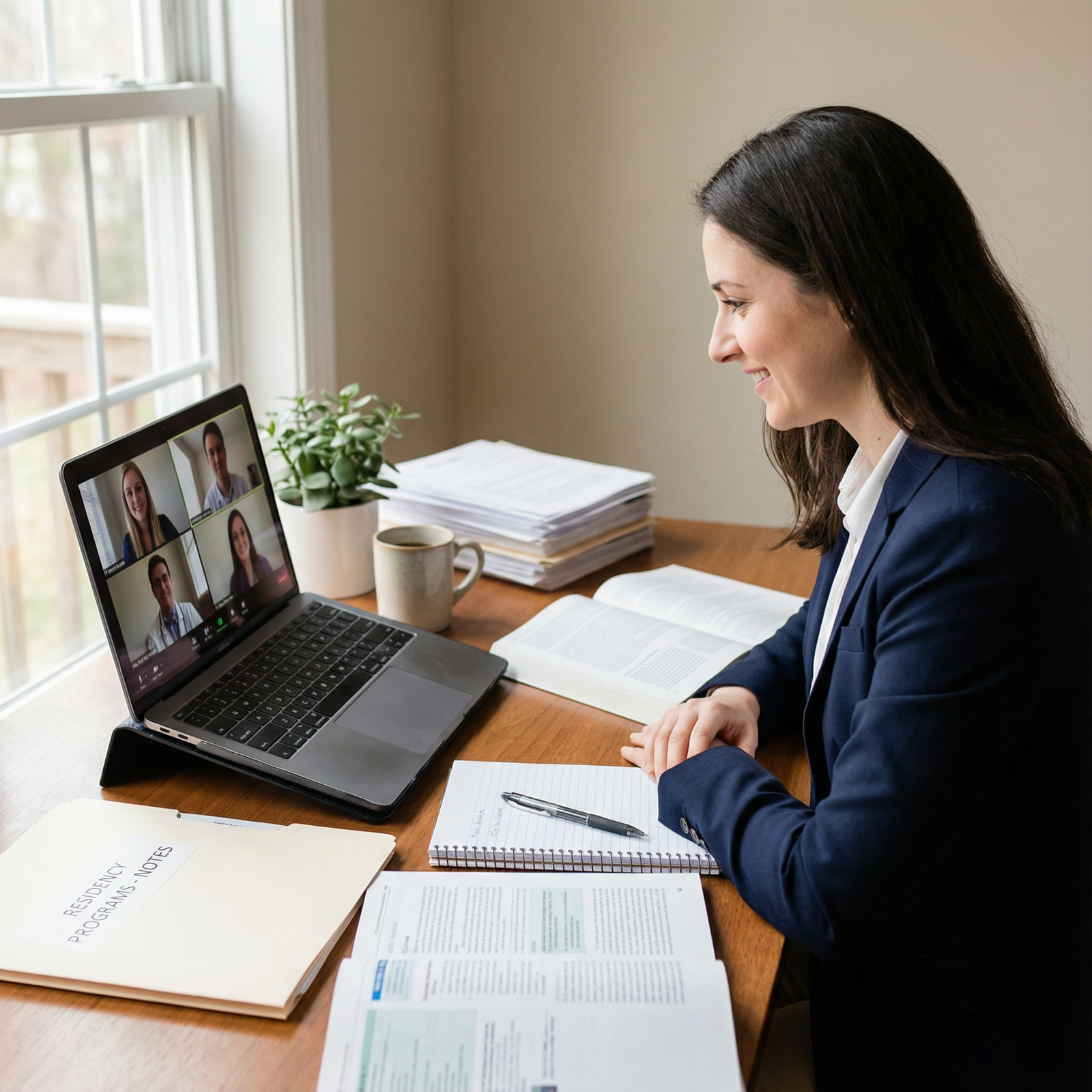
Common Interview Day Behaviors That Quietly Get You Ranked Lower
Most applicants think they’re being judged only in the interview room. They’re wrong.
You’re being evaluated from the minute you walk into the hospital parking lot until the second you leave the Zoom room or step out of the lobby. And it’s not the big, obvious disasters that hurt most people. It’s the small, “normal” behaviors that quietly get you nudged down a rank list. One slot here, four slots there. Suddenly you’re below the cutoff.
Let me walk you through the patterns that get people quietly buried on rank lists every single year.
1. Treating “Non-Evaluative” Parts of the Day as Not Real

If you remember nothing else, remember this: nothing on interview day is truly “non-evaluative.” That “chill” lunch? The resident-only Q&A? The shuttle ride from the hotel? People talk. Impressions leak back to the committee.
The classic mistake: applicants think they can relax their professionalism when the PD leaves the room.
Common ways this shows up:
- Being animated and engaged with faculty, then going flat with residents
- Laughing at slightly inappropriate jokes because “it’s just between us”
- Complaining about other programs’ interview processes
- Oversharing: venting about Step scores, failed attempts, or bad clerkship evals in way too much detail
What residents actually say later in the debrief:
- “Nice on paper, but kind of disengaged when it was just us.”
- “Seemed fake. Totally different person with faculty vs with residents.”
- “Talked a lot of trash about other programs. That’s going to be us next year.”
Here’s the rule:
If you’re on anything that’s officially part of the schedule, you are being evaluated. Even if they swear “this is just to help you get to know us.”
Avoid this mistake by:
- Keeping the same baseline professionalism all day (tone, language, energy)
- Being consistent: who you are with the PD should match who you are with the intern at lunch
- Not saying anything to residents that you wouldn’t be okay with the PD hearing word-for-word
- Remembering that residents often have equal or louder voices than faculty on rank day
You don’t need to be robotic. Just don’t turn the “real” you into the “off-guard” you.
2. Acting Like the Day Is About You, Not the Team
| Behavior Type | What You Think It Looks Like | What It Actually Signals |
|---|---|---|
| Talking over others | Showing enthusiasm | Poor listening |
| Dominating Q&A | Being engaged | Needs too much attention |
| Ignoring staff | Staying focused | Hierarchical, dismissive |
| Monologuing answers | Being thorough | Poor time awareness |
This is where a lot of “strong” applicants quietly sink.
Programs don’t need another star who’s painful to work with at 2 a.m. They rank people they can see fitting into their resident group. If you come across as “me-centered,” you’re in trouble, even with stellar scores.
Behaviors that get you pegged as Not a Team Player:
Hijacking group conversations. You’re always the first to answer, always have a follow-up, always turning questions back to yourself. You think you’re being enthusiastic. Residents think, “We’ll never get out of sign-out with this person.”
Ignoring lower-status people. Being ultra-polite with the PD, mildly polite with residents, and barely acknowledging coordinators, admin staff, or the person checking you in. This is noticed. Every time.
Never asking about the resident experience. You ask smart questions about research, electives, fellowship matches—but nothing about call culture, resident support, or how they handle bad days. That screams “CV builder,” not teammate.
Failing to read the room. You give long, intense answers when people are visibly tired and running behind. You force your full “Why this program” speech into a 3-minute chat as they walk you between sessions.
Avoid this mistake by:
- Intentionally giving space for others to speak in group settings
- Making eye contact and showing real courtesy to EVERYONE: admin, coordinator, security, food staff
- Asking at least a couple of genuine questions about resident life, not just structure and prestige
- Matching your conversational length and energy to how fast the day is moving
You’re not auditioning to be the keynote speaker. You’re auditioning to be a colleague.
3. Weak, Vague, or Copy-Paste Answers to “Why This Program?”

Generic “why us” answers are rank-list poison. Not because faculty are offended—but because they’re bored. They’ve heard the same phrases from 200 people already.
Here’s what quietly hurts you:
- “I love the strong clinical training and diverse patient population.”
- “I’m drawn to the collegial environment and the emphasis on teaching.”
- “I really value work-life balance and the supportive culture here.”
Everyone says this. They could copy-paste your answer to any other program in the region and it would fit.
What it signals:
- You haven’t put in the effort to actually understand the program
- You’d probably be equally “happy” anywhere, so they won’t fight for you
- You’re reciting, not thinking
Avoid this mistake by:
Preparing real specifics, not just names.
Not: “I’m excited by your addiction medicine track.”
Instead: “Your addiction medicine track—with the dedicated PGY-3 clinic and the buprenorphine waiver training—matches exactly what I want to build in my career.”Connecting their features to your story.
Make it: “You have X. I’ve done Y. That’s why this is a fit.”Having 2–3 program-specific points ready for each place.
If you can’t list 3 unique things about a program before you show up, you will default to fluff under pressure.
No, you can’t fake this on the fly at a 12-interview pace. You need a quick reference system: a short note per program with 3 bullets you can glance at the night before.
4. Letting Your Energy Flatten as the Day Goes On
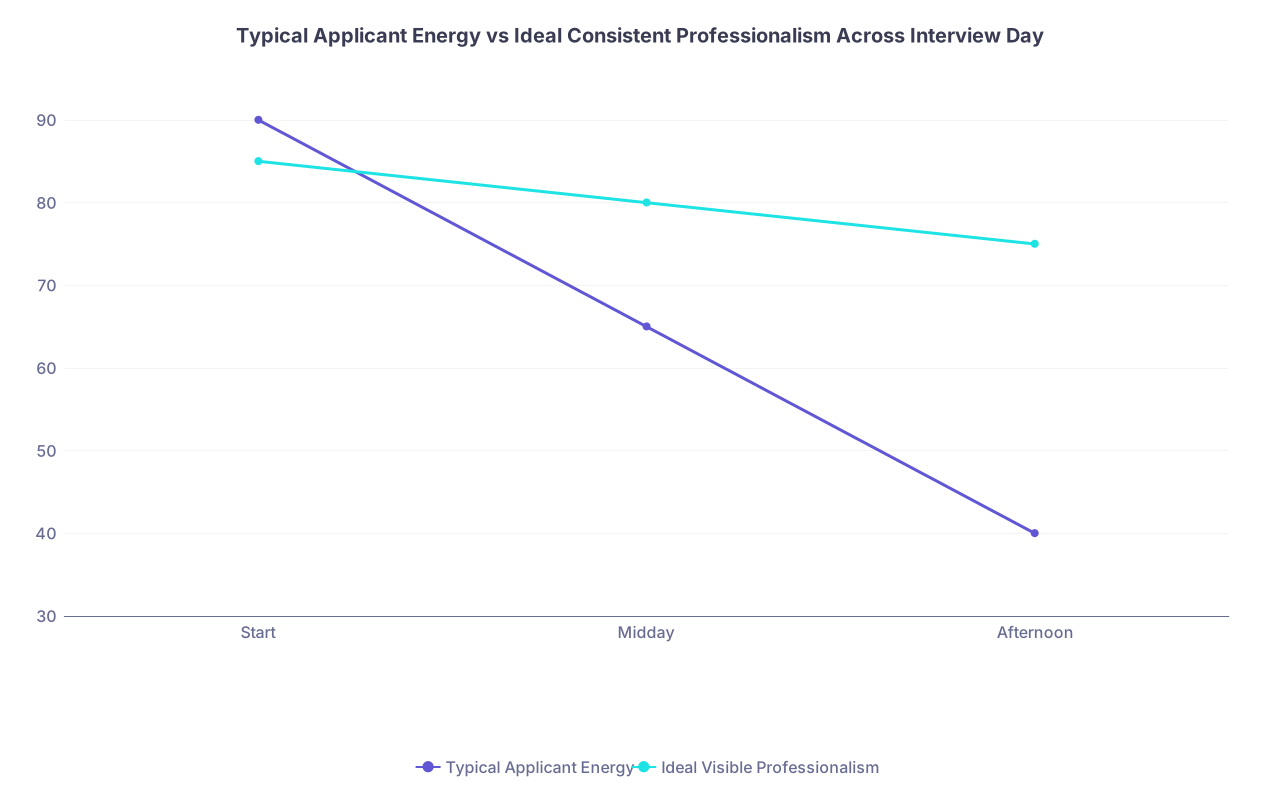
| Category | Typical Applicant Energy | Ideal Visible Professionalism |
|---|---|---|
| Start | 90 | 85 |
| Midday | 65 | 80 |
| Afternoon | 40 | 75 |
The morning-you and the afternoon-you are often two different people. Programs notice.
You’re sharp, smiling, and enthusiastic for the PD and chair at 8:00 a.m. By the 2:00 p.m. resident Q&A, you’re slumped in your chair, camera angle drifting down, answers shorter, face blank.
Residents file into the rank meeting and say: “Seemed nice, but by the afternoon they looked tired and disinterested.” Translation: they will struggle on long days. Lower them a few spots.
Yes, interview days are exhausting. But every program has multiple applicants who manage to stay consistently professional from start to finish. That’s who you’re being compared to.
Avoid this mistake by:
Eating enough. Bring a granola bar or something simple if lunch is unpredictable. A lot of people crash because of hypoglycemia, not personality.
Managing caffeine smartly. Front-loading 400 mg at 6:00 a.m. and then crashing by noon is not a flex.
Using micro-breaks. When you have 5 minutes between sessions, don’t doomscroll. Stand up, stretch, deep breath, reset your face.
Physically resetting posture before each interaction. On Zoom, literally sit up, center your camera, and force a 1-second smile before you click “Join.”
Programs aren’t expecting you to be bubbly all day. They’re expecting not to feel like you’ve given up by lunch.
5. Being Too Casual With Technology and Logistics

| Step | Description |
|---|---|
| Step 1 | Before Interview Day |
| Step 2 | Tech setup not tested |
| Step 3 | Schedule not double-checked |
| Step 4 | Late login / audio issues |
| Step 5 | Missed session or confusion |
| Step 6 | Seen as disorganized |
| Step 7 | Lower subtle rank |
This one has become a bigger issue with virtual and hybrid formats.
You think: “As long as I show up on time, I’m fine.” Programs think: “If they can’t manage their own interview day, what happens on call?”
The small, avoidable things that get noticed:
- Logging into a Zoom room at 8:01 for an 8:00 a.m. start
- “Sorry, my microphone’s acting weird” for the first two minutes
- Terrible lighting where your face is in shadow
- Loud background noise you didn’t try to mitigate
- Phone buzzing repeatedly on the table in front of you
- Obviously checking your phone during downtime with the PD or faculty
Nobody is going to write: “Rank lower: bad lighting.” But here’s how it actually plays out:
- “Came across disorganized.”
- “Seemed distracted.”
- “A bit unprepared tech-wise compared to others.”
That translates to subtle downward movement on the list.
Avoid this mistake by:
Doing a full tech run-through the day before with the exact setup: same room, device, lighting, background
Using wired headphones or reliable earbuds to reduce echo and background noise
Positioning your camera at eye level and your face evenly lit (lamp behind your screen, not behind your head)
Having the meeting links and schedule printed or easily visible—not buried in 20 open tabs
Muting notifications: put your phone on Do Not Disturb, silence computer alerts
None of this will get you ranked first. But getting it wrong can push you down just enough to miss.
6. Overcompensating: Forced Enthusiasm and Fake Personality
Programs are very, very good at spotting overacting. They interview hundreds of people; they can smell it.
Behaviors that feel like “I’m showing interest!” but read as fake:
- Laughing too loud or too long at every minor joke
- Overusing program name and buzzwords in every answer
- Way too many “I’m SO excited about…” statements without substance
- Aggressive name-dropping of faculty you clearly haven’t actually engaged with
- Mirroring PD body language and speech patterns to a creepy degree
Residents talk about this in brutal terms:
- “Felt like they were performing a version of ‘good applicant’ instead of just being themselves.”
- “Every answer was a scripted monologue about how great we are. It got weird.”
Avoid this mistake by:
Answering like you’re talking to a respected senior colleague, not auditioning for a commercial
Letting there be small pauses. You don’t have to fill every second with noise.
Using enthusiasm selectively. Save your highest energy for the 2–3 things that are genuinely central to you. That contrast reads as authentic.
Being comfortable saying, “That’s something I’m still figuring out,” instead of fake certainty about every aspect of your future career
Controlled, grounded interest beats theatrical excitement every time.
7. Mishandling “Tell Me About a Time You…” Questions

Behavioral questions are where a lot of people quietly lose ground. Not because their stories are bad—but because their framing is.
Common mistakes:
Blaming others.
“The nurse was rude.”
“The attending was unreasonable.”
“My classmates just weren’t pulling their weight.”Even if it’s true, it sounds like you externalize problems instead of owning your part and adapting.
Making yourself the hero in every story.
Every example ends with you saving the day, solving the conflict, and teaching everyone around you.Never describing what you learned or changed.
You describe the situation and what happened—but not what you’d do differently now.Telling stories that reflect questionable judgment.
- Bragging about bending rules for patients
- Minimizing safety concerns
- Describing conflict with nurses or other services with a “they were the problem” tone
Avoid this mistake by:
Using a simple structure:
Situation → What you did → What the outcome was → What you learned / would do differentlyChoosing stories where:
- You faced a challenge
- You handled it reasonably (even if not perfectly)
- You clearly grew from it
Explicitly stating reflection:
“Looking back, one thing I’d do differently is…”
“What I took from that was…”
Programs care far more about your capacity to self-reflect and improve than about you being flawless. If every story paints you as the victim or the hero, they notice.
8. Being Too Passive in Resident Interactions
This one is subtle but deadly.
You think: “I’ll just be low-key and not bother anyone. I don’t want to come off as annoying.”
They think: “This person didn’t seem that interested in us. Kind of hard to read. Forgettable.”
When residents later go through the list, being forgettable doesn’t help you. It pushes you into the middle-lower blob of “fine but not compelling.”
Passive behaviors that hurt you:
- Sitting at the edge of the group, not really joining conversations
- Camera off or half-engaged in virtual resident socials (yes, those matter more than you think)
- Asking zero or only very generic questions
- Giving one-word or super-short answers when residents try to talk about non-medical things (hobbies, where you’re from, etc.)
Avoid this mistake by:
Preparing 3–4 questions specifically for residents:
- “What’s something the program changed recently because of resident feedback?”
- “On a tough rotation, what makes it bearable here compared to other places you’ve rotated?”
- “If you had to pick one thing this program could improve for residents, what would it be?”
Letting yourself show some non-medical personality. If they ask what you do for fun, give more than: “I like to read.” Say what, why, how often.
Aiming for “calm and engaged,” not “silent and invisible.” You don’t need to be the life of the party, but you do need to be present.
Residents are explicitly asked: “Would you want this person as your co-intern?” If the answer is “I barely remember them,” that doesn’t help your rank.
9. Trying Too Hard to Impress With Red Flags
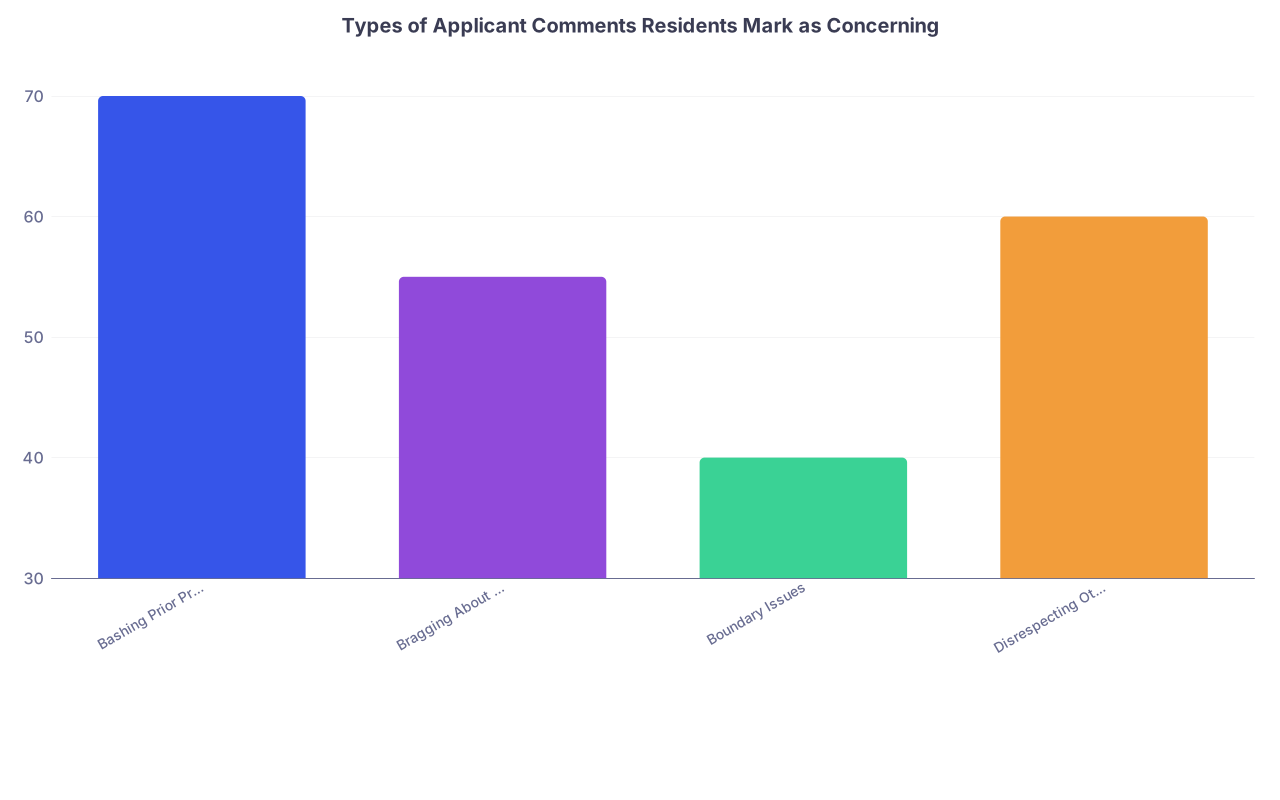
| Category | Value |
|---|---|
| Bashing Prior Programs | 70 |
| Bragging About Overwork | 55 |
| Boundary Issues | 40 |
| Disrespecting Other Specialties | 60 |
Sometimes applicants expose themselves without realizing it, trying to sound tough, dedicated, or smart. It backfires.
Things that seem impressive in your head but read as glaring red flags:
Bragging about overwork.
“On my sub-I I basically functioned as an intern.”
“I was on call 30 hours straight, no breaks, and still saw extra patients.”Programs hear: poor boundaries, unsafe, likely to burn out or ignore duty-hour rules.
Bashing other specialties or programs.
“At [other program], the residents seemed miserable.”
“Surgery people are always like that.”It tells them exactly how you’ll talk about their program next year.
Casually mentioning cutting corners.
“We didn’t really pre-round on everyone, just on the sick ones.”
“We usually just signed charts later to save time.”You’re admitting to behavior that could get a resident in real trouble.
Trying to sound ultra-competitive.
“I need a place that will keep pushing me; I get bored if I’m not the hardest working one there.”That sounds exhausting, not inspiring.
Avoid this mistake by:
Filtering everything through one question: “If this quote was written in my dean’s letter, how would it look?”
Keeping critiques factual and neutral if you must mention negatives:
“That rotation was challenging because coverage was thin and feedback was limited, but I learned to be more proactive in asking for guidance.”Emphasizing growth and learning over toughness and martyrdom
Residents and faculty are not impressed that you ran yourself into the ground. They’re impressed when you show judgment and self-preservation while still caring about patients.
10. Botching the End of the Day and Post-Interview Follow-Up

People remember the last impression.
Here’s where applicants mess it up:
Leaving abruptly. No clear goodbye, no thanks, just vanish when the Zoom says “You’re free to leave.”
Asking about rank position or signaling in awkward ways.
“So… where do you think I stand?”
“Should I send a letter of intent if I decide to rank you #1?”This puts programs in an uncomfortable position and makes you look naive about the Match.
Overdoing post-interview emails.
- Long, multi-paragraph recaps of everything you liked
- Emailing every single faculty member plus the coordinator plus the PD
- Sending obvious copy-paste templates that look identical across programs
Most programs are not moving you up or down purely based on a thank-you email. But clumsy follow-up can annoy them enough to nudge you a bit down when they’re splitting hairs.
Avoid this mistake by:
Ending the day with a simple, direct expression of appreciation:
“Thank you for taking the time today. I appreciate getting to see how the program works from the resident perspective.”Sending short, specific, targeted emails only where they make sense:
- PD and/or main interviewer if you had a real conversation
- Keep it to 3–6 sentences
- Include one specific callback: “I appreciated your honesty about X; it helped me understand Y.”
Not asking about ranking, not promising them anything in writing you’re not 100% sure about, and not trying to game the match verbally
Your goal: leave them thinking, “Professional, thoughtful, easy to work with.” Not “intense” or “trying too hard.”
Key Takeaways
You’re being evaluated all day, by everyone—residents, staff, and faculty. Inconsistency or entitlement in “informal” settings quietly sinks people.
Small, avoidable behaviors—generic answers, low afternoon energy, tech sloppiness, blame-heavy stories—don’t cause dramatic blowups. They just move you down a few slots over and over. That’s how people miss.
The safest path: be consistently respectful, genuinely curious, grounded in your answers, and modestly prepared. No theatrics. No complaining. No cutting corners. Just someone they’d trust at 3 a.m. on a bad call night.