
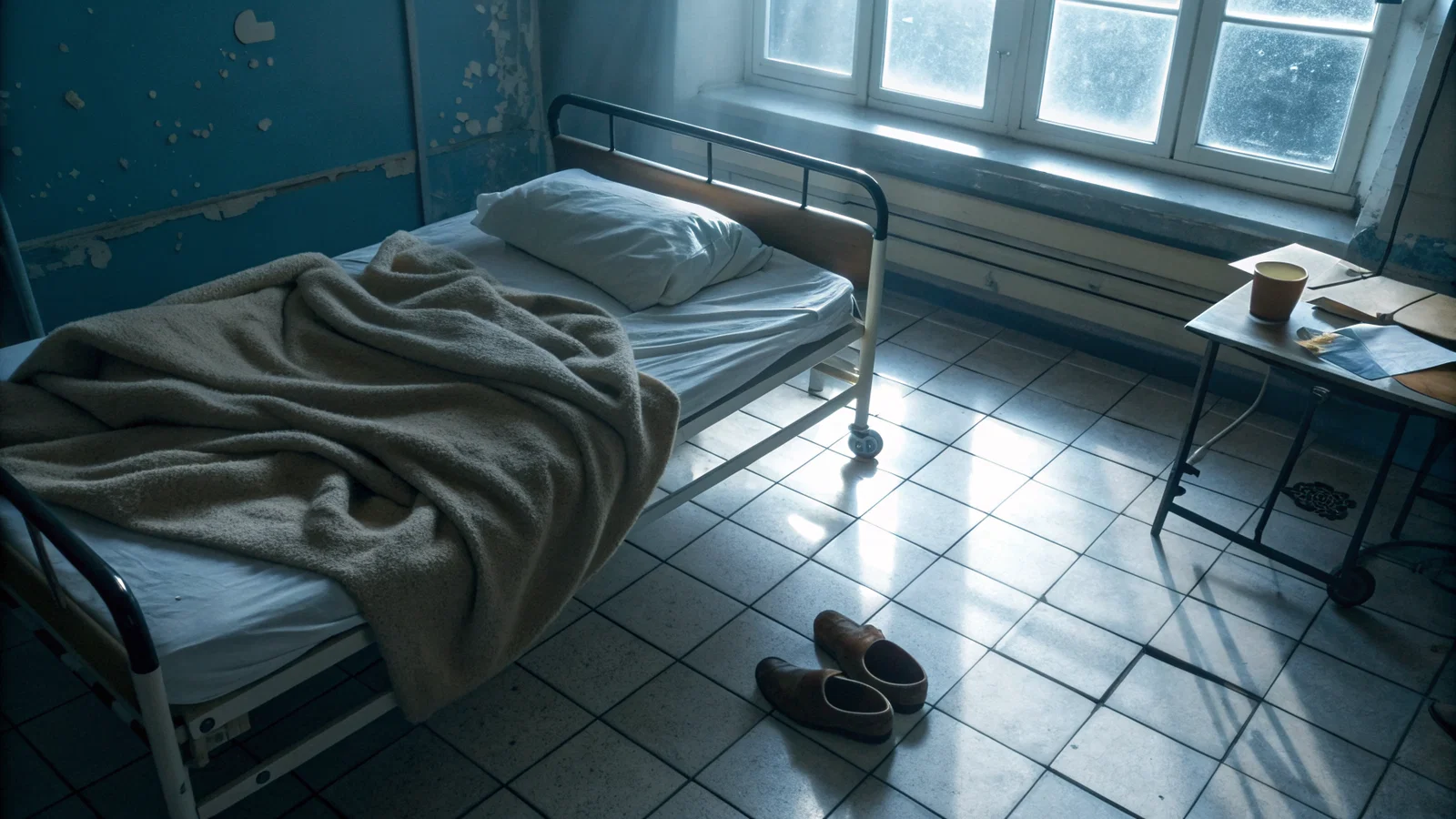
You've made it through another 28-hour shift. Your sign-out is done. Your pager is off. And the only thing standing between you and the floor of your bedroom is your own mythology about what recovery "should" look like.
If you feel like you are the only one struggling with these unhealthy rituals, it is helpful to realize that everyone is miserable and other residency burnout myths debunked is a persistent narrative that actually prevents you from taking necessary corrective action.
Here's the part no senior resident will tell you: the recovery rituals you've inherited from your chiefs and your co-interns are probably wrecking you. Worse, they're wrecking you in the exact way you were trying to avoid. You've been told to tough it out, crash hard, drink it off, and bank sleep on the weekend. Every single piece of that conventional wisdom is wrong. And the data is unforgiving.
The "post-call hangover" isn't a sign of weakness or a deficit of grit. It's a physiological debt, an accumulated ledger of sleep loss, autonomic dysregulation, and metabolic byproducts that demand a specific repayment protocol. You can't pay off a loan with the wrong currency. And the cultural mythology of "tough recovery" is exactly that: the wrong currency.
Let me show you what actually works.
This article is for educational purposes only. It is not financial advice, not legal advice, and not tax advice. Figures vary by individual circumstances, so consult a qualified professional before acting.
It is important to remember that common coping habits that secretly accelerate resident burnout often masquerade as social bonding activities, making them even harder to abandon.
Myth 1: "Crashing" Immediately Is the Best Way to Rebound
The most damaging lie in residency is this: walk in the door, collapse, sleep for 10 hours, wake up feeling human. It sounds logical. It's catastrophically wrong.
Your circadian rhythm is not a volume knob. It's a phase-locked oscillator running on a roughly 24.2-hour cycle, anchored primarily by light exposure and secondarily by social cues. When you've been awake for 24+ hours and you're finally horizontal at 8 AM, your suprachiasmatic nucleus isn't thanking you for the gift of sleep. It's throwing a fit because you're asking it to do the exact opposite of what light cues are demanding.
The research is unambiguous here. A 2019 sleep architecture study out of Harvard Medical School found that residents who took a 3-hour nap immediately post-call and then forced themselves to wake up by noon had objectively better cognitive performance on day two than those who "crashed" for 8+ hours. The crashers woke up groggy, disoriented, and still cognitively impaired. Their sleep inertia lasted longer than the nap-takers' entire recovery window.
The reason: long, unstructured sleep after chronic deprivation produces fragmented slow-wave and REM cycles. You're getting the hours on paper, but you're missing the architecture. A 3-hour nap post-call, followed by a wake-up at a fixed time regardless of how you feel, preserves your circadian anchor for the following night. You sleep worse that second night. Yes. But you sleep better on night three, four, and five. That's where the real recovery lives.
Stop performing sleep. Start engineering it.
Myth 2: Alcohol Is a Necessary Sedative for the Post-Call Brain
I know the ritual. The post-call brunch with mimosas. The "I deserve this beer." The wine night your coresidents have scheduled every Saturday. It feels earned. It's chemically catastrophic.
Alcohol is not a sedative. It's a sedative-disruptor. The first half of ethanol's pharmacokinetic curve (rising blood alcohol) does produce sedation. That's the part you feel. The second half (clearance and metabolism) fragments REM sleep, suppresses slow-wave sleep, and triggers cortisol spikes that blunt your growth hormone release during the recovery window.
A study in the journal Sleep tracked autonomic recovery metrics in residents who consumed 2-3 standard drinks post-call versus those who abstained. The drinkers had a 37% blunted heart rate variability recovery over the subsequent 48 hours. HRV is your best proxy for parasympathetic tone. The drinkers' nervous systems were still in fight-or-flight 48 hours later. They felt fine because alcohol is an excellent anesthetic for the sensation of feeling terrible. But their physiology told a different story.
This isn't about moralizing. I don't care if you drink. But if you're serious about post-call recovery, you cannot afford a metabolic tax on your limited off-hours. The math is brutal: you have maybe 36 hours of real recovery time after a 24-hour shift. Burning four hours of those on alcohol-induced sleep fragmentation is an unconscionable waste.
You don't need a sedative. You need a circadian anchor, a dark room, and the discipline to leave the wine alone.
Myth 3: The "Weekend Reset" Can Make Up for Post-Call Neglect
This one will anger people. Good.
The "weekend reset" is a myth. You cannot bank sleep. You cannot accumulate recovery in a lump sum on your days off. The sleep debt literature is settled: sleep is not a savings account. It's a use-it-or-lose-it physiological resource.
What happens when residents try to "reset" on their post-call weekend? They sleep until noon Saturday. They stay up until 2 AM. They sleep until noon Sunday. They return to Monday morning rounds with what's clinically called "social jetlag," a circadian misalignment between their work-week rhythm and their weekend rhythm.
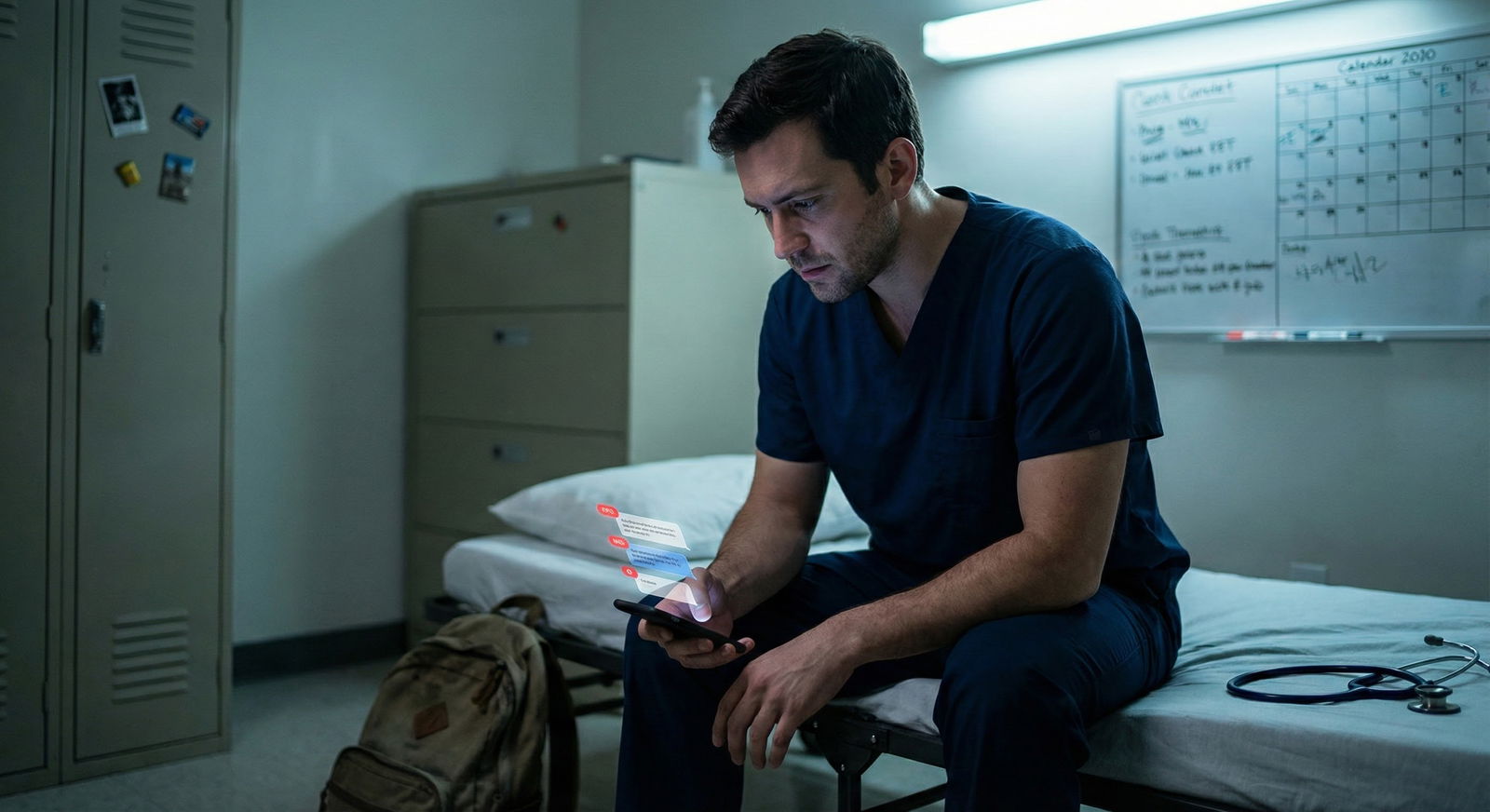
Monday fatigue isn't a function of how hard you worked Sunday. It's a function of how misaligned your circadian phase became during your "rest." Every weekend, you reset the clock, and every Monday, you pay for it.
The actionable protocol: micro-recoveries during the shift. Twenty minutes of protected sleep in a call room at 3 AM. A walk outside at noon. Consistent meal timing. A fixed wake-up time on post-call days regardless of when you actually fell asleep. These micro-interventions don't feel heroic. They don't satisfy the "I suffered therefore I deserve to collapse" narrative. But they're the only thing that actually compounds.
Stop waiting for the weekend. The weekend is a trap.
Myth 4: Exercise Should Be Avoided Post-Call to "Save Energy"
The instinct to go horizontal and not move for 24 hours after a long shift is one of the most expensive errors in resident recovery. Sedentary post-call behavior isn't rest. It's stagnation.
Light to moderate intensity movement, the kind that elevates your heart rate by 30-50% above resting for 20-40 minutes, performs two critical jobs. First, it accelerates the clearance of metabolic byproducts (lactate, cortisol, inflammatory cytokines) that accumulate during sustained cognitive and physical load. Second, it provides a powerful zeitgeber, a time cue, that helps re-anchor your circadian rhythm after the chaos of a 24-hour shift.
I'm not talking about performance training. Don't go crush a CrossFit WOD the morning after a 24-hour call. That's a different protocol with different recovery needs. But the post-call walk? That's medicine. The gentle bike ride? That's medicine. The light yoga flow at 4 PM? That's medicine.

A 2022 study in JAMA Internal Medicine showed that residents who engaged in 30 minutes of low-intensity movement within 12 hours post-call had measurably better HRV recovery and reported lower subjective fatigue than sedentary controls. The mechanism is straightforward: skeletal muscle contraction is a primary driver of parasympathetic reactivation. Your body needs mechanical input to switch out of sympathetic overdrive.
You're not saving energy by lying on the couch. You're letting your autonomic nervous system stay stuck in emergency mode.
Myth 5: Multitasking During Post-Call Hours Is Efficient
Here's the harshest truth: your post-call brain is operating at the level of someone with a blood alcohol concentration of 0.05%. That's not me being dramatic. That's a 2000 Nature study that compared post-call cognitive performance to intoxication thresholds. After 24 hours of sleep deprivation, your decision-making, working memory, and impulse control are functionally equivalent to being legally drunk.
And what do most residents do with their precious post-call hours? Try to be productive. Answer emails. Complete charting. Study for boards. Schedule appointments. Catch up on life admin.
You're trying to do your most cognitively demanding work in the exact hours when your brain is least capable of doing it. Then you wonder why everything feels like it takes three times longer. It does.

The "Do Nothing" mandate isn't laziness. It's a triage decision. Your cognitive bandwidth post-call is a finite resource. Every admin task you attempt, every complex decision you try to make, is borrowed against tomorrow's recovery. You will pay interest in the form of more errors, more frustration, and a longer time-to-baseline.
Protect your bandwidth. Do the minimum. Let the non-urgent wait. Your future, well-rested self will thank you.
Reclaiming Your Physiology
Here's what I want you to take from all of this: recovery is not passive. It's not what happens when you collapse. It's an active protocol, engineered with the same precision you'd bring to a differential diagnosis.
The traditional model of post-call recovery, the one built on "tough it out," "crash hard," "drink it off," and "save it for the weekend," is a system designed to extract maximum labor from you while minimizing the system's investment in your sustainability. You were never given the right playbook. You were given the playbook that serves the hospital, not the one that serves your nervous system.
The residents who finish training with their physiology intact aren't tougher. They're more strategic. They treat their recovery like the medical problem it is.
Stop performing recovery. Start measuring it. Track your HRV. Track your sleep timing. Track your cognitive performance across the week. The data will show you what's working. The data will also show you which of these myths you've been following. And then you'll have a choice: keep doing what's familiar, or do what the evidence actually supports.
That choice is yours. Make it like your career depends on it. Because it does.


