Mastering the Art of Balance: Personal Wellbeing on Match Day
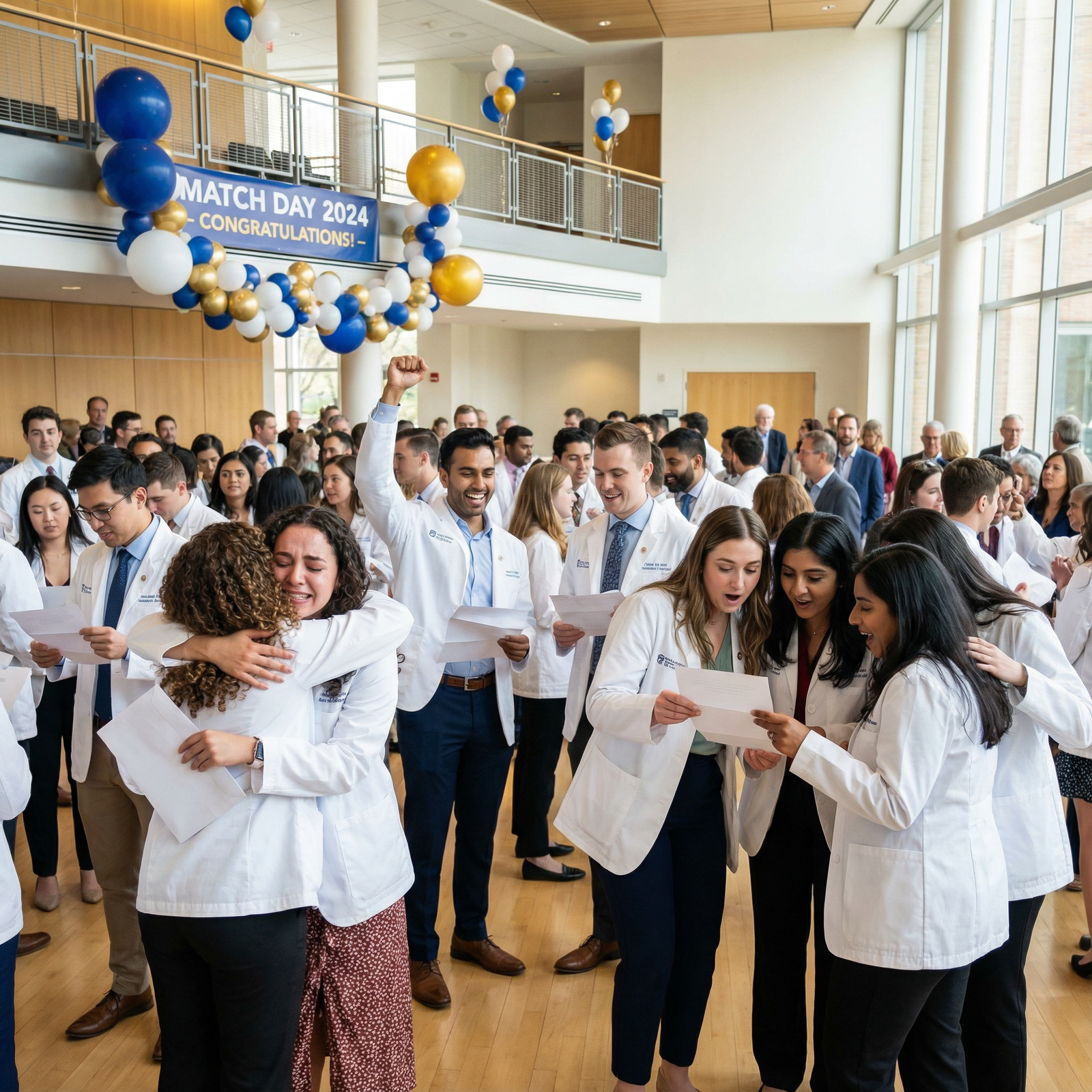
Match Day is one of the most emotionally charged milestones in medical training. For many medical students, it represents the culmination of years of effort, sacrifice, and uncertainty—and the beginning of a new identity as a resident physician. With so much at stake, it’s easy for Match Day to feel overwhelming.
Yet this is precisely why prioritizing personal wellbeing, stress management, and emotional balance on Match Day matters so much. How you take care of yourself—both in the weeks leading up to the Match and on the day itself—can shape not only your experience of the event, but also how you transition into residency.
This guide offers practical, evidence-informed strategies to help you protect your personal wellbeing on Match Day. You’ll learn how to manage stress, use mindfulness techniques, maintain perspective, and create a flexible plan for different outcomes—so you can move through the day with as much clarity, calm, and self-compassion as possible.
Why Personal Wellbeing on Match Day Matters
The Unique Pressure of Match Day for Medical Students
Match Day combines several stressors at once:
- High stakes: It determines where you will live, train, and work for the next several years.
- Public nature: Many schools host public or semi-public events, adding social pressure and comparison.
- Uncertainty and lack of control: Once your rank list is certified, the outcome is entirely out of your hands.
- Cumulative stress: It comes after months (or years) of exams, clerkships, interviews, and applications.
For many medical students, this constellation leads to:
- Racing thoughts and “what if” scenarios
- Fear of disappointing family, mentors, or themselves
- Physical symptoms of stress (GI upset, headaches, insomnia)
- Difficulty being present and enjoying the experience
Understanding why Match Day feels so intense normalizes your reaction—and positions you to respond intentionally rather than reactively.
The Impact of Stress on Performance and Wellbeing
Short-term stress can be energizing, but unregulated stress can erode your wellbeing in meaningful ways:
- Emotional: Irritability, tearfulness, difficulty focusing, catastrophizing (“If I don’t match at X, my career is over.”)
- Cognitive: Trouble concentrating, indecision, negative thinking, and difficulty remembering details.
- Physical: Headaches, muscle tension, palpitations, changes in appetite, and sleep problems.
- Behavioral: Withdrawing from support systems, doom-scrolling social media, overeating/undereating, or relying on substances.
On Match Day, your stress management skills will be tested. You can’t eliminate stress—but you can significantly influence how it affects you.
The Benefits of a Balanced, Intentional Approach
Cultivating balance and self-care around Match Day offers several key benefits:
- More emotional stability: You’re less likely to swing between extremes and more able to process whatever news comes.
- Better decision-making: A calmer mind helps you respond thoughtfully if you need to enter SOAP, consider relocation logistics, or communicate with loved ones.
- Increased resilience: You’re better able to adapt if the outcome isn’t what you envisioned, and to recover more quickly afterward.
- Stronger relationships: Managing your own stress helps you show up more kindly for peers, partners, and family members who are also anxious.
- Healthier transition into residency: How you handle this moment can set the tone for how you handle other high-stakes events in your future career.
Personal wellbeing isn’t a luxury on Match Day—it’s a core professional competency and a protective factor against burnout.
Preparing for Match Day: Foundations of Wellbeing
Thoughtful preparation in the days and weeks leading up to Match Day can dramatically reduce the intensity of stress when the day arrives.

Optimize Sleep, Nutrition, and Routine
Prioritize Sleep in the Days Before Match Day
Trying to “force” sleep the night before often backfires. Instead, focus on building better sleep habits in the week leading up to Match Day:
- Keep a consistent sleep schedule: Aim to go to bed and wake up at roughly the same time each day.
- Protect the hour before bed:
- Avoid Match-related emails and social media.
- Dim lights and reduce screen exposure.
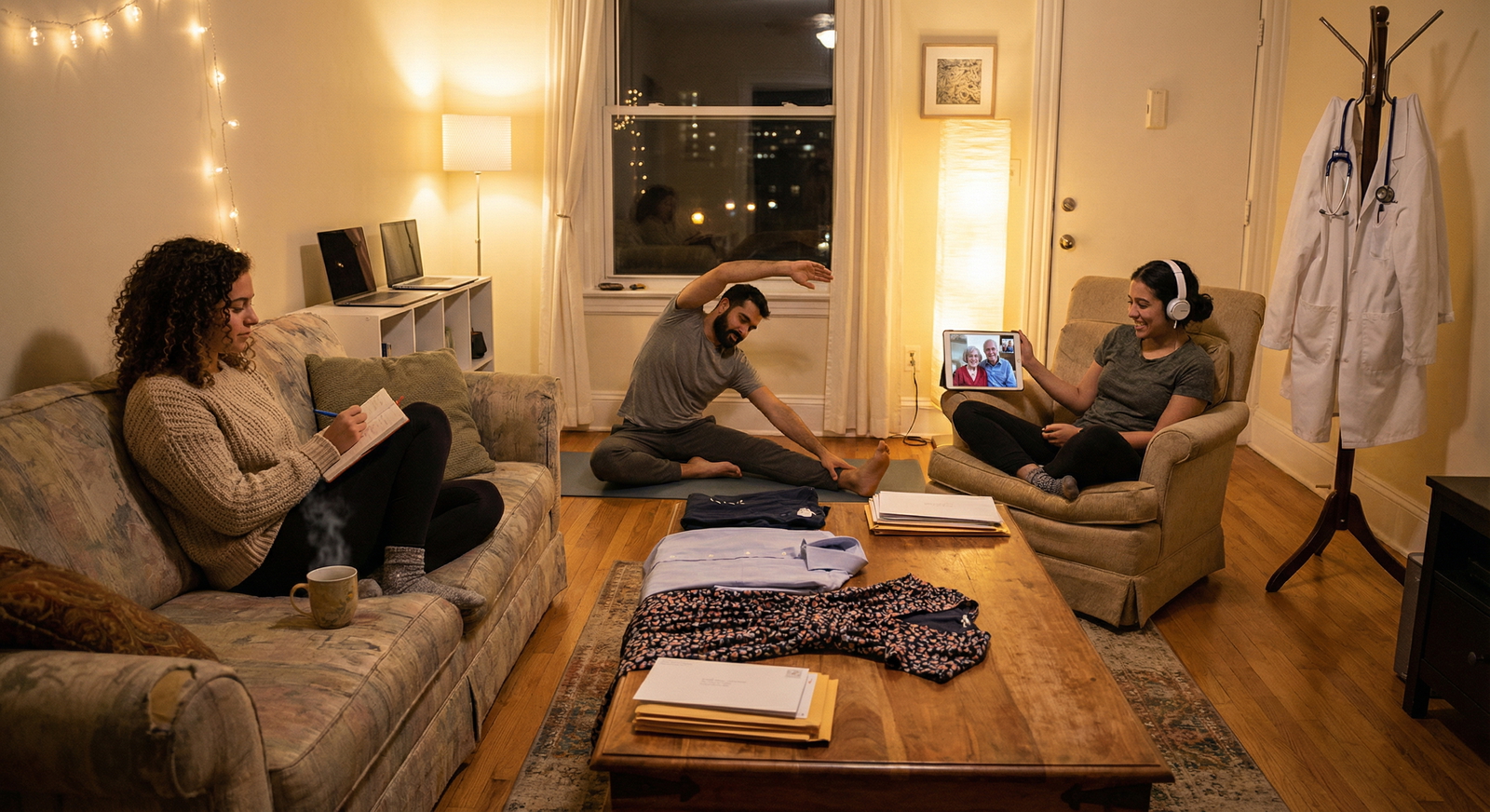
- Choose calming activities—light reading, stretching, or quiet music.
- Limit stimulants:
- Reduce caffeine after midday.
- Avoid energy drinks or new supplements that might interfere with sleep.
- Create a sleep-conducive environment:
- Dark, cool, and quiet.
- Use white noise or earplugs if needed.
- Reserve your bed mainly for sleep, not for studying or scrolling.
Even if you don’t sleep perfectly the night before, a week of relatively consistent rest will buffer you against one suboptimal night.
Support Your Body with Steady Nutrition and Hydration
What you eat and drink can meaningfully influence your mood, focus, and stress tolerance:
- Don’t skip meals: Irregular eating leads to blood sugar swings, which can worsen irritability and anxiety.
- Aim for balanced meals: Include complex carbs (whole grains), lean protein, and healthy fats to provide sustained energy.
- Stay hydrated: Keep a water bottle nearby. Dehydration can mimic or amplify anxiety symptoms.
- Be mindful of alcohol and heavy foods: The night before, avoid heavy, greasy meals and excess alcohol, which can disrupt sleep and mood.
Think of your body as your most important “instrument” on Match Day. Treating it well is not indulgent—it’s strategic.
Use Visualization and Cognitive Strategies to Reframe Stress
Visualize Different Outcomes with Compassion
Positive visualization is helpful, but balanced visualization is even more powerful:
- Spend a few minutes picturing:
- Opening an envelope and seeing your top choice.
- Matching, but not at your first-choice program.
- Learning that you did not match and needing to act quickly.
- In each scenario, imagine:
- Who is with you (or who you’ll contact).
- What you will say to yourself.
- One kind, stabilizing action you will take (e.g., step outside, text a mentor, drink water, take 10 deep breaths).
This doesn’t “jinx” you; it inoculates you. When your brain has mentally rehearsed coping, it is less likely to panic in real time.
Challenge Unhelpful Thoughts
Common cognitive distortions before Match Day include:
- All-or-nothing thinking: “If I don’t match at my dream program, I have failed.”
- Catastrophizing: “If I don’t match this year, my career is ruined.”
- Mind reading: “Everyone will think less of me if I don’t match perfectly.”
- Overpersonalization: “If I don’t match, it proves I’m not good enough.”
When you notice one of these thoughts, gently challenge it:
- “What evidence supports this thought? What evidence doesn’t?”
- “How would I talk to a close friend who said this about themselves?”
- “Is there a more balanced way to say this?”
- For example: “Matching at my top choice would be ideal, but I can still have an excellent career from many different programs.”
This is not toxic positivity; it’s realistic, compassionate thinking.
Mindfulness Techniques and Grounding Practices for Match Day
Mindfulness techniques are powerful tools for Match Day stress management. They help anchor you in the present moment, reduce emotional reactivity, and increase clarity.
Start Match Day with Intention
How you begin the morning can shape the rest of the day.
A 5–10 Minute Morning Mindfulness Routine
You don’t need an hour-long meditation. A simple routine might look like:
- Sit comfortably, eyes closed or softly focused.
- Take 5 slow breaths, counting 4–5 seconds in, 4–5 seconds out.
- Notice your body: Where do you feel tension? Gently relax your jaw, shoulders, and hands.
- Label your emotions: “I notice anxiety, excitement, fear, hope.” No judgment—just noticing.
- Set an intention:
- “Today, I will treat myself kindly, no matter the outcome.”
- “I will let this day be one moment in my longer journey.”
- “I will stay grounded and present.”
This can be done at home, in your car, or even in a quiet corner before the ceremony.
Breathing and Grounding Tools for Acute Anxiety
Keep a few quick strategies ready for when emotions spike:
Box Breathing (4–4–4–4)
- Inhale through your nose for 4 seconds.
- Hold for 4 seconds.
- Exhale through your mouth for 4 seconds.
- Hold empty for 4 seconds.
- Repeat for 4–6 cycles.
This technique calms the autonomic nervous system and can be used discreetly in public settings.
5–4–3–2–1 Grounding Technique
When your mind is racing:
- 5 things you can see
- 4 things you can touch
- 3 things you can hear
- 2 things you can smell
- 1 thing you can taste
This shifts your attention from catastrophic thinking to your immediate environment.
Manage Social Media and Comparison Mindfully
Match Day often plays out on Instagram, TikTok, and group chats—but constant comparison can erode your wellbeing.
- Consider a social media boundary:
- Limit checking social media until after you have processed your own results.
- Mute or archive group chats if they heighten your anxiety.
- Curate your digital space:
- Follow accounts that normalize a variety of match outcomes.
- Avoid comment sections or threads that fuel comparison or judgment.
- Be intentional about posting:
- If you match, consider the many peers who may be struggling. Share with sensitivity.
- If you don’t match or are disappointed, you are not obligated to post anything.
Mindfulness includes paying attention to your digital environment—and stepping back when it no longer serves you.
Physical Activity, Support Systems, and the Match Day Environment
Use Movement as a Tool for Stress Management
Physical activity is a powerful, underused strategy for Match Day balance.
Gentle Movement Options
- Morning yoga or stretching:
- 10–15 minutes can reduce muscle tension and quiet the mind.
- Focus on simple poses: child’s pose, cat-cow, forward fold, gentle twists.
- Short walks:
- A brief walk before the ceremony or results release can help discharge nervous energy.
- If emotions feel overwhelming afterward, a walk can also help you process.
You don’t need a full workout—consistency and intention matter more than intensity.
Intentionally Design Your Match Day Environment
Where and with whom you open your Match results can significantly influence your experience.
Decide How Public or Private You Want the Moment to Be
Reflect honestly on what you need:
- More private options:
- Open your email or envelope at home or in a quiet space, then join the group event later.
- Have just one or two close supporters with you.
- More communal options:
- Participate in your school’s Match Day event with classmates.
- Coordinate with a small group of friends to open results together.
There is no “right” way. The right way is what best supports your personal wellbeing and emotional needs.
Set Expectations with Loved Ones
Family and friends may be excited—and anxious—too. Consider:
- Telling them ahead of time how you’d like to handle:
- Phone calls and video chats.
- Social media announcements.
- In-person reactions if they’re attending.
- Phrasing you might use:
- “I might need a few minutes to process before I talk about the details.”
- “No matter what happens, please avoid comments comparing me to others.”
- “If I’m quiet at first, it doesn’t mean I’m not grateful—I’m just processing.”
Preparing others helps protect your emotional space.
Lean on Support Systems Intentionally
Support doesn’t just “happen”—it helps to be deliberate:
- Identify your support people in advance:
- A close friend, partner, mentor, sibling, or therapist.
- Let them know your hopes and fears:
- “I’m excited but also terrified about not matching at X.”
- Create a contact plan:
- “I’ll text you as soon as I open my envelope.”
- “If I call and don’t say much at first, just stay on the line with me.”
If your outcome is not what you hoped, having pre-identified support can be grounding and protective.
Planning for Different Match Outcomes: Emotional and Practical Strategies
One of the most effective stress management tools is creating flexible action plans for different scenarios.

If You Match at Your Preferred Program
This is the scenario many medical students envision—but intense happiness can coexist with other emotions:
- Allow yourself to celebrate: You have earned this moment.
- Notice complex feelings:
- Survivor’s guilt if close friends didn’t match or are disappointed.
- Anxiety about moving, finances, or starting internship.
- Channel excitement into preparation:
- Review the program’s welcome materials.
- Start a simple checklist: housing, licensure, moving logistics, budgeting.
Even in success, it’s important to maintain self-care routines and stress management strategies—you’re about to start another demanding chapter.
If You Match, But Not at Your Top Choice
This is an incredibly common outcome and can bring a mix of relief and disappointment.
Give Yourself Permission to Grieve
- It’s okay to feel both relieved and sad.
- You may need time to process the loss of an imagined future.
- Avoid shaming yourself for feeling disappointed—this is a normal, human response.
Reorient Toward Growth and Opportunity
Once initial emotions settle:
- Learn more about your matched program:
- Alumni outcomes, fellowship placements, program strengths.
- Identify what you can control:
- How hard you work, the relationships you build, how you advocate for your education.
- Seek perspective from mentors:
- Many physicians trained at non-top-choice programs and still built extraordinary careers.
Residency is one chapter—not your entire story.
If You Do Not Match
Not matching is deeply painful, but it is not the end of your medical career. Many excellent physicians have been exactly where you might be.
Stabilize Yourself Emotionally First
Before logistics:
- Use grounding or breathing techniques.
- Reach out to your most trusted person.
- Remind yourself: “This is devastating, but it is not permanent. I still have options.”
Engage Quickly with Support and Resources
- Contact your dean’s office or student affairs immediately:
- They can help you navigate SOAP (if applicable), revise your application strategy, and explore alternatives.
- Reach out to mentors:
- Ask for honest feedback and specific guidance.
- Seek help identifying programs more aligned with your profile.
- Consider short- and long-term plans:
- Research or prelim/transitional year positions.
- Strengthening your application (research, additional clinical experiences, exam steps, letters).
- Mental health support if distress becomes overwhelming.
Most importantly, remember that not matching is about fit in a specific year’s algorithm, not your fundamental worth or potential as a physician.
Maintaining a Balanced Perspective and Celebrating Your Journey
Redefine Success Beyond a Single Day
Match Day is a milestone—but not a final verdict.
- Your worth is not determined by:
- Whether you match at a “name-brand” institution.
- How early your envelope is opened.
- How your peers or social media react.
- Your career will be shaped by:
- Your integrity, empathy, and clinical skills.
- Your work ethic, professionalism, and growth mindset.
- The relationships you build with patients and colleagues.
Reminding yourself of this broader perspective can buffer you against the tunnel vision of the day.
Intentionally Celebrate the Journey You’ve Already Traveled
Regardless of outcome, you have accomplished something extraordinary:
- Survived and grown through pre-clinical years, clerkships, exams, and interviews.
- Cared for patients in vulnerable moments.
- Demonstrated resilience through an intense and demanding path.
Consider:
- Writing a reflection:
- What have you learned about yourself?
- What are you proud of—beyond grades and scores?
- Creating a small ritual of closure and celebration:
- A dinner with friends.
- A walk to a meaningful place on campus.
- Printing a photo or memento from medical school that symbolizes your growth.
Celebration does not require a “perfect” outcome. It honors the effort and the person you have become along the way.
Frequently Asked Questions About Match Day Wellbeing

1. How should I prepare the night before Match Day to support my personal wellbeing?
Focus on predictable, calming routines rather than trying to force specific emotions.
- Eat a light, balanced dinner and hydrate well.
- Avoid cramming in more Match-related research or “what if” scenarios.
- Set out your clothes and plan your morning to reduce decision fatigue.
- Turn off email notifications and limit social media a few hours before bed.
- Do a short relaxation practice: gentle stretching, mindfulness meditation, or deep breathing.
- Remind yourself: “I have done everything I can. Tonight is about rest, not control.”
Even if you don’t sleep perfectly, these steps reduce physical and emotional strain.
2. Can mindfulness techniques really help with Match Day stress?
Yes. Mindfulness techniques have strong evidence for reducing anxiety and improving emotional regulation, especially in high-stress professions like medicine.
On Match Day, mindfulness can help you:
- Notice anxious thoughts without being consumed by them.
- Stay present during important moments (opening your results, connecting with loved ones).
- Respond deliberately instead of reacting impulsively.
- Recover more quickly after emotional surges.
Simple practices like box breathing, 5–10 minutes of morning meditation, or the 5–4–3–2–1 grounding exercise can be surprisingly powerful when practiced consistently.
3. What if I don’t match? How do I protect my mental health and move forward?
Not matching is painful and destabilizing, but many students recover and move on to meaningful, successful careers.
To protect your mental health:
- Acknowledge your feelings—shock, anger, sadness, shame—without judgment.
- Reach out immediately to your dean’s office or advising team; don’t go through it alone.
- Lean on your support system: trusted peers, mentors, family, and if available, a mental health professional.
- Separate your identity from this outcome: the Match is a complex algorithm, not a moral judgment.
- Ask mentors for honest, specific feedback and a concrete improvement plan.
Over time, this experience can strengthen your resilience and insight—but in the immediate aftermath, self-compassion is essential.
4. How can I handle social pressure and comparison on Match Day?
Social pressure often intensifies stress more than the event itself. To manage it:
- Decide in advance:
- Who you want physically present.
- When and how you’ll respond to texts and calls.
- Whether you’ll engage with social media that day.
- Give yourself permission to:
- Step away from your phone.
- Delay responding to messages until you’ve processed your emotions.
- Opt out of posting publicly.
- Remind yourself that:
- People’s social media posts are curated highlights, not the full story.
- Your journey and timing do not need to match anyone else’s.
Protecting your boundaries on Match Day is an act of self-respect, not selfishness.
5. How can I celebrate my journey after Match Day, regardless of the outcome?
Celebration and reflection are important for closure and wellbeing, no matter what your envelope says.
Ideas include:
- Planning a small gathering with classmates or friends, explicitly framed as celebrating effort and completion of medical school—not just specific Match outcomes.
- Writing a letter to your “MS1 self” describing what you’ve learned and how you’ve grown.
- Creating a simple ritual (walk, favorite meal, journaling) to honor this transition.
- Scheduling a session with a mentor to discuss next steps and long-term goals once the dust settles.
Celebrating your journey reinforces that your value extends beyond a single day—and that your path in medicine is still unfolding, with many chapters yet to be written.
By approaching Match Day with intentional stress management, mindfulness techniques, and a commitment to personal wellbeing, you give yourself the best chance to experience this milestone with clarity, courage, and self-compassion—no matter the outcome.