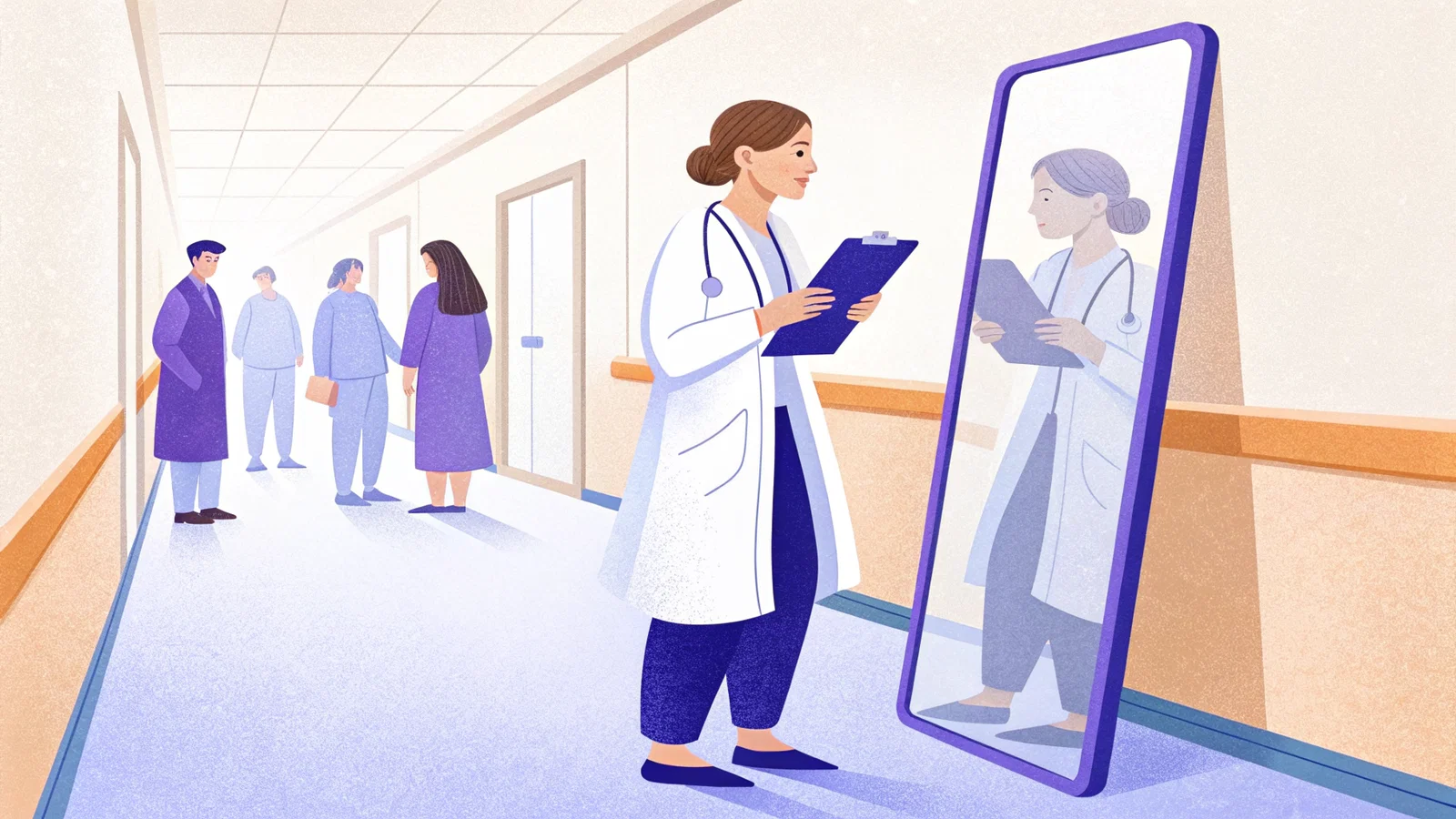
Let me tell you what really happens when you walk into a clinic or show up for sign-out rounds on a second look visit. You think you're being evaluated on your clinical acumen. You think the Program Director is watching you shine. You think if you ask the right question at the right moment, you'll tip the scales in your favor.
You're wrong. And I've watched dozens of applicants torpedo their chances doing exactly that.
This article is for educational purposes only. It is not financial advice, not legal advice, and not tax advice. Figures vary by individual circumstances, so consult a qualified professional before acting.
The Golden Ticket is a Trap: Why the 'Second Look' is a Performance, Not a Test
The myth dies hard. Applicants arrive for second looks believing this is their ace in the hole, a chance to prove they belong. They dress up, they prepare their questions, they rehearse their physical exam maneuvers in the mirror the night before. Then they walk onto the floor and start performing.
Here's the secret no one tells you: Program Directors don't view second looks as auditions. They view them as data-gathering exercises, but the data they're collecting isn't what you think. They're not measuring how well you present a patient. They're measuring how you behave when you think no one important is watching. They're watching what you do in the five minutes between patients. They're watching how you treat the nurse who hands you a chart.
PDs are skeptical of second looks because they've seen too many applicants turn them into theater. The applicant who shows up and immediately tries to run a patient encounter like they're already a resident? That's a red flag. The applicant who shadows silently but asks one genuine, thoughtful question at the end? That's the one who gets remembered.
The real danger is performing for the resident instead of engaging with the patient. You shadow a resident on a second look, and suddenly you're mirroring their mannerisms, their speech patterns, their workflow, because you think that's what integration looks like. It doesn't. It looks like mimicry. And PDs can spot a mimic from across the nursing station.
Shadowing is passive observation. Clinical immersion, the thing you should actually be doing, means engaging with the process of care, the team dynamics, the patient's narrative. It means asking why, not just what. Most applicants on second looks are so focused on looking clinically sharp that they forget to be curious. That's the trap.
Sign-Out Days: The 'Fly on the Wall' Reality
Sign-out days are chaos. Let me paint the picture for you.
It's 6:45 AM. The overnight resident is exhausted, running on caffeine and residual adrenaline. They're handing off fifteen patients to the day team in a conference room that smells like stale coffee and recycled air. The attending is half-listening, half-checking their phone. Two residents are interrupting each other. The intern is frantically writing notes. And you, the applicant on a second look, are standing in the corner trying to look like you belong.
You don't. And that's okay. But you think you need to look busy, so you start taking notes. You write down patient names. You nod thoughtfully when someone mentions a lab value. You lean forward when the attending asks a question. You're performing the role of "engaged learner" without actually being engaged.
Here's what's really happening: you've become a glorified scribe. You're transcribing information you don't fully understand, in a context you can't possibly grasp after thirty minutes of exposure, and you're doing it to look like you're participating. The residents aren't impressed. The attending isn't watching. The PD, if they're even there, is watching the team function, not you.
The sign-out environment is not controlled. It's not designed for your evaluation. It's designed to transfer critical patient information under time pressure. When you insert yourself into that environment trying to demonstrate competence, you're not adding value, you're adding noise. The resident who's already stressed about getting sign-out done before morning rounds doesn't need you asking a clarifying question about the patient with the rising creatinine. They need you to shut up and observe.
The "Sign-Out Trap" is this: you try to look busy when you're actually just watching. And everyone in the room knows it. The residents exchange glances. The attending makes a mental note. The PD hears about it later: "That applicant kept interrupting sign-out to ask questions." You weren't interrupting, you were trying to participate. But perception is reality, and in this environment, the perception is that you don't understand your role.
The Resident's Shadow: You Are Being Evaluated on the Team, Not You
Here's a truth that will sting a little: when you shadow a resident on a second look, you inherit their reputation. At least for that day.
If the resident is disorganized, if their notes are late, their orders are pending, their patients are calling out for them, you look disorganized by association. The attending walks into a room where the resident is fumbling through a handoff and you're standing behind them with your blank clipboard, and the attending doesn't see "eager applicant." They see "another body in an already dysfunctional team."
If the resident is curt with patients, you look curt. If the resident is dismissive of the nurse, you look dismissive. You're in their shadow, and their behavior colors how every observer in that environment perceives you. I've seen outstanding applicants get lukewarm feedback because they happened to shadow the one resident on the team who was having a terrible week.
And then there's the applicant who tries to fix it. The one who sees the resident struggling and steps in to help, reorganizing the task list, suggesting a workflow improvement, offering to call a consult. This applicant thinks they're demonstrating initiative. What they're actually demonstrating is arrogance.
You don't know this team. You don't know the resident's style, the attending's preferences, the hospital's systems. You've been here for two hours. When you try to "help" by restructuring the resident's approach, you're telling the resident, and anyone watching, that you think you know better than someone who's been doing this for months. That's not initiative. That's a red flag the size of a hospital banner.
The best move when the resident is struggling? Be quietly helpful. Offer to grab a chart. Hold the computer so the resident can type. Ask, "Is there anything I can do to help right now?", and if the answer is no, step back. That shows emotional intelligence. That shows you understand team dynamics. That's what PDs are actually looking for.
The Tired Eyes Factor: Why You Miss the Subtle Clues
By the time you're on a second look, you're exhausted. Maybe not physically, though morning sign-out after a flight into town the night before is brutal, but cognitively. You've been interviewing for weeks. You've been "on" for days. Your brain is saturated with program comparisons, rank list calculations, and the low-grade anxiety of wondering where you'll end up.
That cognitive load is your enemy on a second look. You're so consumed with performing well that you miss the things that actually matter.
You miss the non-verbal cues. The attending who pauses slightly too long after you answer a question. The resident who glances at you when the patient asks something you should know. The PD who's standing in the hallway, not watching you examine a patient, but watching how you interact with the charge nurse on your way to the exam room.
Those are the moments that matter. And you miss them because you're busy preparing your next question.
The "Second Look" panic is real. Applicants feel pressure to find something to say, something to ask, something to demonstrate they're engaged. So they ask questions they don't actually understand. "Why did you choose that antibiotic?" when they don't know the resistance patterns. "What's the differential here?" when they haven't read the chart. These questions don't demonstrate curiosity, they demonstrate desperation.
Fatigue makes you perform instead of absorb. You stop being a sponge and start being a parrot. And everyone in the room can hear the difference.
The Pivot: What to Do Instead of a Fake Second Look
Stop performing. That's the whole pivot. But let me break it down because the devil is in the details.
When you show up for a second look on a clinic or sign-out day, your goal isn't to demonstrate that you're clinically ready. Your goal is to demonstrate that you understand how teams work, how patients experience care, and how you fit into that ecosystem.
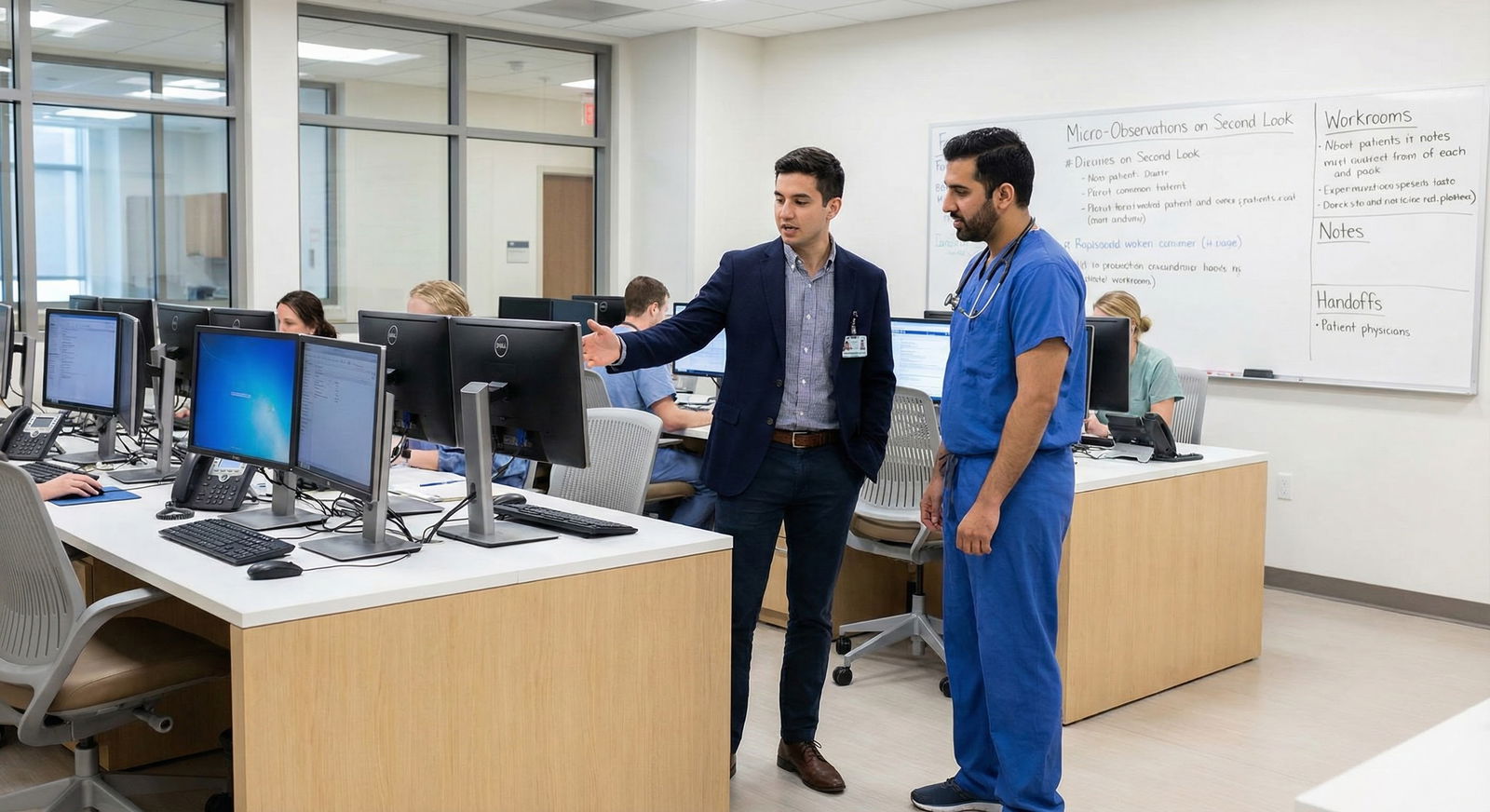
Focus on the sign-out itself. Instead of trying to absorb patient details you'll forget by lunch, ask about the process. "How do you decide what gets handed off first?" "What's the most common thing that gets missed in sign-out?" "How has your sign-out process changed since you started here?" These questions show you're thinking about systems, not just cases. PDs love that. It's the difference between a clinician and a technician.
Engage with the patient, but on their terms. When you're in a room with a patient, stop looking at the computer. Stop trying to review labs. Listen to the narrative. The patient will tell you more in two minutes of conversation than the chart will in twenty. And when you leave the room, instead of offering a slick differential, say: "That patient's main concern isn't their creatinine, it's whether they'll be home for their granddaughter's birthday." That shows you heard the person, not just the data.
Be the sponge. Ask about the process of care: "How does this team handle disagreements about the plan?" "What happens when a patient wants to leave AMA?" "How do you balance teaching with service?" These are questions that show you're thinking about the real work of residency, not the textbook version.
Don't try to prove you belong. Try to understand how this program works. The paradox is that the less you try to impress, the more impressive you become.
Conclusion: Be the Doctor, Not the Actor
Authenticity beats performance every single time. I've sat in the meetings where applicants are discussed. I've heard PDs say, "That applicant was trying too hard" more times than I've heard them say, "That applicant wasn't impressive enough."
You can't fake clinical intuition. You can't rehearse genuine curiosity. You can't perform your way into a residency spot, but you can observe, absorb, and engage your way into one.
The real interview isn't in the exam room where you're showing off your physical exam skills. It's in the hallway, walking between rooms, talking about why this patient matters and what you're actually thinking. It's in the two-minute conversation with the resident about how they manage their list. It's in the moment you choose to listen instead of speak.
Be the doctor you're going to become. Not the actor you think they want to see.

Key Takeaways:
- Second looks are often a distraction that reveals you're more interested in "looking good" than "learning good."
- On sign-out days, you're being graded on how well you integrate into a chaotic team, not how well you perform a scripted exam.
- PDs can spot a mimic from a mile away; authenticity is your only defense.
- Shift your focus from "what do I say next?" to "how does this patient feel?" to truly impress.