

It’s 11:47 pm. You’re staring at a job posting for a “full-time, permanent attending” role. Stable group. Good hospital. Decent pay. And all you can think is:
“Are they going to see that year of locums and toss my CV straight into the trash?”
You picture some stone-faced department chief scrolling, pausing at “Locum Tenens,” raising an eyebrow, and saying that horrible word that lives rent-free in your head: “Commitment issues.”
Let’s pull this apart. Because the fear is real, but the story in your head is… not the whole story.
First: Locums Is Not The Scarlet Letter You Think It Is
I’ll be blunt: if you imagine “LOCUMS” on your CV as a giant red flag screaming “problem doctor,” you’re about 10 years behind how the market actually works.
Are there people who are biased against locums-heavy CVs? Yes. Absolutely. I’ve heard it in hiring meetings:
- “Is this person going to stick around?”
- “Are they just chasing rates?”
- “What’s the story with all the short stints?”
That happens.
But I’ve heard just as many department chiefs say things like:
- “They’ve seen three different EMR systems; that’s a plus.”
- “They’re comfortable jumping into chaos. I like that.”
- “They’ve covered critical access and big academic centers – that’s real experience.”
The difference? How your locums is framed, how long it went on, and what else your CV shows.
Locums itself is not the problem. Unexplained, chaotic-looking locums is.
How Hiring Committees Actually Read A Locums CV
Most physicians imagine hiring committees sitting around doing literary analysis of their CV. That’s not what happens. People skim. Fast.
Here’s what they’re actually doing when they see locums:
- Skim your timeline for red flags
- Try to understand your “story” quickly
- Decide if you’re worth a phone call
They’re not trying to psychoanalyze you. They’re trying to answer three questions in under 60 seconds:
- Are you competent and safe?
- Are you going to stay long enough to be worth onboarding?
- Are you going to be a pain?
That’s it. Locums affects how they think about #2 and a little bit about #3.
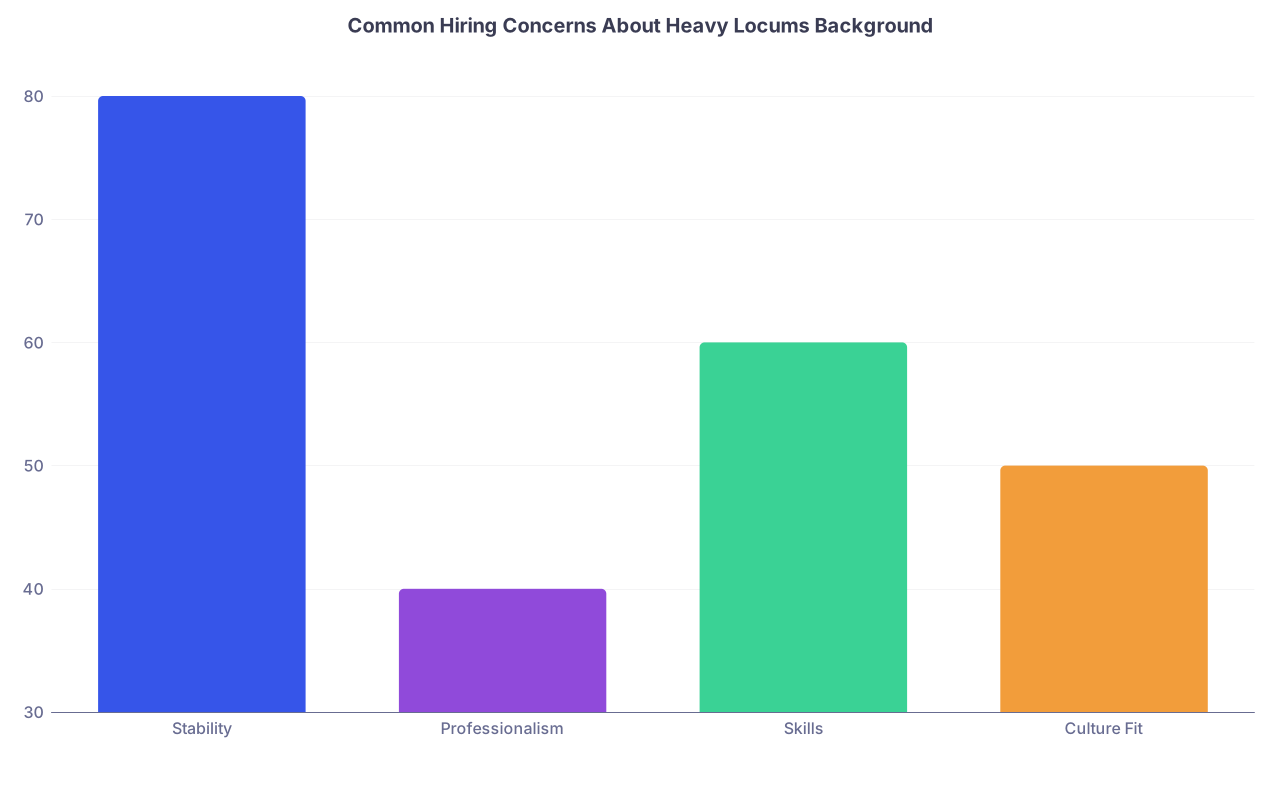
| Category | Value |
|---|---|
| Stability | 80 |
| Professionalism | 40 |
| Skills | 60 |
| Culture Fit | 50 |
Notice what’s not on there? “Locums = automatically reject.” Because that’s not reality.
The real mental calculation is more like: “Does this pattern make sense for someone in their situation… or does it look like they’re running from something?”
The Patterns That Worry Committees (And The Ones That Don’t)
Here’s where your worst-case thinking kicks in: “I did ANY locums, so I’m screwed.” No. The pattern matters more than the label.
Patterns that don’t usually scare people
1–2 years of locums right after residency or fellowship
Common story: “I wanted to explore different practice settings / be near family / pay off loans / follow my partner’s job while we figured out where to settle.”
Most chairs have seen this a hundred times. It doesn’t shock anyone.Locums in between two permanent jobs with a clear reason
Example: you moved states, your spouse matched somewhere new, your first job turned toxic and you left, then did locums while finding a better fit.
That reads like survival and practicality, not instability.Ongoing small locums work alongside a main job
Moonlighting-ish: “0.8 FTE at hospital A, occasional weekends at rural sites.”
That can even be a plus: shows you’re adaptable and can handle different environments.
Patterns that do trigger concern
- Years and years of nothing but short locums gigs with no stable anchor
- Multiple very short stints (3–6 months) where you left without any obvious explanation
- A CV where every role is through a different agency, different state, different practice type, with no narrative
Do people automatically reject you for that? Not always. But they will want an explanation. And if your explanation sounds fuzzy or defensive, they start imagining all the worst-case scenarios you’re already torturing yourself with:
- “Did they get pushed out repeatedly?”
- “Are they hard to work with?”
- “Are they impossible to schedule or negotiate with?”
So the real game is: can you control the story before their imagination fills in the blanks?
How To Frame Locums On Your CV So It Doesn’t Scream “Red Flag”
Right now your brain might be whispering, “Maybe I should just bury it. Compress it. Hide the word ‘locums’ and call it ‘independent contractor.’”
Don’t do that. People see right through it, and hiding things looks worse than owning them.
The better move is to label it clearly and show stability inside the chaos.
Example formats that work:
“Locum Tenens Hospitalist – Various Facilities (via [Agency Name])”
Then list: core sites, date range, typical schedule, types of patients.If you had one main site:
“Locum Tenens Emergency Physician – St. Mary’s Hospital, Springfield, IL (via CompHealth)”
With dates that show you were there consistently, not two random shifts.
| Approach | Example |
|---|---|
| Clear + honest | Locum Tenens Hospitalist, 5 community hospitals in MN/WI, 2022–2023 |
| Vague + sketchy | Independent physician contractor, 2022–2023 |
| Shows stability | Primary site: 0.8 FTE equivalent at Mercy General, 10–12 shifts/month |
| Looks chaotic | Multiple short-term clinical assignments, various locations |
If they can look at your locums entry and understand:
- where you mainly practiced
- for how long
- what kind of clinical load you carried
you’ve done your job.
The Stories That Actually Reassure Hiring Committees
This is the part everyone underestimates. Hiring people are not robots. Many of them are exhausted physicians who completely get why someone chose locums for a while.
What reassures them is a story that sounds:
- thoughtful (not random drifting)
- honest (not spin)
- past-tense (you did locums; you’re now ready to commit)
Examples that play very well in interviews:
“I knew I wasn’t sure if I wanted pure inpatient or a mixed model, so I used locums to try both community and larger centers for a year. I learned I really prefer X, which is why I’m applying to roles like yours.”
“My spouse’s fellowship was only two years, so I did locums to stay flexible. Their training is done now, we know we’re staying in this region, and I’m looking for a long-term position.”
“My first job out of residency was a rough fit – RVU pressure, unsafe staffing. I left at 10 months and did locums while I figured out what a healthy practice looked like. I’m a lot clearer now on what I need and what I can give.”
Huge difference between that and: “Yeah, I just sort of did locums because… you know… flexibility.”

Your worst fear is they’ll think, “This person can’t commit.”
What they actually think, if you tell the story well, is: “This person has seen a lot, knows what they want, and might stay because they chose this intentionally.”
When Locums Can Quietly Help Your Application (And You Don’t Realize It)
There are things you get from locums that someone who stayed in one safe academic job for 8 years simply doesn’t have.
Hiring committees notice if you point it out like a normal human and not like a sales brochure.
Things that genuinely impress them:
- You’ve used multiple EMRs and can adapt fast
- You’ve handled resource-poor settings (rural, critical access)
- You’re used to walking into new teams and not falling apart
- You’ve seen different workflows and can bring ideas
- You’re not completely shell-shocked by staffing shortages and chaos
If you’re applying to:
- rural hospitals
- understaffed community sites
- safety-net hospitals
your locums background can actually make you more attractive because it silently says, “I’ve seen worse and I didn’t bolt.”
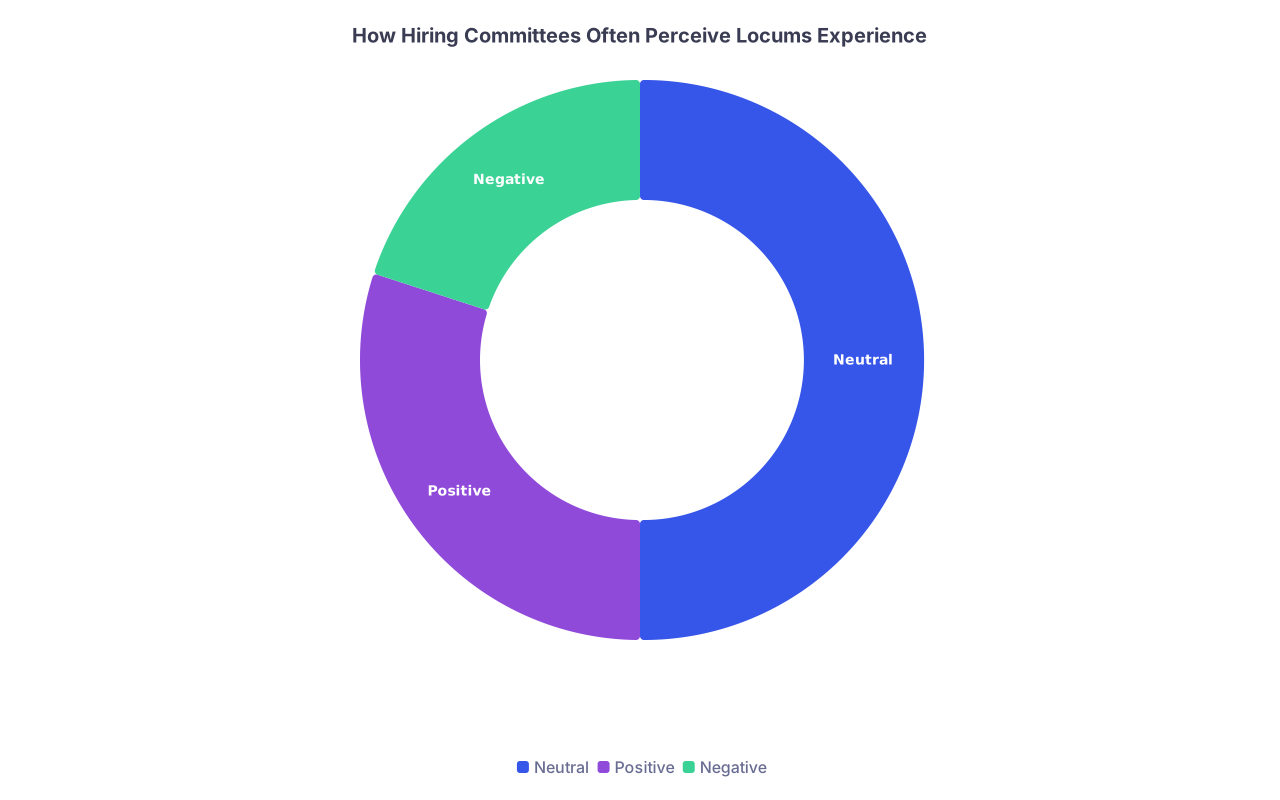
| Category | Value |
|---|---|
| Neutral | 50 |
| Positive | 30 |
| Negative | 20 |
Notice that for a lot of people, it’s neutral by default. Your framing is what pushes it toward positive or negative.
The Scenario You’re Terrified Of vs What Usually Happens
What you’re afraid of:
They see “Locums,” they judge you, they toss your CV, you never hear from them, and you decide you’ve permanently ruined your career before it started.
What actually happens most of the time:
- Someone glances at your locums section
- They think, “Oh, locums for a bit”
- They check your training, board status, any obvious red flags
- If the rest looks good and your story is coherent, you get a screen
Again, the only time I’ve seen real pushback in hiring rooms is when:
- Dates don’t line up (mysterious gaps)
- There are lots of unexplained “3–4 month” roles in different states
- There’s no reference anyone recognizes
If your anxiety is screaming, “They’ll assume the worst,” remember: people who’ve been on these committees have also seen plenty of toxic jobs, sham contracts, and broken systems. Locums doesn’t automatically read as “bad physician.” It often reads as “realistic physician trying to survive the system.”

| Step | Description |
|---|---|
| Step 1 | Review CV |
| Step 2 | Standard review |
| Step 3 | Check timeline |
| Step 4 | Neutral to positive impression |
| Step 5 | Need explanation |
| Step 6 | Invite to screen if rest fits |
| Step 7 | Locums listed? |
| Step 8 | Pattern stable? |
Notice there’s no “Yes → auto reject” branch. Because that’s not usually how this goes.
Red Flags You’re Scared About That Actually Matter Less
You’re probably spiraling about the wrong things.
Things you’re stressing over that usually don’t sink you:
“My locums was through Agency X, not a fancy academic place.”
Committees care more about what you did than which agency brokered it.“I only stayed 8–12 months before moving to another locums site.”
If there’s a clean narrative (contract ended, site closed, moved for family), that’s fine.“I did locums in ‘less prestigious’ hospitals.”
Many hiring docs trained in those exact places. Prestige worship is more of a med student thing.
Things that actually do raise eyebrows:
- You can’t produce a single strong reference from any of your locums sites
- Your malpractice history shows multiple recent claims or non-renewals
- You badmouth every prior place you’ve worked when asked about your history
Locums is rarely the real problem. It’s what it might be hiding that worries people. If it’s hiding nothing, stop acting like it’s a dirty secret.

When You Might Want To Pump The Brakes On More Locums
If you’re reading this and realizing your whole post-residency life has been hopping from one 3-month locums contract to the next, across four states, with no clear through-line… yeah, hiring people will want answers.
Do you need to panic? No. But you should probably:
- Stabilize your story: pick a region or a main site and stick it out for a bit
- Start collecting strong references from recent supervisors
- Get very clear, for yourself, on what you actually want long-term
Because if you don’t know your own story, you absolutely won’t be able to sell it to a hiring committee.
How To Talk About Locums In An Interview Without Sounding Defensive
Your instinct may be to over-explain or apologize. That makes people suspicious.
Aim for: calm, brief, confident, and done.
Something like:
“I chose locums after residency because I wanted to try different practice settings and keep some flexibility while my partner finished training. I worked mostly at [X types of hospitals], carrying a full clinical load. It was a good experience, but now that our situation is stable, I’m ready for a long-term position in [region/type of practice], which is why your job caught my eye.”
Then stop talking. Don’t keep re-defending the choice unless they ask.
If they press more, you can add specific skills or perspective you gained, but don’t turn it into a TED Talk on “the philosophy of locums.” They’re trying to see if:
- you own the decision
- you’ve moved past the purely transient phase
- you’re likely to stay if they hire you
Answer those questions without sounding like you’re giving a confession, and you’re fine.

The Tiny Detail That Quietly Helps: Your Cover Letter
You’re probably obsessing over your CV format, but the place to defuse most of your locums anxiety is actually the cover letter or email.
One short paragraph can completely change how they read your CV:
“Following residency, I worked as a locum tenens hospitalist for 18 months in several community hospitals across [region]. This allowed me to gain experience with different practice environments while my spouse completed fellowship. We’ve now settled in [city/region], and I’m pursuing a long-term position where I can invest in one team and community.”
Suddenly those scattered dates look like someone with a plan, not someone drifting.
FAQ (Read This Before You Rewrite Your Entire CV At 2 am)
1. Should I hide the word “locums” and just call everything “attending physician”?
No. It looks sneaky, and people who hire physicians see this trick all the time. You don’t have to scream “LOCUM TENENS” in bold, but you should clearly indicate these were contract roles. If they discover later that you disguised it, the trust hit is way worse than any bias against locums.
2. Is more than 2–3 years of only locums going to ruin my chances at a permanent job?
It won’t ruin them, but it will require a stronger explanation. If you’ve done 4–5 years of nothing but locums, expect people to ask, “Why now?” You need a believable reason for deciding to settle down at this point: family, burnout from travel, desire for continuity, leadership, teaching, etc. It’s not disqualifying, but it’s a real conversation you’ll have to be ready for.
3. Do academic centers look down on locums more than community hospitals?
Some do, some don’t. I’ve seen ivory-tower attitudes where anything non-linear is side-eyed. I’ve also seen academic chiefs who love that someone has real-world, non-academic experience. The key is matching your story to the job. If you want academia, emphasize teaching, QI projects, varied patient populations, and how locums broadened your perspective. If you want community, emphasize adaptability and readiness to work.
4. I left a toxic first job and did locums right after. Is that a huge red flag?
It can actually be a green flag if you handle it well. Lots of physicians end up in miserable, unsafe, or misleading first jobs. Leaving a bad situation and using locums as a bridge is normal. The danger is sounding bitter or evasive. Keep it simple: “The practice wasn’t a good fit because of X (keep it professional, not trash-talk), so I decided to move on and did locums while figuring out the right environment. That’s taught me I’m looking for Y and Z, which your group offers.” That reads as self-aware, not unstable.
Open your CV right now and look at your locums entries. Ask yourself: “If a stranger read only this section, would they understand where I was, for how long, and why?” If the answer is no, fix that one thing today. The experience itself isn’t killing your chances. The silence around it is.


