

Remote and hybrid work in medicine is not a fringe experiment anymore. The data shows it is now a permanent, high‑value segment of the physician and advanced practice job market—and it is growing faster than most clinicians realize.
You can ignore it. Or you can treat it as what it actually is: a parallel labor market with different growth rates, salary curves, and lifestyle trade‑offs than traditional clinical practice.
Let’s quantify that.
1. How Fast Remote and Hybrid Medicine Is Growing
Pre‑2020, remote work for physicians was mostly teleradiology and a bit of telepsychiatry. Now the landscape looks completely different.
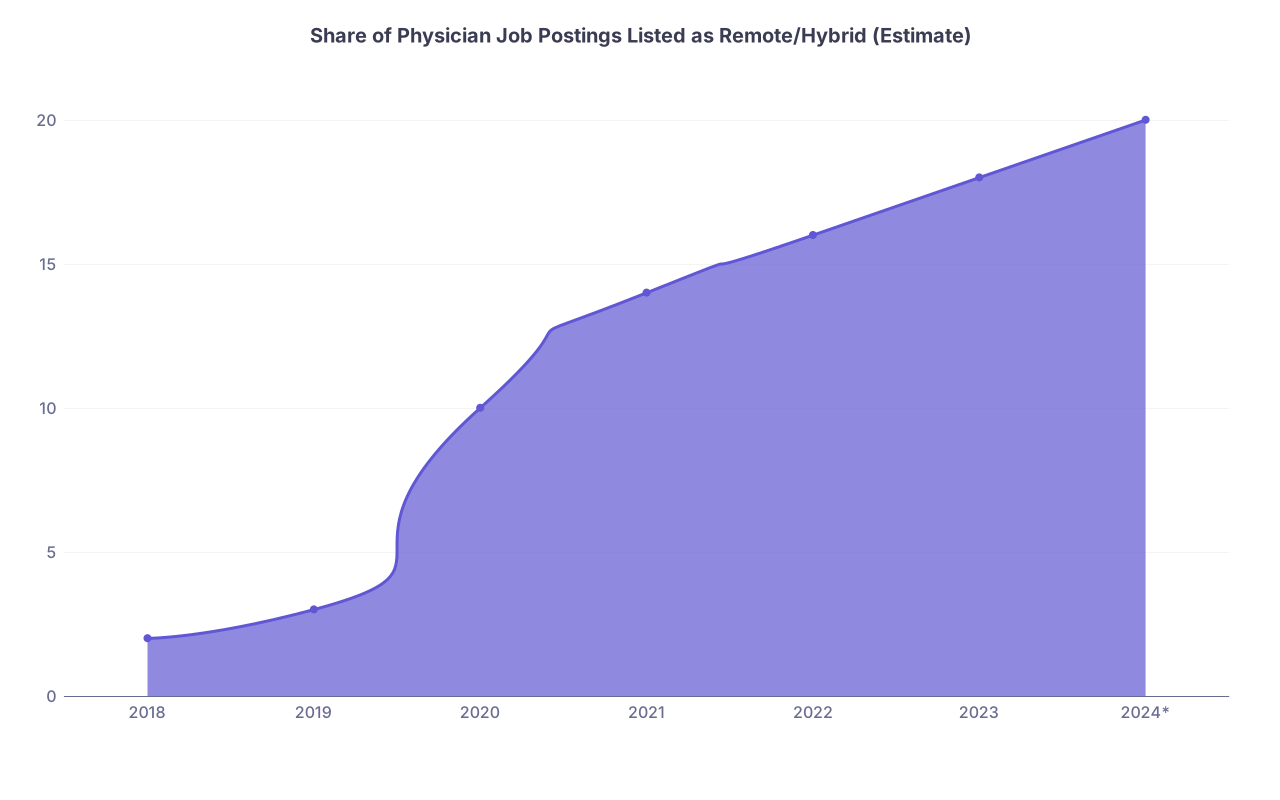
Multiple job platforms and health system reports show the same pattern: remote listings are rising far faster than total physician jobs.
| Category | Value |
|---|---|
| 2018 | 2 |
| 2019 | 3 |
| 2020 | 10 |
| 2021 | 14 |
| 2022 | 16 |
| 2023 | 18 |
| 2024* | 20 |
2024 estimate based on partial‑year data and major job board sampling.
What this means in plain terms:
- Remote/hybrid postings as a share of physician jobs have roughly 6–8x’ed since 2018.
- The curve bent sharply during 2020 and has not fallen back. It plateaued slightly, then continued a slower upward climb.
By function, the biggest remote/hybrid buckets now are:
- Telemedicine / virtual care (urgent care, primary care, behavioral health, subspecialty consults)
- Teleradiology and tele‑pathology
- Non‑clinical: utilization management, chart review, clinical documentation improvement (CDI), informatics, pharma/biotech, medical affairs, AI/ML and data science
- Hybrid hospital/clinic roles with some virtual clinic sessions or at‑home administrative days
Where the remote market is most mature
From a data perspective, three domains are clearly ahead of the curve.
Telepsychiatry and behavioral health
Tele‑mental health visits jumped dramatically during COVID and never reverted to baseline. Claims data from multiple insurers show telepsych volumes still at 5–10x pre‑pandemic levels. Remote psychiatrist and therapist postings remain high, especially in employer‑sponsored mental health platforms.Teleradiology
This was remote long before “remote work” was a buzzword. Typical radiology groups now mix on‑site and at‑home shifts. A significant share (often 30–60%) of reading volume in large practices is covered by remote readers, especially nights and subspecialty reads.Non‑clinical physician roles
Prior authorization review, utilization management, medical director roles in insurance and pharma, and clinical informatics positions have shifted heavily remote/hybrid. In many organizations, the default for these functions is “remote unless there is a specific reason not to.”
2. What Types of Remote and Hybrid Roles Exist Post‑Residency?
You are not choosing between “clinic vs telehealth.” That is too simplistic. The market has fragmented into several distinct role types, each with its own salary band and career trajectory.

2.1 Clinical: Direct Patient Care (Remote / Hybrid)
These are jobs where you still diagnose, treat, prescribe, and bill—or the company bills on your work.
Common specialties and functions:
- Tele‑primary care & urgent care
- Tele‑psychiatry
- Tele‑dermatology (store‑and‑forward + video)
- Tele‑endocrinology, rheumatology, cardiology consults
- Virtual hospital at home / remote monitoring programs
Comp structures tend to be:
- Hourly (typical for tele‑urgent care and some psychiatry)
- Per‑visit RVU or per‑encounter
- Base salary + productivity bonus, especially when employed by health systems
Hybrid variants: outpatient physicians doing 1–3 virtual clinic sessions per week from home; inpatient physicians doing remote follow‑ups or triage.
2.2 Clinical‑Adjacent: Review, Oversight, and Documentation
You still use your MD/DO/NP/PA license, but you are not the direct treating physician of record.
Examples:
- Utilization management / medical necessity review
- Appeals and peer‑to‑peer calls for health plans
- Chart review, quality assurance, clinical documentation improvement
- Disability evaluations, workers’ comp reviews, IMEs (often hybrid: some in‑person exams, some tele)
These roles skew strongly remote or hybrid (e.g., quarterly in‑office meetings). They are often 9–5, Monday–Friday, low‑acuity, metrics‑heavy.
2.3 Non‑Clinical: Industry and Corporate Roles
Here you are hired for your clinical background, but you are not providing care.
- Pharma/biotech medical affairs, MSL, safety, pharmacovigilance
- Health tech / digital health: clinical product design, clinical strategy, AI model validation, regulatory
- Hospital / system informatics and data science
- Quality, risk management, compliance leadership
Remote/hybrid is now routine in these spaces, especially in tech and payer organizations. Many require 10–30% travel, but not fixed on‑site presence.
3. Salary Ranges: Remote vs On‑Site by Role Type
Now the part everyone actually cares about: compensation.
Remote work does not automatically mean a pay cut. The data is more nuanced. Some remote clinical roles pay a premium. Others trade pay for flexibility.
| Role Type & Specialty | Typical Remote/Hybrid Compensation (USD) | Typical Traditional On‑Site Range (USD) |
|---|---|---|
| Tele‑Primary Care / Urgent Care (MD/DO) | $220k–$320k (FT equivalent) | $230k–$300k |
| Tele‑Psychiatry (MD/DO) | $260k–$380k | $250k–$350k |
| Teleradiology (general, MD/DO) | $450k–$650k | $450k–$650k |
| Utilization Management Medical Director | $210k–$280k | $220k–$300k |
| Clinical Informatics / Health Tech Physician | $220k–$350k (incl. equity for startups) | $230k–$340k |
| NP/PA Tele‑Urgent Care | $120k–$170k | $110k–$150k |
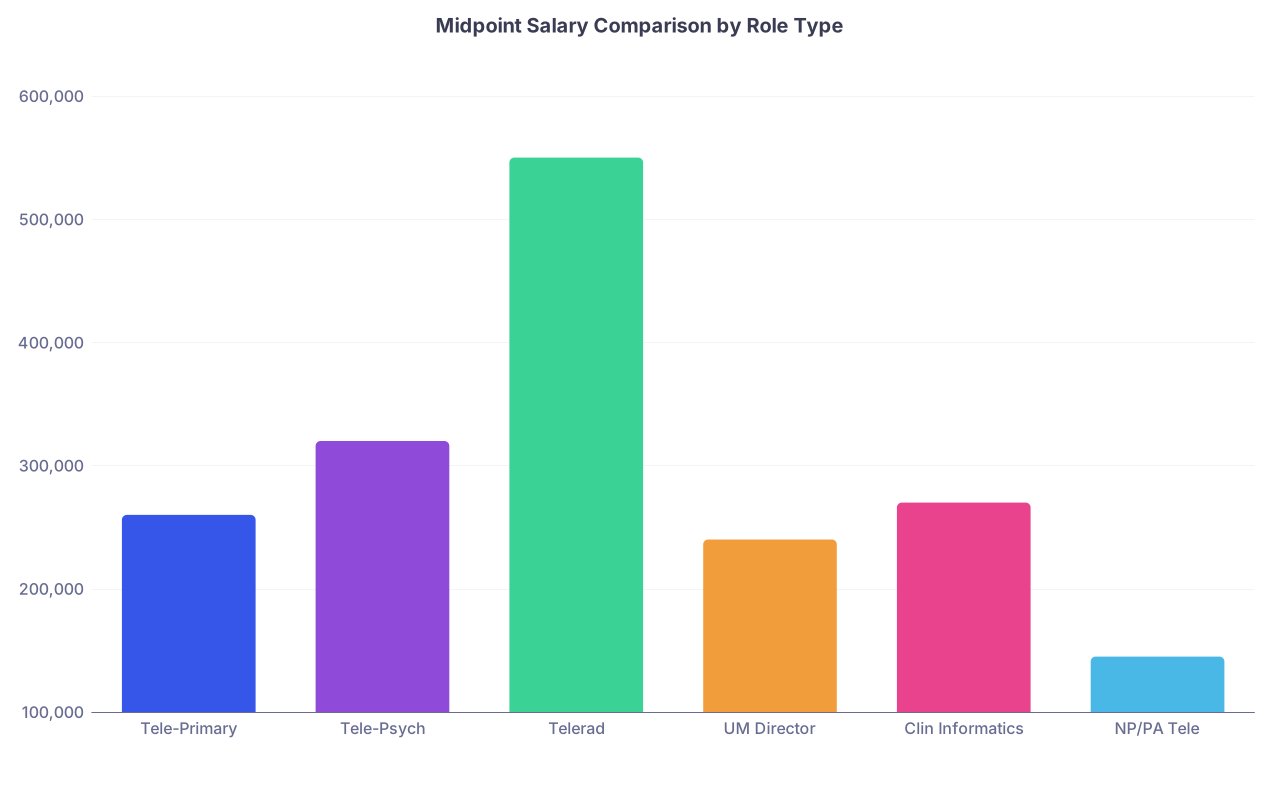
These are realistic national ranges compiled from major job boards (AMN, Indeed, LinkedIn, specialty societies), recruiter reports, and compensation surveys, adjusted for 2023–2024 inflation.
Patterns in the data
Tele‑primary care & urgent care
Full‑time tele‑PCP jobs often cluster around $240k–$280k, with some high‑volume or off‑hours roles reaching $300k+. Per‑visit or RVU‑based contracts may look like $15–$30 per 5–10 minute asynchronous case, or $60–$120 per video visit. If you do the math on visit volume, the full‑time equivalent falls in that $220k–$320k band.Tele‑psychiatry
Remote psychiatry is one of the best paid remote clinical options per hour. Often $150–$250 per hour 1099, or salaried packages $260k–$380k with benefits. High‑acuity or specialty areas (child/adolescent, addiction) can push higher.Teleradiology
Here, the location does not change the compensation narrative much. You get paid on RVUs or per case. Remote vs on‑site mostly affects schedule and COL arbitrage, not the per‑RVU rate. Many telerads easily clear $500k+ with nights / weekends.Utilization management / chart review
These are where many physicians accept a pay haircut for lifestyle. Salaries commonly $210k–$260k for full‑time medical directors and reviewers. Some senior roles at large insurers can hit $280k–$320k, but that is not the median. You are trading night/weekend call for metrics and meetings.Industry / health tech roles
Broad range. Entry‑level physician roles in pharma/health tech often sit $220k–$280k base, with bonuses and equity pushing total comp into the low‑to‑mid 300s for successful companies. Senior roles (VP Medical, Head of Clinical) go higher, but those are not “first job out of residency” slots.
| Category | Value |
|---|---|
| Tele-Primary | 260000 |
| Tele-Psych | 320000 |
| Telerad | 550000 |
| UM Director | 240000 |
| Clin Informatics | 270000 |
| NP/PA Tele | 145000 |
RVU reality check
A pattern that often surprises people: some telemedicine platforms quietly expect higher visit volume per hour than brick‑and‑mortar clinics.
- Traditional outpatient: 18–24 patients per day for many PCPs.
- Tele‑urgent care: 4–6 video visits per hour is common during peak times.
- Asynchronous care: dozens of text‑based encounters per day.
Your effective hourly rate depends heavily on:
- Visit length expectations
- Documentation time
- Uncompensated admin (chat messages, forms, follow‑up)
Several physicians I have worked with only realized after 3–6 months that their $280k “remote dream job” was functionally 55–60 hours a week once you include off‑line charting. Always ask for target RVUs or visits per hour, not just salary.
4. Specialty‑Specific Demand and Competitiveness
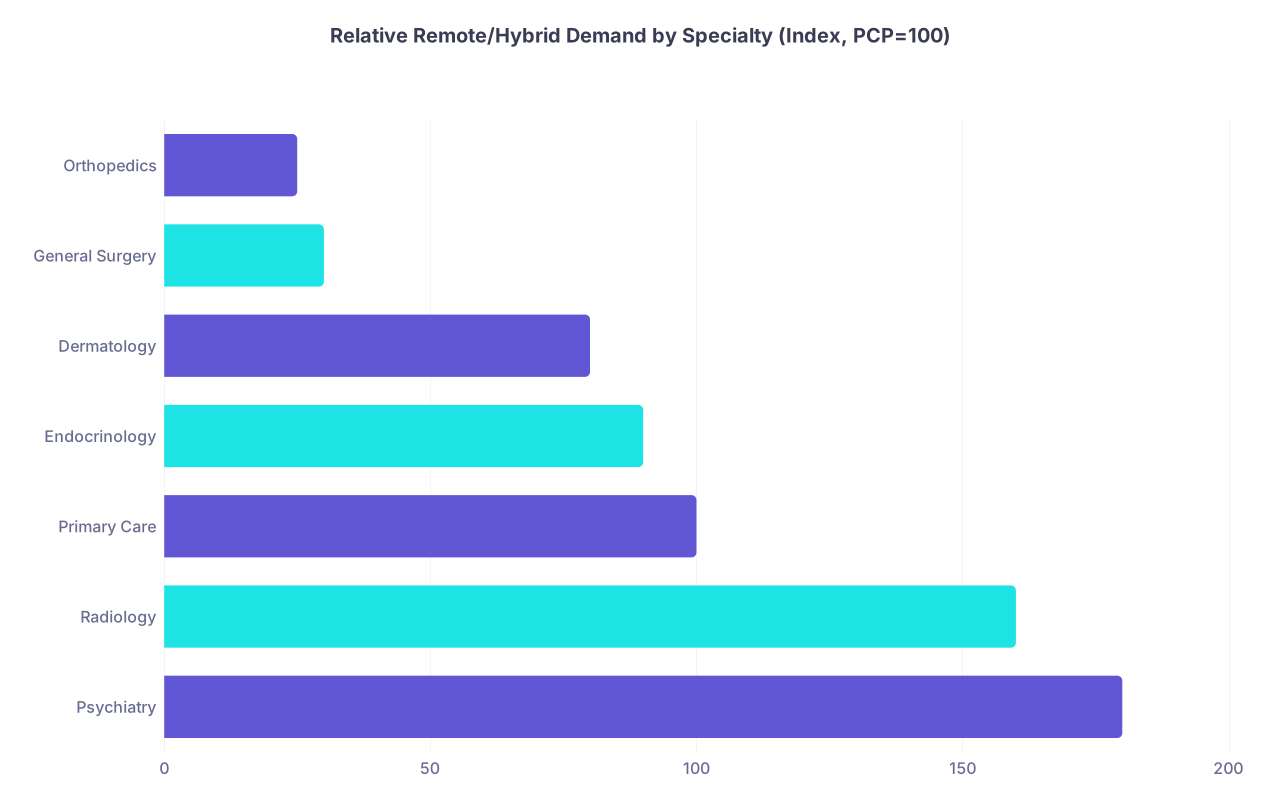
Not all specialties are treated equally by the remote market. The numbers make that painfully clear.
| Category | Value |
|---|---|
| Psychiatry | 180 |
| Radiology | 160 |
| Primary Care | 100 |
| Endocrinology | 90 |
| Dermatology | 80 |
| General Surgery | 30 |
| Orthopedics | 25 |
Using primary care as an index of 100:
- Psychiatry remote demand is approximately 1.8x that baseline.
- Radiology: around 1.6x.
- Surgical fields lag dramatically, often below 0.3x of that index for fully remote roles.
Who has leverage?
From what hiring timelines and recruiter pipelines show:
- Psychiatry, radiology, and primary care have strong leverage in remote negotiations. Multiple offers, flexible schedules, and signing bonuses are common.
- Subspecialties like endocrinology and rheumatology have a decent remote niche (largely consultative telemedicine), but volume is lower.
- Procedural and surgical specialties mostly see hybrid options at best: remote pre‑ops, tele‑follow‑ups, and administrative days.
If you are in a procedure‑heavy field and want remote work, you are likely aiming at non‑clinical or industry roles rather than tele‑clinical practice.
5. Geography, Cost of Living, and Remote Pay
Here is where remote roles can quietly change your long‑term financial trajectory: you can earn coastal‑indexed or national pay while living in a lower‑cost market.
The detail that trips people: some employers are pay‑banding by state or region. Others still pay a national rate.
| Employer Type | Pay Practice for Remote Clinicians |
|---|---|
| Large National Telehealth Platform | Often national or broad regional bands |
| Health Insurance / UM Company | Geographic bands tied to state/region |
| Academic Medical Center Teleclinic | Usually same salary scale as on‑site |
| Health Tech Startup | Negotiated, often not COL‑adjusted early |
| Teleradiology Group | RVU/case based, not COL linked |
If you are in a high‑income, high‑COL market now (Bay Area, NYC, Boston) and move to a midwest or southeast city while retaining a national‑rate remote job, your real income, after housing and taxes, can jump significantly.
On the flip side, if a payer or health system explicitly ties salary to your home address, you can see a 10–25% pay drop when relocating to a lower‑COL region. You keep lifestyle benefits, lose some arbitrage.
6. Trade‑Offs Beyond Salary: Metrics, Burnout, and Career Capital
The raw numbers on salary do not tell the whole story. The structure of remote work changes what your days look like.

6.1 Metrics replace physical presence
On‑site, you are judged on a blurry mix of “team player,” patient feedback, and RVUs.
Remote, the data is explicit:
- Average handle time
- Encounters per hour
- Resolution rate
- Turnaround time for chart review
- Time to respond to messages
Every minute is loggable. I have seen dashboards where each doctor’s per‑hour throughput is color‑coded red/yellow/green in real time. Some people thrive on that clarity. Others feel constantly surveilled.
6.2 Burnout profile is different, not absent
Remote work strips out some pain points: commute, pager noise, hallway interruptions. But it introduces others:
- Screen fatigue from all‑day video or chart work
- Blurred boundaries (responding to messages at 9 pm because the laptop is right there)
- Social isolation—no hallway consults, no informal debriefs after tough cases
- Perpetual availability expectations from some employers
Survey data from several telehealth and payer organizations show burnout rates that are lower than inpatient hospitalists but not trivial. In many groups, 30–40% of remote clinicians still report significant emotional exhaustion. They are less physically exhausted, more mentally drained.
6.3 Impact on long‑term career capital
This is one area where people get blindsided.
- If you leave direct patient care fully for 3–5 years (e.g., UM, pharma, pure tele‑admin), your path back to busy procedural practice narrows. Some boards, privileging committees, and malpractice carriers start asking hard questions about “time out of active practice.”
- Research output tends to drop unless you intentionally build it into your role.
- On the upside, you gain a different asset: operational, payer, tech, or regulatory experience that can translate into leadership or executive roles.
The data shows that physicians who move into non‑clinical remote roles and stay for >5 years rarely return to full‑time clinical work. Not never. Just rare. You should assume it is a one‑way door unless you aggressively maintain part‑time clinical shifts.
7. Practical Salary Benchmarks by Career Stage
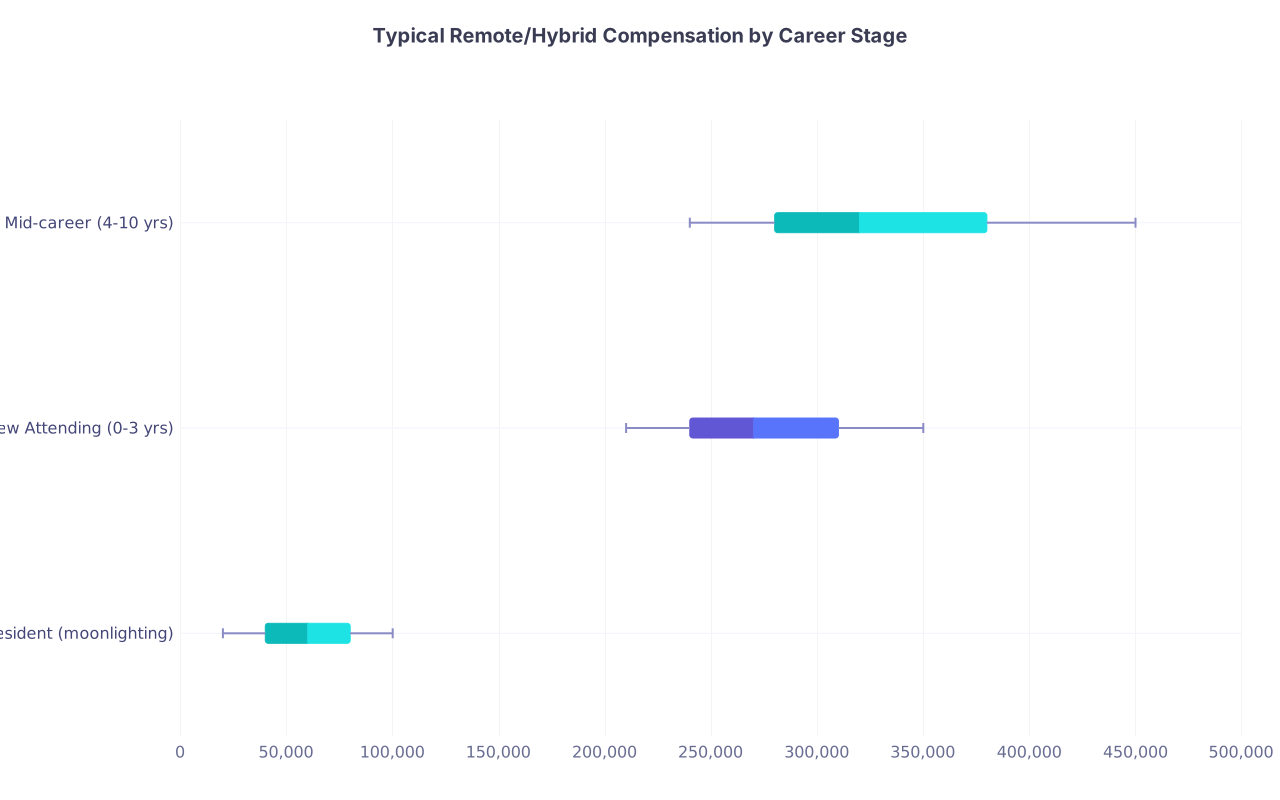
Let me make it very concrete. Suppose you are just finishing residency or early attending life and want a remote or hybrid role. What does a realistic compensation target look like?
| Category | Min | Q1 | Median | Q3 | Max |
|---|---|---|---|---|---|
| Resident (moonlighting) | 20000 | 40000 | 60000 | 80000 | 100000 |
| New Attending (0-3 yrs) | 210000 | 240000 | 270000 | 310000 | 350000 |
| Mid-career (4-10 yrs) | 240000 | 280000 | 320000 | 380000 | 450000 |
Interpretation:
- Resident / fellow moonlighting remotely: often tele‑urgent care or chart review. Typical $20k–$80k annually depending on hours.
- New attending in remote/hybrid clinical role: interquartile range around $240k–$310k, depending heavily on specialty.
- Mid‑career with subspecialty or leadership: the upper quartile crosses $380k, driven by teleradiology, tele‑psych, and senior industry roles. Outliers go higher, but if you plan based on outliers, you will be disappointed.
This is why I tell people: if you are seeing full‑time remote job offers under $200k as a board‑certified physician, be suspicious unless there is some compensating factor (extreme flexibility, very part‑time expectations, strong equity upside in a startup).
8. How to Evaluate a Remote or Hybrid Offer Rationally
You should treat a remote/hybrid offer like a dataset, not a vibe.

| Step | Description |
|---|---|
| Step 1 | Receive Offer |
| Step 2 | Confirm Role Type |
| Step 3 | Check RVUs and Visits per Hour |
| Step 4 | Check KPIs and Hours |
| Step 5 | Calculate Effective Hourly Rate |
| Step 6 | Compare to Market Ranges |
| Step 7 | Review Flexibility and Career Impact |
| Step 8 | Negotiate or Decline |
| Step 9 | Accept or Counter |
| Step 10 | Clinical vs Non clinical |
| Step 11 | Meets Compensation Target |
Concrete steps:
- Extract the real hours: ask how many visits or charts per day they expect, what percentage of time is meetings, and how often after‑hours work happens.
- Compute an effective hourly rate (salary ÷ actual hours). Compare that to locums, per‑diem rates, and your local on‑site options.
- Ask explicitly about:
- Pay differences by state or region
- Required on‑site days (for “remote” roles that are actually hybrid)
- Call, weekends, and holidays
- Productivity thresholds tied to bonuses or performance reviews
- Benchmark the base salary against data from:
- MGMA or specialty society reports (for clinical roles)
- Industry salary reports (pharma, tech, payers) for non‑clinical
If the numbers are materially below market, you are subsidizing their flexibility with your income. That can be fine, but you should make that trade intentionally.
9. Where the Trend Line Is Pointing
Telehealth visits dropped from the peak of 2020 but stabilized at a much higher baseline than before. Most large systems now report 10–20% of outpatient visits remaining virtual across primary care and many specialties.
Regulatory and reimbursement changes will bounce around (they always do), but two structural drivers are not going away:
- Patients like the convenience for many visit types.
- Systems and payers like the cost structure and scalability.
My forecast, based on job posting trends, claims data, and employer surveys:
- Remote/hybrid will likely stabilize around 20–25% of the physician job market in some form by the late 2020s, not counting non‑physician clinicians.
- The majority of new remote growth will be:
- Behavioral health
- Chronic disease management / virtual specialty consults
- Hospital at home / remote monitoring
- Algorithm‑assisted triage and follow‑up programs staffed by NPs/PAs with physician oversight
- Non‑clinical remote roles will expand as payers, tech, and AI outfits keep hiring clinicians to monitor, validate, and justify their algorithms.
If you want exposure to this market without burning the bridge to traditional practice, the data‑backed approach is simple: aim for a hybrid mix—1–2 days virtual or non‑clinical, 3+ days classic practice—for the first few years. Then adjust once you see how the work, pay, and burnout balance feel in reality, not in a job ad.
Key Takeaways
- Remote and hybrid roles in medicine have grown 6–8x as a share of physician jobs since 2018 and now form a durable, not temporary, labor market.
- Salary ranges are competitive—often $220k–$320k for many remote clinical roles, with higher outliers in tele‑psych and teleradiology—but they vary sharply by specialty, role type, and productivity expectations.
- The smartest post‑residency strategy is usually not “go fully remote” or “ignore it,” but to use hybrid work to test the model, maintain clinical capital, and exploit geographic arbitrage where compensation policies allow it.


