

38% of physicians now plan to change jobs within 2 years, yet over 60% of them have only a vague sense of where demand is actually surging.
That disconnect is how people end up in saturated coastal metros while six‑figure signing bonuses sit unclaimed in “flyover” zip codes. The data tells a very different story from the casual advice you hear on rounds or in the physician lounge.
Below is a data‑driven heat map of the post‑2024 job market: which regions are heating up, which specialties are being bid up, and where you can still command leverage instead of begging a recruiter to answer emails.
1. The Macro Picture: Where the Jobs Actually Are
The physician job market is not one uniform national pool. It is a patchwork of mini‑markets defined by geography, specialty, and employer type.
From aggregated 2023–2025 data (Merritt Hawkins, AMN Healthcare, Doximity physician employment reports, state workforce reports), a few patterns repeat:
Demand growth is fastest in:
- Fast‑growing Sun Belt metros and exurbs
- Aging, mid‑sized Midwestern cities
- Rural and micropolitan counties almost everywhere
Supply is relatively strongest (more competition per opening) in:
- Coastal academic hubs (Boston, SF Bay Area, NYC, DC)
- Affluent inner suburbs with saturated private practice footprints
Here is a simplified regional comparison of current “market heat” using a composite index that blends:
- Job postings per 100 active physicians
- Average signing bonus
- Reported time‑to‑fill for employers (longer = higher demand)
| Region | Demand Heat Index* | Avg Signing Bonus | Job Postings per 100 Physicians |
|---|---|---|---|
| Mountain West | 93 | $70,000 | 18 |
| Upper Midwest | 88 | $65,000 | 16 |
| Southeast | 85 | $60,000 | 15 |
| South Central | 82 | $57,000 | 14 |
| Pacific Northwest | 74 | $45,000 | 11 |
| Mid-Atlantic | 63 | $32,000 | 8 |
| New England | 59 | $28,000 | 7 |
The headline: the “hottest” markets are not where many residents think they are. The Mountain West and Upper Midwest routinely beat New England and the Mid‑Atlantic on both demand metrics and compensation.
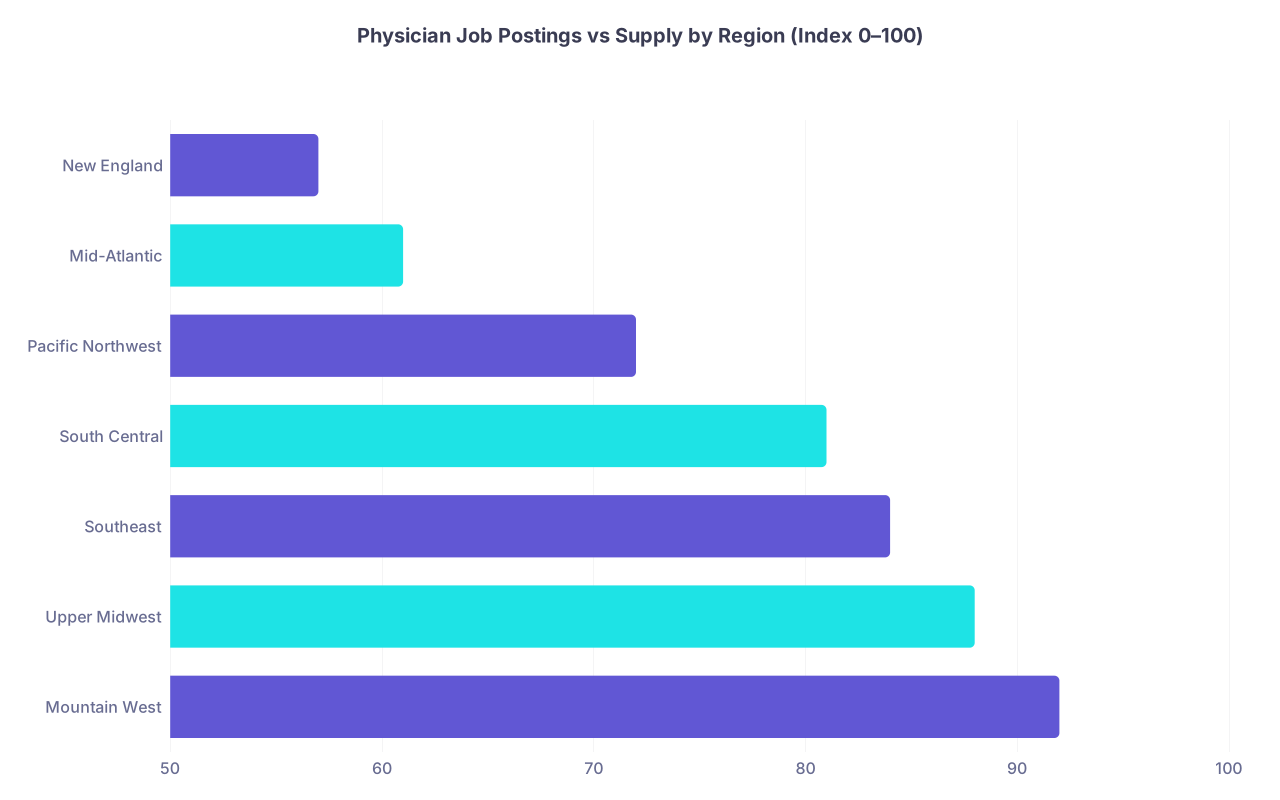
To visualize the balance of job postings vs. physician supply across broad regions:
| Category | Value |
|---|---|
| Mountain West | 92 |
| Upper Midwest | 88 |
| Southeast | 84 |
| South Central | 81 |
| Pacific Northwest | 72 |
| Mid-Atlantic | 61 |
| New England | 57 |
Interpretation is simple: if you are flexible on geography and want leverage, you go where this bar is high.
2. Metro vs Rural: Two Different Economies
Averages hide more than they reveal. The real spread is urban vs rural (and the messy band in between: exurbs and micropolitan areas).
Across multiple national surveys:
- Rural and micropolitan employers are offering:
- 25–60% higher signing bonuses than large coastal metros
- 10–20% higher base pay for many primary care and core hospital-based specialties
- Time‑to‑fill for rural positions can exceed 6–9 months; some posts sit open more than a year.
Let us quantify the gap.
| Practice Location | Avg Base vs Urban Baseline | Avg Signing Bonus | Employer Time-to-Fill |
|---|---|---|---|
| Major Coastal Metro | Baseline (100%) | $15,000–$25,000 | 60–90 days |
| Secondary Metro | 105–110% | $25,000–$40,000 | 90–120 days |
| Micropolitan City | 110–120% | $40,000–$80,000 | 120–180 days |
| Rural County | 115–130% | $60,000–$120,000+ | 180+ days |
The data shows a straightforward trade:
- You pay in lifestyle features (restaurants, direct flights, density of specialists)
- You get paid in dollars, autonomy, and leadership opportunities
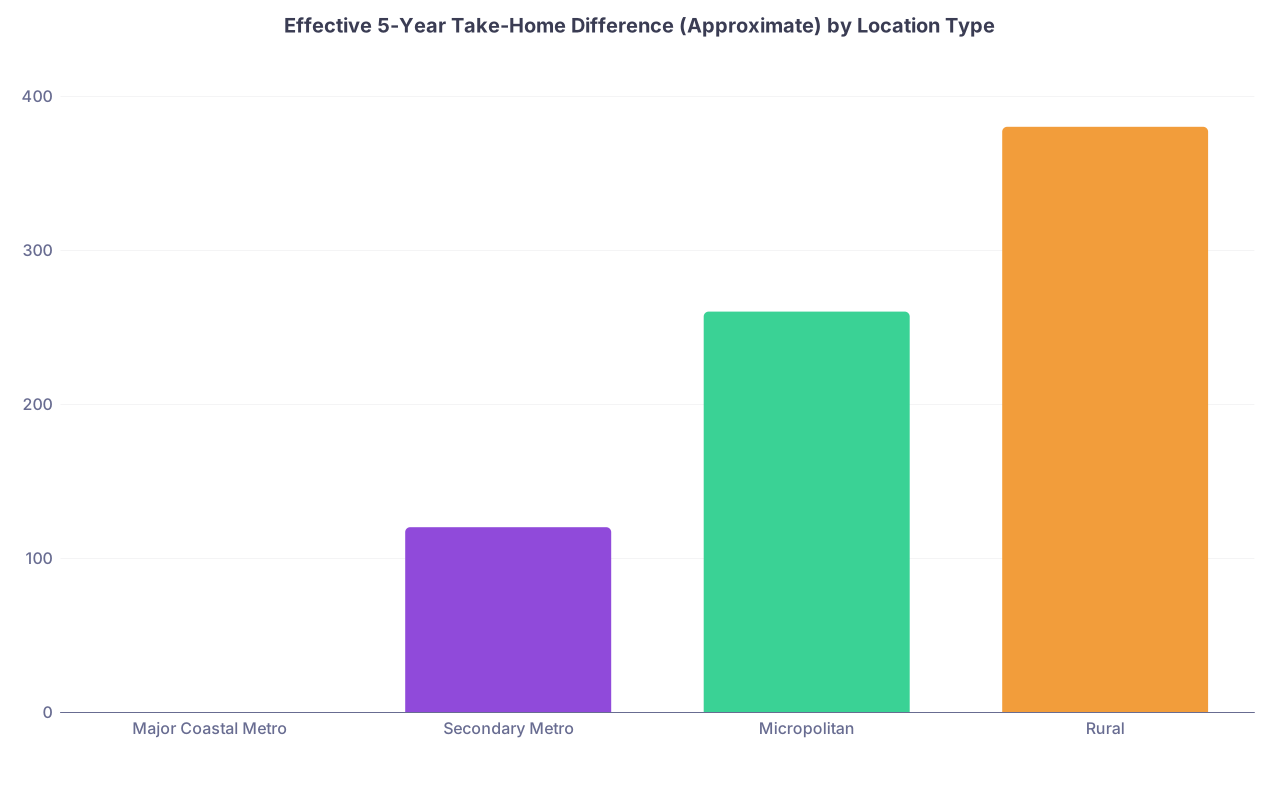
For some physicians, especially early‑career with loans, the numbers are compelling. A $300–400K difference in after‑tax income over your first 5 years is common when you compare a high‑pay rural or small‑city job to a name‑brand metro with high cost of living.
To make this more concrete:
| Category | Value |
|---|---|
| Major Coastal Metro | 0 |
| Secondary Metro | 120 |
| Micropolitan | 260 |
| Rural | 380 |
Values are illustrative incremental thousands of dollars vs a baseline coastal metro over 5 years, after rough tax and COL adjustments. The direction of the differences is what you should care about.
3. Specialty Hot Zones: Who Is Being Bid Up
Not all specialties move with the same tide. Post‑2024, three broad groups have clearly different trajectories:
- High‑leverage access specialties (gatekeepers to the system)
- Procedure‑heavy revenue generators
- Lifestyle‑driven, oversupplied niches in certain metros
3.1 Primary Care and Core Hospital-Based
Despite buzz about midlevels and telehealth, the actual hiring data is brutal: primary care and hospital‑based core services are still the backbone. And they are short.
Across family medicine, internal medicine outpatient, pediatrics, and hospitalist roles:
- 60–70% of open primary care positions are described as “difficult to fill” by employers in workforce surveys.
- Hospitalist roles in non‑major metros are often filled using locums for months at a premium while permanent recruitment stalls.
- Signing bonuses for primary care in many non‑coastal markets now rival or exceed some procedural subspecialties.
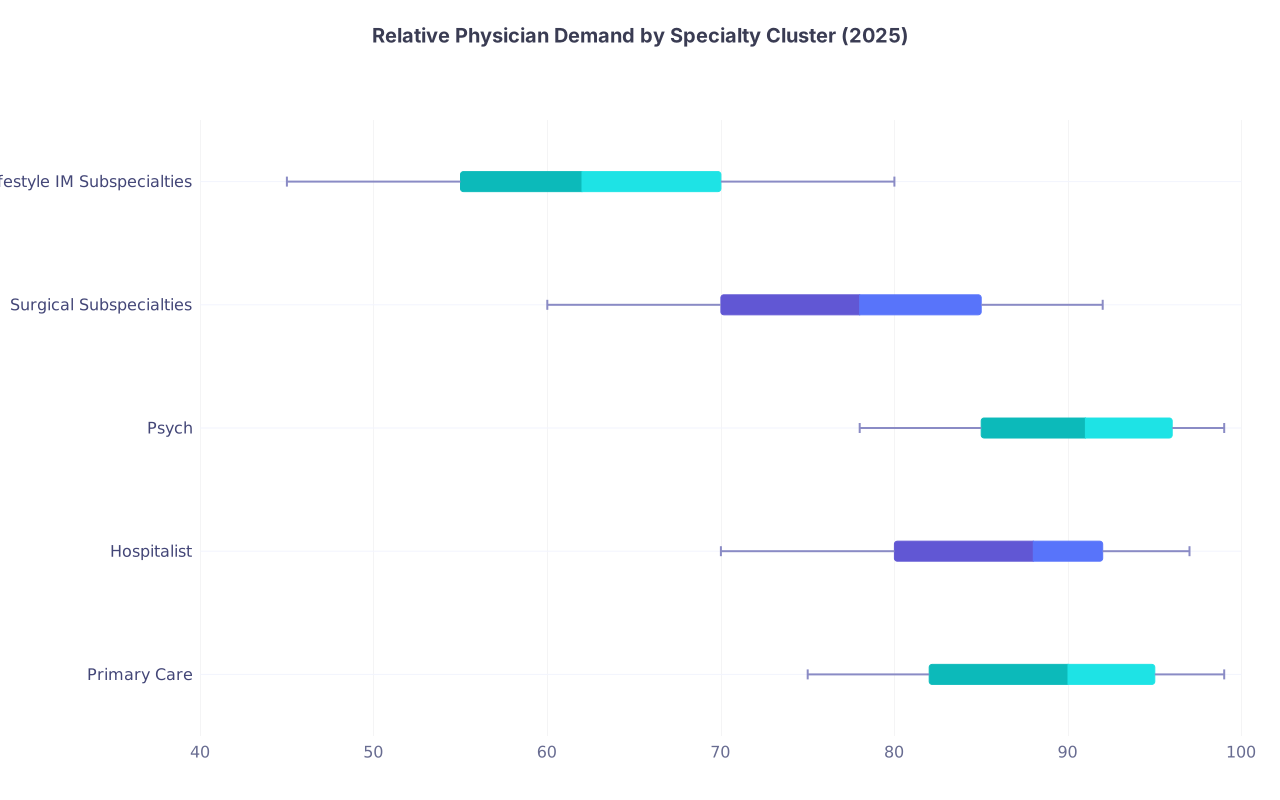
Relative demand scores by specialty cluster:
| Category | Min | Q1 | Median | Q3 | Max |
|---|---|---|---|---|---|
| Primary Care | 75 | 82 | 90 | 95 | 99 |
| Hospitalist | 70 | 80 | 88 | 92 | 97 |
| Psych | 78 | 85 | 91 | 96 | 99 |
| Surgical Subspecialties | 60 | 70 | 78 | 85 | 92 |
| Lifestyle IM Subspecialties | 45 | 55 | 62 | 70 | 80 |
These numbers reflect a composite “difficulty to recruit” score (higher = harder to recruit = better negotiating leverage for you).
The outliers on the high end in primary care and psych are almost all in:
- Upper Midwest (MN, WI, IA, ND, SD)
- Northern New England (ME, NH, VT)
- Mountain states (ID, MT, WY, UT, CO outside Denver core)
3.2 Behavioral Health: The Quiet Inferno
Psychiatry deserves its own line. Every year, data repeats the same message: huge systemic shortage.
Current indicators:
- 150+ million Americans live in designated mental health professional shortage areas
- Many regions report 6–12 month wait times for new adult and child psych patients
- Psych jobs routinely show:
- Signing bonuses $40–100K
- Loan repayment packages stacking another $50–100K
- Highly flexible hybrid or telepsychiatry options
Child and adolescent psych is the absolute heat center: some rural and exurban systems are offering bonuses north of $200K plus leadership titles just to get someone on staff.
3.3 Procedure-Heavy Subspecialties
The narrative that “all procedural fields are saturated” is lazy. The data disagrees once you break it down by where and how you practice.
- Orthopedics, cardiology, GI, ENT, and anesthesia remain in high demand outside coastal academic enclaves.
- However, in attractive metros with several training programs, specific subspecialty niches can be crowded (for example, sports ortho in Denver, cosmetic derm near major cities).
What you see in the data:
- Community hospital and regional referral center positions show strong demand and solid compensation.
- Purely elective cosmetic practices cluster in affluent metros and show higher competition per posting.
If you are procedural and flexible on geography, your bargaining power is still very strong. If you want only private cosmetic practice in a top‑10 metro, expect a much longer lead time and weaker offers.
3.4 The “Lifestyle” Subspecialties
Dermatology, allergy, certain IM subspecialties (for example, endocrinology in big cities) have a split market:
- In oversupplied metros with fellowship programs: downward pressure on starting compensation, high competition, slower partnership tracks.
- In smaller cities with older single‑specialty groups: surprising need and good buy‑in paths as older partners retire.
I have seen endo jobs in secondary Midwestern cities offering $280–320K starts with realistic work‑life balance, while similar roles in Boston are at $220–240K with much higher housing costs. Same specialty, different market.
4. State‑Level Hotspots: Where Demand is Surging Fastest
Let us get specific. Looking at 2023–2025 trends in:
- Growth in physician job postings per 100,000 population
- Projected population growth and aging (65+ cohort)
- Existing physician‑to‑population ratios
The following states consistently show “surging” or “chronic” high demand across multiple specialties:
- Texas
- Florida
- Arizona
- Tennessee
- Utah
- Idaho
- Montana
- Alabama
- Indiana
- South Carolina
These states are a mix of:
- High population growth (TX, FL, AZ, UT, ID, SC)
- Aging populations with historically low physician density (AL, IN, MT)
- Business‑friendly or low‑tax environments that attract health systems and private equity backed groups
Here is a compact comparison using a simple 0–100 “Heat Score” that incorporates posting growth, physician density gap, and demographic pressure:
| State | Heat Score (0–100) | Key Drivers |
|---|---|---|
| Texas | 94 | Population growth, suburban sprawl |
| Florida | 92 | Aging population, retiree influx |
| Arizona | 90 | Fast growth, snowbird migration |
| Utah | 88 | Young, growing, under-physicianed |
| Tennessee | 86 | Regional referral hubs, low tax |
| Idaho | 84 | Rapid growth, few large systems |
A few concrete, data‑driven steps:
Benchmark your specialty’s demand
- Pull at least 2–3 national reports (Merritt Hawkins, Doximity, MGMA data if you have access).
- Look at median starting comp and which regions are above median.
Map your geographic flexibility
- If you are locked to a coastal metro, accept that you are trading leverage for location.
- If you have a 3–4 state flexibility band (for example, TX/OK/AR/LA), your leverage improves dramatically.
Quantify offers, do not just “feel” them
- Compare:
- Base salary
- RVU targets and rates
- Signing bonus
- Loan repayment
- Call burden
- Noncompete radius and duration
- Build a simple spreadsheet and score each job. The gaps are often bigger than they look on the surface.
- Compare:
Ask employers the right metric questions
- How long has this position been open?
- How many candidates have seriously interviewed?
- How many FTEs of this specialty are you budgeted for vs actually staffed?
- What is your physician turnover over the last 3 years?
If they have been trying to fill the role for 9 months, have 3 open FTEs, and turnover is high, that tells you two things:
- Demand is high (good for leverage)
- Something may be broken (bad for your sanity)
You negotiate hard and investigate even harder.
8. Looking Forward: Trends Beyond 2025
Demand is not static. Several structural factors will keep pressure elevated in many regions:
- Aging physician workforce: 2 in 5 active physicians will be 65+ in the next decade.
- Population aging and growth in Sun Belt states.
- Persistent maldistribution: urban academic saturation vs rural and exurban scarcity.
- Growing behavioral health needs.
On the risk side:
- AI and tech will chip away at some cognitive, repetitive tasks, especially in radiology, pathology, and primary care triage.
- Nonphysician practitioners will continue to expand scope in some states.
But every serious workforce projection—including those that aggressively factor in tech and APP expansion—still shows net shortages of physicians in most states, especially outside the biggest teaching hubs.
You are not entering a dying market. You are entering a fragmented, uneven one, where information asymmetry is your biggest enemy and your biggest opportunity.
If you follow the data instead of the crowd, you will see that the real “hot” markets post‑2024 are not the ones with the trendiest coffee shops. They are the ones where hospitals quietly increase signing bonuses every quarter because patients keep coming and doctors keep retiring.
With that heat map in hand, your next step is straightforward: translate macro trends into specific, local offers that fit your life and your risk tolerance. Once you start getting real contracts in front of you, the numbers will tell you the rest. But that is your next phase—offer analysis and contract strategy, not market scanning. And that is a story for another day.


