
Waiting until you graduate to chase private practice offers is how people end up in jobs they hate.
If you want real options, you start in your final year of residency—on purpose, on a schedule, not “whenever things slow down.”
This is the timeline I walk residents through when they ask, “When do I actually start looking?” I’ll lay it out month‑by‑month, then tighten the screws into a week‑by‑week plan when the job hunt goes live.
Big Picture: When Private Practices Actually Hire
Before we dive into the calendar, you need the macro view.
Most private practices:
- Recruit 6–12 months before your start date
- Move slowly on contracts but fast on interviews
- Prefer candidates who are decisive but not desperate
If you finish residency in June, the “prime window” for private practice offers is:
- Exploration: August–November (PGY‑final year − 10 to 7 months from finish)
- Active applications & interviews: November–February
- Contract negotiation & signing: January–April
- Licensing, credentialing, logistics: March–June
You can sign earlier or later, but that’s the center of gravity.
Let’s lock in a clean working assumption: you finish residency June 30. Adjust a month either way if your program ends in May or July; the relative timing stays the same.
PGY‑2/PGY‑3 (or 2 Years Before Graduation): Quiet Setup
No, you’re not signing anything yet. But this is when smart residents stop being passive.
At this point you should…
- Have a rough specialty goal nailed down (or 2–3 serious options at worst)
- Start noticing: which attendings are private vs academic vs employed by a health system
- Pay attention to:
- Who seems burned out vs happy
- How many patients they see per day
- How they talk about admin, compensation, and autonomy
1–1.5 years before graduation (January–June, two cycles out):
- Ask very specific questions on rotations:
- “If you were finishing residency now, would you join a private group or hospital employed?”
- “What do you wish you’d known about your first contract?”
- Keep a running note on your phone with:
- Practice names
- Types (solo, small group, large multispecialty, PE‑backed, hospital affiliate)
- Cities you’d actually live in
You’re not acting yet. You’re building a radar.
PGY‑Final − 12–10 Months: Define Your Target (July–September)
Now you’re a fresh senior. Time to stop being vague.
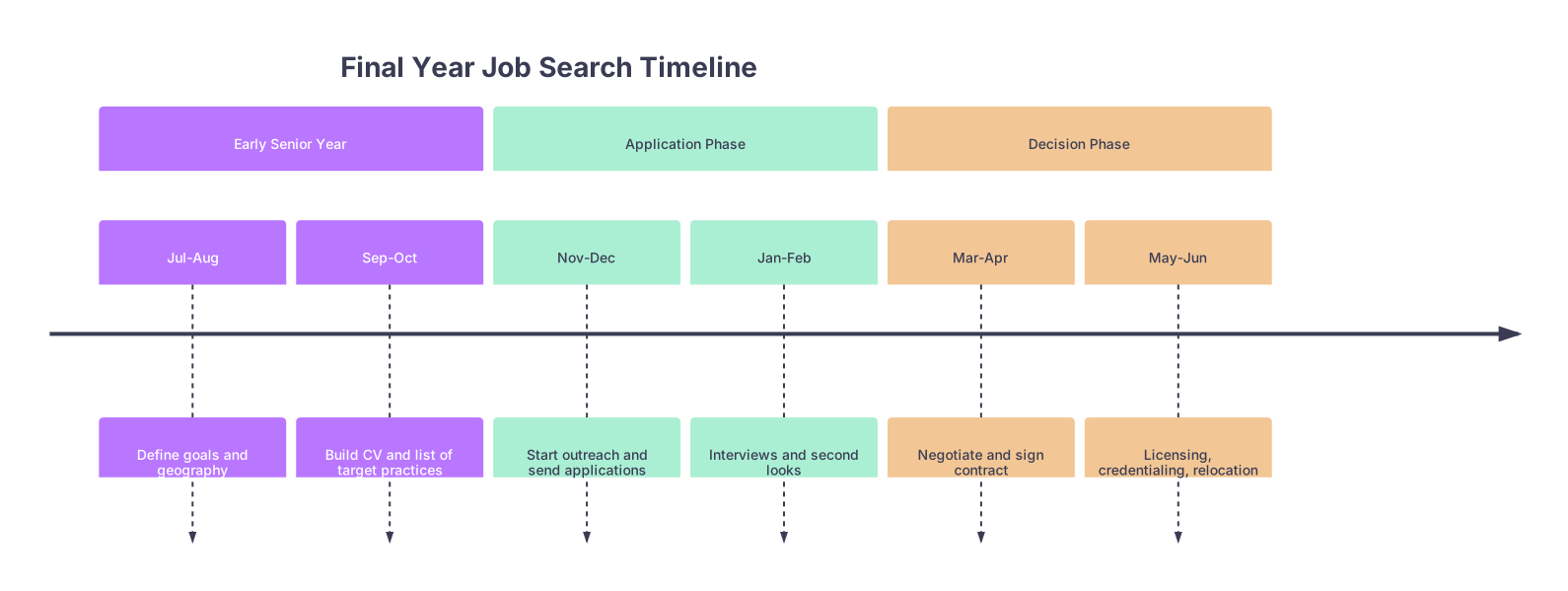
| Period | Event |
|---|---|
| Early Senior Year - Jul-Aug | Define goals and geography |
| Early Senior Year - Sep-Oct | Build CV and list of target practices |
| Application Phase - Nov-Dec | Start outreach and send applications |
| Application Phase - Jan-Feb | Interviews and second looks |
| Decision Phase - Mar-Apr | Negotiate and sign contract |
| Decision Phase - May-Jun | Licensing, credentialing, relocation |
July: Get brutally specific about your priorities
At this point you should:
- Decide on geography tiers:
- Tier 1: “Would move here immediately”
- Tier 2: “Would move if job is great”
- Hard no: don’t lie to yourself; cut them
- Decide your practice type preference order:
- Independent private practice
- Large multispecialty group
- Hospital‑employed with private practice‑like feel
- Academic “plus” with some private revenue
You need these ranked before recruiters start offering shiny distractions.
August: Fix your professional materials
This is housekeeping, but it kills people later when they’re busy with ICU nights.
At this point you should:
- Build or update your CV (not a fluffy “resume”) with:
- Education, training, expected completion date
- Procedures/skills list that’s realistic, not aspirational
- Presentations, QI, leadership roles (chief resident, committee work)
- Draft a short professional bio (3–4 sentences) you can plug into emails and websites
- Clean your online presence:
- LinkedIn updated with “Resident Physician – Expected completion June 20XX”
- Remove anything idiotic from public social media
PGY‑Final − 9–7 Months: Build the Target List (September–November)
This is where you quietly move from “I should think about jobs” → “I have a hit list.”
September: Map the market
At this point you should:
- Create a simple spreadsheet with columns like:
- Practice name
- City/region
- Website
- Size (# physicians, APPs)
- Ownership (independent, PE‑backed, health system affiliate)
- Contact person
- Status (researching / contacted / interviewing / offer / declined)
| Practice Name | City/Region | Type | Size (MDs) | Status |
|---|---|---|---|---|
| River Valley Cardiology | Mid-size city | Independent group | 12 | Researching |
| Metro Ortho Partners | Major metro | PE-backed group | 30 | Contacted |
| Lakeside Family Clinic | Suburban | Small private | 4 | Interview |
| Sunrise GI Associates | Regional hub | Health system affiliate | 9 | Offer |
| Summit Pediatrics | Rural | Solo to group hire | 2 | On hold |
Where to actually find these practices:
- Hospital medical staff directories
- Specialty society job boards (AAOS, ACOG, ACP, ACEP, etc.)
- Google “[specialty] group [city]” and follow the rabbit hole
- Ask attendings: “If you were looking for a strong private group in [X region], who’s good?”
October: Start soft intel gathering
Now you’re still a few months from hard outreach, but you can quietly gather real data.
At this point you should:
- Ask trusted attendings to name 2–3 practices they respect in your target regions
- Ask recent grads (1–3 years out):
- “Which job offers did you turn down and why?”
- “Did you feel rushed to sign?”
- “What surprised you about private practice life?”
- Update your spreadsheet with:
- Reputation notes (e.g., “great culture, heavy call,” “high RVU pressure”)
You’re triangulating signal vs noise.
PGY‑Final − 6–5 Months: Start Targeted Outreach (November–December)
This is where most private practice hiring cycles really begin for June finishers.

At this point you should:
November: Turn the lights on
- Identify 10–20 target practices across your top geographies
- For each, find:
- Practice manager or physician recruiter email
- A specific physician you can name in your introductory line (“I work with Dr. X who speaks highly of your group”)
Your first outreach email should be:
- Short
- Specific
- Professional
Think 2–3 tight paragraphs:
- Who you are (PGY level, specialty, program, graduation date)
- Why you’re interested in their practice/region
- Ask directly if they anticipate hiring around your timeline
Do not send a spam blast BCC to 50 practices. They can smell that a mile away.
December: First round of informal conversations
Well‑run practices will:
- Reply with interest
- Suggest a phone call or Zoom
- Ask for your CV
At this point you should:
- Do 15–30 minute intro calls with any practice that looks remotely promising
- Ask pointed questions:
- “How many new partners have you hired in the last 5 years?”
- “What’s the real timeline to partnership?”
- “What’s the call burden and how is it distributed?”
- Start a ranking in your spreadsheet: Green / Yellow / Red
PGY‑Final − 4–3 Months: Interview Season (January–February)
This is where your job hunt becomes an actual second job.
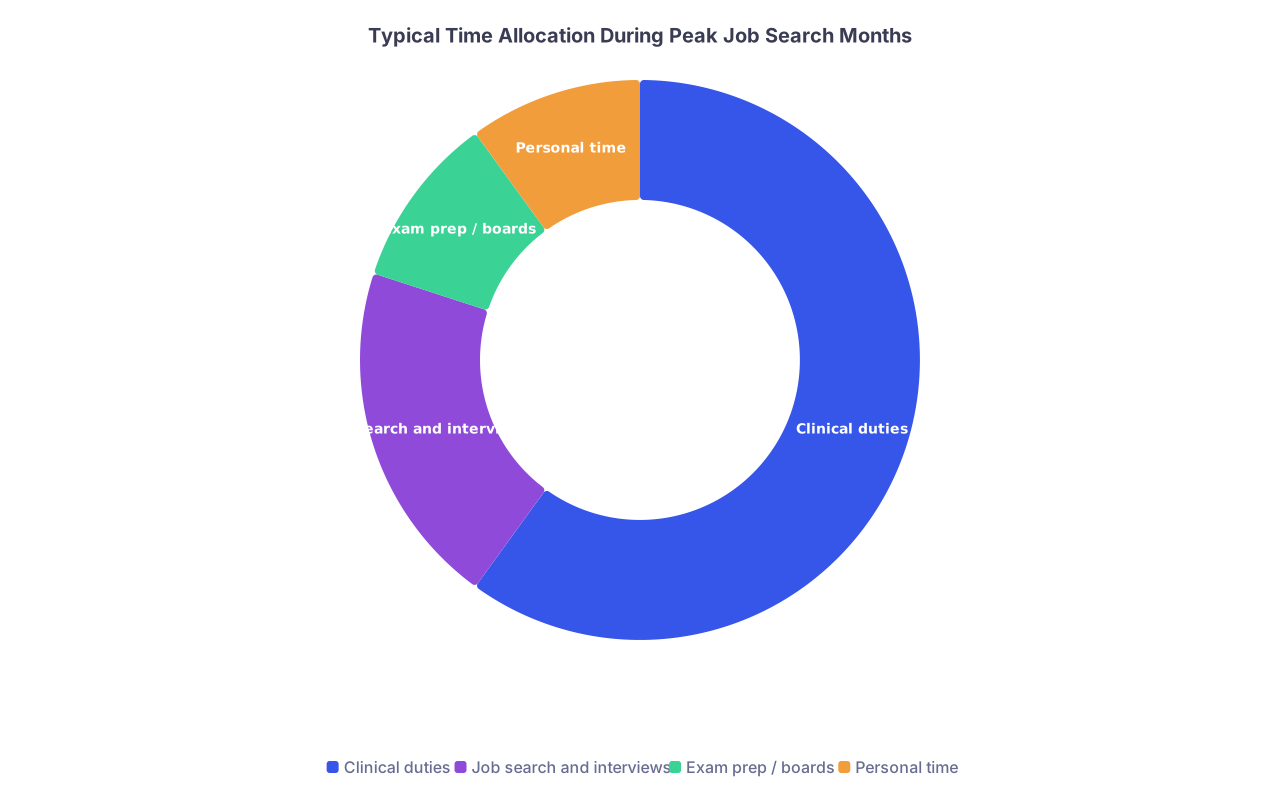
| Category | Value |
|---|---|
| Clinical duties | 60 |
| Job search and interviews | 20 |
| Exam prep / boards | 10 |
| Personal time | 10 |
January: Formal interviews and visits
At this point you should:
- Be proactive about scheduling:
- If a group sounds interested, say:
“I’d like to visit in person in the next 4–6 weeks if that fits your timeline.”
- If a group sounds interested, say:
- Batch interviews when possible:
- Stack 2–3 practices in one region over a 2–3 day span to limit time off
- Coordinate with your program:
- Give chief/scheduler as much notice as possible for days off
- Use lighter rotations for travel whenever you can
What a typical practice interview trip includes:
- Clinic shadowing
- Meeting partners, maybe future “senior partner” or managing partner
- Dinner with a subset of the group
- Quick, high‑level compensation/structure talk, but usually not hard numbers yet
February: Second looks & early offers
Stronger groups will move faster than you expect.
At this point you should:
- Expect verbal offers to start coming in
- Ask for:
- Draft contract
- Compensation structure explained in plain language
- Call expectations, vacation, CME, tail coverage, restrictive covenants
Do not feel pressured to agree on the spot. You can:
- Thank them genuinely
- Ask about their decision timeline
- Say you’ll review the contract with a physician‑side attorney
PGY‑Final − 2–1 Months: Negotiate, Decide, and Sign (March–April)
This is the part most residents are least prepared for: contracts.

March: Contract review and negotiation
At this point you should:
- Narrow to 2–3 serious options max; more than that and you’re kidding yourself
- Pay special attention to:
- Non‑compete clause (radius, duration, how it interacts with geography)
- Partnership track (is it a real pathway or a mirage?)
- Buy‑in structure and what you’re buying (hard assets? goodwill?)
- Malpractice coverage (claims‑made vs occurrence; who pays tail?)
- Hire a physician contract attorney (yes, spend the money; no, this is not optional if you have serious offers)
You’re not haggling like a used‑car buyer. You’re clarifying:
- Call expectations
- Schedule flexibility
- Productivity expectations (RVUs, collections, wRVU bonuses, etc.)
April: Commit
Most residents who land good private practice positions sign between March and April for a July–August start.
At this point you should:
- Choose one primary offer
- Inform the others promptly and respectfully:
- “After careful consideration, I’ve decided to pursue another opportunity that’s a better fit for my family/location goals. I really appreciated the chance to meet your team.”
- Confirm:
- Start date
- Any sign‑on bonus details and payout timing
- Relocation support
- Immediately start:
- State license applications if not already done
- Hospital credentialing paperwork as directed by the group
Final 2–3 Months of Residency: Logistics and Exit Strategy (May–June)
The job is locked. Now you keep it from blowing up.

| Step | Description |
|---|---|
| Step 1 | Signed Contract |
| Step 2 | Apply for State License |
| Step 3 | Hospital Credentialing |
| Step 4 | Malpractice Enrollment |
| Step 5 | Relocation and Housing |
| Step 6 | Onboarding with Practice |
| Step 7 | First Day in Practice |
At this point you should:
May: Clean your runway
- Finish:
- All licensing (state, DEA, controlled substance if separate)
- Any board exam registration
- Work with your new group to:
- Submit credentialing packets to hospitals and insurers
- Confirm your EHR training schedule
- Clarify who your onboarding buddy will be (you want one)
June: Exit your program like a professional
- Don’t mentally check out and torch your reputation. People talk.
- Make it easy for your program:
- Finish charts
- Hand off QI projects, leadership roles cleanly
- Stay in touch with:
- 2–3 attendings who will be long‑term references or future allies
PGY‑Final Weekly Rhythm During Peak Months
During January–April, your week will feel like juggling scalpels. You need a rhythm.
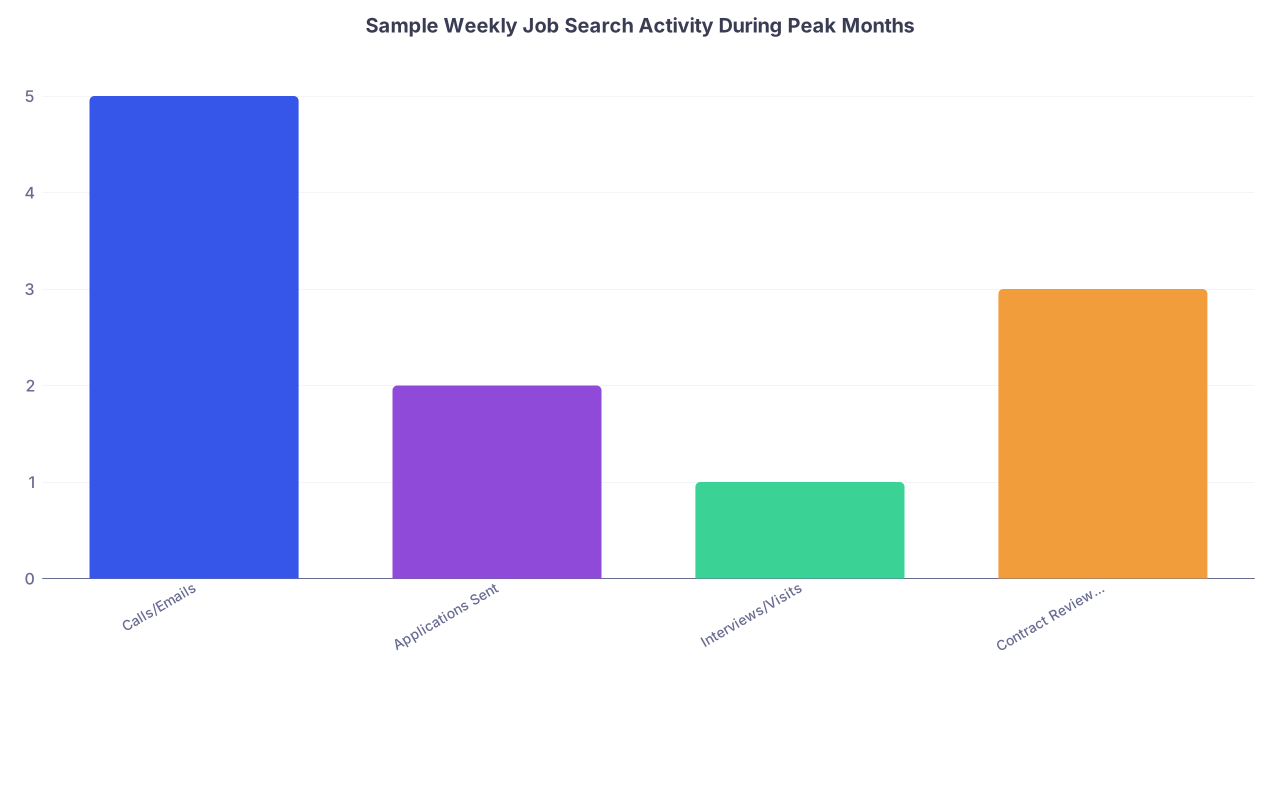
| Category | Value |
|---|---|
| Calls/Emails | 5 |
| Applications Sent | 2 |
| Interviews/Visits | 1 |
| Contract Review Hours | 3 |
A realistic template:
- Sunday (30–60 minutes):
- Update your spreadsheet
- Plan which practices you’ll contact this week
- One evening midweek (60–90 minutes):
- Send outreach or follow‑up emails
- Review any new contracts / notes
- One evening (30 minutes):
- Quick calls with practices in different time zones
- Days off / golden weekends:
- Travel for on‑site interviews
- Deep dive contract review with attorney
If you treat the job search like a casual side hobby, you get casual, mediocre offers. Treat it like a structured project.
Private Practice Timing Traps to Avoid
At this point you should be aware of the landmines:
Starting too late (April/May):
- Practices assume you’re leftovers or have red flags
- Most good positions already have a signed candidate
Signing too early (before January) without comparison:
- You have no benchmark for compensation or culture
- You’ve given up all leverage
Ignoring non‑competes because “I won’t stay here forever anyway”:
- Then you meet someone. Buy a house. Have kids. And suddenly that 25‑mile radius matters.
Letting recruiters drive your timeline:
- Their urgency is not about your best fit; it’s about filling a seat
Quick Year‑Out Snapshot: What You Should Be Doing When
| Time Before Graduation | Focus | Main Actions |
|---|---|---|
| 12–9 months (Jul–Sep) | Define goals & materials | Geography, practice type, CV, basic research |
| 9–6 months (Sep–Dec) | Build target list & soft intel | Spreadsheet, attendings, intro outreach |
| 6–3 months (Nov–Feb) | Applications & interviews | Emails, calls, visits, early offers |
| 3–1 months (Mar–Apr) | Negotiate & sign | Contract review, negotiation, commit |
| 1–0 months (May–Jun) | Licensing & transition | License, credentialing, exit residency cleanly |

FAQ (Exactly 2 Questions)
1. What if I still have no idea where I want to live by early senior year?
Then your job search becomes about practice type first, geography second. In August–September of your final year, pick 2–3 broad regions (e.g., “Northeast big city,” “Southeast mid‑size,” “West Coast suburban”) and deliberately line up sample interviews in each. Use your away rotations, conferences, and interview trips to test what “feels right.” But pick something by December. The resident who says “I’m open to anywhere” in February usually ends up nowhere they actually want to be.
2. Is it a mistake to sign with the first private practice that offers me a contract?
Not automatically. The mistake is signing the first contract without a comparison point and without professional review. If that first group is in your top geography, has a culture you’ve vetted through back‑channel references, and the contract survives attorney review, you do not need three more offers just to feel “shopped.” But if it’s November and they’re demanding a 2‑week answer with a heavy non‑compete and vague partnership promises? Walk. Or at least stall until you’ve seen what else is out there.
Key points:
- Serious private practice targeting starts 6–9 months before graduation, not in the last month of residency.
- Treat the search like a structured project: define goals, build a target list, then execute on a clear month‑by‑month and week‑by‑week plan.
- Never sign a contract—especially with a non‑compete—without comparison and competent legal review.