
The biggest mistake applicants make from September to November is simple: they track where they felt good, not what actually matters.
You will forget programs. You will blur interview days together. And you will absolutely overestimate “vibes” if you are not disciplined. So you need a system, tied to time, for what to track at each stage of interview season.
Here is that system—month by month, then week by week, then what to write down the night before, during, and right after each interview.
Big-Picture Timeline: September to November
At this point in the cycle, you should stop thinking like an applicant and start thinking like a data collector.
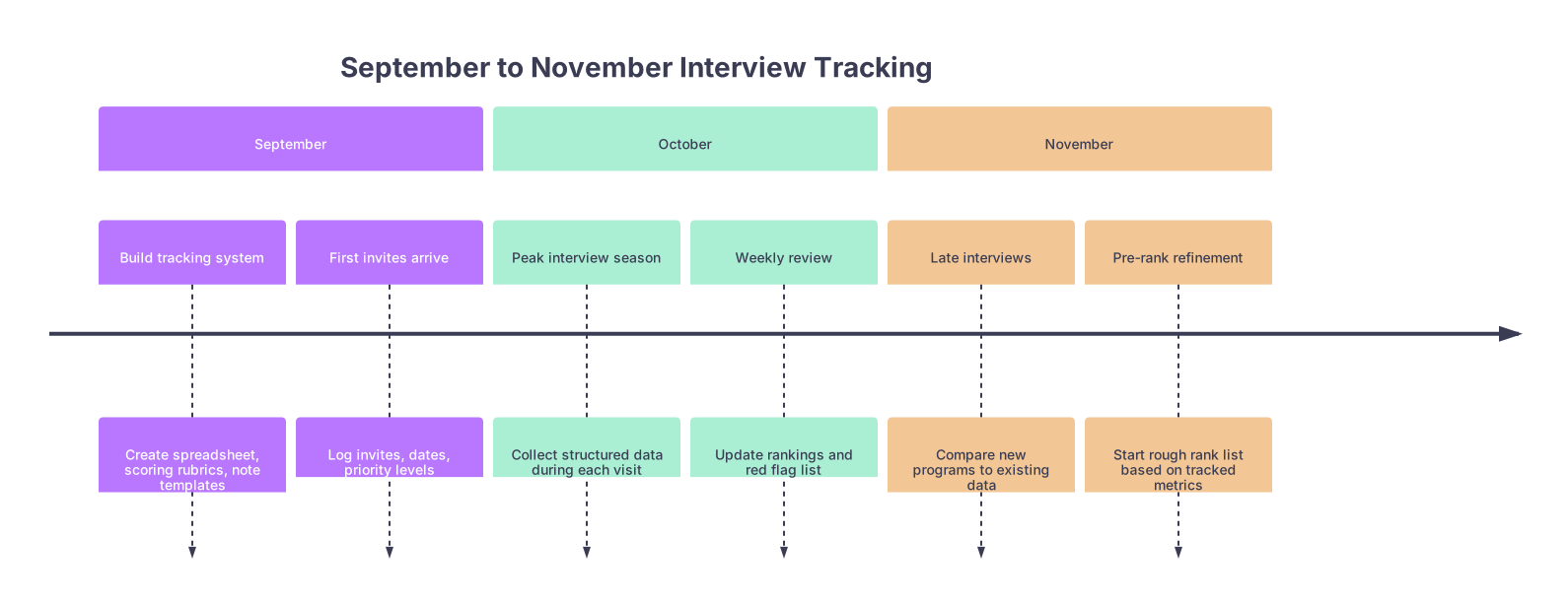
| Period | Event |
|---|---|
| September - Build tracking system | Create spreadsheet, scoring rubrics, note templates |
| September - First invites arrive | Log invites, dates, priority levels |
| October - Peak interview season | Collect structured data during each visit |
| October - Weekly review | Update rankings and red flag list |
| November - Late interviews | Compare new programs to existing data |
| November - Pre-rank refinement | Start rough rank list based on tracked metrics |
By the end of:
- September – Your tracking system is built and tested on early interviews.
- October – You are collecting consistent, comparable data from each program.
- November – You are refining your rank list using that data, not your memory.
September: Build Your Tracking System Before the Chaos
If you try to “figure it out as you go,” you will lose track by your fifth interview. September is setup month.
Week 1–2: Decide What You Will Actually Track
At this point, you should create your core categories. Not twenty. Six to ten, max, that you score every program on.
Common high-yield categories:
- Training quality (cases, pathology, autonomy)
- Resident culture (how people treat each other)
- Faculty mentorship and approachability
- Fellowships/jobs after residency
- Location and lifestyle
- Schedule and call structure
- Program leadership stability and transparency
- Support systems (wellness, parental leave, coverage)
- Educational structure (didactics, board prep)
Now, force yourself to weight them. What matters most to you?
| Category | Example Weight (%) |
|---|---|
| Training Quality | 25 |
| Resident Culture | 20 |
| Location/Lifestyle | 20 |
| Schedule/Call | 15 |
| Mentorship/Fellowships | 15 |
| Leadership/Support | 5 |
If everything is “very important,” nothing is.
Week 2–3: Build Your Tracking Tools
At this point, you should have three concrete tools ready:
Master Program Spreadsheet
Columns might include:- Program name
- City, region, hospital type (county, academic, community)
- Interview date
- Your weighted scores for each category
- Dealbreakers/red flags (Y/N, with notes)
- “Would I be content here?” (Yes / Maybe / No)
- Running overall score (auto-calculated)
Per-Program Interview Day Template
One page per program, paper or digital, with sections like:- Pre-interview expectations (what you think going in)
- Notes from:
- PD/chair talk
- Resident Q&A
- Individual interviews
- Tour/virtual tour impressions
- Pros / Cons
- Specific quotes or moments (“resident said: ‘nights are brutal but we cover each other’”)
- 3–5 “If I match here” statements (helps gut-check later)
Weekly Review Log
Simple: once a week from October onward, you sit down and:- Update scores
- Rank programs as of that week
- Record any changes in how you feel and why
Do this now, before invites really hit.
Week 3–4: Pilot Your System on Early/Prelim Interviews
By late September, you might have:
- Early interviews (often prelims, community programs, or your home institution)
- Several invites scheduled for October and November
Use these early experiences as test runs:
- After 1–2 interviews, ask: Are my categories too vague? Too many? Missing something critical (like procedural volume, research, or family support)?
- Refine your sheet and template now. After 10 interviews, you will not bother.
October: Peak Interview Season – What to Track Each Week
October is when the firehose opens. At this point, your problem shifts from “What should I track?” to “How do I not drown in data?”
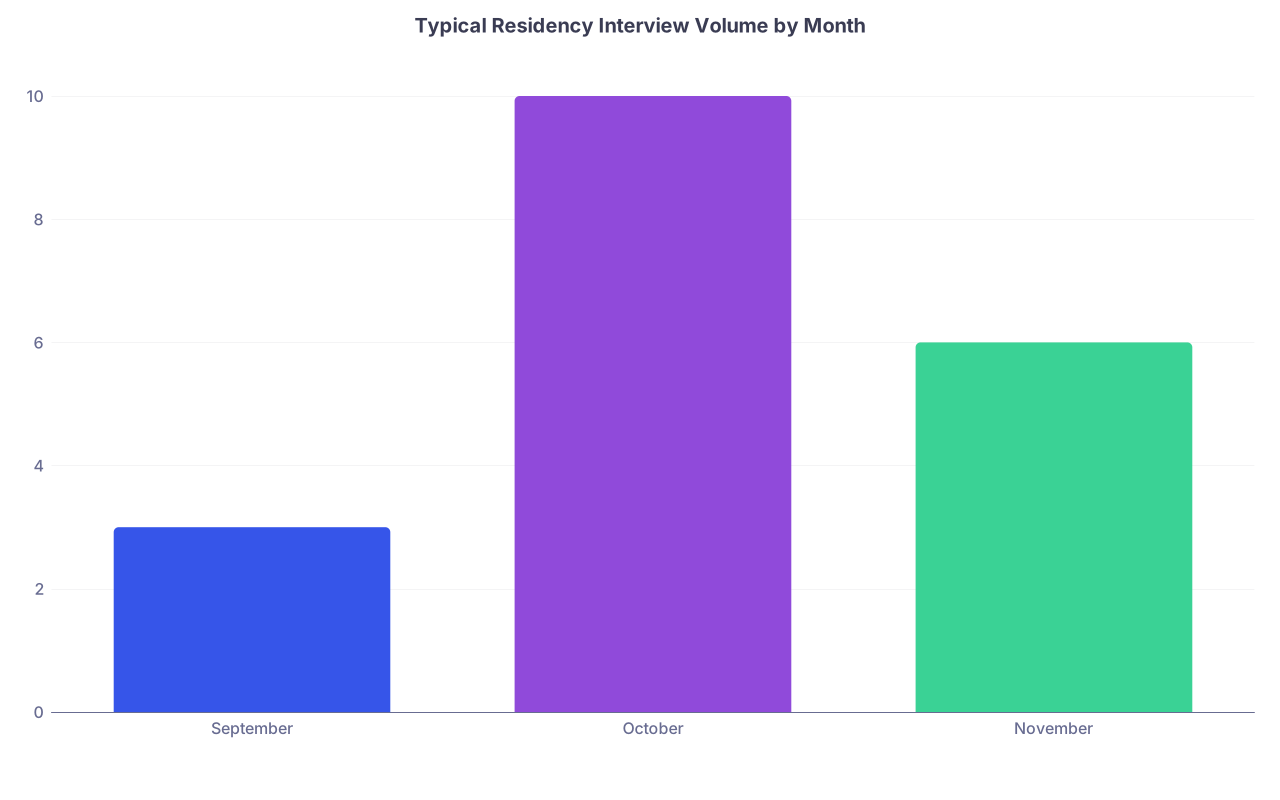
| Category | Value |
|---|---|
| September | 3 |
| October | 10 |
| November | 6 |
Weekly Rhythm in October
Assume you are interviewing 1–3 times per week. Your structure should be:
- 48–24 hours before each interview
- Review your template, program website, and any notes from mentors.
- Write 2–3 specific things you want to learn or confirm.
- Interview day
- Capture real-time impressions in your template.
- Mark any clear red flags immediately.
- Within 24 hours after
- Score the program in your spreadsheet.
- Write a short narrative: “Why would I rank this above/below X?”
- End of each week
- Re-sort your running rank list.
- Resolve contradictions (“Why did I score this a 9/10 but write ‘I would be miserable here’?”)
Let us break down what you track at each stage.
What to Track: 24 Hours Before Each Interview
This is where almost everyone is sloppy. You do not prepare your tracking; you only prepare your answers. Fix that.
At this point, you should:
Clarify Your Hypothesis About the Program In your per-program template, write:
- What you expect the program to be:
- Example: “Urban safety-net, heavy volume, strong for procedures, weaker on wellness and research.”
- Where you think it fits now:
- “Likely mid-tier on my list unless it surprises me on culture.”
- What you expect the program to be:
List 3–5 Target Questions Aligned to Your Priorities Not generic nonsense like “tell me about your program.” Focused questions. For example:
- Training:
- “How often do seniors perform X procedure independently by graduation?”
- Culture:
- “What kind of resident does not do well here?”
- Career outcomes:
- “Where did your last three graduates who wanted cardiology/fellowship/hospitalist jobs end up?”
- Schedule:
- “What is the worst rotation in the program, honestly?”
- Training:
Create a Quick “Watch For” List A few behaviors to notice and write down:
- Do residents interrupt each other or let each other talk?
- Does anyone badmouth the program or other residents?
- How do they talk about nights, ICU, or ED—survivable or soul-crushing?
You are not just attending an interview. You are running a structured site visit.
What to Track During the Interview Day Itself
Attention will be fragmented. You will be tired, hungry, mildly anxious. That is normal. Your tracking needs to be simple and brutal.
During the PD/Chair Presentation
At this point, you should jot down:
- Stability of leadership
- How long has the PD been in place?
- Any recent major changes (mergers, loss of sites, ACGME citations)?
- Program’s explicit priorities
- Do they brag about research? Volume? Wellness? Fellowship match?
- Do those align with what you actually care about?
- Transparency
- Do they share hard data?
- Board pass rates
- Fellowship/job placement
- Duty hour compliance
- Attrition (residents leaving)
- Do they share hard data?
Red flag: leadership gives only vague platitudes with no concrete numbers.
During Resident Q&A / Lunch / Social
This is where the truth leaks out. You should track:
Resident Mood and Cohesion
- Are they joking with each other?
- Does anyone look dead behind the eyes?
- Do juniors talk in front of seniors, or stay quiet?
Consistency of Answers Ask the same question to multiple residents:
- “How often do you violate duty hours?”
- “If someone is struggling, what happens?”
- “How much do seniors actually supervise you and help you grow?”
If answers conflict widely, write that down. Either the culture is fragmented or communication is poor.
Lifestyle Reality Write specific, numeric statements you hear:
- “We usually leave by 5–6 on wards.”
- “ICU is tough; those are true 80-hour weeks.”
- “I moonlight PGY-3 and still have one full weekend off a month.”
Write the quote, not your interpretation. You will forget where it came from later.
During Individual Interviews
Here, your goal is twofold: evaluate them, and collect concrete data. You should track:
- Faculty behavior
- Do they ask about you as a person, or just your scores and CV?
- When you ask about program weaknesses, do they give a real answer?
- Mentorship vibe
- If you asked this person for career advice, would you trust them?
- Program fit signals
- Any specific faculty or niche that aligns with your goals (global health, med ed, ultrasound, etc.)
Write down:
- One specific positive moment.
- One specific concern or hesitation.
If you leave an interview room with “That felt fine,” that is useless. Push yourself to name something concrete.
During the Tour / Virtual Walkthrough
You are not there to admire the lobby. You are tracking:
- Workflow reality
- Workroom size and chaos.
- Access to computers and space.
- Patient population
- Does what you are seeing match what they described?
- Support staff
- Are nurses, pharmacists, RTs engaged and collaborative?
- Or does everyone look like they work on different planets?
If virtual, listen to how residents describe spaces they cannot show:
- “We do not have our own workroom” is a different life than “we all share this huge resident room with windows.”
What to Track Within 24 Hours After Each Interview
This is the most important window. At this point, feelings are fresh and you still remember details. If you wait a week, you will manufacture nostalgia or negativity that did not exist.
Within 24 hours, you should do four things.
1. Forced-Rank Your Gut Reaction
No scale of 1–10 yet. Just answer:
- “If I had to submit my rank list today, where would I put this program relative to the others I have seen?”
And then put it there in your spreadsheet. No ties.
This will change later, but you need this snapshot.
2. Convert Impressions into Scores
Take your weighted categories and score each (0–10 or 1–5, but use the same scale for all programs):
Example scoring:
- Training quality: 8/10
- Culture: 7/10
- Location: 5/10
- Schedule: 6/10
- Mentorship/fellowships: 9/10
- Leadership/support: 7/10
Let your spreadsheet calculate a weighted total automatically.
This matters when you are comparing Program #3 and #4 in January and your brain says, “They both felt good…”
3. Document Hard Pros, Hard Cons, and True Red Flags
Use your template:
Top 3 Pros
- “Residents repeatedly said they feel supported when sick or struggling.”
- “Strong track record of cardiology fellowships at well-known centers.”
- “Realistic talk about work-life balance; not performative wellness.”
Top 3 Cons
- “Location is far from family, limited partner job market.”
- “ICU schedule sounds brutal—lots of 6-day stretches.”
- “Limited exposure to X patient population I care about.”
Red Flags (Separate Section)
- “Resident quietly said: ‘We’ve had three people leave in the last two years.’”
- “Faculty minimized duty hour issues, blamed residents for ‘inefficiency.’”
- “Leadership change happening; new PD not yet on site.”
Red flags are not automatically fatal, but they must be highly visible when you revisit your list.
4. Write 3–5 “If I Matched Here…” Statements
This sounds cheesy. Do it anyway. It forces your brain to imagine the real life behind the score:
- “If I matched here, I would get excellent ICU and ED training but sacrifice geographic proximity to family.”
- “If I matched here, I’d be surrounded by colleagues who seem genuinely happy but might have weaker research support.”
- “If I matched here, I would be pushed hard clinically and might risk burnout if I am not careful.”
When you reread these in January, they are far more helpful than “Program felt nice. Good vibes.”
November: Late Interviews and Early Rank Shaping
By November, the pattern is set. At this point, you should not be reinventing your system, but refining your judgment.
Early November: Compare New Programs to Established Anchors
By now, you probably have 5–10 programs with thorough notes. Use them as anchors.
For each new interview:
- Immediately ask: “Is this clearly above or below my current #3? Why?”
- If it is “about the same,” dig into category scores rather than vibes.
You will notice trends:
- Certain regions consistently score higher on lifestyle but lower on training volume.
- Some big-name programs look shiny but land lower because of culture or schedule.
Track those trends explicitly in your weekly review log.
Mid to Late November: Start Building a Draft Rank List
You are not submitting it yet, but at this point, you should:
- Sort programs by:
- Weighted total score
- Your gut rank
- Look for mismatches:
- High score, low gut rank → Are you overvaluing one category?
- Low score, high gut rank → Are you glamorizing the name or city?
This is where you adjust weights if needed. Maybe culture turned out to matter more than you admitted in September. Raise its weight. Recalculate. See what moves.
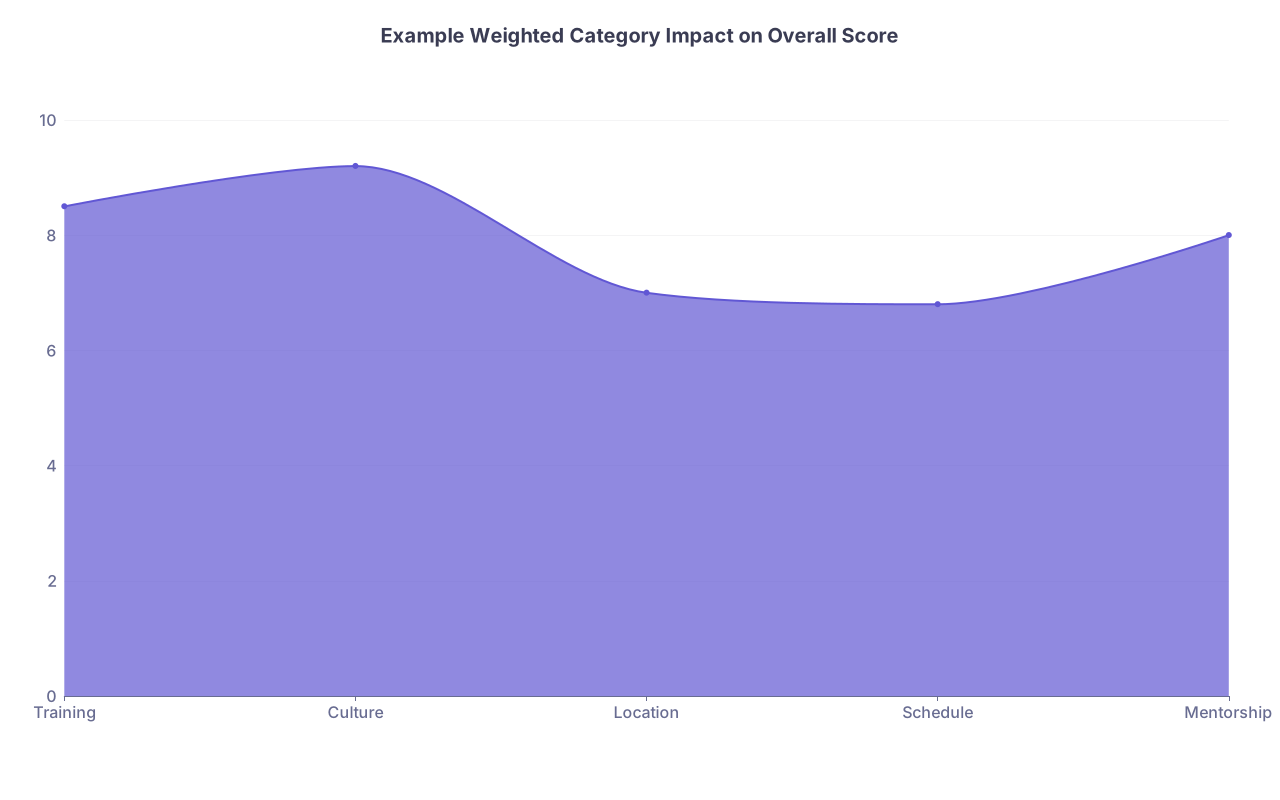
| Category | Value |
|---|---|
| Training | 8.5 |
| Culture | 9.2 |
| Location | 7 |
| Schedule | 6.8 |
| Mentorship | 8 |
Late November: Confirm Dealbreakers and Must-Haves
By the end of November, you should have clarity on:
- Dealbreakers
- Chronic duty hour violations with no fix.
- Toxic culture (residents undermining each other, PD dismissive of concerns).
- Leadership instability with zero clear plan.
- Must-Haves
- Minimum fellowship/job outcomes that match your goals.
- Acceptable call schedule and time off.
- A baseline level of resident support you know you need to survive.
Mark any program violating a dealbreaker in your spreadsheet. No amount of prestige compensates for a daily miserable life.
Simple Daily Checklist for Each Interview
To make this practical, here is the bare-minimum checklist to follow.
Day Before
- Review program info and your priorities.
- Fill in expectations and hypothesis section in template.
- Write 3–5 targeted questions tied to your priorities.
Interview Day
- During PD talk – note leadership stability, data shared, major changes.
- During resident interactions – write exact quotes about hours, culture, support.
- During interviews – record one strong positive and one concern per interviewer.
- During tour – note workroom setup, support staff vibe, patient population.
Within 24 Hours After
- Forced-rank this program among all programs so far.
- Score each core category in your spreadsheet.
- List top 3 pros, top 3 cons, and any red flags.
- Write 3–5 “If I matched here…” statements.

Final Thoughts: What Actually Matters
You are not trying to remember every detail. You are trying to consistently capture the differences that will matter on Match Day.
By the time you reach December–January, three things will separate people who build smart rank lists from those who wing it:
- They built and used a structured tracking system from September onward instead of trusting their memory.
- They wrote down concrete quotes, numbers, and red flags within 24 hours of each interview, not weeks later.
- They regularly compared new programs to existing ones, forced-ranked them, and adjusted based on what truly mattered to their future—training, culture, and an actually livable life.