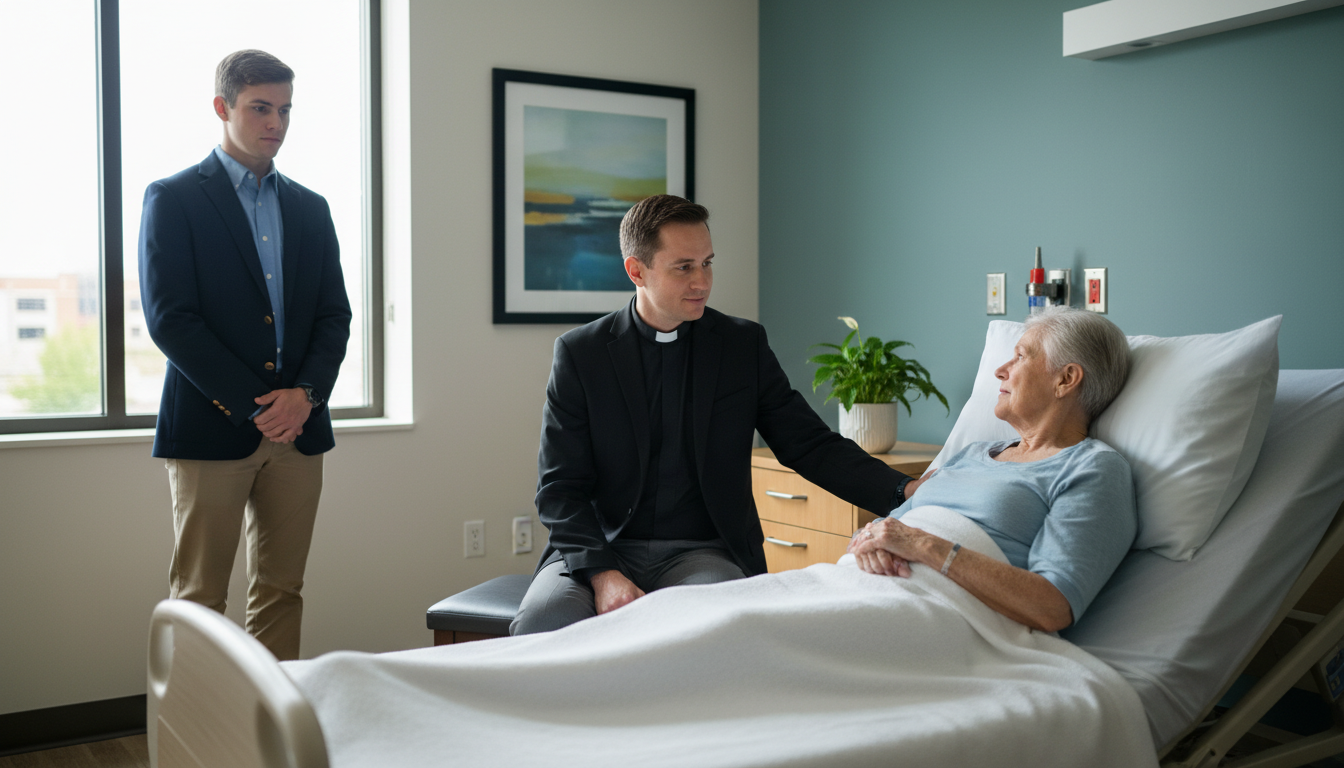
Most pre‑meds are sleepwalking past one of the richest forms of clinical exposure in the hospital: the chaplaincy team.
If you think “clinical experience” only means scribing, CNA work, or shadowing physicians, you are missing a powerful, underused lane that admissions committees quietly respect: structured volunteering with hospital chaplaincy and spiritual care services.
Let me break this down specifically.
Hospital chaplaincy volunteering is not about religious proselytizing. It is a front‑row seat to:
- End‑of‑life discussions
- Code blues and death notifications
- Family crises, conflict, and grief
- Value‑laden medical decisions (withdrawal of care, DNR, palliative transitions)
- Real‑time communication between physicians, nurses, social workers, and families
For a pre‑med, this is non‑traditional clinical exposure that can shape your professional identity in ways that a thousand hours of basic transport or front‑desk work will never touch.
What Hospital Chaplaincy Actually Does (And Why It Counts As Clinical)

(See also: Clinical Volunteering in Palliative Care: Communication Skills You’ll Gain for more on this topic.)
Most students vaguely know chaplains “do spiritual stuff” and then mentally file them under “not relevant to medicine.” That is a mistake.
The real scope of hospital chaplaincy
A typical hospital chaplain (or spiritual care provider) may:
- Respond to rapid response and code blue calls
- Support families during trauma activations
- Be present during and after death pronouncements
- Facilitate family meetings with physicians and social work
- Help patients articulate goals of care in light of their beliefs and values
- Assist with complex ethical situations (e.g., conflict over treatment decisions)
- Provide staff support after difficult cases or adverse outcomes
You are not just hanging out with clergy. You are embedded in the hospital’s response to suffering, crisis, and meaning‑making. That is clinical context.
Why admissions committees see this as clinical exposure
Clinical experience, at its core, requires:
- Direct exposure to patients and/or families in a care setting
- Proximity to medical decision‑making and the health‑care team
- An evolving understanding of illness, suffering, and care delivery
Chaplains work in patient rooms, ICUs, oncology units, EDs, and trauma bays. They receive consults written by physicians. They are charted in the EMR. They attend multidisciplinary rounds in many institutions.
From an admissions perspective, you are:
- In the hospital environment
- Engaging patients and families about illness, prognosis, and treatment
- Observing interprofessional communication and conflict
- Learning how people cope with diagnoses, disability, and death
That is clinical, even if your role is not technical.
The Types of Chaplaincy Roles Open to Pre‑Meds
Not every hospital will let a 19‑year‑old accompany the chaplain into a code situation on day one. The structure varies a lot by institution. Let’s separate common models you will see.
1. Spiritual care visitor programs
These are usually run by the Department of Spiritual Care or Pastoral Care and designed for:
- Undergraduates
- Post‑bacs
- Early medical students
Typical features:
- Weekly or biweekly “rounding” through assigned units
- You visit patients, often with a script like:
“Hello, my name is ___. I am part of the spiritual care team visiting patients today. How are you doing with your hospitalization?” - Supervision by a staff chaplain, with debriefing sessions
- Some structured training (2–12 hours) on:
- Active listening
- Spiritual screening (not full spiritual history)
- Boundaries and confidentiality
- When to escalate to a chaplain
Exposure level:
Moderate. You interact with patients independently, but usually do not handle the most acute crises.
2. Chaplain shadowing / observation
Some hospitals allow a more classic “shadowing” arrangement with chaplains:
- You follow a chaplain on their rounds and consults
- You observe how they talk with patients, coordinate with clinicians, and respond to pages
- Minimal independent interaction at first, then possibly some co‑visits you actively participate in
Exposure level:
High observational value. You see complex, sensitive encounters that most pre‑meds never witness.
3. Hybrid roles with unit assignment
At larger academic centers, you may be formally assigned to a unit:
- Example assignments:
- Medical ICU
- Oncology / hematology floor
- Cardiac step‑down
- Emergency department
- You round regularly in that unit
- Nurses and physicians begin to recognize you as “spiritual care” personnel
- You attend, with the chaplain’s approval, family meetings or care conferences
Exposure level:
Very high. You gain a deep sense of one unit’s rhythm, disease processes, and team culture.
4. CPE‑adjacent roles (for advanced students)
Clinical Pastoral Education (CPE) is formal chaplain training, typically for seminary students or clergy. Very rarely, advanced pre‑meds or med students may be allowed:
- To take a CPE unit (often not feasible for most pre‑meds)
- To join select seminars or debrief sessions with CPE students
Exposure level:
Deep. You learn not just what chaplains do, but how they dissect encounters, ethics, boundaries, countertransference, and more.
What You Actually Do, Hour by Hour

Let us be concrete. Admissions committees like specifics, and so should you.
A 3‑hour chaplaincy volunteer shift might look like:
0:00–0:15 – Check‑in and handoff
- You report to the spiritual care office or unit desk
- The chaplain gives you:
- A list of rooms appropriate for visits
- Any patients requesting spiritual care follow‑up
- Units to avoid (active codes, isolation if you lack appropriate clearance)
0:15–2:15 – Patient visits
You go room to room (either solo or paired):
- Introduce yourself and your role
- Ask open‑ended questions:
- “How are you coping with your stay?”
- “What has been most challenging about this illness so far?”
- “Who are your supports?”
- You listen more than you speak
- You may encounter:
- A lonely patient with no visitors
- A patient angry about delayed surgery
- A family member anxious in the hallway
- A patient struggling with whether to proceed with chemotherapy
You do not:
- Pray uninvited or impose beliefs
- Offer medical advice
- Promise outcomes (“You’re going to be OK”)
- Push any religious agenda
If a patient expresses distress beyond your scope, you say something like:
“Thank you for sharing that. I am going to let our staff chaplain know so they can follow up with you more deeply about this.”
You then notify the chaplain, and in many hospitals, they will document the visit in the EMR.
2:15–2:45 – Debrief
- You meet with the chaplain
- Discuss difficult encounters:
- “I felt stuck when the patient asked why God let this happen.”
- “The family started arguing about treatment in front of me. What should I have done?”
- The chaplain helps you:
- Reflect on your own reactions
- Identify spiritual or existential themes
- Understand cultural or religious nuances
2:45–3:00 – Documentation or closing
- At some sites, you may complete a simple tracking log:
- Number of visits
- Types of concerns (loneliness, fear, grief, etc.)
- You sign out and, over time, build a longitudinal experience across many months
This kind of shift, repeated weekly for 6–12 months, gives you:
- Longitudinal patient contact
- Real stories and cases for your personal statement and interviews
- A deep sense of how illness affects whole lives, not just organs
How This Compares to More Traditional Clinical Volunteering
Let us compare chaplaincy work with common pre‑med roles.
Versus ED volunteer / transport
ED volunteers:
- Often move patients, restock supplies, clean rooms
- May have fleeting patient contact (brief conversation while transporting)
Chaplains/chaplain volunteers:
- Sit with patients for 10–45 minutes
- Hear detailed narratives about diagnosis, fear, and family
ED volunteering gives you pace and acuity; chaplaincy gives you depth and emotional complexity.
Versus medical scribing
Scribing:
- High yield for understanding workflow, documentation, and clinical reasoning
- Limited direct interaction with patients; you mostly watch and type
Chaplaincy:
- Moderate exposure to medical details, high exposure to psychosocial and spiritual dynamics
- You actively communicate with patients rather than silently observing
If you combine scribing and chaplaincy, you develop a rare dual perspective: biomedical decision making + existential and emotional context.
Versus CNA / MA roles
CNA/MA work:
- Heavy on physical care (vital signs, ADLs, basic procedures)
- High direct patient contact but limited deep conversation in many settings due to time pressure
Chaplaincy:
- You are explicitly there for emotional, spiritual, and relational support
- You have “permission” to spend time exploring meaning, values, and fears
Both are valuable. If you have CNA experience plus chaplaincy exposure, your application narrative becomes extremely compelling.
How Admissions Committees Will Read This Experience

When an admissions reader sees “Hospital Chaplaincy Volunteer – 120 hours” in AMCAS or AACOMAS, they will not assume you were preaching at bedsides. They will look for evidence that you:
Had actual patient contact
You need to make this explicit in your activity description:- “Conducted 1:1 bedside visits with hospitalized patients, focusing on emotional and spiritual coping with illness and hospitalization.”
Worked under a clinical team
- “Collaborated with staff chaplains, nurses, and social workers to identify patients experiencing distress or lacking support.”
Gained professional maturity
They will expect you to have:- Navigated difficult emotions (patients crying, angry, or withdrawn)
- Dealt with your own discomfort around death and suffering
- Maintained boundaries and confidentiality
Drew thoughtful insights
Your essays and interviews should show:- Nuanced understanding of how culture, faith, and values shape medical decisions
- Awareness that “good care” is more than accurate diagnoses and procedures
When you are up against other applicants with similar GPAs and MCATs, this kind of experience can stand out because:
- It is uncommon yet clearly clinical in its context
- It signals emotional intelligence and reflection
- It often generates deep, memorable stories for secondary prompts and interviews
How To Find And Secure A Chaplaincy Role
Here is the practical part many students never figure out.
Step 1: Target the right hospitals
Look for:
- Major academic medical centers (e.g., teaching hospitals for med schools)
- Large community hospitals with:
- “Spiritual Care,” “Pastoral Care,” or “Chaplaincy Services” departments
- Hospitals with CPE programs (good sign they have structured chaplaincy)
On hospital websites, search for:
- “Spiritual care volunteer”
- “Pastoral care volunteer”
- “Compassionate companion” programs
- “No one dies alone” programs (NODA – adjacent but sometimes separate)
Step 2: Use the right language when inquiring
Instead of a vague email (“I want to help patients spiritually”), be precise and professional.
Example email:
Subject: Inquiry about Student Volunteer Opportunities with Spiritual Care
Dear [Name or Spiritual Care Department],
I am a pre‑medical student at [Your University] with ongoing clinical volunteering experience, and I am very interested in learning more about structured volunteer or observer roles with the Spiritual Care / Chaplaincy team.
I am particularly hoping to develop my skills in listening to patients, supporting families during hospitalization, and understanding how spiritual or existential concerns intersect with medical decision‑making.
Could you please let me know if your department offers any student volunteer positions, shadowing opportunities, or unit‑based visitor programs? I would be happy to complete any required training or onboarding processes.
Thank you for your time and consideration.
Sincerely,
[Name]
[Contact info]
This communicates maturity and clarity of purpose, which chaplaincy departments value highly.
Step 3: Clear the prerequisites
Expect:
- Standard hospital onboarding:
- Background check
- TB testing
- Vaccination records
- HIPAA training
- Possibly:
- Reference letters
- Interview with a chaplain or volunteer coordinator
- Commitment (often 6–12 months, 2–4 hours/week)
If you show reliability and insight during the initial meetings, you will often be given more responsibility over time.
How To Think About Ethics, Boundaries, And Your Own Beliefs
This area is where many pre‑meds get anxious: “What if I am not religious?” or “What if our beliefs differ?”
Chaplaincy is not about pushing religion
Key points:
- Modern hospital chaplains are trained to support people of any faith or none
- You are not there to:
- Convert
- Argue theology
- Offer religious explanations (“God wanted another angel”)
- You are there to:
- Listen
- Validate emotions
- Recognize spiritual distress
- Connect patients with appropriate resources
You might say:
- “How does your faith or worldview influence how you are thinking about your illness?”
- “Are there spiritual or cultural practices that are important to you while you are in the hospital?”
You must know your boundaries
You are not:
- A therapist
- A chaplain
- A physician
- A crisis counselor
You are a trained, supervised volunteer. When:
- A patient expresses suicidal thoughts
- A family member is in active panic
- You sense brewing conflict about treatment decisions
You escalate. Immediately. You notify the unit nurse, the chaplain, or your supervisor. Part of professionalism is knowing when to call in someone more qualified.
Handling belief differences
You will sometimes sit with people whose beliefs you do not share.
Your role is not to resolve that discrepancy. It is to be curious and respectful:
- “It sounds like your faith has been a source of strength for you.”
- “It seems this diagnosis has raised difficult questions for you about meaning and fairness.”
You can support someone’s meaning‑making without endorsing specific doctrines.
How To Leverage This Experience In Applications
You must translate this into application language that admissions committees recognize as high‑yield.
On your application activity entries
For AMCAS (up to 700 characters) or a “most meaningful” (up to 1325):
Concrete description
- “Volunteered 3 hours/week on inpatient medicine and oncology units as part of the hospital’s Spiritual Care team.”
Direct patient involvement
- “Conducted bedside visits with patients facing acute and chronic illness, focusing on listening to their fears, hopes, and questions about prognosis and treatment.”
Interprofessional context
- “Collaborated with staff chaplains, nurses, and social workers to identify patients experiencing spiritual or emotional distress, prompting formal chaplain consults when appropriate.”
Reflection / growth
- “Through repeated exposure to end‑of‑life situations and family conflict around goals of care, developed comfort with silence, grief, and uncertainty, deepening my understanding of what holistic care requires.”
In your personal statement
You can build powerful narratives around:
- A difficult family meeting where the chaplain helped translate a physician’s prognosis into language the family could process
- A patient who struggled with whether aggressive treatment aligned with their values
- Your own discomfort the first time you were in a room with a dying patient, and how that changed over time
Emphasize:
- What you learned about:
- Listening beyond symptoms
- The impact of culture and belief on medical decisions
- The emotional demands of being present in suffering
- How this convinced you you want to be a physician, not a chaplain:
- “I realized I wanted not only to witness these moments, but also to participate in the medical decisions and treatments that shape them.”
In interviews
Expect questions like:
- “You volunteered with hospital chaplaincy. What was that like?”
- “How did you handle situations where families requested miracles from God in the face of poor prognosis?”
- “What did you learn from seeing so much end‑of‑life care?”
The strongest answers:
- Use specific stories (de‑identified)
- Acknowledge your own growth and discomfort
- Highlight respect for patients’ beliefs while maintaining professional boundaries
Who Should Seriously Consider Chaplaincy Experience?
This pathway is not for everyone. You should seriously explore it if:
- You are genuinely interested in:
- End‑of‑life care
- Palliative medicine
- Psychiatry
- Family medicine
- You sense you need to grow in:
- Comfort with emotionally intense situations
- Listening skills
- Navigating ambiguity and suffering
- You feel your application is “checklist‑y” and needs a depth dimension
Conversely, you may want to wait or avoid this path if:
- You are currently in acute grief or trauma yourself and do not have supports
- You struggle with maintaining emotional boundaries in crisis situations
- You have strong proselytizing impulses that you might find hard to bracket
A good chaplaincy supervisor will help screen for this. Be honest in your interviews.
Key Takeaways
- Hospital chaplaincy teams provide non‑traditional but highly valuable clinical exposure that admissions committees often respect when clearly articulated.
- As a pre‑med, you can gain deep patient contact, exposure to end‑of‑life and complex family dynamics, and refined listening skills that few peers will have.
- When leveraged thoughtfully in applications and interviews, chaplaincy experience can differentiate you as someone who understands that medicine is not only about pathology and procedures, but also about meaning, identity, and suffering.
FAQ (Exactly 5 Questions)
1. I am not religious. Can I still volunteer with hospital chaplaincy?
Yes. Many chaplaincy departments explicitly welcome volunteers of any or no faith. The work centers on listening, presence, and respect for each patient’s belief system. Your own beliefs are less important than your ability to withhold judgment, avoid proselytizing, and remain curious and compassionate.
2. Will medical schools really count this as “clinical” experience?
Most will, provided it involves direct patient/family interaction in a hospital or clinical setting under supervision from a clinical team member (chaplain, nurse, etc.). You must describe your duties clearly in your application so it is obvious that you were not just doing administrative work or purely religious activities disconnected from the care environment.
3. How many hours of chaplaincy volunteering are enough to be meaningful?
There is no magic number, but 50–100 hours of consistent, longitudinal involvement is usually sufficient to glean substantive insight and stories. Many strong applicants accumulate 100–200 hours over 6–12 months. Depth and reflection matter more than sheer volume.
4. What if I get overwhelmed by patient suffering or death?
That is normal, especially at the beginning. Good chaplaincy programs include regular debriefing with supervisors to process your reactions. If you find yourself persistently distressed, unable to function, or carrying the encounters home in a way that affects daily life, you should discuss this with your supervisor and consider stepping back or seeking additional support.
5. How should I answer “Why not become a chaplain instead of a doctor?” in an interview?
Clarify that chaplaincy helped you understand dimensions of care beyond the biomedical model, but it did not replace your desire to practice medicine. You might say you want to integrate this deeper understanding of patients’ values and beliefs into your role as a physician who diagnoses, treats, and guides medical decisions, rather than serving only in a spiritual support role. This reinforces that chaplaincy enhanced, rather than redirected, your commitment to becoming a doctor.