How to Ace Your Virtual ACGME Interviews as a DO: Insider Tactics for Standing Out On-Screen
Let's cut through the noise. By now, you've heard the standard advice a hundred times. Dress professionally. Test your connection. Smile. It's all surface-level, and it's not going to get you ranked higher than the next candidate who got the exact same bullet-point list.
I've sat on the other side of the screen. I've watched program directors lean back in their chairs and make the "this one's done" face while an applicant is still mid-sentence. I've also seen DO candidates walk into a virtual interview room against heavy odds and walk out with a "must-rank" stamp from the entire committee. The difference isn't luck. It's a set of deliberate, often counterintuitive choices that signal you're a colleague, not just another applicant.
Virtual interviews have fundamentally changed residency selection. For DO applicants specifically, the screen creates both a minefield and a massive opportunity. You lose the in-person handshake and the ability to physically command a room. But you gain total control over your environment in a way that MD candidates often squander. Program directors are looking at you through a lens of assumptions about osteopathic training. How you handle that, visually, verbally, technically, determines whether those assumptions work for you or against you.
This isn't public guidance. This is what faculty members say when the Zoom call ends and the real evaluation begins.
This article is for educational purposes only. It is not financial advice, not legal advice, and not tax advice. Figures vary by individual circumstances, so consult a qualified professional before acting.
Section 1: Technical Setup That Makes Program Directors Take Notice
Most applicants think technical setup is about avoiding disaster. That's middle-of-the-pack thinking. The top candidates use technical setup to signal competence before they speak a single word.
The $50 equipment upgrade that rivals setups costing ten times more is simple: a used Logitech C920 webcam mounted on an adjustable tripod, placed exactly at eye level. Not sitting on your laptop looking up at you. Not on a stack of textbooks tilted slightly down. Eye. Level. When your camera is low, you're looking down at the interviewer, and that subconsciously reads as dismissive or, worse, insecure. When your camera is too high, you look diminished. The tripod solves this permanently.
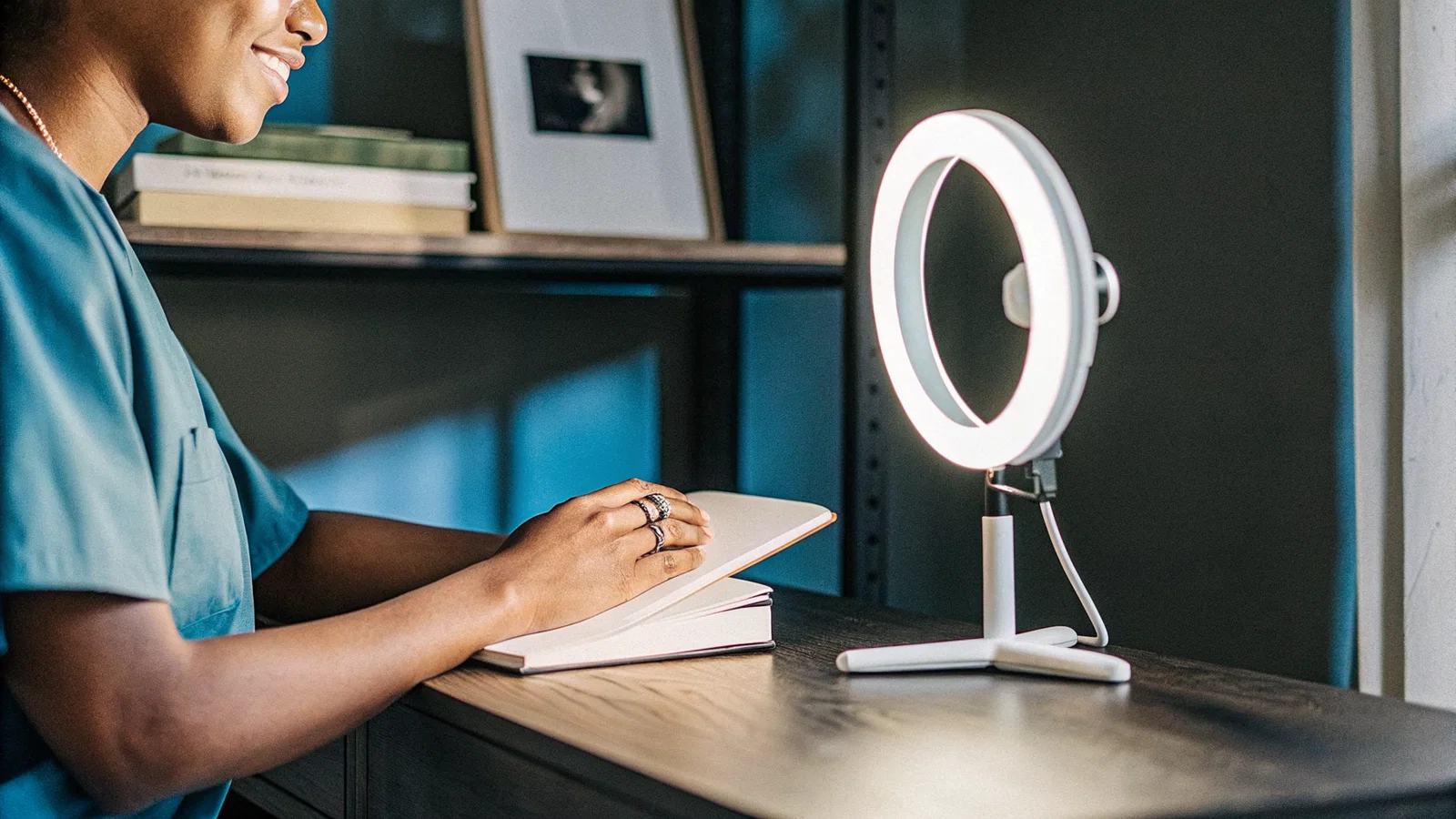
Lighting is where I see the most catastrophic failures. Overhead lighting creates raccoon eyes and makes you look exhausted. A single ring light placed dead center gives you that eerie, hollow-eyed influencer look that reads as trying too hard. The hack: position your main light source at 45 degrees to one side, slightly above eye level, with a cheap piece of white foam board on the opposite side to bounce fill light back. This creates depth in your face. You look three-dimensional, authoritative, and present. It's the difference between looking like a hostage video and looking like you're already running the code team.
Audio quality matters more than your camera. I've watched program directors visibly flinch when an applicant's audio crackles. Poor audio creates cognitive load. The interviewer has to work harder to understand you, and that subtle friction gets attributed to you as a person, not your microphone. A $30 USB condenser microphone on a small boom arm, positioned just below frame, eliminates the hollow, distant sound of a built-in laptop mic. It makes your voice intimate. Close. Trustworthy.
Internet redundancy. One program director told me he automatically drops candidates who freeze more than once. "If you can't solve for the most predictable variable in a virtual interview, what am I supposed to think about your clinical problem-solving?" Hardwire into your router. Have your phone hotspot pre-configured and tested. Have the phone number for the program coordinator taped to your desk. If your connection drops, you call immediately, while reconnecting. You don't panic. You demonstrate exactly what you'd do when a patient crashes, you have a backup plan and you execute it without hesitation.
Section 2: On-Camera Presence That Signals Competence
Here's the paradox that ruins most candidates. You naturally want to look at the interviewer's face on your screen. That's where the human is. But when you look at your screen, your gaze drops slightly. On their end, you appear to be looking down. Disengaged. Maybe reading notes. Eye contact means staring directly into the camera lens. Specifically, your own tiny reflection in that lens. It feels unnatural. It feels like you're talking to a machine. But on the other side, it locks eyes with every person in that virtual room. It's intimate and unnervingly effective.
The 2-foot rule changed everything for a candidate I mentored last cycle. Sit close enough that your head and shoulders fill roughly 60% of the vertical frame, with your hands visible when you gesture at chest level. Sit too far back and you look small, disconnected, like you're presenting at a conference you don't really want to be at. Sit too close and you're looming. Two feet from the camera, give or take, is the sweet spot.
Hand gestures. Keep them within the frame, slow, and open-palmed. Quick, jerky movements blur on camera and read as nervousness. Steeple your fingers briefly, then open. Use a single hand to emphasize a point, then return it to a resting position. I've seen attendings nod approvingly when a candidate's hands reinforce their words without becoming the main event.
<mermaid-data-api title="Optimal On-Camera Body Language Flowchart" code="flowchart TD A[Interview Start] --> B{Eye Contact} B -->|Look at camera lens| C[Perceived as confident and present] B -->|Look at screen| D[Appears disengaged or reading notes] E{Posture} -->|Upright, slightly forward| F[Projects authority and interest] E -->|Slouched or too far back| G[Appears unprepared or arrogant] C --> H[Positive impression compounded] D --> I[Red flag noted by panel] F --> H G --> I'>
Smiling. The candidates who get this wrong smile constantly, like they're greeting customers at a store. That reads as nervous and inauthentic. The ones who get it right smile at specific moments: when they're introduced, when they first start answering a question, and when the conversation reveals a genuine connection. Then they let their face rest in an expression of engaged attention. This micro-rhythm signals emotional intelligence. It says you read the room, even when the room is a grid of faces in gallery view.
Background psychology matters more than you think. A completely blank white wall reads as sterile and low-effort. A bookshelf stuffed with medical textbooks reads as trying too hard. The ideal background has depth, a corner of a room with a plant, a piece of art that isn't a motivational poster, a single shelf with a few books and something personal. It communicates that you have a life and identity beyond this interview. One program director told me she remembers the candidate who had a small, framed osteopathic manipulative medicine chart visible in the background. "It wasn't in your face, but it told me she was proud of her training. I liked that."
Section 3: DO-Specific Tactics That Make You Unforgettable
This is where I see most DO applicants either fold or flourish. The elephant in the virtual room is always the same: "How does your training compare?" If you're defensive, you lose. If you're evasive, you lose. If you're apologetic, you've already lost.
Address your COMLEX scores head-on if they ask, but never apologize. A program director who trained at an allopathic institution genuinely doesn't understand COMLEX scoring. They see a three-digit number and their brain tries to map it to USMLE percentiles. Your job is to bridge that gap without making them feel dumb. Say something like: "My COMLEX Level 2 score was 625, which places me in the 85th percentile among osteopathic students nationally. I also sat for USMLE Step 2 to give programs an additional standardized data point." You've answered the question, provided context, and demonstrated that you understand what they're actually trying to assess without once sounding defensive.
The OMT demonstration trick. Not every interview calls for it, but when the conversation naturally turns to your osteopathic training, be ready. I've seen a candidate say, "I can actually show you a technique that I've found incredibly useful for post-operative ileus patients during my surgery rotation, if you're interested." The panel leaned in. She stood up, positioned her camera to show her hands clearly on her own abdomen, and walked them through a gentle mesenteric lift technique in under 90 seconds. Was it a bit performative? Sure. But it was also memorable, confident, and demonstrated a skill that distinguished her from every other applicant they'd seen that day. They ranked her number two.
Osteopathic philosophy answers that sound mature. Stop saying "we treat the whole patient." It's a cliché that triggers eye-rolling in the virtual room. Instead, describe a specific patient encounter where your osteopathic approach changed your clinical reasoning. A candidate I coached talked about a patient with chronic back pain whose recurrent ER visits stopped after she addressed the patient's housing instability through social work, and also provided OMT for the somatic dysfunction. She concluded: "The philosophy isn't just about being nice to patients. It's about recognizing that structural and systemic issues are often intertwined, and addressing both changes outcomes." That's a mature, non-defensive articulation of osteopathic identity.
Here's the insider secret about how DO students are actually evaluated in virtual interviews. Most programs now use a standardized scoring rubric with categories like "clinical knowledge," "communication," "professionalism," and "fit." The "fit" column is where your DO background gets adjudicated. Attendings aren't sitting there debating the merits of cranial osteopathy. They're asking themselves: "Does this candidate seem comfortable in their own skin? Will they integrate well with our team? Are they going to be constantly trying to prove something, or are they going to contribute?" Your job is to project a calm, grounded confidence about your training that makes those questions answer themselves in your favor.
Section 4: The Q&A Phase, Where Winners Are Made
Most applicants treat the Q&A portion as a formality. They ask a couple of safe questions and wait for the session to end. The candidates who get ranked highly understand that this is where the real assessment happens. The questions you ask reveal your priorities, your emotional intelligence, and your understanding of what residency actually entails.
The question reverse technique. When a program director asks if you have any questions, pause. Then say something like, "I do have a few, but first I wanted to ask about something you mentioned earlier regarding the new simulation curriculum. I'm curious how that's changed the way residents prepare for codes." You've just demonstrated that you were listening actively, not just waiting for your turn to speak. You've asked a question that shows you care about training quality, not just perks. Program directors eat this up. One confided in me, "When a candidate references something I said earlier, I know they're paying attention, and that's half of what I need in a resident."
Red flag answers. If you're asked about your weaknesses and you say "I work too hard" or "I care too much," you've just told the panel you lack self-awareness. Give a real weakness, and more importantly, tell them what you're doing about it. "I struggled with delegation on my sub-I because I wanted to handle everything myself. My attending gave me feedback, and I started deliberately assigning tasks to the med students on my team. It improved the workflow and I'm continuing to work on it." That's a real answer from a real human.
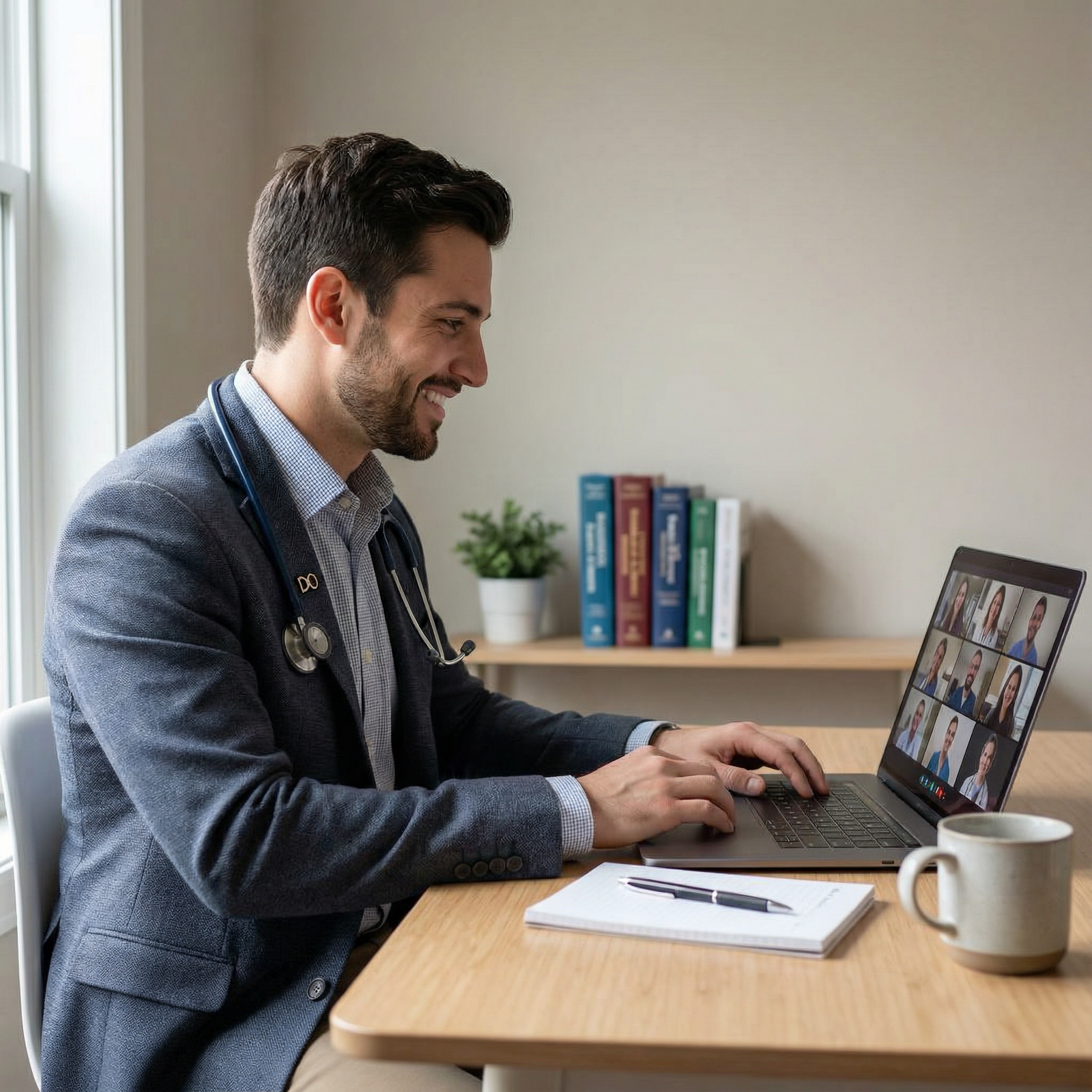
What to actually ask programs. Skip the mission statement questions. They're on the website. Ask things that reveal your priorities: "How do your senior residents mentor the interns, specifically?" or "Can you tell me about a recent change the program made based on resident feedback?" or "What's one thing graduates of this program do differently than their peers from other programs?" These questions communicate that you're thinking like a resident, not an applicant.
Never, and I mean never, ask about salary, benefits, or vacation during the formal interview. That's a coordinator question. Asking the program director about time off signals that you're already looking for the exit before you've even arrived. It's a small thing that leaves a disproportionately negative impression.
When technical difficulties hit, and they will, eventually, don't apologize profusely. Don't make a joke about how technology is the worst. Just say, calmly, "My connection seems to be struggling for a moment. I'd like to restart my video feed. One moment." Then do it. When you return, say "Thank you for your patience," and continue exactly where you left off. The composure you show in that ten-second disruption says more about your clinical readiness than any answer you'll give.
Conclusion: Your Virtual Footprint Is Your New First Impression
The interview is one data point in a massive application file. But it's the only one you can control completely in the moment. Your board scores are locked. Your clinical grades are set. But how you show up in that Zoom window, your voice, your gaze, your background, your questions, that's entirely under your command.
Program directors aren't looking for a perfectly polished robot. They're tired. They've been interviewing for weeks. They want to remember someone who felt real. A colleague they can imagine working beside at 3 AM. Your technical preparation, your on-camera presence, and your unapologetic ownership of your osteopathic training all converge to create that impression.
Don't perform these tactics. Make them second nature through practice, then forget about them and be yourself. The goal isn't to game the system. It's to remove every barrier between who you are and what they see on the screen. When you do that, the ranking takes care of itself.