
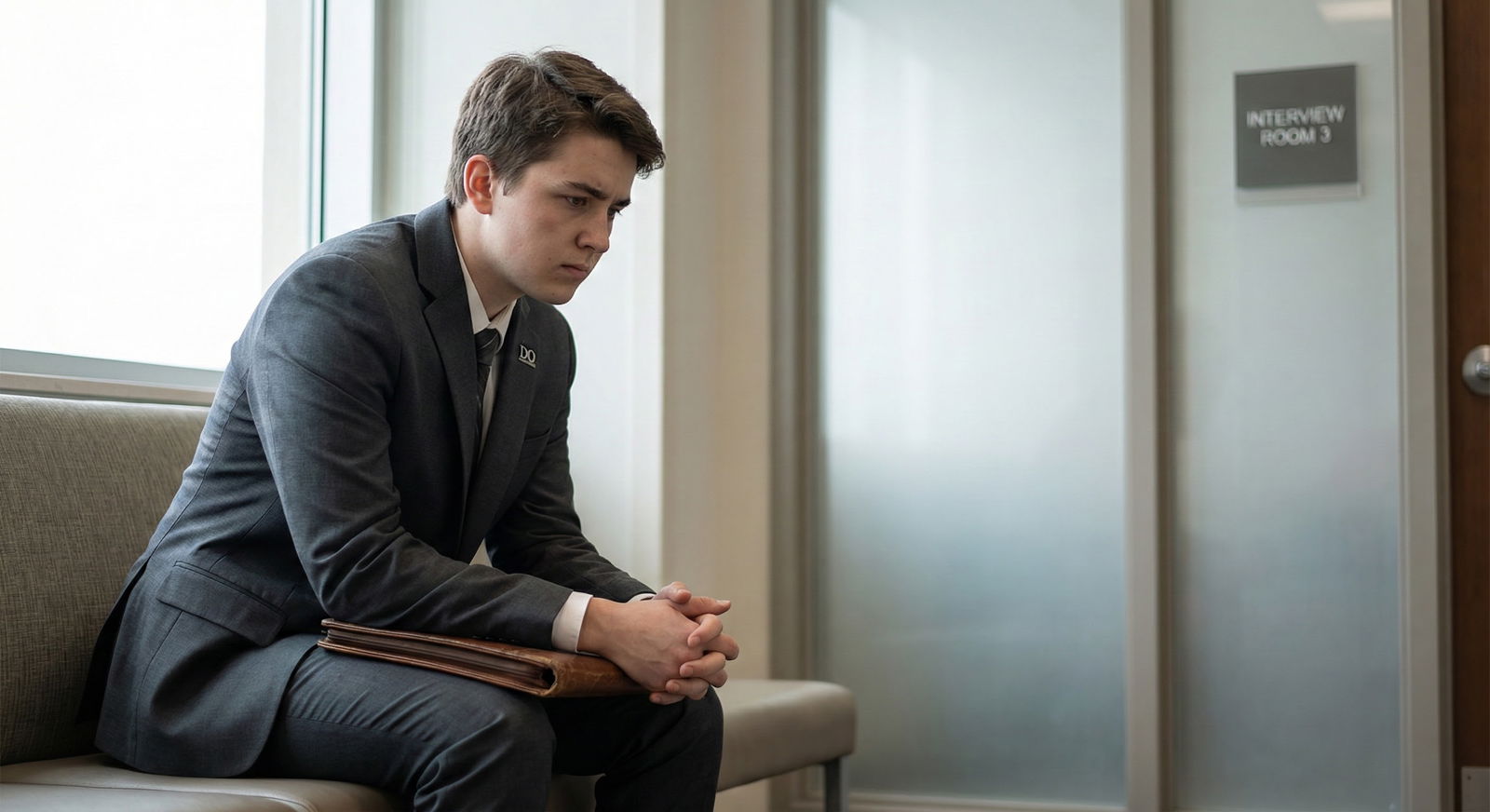
What if you mention OMM once in an interview and the program silently labels you as “too DO, not enough real medicine”?
Yeah. That fear.
You’re sitting there in your suit, they ask about your medical school, your training, what makes you different… and you’re thinking: “If I say OMM, are they going to think I’m a quack?” But if you don’t say it, you feel like you’re erasing a core part of your education and what you actually bring to the table.
Let’s pick this apart, honestly, the way someone who has to live with the Match result would.
The Ugly Truth: Do Some Programs Judge OMM? Yes.
I’m not going to sugarcoat this: there are ACGME programs where people roll their eyes at OMM.
I’ve heard it directly in the halls:
- “We don’t really do that voodoo stuff here.”
- “If they start talking about cranial I tune out.”
- “I like DOs as long as they’re basically MDs.”
Are those comments ignorant? Yes. Do they exist? Also yes.
(See also: How ACGME Programs Quietly Sort DO vs MD Files on ERAS Review Day for tips on spotting program-level biases.)
But here’s the thing: those aren’t all programs. And they’re not even most programs anymore, especially post-single accreditation. What’s really happening is more nuanced:
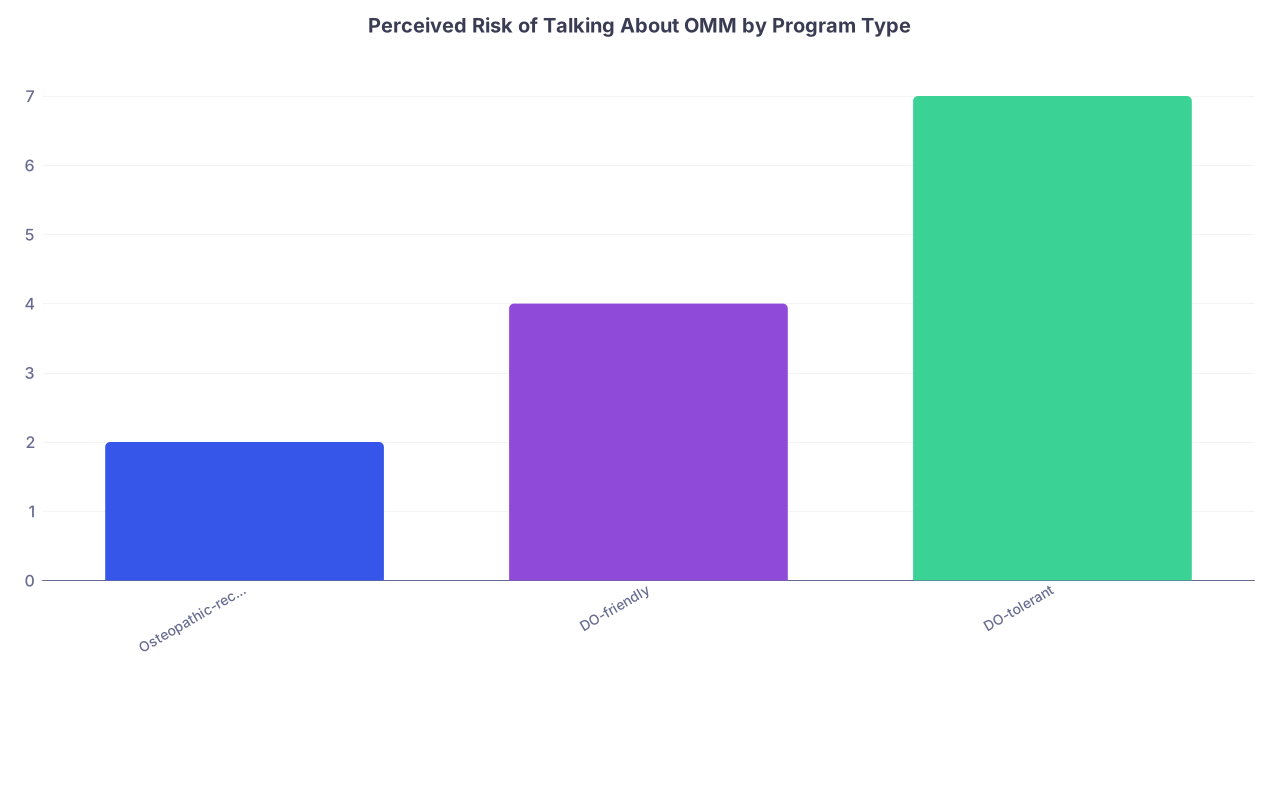
There are roughly three types of ACGME programs when it comes to OMM/osteopathic identity:
| Program Type | Attitude to OMM | Risk if You Talk About It |
|---|---|---|
| Osteopathic-recognized | Supportive/Neutral-Positive | Low |
| DO-friendly, no recognition | Neutral/Practical | Low-Moderate |
| DO-tolerant-at-best | Skeptical/Negative | Moderate-High |
The nightmare scenario in your head is that every ACGME program is secretly Type 3. That’s just not reality.
Most are in the middle: they don’t care as long as:
- You’re clinically solid
- You don’t make OMM your entire personality
- You don’t sound like you think OMM replaces evidence-based medicine
So the question isn’t “Will talking about OMM automatically hurt me?” It’s: “How you talk about OMM — will that help or hurt you depending on the room you’re in?”
When Talking About OMM Actually Helps You
This is the part DO students underestimate, because we’re all conditioned to think our training is a liability.
Used correctly, OMM is not a red flag. It’s a super clean, easy way to:
- Show you understand musculoskeletal medicine
- Signal you can help with common resident-level problems (neck, back, ribs, post-op pain)
- Demonstrate you think with your hands, not just your cursor
Programs see thousands of “hardworking, compassionate, team players.” They do not see thousands of people who can say:
“I’ve had hands-on training assessing and treating musculoskeletal dysfunction, which really helped me on my surgery and EM rotations when we had patients with post-op pain or acute back pain.”
That’s not “I’m going to start a holistic healing spa on your inpatient unit.” That’s you saying: I have a concrete, clinically useful skill.
Where OMM helps you:
- Osteopathic recognition programs
- Programs that already have DO faculty (especially those who actually use OMM)
- Community hospitals drowning in back pain, shoulder pain, neck strain, etc.
- Primary care, FM, PM&R, EM, sports, IM with lots of MSK complaints
Specific example you can actually say in an interview:
“I don’t see OMM as a separate world from standard care. On my IM rotation, we had a patient with rib dysfunction after coughing fits from pneumonia. My attending let me do some muscle energy techniques alongside their usual meds, and the patient reported improved pain and breathing. That experience showed me it can be a useful adjunct when used appropriately.”
Notice what that does:
- You’re not preaching philosophy
- You’re not saying “I fixed them with my hands”
- You’re clearly grounded in normal medicine + using OMM as an add-on, not a replacement
That’s the version that helps you.
When OMM Talk Can Hurt You (and How to Avoid That Trap)
Let’s just name the nightmare scenarios so they stop haunting your brain.
Talking about OMM can hurt you if:
You make it sound like magic. If you start talking about “realigning energy” or “fixing organs with cranial” in a highly academic, skeptical program, you’ll lose the room. Fast.
You sound like you think OMM is more important than guideline-based care. Anything that sounds like “I prefer OMM instead of meds” without nuance is bad. Especially in acute/critical settings.
You can’t explain it in concrete, rational, non-woo terms. If they ask, “How would you use that in our program?” and you respond with vague philosophy and zero practical examples, you’re in trouble.
(Related: I’m a DO with No Home Program: Can I Still Match Well in ACGME?)
- You try to force it into specialties where it’s clearly not central. Like going into pathology and talking for five minutes about OMM in your “Why this specialty?” answer. They’ll just think you don’t understand the job.
So what do you do if they ask directly, “Do you use OMM?” and you’re worried it’s a hostile crowd?
You keep it simple, boring, and clinical:
“I’m trained in OMM, and I see it as a tool I can use when it’s evidence-based, appropriate, and within the culture of the program. My priority is always standard-of-care medicine. If I’m in a setting where OMM fits and the attending’s comfortable with it, I’m happy to use it as an adjunct for things like musculoskeletal pain. If not, I’m equally comfortable not using it.”
That answer does a lot of things at once:
- You’re not hiding your DO identity
- You’re signaling you won’t be the rogue OMM crusader
- You’re making it clear you respect local culture and attendings
| Category | Value |
|---|---|
| Osteopathic-recognized | 2 |
| DO-friendly | 4 |
| DO-tolerant | 7 |
(Scale 1–10: 1 = no risk, 10 = very risky if mishandled.)
How to Talk About OMM Without Making It Your Whole Identity
The fear under all of this is: “If I mention OMM, they’ll think that’s all I care about.”
So don’t let that happen.
Here’s the rough ratio I’ve seen work for DOs going into ACGME programs:
OMM should be a side note, not the headline.
If they ask “What makes you different?” you don’t launch into a monologue about osteopathic principles. You say something like:
“I think my strengths are my work ethic, my ability to communicate with patients in stressful situations, and my musculoskeletal exam skills from my DO training. On rotations, those last ones helped with patients who had complex pain complaints.”
See what happened? OMM isn’t the star. It’s the third bullet in a mixed answer.
You can also control where OMM shows up:
- Personal statement: a couple of lines at most, unless you’re applying to osteopathic recognition programs.
- Interviews: weave it in only when it makes sense (patient care questions, “what makes you unique,” “tell me about a time” stories).
- Not in every answer. Please. Don’t be the “OMM guy” or “OMM girl” for a program that doesn’t care.
And if you’re really paranoid, do this in advance:
Look up whether the program has:
- Any DO faculty
- Osteopathic recognition
- DO residents already
If they do, you can be a little more open. If they don’t, you go more measured, more “it’s a tool, not my religion.”

| Step | Description |
|---|---|
| Step 1 | Research Program |
| Step 2 | Comfortable, positive OMM mention |
| Step 3 | Brief, practical OMM examples |
| Step 4 | Very light OMM mention, focus on core clinical skills |
| Step 5 | Osteopathic recognition or DO-heavy? |
| Step 6 | Any DO faculty/residents? |
What If They Straight-Up Hate OMM?
Here’s the worst-case scenario you’re probably secretly rehearsing:
You: “As a DO, I also have training in OMM which—”
Interviewer: “We don’t do that here.” Tone: dismissive. Smirk present.
Your brain: I’m dead, I’ve ruined everything, I will never match, I should’ve gone to law school.
Reality check:
That’s data about them, not you.
If they’re openly hostile to something that is literally part of your degree, ask yourself whether you truly want to spend 3–7 years there getting subtle (or not-so-subtle) digs about being a DO.You can recover in real time.
You can say calmly:“That makes total sense. I’ve always viewed OMM as one tool in a larger toolbox. My priority is practicing evidence-based medicine within the culture of the program I’m in, so if OMM isn’t part of that here, that’s completely fine.”
Then you pivot back to bread-and-butter topics: patient care, teamwork, your clinical experiences.
One bad interviewer doesn’t always equal a full-program stance.
Some places have one grumpy MD who hates DOs and five others who love them. Annoying, but true.
But — and I’m going to be blunt here — if multiple interviewers at a program throw shade at OMM and your DO background? You’re not blowing a chance. You’re dodging a bullet.
You can survive being somewhere that doesn’t use OMM.
Living for years where they don’t respect your training at all? That eats at you.

Practical Do/Don’t Script for Interview Day
You’re anxious, so here’s the part you can basically rehearse.
When they ask about being a DO:
“Being a DO’s given me a strong foundation in musculoskeletal and holistic patient assessment. I don’t see it as separate from standard medicine, just a slightly different lens and a few extra tools, like OMM, that I use when appropriate.”
If they explicitly ask, “Do you plan to use OMM here?”
“Only if it fits within the program’s culture and the supervising attending is comfortable with it. My priority is always following evidence-based guidelines and the team’s approach. If there are opportunities where OMM could help with things like musculoskeletal pain and everyone’s on board, I’d be glad to contribute that skill. If not, I’m completely fine not using it.”
If you sense they’re DO-friendly:
“On my rotations, I used OMM occasionally for things like neck and back pain when attendings allowed it, and patients often appreciated having a non-pharmacologic adjunct. I’d love to keep those skills sharp if there’s space for that here.”
If you sense they’re skeptical:
“My focus is absolutely on being a strong, evidence-based clinician. OMM is something I’m trained in, but I see it as optional and context-dependent, not central to how I practice day-to-day.”
| Category | Value |
|---|---|
| Hostile | 1 |
| Neutral | 3 |
| DO-friendly | 6 |
| Osteopathic-recognized | 8 |
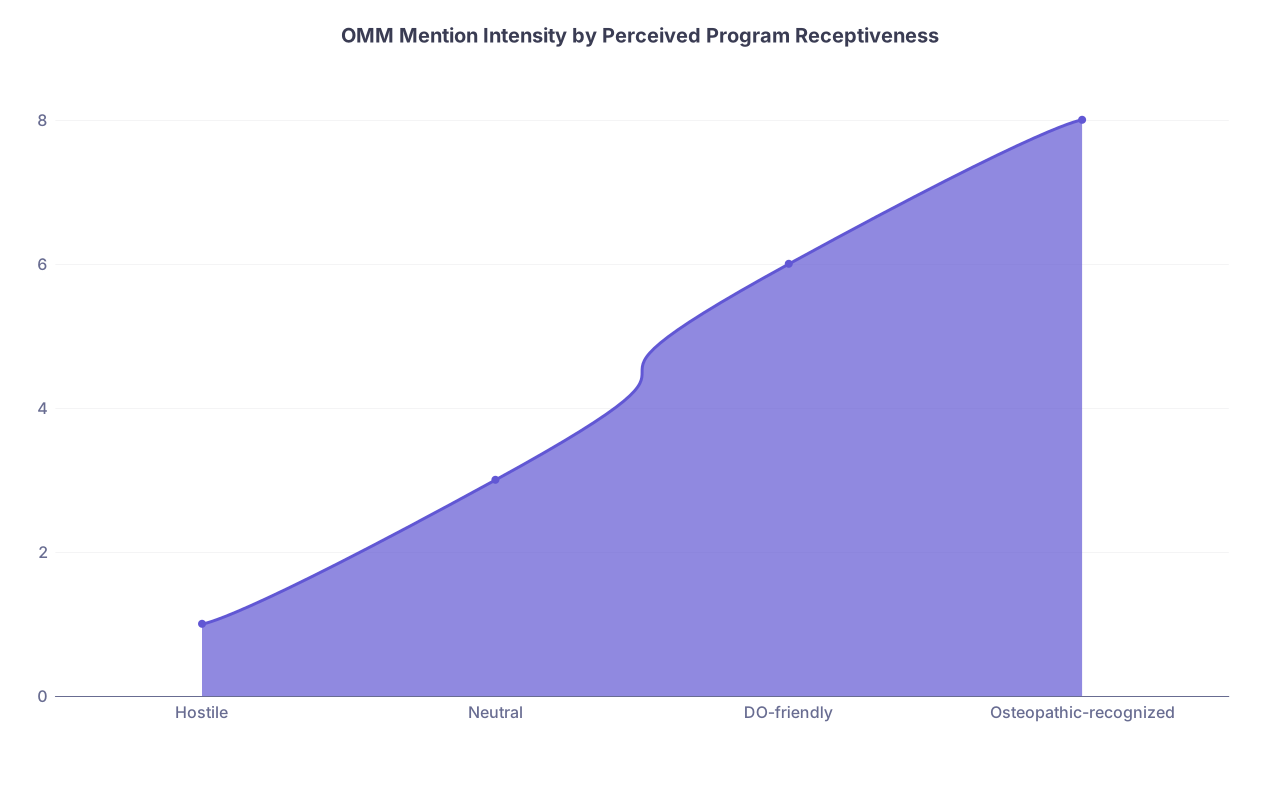
(Scale 1–10: how much you lean into OMM discussion.)
Your Real Question: Could One OMM Comment Tank My Match?
You’re afraid there’s a trapdoor. One wrong move, one OMM sentence, and suddenly you’ve ruined your chances at that program forever.
The reality is less dramatic and more annoying:
- If a program already doesn’t like DOs, talking about OMM might confirm their bias — but they were probably never ranking you high anyway.
- If a program is neutral, how you frame OMM can slightly help or slightly hurt — but usually not enough to overshadow your letters, scores, and how you come across overall.
- If a program is DO-friendly, a measured, grounded OMM answer can actually boost you.
The real danger is not “mentioning OMM.”
The danger is coming across as:
- Unscientific
- Rigid
- Not adaptable to their culture
You can be a DO, acknowledge OMM, and still come across as 100% mainstream, evidence-based, team-oriented.
That’s the sweet spot.
FAQs
1. Should I bring up OMM if they don’t ask?
If the program looks DO-friendly or has osteopathic recognition, yes, briefly. Otherwise, only weave it in when it fits naturally (e.g., patient care stories, “what makes you unique”). Don’t force it into every answer. Let it be a supporting detail, not the headline.
2. Will not mentioning OMM make me look like I’m hiding my DO identity?
No. Most people don’t expect a TED Talk on osteopathy. Your DO degree is obvious from your application. As long as you don’t act ashamed or weird when they mention your school or degree, you’re fine. You’re not obligated to turn OMM into a personality trait.
3. What if a program openly dismisses OMM during my interview?
Stay calm and don’t argue. Give a measured answer like, “I see it as an optional tool, and I always follow the culture and standards of the program I’m in.” Then mentally note that this program might not be a place where you’ll feel fully respected. One rude comment from them shouldn’t send you into a spiral about your entire career.
4. Can I say I probably won’t use OMM much in residency?
Yes, and for many specialties, that’s completely reasonable. You can say, “In this specialty, I don’t expect to use OMM frequently, but the training has helped my musculoskeletal exam skills and global way of thinking about patients.” You’re not betraying osteopathy by being honest about your actual practice.
5. Will focusing too much on OMM hurt my chances at competitive specialties (like EM, anesthesia, some IM programs)?
It can, if it makes you sound unfocused or like your main agenda is to practice OMM instead of becoming excellent in that specialty. Programs want specialists first, DOs-with-extra-tools second. For competitive fields, keep OMM as a minor, practical bonus, not the core of your pitch.
6. How do I know ahead of time if a program is DO-friendly about OMM?
Look at their roster: DO faculty? DO residents? Any osteopathic recognition? Check resident bios and social media. Talk to current DO residents if you can. If a program has zero DOs anywhere and a very academic vibe, assume neutral-to-skeptical and keep your OMM talk short, practical, and obviously evidence-based.
Key points to walk into interviews with:
- Talking about OMM won’t automatically hurt you; how you talk about it matters.
- Frame OMM as a practical, optional tool, not a belief system or replacement for standard care.
- Read the room and the program. Let your DO training be part of you, not the only thing they see.


