It’s 11:47 p.m. You’re on FREIDA, again, staring at program websites. Your school doesn’t have a home residency program in your specialty. Your classmates at MD schools are talking about “our home program” and getting “automatic” interviews. And you’re sitting there thinking:
“I’m a DO, no home program, no built-in PD connections. Am I already screwed?”
Let’s just say what your brain is screaming:
What if this one structural disadvantage quietly kills my shot at a good ACGME match?
I’m going to walk straight into that anxiety and unpack it, because I’ve watched DOs without home programs do really well… and I’ve also watched some crash and burn because they didn’t understand the playing field.
You’re not doomed. But you absolutely can’t play this like someone with a cushy home program safety net.
Reality check: What “no home program” actually means (and doesn’t)
First, we need to separate the fear from the facts.
No home program means:
- No built‑in “default” audition rotation where the PD already knows your school
- No easy “home letter” from a program director in your specialty
- No automatic exposure to residents/faculty in your target specialty just by existing on your campus
- No “home advantage” where they feel obligated to interview you because you’re “one of theirs”
What it doesn’t automatically mean:
- It does NOT mean you can’t match well in ACGME
- It does NOT mean programs blacklist you
- It does NOT mean you’re behind every MD applicant
Let me be blunt: lots of DO schools function like this. Tons of students in specialties like EM, anesthesia, radiology, ortho, even IM subspecialties… match every single year without a home program. I’ve seen DOs with zero home program match:
- University IM at big academic centers
- EM at busy urban programs
- Anesthesia and rads at solid mid-tier university and strong community programs
- Even some competitive fields when they played it smart
But here’s the catch: the margin for error is way smaller for you.
Your MD classmate with a home program can get away with lazy networking and one decent away rotation. You? You need a strategy, not vibes.
How much does being a DO + no home program hurt me… really?
Let’s put your worst nightmare on the table: “Everyone will prefer MDs with home programs and I’ll be tossed instantly.”
Is there bias? Yes. Pretending there isn’t is delusional.
Here’s the rough truth:
- Some ACGME programs are still MD‑leaning and don’t understand DO training
- Some will quietly filter out DOs unless you have something special (Step 2, strong letters, known rotations)
- Some PDs just feel more comfortable with students from schools they “know,” especially their own
But programs are not one giant monolith. The DO with no home program isn’t the red flag your 2 a.m. brain thinks it is. It’s more like a missing checkbox they’d ideally like to see—but can be replaced.
What replaces it?
- Rotations where they know your face, not your degree
- Letters from people they respect
- Clear evidence you function well in an ACGME environment
- A believable, coherent story in your application
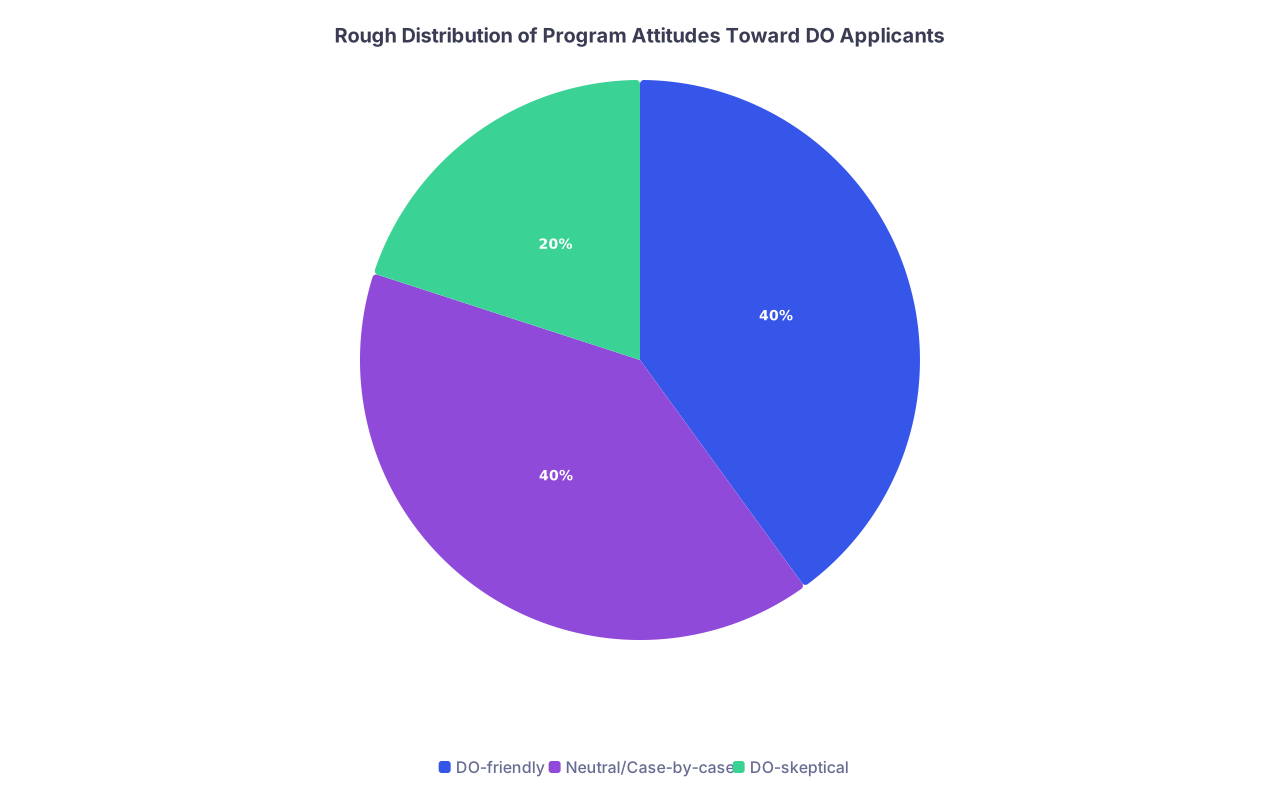
| Category | Value |
|---|---|
| DO-friendly | 40 |
| Neutral/Case-by-case | 40 |
| DO-skeptical | 20 |
Those numbers aren’t exact, but they reflect what I’ve seen: a decent chunk are happy to take DOs, many are on the fence but persuadable, and yes, some are a waste of your time.
Your job is to aim heavily at the first two groups and stop obsessing about the last one.
Your biggest handicap isn’t DO or no home program. It’s being “unknown.”
Here’s what a home program gives MD students that you don’t have by default:
- People who can say: “I’ve seen this student on our wards for months. They’re solid.”
- A PD who can say: “We know their school’s grading. This grade actually means something.”
- A network that naturally advocates: chiefs messaging their co-residents at other programs saying, “Hey, interview this kid.”
Your risk is not “I’m DO.”
Your risk is “No one knows me well enough to go to bat for me.”
So you have to create what I call “artificial home programs.” Several of them.
Places where, by the time ERAS hits:
- At least one attending could recognize your name in a stack of 800 apps
- Someone could say, “They rotated here. They work hard and fit in.”
- You’re not just another DO from a random school on paper
This is built almost entirely through rotations, letters, and targeted networking.
Building your “pseudo-home programs” through rotations (this part is huge)
If you take nothing else from this: your rotations basically become your home programs.
You cannot coast on random community rotations in unrelated fields and hope to scramble into a good ACGME spot. That’s fantasy.
You need to treat every audition/away like it might be your only shot at a “home” somewhere.
Here’s how to think about it:
| Rotation Type | Value for DO w/ No Home Program |
|---|---|
| Audition at DO-friendly ACGME | Highest |
| Rotation at community program | High |
| Rotation at big-name MD-only | Variable to low |
| Random outpatient elective | Low |
| Non-specialty core rotation | Indirect |
You want:
- At least 2–3 audition/away rotations in your specialty at DO‑friendly programs
- A mix of community and university when possible
- Programs that have actually matched DOs recently (check resident lists)
- Places where you’re not the 10th rotator that month with no chance to stand out
And on those rotations, you can’t just “do fine.”
You’re trying to become “their DO home student.”
That means:
- Show up early. Every day. Not just week one.
- Volunteer for the unsexy work: notes, scut, follow‑up calls
- Ask for feedback early—then actually fix things
- At the end, explicitly ask: “Would you feel comfortable writing me a strong letter for residency?”
If that question scares you, good. It should. Because a lukewarm letter is almost worse than no letter.
Letters of recommendation: you cannot afford generic
The MD with a home program can get a letter that says, “We know this student. They’re good. We’d take them.” and it still works.
You? You need letters that punch way above average.
Think:
- “Top 10% of students I’ve worked with in 10 years”
- “I would gladly have them in our residency”
- Specific examples of work ethic, reliability, teamwork
Three strong specialty letters is ideal, at least one from an ACGME program director or core faculty.
If your school doesn’t have your specialty, you must generate these externally. That usually means:
- Two letters from audition/away rotations in your specialty
- One from a strong inpatient/core attending who can speak to your work ethic if specialty options are limited
If a letter writer seems hesitant, don’t use them.
You do not need “This student was on my service and did what was expected.” That’s code for “meh.”
The Step 2 / COMLEX reality: you don’t get to play the mystery game
If you’re DO + no home program and you’re not taking Step 2 or you’re hiding it… you’re basically asking programs to guess in a way that usually hurts you.
Are there programs who’ll take COMLEX only? Yes.
But many ACGME programs flat-out understand Step 2 better and will filter based on it.
Where you land roughly:
- Competitive-ish specialty (EM, anesthesia, rads, gas, some IM programs): Step 2 almost mandatory to be taken seriously
- Less competitive fields or very DO-friendly places: COMLEX alone can still work, especially with strong rotations and letters
But if your fear is “They’ll doubt me because I’m DO,” handing them no familiar score doesn’t fix that.
If your Step 2 is already back and it’s mediocre, then you need:
- A wider application list
- Programs that actually list DOs/COMLEX in their residents
- Heavy emphasis on those places where your letters/rotations are strongest
What you don’t do is pretend the score doesn’t exist and hope it never comes up.
Program list strategy: you can’t be precious about prestige
Here’s another place DOs with no home program blow up their match:
They build MD-classmate fantasy lists. Then act shocked.
You cannot copy your MD friend’s list who has:
- A home program in your specialty
- A glowing PD letter from there
- An MD school name that half the country recognizes
You need to be much more cynical and much more realistic.
Look for:
- Programs where current residents include DOs
- Programs that have multiple DO faculty or PDs/APDs
- Places that take your school’s grads or similar DO schools
- Community and university‑affiliated programs, not just brand-name academic giants
Aim for a broad list, especially if you’re in a competitive field.
Think something like (for mid-competitive specialties):
- 15–20 “reach but DO-friendly”
- 20–30 solid DO‑friendly targets
- 10+ safety community programs with known DO residents
Not every specialty needs 60 apps, but your margin to “aim high only” is minimum.
How to not look like a drifting DO with no anchor in your application
Another hidden fear: “Are they going to look at my app and think I’m just floating around with no real ties anywhere?”
They might—unless you give them a different narrative.
You want your application to communicate:
“I didn’t have a home program, so I built my own network and sought out strong training wherever I could.”
How that looks on paper:
- Rotations show a pattern: several in your specialty, not random scattered electives
- Your personal statement briefly acknowledges your context if relevant
- Example: “My DO school didn’t have a [specialty] program, so I sought out training at X and Y, where I confirmed I’d fit best in…”
- Short. Not an excuse. More like: “I did something about it.”
- Your letters all reinforce the same story: you show up, work hard, fit on teams, and are coachable
Programs don’t punish you for not having a home program. They punish you for looking like you never figured out how to compensate for it.
Common disaster scenarios (so you can avoid them)
Let me just list the stuff I keep seeing that sinks DOs with no home program:
- Only one real audition rotation in the specialty, then a bunch of random outpatient stuff
- Applying mainly to MD-prestige programs with almost no DOs in their current residents
- No Step 2 and COMLEX barely above average, then shock when interview season is quiet
- Letters: 1 generic specialty letter, 1 from a random preceptor, 1 from a non-physician
- Personal statement that reads like: “I like this specialty, please pick me,” with no sense of actual fit or evidence
If you recognize yourself in one of those, you’re not cooked. But you can’t just “hope it works out.” You need to pivot now.
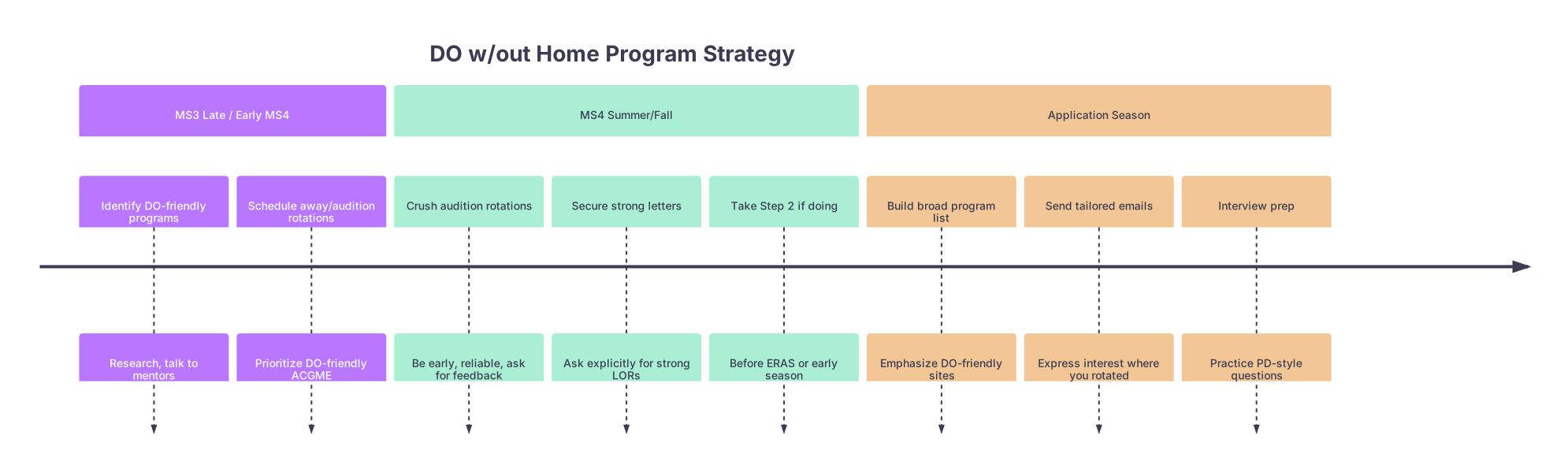
Quick visual: what you should be building this year
| Period | Event |
|---|---|
| MS3 Late / Early MS4 - Identify DO-friendly programs | Research, talk to mentors |
| MS3 Late / Early MS4 - Schedule away/audition rotations | Prioritize DO-friendly ACGME |
| MS4 Summer/Fall - Crush audition rotations | Be early, reliable, ask for feedback |
| MS4 Summer/Fall - Secure strong letters | Ask explicitly for strong LORs |
| MS4 Summer/Fall - Take Step 2 if doing | Before ERAS or early season |
| Application Season - Build broad program list | Emphasize DO-friendly sites |
| Application Season - Send tailored emails | Express interest where you rotated |
| Application Season - Interview prep | Practice PD-style questions |
You’re basically manufacturing a network from scratch. It’s harder. But absolutely doable.
Bottom line: can you still match well in ACGME as a DO with no home program?
Yes.
But not by accident.
If you do what a “typical” MD with a home program does, you’re rolling loaded dice against yourself.
If you:
- Pick DO‑friendly ACGME programs intentionally
- Treat your away rotations like “auditions for a pseudo-home”
- Get strong, specific letters from ACGME faculty
- Take Step 2 (for most fields) and don’t hide from your scores
- Apply broadly and realistically, not ego-first
You can absolutely match well. I’ve seen people do it with lower scores, average research, and no fancy pedigree.
They just didn’t pretend the home program gap didn’t matter. They built around it.
FAQ (exactly 5 questions)
1. I’m a DO with no home program in EM/anesthesia/rads. Is it even worth trying for these specialties?
Yes, but you can’t “dabble.” These fields have gotten tighter. You’ll need:
- Multiple audition rotations at DO‑friendly programs
- Step 2 (and a decent score)
- Programs on your list that actually have DO residents now
If you’re not willing to travel for rotations and cast a wide net, then yeah, it becomes almost lottery-level odds. But committed DOs still match into these every year.
2. My school has zero faculty in my specialty. Who should write my letters?
You have to manufacture that specialty exposure:
- Do at least 2 away/audition rotations in your target specialty
- Get letters from attendings or PDs at those sites
- Use a strong inpatient core attending from another field as a backup third letter, if needed
You’d rather have a powerful letter from an IM attending who really knows you than a weak form letter from some distant “specialist” who barely remembers you.
3. What if my Step 2 isn’t amazing? Am I done as a DO with no home program?
Not automatically. A mediocre Step 2 just means:
- You can’t be picky with programs—you need plenty of DO‑friendly, community, and mid-tier options
- Rotations and letters carry even more weight; you need to be someone they want on the team, not just a score
- You may need to expand geographic flexibility
It’s “work harder and aim wider,” not “give up.”
4. Should I mention not having a home program in my personal statement?
Only briefly, and never as an excuse. A good version sounds like:
“My school doesn’t have a [specialty] residency, so I sought out training at X and Y programs, where I discovered I enjoy high-acuity inpatient care and strong resident teaching culture.”
You’re framing it as: “I lacked this resource, so I built my own,” not “Poor me, please compensate.”
5. I’m late. I don’t have enough away rotations planned. Is there anything I can still do?
You’re behind, but not dead. Options:
- Grab any late-open audition spots, even if they’re not your dream locations
- Lean heavily on your strongest core rotation attendings for honest, enthusiastic letters
- Widen your application list and include more DO-heavy programs and less competitive regions
- Strong, personalized emails after application submission to programs where you have any connection (school alumni, region, prior observerships)
You can’t fix the past, but you can absolutely make smarter moves from today forward.
Today’s concrete step:
Open a spreadsheet and list 20–30 ACGME programs in your specialty that have DO residents right now. Check their websites. That’s your starting “DO-friendly target” list. If you don’t have at least that many, you’re underbuilt—and now you know where to push.