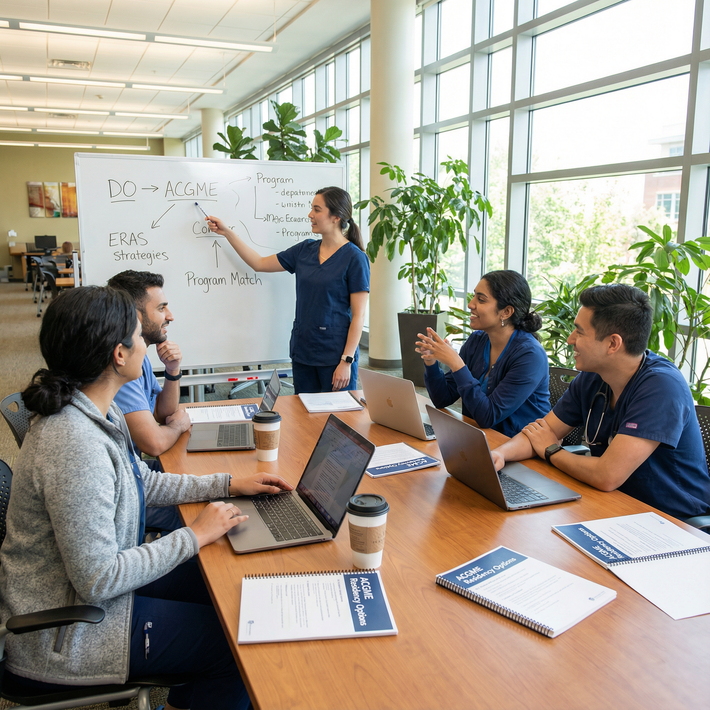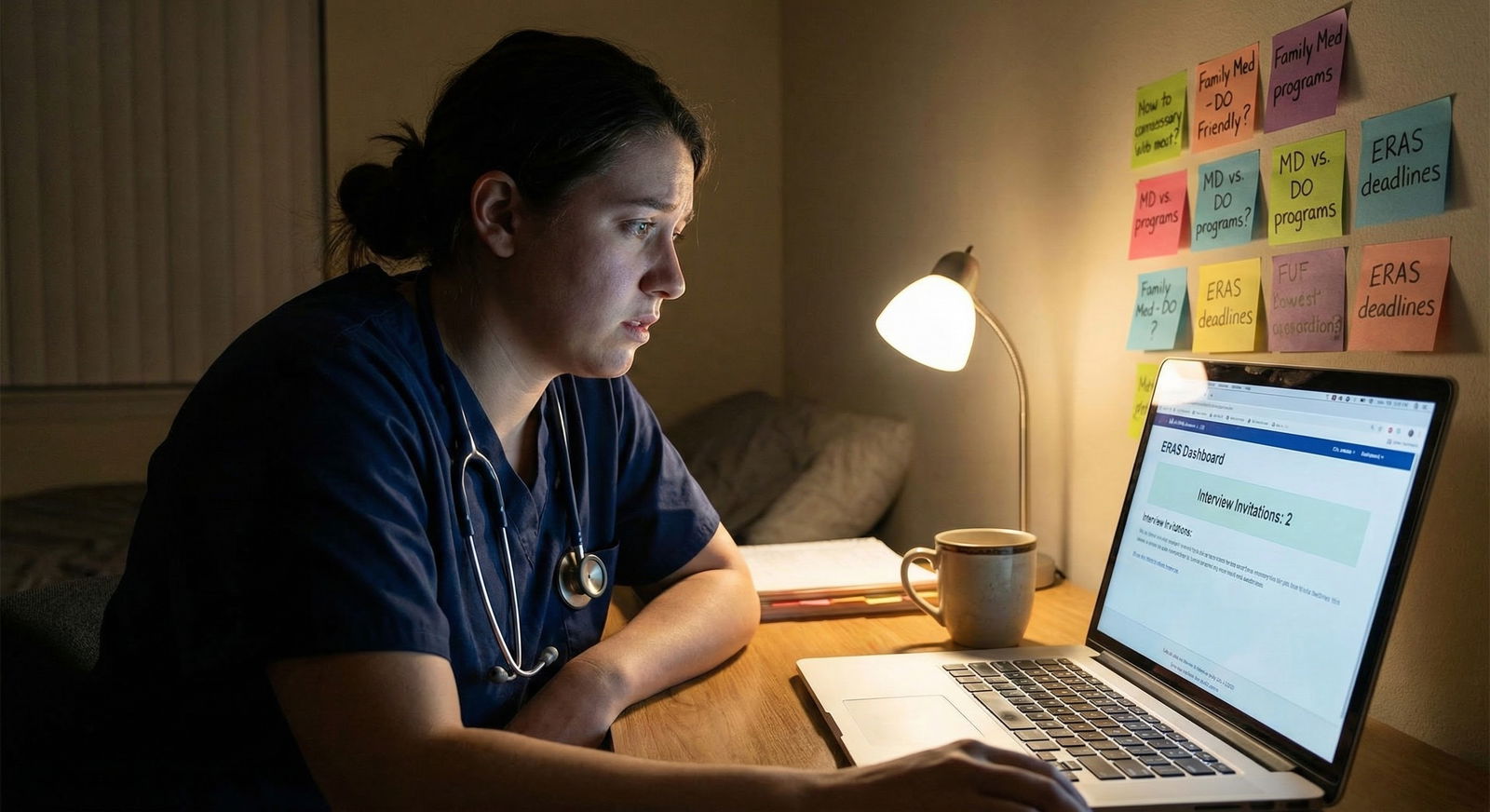
What do you actually say when an ACGME faculty member asks, “So, tell us about your osteopathic training,” and you’ve got 60 seconds to not sound defensive, confused, or preachy?
Let me walk you through the answer you’re looking for.
The Real Goal: Translate, Don’t Defend
Your job in that room isn’t to “justify” being a DO.
Your job is to translate your osteopathic education into language an ACGME panel instantly recognizes as valuable for their program: patient-centered, systems-oriented, procedure-comfortable, team-ready.
Here’s the mental framework:
- Assume half the panel doesn’t really understand osteopathic training.
- Assume at least one person has worked with great DOs and likes them.
- Assume nobody has time or patience for a philosophy lecture.
You need a tight, rehearsed script that hits three things:
- What osteopathic training is (brief, concrete)
- How it changes the way you approach patients
- How that benefits their residency specifically
If your answer sounds like a brochure, you’ve lost them. If it sounds like a practical advantage for their service, you’ve got them.
A Core Script You Can Actually Use
Let’s build a simple, plug-and-play answer you can adapt.
When they ask: “Can you tell us how your DO training influences your approach?” or “How is osteopathic training different?” you can use something like:
“Sure. My osteopathic training has two big components that shape how I work.
First, it’s very systems- and function-focused. We’re trained to think about how structure and function are linked, which in practice means I’m always asking, ‘What’s actually driving this patient’s symptoms at a whole-person level—medical, functional, social?’
Second, we get hands-on training through OMM/OMT. I don’t use it as magic; I use it as another tool—for diagnosis, for understanding pain patterns, and occasionally for treatment when it’s appropriate and evidence-based.
Practically, that’s made me very exam-focused, comfortable with touching and positioning patients, and pretty good at explaining plans in a way patients actually buy into. On rotations, attendings have commented that I tend to step back and see the whole clinical picture rather than just the chief complaint, which I think comes directly from my DO background.”
That’s the spine of the answer. You can then customize depending on specialty:
- For EM: emphasize efficiency, MSK evaluation, and bedside procedures.
- For IM: emphasize chronic disease, functional status, and polypharmacy context.
- For FM: emphasize continuity, prevention, and biopsychosocial model.
- For surgery: emphasize anatomic focus, tissue handling, and peri-op functional thinking.
You’re not trying to “sell OMT.” You’re selling the kind of resident your training created.
What ACGME Panels Actually Care About (Not the Brochure Stuff)
Interviewers are not asking, “Please define osteopathy.”
They’re asking (silently):
- Will this DO function just like our MD residents?
- Are they going to insist on doing manipulative treatments in the middle of a slammed ED shift?
- Do they see osteopathy as a religion or as a clinical framework?
- Are they going to be weird about evidence-based medicine?
So your answer has to check these boxes implicitly:
- You practice evidence-based medicine first.
- OMT is a tool, not a religion.
- You understand time and workflow constraints.
- You’ve seen how DOs integrate just fine in ACGME environments.
So something like:
“In my ACGME electives at [Hospital X], I functioned exactly like the MD students. I used my osteopathic training mainly to enhance my physical exam and to better understand pain and function, but I followed the same evidence-based protocols and guidelines as everyone else.”
You’re signaling: I’m not here to disrupt your system. I’m here to add value inside it.
How to Explain OMM/OMT Without Sounding Fringe
Panels get turned off when OMT is presented as magic or vague “holistic” energy.
Here’s a clean, grounded way:
“OMT for me is a set of manual techniques grounded in anatomy and physiology that I use selectively—usually for MSK complaints, headache, or rib dysfunction affecting breathing—when it’s appropriate, safe, and the patient is interested.
It’s not a replacement for standard care; it’s an adjunct. I still follow clinical guidelines first. If I’m working with a team that doesn’t use OMT, I don’t force it into the workflow—I focus on what the service needs. If there’s an opportunity and the team’s interested, I’ll discuss it. If not, I’m perfectly comfortable treating like any other resident.”
That hits all the right notes: safe, selective, guideline-based, team-aware.
If they push: “Do you plan to use OMT in residency?” you can say:
“If the setting, time, and attending support it, I’d be happy to use OMT when it clearly benefits the patient—especially for MSK pain and functional issues. But my priority as a resident is to deliver excellent, efficient, team-based care. I won’t let OMT disrupt workflow or delay essential interventions.”
Translation: I’m practical, not dogmatic.
Concrete Differences You Can Talk About (Without Overhyping)
Don’t pretend DO school is some completely different universe. It’s not. You still learned the same core medicine.
Better approach: be specific and realistic.
You can say things like:
- “We had longitudinal OMM labs where we practiced palpation, joint motion, and tissue assessment every week for two years. That made me very comfortable with hands-on assessment and positioning.”
- “Osteopathic education drilled the biopsychosocial model into everything. When a patient comes in with chronic back pain, my brain automatically runs through anatomy, mood, sleep, work, family stressors, everything—because that’s how we were trained to think.”
- “On my osteopathic rotations, we were pushed to connect imaging and exam findings with the functional limitations the patient was experiencing, not just the diagnosis name.”
If you want a clean comparison, frame it like this:
| Aspect | MD (Typical) | DO (Typical) |
|---|---|---|
| Core Sciences | Same | Same |
| OMM/OMT Training | Rare | 200–300+ hours hands-on |
| Philosophy Emphasis | Varies by school | Whole-person / structure-function |
| MSK Focus | Moderate | Often more emphasized |
| Touch Comfort | Variable | Usually very comfortable with exam |
Use this in your head, not out loud as a speech. But it helps you organize what you want to mention.
Specialty-Specific Angles (Because Panels Think in Their Own Language)
You’ll sound smarter if you translate your training into their world.
For Internal Medicine
Emphasize chronic disease and complexity:
“Osteopathic training really pushed me to connect symptoms to function and quality of life. So with a COPD patient, I’m not just thinking inhalers—I’m thinking about rib mechanics, deconditioning, sleep, anxiety, social support. That whole-picture approach has helped me write more realistic discharge plans and follow-up recommendations.”
For Emergency Medicine
Focus on speed, procedures, and MSK:
“The hands-on aspect of my training shows up in the ED in two ways: I’m comfortable with physical exam under pressure, and I’m less hesitant with procedures because I’ve spent years using my hands in a structured way. OMT is mostly useful for quickly sorting out MSK vs non-MSK pain and sometimes offering fast, non-opioid relief when appropriate.”
For Family Medicine
This is basically home turf:
“Family medicine aligns really closely with how I was trained—whole-person care, continuity, and function. My DO background helps me manage chronic pain without defaulting to medications, talk through lifestyle change in a realistic way, and connect psychosocial factors with physical complaints.”
For Surgery / Surgical Subspecialties
Be careful not to oversell OMT. Lean into anatomy and tissue respect:
“Osteopathic school hammered anatomy and tissue behavior into us, especially with the manual training. That’s carried over into how I think about tissue handling, positioning, and post-op function. I’m not expecting to use OMT in the OR, but the mindset of structure-function and respect for tissue absolutely translates to surgical training.”
How to Handle Skeptical or Subtle-Hostile Questions
You might get:
- “Is there any evidence OMT works?”
- “So… do you believe you can fix asthma with manipulation?”
- “How’s your training different from MDs, really?”
Don’t get defensive. Stay calm, concise, and grounded.
For evidence:
“The evidence is strongest for certain MSK conditions and some headache syndromes. Outside of that, I treat OMT like any other modality—I use it where data and clinical experience support it, and I don’t use it where they don’t. I’m very comfortable saying, ‘This isn’t the right tool for this problem.’”
For wild “fix asthma” type comments:
“I don’t think OMT replaces guideline-based care for anything—especially not asthma or serious disease. At most, it can sometimes help with mechanics or comfort, but I would never use it instead of standard treatments.”
For “how’s it different, really?”:
“The core medicine is the same: same boards content, same pathophysiology, same treatment guidelines. The difference is really twofold: I had structured manual training through OMM, and my curriculum pushed a constant focus on structure-function and whole-person context. That changes how I think about patients and how I examine them, but not the evidence base I use.”
You’re showing: I’m rational, I understand limits, I know the evidence.
Practice: A 60-Second, Polished Answer
Here’s a full, realistic response you can memorize and tweak:
“My osteopathic training shapes my approach in three main ways.
First, I was trained with a strong structure–function mindset. That means when I see a patient, I’m always asking not just ‘What’s the diagnosis?’ but ‘How is this affecting their function, and what’s driving it biologically, mechanically, and socially?’
Second, I had extensive hands-on training through OMM—hundreds of hours of palpation, joint motion, and tissue assessment. That’s made me very comfortable with physical exam and with using my hands in a precise, deliberate way, which has helped on rotations with procedures and MSK complaints.
Third, we were pushed to integrate the whole person into every plan—medical issues, mental health, social factors, and long-term function. In practice, that’s helped me build realistic, patient-centered plans that patients actually follow.
I see OMT as an adjunct tool I can use selectively—mainly for MSK and some pain conditions—always within an evidence-based framework and the needs of the team. Day to day, you’d see me functioning like any other resident, just with a strong emphasis on exam, function, and patient communication that grew out of my DO training.”
That’s the kind of answer that makes panels think: “Okay. This makes sense. This person will fit.”
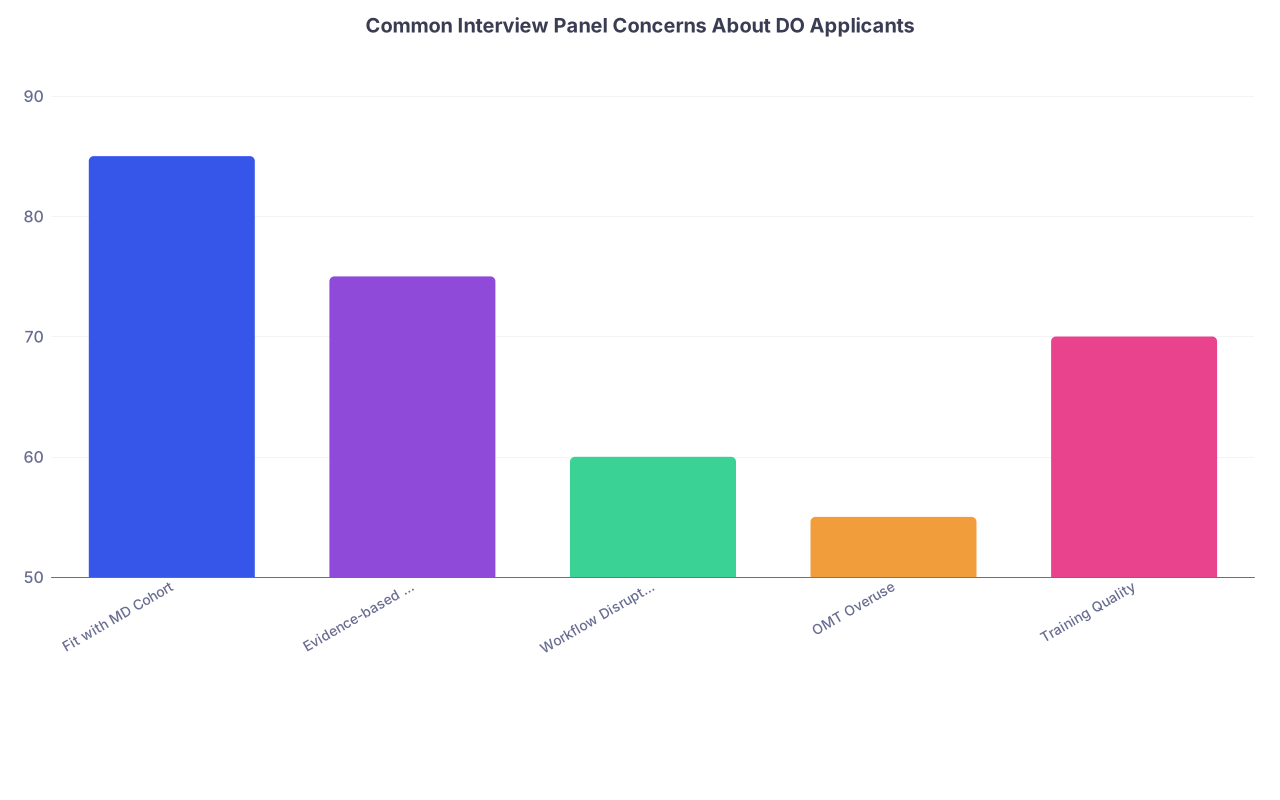
| Category | Value |
|---|---|
| Fit with MD Cohort | 85 |
| Evidence-based Practice | 75 |
| Workflow Disruption | 60 |
| OMT Overuse | 55 |
| Training Quality | 70 |

| Step | Description |
|---|---|
| Step 1 | Question about DO training |
| Step 2 | Start with brief definition |
| Step 3 | Describe how it changes your clinical thinking |
| Step 4 | Connect to specialty-specific benefits |
| Step 5 | Clarify your practical use of OMT |
| Step 6 | Reassure about evidence and workflow |
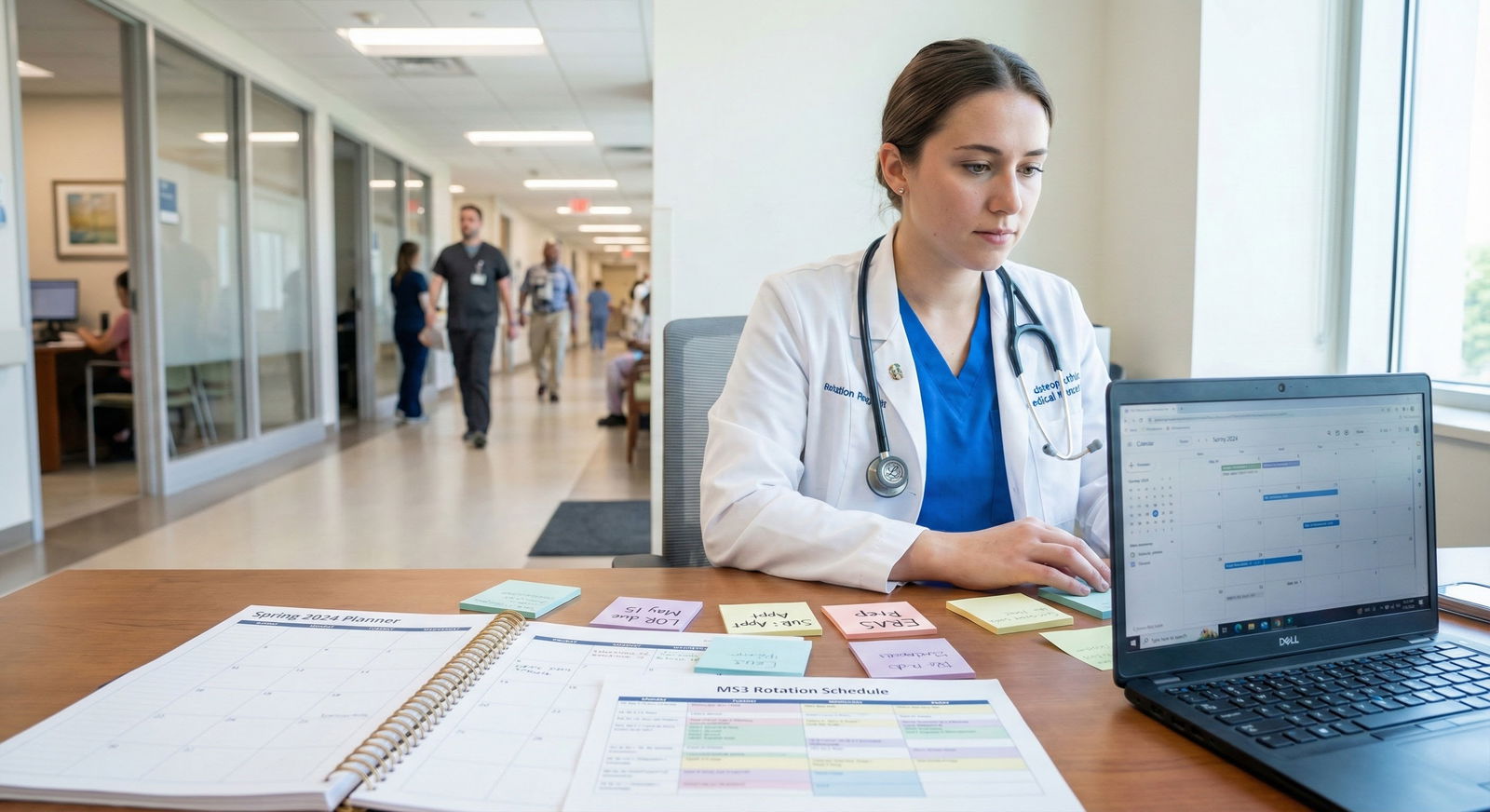
Common Mistakes DO Applicants Make (And How to Avoid Them)
I’ve watched a lot of DO applicants stumble in the same ways:
- Giving a philosophy lecture.
- Sounding apologetic for being a DO.
- Over-selling OMT like it’s a superpower.
- Ignoring the specialty context entirely.
Better approach:
- Two sentences max on “what is osteopathy.”
- Zero apologizing. You chose this path—own it.
- OMT is one tool. Not your entire personality.
- Always tie back to how you’ll function as an intern on their service.
If your answer wouldn’t make sense to a busy, slightly cynical attending pre-rounding at 6:30 a.m., rewrite it.
FAQ: DOs Explaining Osteopathic Training to ACGME Panels
1. Should I bring up OMT/OMM even if they don’t ask?
Briefly, yes—but keep it controlled. A simple line like, “We also had extensive training in osteopathic manipulative medicine, which strengthened my physical exam and hands-on skills,” is enough. If they want more, they’ll ask.
2. What if I never really use OMT and don’t plan to in residency?
Be honest without trashing your training: “I don’t expect to use OMT much clinically in residency, but the training significantly improved my anatomy knowledge, palpation skills, and comfort with physical exam. Those benefits I use every day.”
3. How do I answer if they say, ‘We don’t really do OMT here’?
Reassure them: “That’s completely fine. I don’t need a program to have OMT built in. I’m here to train in [specialty], and I’ll practice just like my MD colleagues. If there’s ever a situation where OMT is clearly useful and the team’s interested, I’m happy to help—but it’s never a requirement for me.”
4. What if an interviewer clearly doesn’t understand DO vs MD training?
Clarify without sounding condescending: “Our core medical curriculum is very similar—same organ systems, same pathophysiology, same evidence-based guidelines. On top of that, DO schools add OMM training and a strong emphasis on whole-person care and structure-function. So I’m very comfortable practicing in the same environment as MD grads.”
5. How do I handle an openly skeptical or dismissive comment about DOs?
Stay calm and professional: “I’ve worked in several ACGME environments where DOs and MDs trained side by side with identical expectations and responsibilities. My goal is the same as any resident’s—safe, efficient, evidence-based care. My DO background just adds some extra tools and perspectives on top of that.”
6. Should I quote AOA ‘tenets of osteopathic medicine’ in my answer?
Not verbatim. That sounds canned. Instead of reciting tenets, show how they play out: talk about thinking in terms of function, whole-person context, and structure–function relationships. Panels care more about what you actually do with patients than whether you can quote doctrine.
Key points to remember:
- Translate your training into practical, specialty-relevant benefits—not philosophy.
- Frame OMT as a selective, evidence-aware tool, never a replacement for standard care.
- Reassure panels you function like any strong MD resident—with some extra exam and whole-person strengths from your DO background.