What do you do when the score report opens, your stomach drops, and your brain immediately jumps to the ugliest question of all: Did I just ruin my career?
If you failed COMLEX Level 1, I know where your mind probably went. Straight to catastrophe. You're not thinking, "I need a structured remediation plan." You're thinking, "I'll never match. Everyone else is moving on. I'm the cautionary tale now." That spiral is brutal. And honestly, it's common.
For guidance on whether to take USMLE in addition to COMLEX, see Is It Worth Taking USMLE as a DO Student: Factors to Consider Before You Commit.
Failing COMLEX Level 1 hurts in a very specific way because it doesn't just feel like an exam failure. It feels like an identity failure. You worked for years to get here. You survived weed-outs, boards studying, practicals, mandatory attendance nonsense, and all the little humiliations medical training throws at people. Then one exam spits out a result that makes you question whether you belong. That's the part no one says out loud enough.
So let me say it clearly: failing COMLEX Level 1 is bad. It's a setback. It may limit some options. It may force you to be smarter and more strategic than classmates who passed on the first try. But it is not the end of your medical career. Not even close.
I've seen students fail COMLEX, regroup, pass the retake, crush rotations, interview well, and match. Not theoretically. Actually. The students who recover aren't the ones who pretend it didn't happen. They're the ones who stop the panic spiral long enough to ask the only useful question: Why did I fail, and what has to change before I sit again?
That's the shift. From shame to analysis. From "I'm done" to "I need a better plan." Because this isn't a disqualification. It's a hit. A painful one. But not a career-ending one.
Understanding What Happened: Why Students Fail COMLEX
Most COMLEX failures aren't because someone is "not smart enough." That explanation is lazy, cruel, and usually wrong. The real causes are more boring and more fixable: not enough preparation time, using too many resources badly, major content gaps, weak question-bank discipline, untreated test anxiety, or trying to study while completely fried.
(See also: What If I Only Took COMLEX as a DO? Realistic ACGME Match Scenarios for more on your options.)
A lot of students make the same mistake the first time: they confuse being busy with being prepared. Eight resources open. Three Anki decks half-done. Random OMM review on Sunday. Practice questions done in tutor mode only. A couple shaky self-assessments. That isn't a study plan. That's academic panic wearing a productivity costume.
If your COMLEX Level 2 performance becomes a critical part of your recovery strategy, see Low COMLEX Level 1, Better Level 2: Reframing Your Story for ACGME PDs for guidance on presenting your trajectory positively.
You need to figure out whether your problem was mainly content or mainly execution.
If it was a content gap, your foundation wasn't solid enough. Maybe micro was a mess. Maybe physiology never clicked. Maybe biochem was held together by vibes and caffeine. If your practice scores were consistently poor, or if you were guessing way too often even on review, that points to knowledge deficits.
If it was a strategy problem, the content may have been there but your test-day performance fell apart. I've seen students who knew the material but mismanaged time, got rattled by weirdly written stems, changed right answers, or had such bad anxiety that they barely processed what they were reading. COMLEX can be a strange exam. You can't brute-force it with intelligence alone.
Then there's burnout. Real burnout. Not "I'm tired because med school is hard." I mean brain-fog, low retention, no stamina, crying over question blocks, sleeping badly, and studying for ten hours with the output of two. If that was you, the answer is not to punish yourself harder.
Be honest, but don't turn honesty into self-flagellation. You are not a prosecutor building a case against yourself. You're a clinician trying to diagnose the problem accurately. Thousands of students retake board exams every year. You are not the only one. You are just in the awful middle part right now.
Your Retake Strategy: Creating a Plan That Works
Your retake plan needs to be boring, disciplined, and ruthless. This is not the moment for experimental study aesthetics or buying five new courses because you're scared. Fear makes people spend money on nonsense. Don't do that.
For a comprehensive timeline on scheduling both COMLEX and USMLE strategically, see How to Plan Your Exams: COMLEX vs. USMLE Timeline for DO Students.
Start with time. Most students need at least 4 to 8 weeks of focused prep. If your failure came from major content gaps, lean toward 6 to 8 weeks or more. If you were close to passing and the issue was mostly strategy or anxiety, 4 to 6 weeks may be enough. But rushing a retake is one of the dumbest mistakes you can make. A second failure is much harder to explain than a careful delay.
Here's the basic structure I like:
Week 1: post-mortem and reset. Review score performance if available. Identify weak systems and subjects. Decide what resources stay and what gets cut. Build a realistic daily schedule. Not an aspirational one written by your guilty conscience.
Weeks 2 through 5 or 7: focused content review plus heavy question-bank work. One primary content source. One question bank. One OMM plan. That's it. If you used ten resources the first time and failed, adding more is not a personality trait. It's a problem.
Final 1 to 2 weeks: full-length practice, timing, stamina, and patching remaining holes. By this point, you should be doing blocks under exam conditions, reviewing mistakes aggressively, and watching for repeat errors. Repeatedly missing autonomics? Fix it. OMM still weak? Drill it. Running out of time? Change your pacing now, not on test day.
Resource-wise, keep what genuinely worked. If First Aid helped anchor content, fine. If COMBANK or TrueLearn helped you learn COMLEX-style wording, keep it. If UWorld exposed your weaknesses better, use it. But don't keep a resource out of nostalgia. "I already spent money on it" is not a reason. Sunk cost thinking buries students.
Systematically address gaps. Don't say, "I'm weak in cardio." That's too vague. Say, "I keep missing murmurs, pressure-volume loops, antiarrhythmics, and shock physiology." Specific weaknesses can be fixed. Vague panic can't.
And please, build a support system. You need at least one honest adult in this process. A dean, faculty advisor, tutor, upperclassman who recovered from a fail, or academic support person. Preferably someone who won't just say, "You've got this," while offering zero useful advice. Reassurance without structure is fluff.
Timing matters too. If clinical rotations are looming, coordinate carefully. Trying to start clerkships while quietly restudying for a board retake is miserable and usually ineffective. If your school allows protected time, use it. Pride is expensive here.
The Match Reality: Can You Still Match After Failing COMLEX?
Yes. You can still match after failing COMLEX Level 1.
That's the answer. Not the sugarcoated version. The real one.
But let's not be fake about it. A failure can hurt, especially for highly competitive specialties or programs that screen heavily by board history. Some doors may narrow. Some programs will absolutely care. Some won't interview you. That stings, but pretending otherwise helps no one.
Still, many DO students with a failed first attempt go on to match successfully, especially if they pass on retake, perform well clinically, and show an upward trajectory. Residency programs like redemption stories a lot more than applicants realize. Not all of them. But plenty. Program directors are training residents, not assembling a museum of flawless transcripts.

What matters most is the rest of the file. Did you pass the retake decisively? Did you do well on Level 2? Did you show strong clerkship evaluations? Did attendings trust you with patients? Did you act like someone who can take a hit and recover without collapsing?
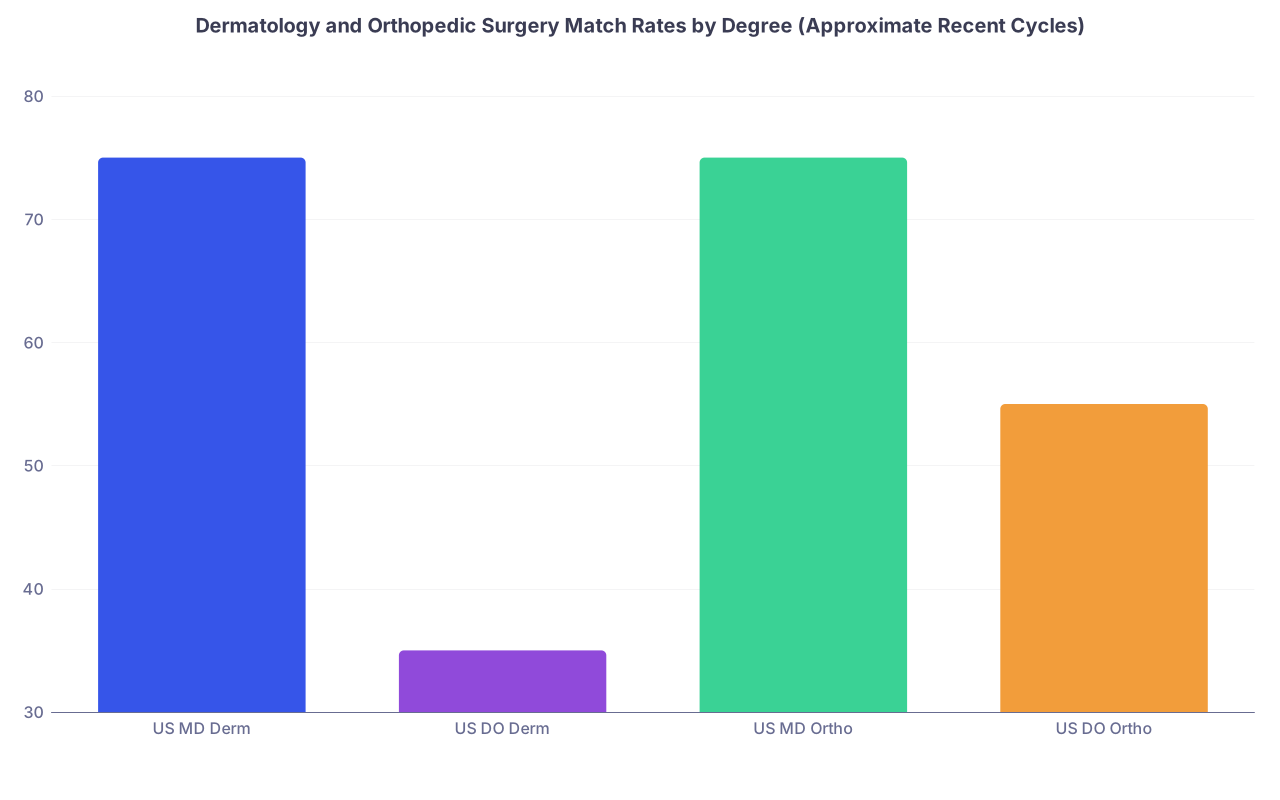
Specialty choice matters. Primary care fields tend to be more forgiving than highly competitive surgical subspecialties, dermatology, or certain academic prestige-chasing programs. That's not an insult. It's just reality. If you've had a COMLEX failure and still want something highly competitive, you need an exceptionally strong comeback. Strong Level 2. Strong letters. Strong performance. Maybe broader application strategy. Maybe parallel planning. Hope is good. Magical thinking is not.
How you explain the failure matters too. Keep it brief, direct, and mature. No melodrama. No blaming the school, the exam, your roommate, mercury in retrograde, or "not being a good standardized test taker" as if that ends the conversation. Say what happened, what you changed, and what the result was.
A solid explanation sounds like this: you identified a flawed study approach, corrected it with structure and support, and demonstrated improvement. Done. That lands much better than a tortured five-minute confession.
You also need to compensate elsewhere. If your application has one obvious scar, strengthen everything around it. That means honors where possible, strong Sub-I performance later on, excellent letters, meaningful service or leadership, and polished interviewing. A failed board attempt is much more survivable when the rest of your application says, "This person is reliable, teachable, and clinically strong."
Mental Health Matters: Managing Anxiety During Recovery
This part gets minimized way too often. Failing COMLEX can punch a hole straight through your confidence. Then anxiety starts narrating everything. What if I fail again? What if my classmates find out? What if I'm forced into a specialty I never wanted? What if every interview asks about it? What if this follows me forever?
Some of those fears are exaggerated. Some are grounded in reality. The trick is learning the difference.
You need practical anxiety control, not inspirational quotes. Sleep on a schedule. Eat actual meals. Move your body even when you don't feel like it. Cut the doom-scrolling and class-group gossip, because nothing good comes from watching other people announce their victories while you're trying to recover. Protect your focus like it's part of your study plan, because it is.
If anxiety is hijacking your studying or making testing impossible, get professional help. Therapy. Counseling. Sometimes formal evaluation for test anxiety. Sometimes accommodations if truly indicated. There's no badge for suffering untreated.
And please find your people. Other retakers. A trusted friend. A mentor who doesn't get weird and preachy. Shame grows in isolation. Once you hear someone else say, "Yeah, I failed too, and I'm still here," the whole thing gets a little less monstrous.
Resilience isn't pretending you're fine. It's building a system that keeps you moving when you're not.
Next Steps: Your Action Plan After COMLEX Failure
In the first 1 to 7 days, do three things: let yourself feel awful, tell the people who actually need to know, and stop making impulsive decisions. You do not need to sign up for a retake in a panic at 2 a.m. You need a plan.
In weeks 1 to 4, meet with your school, analyze the failure, rebuild your schedule, and start focused prep. Track hard metrics: question-bank percentage, daily block completion, weak-topic accuracy, stamina on timed sets, and practice exam performance. Vibes don't count. Data does.
Long term, think beyond the retake. Your goal is not just to pass COMLEX. Your goal is to become a credible residency applicant again. That means passing, then performing well in clerkships, then building a coherent application story: setback, correction, growth, momentum.
So keep going. Seriously. Don't let one exam score bully you into believing you're finished. You're not finished. You're wounded, embarrassed, angry, scared. Fine. Be all of that. Then get organized and get back to work.
If this is your moment, reach out today, to your advisor, your academic support office, a tutor, a mentor, or someone who's survived this before. Don't sit alone with the panic. Build the plan. Take the next step. Then the one after that.