Understanding H‑1B Sponsorship in Mountain West Residency Programs
For many international medical graduates (IMGs), combining postgraduate training with long‑term practice in the United States means finding residency programs that can sponsor the H‑1B visa. In the Mountain West region—typically including Colorado, Utah, Nevada, Idaho, Montana, Wyoming, and sometimes New Mexico—this decision is tightly linked to workforce needs in rural and semi‑rural communities, hospital funding structures, and institutional experience with immigration.
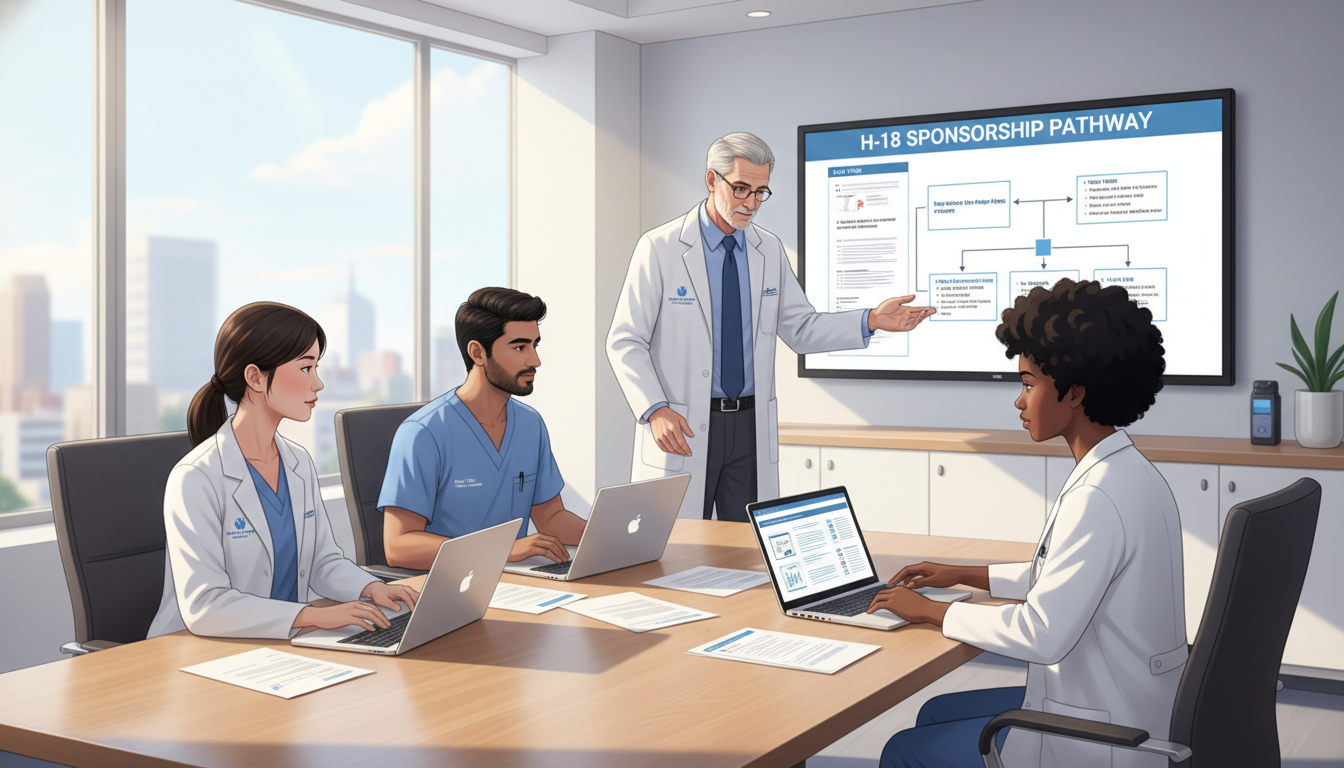
This article walks through how H‑1B sponsorship works for residency, how it differs from J‑1, what “H‑1B cap exempt” really means, and how to strategically identify and approach Mountain West residency and Colorado residency programs that may be open to H‑1B sponsorship. You’ll also find practical strategies, examples, and an FAQ tailored to residency applicants.
1. H‑1B Basics for Residency in the Mountain West
1.1 What is the H‑1B for Residents?
The H‑1B is a temporary work visa for specialty occupations that typically require at least a bachelor’s degree, and in the case of physicians, appropriate medical education and licensing.
For residency and fellowship training, the H‑1B category:
- Classifies you as a worker, not a trainee
- Requires passing USMLE Steps (with specific requirements per state/program)
- Requires ECFMG certification (for IMGs)
- Requires appropriate state licensure (usually a training license / limited license)
- Is employer‑specific: each residency program (or the sponsoring institution) must file its own petition
Most large academic centers and some community hospitals in the Mountain West can use H‑1B cap exempt positions because they qualify as:
- Non‑profit hospitals affiliated with universities
- Non‑profit entities related to or affiliated with an institution of higher education
- Governmental research organizations
This is crucial: cap‑exempt status allows these hospitals to sponsor H‑1Bs year‑round without being limited by the national H‑1B lottery.
1.2 H‑1B vs J‑1 for Mountain West Residency
Many Mountain West institutions default to J‑1 sponsorship through ECFMG; however, some are open to H‑1B residency programs in specific cases.
Key differences:
Home‑country return vs flexibility
- J‑1 typically requires a 2‑year home‑country physical presence after training, unless you obtain a waiver (e.g., through Conrad 30).
- H‑1B has no automatic 2‑year home return requirement.
Length and renewals
- J‑1 is limited to the duration of training, with ECFMG oversight.
- H‑1B is generally limited to 6 years total (in 3‑year increments) but can be extended if you enter certain green card processes.
Moonlighting and work location
- J‑1 is limited to ECFMG‑approved sites.
- H‑1B is employer‑ and location‑specific; any new regular work site generally requires an updated petition or LCA.
In the Mountain West, where underserved and rural communities often rely on IMGs, H‑1B can be strategically advantageous, especially if you hope to transition seamlessly to long‑term employment in the region after residency.
2. How the H‑1B Process Works for Residents
2.1 Core Requirements for Physician H‑1B
Most Mountain West residency programs that sponsor H‑1Bs for residents will expect you to meet all of the following before they can file:
USMLE
- Step 1 and Step 2 CK usually must be passed before the H‑1B petition is filed.
- Many programs also require Step 3 passed before filing the H‑1B for PGY‑1 start, though a portion may allow Step 3 to be completed early in PGY‑1 with careful planning.
ECFMG Certification
- Mandatory for IMGs; must be valid at the time of petition filing.
State Training License
- Each Mountain West state has its own licensing board:
- Colorado, Utah, Nevada, New Mexico, Montana, Idaho, Wyoming
- The program usually helps you obtain the appropriate training license, but background checks and documentation can take months.
- Each Mountain West state has its own licensing board:
Prevailing Wage and LCA
- The institution must meet wage standards and file a Labor Condition Application (LCA) with the Department of Labor.
- Residency salaries generally meet or exceed the prevailing wage when classified appropriately as “resident physician” or equivalent.
Institutional Policy
- Some institutions in the Mountain West have clear written policies that they do sponsor H‑1Bs.
- Others have informal practices (e.g., will sponsor only when there is a compelling need or candidate is highly competitive).
2.2 H‑1B Cap‑Exempt vs Cap‑Subject in Residency
Most H‑1B residency programs in the Mountain West are cap‑exempt due to their affiliation with teaching hospitals or universities.
Cap‑exempt advantages:
- No need to enter the H‑1B lottery.
- Petitions can be filed any time of the year.
- Easier to align start date with the ACGME academic year (July 1).
However, some smaller or independent community hospitals may be cap‑subject, meaning:
- They must enter the national H‑1B lottery each spring.
- If your petition is not selected, you cannot start in H‑1B status that July.
- These programs often prefer J‑1 residents for predictability.
For Mountain West bound IMGs, prioritizing cap‑exempt academic centers for an H‑1B‑sponsored residency is generally safer and more predictable.
3. Mountain West Landscape: Where H‑1B Sponsorship is More Likely
The Mountain West includes significant academic hubs and large teaching hospitals that routinely train IMGs and may appear in an informal H‑1B sponsor list compiled by applicants or advisors. While institutional policies change frequently, you can think in terms of probability zones and search strategies.
Note: Always verify current policies directly with programs or their GME offices; this article does not list or endorse specific institutions, and policies may change year to year.
3.1 Colorado Residency and H‑1B Opportunities
Colorado is a centerpiece of the Mountain West region. A Colorado residency can be particularly attractive due to:
- Large academic health systems with multiple ACGME‑accredited programs
- Strong need for primary care in both urban and rural/frontier areas
- Established experience with IMGs in many programs
Colorado institutions that are:
- University‑affiliated (e.g., large academic medical centers)
- VA Medical Centers with university affiliations
- Non‑profit community‑teaching hospitals
…are most likely to be H‑1B cap exempt and historically more open to H‑1B residency programs.
Applicants should:
- Review each Colorado residency program’s website for visa policy statements (often under “International Medical Graduates” or FAQ).
- Look for language like “We sponsor J‑1 and H‑1B visas” or “We may consider H‑1B sponsorship for exceptional candidates.”
- Email program coordinators or program directors before ERAS submission if clarity is needed.
3.2 Other Mountain West States
Different states in the Mountain West have varying densities of large teaching centers:
Utah
- A strong university academic system and several sizable teaching hospitals.
- Often has a structured policy on IMGs and visas.
- Check whether internal medicine, pediatrics, psychiatry, and anesthesiology programs have historically taken H‑1B residents.
Nevada
- Rapidly growing graduate medical education infrastructure.
- Mix of new and older programs, some in partnership with universities.
- Visa policies can vary widely by program; some may be open to H‑1B for in‑demand specialties.
New Mexico
- University‑based and community‑based programs with a strong mission toward underserved populations.
- Rural and border‑health needs may create openness to IMGs and, occasionally, to H‑1B for continuity beyond residency.
Idaho, Montana, Wyoming
- Fewer residency programs overall, frequently focused on family medicine, internal medicine, and rural health tracks.
- Some community or regional hospitals may default to J‑1, but a few may be open to H‑1B in exceptional cases or for key specialists.
In all these states, institutional affiliation with a university dramatically increases the chance of being H‑1B cap exempt and experienced with international hires.

4. Building a Targeted H‑1B Strategy for Mountain West Programs
4.1 Step‑by‑Step Approach to Identifying H‑1B‑Friendly Programs
You won’t find a single official “H‑1B sponsor list” for residency; instead, you need to build your own, customized to the Mountain West.
Step 1: Define your geographic and specialty priorities
- Decide if you are open to any Mountain West state, or only specific cities (e.g., Denver, Salt Lake City, Las Vegas, Albuquerque).
- Clarify if you are applying mainly to:
- Internal Medicine
- Family Medicine
- Pediatrics
- Psychiatry
- Surgery or subspecialties
Some specialties have more visa sponsorship experience than others.
Step 2: Filter for university‑affiliated and large teaching hospitals
- Use the ACGME or FREIDA database to:
- Identify all programs in your specialty in each Mountain West state.
- Mark those affiliated with major universities or large non‑profit systems.
These are more likely to be:
- H‑1B cap exempt
- Familiar with immigration processes
Step 3: Review program websites carefully
Look for:
- Explicit statements:
- “We sponsor J‑1 and H‑1B visas”
- “We sponsor J‑1 only”
- “We do not sponsor visas”
- FAQ pages or “International Medical Graduates” sections.
- Past resident bios suggesting H‑1B (harder to see, but sometimes indicated in alumni notes).
Step 4: Contact programs directly
For programs without a clear policy online:
- Email the program coordinator or program director with a concise, respectful query:
- Introduce yourself (medical school, graduation year, specialty interest).
- State your visa needs (e.g., “I am currently on F‑1 with OPT and will require H‑1B sponsorship” or “I am an IMG currently abroad and will need H‑1B for residency”).
- Ask directly if the program can sponsor H‑1B visas for residents and whether they historically have done so.
Document responses to maintain your personal H‑1B sponsor list for Mountain West programs. This list becomes a strategic guide to where you invest your ERAS applications and interview efforts.
4.2 Timing: Aligning Exams and Applications
Since H‑1B residency programs require more documentation, timing is critical.
Before ERAS submission (June–September):
- Aim to have USMLE Step 3 completed (or at least scheduled with a realistic pass date) if many of your targeted programs require it.
- Ensure that:
- Your ECFMG certification is complete.
- You understand each state’s training license requirements.
Interview Season (October–January):
- During interviews, if not clearly stated, ask:
- “What is your policy on H‑1B sponsorship for residents?”
- “Have you sponsored H‑1B for residents in the past few years?”
- Take notes on each program’s openness and past practice.
Ranking (February):
- When finalizing your NRMP rank list:
- Give higher priority to programs that have been clear and positive about H‑1B sponsorship.
- Consider the cap‑exempt status of the institution to avoid lottery risk.
5. Practical Considerations Once You Secure an H‑1B‑Sponsoring Residency
5.1 Managing Status: F‑1, J‑1, or Direct H‑1B?
You may be approaching the Match from different statuses:
- From abroad (no U.S. status)
- You will apply directly for an H‑1B visa at a U.S. consulate after your petition is approved.
- From F‑1 + OPT
- Your residency can file a change of status to H‑1B within the U.S., usually to start on July 1.
- From J‑1 in another category
- More complex; you must ensure you are not subject to the J‑1 2‑year home‑residency requirement, or you must secure a waiver before moving to H‑1B.
Discuss your exact situation with the institution’s international office and, when appropriate, an experienced immigration attorney.
5.2 Duration and Planning for Fellowship or Practice
H‑1B for residency typically:
- Is approved for 3 years initially, then extended as needed.
- Has a 6‑year maximum across all H‑1B employment (residency, fellowship, and early attending work).
If you plan to:
- Do a 3‑year residency plus a 3‑year fellowship in the Mountain West, your full 6‑year H‑1B can be used within the region.
- Pursue a green card (e.g., through employer sponsorship or national interest waiver), you may become eligible for H‑1B extensions beyond 6 years.
Many IMGs who complete H‑1B‑sponsored Colorado residency training, for example, remain in the region by:
- Taking hospitalist, primary care, or subspecialty positions with the same or neighboring health systems.
- Transitioning from cap‑exempt H‑1B (university hospital) to cap‑subject H‑1B (private practice or community hospital) after securing a lottery number or other long‑term plan.
5.3 J‑1 Waiver vs H‑1B Strategy in the Mountain West
Even if you choose an H‑1B path, understanding J‑1 waiver programs is helpful:
- States in the Mountain West (e.g., Colorado, Utah, New Mexico, Nevada, etc.) use Conrad 30 waivers to attract physicians to underserved areas.
- Physicians who complete J‑1 residency or fellowship can work in these areas on H‑1B after obtaining a J‑1 waiver job.
- If you start on H‑1B from residency, you do not need a waiver—but you may still work in the same underserved communities.
Some physicians intentionally choose J‑1 with the goal of a waiver job in a Mountain West rural community. Others prefer H‑1B from the outset to avoid the home‑country return requirement and to have more flexibility in long‑term planning.

6. Actionable Tips for IMGs Targeting H‑1B Residency in the Mountain West
6.1 Make Yourself a Strong H‑1B Candidate
Programs that sponsor H‑1Bs incur extra cost and administrative work. To increase your chances:
- Complete Step 3 early
- Programs are more comfortable sponsoring H‑1B when you already have Step 3 completed.
- Demonstrate regional interest
- Show knowledge of Mountain West health issues: rural care, Native American health, frontier medicine, opioid crisis, mental health access, etc.
- Tailor your personal statement to why a Mountain West or Colorado residency fits your goals.
- Highlight continuity potential
- Emphasize your interest in staying long term in the region for practice.
- For example, state a goal of primary care in rural Colorado or hospitalist work in underserved Utah.
6.2 Manage Communication Professionally
When inquiring about H‑1B:
- Keep emails short and specific.
- Do not demand policies—simply ask for clarification so you can apply wisely.
- Respect that:
- Some programs may be uncertain or in transition.
- Decisions might require consultation with GME and legal teams.
If you receive a positive response:
- Thank them and save the email. It may be useful later if there’s confusion after you match.
6.3 Prepare for Contingencies
Even with careful planning, issues can arise:
- Licensing delays in certain states
- Administrative backlogs in immigration processing
- Policy changes at the institutional or national level
To mitigate risk:
- Apply broadly within your criteria (not just a few H‑1B‑friendly programs).
- Consider a backup strategy:
- Programs that sponsor J‑1 plus strong support for J‑1 waiver placement in the Mountain West.
- Stay proactive with documentation:
- Keep passports, diplomas, ECFMG certificates, exam score reports, and translations organized and ready.
FAQs: H‑1B Sponsorship for Residency in the Mountain West
1. Are all Colorado residency programs able to sponsor H‑1B visas?
No. While many Colorado residency programs are based in large, university‑affiliated teaching hospitals that are H‑1B cap exempt, not all of them choose to sponsor H‑1B for residents. Some sponsor J‑1 only, some sponsor both J‑1 and H‑1B, and some do not sponsor any visas. Always confirm directly with each program; policies can differ even within the same health system.
2. Do I need USMLE Step 3 completed for an H‑1B residency in the Mountain West?
In practice, most programs that sponsor H‑1B for residency strongly prefer or require Step 3 to be passed before filing the H‑1B petition. A few may allow filing without Step 3 in limited circumstances, but that is increasingly uncommon. If you are targeting H‑1B residency programs in Colorado or other Mountain West states, plan to complete Step 3 as early as possible, ideally before or during the ERAS application season.
3. How can I tell if a Mountain West residency program is H‑1B cap exempt?
Cap‑exempt status usually applies when the sponsoring institution is:
- A non‑profit hospital affiliated with a university
- A non‑profit entity related to a university
- A governmental research organization
Look for clear university affiliations and academic medical center descriptions on the program’s website. However, the definitive answer comes from the GME office or the institution’s immigration team, so ask directly if you need to know for your planning.
4. Is H‑1B always better than J‑1 for residency in the Mountain West?
Not always. H‑1B offers advantages—no automatic 2‑year home return requirement and a more direct path to long‑term employment—but it also has limits (e.g., 6‑year maximum without green card progression, stricter exam and licensing requirements, fewer programs willing to sponsor). J‑1, combined with a Conrad 30 waiver job in a Mountain West state, can also lead to stable long‑term practice and may be easier to obtain in some cases. The “better” choice depends on your personal goals, competitiveness, and risk tolerance.
By understanding how H‑1B sponsorship works, how cap‑exempt status applies to Mountain West teaching hospitals, and how to systematically build your own H‑1B sponsor list, you can approach the residency match with a realistic and strategic plan. Focus on early exam completion, targeted communication with programs, and a clear narrative about why you want to train—and potentially stay—in the Mountain West.