Your Path to Success: Residency Programs with Friendly Policies for IMGs
International Medical Graduates (IMGs) bring invaluable perspectives, language skills, and global clinical experience to the U.S. healthcare system. Yet, the journey from medical school abroad to matching into a U.S. residency can feel overwhelming. Policies vary widely between programs, and not all institutions are equally welcoming to IMGs.
This expanded guide explains how to identify residency programs with truly IMG-friendly policies, what specific features to look for, where to find examples of supportive programs, and how to strategically position yourself for success. Whether you are early in your preparation or actively applying, you’ll find practical steps to help you secure a residency that values your background and supports your long-term medical career in the United States.
Understanding the IMG Residency Landscape in the U.S.
Unique Challenges International Medical Graduates Face
IMGs often navigate a more complex pathway into U.S. residency programs than U.S. medical graduates. Common challenges include:
Limited familiarity with the U.S. healthcare system
Many IMGs come from systems where documentation, electronic health records, interdisciplinary teams, and patient expectations differ significantly. Adapting quickly is possible—but programs that provide structured support make that transition more successful.Cultural and communication barriers
Even for fluent English speakers, differences in communication styles, shared decision-making norms, and expectations around hierarchy can be significant. Misunderstandings can impact both patient care and interactions with colleagues.Complex application and credentialing processes
Navigating ECFMG certification, USMLE exams, ERAS, NRMP, and state medical board requirements demands careful planning. Visa issues add another layer of complexity.Limited positions and variable acceptance of IMGs
Some residency programs rarely interview or rank IMGs, while others embrace them and have a long track record of successful IMG graduates. Understanding these patterns helps you target programs wisely.Visa needs and immigration uncertainty
Securing J-1 or H-1B sponsorship, understanding waiver options, and planning long-term career pathways (e.g., academic vs. underserved practice) requires programs that are knowledgeable and supportive.
Recognizing these challenges isn’t about discouragement—it allows you to choose residency programs that intentionally support IMGs and have built systems to help you succeed.
Why IMG-Friendly Residency Programs Matter
Residency programs that are explicitly welcoming to International Medical Graduates often:
- Have higher proportions of IMGs among current residents and alumni.
- Emphasize Diversity in Medicine as a core institutional value.
- Invest in Mentorship in Healthcare, pairing IMGs with faculty who understand their path.
- Offer structured onboarding and orientation tailored to diverse educational backgrounds.
- Support a wide variety of medical careers, from community practice to academic medicine.
Choosing such a program increases your chances not only of matching, but of thriving—clinically, professionally, and personally.
Key Features of Truly IMG-Friendly Residency Programs
Not all “IMG-friendly” labels are equal. Some programs may accept IMGs occasionally, while others build their culture and structures around supporting them. Here are core features to look for.
1. Supportive and Transparent Application Processes
Residency programs committed to IMGs recognize that the application process can be especially confusing for international graduates. A supportive process often includes:
Clear, detailed program websites
Look for:- Explicit mention of IMGs and visa sponsorship.
- Minimum USMLE score expectations (if any).
- Requirements for U.S. clinical experience.
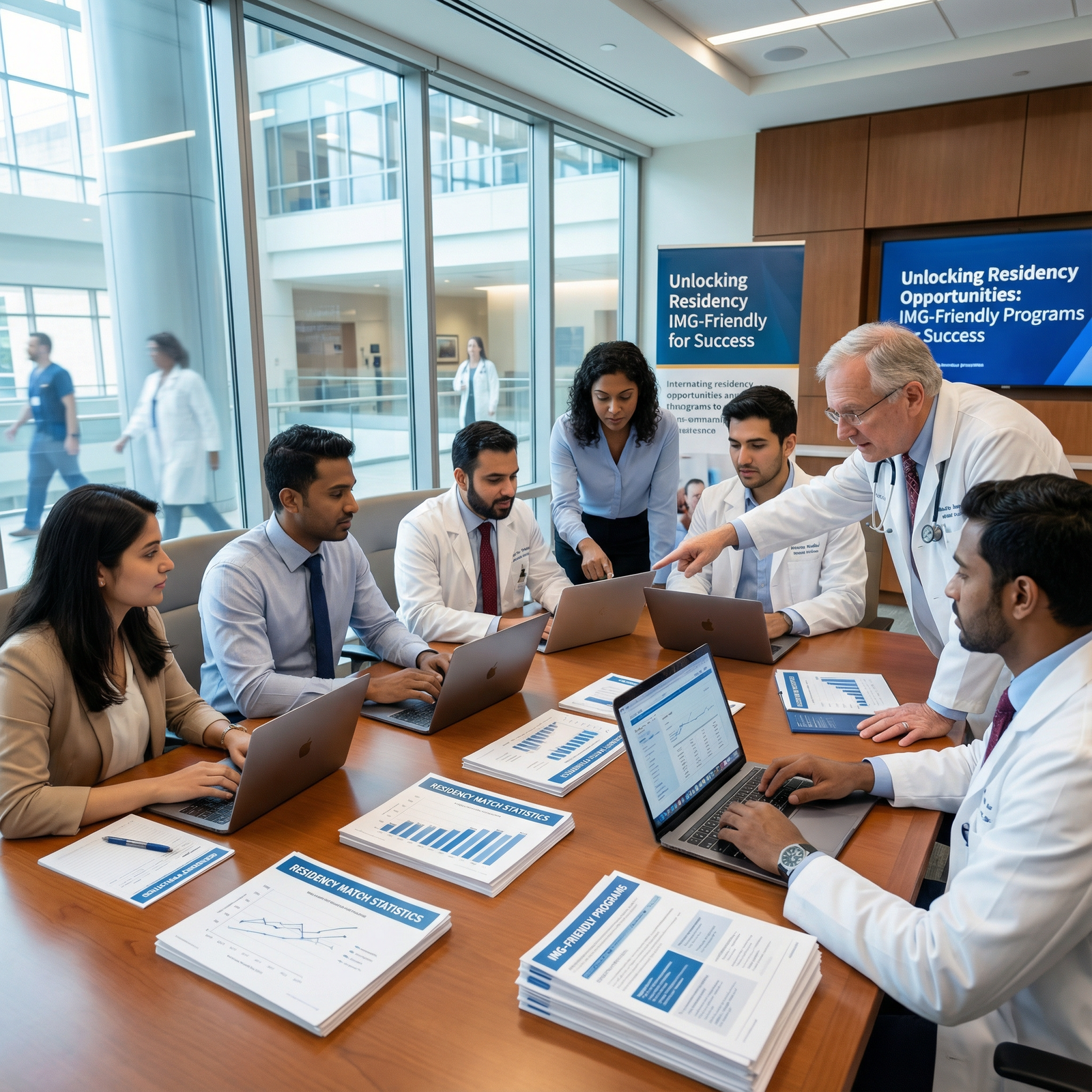
- Data on recent match classes, including percentages of IMGs.
Dedicated IMG Liaison or Coordinator
Some programs have:- An IMG liaison officer or program coordinator familiar with ECFMG, visa issues, and foreign medical school documentation.
- Email addresses or office hours specifically published for questions from International Medical Graduates.
Guidance on application strategy
Truly supportive programs may:- Host webinars or Q&A sessions for IMGs.
- Publish FAQs about application requirements and timelines.
- Provide sample schedules or example rotation structures to help you visualize daily life as a resident.
Action step:
Before applying, explore each program’s website carefully. If they do not discuss IMGs at all, that’s informative. If they provide extensive IMG-specific guidance, it’s a strong positive sign.
2. Flexible and Experienced Visa Sponsorship Policies
Visa sponsorship is a central factor in determining which Residency Programs are accessible to you as an IMG.
J-1 visa sponsorship
Most academic centers sponsor J-1 visas through ECFMG. Look for:- Clear, written policies on J-1 sponsorship.
- Evidence that multiple current residents are on J-1 visas.
- Institutional support offices (e.g., International Office) familiar with physicians.
H-1B visa sponsorship
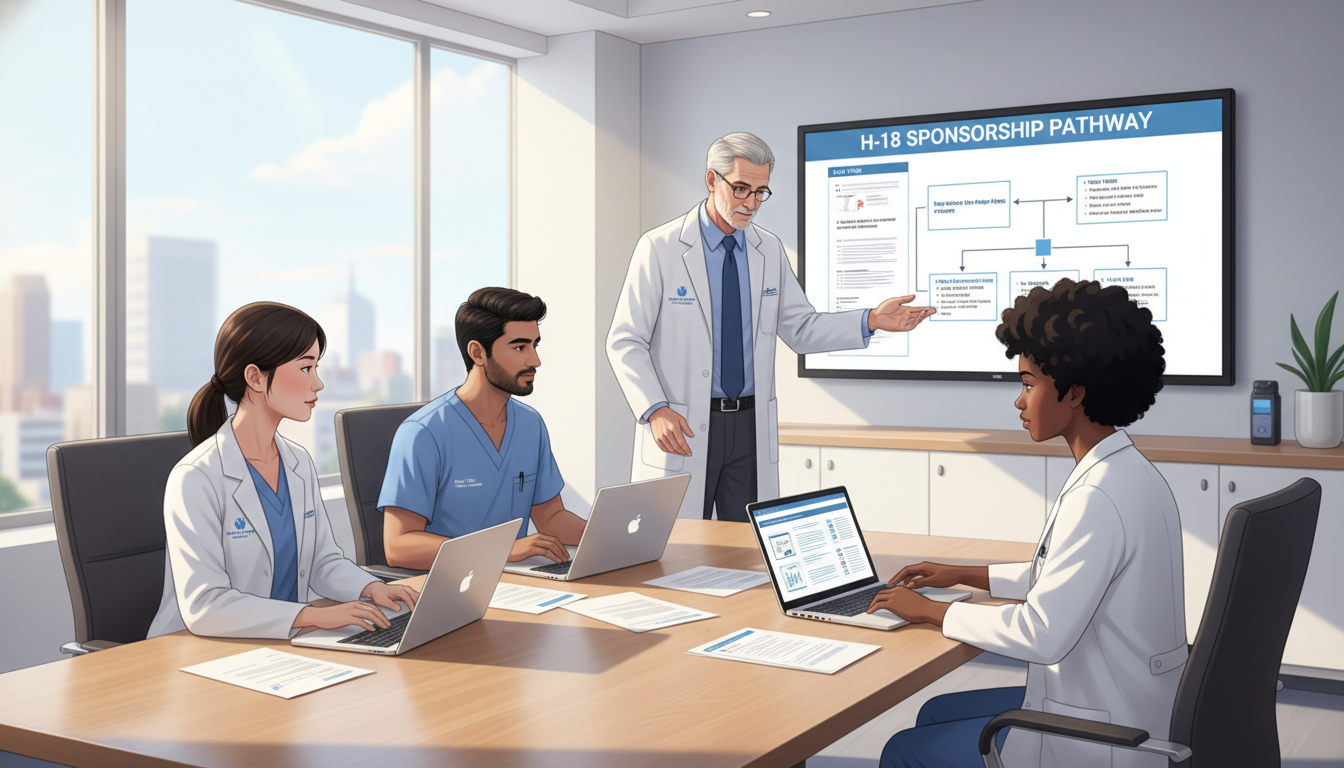
H-1B sponsorship is more complex and resource-intensive, but can be beneficial for long-term career planning. Programs that offer H-1B visas often:- List this explicitly on their website or in FREIDA.
- Have minimum USMLE Step scores and require Step 3 completion before starting residency.
- Have a history of successfully renewing and transitioning H-1B visas.
Administrative support for immigration
Strong IMG-friendly programs often collaborate closely with:- Institutional immigration lawyers.
- International employee offices.
- Advisors experienced in Conrad 30 and other waiver pathways (for post-residency planning).
Action step:
Create a spreadsheet of target programs, documenting whether they sponsor J-1, H-1B, or both, and what conditions they specify. This helps you target your ERAS applications efficiently.
3. Strong Commitment to Diversity and Inclusion
Residency programs that value Diversity in Medicine tend to be more receptive to IMGs and to candidates from nontraditional pathways.
Look for signs of a robust diversity culture:
Visible diversity in faculty, leadership, and residents
Check program websites, social media, and resident profiles. Do you see:- Graduates from multiple countries?
- Faculty with international training backgrounds?
- Resident spotlights featuring IMGs?
Formal diversity and inclusion initiatives
Examples include:- Offices of Diversity, Equity, and Inclusion (DEI).
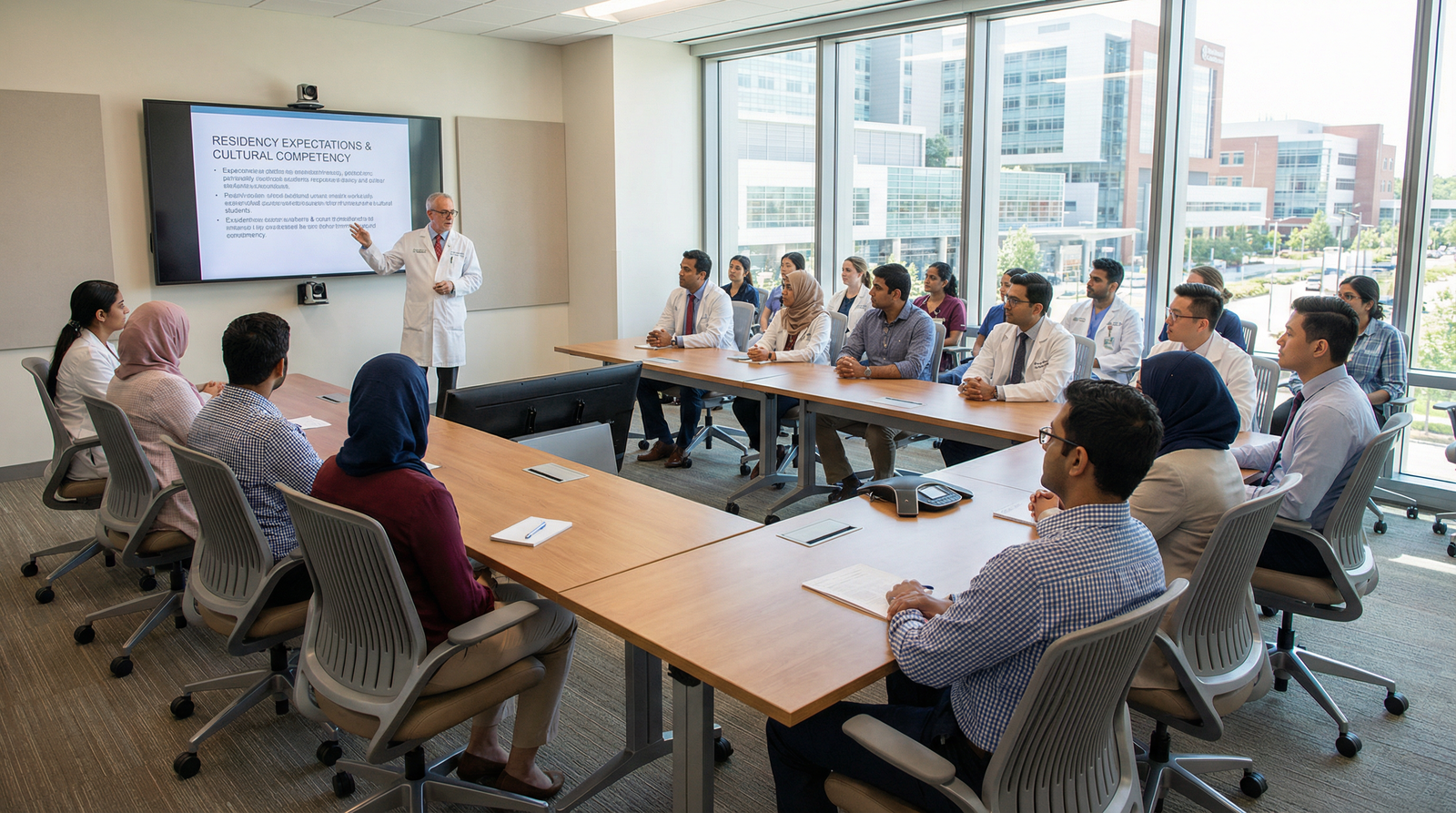
- Anti-bias and cultural competency training integrated into orientation and ongoing teaching.
- Diversity committees with resident representation.
Language and community engagement
Programs serving diverse communities often:- Highlight multilingual staff and residents.
- Offer language-appropriate patient materials.
- Engage in community outreach projects that benefit immigrant or underserved populations.
These features indicate an environment where your international background is not just tolerated—but considered an asset to patient care and education.
4. Structured Mentorship and Networking Opportunities
Mentorship in Healthcare is especially critical for IMGs who are adapting to a new clinical and cultural environment.
Key indicators of strong mentorship for IMGs:
Formal mentorship programs
Look for:- Pairing of incoming residents with faculty and senior residents.
- Options to request mentors with similar backgrounds or interests (e.g., other IMGs, same language, same specialty interest).
- Protected time for mentor-mentee meetings during the academic year.
Latent and informal mentorship networks
Programs with many IMGs often:- Have informal support groups or WhatsApp networks where IMGs share tips, resources, and advice.
- Encourage peer mentoring between PGY-1 and senior residents.
Career development and networking
IMG-friendly programs invest in:- Workshops on fellowships, research, and academic medicine careers.
- Support for attending national conferences (ACP, AAFP, subspecialty societies).
- Opportunities to join hospital committees, quality improvement projects, or community initiatives.
These mentoring structures help you plan long-term medical careers—whether in academic medicine, subspecialty training, hospitalist roles, primary care, or global health.
5. Comprehensive Orientation, Onboarding, and Ongoing Support
A well-designed orientation is vital for setting IMGs up for success from Day 1.
Elements of robust orientation and ongoing support include:
Clinical and systems orientation
- Training on EHR systems, order entry, note-writing, billing, and documentation.
- Clear explanation of supervision levels, escalation pathways, and patient safety protocols.
- Shadowing opportunities before taking on full patient loads.
Cultural and communication training
- Workshops on patient-centered communication in the U.S.
- Role-play sessions focusing on delivering bad news, informed consent, and shared decision-making.
- Discussion of professionalism expectations, team hierarchies, and conflict resolution.
Wellness resources and psychosocial support
- Access to counseling, peer support, and wellness programs.
- Recognition that immigration stress, homesickness, and cultural adjustment are real and valid challenges.
- Flexibility for religious or cultural observances when possible.
Team-building activities
- Welcome retreats, social events, and resident-led interest groups.
- Activities that intentionally integrate IMGs with U.S. graduates, rather than letting “cliques” form by background.
Programs that invest in this type of orientation and support typically see better resident satisfaction, retention, and performance.
Examples of Notable IMG-Friendly Residency Programs
The specific landscape changes over time, and you should always verify current policies on official program websites and via NRMP/FREIDA data. However, historically, some institutions and departments have built reputations for being especially welcoming to IMGs and for supporting them into successful medical careers.
1. Rutgers New Jersey Medical School
Location: Newark, NJ
Why it’s often considered IMG-friendly:
- Serves a highly diverse urban population, aligning well with IMGs’ strengths in cross-cultural care.
- Many departments (particularly Internal Medicine and Family Medicine) have historically included significant numbers of IMGs.
- Strong emphasis on community engagement and Diversity in Medicine, with various support structures for residents from nontraditional backgrounds.
What to look for when researching Rutgers and similar programs:
- Proportion of IMGs among current residents and alumni.
- Visa sponsorship details by specialty.
- Availability of mentorship from faculty or residents who trained internationally.
2. University of California, San Diego (UCSD)
Location: La Jolla, CA
Key strengths for IMGs:
- Robust institutional support for both J-1 and H-1B visas in select specialties.
- Clear commitment to DEI and inclusion in many clinical departments.
- Well-established mentorship and career development programs, including research and academic pathways.
UCSD and similar academic centers can be especially attractive if you’re interested in combining residency with research, quality improvement, or future fellowship training.
3. University of Illinois College of Medicine (UIC)
Location: Chicago, IL
IMG-relevant features:
- Multiple affiliated hospitals serving diverse, often immigrant-heavy communities.
- A track record of welcoming IMGs into Internal Medicine, Family Medicine, Psychiatry, and other fields.
- Holistic review processes that consider international experiences and language skills as strengths.
- Resident organizations and affinity groups that provide peer support and networking.
Programs like UIC often serve as springboards to a wide range of fellowships and practice settings.
4. Florida International University (FIU)
Location: Miami, FL
Why FIU is appealing for IMGs:
- Situated in one of the most culturally diverse cities in the U.S., with a large immigrant and Spanish-speaking population.
- Recognizes the unique perspectives and language abilities that IMGs bring to care.
- Focus on tailored mentorship, helping international graduates adapt both professionally and culturally.
If you speak multiple languages or have experience with Latin American, Caribbean, or other immigrant communities, places like FIU may highlight those strengths.
5. Michigan State University (MSU) – College of Human Medicine
Location: Multiple campuses across Michigan
IMG-friendly aspects:
- Regional campus model exposes residents to varied practice settings, including community and rural sites.
- Many departments actively recruit IMGs and provide structured orientation to the U.S. health system.
- Robust networking opportunities across campuses, with alumni in diverse medical careers—from academic centers to community hospitals and primary care practices.
As always, when you hear that a program is “IMG-friendly,” verify current policies, visa options, and match statistics. Use these examples as a starting point, not as a definitive or exhaustive list.
Strategies to Maximize Your Chances in IMG-Friendly Programs
Even the most supportive program can only rank applicants it interviews. Your goal is to present yourself as a strong, prepared candidate who will thrive in their environment.
1. Research and Apply Strategically
Avoid a purely “shotgun” approach. Instead:
Use data-driven tools
- Explore FREIDA, residency program websites, and publicly available NRMP data.
- Look at historical percentages of IMGs, required scores, and visa policies.
Create tiers of programs
Group programs into:- High priority: Strongly IMG-friendly, fit your interests, realistic based on your profile.
- Moderate priority: Some IMG support, maybe more competitive, but still worth targeting.
- Reach programs: Very competitive but aligned with your goals.
Align your story with the program’s mission
In personal statements and interviews, highlight:- How your background supports their patient population.
- Your commitment to community health, research, or academic medicine, depending on the program’s focus.
2. Build a Strong U.S. Clinical and Professional Profile
For many programs, especially those welcoming IMGs, U.S.-based experience is key.
Pursue U.S. clinical experience (USCE)
- Aim for hands-on experiences: sub-internships, externships, or observerships where you can interact with patients and teams.
- Seek letters of recommendation from U.S. attending physicians familiar with your clinical skills and work ethic.
Engage in research or quality improvement
- Even small QI projects or case reports can demonstrate initiative and familiarity with U.S. academic standards.
- Ask whether previous IMGs at your target programs have done similar work; this can inform your approach.
Demonstrate professionalism and teamwork
- Request feedback from supervisors on your communication and collaboration skills.
- Reflect that feedback in your personal statement and interviews by sharing examples of growth and adaptation.
3. Prepare a Competitive Application
IMG-friendly programs still receive many applications—stand out by ensuring every component is strong.
USMLE scores and timing
- Try to take Steps in a timeline that aligns with typical U.S. graduates, if possible.
- If you have gaps or lower scores, address them with:
- Clear evidence of improvement (later exams, courses, or certifications).
- Strong U.S. clinical letters and a coherent narrative.
Personal statement and CV
Emphasize:- How your international experience enhances patient care: languages, cross-cultural competence, resilience.
- Specific encounters that shaped your interest in the specialty.
- Concrete reasons why training in the U.S. aligns with your long-term goals in medicine.
Letters of recommendation
- Prioritize U.S. attending physicians in your specialty (when possible).
- Provide your letter writers with your CV and key talking points, including your adaptability, work ethic, and communication skills.
4. Strengthen Cultural Competency and Communication
Programs look for candidates who can integrate smoothly into U.S. healthcare teams and communicate effectively with patients.
Study U.S. healthcare norms
- Review resources from professional societies (e.g., ACP, AAFP) on professionalism and patient-centered care.
- Watch recorded patient-physician interactions or standardized patient videos used in U.S. medical schools.
Practice interviews and bedside communication
- Engage in mock interviews, ideally with someone familiar with U.S. residency interviews.
- Focus on:
- Clear, concise answers.
- Structured storytelling (Situation–Task–Action–Result).
- Reflecting on mistakes and learning from them.
Highlight your cross-cultural strengths
- Share examples where your background helped build trust with patients.
- Emphasize how your experience as an IMG enhances the program’s commitment to Diversity in Medicine.
Frequently Asked Questions (FAQ) for IMGs Seeking Residency in the U.S.
1. What exactly is an International Medical Graduate (IMG)?
An International Medical Graduate is a physician who completed their primary medical education at a school located outside the United States or Canada, regardless of citizenship. To enter U.S. residency training, IMGs typically must:
- Obtain ECFMG certification (including passing required USMLE exams).
- Provide verified medical school credentials.
- Meet individual residency program requirements (e.g., USCE, time since graduation, English proficiency).
Both U.S. citizens who studied abroad and non-U.S. citizens who studied abroad are considered IMGs.
2. How can I identify Residency Programs that are truly IMG-friendly?
Use a combination of strategies:
Check program websites and FREIDA for:
- Explicit mention of IMGs and visa sponsorship.
- Percentages of current residents who are IMGs.
- Requirements for USMLE scores and U.S. clinical experience.
Contact programs or current residents:
- Email program coordinators with focused questions about IMGs and visas.
- Connect with current residents (via LinkedIn, alumni networks, or program social media) and ask about the culture and level of support for IMGs.
Use IMG-focused communities:
- Online forums, social media groups, and organizations supporting IMGs often share updated lists and experiences, but always verify with official sources.
3. What types of visas do IMG-friendly residency programs typically sponsor?
Most IMG-supportive programs sponsor:
J-1 visa (through ECFMG):
- The most common visa for residency training.
- Typically requires returning to your home country for two years after training, unless you obtain a waiver (e.g., Conrad 30, hardship, or interested government agency waivers).
H-1B visa (for specialty occupations):
- Less common and more complex, but beneficial for certain long-term career paths.
- Usually requires:
- Passing USMLE Step 3 before the start of residency.
- Support from the institution’s legal and HR teams.
- Often used in specialties and institutions with robust legal/HR infrastructure.
Always confirm visa policies with each program directly and consider consulting an immigration attorney for long-term planning.
4. How does mentorship specifically benefit IMGs during residency?
Mentorship in Healthcare is especially valuable for IMGs because mentors can:
- Help you navigate cultural and system differences, including unspoken expectations.
- Guide your career development, whether you aim for fellowship, academic roles, or community practice.
- Offer feedback on your communication style, documentation, and teamwork in the U.S. context.
- Support you emotionally as you manage immigration stress, homesickness, and adaptation.
Strong mentorship is a hallmark of IMG-friendly programs and can significantly shape your confidence, performance, and long-term opportunities.
5. Are some specialties more open to IMGs than others?
Yes, historically, IMGs have matched more frequently in certain specialties. While trends change over time, many IMGs successfully match into:
- Internal Medicine
- Family Medicine
- Pediatrics
- Psychiatry
- Pathology
- Neurology
Subspecialties with more intense competition (e.g., Dermatology, Plastic Surgery, Orthopedic Surgery) have lower IMG representation, but IMGs do match with strong profiles, strategic planning, and often significant research or U.S. experience. Always research individual Residency Programs and recent match data for the most accurate, up-to-date information.
Residency in the United States is an achievable goal for International Medical Graduates who plan strategically, target truly IMG-friendly programs, and present their unique strengths clearly. By focusing on programs that value Diversity in Medicine, provide robust Mentorship in Healthcare, and maintain transparent and supportive policies, you can build a rewarding medical career that honors both your international background and your commitment to patients in the U.S.