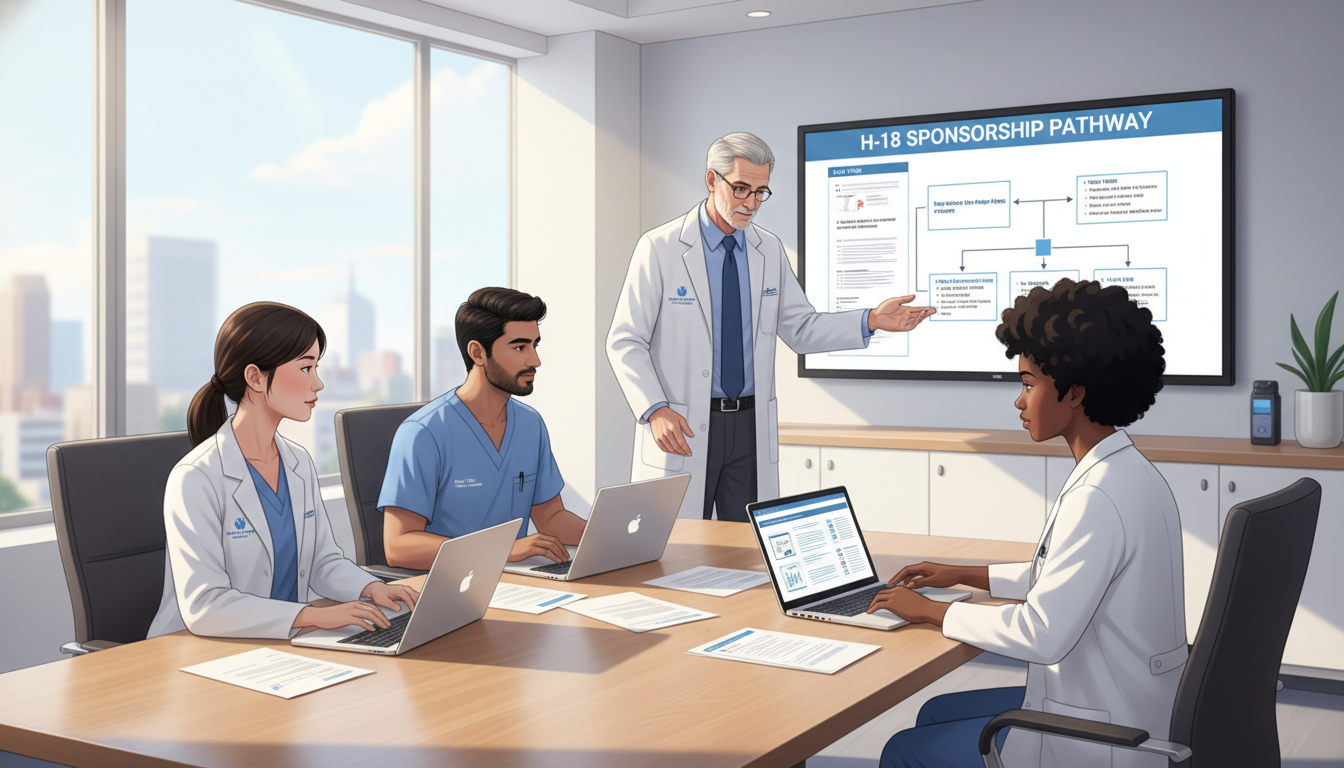
Understanding H-1B Sponsorship for Caribbean IMGs in New York City
For many Caribbean international medical graduates (IMGs), New York City feels like the natural next step after completing basic sciences or clinical rotations—especially if you trained at a Caribbean medical school with strong U.S. ties, such as SGU, AUC, or Ross. The combination of large teaching hospitals, diverse patient populations, and numerous NYC residency programs makes the city a prime destination.
But if you are not a U.S. citizen or permanent resident, medical training in the U.S. almost always requires a visa. As a Caribbean IMG hoping to train in a New York City residency program, you’ll typically face a key question:
Should I pursue J-1 or H-1B sponsorship—and which NYC programs are realistic for H-1B?
This article focuses on H-1B Sponsorship Programs for Caribbean IMGs in New York City, with emphasis on:
- How H-1B residency sponsorship actually works
- The pros and cons of H-1B vs J-1 for Caribbean graduates
- NYC hospital systems and programs historically more open to H-1B
- Practical steps to identify H-1B-friendly programs and build a target list
- Tips to strengthen your application as a Caribbean IMG aiming for H-1B
Throughout, references to Caribbean medical school residency, SGU residency match, NYC residency programs, New York City residency, and H-1B residency programs are integrated to mirror how these topics appear in real-world planning for Caribbean IMGs.
1. H-1B Basics for Caribbean IMGs Pursuing NYC Residency
What is the H-1B for Residents?
The H-1B is a temporary, employment-based visa for specialty occupations. In residency, your sponsoring institution is the employer; you are the employee. For a New York City residency, the hospital or academic medical center files the petition on your behalf.
For physicians in ACGME-accredited residency or fellowship, H-1B is typically used as:
- A direct training visa (you match to a program that sponsors H-1B)
- A transition visa (e.g., from F-1 OPT, J-1 waiver, or another status)
Although many NYC residency programs primarily sponsor J-1 visas through ECFMG, a subset are willing to sponsor H-1B residency programs, especially for competitive or hard-to-fill specialties, or for candidates with strong exam scores and CVs.
H-1B vs J-1: Key Differences for Caribbean IMGs
Most Caribbean IMGs default to the J-1 because it is more common and easier for programs to administer. But you should understand the trade-offs.
J-1 (ECFMG-sponsored):
- Common, familiar, and administratively simpler for programs
- Requires home-country 2-year return (or obtaining a J-1 waiver) before certain U.S. visas/green card options
- Limits ability to moonlight (varies by program and state)
- Usually straightforward to obtain for those who meet ECFMG and training requirements
H-1B (employer-sponsored):
- No automatic 2-year home return obligation
- May allow more straightforward transition to H-1B jobs or green card after residency
- Often preferred for those who clearly plan long-term U.S. practice
- Requires all USMLE Steps (including Step 3 in most cases) and often higher scores
- More paperwork and cost for the hospital (filing fees, attorney involvement)
- Some institutions have caps or institutional policies limiting H-1B sponsorship
For a Caribbean medical school residency path, particularly if you are aiming to stay in the U.S. long-term, H-1B can be very attractive—but more competitive and less widely available.
H-1B Cap vs Cap-Exempt for Residency
A crucial point: Most academic residency programs in New York City are H-1B cap exempt.
- The general H-1B category has an annual numerical cap (the “lottery”).
- However, nonprofit institutions related to or affiliated with universities and some research entities are H-1B cap exempt, meaning they can sponsor H-1B any time of the year, outside the lottery.
Most large NYC teaching hospitals are either directly or indirectly affiliated with universities and thus fall under the H-1B cap exempt category. This is a huge advantage for Caribbean IMGs: your residency employer often won’t need to worry about the lottery system; they can file your H-1B whenever required.
That said, even if they are cap-exempt, programs may have internal policies that limit or discourage H-1B sponsorship. So, being cap-exempt does not automatically mean they will support you.
2. NYC Landscape: Where Caribbean IMGs Find H-1B-Friendly Residencies
New York City has one of the densest concentrations of residency programs in the U.S., spanning:
- Major academic medical centers
- City/public hospitals
- Community hospitals affiliated with universities
For Caribbean IMGs, particularly those from SGU, AUC, Ross, and similar Caribbean medical schools, NYC residency programs are a frequent match destination. If you review an SGU residency match list, you’ll see a large number of entries in Brooklyn, Queens, the Bronx, Manhattan, and Staten Island.
Within this universe, a subset are historically more open to H-1B sponsorship.
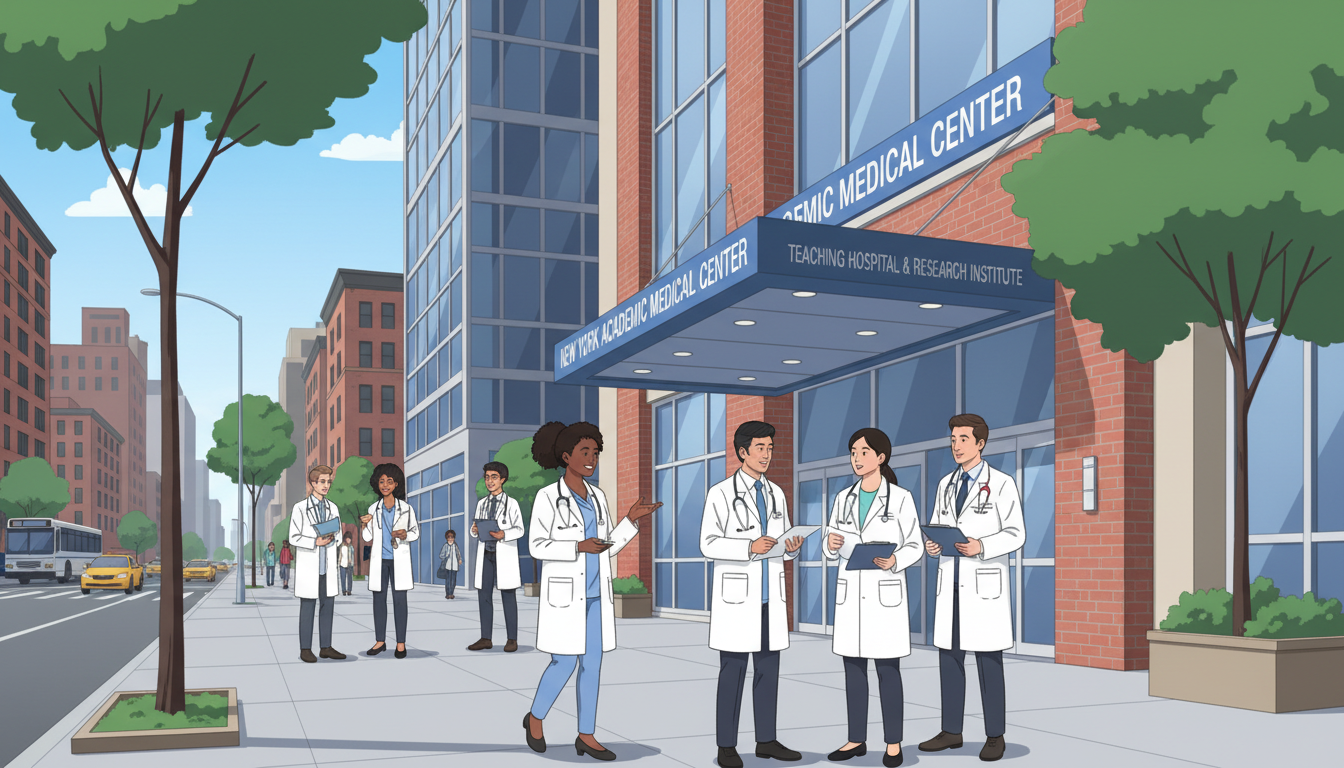
Types of NYC Institutions More Likely to Offer H-1B
Large Academic Centers
- Affiliated with universities (e.g., Columbia, Cornell, NYU, Mount Sinai).
- Often H-1B cap exempt by structure.
- Typically have more robust immigration offices and established policies.
- Still, some have strict rules—some sponsor only J-1 for residents and reserve H-1B for fellows or faculty.
Community Hospitals with University Affiliations
- Many of these hospitals are IMG-friendly and have sponsored H-1B in the past for strong candidates.
- Often host Caribbean medical students for core or elective rotations.
- Can be flexible if they see high value in a candidate (strong USMLE/clinical performance).
Public / Safety-Net Hospitals
- Some NYC Health + Hospitals (H+H) sites have historically sponsored H-1B.
- Policies vary significantly by site and over time.
Why Program Policies Change
This is important for Caribbean IMGs: there is no static, official H-1B sponsor list for residency.
Program policies can shift based on:
- Changes in GME leadership or DIO (Designated Institutional Official)
- Institutional budgetary constraints
- Legal/HR risk tolerance
- Prior experiences (positive or negative) with visa sponsorship
- Broader institutional policy changes (e.g., “J-1 only” mandate)
Therefore, any H-1B sponsor list you find online is a starting point, not a guarantee. You must confirm directly with each program for the current season.
3. How to Identify H-1B-Friendly NYC Residency Programs as a Caribbean IMG
Step 1: Use Official Databases and Program Websites
Start with the basics:
FREIDA (AMA Residency & Fellowship Database)
Filter by location (New York, NY) and specialty. Some programs mention visa types accepted (J-1, H-1B) in the “Program Policies” or “Requirements” section.Program Websites
Under sections like “For Applicants,” “FAQ,” or “International Medical Graduates,” look for:- Statements such as “We sponsor J-1 visas only”
- Or “We sponsor J-1 and H-1B visas for qualified applicants”
- Or ambiguous phrases like “We consider visa sponsorship on a case-by-case basis”
If a program explicitly lists H-1B or “H1B” on its website, that’s your first flag that it may belong on your H-1B residency programs target list.
Step 2: Check with Current or Recent Residents
Because written policies may lag behind practice, talking to people on the ground is critical.
- Use LinkedIn, Facebook groups, and residency match forums to find current residents, especially other Caribbean IMGs in NYC.
- Ask specifically:
- “Has your program sponsored H-1B for anyone in the last 2–3 years?”
- “Do they usually sponsor J-1 only, or is H-1B possible for strong candidates?”
If you are from a school like SGU, explore your school’s SGU residency match and alumni data. Alumni often know which New York City residency programs have seriously considered or actively sponsored H-1B for their classmates.
Step 3: Directly Email or Call the Program Coordinator
Once you shortlist, contact the program coordinator or program administrator. Be concise and professional. For example:
Dear [Coordinator Name],
I am an international medical graduate from [Caribbean School Name], currently planning to apply to your [Specialty] residency program. I anticipate needing visa sponsorship for residency.
Could you kindly let me know whether your program sponsors H-1B visas for residents, or if sponsorship is limited to J-1 visas only?
Thank you very much for your time and guidance.
Sincerely,
[Your Name], MD (Expected)
This approach is:
- Direct
- Respectful
- Focused on policy (not negotiating at the application stage)
Make note of all responses in a spreadsheet—this becomes your real-time H-1B sponsor list for NYC.
Step 4: Look at Historical Patterns
Search for phrases such as:
- “H-1B residency programs New York City”
- “H-1B cap exempt hospitals NYC”
- “[Hospital Name] H-1B residents”
Read forum posts, old program brochures, and alumni reports. If you see consistent confirmation from multiple sources that a hospital used to sponsor H-1B, treat it as “likely but not guaranteed”—and verify with step 3.
4. Strategic Planning: Balancing H-1B Goals with Match Reality
As a Caribbean IMG, aiming exclusively at H-1B-sponsoring programs can be risky. You must balance:
- Your visa preference (H-1B vs J-1)
- Your match competitiveness
- The realistic availability of H-1B-friendly NYC residency programs

Consider Your Profile Honestly
Key factors that influence how aggressive you can be in targeting H-1B programs:
- USMLE scores (Step 1, Step 2 CK; Step 3 if completed)
- Number of attempts on each exam
- Clinical experience in the U.S., especially in NYC
- Letters of recommendation from U.S. physicians
- Graduation year (recent graduates are often preferred)
- School reputation: Some programs are familiar with Caribbean medical school residency track records, including SGU, AUC, Ross, Saba, etc.
If you have very strong metrics (e.g., high USMLE scores, no failures, good U.S. letters, recent YOG), you can justify:
- Larger proportion of H-1B-targeting programs in NYC
- Selective application to more competitive specialties or academic centers
If your profile is average or below average for U.S. IMGs, consider:
- A mixed strategy:
- A significant number of J-1-friendly programs
- A smaller but targeted group of H-1B-friendly NYC programs
- Being flexible about specialty and location (not only Manhattan or Brooklyn, but also other New York State or neighboring states).
Crafting a Target List
For each NYC program on your list, create fields like:
- Program Name
- Specialty
- Borough (Manhattan, Brooklyn, Queens, Bronx, Staten Island)
- Visa: J-1 only / J-1 + H-1B / Case-by-case
- Confirmed via: Website / Email / Current resident
- Notes: Caribbean IMG presence? SGU/AUC/Ross grads?
Aim for a balanced distribution, for example (numbers will vary by profile):
- 20–30 NYC programs that are J-1 only but IMG-friendly
- 10–15 NYC programs that explicitly allow H-1B or “J-1/H-1B”
- Additional programs outside NYC with known H-1B friendliness in your specialty
5. Practical Requirements for H-1B Sponsorship in NYC Residency
USMLE Step 3: Often Essential
Most NYC H-1B sponsoring programs require Step 3 completion before they file your H-1B petition, and some even require Step 3 before ranking you.
As a Caribbean IMG targeting H-1B residency programs, prioritize:
- Taking Step 3 early enough in the application cycle
- Achieving a strong pass (ideally one attempt)
This can be logistically tough if you’re still finishing rotations, but for H-1B:
- Step 3 is often non-negotiable
- Not having it done can move you out of the H-1B pool and into J-1 only consideration
Timing Considerations in New York City
Because most NYC academic centers are H-1B cap exempt, they are not restricted by the April H-1B cap season. But they still face:
- Internal deadlines to process H-1B petitions
- Start-date requirements (typically July 1)
Therefore:
- If you are applying with the explicit goal of H-1B, mention that your Step 3 is completed.
- For interviews, be prepared to discuss visa options and show clear understanding of H-1B cap exempt status.
Documentation and Credentialing
Typical requirements for H-1B sponsorship in NYC residencies include:
- Valid ECFMG certification
- USMLE Steps 1, 2 CK, and Step 3
- Valid passport and immigration history documents (if currently in the U.S.)
- Medical degree and transcripts
- Professional CV and previous training details
The hospital’s legal or immigration office will handle the petition itself (I-129, LCA, etc.), but delays can occur if your documents are incomplete or inconsistent. As a Caribbean IMG, gather your paperwork early and keep digital copies organized.
6. Long-Term Career Impact: Why H-1B Matters for Caribbean IMGs
For many Caribbean IMGs in New York City, residency is only the first step. You may wish to:
- Stay in NYC as an attending
- Pursue fellowship in NYC or elsewhere in the U.S.
- Transition to a community practice or academic position
Advantages of H-1B for Long-Term Planning
No J-1 Home Residency Requirement
You’re not automatically forced to return to your home country for 2 years, nor do you have to seek a J-1 waiver (often in underserved areas).Pathway to Employment and Green Card
Employers are often familiar with sponsoring H-1B residents and then transitioning them into H-1B attending roles. Many H-1B attendings go on to pursue PERM-based green card sponsorship.More Geographic Flexibility Post-Training
Without a J-1 waiver obligation, you may have more freedom to choose location and practice type—whether in New York City, elsewhere in New York State, or another state entirely.
Trade-Offs to Acknowledge
However, you should also be realistic:
- H-1B sponsorship may narrow your residency options, especially if you insist on both NYC and H-1B.
- Some competitive NYC programs may prefer J-1 even if they are technically able to sponsor H-1B.
- If you fail to match due to over-restricting your list (H-1B-only in NYC), you may lose a year and weaken your profile.
A common compromise for Caribbean IMGs:
- Apply to a mix of J-1 and H-1B–friendly NYC programs.
- If matched to J-1, pursue a thoughtful plan for J-1 waiver jobs that still align with your long-term goals.
Remember, visa type matters, but matching into a solid training program matters more—especially if you are a first-generation immigrant physician establishing your career in the U.S.
FAQs: H-1B Sponsorship Programs for Caribbean IMGs in New York City
1. Can Caribbean IMGs on H-1B do fellowship in New York City later?
Yes. If you train in a New York City residency program on an H-1B (cap-exempt), many university-affiliated fellowship programs are also H-1B cap exempt and can continue your H-1B status. You’ll need to:
- Ensure the fellowship program is willing to sponsor H-1B
- Maintain continuous employment/visa status without gaps
- Coordinate timing between residency end and fellowship start
2. Is there an official H-1B sponsor list for NYC residency programs?
No. There is no official, centralized H-1B sponsor list for residency. Lists you find online are usually:
- Based on historical data or anecdotal reports
- Sometimes outdated
The best method is to:
- Check program websites
- Contact coordinators directly
- Talk to current Caribbean IMGs in those programs
Use that information to build your own up-to-date H-1B residency programs list focused on New York City.
3. Do all New York City residency programs require Step 3 for H-1B?
Not all—but many H-1B sponsoring programs do. It’s safer to assume Step 3 is required unless a program states otherwise. For Caribbean IMGs specifically:
- Completing Step 3 early is a major competitive asset
- Some programs will not even consider H-1B sponsorship without Step 3 passed
If you cannot complete Step 3 before applying, you may need to be more open to J-1 sponsorship.
4. Are H-1B cap-exempt NYC hospitals always better for Caribbean IMGs?
Being H-1B cap exempt primarily affects the employer’s ability to file petitions outside the lottery, not the quality of training. Many excellent NYC programs are cap-exempt and IMG-friendly, but:
- Program culture, training quality, and specialty fit matter more than cap status alone.
- Focus on finding programs that are both good training environments and realistic visa sponsors for your profile.
For a Caribbean IMG seeking a New York City residency with H-1B sponsorship, cap-exempt status is an advantage—but match quality and program support should remain the core priorities.
By understanding how H-1B residency programs work, actively verifying program policies, and building a realistic application strategy, Caribbean IMGs can significantly improve their chances of training—and ultimately practicing—in New York City.