Neurology is often viewed as a “thinking” specialty with relatively controllable hours compared with surgical fields—but for an international medical graduate (IMG), the reality of work-life balance can feel very different once you enter the U.S. training system. This IMG residency guide focuses specifically on what work-life balance actually looks like in neurology residency and early practice, with practical strategies to protect your well‑being while building a strong career.
Understanding Work-Life Balance in Neurology for IMGs
Work-life balance in neurology residency is shaped by several overlapping factors: duty hours, call structure, program culture, visa and financial pressures, and your long‑term career goals. For an IMG, each of these has additional layers of complexity.
Neurology as a “Lifestyle Residency”: Reality vs Perception
Neurology is frequently grouped among “lifestyle residencies,” but that label is nuanced:
What supports lifestyle in neurology:
- Fewer emergent surgeries or invasive procedures compared to surgical specialties
- Many stable outpatient conditions (migraines, epilepsy follow-up, movement disorders)
- Growing outpatient and subspecialty opportunities with regular clinic hours
- Some fellowship paths (e.g., behavioral neurology, outpatient movement disorders) with predictable schedules
What can threaten lifestyle:
- Acute stroke codes and emergencies with time pressure
- High cognitive load and complex decision-making
- Heavy inpatient services at academic centers
- Night float and 24-hour call in some programs
- Documentation, prior authorizations, and electronic health record (EHR) burden
As an international medical graduate, your perception of “busy” or “balanced” may differ from U.S. graduates depending on your home system’s norms. Clarifying expectations early—before and during the neuro match process—will help you choose a setting where you can thrive.
Unique IMG Pressures That Affect Balance
Even in a relatively lifestyle-friendly specialty, IMGs often experience additional work and emotional strain:
- Visa status and job security: Worries about matching, maintaining status (J-1 vs H-1B), and finding a waiver job can extend anxiety beyond normal residency stress.
- Financial responsibilities: Supporting family abroad, paying for exams (USMLE, ECFMG, Step 3), relocation costs, and potential lower starting salaries than anticipated.
- Cultural adaptation: New health system, communication style, hierarchy, and patient expectations.
- Language and documentation: Charting in English, writing detailed notes, and phone communication with patients/families.
- Isolation: Distance from family, smaller social network, sometimes subtle or overt bias.
Recognizing these factors early helps you create realistic expectations and deliberate protective strategies for your residency work life balance.
Residency Structure, Duty Hours, and Lifestyle Expectations
Understanding how neurology residency is typically structured in the U.S. is key to assessing lifestyle and workload.
Typical Neurology Residency Timeline
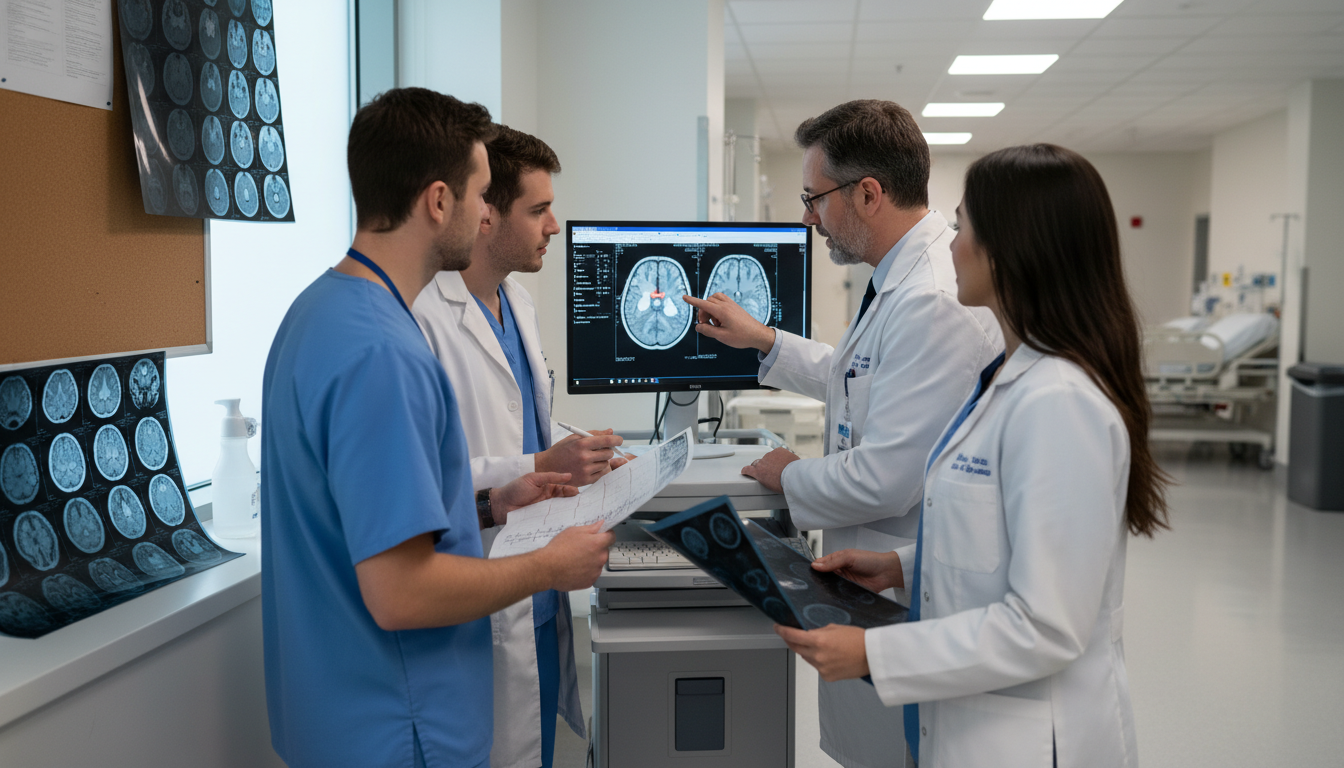
Most neurology training in the U.S. follows this structure:
- PGY-1: Preliminary/internal medicine year (sometimes TY or categorical with integrated neurology rotations)
- PGY-2: First dedicated neurology year—heavy inpatient service
- PGY-3: Mixed inpatient and outpatient neurology, some electives
- PGY-4: Senior resident—more supervisory roles, electives, subspecialty exposure
Work-life balance tends to improve gradually from PGY-2 to PGY-4 as you move from front-line admissions to more focused and selective rotations.
Duty Hours: What the Rules Actually Mean
The ACGME regulates duty hours for all residents, including neurology:
- Maximum 80 hours/week, averaged over 4 weeks
- At least 1 day off in 7, averaged over 4 weeks
- Minimum 8 hours off between shifts (often 10–12 hours recommended)
- No more than 24 hours of continuous in-house duty, plus up to 4 hours for transitions/education
- Night float systems increasingly used to avoid 30-hour calls
As an IMG, it’s important to understand:
- These are maximums, not targets. Good programs aim for sustainable schedules well below 80 hours most weeks.
- Enforcement varies. Some programs push the limit; others are strongly work-life balanced. Resident feedback is often the best data.
When researching programs for the neuro match, pay attention not just to formal duty hours but to hidden work: pre-rounding at home, unlogged pages, and after-hours charting.
Inpatient vs Outpatient Rotations: Lifestyle Contrast
Inpatient neurology often includes:
- Stroke service
- General neurology consults
- Epilepsy monitoring unit (EMU) at some centers
- Neuro-ICU (sometimes staffed by neurocritical care)
Expect:
- Early starts (6:30–7:30 am sign-out)
- Evening sign-out and potential late admissions
- High cognitive demand and frequent emergencies (e.g., stroke alerts)
- More frequent nights or night float
Outpatient neurology often includes:
- Continuity clinic
- Subspecialty clinics (movement, epilepsy, MS, headache, neuromuscular, behavioral neurology, etc.)
- Electives with research or specialized clinics
Expect:
- More predictable daytime hours
- Some documentation or labs after clinic but fewer true emergencies
- Better opportunity to protect evenings and weekends
Your overall residency lifestyle will heavily depend on the mix of these rotations and your program’s call structure.
Evaluating Work-Life Balance When Choosing a Neurology Program
For an international medical graduate, a structured approach to assessing programs is critical. You will see wide variation in workload, support, and culture between institutions.

Key Questions to Ask During the Neuro Match Process
Use interviews, open houses, and resident socials to gather data. Some targeted questions:
About workload and duty hours
- “On average, how many hours per week do you work on stroke service? On general neurology?”
- “How often do residents approach the 80-hour duty hours limit?”
- “What does a typical day look like on inpatient neurology? What time do you arrive and leave?”
- “How are admissions distributed at night?”
About call and nights
- “Do you use night float? For which years and how long are the blocks?”
- “How often does a typical resident take 24-hour call, if at all?”
- “Is night coverage in-house or home call?”
- “How are weekends scheduled?”
About program culture and support
- “Are attendings approachable if you feel overwhelmed or unsafe due to fatigue?”
- “How is coverage handled when someone is sick or has a family emergency?”
- “Have duty hour violations been an issue here, and how has leadership responded?”
Signs of a Lifestyle-Friendly Neurology Residency
Look for programs where:
- Residents consistently say they’re busy but feel supported, not chronically exhausted.
- Multiple upper-level residents independently describe a similar, realistic schedule (not sugar-coated).
- There is a balanced mix of inpatient and outpatient rotations, with protected elective time in PGY-3 and PGY-4.
- Night float is limited to reasonable blocks, with recovery days built in.
- There are wellness initiatives with substance, not just slogans (e.g., easy mental health access, practical schedule adjustments, protected time for medical appointments).
- Resident turnover is low, and graduates speak positively about their experience.
IMG-Specific Factors to Clarify
Ask explicitly as an international medical graduate:
- “How many IMGs are currently in the program, and how have they done in terms of fellowships and jobs?”
- “Does the program sponsor J-1 and/or H-1B visas? Any recent changes?”
- “Are there support structures for IMGs (mentorship, orientation to the U.S. health system, documentation help)?”
- “For residents who are far from family, how flexible is the program about time off for important family events or emergencies abroad?”
Programs experienced with IMGs are more likely to understand your unique pressures and provide a more sustainable residency work life balance.
Practical Strategies to Protect Your Lifestyle During Neurology Residency
You will not be able to control everything about your schedule—but you can actively shape how you experience it. The goal is not perfection, but sustainable function across 3–4 intense years.
1. Managing Time on Busy Inpatient Rotations
When duty hours are highest, deliberate structure is non‑negotiable.
Before your inpatient month:
- Block out essential personal tasks (paying bills, visa paperwork deadlines, family calls) on your calendar.
- Prepare meals or identify quick, healthy options near the hospital.
- Set clear expectations with family and friends: “For this month, replies might be slower, but I’m okay.”
During the rotation:
- Batch tasks: Write multiple notes at once after seeing several patients, when possible.
- Prioritize life-saving tasks first (stroke codes, respiratory issues), then time-sensitive orders, then documentation.
- Use templates and smart phrases in the EHR to speed up documentation while maintaining quality.
- Protect micro-breaks: 5 minutes to stretch, drink water, or step outside between codes or rounding segments can dramatically reduce burnout.
After call or long days:
- Create a simple decompression ritual: change clothes immediately, short shower, light snack, 15 minutes of non-medical reading or music.
- Avoid heavy decisions (financial, visa, major life choices) when acutely sleep-deprived.
2. Building Boundaries in Outpatient and Elective Blocks
Outpatient and elective months are where you truly reclaim your lifestyle residency potential.
- Make a written plan for these months: exercise routine, social connections, board study, long-term projects.
- Set a personal “no charting after X time” rule where you reasonably can—train yourself to be efficient during clinic hours.
- Learn to say, “I’d love to help, but I’m at capacity this week” when asked to take on additional non-required tasks.
- Use part of your elective time to explore lifestyle-friendly subspecialties (e.g., outpatient movement disorders, headache, neuroimmunology) and talk to attendings about their schedules.
3. Protecting Sleep and Health on Shift Work
Consistent sleep is one of the most powerful determinants of your work-life balance.
- For night float:
- Try to keep a stable schedule (sleeping late morning to early afternoon).
- Use blackout curtains, eye masks, and white noise.
- Avoid large meals right before sleep; light snacks are better.
- Limit caffeine in the last 4–6 hours of your shift.
- For flip-flopping between days and nights:
- Plan at least 24 hours between your last night shift and a return to daytime.
- Use short naps rather than long daytime sleep if you’re trying to readjust.
Maintain basic health anchors:
- Prioritize even short, regular exercise (10–20 minutes) over sporadic long workouts.
- Keep healthy, easy snacks available: nuts, yogurt, fruit, pre-cut veggies.
- Schedule your own medical and dental appointments during lighter months and keep them.
4. Emotional Resilience and Cognitive Load in Neurology
Neurology can be emotionally heavy: devastating diagnoses, complex prognoses, and discussions about quality of life.
As an IMG, you may face additional emotional strain:
- Language nuances when conveying bad news
- Families with different cultural expectations than those you’re used to
- Personal distance from your own support network
Strategies:
- Find one or two trusted colleagues or co-residents to debrief difficult cases with regularly.
- Use hospital-based resources (employee assistance programs, confidential counseling) early rather than waiting for crisis.
- Develop a brief reflective practice: a few minutes after shifts to acknowledge what went well and what was hard, without judgment.
- Learn simple, structured frameworks for breaking bad news (e.g., SPIKES) and rehearse them—it reduces emotional chaos during the real conversation.
5. Financial and Visa Planning to Reduce Chronic Stress
Chronic background anxiety about money or immigration significantly undermines work-life balance.
- Make a simple budget around PGY-1 that accounts for:
- Rent and utilities
- Loan payments (if any)
- Support for family abroad (if applicable)
- Exam and application costs for fellowships
- Seek a financial literacy seminar if your institution offers it.
- Clarify your visa pathway early:
- J-1: Understand waiver requirements and timelines.
- H-1B: Confirm whether the program will sponsor and what that means for Step 3 timing.
- Schedule periodic 30–60 minute blocks (every 2–3 months) for life administration (visa documents, banking, insurance) so these tasks don’t eat into precious recovery time spontaneously.
Life After Residency: Neurology Career Paths and Long-Term Lifestyle
Your long-term work-life balance will depend more on career choices than residency alone. Neurology is diverse, with both high-intensity and very controllable-lifestyle roles.
Academic vs Community vs Private Practice
Academic neurology:
- Mix of inpatient, outpatient, teaching, and research.
- Can be very balanced in some subspecialties (e.g., cognitive/behavioral neurology, neuromuscular clinic).
- May pay slightly less but offer more intellectual variety and academic support.
Community neurology:
- Often more outpatient-heavy, with scheduled clinics.
- In smaller hospitals, you may cover both outpatient and some inpatient consults.
- Call can be manageable with group sharing (e.g., 1 in 4 or better), sometimes with teleneurology coverage.
Private practice:
- High variability: some practices are intense, others very lifestyle-oriented.
- Greater control over schedule if you become a partner, but early years can be busier.
- Income often higher but administrative responsibilities may grow.
Subspecialties with Relatively Favorable Lifestyle
While lifestyle is about the specific job, some neurology subspecialties often lend themselves more easily to a controllable schedule:
- Headache medicine: Largely outpatient, procedural options (e.g., Botox) without emergency calls.
- Movement disorders: Mostly clinic-based, predictable hours.
- Neuroimmunology/MS: Outpatient focus, occasional infusion center management.
- Behavioral neurology: Cognitive disorders clinic, often academic with good daytime hours.
- Neurophysiology/EMG and EEG (outpatient-focused jobs): Procedural but planned.
More intense but still manageable with the right setting:
- Epileptology: Can have EMU and call responsibilities, but some jobs are heavily outpatient.
- Neurocritical care: Often ICU-based with shift work; can be intense, but time off between shifts may be significant.
When considering fellowships, ask attendings directly about their actual weekly schedule, not just the advertised clinic hours.
Negotiating Work-Life Balance as an IMG Neurologist
Once out of training:
- Ask about clinic templates: number of patients per half day, new vs follow-up ratio.
- Clarify call structure: in-house vs home call, frequency, stroke codes, telestroke duties.
- Inquire about administrative support: scribes, nurse practitioners/physician assistants, scheduling, and triage nurses.
- Don’t underestimate the impact of commute time on lifestyle—living close to work often improves work-life balance more than a slightly higher salary farther away.
Frequently Asked Questions (FAQ)
1. Is neurology truly a lifestyle residency for an international medical graduate?
Neurology is generally more lifestyle-friendly than many surgical and some medicine subspecialties, but for IMGs, the overall experience depends heavily on the program and personal circumstances. If you choose a program with reasonable duty hours, good support for IMGs, and balanced inpatient/outpatient time, neurology can absolutely provide a sustainable residency work life balance. However, visa pressures, financial obligations, and distance from family can add non-clinical stress that requires deliberate management.
2. How many hours per week do neurology residents typically work?
It varies widely by program and rotation. In busy academic centers, inpatient months (stroke, neuro-ICU) can approach 65–80 hours/week during peak periods, though many weeks are lower. Outpatient and elective blocks may be closer to 45–55 hours/week. When evaluating programs, ask current residents for specific examples by rotation to get a realistic picture.
3. Which neurology subspecialties offer the best lifestyle after training?
While individual jobs vary, many neurologists find relatively favorable lifestyles in headache medicine, movement disorders, outpatient-focused epilepsy, neuroimmunology, and behavioral neurology. These fields are often clinic-based with minimal night emergencies, allowing for more predictable schedules. Neurocritical care and hospital-based positions can be more intense but may involve shift work with clear off-time.
4. As an IMG, what can I do now—before matching—to improve my future work-life balance in neurology?
You can start by:
- Prioritizing programs during the neuro match that show strong resident support, transparent duty hours, and experience with IMGs.
- Gaining exposure to neurology through observerships or research so that you understand the specialty’s demands realistically.
- Planning financially for exam fees and relocation to reduce stress during residency.
- Building communication and documentation skills in English, which will make clinical work more efficient and less draining once you start residency.
With informed program selection and deliberate strategies during training, neurology can be a highly rewarding and sustainable specialty for an international medical graduate.