Understanding Work-Life Balance in PM&R for IMGs
Work-life balance in Physical Medicine & Rehabilitation (PM&R) is often described as one of the best in all of residency. For an international medical graduate (IMG), however, “good lifestyle” is not just about fewer duty hours—it’s also about immigration stress, financial pressure, cultural adaptation, and being far from family support.
This IMG residency guide focuses on the real work-life balance you can expect in PM&R (physiatry), especially as an IMG navigating the physiatry match. You will learn:
- What a typical PM&R schedule looks like (inpatient vs outpatient)
- How PM&R compares to other specialties on lifestyle and duty hours
- Unique challenges and advantages for IMGs in this field
- How to evaluate program culture and lifestyle before ranking
- Practical strategies to protect your well-being during residency
Why PM&R Is Considered a “Lifestyle Residency”
PM&R is often grouped among the most lifestyle-friendly specialties. But what does that actually mean in terms of day-to-day reality?
1. Typical Duty Hours and Schedule
While every program is different, PM&R generally offers:
- Average weekly hours: 45–60 hours for most rotations
- Inpatient rotations: Closer to 55–65 hours/week
- Outpatient rotations: Often 40–50 hours/week
- Call schedule: Frequently home call; in-house call is less common than in surgery or internal medicine
Compared to surgery, OB/GYN, or some internal medicine subspecialties, PM&R usually has:
- Fewer overnight calls
- Less chronic sleep deprivation
- More predictable daytime work
From a residency work life balance perspective, this is why PM&R frequently appears in lists of “lifestyle residency” fields.
2. Nature of the Work
PM&R focuses on function, quality of life, and long-term rehabilitation—more “marathon” than “sprint.” This translates into:
- Fewer acute, middle-of-the-night emergencies
- Team-based care with therapists, nurses, psychologists, social workers
- Scheduled therapies and clinics with predictable start and end times
- Lower frequency of unexpected crises than in ICU-heavy specialties
This structure helps residents maintain personal routines such as exercise, sleep, and social time—critical elements of healthy work-life balance.
3. Emotional Demands
PM&R has its own emotional challenges:
- Managing chronic disability, pain, or life-changing injuries (spinal cord injury, TBI, stroke, amputations)
- Supporting patients and families adjusting to new functional limitations
However, many residents find that the longitudinal, functional improvement in patients (e.g., watching a stroke patient progress from bed-bound to walking with assistance) provides strong emotional reward and prevents burnout.
For IMGs who may be working far from home support systems, this sense of meaning can be a powerful protective factor.
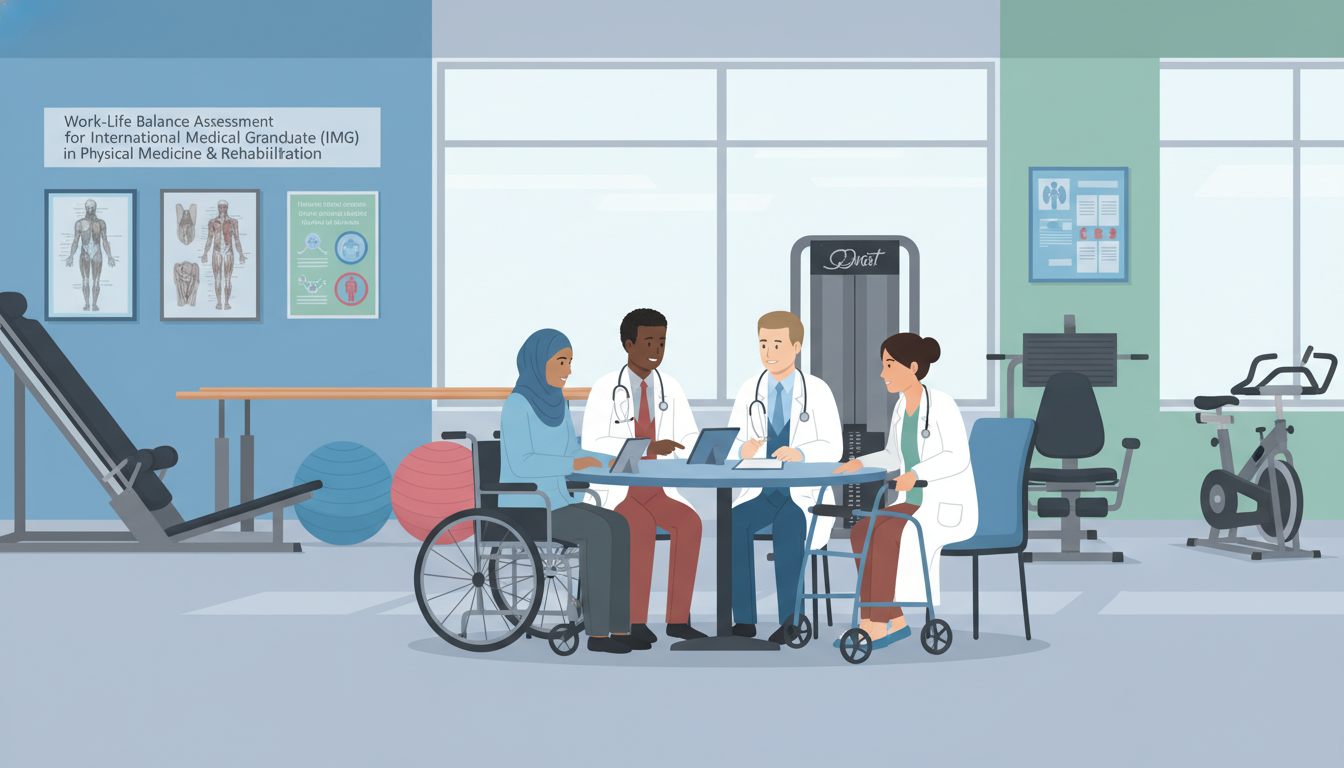
Specific Work-Life Balance Factors in PM&R Residency
Inpatient vs Outpatient: What Changes Your Day-to-Day
Most PM&R residency programs have a mix of:
- Inpatient rehab rotations
- Consult services (e.g., evaluating patients on neurology, trauma, or orthopedic floors)
- Outpatient clinics (pain, musculoskeletal, spasticity, EMG, sports, etc.)
- Elective/research blocks
Each has a distinct impact on your lifestyle.
Inpatient Rehabilitation Rotations
Typical experience:
- Hours: ~6:30–7:00 AM to 5:30–6:30 PM on weekdays
- Weekends: 1–2 weekends per month (rounds only; shorter days)
- Call: Often home call (responding by phone, occasional hospital visits)
Lifestyle implications:
- More structured mornings (pre-rounding, rounds)
- More documentation (admission notes, daily notes, discharge planning)
- Team coordination with PT/OT/SLP, case managers, nurses
- Patients tend to be stable but complex, so emergencies are less frequent than in acute care
For IMGs, inpatient rehab can be an easier transition than ICU or ED-type environments because the pace is intense but more predictable, and communication is collaborative rather than crisis-driven.
Outpatient Clinics
Typical experience:
- Hours: ~8:00 AM–5:00 PM, often no weekends
- Call: Usually minimal; some clinics have none
- Patient flow: Scheduled appointments (20–40 minutes+), procedures, EMGs
Lifestyle implications:
- Highly predictable schedule
- Often time for lunch and brief breaks
- Less “spillover” into nights/weekends once charting is under control
IMGs may find outpatient settings helpful for gradually building confidence in medical English, patient counseling, and nuanced communication without acute time pressure.
Consult Services
Typical experience:
- Hours: Variable but typically 7:00/8:00 AM–5:00/6:00 PM
- Workload: Fluctuates based on hospital census and referring services
- Call: May include some weekend coverage
Lifestyle implications:
- Can be busier and less predictable than inpatient rehab
- Higher exposure to acute settings (ICU, trauma)
- More walking and time in different hospital units
This can be more tiring for IMGs early on but is excellent for learning systems navigation and interdisciplinary communication in the U.S. system.
Call Structure and Night Float
PM&R is usually more forgiving with call than many other specialties:
- Home call is common, especially on rehab units
- In-house call tends to be less frequent and often shared with multiple residents
- Some programs have a night float system, typically:
- 1–2 weeks of nights at a time
- Often shorter blocks than internal medicine or surgery
As an IMG, ask specifically:
- Is call mostly home or in-house?
- How many total calls/month?
- How often do residents come in from home call?
- Do attendings provide effective backup overnight?
Your perception of “good work-life balance” will be very different if home call almost never requires coming in vs frequently turning into overnight admissions.
Unique Work-Life Balance Challenges for IMGs in PM&R
Even in a lifestyle-friendly field, IMGs face added pressures. Understanding them early can help you plan.
1. Visa and Immigration Stress
Managing immigration alongside training can significantly affect your mental bandwidth:
- Navigating J-1 vs H-1B decisions
- Concern about waiver jobs and future employment
- Anxiety around travel, renewals, and status changes
Impact on work-life balance:
- Less mental space for hobbies or rest
- Hesitation to take time off to visit family abroad
- Extra paperwork and appointments on days off
Actionable advice:
- Choose programs with strong IMG support (ask current residents: “Who helps you with visas?”)
- Early in PGY-1, identify a trusted immigration lawyer (even if your employer handles basics)
- Block vacation time early if you plan international travel so you can align with visa timing
2. Financial Pressure and Family Obligations
IMGs often:
- Arrive with educational debt from abroad plus U.S. exams/observerships
- Support family back home financially
- Have higher relocation costs crossing continents rather than states
Impact on lifestyle:
- Pressure to moonlight (if allowed) once licensed, cutting into rest time
- Difficulty affording wellness activities (gym, travel, conferences) early on
- Stress during any unexpected expenses (car problems, medical bills)
Practical strategies:
- Before matching, estimate cost of living for each program city
- Ask residents: “Can you live comfortably on the salary here without constant financial worry?”
- Create a budget that includes:
- Remittances/home support
- Licensure/board exam fees
- Occasional personal enjoyment (even small, regular treats)
3. Social Isolation and Cultural Adjustment
Moving to a new country, language and medical system brings:
- Loneliness, especially if you are far from any family
- Cultural differences in patient interactions, humor, and hierarchy
- Fear of “standing out” or saying the wrong thing
PM&R’s team-based nature can actually help:
- Daily collaboration with therapists, nurses, social workers, psychologists
- Frequent family meetings build communication skills and cultural understanding
- Many rehab teams are used to working with diverse staff and communicative approaches
Still, you must be intentional:
- Join resident interest groups (wellness committees, diversity groups, IMG networks)
- Ask co-residents about local religious/cultural communities if relevant
- Protect at least one regular weekly social activity, even simple (call to family, video chat with friends, walk with a colleague)

How to Evaluate PM&R Programs for True Lifestyle and Work-Life Balance
During the application and interview process, every program will say they “value resident wellness.” Your goal as an IMG is to look beyond slogans and assess the reality.
Key Questions to Ask Residents (Not Just Faculty)
Ask these during interviews, second looks, or informal chats:
“What does a typical week look like on your busiest rotation?”
- Listen for specifics in hours and call frequency
- If you only get vague answers (“busy but manageable”), follow up.
“How often do you stay significantly late documenting?”
- Many residents leave on time but then chart at home—this still impacts balance.
“Can you reliably make regular commitments outside work, like a weekly class or religion service?”
- If residents laugh nervously, it may indicate an unpredictable or intense schedule.
“How does the program respond when someone is struggling (health, family issues, burnout)?”
- Look for real examples, not just “we’re supportive.”
“Where do most residents live, and what is the commute like?”
- A 60-hour week plus a 1-hour commute each way is very different from a 15‑minute commute.
“How many IMGs are currently in the program?”
- If there are several, ask: “What challenges do IMGs usually face here, and how has the program helped?”
Red Flags for Poor Work-Life Balance
Be cautious if you see:
- Residents appear exhausted or disengaged during your visit
- Multiple residents describe the culture as “sink or swim”
- Program leadership avoids discussing:
- Duty hours compliance
- Recent attrition or leaves of absence
- No structured wellness initiatives or mental health resources
- Chronic under-staffing (frequent gaps in the schedule, unfilled positions)
Even in a traditionally “lifestyle” field like PM&R, these red flags can turn training into a high-burnout experience.
Positive Signs of a Lifestyle-Supportive Program
Encouraging indicators:
- Clear duty hours monitoring and real consequences for violations
- Regular wellness days, retreats, or built-in mental health resources
- Encouragement of vacation use, with coverage planned in advance
- Residents who:
- Describe hobbies and activities outside of work
- Seem relaxed and honest about challenges
- Protected didactic time that is actually respected (not routinely interrupted by pages unless emergency)
- Transparent moonlighting policies if you plan to supplement income
For an international medical graduate, also look for:
- A program coordinator experienced with visas
- Upper-year IMGs who have successfully renewed visas or started waiver jobs
- Clear policies around time off for visa appointments or international travel
Practical Strategies to Maintain Work-Life Balance as an IMG Physiatry Resident
Work-life balance is not only about the program; it’s also about your habits and boundaries.
1. Time Management and Efficiency
PM&R documentation and care plans can be detailed. Good workflow can save you hours weekly.
Practical steps:
- Use templates and smart phrases for common consults (stroke admission, SCI follow-up, TBI, amputee eval)
- Start notes early in the day—brief structure during morning, complete later
- Batch tasks:
- Return calls in groups
- Do all discharge summaries at a consistent time each day
- Learn keyboard shortcuts and EHR efficiency tricks from senior residents
2. Protecting Sleep
Even with lighter duty hours compared to other specialties, sleep can slip.
- Aim for a consistent sleep window most nights (e.g., 11 PM–6 AM)
- Use home call wisely:
- After a late-night call, give yourself 10–15 minutes to decompress before trying to sleep again
- Avoid studying very late unless absolutely necessary:
- Focus on spaced repetition during the day or early evening
- If you struggle with sleep, do not hesitate to seek medical or mental health support; insomnia can quickly spiral during residency.
3. Building a Support System
Because most IMGs cannot rely on nearby family, intentional support-building is vital.
Ideas:
- Identify 1–2 trusted co-residents you can message during rough days
- Use group chats for your class to coordinate rides, meal orders, or debrief tough cases
- Connect with:
- Local diaspora groups
- Religious centers
- National IMG or PM&R societies online
Even a monthly meet-up or shared cultural meal can dramatically reduce feelings of isolation.
4. Setting Realistic Expectations of Yourself
IMGs often feel pressure to:
- Work harder than everyone
- Never say no
- Never ask for help
This mindset is understandable but unsustainable.
Healthier approach:
- Accept that you are learning a new system, not just medicine
- When overwhelmed, speak with:
- Chief resident
- Mentor
- Program director or associate PD
- Differentiate between:
- Temporary busy weeks on heavy rotations
- Chronic overload that may require structural solutions
5. Preserving Identity Outside of Medicine
Even in a lifestyle residency, it is easy for medicine to become your entire identity. Intentionally maintain some non-medical parts of yourself:
- Keep one or two pre-residency hobbies: reading, music, sports, gaming
- Celebrate your cultural traditions, even in small ways (food, music, holidays)
- Share your background with co-residents—many will be genuinely interested, and it can help you feel more “seen” and accepted.
Long-Term Lifestyle Outlook: Beyond Residency
When you consider PM&R as an international medical graduate, it’s important to think beyond residency into attending life.
Practice Settings and Work-Life Balance
Common practice paths and typical lifestyle considerations:
Outpatient MSK/Spine/Pain Clinics
- Often 4–4.5 clinic days/week
- Mostly daytime hours; rare weekends
- Procedures (injections, fluoroscopy-guided procedures) add variety without emergency hours
Inpatient Rehab Medical Director or Attending
- Hours similar to inpatient residency rotations but with:
- More autonomy over schedule
- Ability to design team structure
- Generally minimal night call
- Hours similar to inpatient residency rotations but with:
Academic Physiatry
- Mix of:
- Clinical work
- Research
- Teaching
- Can be very lifestyle-friendly if designed with clear expectations
- Mix of:
Sports Medicine or Interventional Pain
- Still generally good work-life balance
- Some variability depending on call (e.g., coverage for sports teams)
Across all, PM&R remains one of the most lifestyle-friendly specialties, especially for physicians who prioritize both meaningful patient relationships and personal life.
As an IMG, factor in:
- Availability of visa-supporting employers in your desired subspecialty/region
- Whether you prefer urban vs rural practice (affects call, income, and cost of living)
- Long-term proximity to family or diaspora communities
FAQs: Work-Life Balance for IMGs in PM&R
1. Is PM&R a good specialty for IMG work-life balance compared to Internal Medicine or Surgery?
Yes. PM&R is generally more lifestyle-friendly than internal medicine or surgery, especially in:
- Duty hours: Often fewer total weekly hours
- Night call burden: More home call and less ICU-level overnight work
- Predictability: Much more scheduled, less crisis-driven
For an international medical graduate, this often means more energy for adaptation (new country, language, and system) and more space for personal life.
2. As an IMG, will I have to work harder than others to “prove myself,” and does that ruin work-life balance?
You may feel internal pressure to overperform, but a well-run PM&R program should not systematically overburden IMGs. Workload should be distributed by rotation, not nationality.
Key steps:
- Choose programs with multiple successful IMGs in recent years
- Set healthy boundaries: do your best during work hours, but do not sacrifice all rest time out of fear
- Use early months to learn efficiency skills so you can maintain quality without constant overtime
3. Can I have a family (or start one) during PM&R residency as an IMG?
Many PM&R residents, including IMGs, successfully have children or raise families during residency. PM&R’s relatively predictable schedules and lower overnight burden help.
Considerations:
- Ask about parental leave policies and real-life examples from residents
- Understand your visa implications for travel and dependents
- Build a local support network early (friends, colleagues, childcare resources)
4. How do I balance USMLE/board studying with residency duties in PM&R?
Strategies:
- Use light rotations (outpatient, electives) to focus on exams
- Implement spaced repetition (e.g., Anki) for brief daily review instead of long weekend marathons
- Study cases you see on service; PM&R is clinically rich, and real patients make learning stick
- Discuss exam timelines with your program director to avoid conflict with heavy rotations
Bottom line: For an international medical graduate, PM&R offers one of the most favorable combinations of meaningful patient care, reasonable duty hours, and sustainable work-life balance in residency. By carefully choosing the right program, planning for immigration and financial realities, and intentionally building your support systems, you can build a rewarding physiatry career without sacrificing your health, relationships, or identity.