
Understanding Work–Life Balance in Diagnostic Radiology for IMGs
Diagnostic Radiology is widely viewed as one of the more “lifestyle-friendly” specialties—especially compared with surgery, emergency medicine, or certain internal medicine subspecialties. For an international medical graduate (IMG) planning a radiology residency in the U.S., that reputation is attractive, but it can also be misleading if you don’t understand what daily life actually looks like.
This IMG residency guide focuses specifically on work-life balance: what you can realistically expect in a Diagnostic Radiology residency, how the duty hours feel in real life, and how being an IMG may shape your experience. It also covers practical strategies to protect your personal well-being while still building a strong career foundation and staying competitive for the diagnostic radiology match.
1. Why Diagnostic Radiology Is Considered a “Lifestyle Residency”
Diagnostic Radiology is frequently classified among the most lifestyle-friendly specialties, but “lifestyle-friendly” does not mean “easy” or “low stress.” It means that compared with many other fields, radiology offers:
- More predictable schedules (especially in later years and after training)
- Fewer in-person emergencies
- Limited overnight work once you are in attending practice (especially in private practice or teleradiology roles)
- Some flexibility in work location (e.g., hybrid or remote image reading in certain jobs)
Key Workload Features During Residency
During a typical ACGME-accredited radiology residency, you can expect:
- Standard daytime hours: Commonly 7:30–8:00 am to 5:00–6:00 pm on most rotations
- Night float systems: Blocks of consecutive night shifts (for example, 1–2 weeks) instead of frequent isolated overnight calls
- Limited in-person emergencies: You’re rarely running codes or handling crashing patients; your “emergency” is usually a STAT head CT or trauma scan that needs rapid interpretation
- Team-based workflow: Attendings, fellows, residents, and technologists share responsibility for throughput; you’re not “solo” the way you might be in some other specialties
Overall, radiology offers a better chance at controlled working hours and a more predictable residency work life balance compared with procedure-heavy or ICU-heavy specialties. However, for IMGs, factors like visa status, cultural adjustment, and performance pressure can significantly influence how balanced your life feels, regardless of the clock.
2. Typical Schedules, Duty Hours, and Call Structure
Understanding typical U.S. duty hours and call patterns in radiology is key to assessing work–life balance.
ACGME Duty Hour Rules: The Baseline
All ACGME-accredited radiology programs in the U.S. must follow duty hour standards:
- Maximum 80 hours/week, averaged over 4 weeks
- 1 day off in 7, free of clinical and educational duties (averaged over 4 weeks)
- 10 hours off between duty periods (recommended minimum rest)
- No more than 24 hours of continuous in-house duty, but in radiology this is uncommon due to night float systems
Most Diagnostic Radiology residents do not reach 80 hours regularly. Typical ranges are:
- 50–60 hours/week on many rotations
- Occasionally 60–70 hours/week on busier services (e.g., night float, trauma-heavy emergency radiology)
Daytime Rotations: Core of Radiology Residency
Most of your time will be on daytime services:
- Hours: ~7:30–8:00 am start, ~5:00–6:00 pm finish
- Activities:
- Reading CT, MRI, ultrasound, or X-rays with supervision
- Protocoling studies
- Interacting with clinicians by phone or secure messaging
- Attending conferences, lectures, and case reviews
- Intensity: Mentally demanding but physically less intense than ward-based specialties
On these rotations, your evenings are often available for:
- Studying for the ABR Core Exam
- Exercising
- Spending time with family/friends
- Completing personal errands
For IMGs, this structure can feel like significant relief compared with long, chaotic inpatient shifts in some home-country systems.
Night Float and Call: Real Impact on Work–Life Balance
Night coverage varies by program but commonly includes:
- Night float blocks:
- 1–2 weeks of consecutive nights (e.g., 9:00 pm–7:00 am)
- Sometimes every 4–6 weeks during certain years
- Weekend call:
- Day or night weekend shifts
- Often paired with night float systems so weekends cluster with those blocks
Work–life implications:
- Pros:
- Predictable stretches of nights with protected post-call time
- On non-call weeks, you often have no overnight duties
- Cons:
- Disrupted sleep pattern during night float
- Limited personal life during these weeks, especially tough for IMGs without local family support
For an IMG, night shift weeks can worsen:
- Jet lag and circadian disruption, especially if you traveled recently
- Isolation, if most friends/family are in different time zones
- Anxiety about making critical decisions overnight in a new healthcare system
Interventional Radiology Rotations
On rotations in Interventional Radiology (IR), your schedule may be closer to procedural specialties:
- Earlier starts: To prepare cases, consent patients, and set up rooms
- Longer days: If cases run over schedule
- More call: For urgent procedures (e.g., bleeds, emergent drainages)
If you are purely in a Diagnostic Radiology residency (not IR/DR), IR rotations are limited and temporary. They can make certain rotations more intense, but they do not define your entire residence experience.
3. Lifestyle Factors Beyond Hours: Cognitive Load, Stress, and Culture
Work–life balance is not just about hours worked. It’s also about the type of work, how supported you feel, and your ability to recover after work.
Cognitive Workload in Radiology
Radiology is mentally intense:
- Constant image interpretation (CT, MRI, US, X-ray, sometimes nuclear medicine)
- Rapid switching among modalities and body systems
- Responsibility for critical findings (e.g., intracranial hemorrhage, aortic dissection, PE)
- Heavy reading volume, especially in emergency radiology
This cognitive load can be exhausting even if you’re “just sitting.” For IMGs:
- Reading in English all day, plus documenting in English
- Understanding subtle communication from clinicians with different accents or slang
- Handling detailed and sometimes ambiguous clinical histories
All of this can magnify mental fatigue.
Work Environment and Autonomy
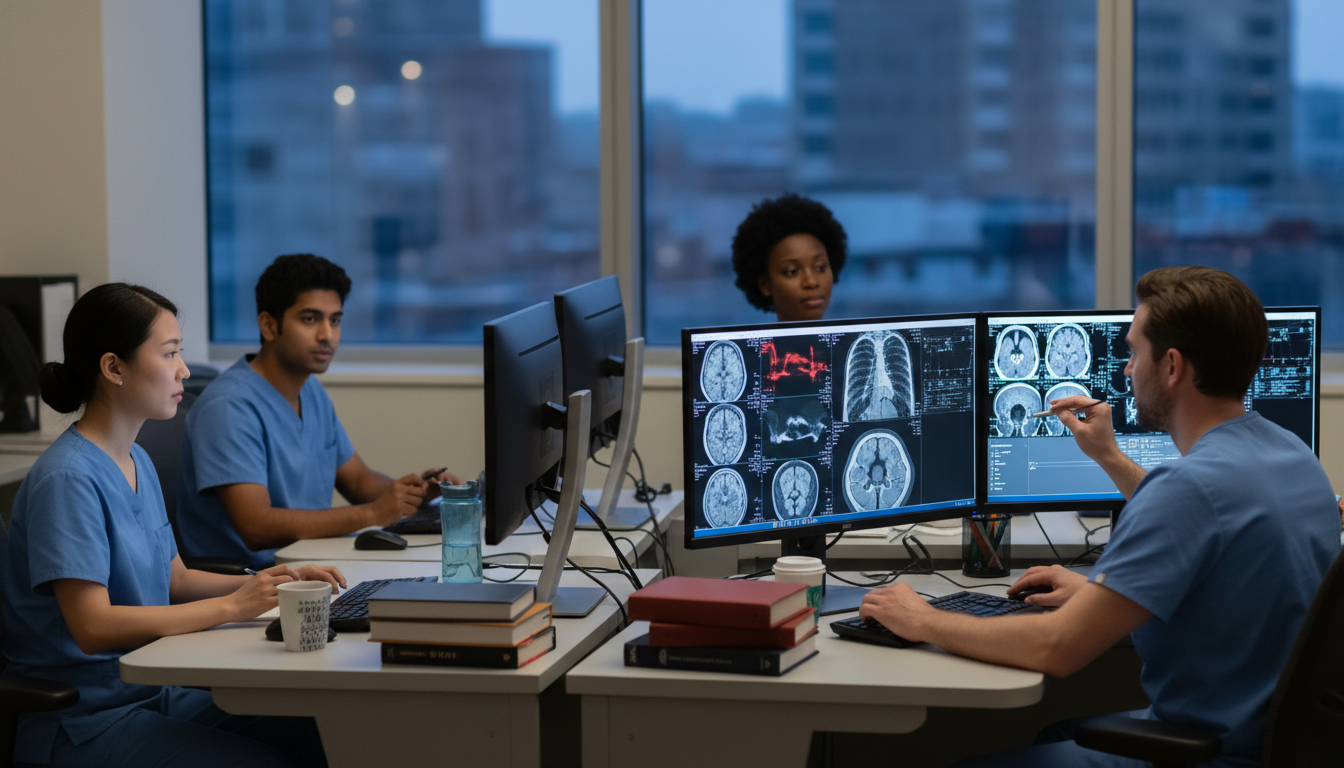
Radiology reading rooms are typically:
- Quiet, dimmed, and focused
- Structured around efficiency and throughput
- Staffed by attendings, fellows, residents, technologists, nurses (in IR), and support staff
Comparatively:
- Pros for work–life balance:
- Fewer interruptions from patients or families
- Less “emotional labor” from face-to-face patient encounters
- Clear start and stop to shifts in many settings
- Cons:
- Can feel isolating, especially early on
- Little physical activity during the workday
- High emphasis on speed and accuracy
Radiology’s culture is often described as fast, analytical, and productivity-driven. For an IMG, an extra layer of pressure might be felt due to visa reliance, cultural adjustment, and performance expectations.
Educational and Exam Stress
Your residency years are also preparation for major examinations:
- ABR Core Exam (typically taken in PGY-4)
- Ongoing in-service training exams and program assessments
This often means:
- Studying in evenings and on weekends
- Using structured review courses and question banks
- Extra pressure to perform well as an IMG to strengthen your CV and credibility
This can compress your available “free time,” especially in the core exam year, which can temporarily worsen work–life balance even when duty hours are manageable.
4. IMGs in Radiology: Specific Work–Life Balance Challenges
Being an international medical graduate adds layers to the standard residency experience. These can directly impact your well-being and your perception of balance—even when the schedule looks reasonable on paper.
4.1 Visa and Immigration Pressures
Common issues for IMGs include:
- J-1 or H-1B visa restrictions and timelines
- Anxiety over visa renewals and institutional support
- Long-term concerns about waiver jobs or future practice options
These stressors may result in:
- Taking on extra research or leadership to stand out
- Reluctance to ask for time off or leave for fear of appearing “less committed”
- Difficulty traveling home to see family due to visa or financial constraints
All of this erodes personal recovery time and emotional balance.
4.2 Cultural Adaptation and Communication
You are learning:
- A new healthcare system (U.S. insurance, EMR, referral patterns)
- Radiology-specific English (e.g., “ground-glass opacities,” “tree-in-bud nodularity”)
- Expectations about communication with clinicians (phone etiquette, urgency stratification)
While this is manageable, it takes extra cognitive energy after hours: reading policies, reviewing guidelines, and sometimes reworking reports based on feedback about style, tone, or clarity.
4.3 Distance from Family and Support Networks
Many IMGs:
- Arrive with limited or no local family support
- Have partners who may not immediately secure jobs in the U.S.
- Are supporting family abroad financially
Impacts on work–life balance:
- Less backup at home for chores, childcare, or illness
- Less emotional support in times of stress
- Limited ability to take meaningful vacations due to travel cost and time
Radiology’s relatively stable hours can help, but the emotional toll of isolation can still be heavy.
4.4 Pressure to Overperform
IMGs often feel they must:
- Work harder
- Say “yes” more often
- Avoid any sign of weakness or burnout
This can mean:
- Avoiding mental health services
- Not using all allotted vacation or wellness days
- Overcommitting to research or projects
In a field like radiology, where burnout risk can arise from high volumes and constant cognitive load, this pattern is particularly dangerous.
5. Practical Strategies for Preserving Work–Life Balance as an IMG in Radiology
Even in a relatively lifestyle-friendly specialty, intentional planning is essential. Below are concrete actions tailored for IMGs in Diagnostic Radiology.
5.1 Evaluate Programs for Lifestyle Before You Rank
During interviews and virtual open houses, ask targeted questions:
- Duty hours:
- “What is the typical weekly hour range for residents on core rotations?”
- “How often do residents reach the 70–80 hour range?”
- Call structure:
- “How is night coverage organized—night float or home call?”
- “How many weeks of nights per year, and in which years?”
- Well-being support:
- “What wellness resources are actively used by residents?”
- “Do residents actually take their full vacation allowance?”
- IMG-specific support:
- “How many current residents are IMGs?”
- “What assistance does the program provide for visas and immigration?”
Look for signs that the program:
- Has clear, transparent schedules
- Encourages use of vacation time
- Has IMG representation among residents or faculty
- Describes radiology as a “marathon, not a sprint”

5.2 Establish Routines Early
Your first 6–12 months set the tone. As soon as you start:
- Create a consistent sleep schedule:
- Fix a bedtime/wake time on non-call days
- Use blackout curtains and white noise for night float recovery
- Plan study time:
- 30–60 minutes on most weekdays (question banks, case review)
- 2–3 focused blocks on weekends (instead of all-day cramming)
- Protect non-negotiables:
- One social activity weekly (even if virtual)
- Some physical activity (short gym sessions, walking, home workouts)
- At least one proper meal per day not eaten at a workstation
These habits reduce the risk of your life being consumed by a continuous cycle of work–study–sleep.
5.3 Use the Strengths of Radiology to Your Advantage
Radiology offers structural lifestyle benefits. You can amplify them:
- Study at work where possible:
- Use downtime between cases to review teaching files
- Ask attendings to review interesting cases during quieter times
- Read exam-focused materials when duty is legitimately light
- Batch administrative tasks:
- Reserve one evening per week for emails, paperwork, and immigration tasks
- Avoid letting these overflow daily into your limited free time
- Leverage predictable shifts:
- Plan regular weekly activities (language classes, sports, religious services, hobbies) around stable daytime hours
5.4 Build a Support Network—Especially as an IMG
- Connect with IMG peers:
- Within radiology and across other specialties
- Join institutional IMG groups or WhatsApp/Telegram networks
- Find mentors:
- At least one radiology faculty mentor
- Ideally one mentor who is also an IMG and understands visa + cultural issues
- Use institutional resources:
- Employee Assistance Programs (EAP) for confidential counseling
- Wellness offices, peer support groups, or resident retreats
Strong relationships are one of the most protective factors against burnout.
5.5 Protect Time Off and Set Boundaries
As an IMG, it can feel risky to set boundaries, but they’re essential.
- Take all your vacation:
- Plan at least one block purely for rest (not conferences or research)
- Say “no” strategically:
- It’s okay to decline non-essential projects when overwhelmed
- Discuss priorities with your program director or mentor
- Manage expectations:
- Let colleagues know when you are on vacation or post-call
- Avoid routinely answering work emails late at night when off duty (unless this is part of your direct responsibilities)
This prevents mission creep where your “lifestyle residency” quietly expands into 24/7 availability.
6. Long-Term Perspective: Post-Residency Lifestyle in Radiology
When assessing work–life balance, think beyond residency to the next 10–20 years. Diagnostic Radiology often maintains or even improves its lifestyle advantages after training.
6.1 Attending Schedules and Practice Types
Common practice environments:
- Private practice:
- Often high-volume but well-compensated
- Many groups have shifts covering days, evenings, and limited nights
- Potential for part-time/0.8 FTE arrangements in some markets
- Academic centers:
- Mix of clinical work, teaching, and research
- More meetings, admin, and academic commitments
- Some flexibility, but often lower pay relative to private practice
- Teleradiology:
- Remote work reading studies from multiple sites
- Flexible locations, sometimes non-traditional hours (nights, weekends)
- Can be very appealing for work-from-home lifestyles
Overall, radiology remains a lifestyle residency in the sense that it opens doors to jobs with:
- More predictable daytime work
- Option to limit or negotiate night/weekend coverage
- Possibility of geographic flexibility later in your career
6.2 Considerations for IMGs Post-Residency
- Visa and waiver jobs may require practicing in underserved areas or certain types of positions for a period
- Some waiver positions may have less favorable schedules or call compared with urban group practices
- Long-term, as you secure permanent residency or citizenship, you can align your job more closely with your preferred lifestyle
Even with these constraints, radiology still offers more options to optimize lifestyle than many other specialties.
7. Is Diagnostic Radiology the Right Lifestyle Fit for You as an IMG?
When deciding if Diagnostic Radiology is the right path, consider:
You May Thrive in Radiology If You:
- Prefer intellectual, image-based problem solving over direct procedural care
- Value predictable schedules and relatively stable duty hours
- Are comfortable with prolonged computer-based work in a seated environment
- Can handle high cognitive load and attention to detail
- Are willing to invest serious study time for the ABR exams
You May Struggle With Radiology’s Lifestyle If You:
- Strongly prefer continuous in-person patient interaction
- Need frequent movement and dislike sitting for long periods
- Struggle with isolation or quiet, focused environments
- Are highly affected by screen fatigue or eye strain
For IMGs, weigh in:
- Your comfort with English-language reading and writing
- Your resilience in adapting to new systems and norms
- Your access to support networks and coping strategies
If you recognize both the advantages and the challenges, you can make a realistic, informed decision about your future balance.
FAQs: Work–Life Balance for IMGs in Diagnostic Radiology
1. How many hours per week do radiology residents typically work?
Most Diagnostic Radiology residents work approximately 50–60 hours per week, with some rotations reaching 60–70 hours. Hitting the full 80-hour ACGME limit is uncommon in this specialty. However, night float or very busy emergency radiology blocks can temporarily raise weekly hours and fatigue.
2. Is radiology really a “lifestyle residency” for IMGs, or is that overstated?
Radiology is legitimately among the more lifestyle-friendly specialties, especially compared with surgery, OB/GYN, or certain medical subspecialties. However, IMGs may feel additional pressure from visa concerns, cultural adjustment, and exam performance, which can make life feel less “relaxed” even with better hours. The specialty offers the structure for good work–life balance; you still have to actively protect that balance.
3. How does night float affect work–life balance in radiology?
Night float concentrates overnight work into defined blocks (e.g., 1–2 weeks), which can be intense but predictable. During these weeks, social life and rest can suffer due to inverted sleep schedules. The advantage is that during non-call periods, your schedule is more stable, with fewer random overnight shifts. Good sleep hygiene and planning are crucial, especially for IMGs away from family support.
4. What can IMGs do during residency to maintain a healthy balance while staying competitive?
Key strategies include:
- Choosing programs with transparent, reasonable duty hours
- Building routines around sleep, study, and exercise early
- Using downtime at work to study, reducing after-hours burden
- Seeking IMG and radiology mentors for guidance and advocacy
- Taking all allotted vacation and using wellness resources without guilt
By combining these steps with the structural advantages of Diagnostic Radiology, IMGs can achieve a sustainable and rewarding residency work life balance, and set the stage for a long-term career that supports both professional success and personal well-being.