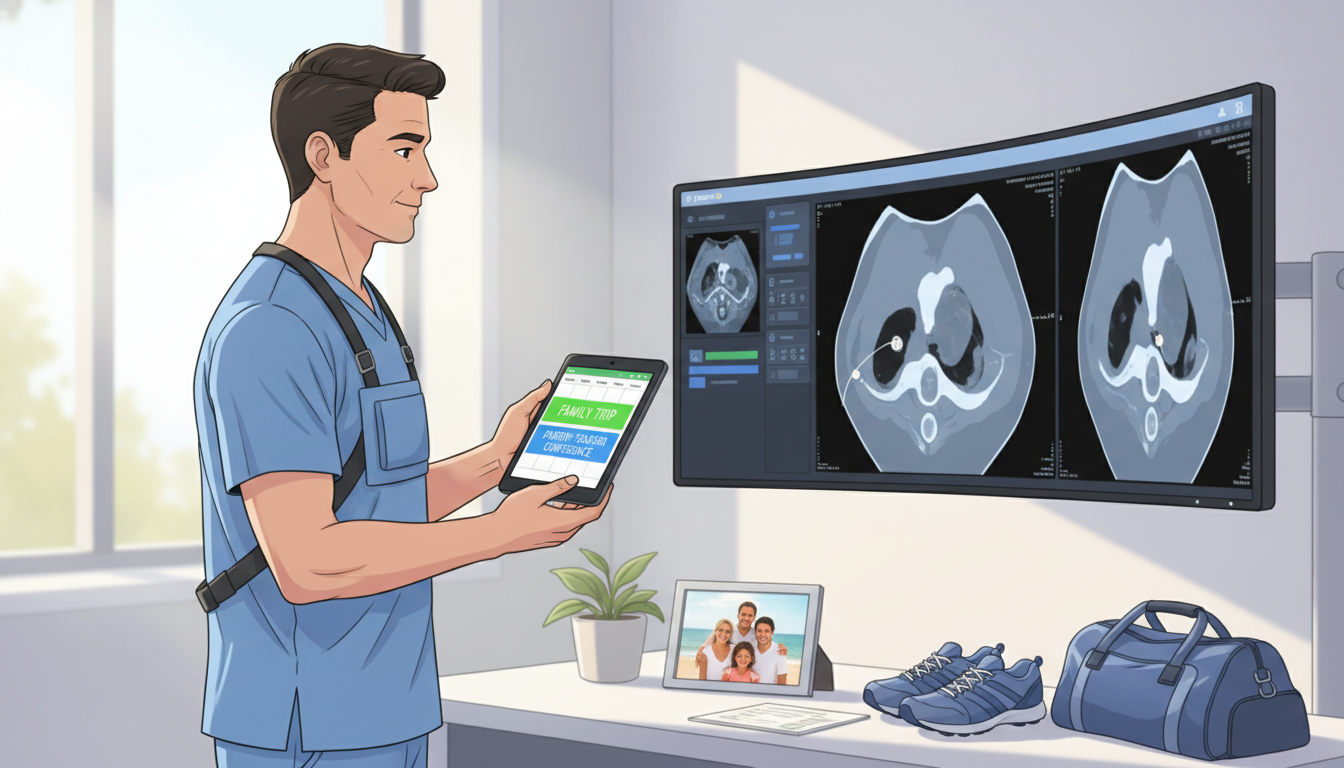
Understanding Work–Life Balance in Interventional Radiology
Interventional Radiology (IR) has a reputation for being both technologically advanced and procedurally intense. For an MD graduate evaluating lifestyle residency options, it can be hard to know where IR sits on the spectrum between a typical “lifestyle residency” (like dermatology or pathology) and more demanding procedural fields (like general surgery or neurosurgery).
IR is not a classic lifestyle specialty, but it can support a sustainable, satisfying work-life balance for many physicians—especially as the field matures, duty hours are better structured, and group coverage models improve. The key is understanding what drives workload, call burden, and stress in IR, and how those factors vary between training and practice settings.
This article breaks down the work–life balance realities of Interventional Radiology for an MD graduate, from the allopathic medical school match process through residency, fellowship-equivalent early years, and into attending practice.
1. Training Pathways and How They Shape Lifestyle
1.1 The Two Main IR Pathways (and Why They Matter for Balance)
As an MD graduate, you’ll most commonly enter IR in one of these ways:
Integrated Interventional Radiology Residency (most common for new grads)
- 6 years total after graduation (PGY-1 to PGY-6)
- Typically:
- PGY-1: Transitional year, preliminary medicine or surgery, or a dedicated IR internship
- PGY-2–PGY-4: Diagnostic Radiology (DR)-heavy years with IR exposure
- PGY-5–PGY-6: IR-heavy years (procedures, clinic, consults)
- Leads directly to board eligibility in both IR and DR
Independent Interventional Radiology Residency (after DR residency)
- For those who complete a traditional Diagnostic Radiology residency first
- 1–2 additional years of IR (depending on prior ESIR – Early Specialization in IR)
For MD graduate residency planning, the integrated IR residency is now the primary route through the allopathic medical school match (NRMP). The training structure itself affects your day-to-day routine, call, and how much non-clinical time you’ll have.
1.2 How IR Training Compares to Other Specialties
For work-life balance, IR sits somewhere in the middle:
More intensive and unpredictable than:
- Dermatology
- Pathology
- Many outpatient-based subspecialties
But often more controlled than:
- General surgery
- Trauma surgery
- Some surgical subspecialties with heavy in-house call
Compared to a pure diagnostic radiology residency, integrated IR:
- Has more call intensity (especially for emergencies like hemorrhage or ischemia)
- Includes more direct patient care (rounding, consults, clinic)
- Retains some radiology advantages:
- Substantial time in reading rooms
- Some ability to leave work at work (depending on call model)
- Relatively well-structured duty hours in many academic centers
In other words, IR is not the easiest lifestyle residency, but it can be more predictable and controllable than many surgical pathways.
2. Daily Life and Duty Hours During IR Training
2.1 A Typical Day in an IR Integrated Residency
Your actual schedule varies by institution, but a representative IR resident day might look like:
Early PGY (DR-heavy years)
- 8:00 am – 5:00 pm: Diagnostic rotations (plain films, CT, MRI, nuclear, etc.)
- Optional early start (7:30–7:45) for readout or case review
- Occasional call (night float or evening shift)
Senior PGY (IR-heavy years)
- 6:30–7:00 am: Arrive, pre-round on inpatients, review overnight cases
- 7:00–7:30 am: IR team huddle (cases of the day, add-ons, urgent consults)
- 7:30 am – 5:00/6:00 pm: IR procedures, consults, floor/ICU visits, clinic
- 5:00–6:00 pm: Wrap-up, finalize notes, plan for the next day
- Depending on the program:
- Home call: available for emergent procedures after-hours
- In-house call: less common solely for IR but may combine with DR responsibilities
In line with ACGME duty hours:
- Max 80 hours/week averaged over 4 weeks
- One day off in 7 (averaged)
- Certain limits on continuous duty
Reality check: During some IR-heavy rotations, you may approach the upper end of duty hours, especially in busy trauma or transplant centers. However, chronic 90–100 hour weeks are uncommon and generally not allowed.
2.2 Call Burden in IR Residency
IR call is a major driver of work-life balance. Typical responsibilities during call:
- Emergent procedures:
- Active GI bleeding
- Trauma bleeding (pelvic, solid organ)
- Stroke thrombectomy (in some programs—though often done by neuro-IR)
- Limb-threatening ischemia
- Complications from lines, drains, or prior procedures
- Inpatient consults:
- New drain placement (e.g., abscess)
- Dialysis access issues
- Central lines for critically ill patients
Call models vary:
Home call (most common for IR-specific call):
- You’re at home but must come in for emergent procedures.
- Nights can be unpredictable—some will be quiet, others very busy.
- Typically more common in senior years.
In-house call (often as DR resident):
- Night float reading imaging studies + limited IR responsibilities.
- More structured but more disruptive to circadian rhythm.
Programs differ markedly in how they:
- Balance call among residents and fellows
- Use attending back-up
- Compensate with post-call days or lighter schedules
Actionable advice:
When considering the IR match, ask explicitly on interview day:
- How often do IR residents take call?
- Is it primarily home call or in-house?
- Who comes in for emergent cases (resident alone, resident + fellow, always with attending)?
- What’s the typical number of overnight cases per month?
You’re not just asking “Is it busy?” You’re assessing how predictable and sustainable the system is.

3. Factors That Most Influence IR Work–Life Balance
3.1 Practice Setting: Academic vs Private vs Hybrid
Your eventual practice environment is as important as the residency itself for long-term work-life balance.
Academic IR Practice
- Often based at large hospitals or university medical centers
- Advantages for work-life balance:
- Larger teams: more shared call, more coverage depth
- Residents/fellows: help distribute workload and night work
- Offloaded tasks (e.g., advanced practice providers, trainees)
- More predictable non-clinical time for research, teaching
- Challenges:
- Tertiary/quaternary centers have higher complexity and more emergent cases
- IR may be the “go-to” for every difficult problem, leading to high demand
- Administrative and academic expectations add to total workload
Private Practice IR
- Often mixed IR/DR, though pure IR groups are increasingly common
- Advantages:
- Potentially more control over practice style and schedule in well-run groups
- Some practices negotiate favorable call schedules or shared coverage across hospitals
- Income may allow more flexibility (e.g., ability to drop call as partner)
- Challenges:
- Fewer trainees to buffer workload
- You may cover multiple hospitals, increasing call intensity
- Some groups expect high procedural volume and long days
Hybrid / Employed Models
- Hospital-employed or large multispecialty group IR
- Often sit between academic and private practice:
- Shared call, built-in coverage models
- Competitive compensation with some lifestyle accommodations
- Variability depending on hospital leadership and service expectations
For MD graduates thinking long-term, ask mentors:
- How many nights per week are you truly home and off?
- How many weekends do you work per year?
- How often are you called in between midnight and 6 a.m.?
These questions give a concrete sense of lifestyle rather than vague labels like “busy” or “reasonable.”
3.2 Procedural Scope and Subspecialization
Your IR work–life balance will also depend on what kind of IR you end up doing:
- Vascular / Trauma-heavy IR:
- More emergent cases: acute bleeding, embolization, ischemia
- Higher overnight and weekend activation rates
- Oncologic IR:
- Many procedures are scheduled: ablations, chemoembolization, Y-90
- Some call burden due to post-procedural complications but often more controllable
- Outpatient-focused IR (e.g., vein centers, PAD clinics):
- Business hours-centric with minimal emergencies
- Often closer to a “lifestyle residency” in practice
- Growing area with more 9–5 clinic/procedural models
As the field matures, opportunities for lifestyle-oriented IR practices are expanding—especially with outpatient labs, OBLs (Office-Based Labs), and ambulatory centers.
3.3 Team Culture and Support
Regardless of setting, culture is crucial to work-life balance:
- Is coverage fair and transparent?
- Do partners cover for each other during life events (birth of a child, family illness)?
- Are nights/weekends compensated fairly (financially or with time off)?
- Is burnout openly discussed and addressed?
Even a high-volume practice can be sustainable if:
- The workload is shared equitably
- Communication is strong
- Expectations are clear from the beginning
4. Pros and Cons of IR from a Lifestyle Perspective
4.1 Lifestyle Advantages of Interventional Radiology
Mix of procedural and cognitive work
- Many IRs find that variety keeps them engaged and reduces burnout.
- You’re less likely to feel stuck only reading images or only operating.
Some control over your schedule
- Elective cases are scheduled, allowing predictable clinic and lab days.
- In some practices, you can cluster cases or half-days for family or personal priorities.
Possibility of home call
- Being able to sleep in your own bed (even if you’re called in occasionally) is a major quality-of-life boost compared with constant in-house call.
Shiftable career focus over time
- Earlier in your career, you might accept more call and higher volume.
- Later, you can negotiate less call, more outpatient or clinic time, or transition to more DR-heavy roles.
Financial stability and flexibility
- IR compensation is often strong, especially in private practice.
- Greater financial security can support better personal balance (e.g., ability to live close to the hospital, outsource certain tasks, fund childcare).
4.2 Lifestyle Challenges and Stressors in IR
Unpredictable emergencies
- Hemorrhage and trauma do not respect your plans or sleep schedule.
- A “quiet” call night can turn into multiple embolizations at 2 am.
High acuity and stress
- You often manage critically ill patients where seconds matter.
- Cognitive and emotional load can be intense, contributing to burnout if not balanced.
Documentation and administrative tasks
- Notes, consults, pre-authorizations, and clinic documentation add to your time.
- In some systems, administrative tasks creep into evenings and days off.
Long training pathway
- Integrated IR is 6 years post-graduation, which can delay full autonomy and higher attending-level control over your schedule.
- Early career years can still be intense, especially in first attending roles.
Expectations as a “fix-it” specialty
- Other services often turn to IR as the solution for difficult problems.
- This can mean frequent “urgent” consults and pressure to accommodate add-on cases.
Despite these challenges, IR is not inherently incompatible with a healthy work–life balance. The key is choosing the right training and practice environment and being proactive about boundaries.

5. Strategies to Protect Work–Life Balance in IR
5.1 During the IR Match and Residency Selection
For MD graduates focused on an interventional radiology residency with sustainable work–life balance, be strategic during the allopathic medical school match process.
On interview days, consider asking:
- Schedule & Duty Hours
- What are typical daily start and end times on IR rotations?
- How often do residents exceed 70–75 hours per week?
- Call & Coverage
- What is the call structure in junior vs senior years?
- Are there IR fellows or only residents taking call?
- How many nights per month are IR residents on call?
- Support & Culture
- How does the program handle resident fatigue or burnout?
- Are there wellness initiatives that actually matter (not just slogans)?
- Autonomy & Oversight
- Do residents feel supported by attendings during complex emergent cases?
- Is there redundant coverage to prevent any one trainee from being overwhelmed?
Red flags for lifestyle:
- Chronic violation of duty hours
- Normalization of residents coming in post-call without protections
- Culture of pride in “brutal” workload without acknowledgment of costs
Green flags:
- Clear systems for backup coverage
- Honest discussion about busy rotations and how they’re mitigated
- Graduates who describe their training as intense but well-supported
5.2 Personal Tactics During Residency
Once you match into an IR program, you can actively protect your work–life balance:
Time blocking
- Protect small pockets of time daily or weekly (exercise, hobbies, family dinners).
- Treat these as seriously as conference or case blocks.
Boundary setting
- Avoid routinely checking work email late at night unless on call.
- Communicate clearly about coverage (e.g., when you’re post-call or off).
Efficient workflows
- Develop templates for notes and consults.
- Learn to batch tasks (signing studies, returning calls, reviewing labs).
Mental health support
- Don’t wait for crisis to seek counseling, mentoring, or peer support.
- Many institutions offer confidential services specifically for residents.
Deliberate rest and recovery
- Protect post-call sleep.
- Schedule true days off where you don’t catch up on work unless absolutely necessary.
5.3 Planning a Sustainable Attending Career
As you transition from IR match to early career:
- Consider group size: Larger groups often mean more shared call and fewer weekends.
- Ask about call buy-down options: Some practices let partners trade income for reduced call.
- Clarify expectations for productivity: Unrealistic volume targets are a major stressor.
- Look for support staff: PAs/NPs, nurses, coordinators to reduce non-procedural burden.
- Understand long-term flexibility: Is it possible to adjust your role (e.g., more clinic, less call) later?
IR can be compatible with raising a family, hobbies, and a rich life outside medicine, but only if you’re intentional in choosing your environment.
6. How IR Compares to Other “Lifestyle-Friendly” Specialties
From the perspective of MOST_LIFESTYLE_FRIENDLY_SPECIALTIES, IR is not in the top tier of classic lifestyle fields—but it is more lifestyle-friendly than many high-acuity procedural specialties.
On a rough spectrum of residency work life balance, with training years in mind:
More lifestyle-friendly (in training)
- Dermatology
- Pathology
- Radiation Oncology
- Some Psychiatry programs
Middle tier (balanced but variable)
- Diagnostic Radiology
- Anesthesiology
- Emergency Medicine
- Interventional Radiology (especially in programs with strong structure and good coverage)
Less lifestyle-friendly (in training)
- General Surgery
- Neurosurgery
- Orthopedic Surgery
- Cardiothoracic Surgery
As a MD graduate residency applicant, your personal priorities matter:
- If lifestyle is your top priority above all else, IR may feel demanding.
- If you want procedure-heavy work, significant patient impact, and are willing to accept some unpredictability, IR offers a reasonable work–life balance compared with many surgical specialties, especially later in your career when you can shape your practice.
FAQs: Work–Life Balance in Interventional Radiology
1. Is Interventional Radiology considered a “lifestyle residency”?
Not in the strict sense. IR is more demanding and less predictable than classic lifestyle residencies like dermatology or pathology. However, compared with many surgical fields, IR can offer a moderately favorable residency work life balance, especially in well-structured programs that respect duty hours and have robust call coverage. Long-term, many IR attendings achieve a very reasonable and fulfilling lifestyle, especially in outpatient-focused or well-staffed academic practices.
2. How does IR call compare to surgical call?
IR call tends to be:
- Less frequent in-house call than many surgical services
- More home-call based, though you will still be called in for true emergencies
- Focused on specific urgent issues (bleeding, ischemia, critical access) rather than broad-spectrum ward coverage
You may still have sleepless nights and busy weekends, but in many practices you’ll have fewer total overnight shifts than high-acuity surgical specialties, and you’ll often share duty among multiple partners or trainees.
3. Can I have a family and a life outside of medicine as an IR?
Yes. Many interventional radiologists successfully balance careers with parenting, partnerships, and meaningful hobbies. The keys are:
- Choosing a program and practice environment that values work–life balance
- Setting boundaries around call, clinic, and documentation time
- Negotiating a fair share of call and weekend coverage
- Proactively planning for support at home (e.g., childcare, shared responsibilities)
The unpredictable nature of emergencies means you will occasionally miss events, but IR is far from incompatible with family life.
4. Does the IR match competitiveness compromise lifestyle?
The IR match is competitive, especially for MD graduates from allopathic medical schools. Preparing a strong application (research, rotations, letters) can be demanding. However, that intensity is temporary and front-loaded. It does not inherently worsen your long-term lifestyle; in fact, landing in a well-resourced program can improve your work–life balance during training. When ranking programs, consider not just prestige but also their documented approach to duty hours, call structure, and resident well-being.
Interventional Radiology offers a uniquely satisfying blend of high-impact procedures and imaging-based decision-making. While it is not the easiest path from a work–life standpoint, it can absolutely be a sustainable and rewarding career if you are intentional about program selection, practice environment, and personal boundaries. For the MD graduate seeking meaningful intervention with a realistic chance at balance, IR is a compelling, if demanding, option.