
How Occupational Medicine Creates a Path for a Balanced Life
Medical students and residents increasingly prioritize not only meaningful clinical work, but also sustainability, family time, and personal well-being. Among the many healthcare careers available, Occupational Medicine stands out as a specialty that naturally supports Work-Life Balance while allowing physicians to make a broad impact on worker safety, public health, and Preventative Care.
Occupational medicine (also called occupational and environmental medicine, OEM) focuses on the health of workers and the environments in which they work. It blends clinical medicine, public health, safety science, and policy. For residents and early-career physicians who value structured schedules, longitudinal relationships with organizations, and systems-level thinking, Occupational Health can create a rewarding, flexible, and balanced career path.
This enhanced guide explores what occupational medicine entails, how it uniquely supports Work-Life Balance, and what steps you can take if you’re considering this specialty.
Understanding Occupational Medicine as a Specialty
Occupational medicine is dedicated to the prevention, evaluation, and management of work-related injuries and illnesses, as well as the promotion of overall worker health and productivity. Unlike many clinical specialties that focus on individual patients in acute care settings, occupational physicians often work at the intersection of medicine, workplace operations, and regulation.
What Do Occupational Health Physicians Actually Do?
Occupational physicians (also known as occupational health doctors or OEM physicians) serve as medical experts on how work affects health and how health affects work. Their scope of practice commonly includes:
Health Assessments and Screenings
- Pre-employment and fitness-for-duty exams
- Periodic surveillance exams for workers exposed to chemicals, noise, or other hazards
- Return-to-work evaluations after illness, injury, or surgery
These assessments aim to detect early signs of occupational disease (e.g., hearing loss from noise exposure, lung changes from inhaled agents) and to ensure employees can perform job duties safely.
Workplace Safety and Risk Assessment
- Reviewing job tasks, workflows, and exposures
- Participating in safety committees and incident reviews
- Advising on ergonomic design to prevent musculoskeletal injuries
Occupational physicians collaborate closely with safety officers, industrial hygienists, human resources, and leadership to reduce risk before harm occurs.
Clinical Care and Rehabilitation
- Managing work-related injuries (e.g., back strain, repetitive stress injuries, chemical exposure)
- Coordinating physical therapy and rehabilitation services
- Creating graded return-to-work plans and modified duty pathways
The overarching goal is safe and timely recovery while maintaining the worker’s functional ability and income.
Legal, Regulatory, and Policy Compliance
- Ensuring adherence to Occupational Safety and Health Administration (OSHA) standards and other regulations
- Completing required documentation for workers’ compensation, disability, and regulatory agencies
- Serving as a medical advisor or expert witness in occupational health-related legal matters
This aspect requires familiarity with occupational health law and careful, objective documentation.
Education, Training, and Health Promotion
- Leading training on safe lifting, chemical handling, PPE use, and workplace ergonomics
- Designing wellness programs targeting chronic disease risk factors (e.g., smoking cessation, obesity, hypertension)
- Raising awareness about mental health, burnout, and stress in the workplace
By combining these elements, occupational physicians impact not just individual employees, but entire workforces and industries.
Where Do Occupational Medicine Physicians Work?
One of the appealing aspects of Occupational Medicine is the variety of practice settings, many of which align naturally with a stable lifestyle:
- Corporate or in-house occupational health departments (e.g., tech companies, manufacturing plants, hospitals)
- Occupational medicine clinics or urgent care–style centers with an occupational health focus
- Government agencies (e.g., OSHA, NIOSH, military, public health departments)
- Academic centers and medical schools (teaching, research, and policy development)
- Consulting roles with insurance companies, workers’ compensation carriers, or legal firms
This flexibility allows physicians to shape a career that matches their interests—whether more clinical, administrative, research-focused, or policy-driven.
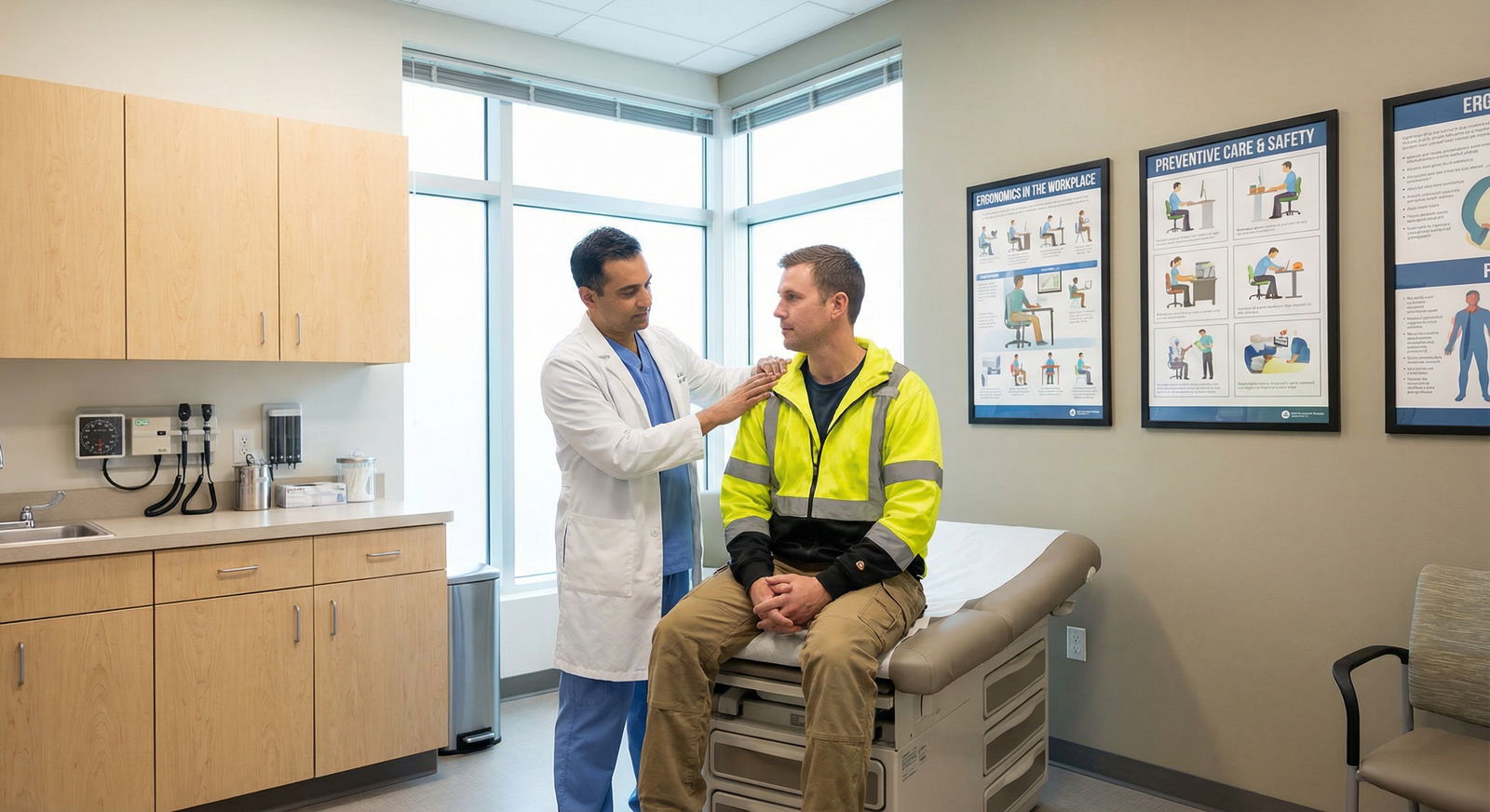
Why Occupational Medicine Supports Work-Life Balance
For many trainees, a critical question is: Can I have a satisfying medical career without sacrificing my personal life? Occupational Medicine is consistently cited as one of the more lifestyle-friendly specialties, and for good reason.
1. Predictable, Daytime Hours and Less Call
Most occupational medicine practices operate during standard business hours (e.g., 8 a.m. to 5 p.m., Monday through Friday). While specific roles vary, features that support balance often include:
- Limited or no overnight call in many positions
- Rare weekend or holiday coverage
- Clinic schedules that are appointment-based rather than driven by unpredictable emergencies
For example, a physician employed by a large corporation may work a strictly Monday–Friday schedule with no nights or weekends and only occasional phone consultation. Even in more acute occupational health settings (like large industrial sites), on-call responsibilities are typically lighter than in hospital-based specialties such as surgery, obstetrics, or emergency medicine.
This structure allows for more reliable time with family, consistent childcare planning, and capacity to pursue personal interests or academic projects.
2. Focus on Preventative Care Over Crisis Management
Occupational Health is fundamentally a Preventative Care specialty. The emphasis is on identifying and mitigating risk before severe illness or injury occurs:
- Monitoring groups of workers exposed to hazards
- Implementing safety protocols to reduce repetitive strain injuries
- Designing wellness initiatives to reduce chronic disease burden
While acute injuries certainly occur, the overall pace is often less crisis-driven than in emergency medicine or critical care. This can mean:
- Fewer emotionally overwhelming situations (e.g., resuscitations, end-of-life decisions)
- More time per case to think through complex causation, workplace factors, and long-term prevention
- Lower rates of burnout related to chronic exposure to medical trauma
For physicians who value cognitive work, systems-level problem-solving, and long-term impact, this preventive focus can be both intellectually satisfying and emotionally sustainable.
3. Professional Environments and Collaborative Culture
Many occupational physicians practice in comfortable, office-based clinical environments, often within corporate or administrative settings. Common workplace advantages include:
- Modern office spaces rather than crowded hospital wards
- Interdisciplinary collaboration with safety engineers, industrial hygienists, HR professionals, and leadership
- A culture that emphasizes prevention, planning, and policy rather than crisis response
This collaborative environment can contribute to higher job satisfaction, reduced workplace stress, and an opportunity to build relationships across multiple disciplines and departments.
4. Meaningful Impact and Long-Term Fulfillment
Work in occupational medicine is often deeply aligned with values such as advocacy, social justice, and public health. Physicians in this field:
- Protect vulnerable workers (e.g., migrant laborers, factory workers, healthcare personnel)
- Influence corporate policies that directly affect thousands of people
- Reduce the risk of catastrophic workplace events and long-term occupational diseases
This sense of purpose—knowing that your decisions can prevent injuries, cancer, or chronic disability years down the road—can be a powerful driver of long-term career satisfaction. Many occupational physicians report:
- Lower rates of burnout compared with highly acute specialties
- A sense of professional autonomy and influence
- Appreciation for seeing population-level outcomes from their work
5. Flexibility, Variety, and Professional Development
Occupational medicine is a dynamic field with multiple avenues for growth and reinvention throughout your career:
- Clinical advancement: Leading larger occupational health teams or centers
- Administrative leadership: Serving as a medical director, chief medical officer, or safety executive
- Academic and research roles: Studying workplace exposures, developing guidelines, or teaching residents and students
- Policy and advocacy: Working with governmental or non-governmental organizations on regulations, standards, and worker protections
- Consulting: Advising employers, insurers, or law firms on complex occupational health issues
This variety allows you to adapt your role as your interests and personal life evolve, which is a key component of sustainable Work-Life Balance over decades of practice.
Real-World Applications: How Occupational Medicine Works in Practice
Understanding how occupational physicians operate in real situations can clarify the impact and scope of this specialty.
Case Study 1: Return-to-Work Program in a Manufacturing Plant
A 45-year-old assembly line worker in a large manufacturing facility sustains a lumbar strain while lifting heavy components. The occupational medicine physician:
Initial Assessment and Diagnosis
- Evaluates the worker’s injury, orders appropriate imaging if indicated, and initiates pain management.
- Assesses both the medical condition and the worker’s job demands.
Rehabilitation and Functional Assessment
- Works with physical therapists to create a tailored rehab plan emphasizing core strength and safe lifting techniques.
- Conducts functional capacity evaluations to determine what tasks the worker can safely perform.
Modified Duty and Gradual Return to Work
- Collaborates with the employer to arrange modified duties (e.g., lighter tasks, reduced lifting, shorter shifts) during recovery.
- Implements a stepwise return-to-work plan with clear milestones and safety checks.
Prevention and Systems Improvement
- Reviews injury data and discovers that several similar back injuries have occurred in the past year.
- Recommends ergonomic changes (e.g., mechanical lifting devices, redesign of workstations, staff training) to prevent future injuries.
Outcome:
The worker returns safely to full duty, disability time is minimized, long-term injury risk is reduced, and the company sees lower costs and improved morale. The physician’s role extends well beyond treating one injury—they help redesign the system to protect the entire workforce.
Case Study 2: Mental Health and Burnout Initiatives in a Corporate Environment
A large financial services company notices rising absenteeism, high turnover, and complaints of burnout among employees. They engage an occupational physician to address Occupational Health from a mental well-being angle.
The physician:
Needs Assessment
- Conducts anonymous surveys assessing stress, workload perceptions, sleep patterns, and mental health symptoms.
- Reviews data on sick leave, disability claims, and turnover.
Program Design
- Develops a comprehensive well-being strategy, including resilience training, stress management workshops, and manager education.
- Advocates for policy changes such as flexible work arrangements, clear expectations for after-hours email, and protected mental health days.
Implementation and Support
- Partners with mental health professionals to provide on-site counseling and tele-mental health referrals.
- Implements regular check-ins, wellness campaigns, and digital resources.
Measurement and Continuous Improvement
- Tracks absenteeism, engagement scores, and mental health outcomes over time.
- Adjusts programs based on employee feedback and outcomes.
Outcome:
Over the next year, absenteeism drops, staff satisfaction rises, and productivity improves. The occupational physician has materially improved the Work-Life Balance not only for themselves, but for hundreds of employees in the organization.
These examples highlight how Occupational Medicine integrates clinical acumen with organizational strategy, benefiting individuals, employers, and the physician’s own sense of purpose.
Navigating Challenges in Occupational Medicine
No specialty is entirely without challenges, and occupational medicine has its own unique demands.
Keeping Up with Evolving Workplaces and Hazards
Work environments are constantly changing:
- New technologies (e.g., nanomaterials, robotics, AI-driven processes)
- Emerging infectious diseases and global travel
- Novel chemicals and production methods
- Remote and hybrid work models introducing new ergonomic and mental health issues
Occupational physicians must stay up to date with current evidence, regulations, and best practices. This requires:
- Ongoing continuing medical education (CME)
- Regular engagement with professional societies (e.g., American College of Occupational and Environmental Medicine, ACOEM)
- Willingness to learn from industrial hygienists, engineers, and safety experts
Balancing Multiple Stakeholders
Occupational health physicians often navigate complex relationships:
- Workers who need advocacy and clear communication
- Employers seeking productivity, compliance, and cost control
- Insurers interested in efficient, evidence-based care
- Regulatory bodies concerned with safety and legal standards
Maintaining professional independence and ethical integrity is essential. Clear documentation, transparent communication, and consistent application of evidence-based guidelines help manage these competing priorities.
Dealing with Administrative and Legal Complexity
Compared with some other specialties, occupational medicine can involve more:
- Detailed documentation for workers’ compensation and disability claims
- Testimony or reports for legal proceedings
- Regulatory reporting requirements after workplace incidents
While some physicians find this administrative work challenging, others appreciate the opportunity to engage in systems-level problem-solving and policy influence.
Building a Strong Professional Support Network
Because occupational medicine can be relatively niche compared with fields like internal medicine or pediatrics, proactively building a network is vital:
- Professional Societies: Groups like ACOEM, regional OEM societies, and international associations offer guidelines, conferences, mentorship, and specialty-specific resources.
- Local Networks: Connecting with other occupational health clinicians, physical therapists, safety professionals, and industrial hygienists fosters multidisciplinary collaboration.
- Academic and Online Communities: Webinars, specialty journals, and discussion forums provide platforms to share cases, research, and best practices.
These relationships not only enhance your clinical practice, but also provide career guidance, job leads, and a sense of professional community—which is invaluable for long-term well-being.

Pathway to a Career in Occupational Medicine
If you’re a medical student or resident considering occupational medicine, understanding the training and career steps can help you plan strategically.
Training and Certification
While pathways differ by country, in the United States a typical route includes:
Medical School (MD or DO)
Build a strong foundation in internal medicine, primary care, and public health concepts. Electives in occupational health, toxicology, and environmental medicine are helpful if available.Residency Training
- Dedicated occupational and environmental medicine residencies (often two-year programs, sometimes combined with a Master of Public Health or similar degree)
- Alternative pathways may include completing another residency (e.g., internal medicine, family medicine, emergency medicine) followed by an occupational medicine fellowship or additional training.
Board Certification
Many OEM physicians pursue certification through boards such as:- American Board of Preventive Medicine (ABPM) in Occupational and Environmental Medicine
- Other region-specific boards, depending on your country or practice location
Additional Education and Credentials
- MPH or MS in public health, industrial hygiene, or epidemiology
- Certifications in toxicology, safety, or related fields for niche roles
Building Skills that Translate to Occupational Health
Regardless of your stage of training, you can start developing core skills that are highly valued in Occupational Medicine:
- Strong history-taking and physical exam skills with attention to functional status
- Familiarity with common occupational exposures (noise, dust, chemicals, ergonomic risks)
- Understanding of basic epidemiology and biostatistics
- Communication skills for explaining complex concepts to non-medical audiences
- Comfort working within teams and across disciplines
Electives in occupational health clinics, public health departments, or corporate wellness programs can provide a realistic look at day-to-day practice.
Career Flexibility and Long-Term Planning
One of the strengths of occupational medicine is its adaptability:
- Early-career: More clinical and hands-on roles in occupational health clinics or employer-based health centers
- Mid-career: Opportunities to transition into leadership, policy work, or consulting while maintaining a stable schedule
- Late-career: Part-time roles, advisory positions, or medico-legal consulting that support gradual retirement and personal priorities
This flexibility allows you to align your work with your life circumstances—an important aspect of sustainable Work-Life Balance.
Frequently Asked Questions (FAQ)
Q1: Is Occupational Medicine a good choice if I prioritize Work-Life Balance?
Yes. Compared with many hospital-based specialties, Occupational Medicine frequently offers more predictable daytime hours, limited overnight or weekend call in many positions, and office-based environments. While every job is different, the structure of most occupational health roles is highly compatible with maintaining family time, hobbies, and personal well-being.
Q2: What kinds of conditions do occupational physicians see most often?
Common presentations include musculoskeletal injuries (back pain, sprains, repetitive strain injuries), skin conditions (contact dermatitis, chemical burns), respiratory issues (asthma, inhalation injuries), hearing loss from noise exposure, mild traumatic brain injuries, and work-related mental health concerns such as stress or burnout. OEM physicians also manage fitness-for-duty evaluations and chronic disease management in the context of specific job demands.
Q3: Do I need a preventive medicine background or an MPH to enter Occupational Medicine?
An MPH or similar degree is not strictly required, but it is highly valued and commonly integrated into OEM residency programs. A background in preventive medicine, epidemiology, or public health is extremely helpful, as the field is population- and systems-focused. Physicians from internal medicine, family medicine, or emergency medicine backgrounds can transition into occupational medicine through specialized training or fellowships.
Q4: Can I work in different industries as an occupational physician?
Absolutely. Occupational physicians can practice across diverse sectors—manufacturing, construction, healthcare, transportation, technology, energy, and more. Many move between industries during their careers, or work as consultants serving multiple employers. This variety can keep the work fresh and provide opportunities to develop niche expertise (e.g., aviation medicine, healthcare worker safety, industrial toxicology).
Q5: Is Occupational Medicine a growing field, and what does the job market look like?
Demand for occupational health expertise is strong and steadily growing. Factors driving this growth include increasing regulatory complexity, heightened attention to worker safety and mental health, aging workforces, and the health and safety implications of emerging technologies. Public health crises like COVID-19 further highlighted the importance of workplace-based disease prevention and response, leading many organizations to expand their Occupational Health services.
Exploring lifestyle-friendly specialties like Occupational Medicine can be a strategic step toward a sustainable, fulfilling medical career. By combining Preventative Care, systems-level thinking, and a genuine opportunity for Work-Life Balance, Occupational Health offers a compelling path for physicians who want to protect workers, shape safer workplaces, and still have time and energy for life outside of medicine.