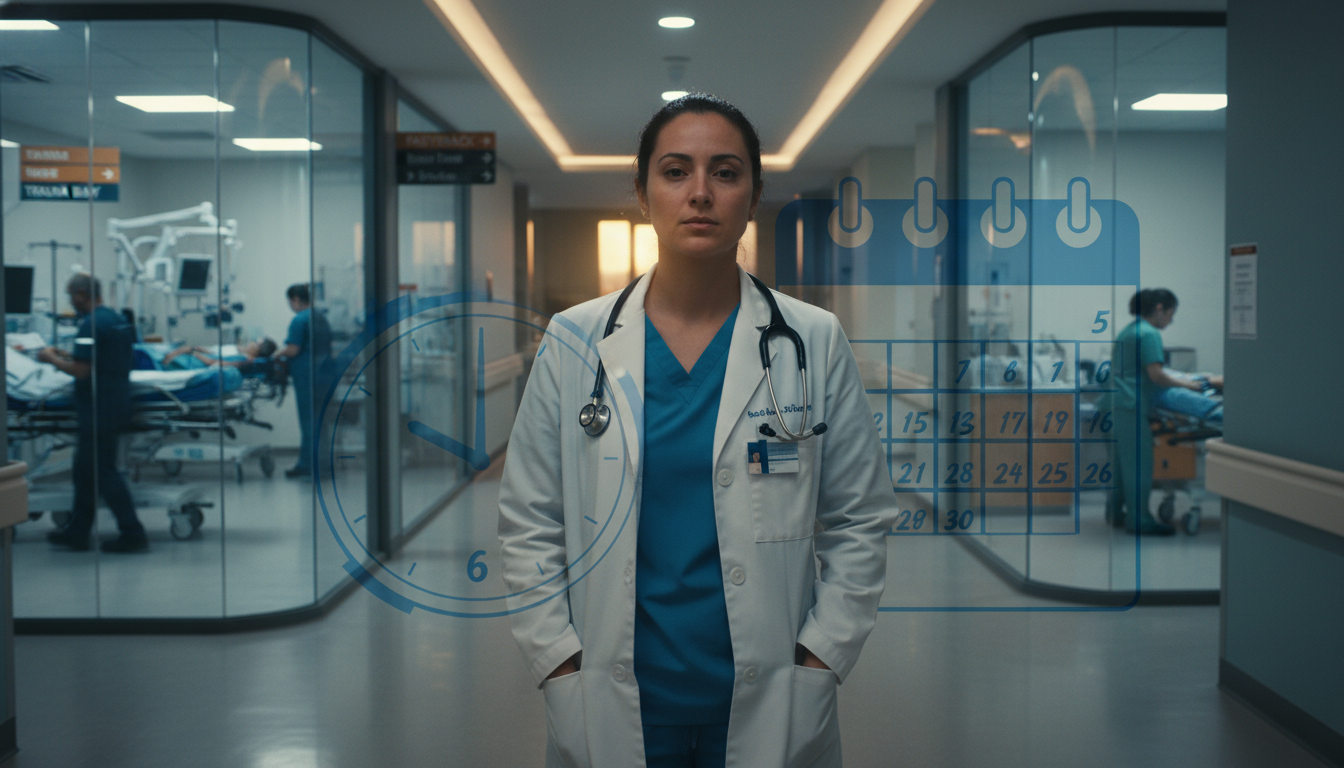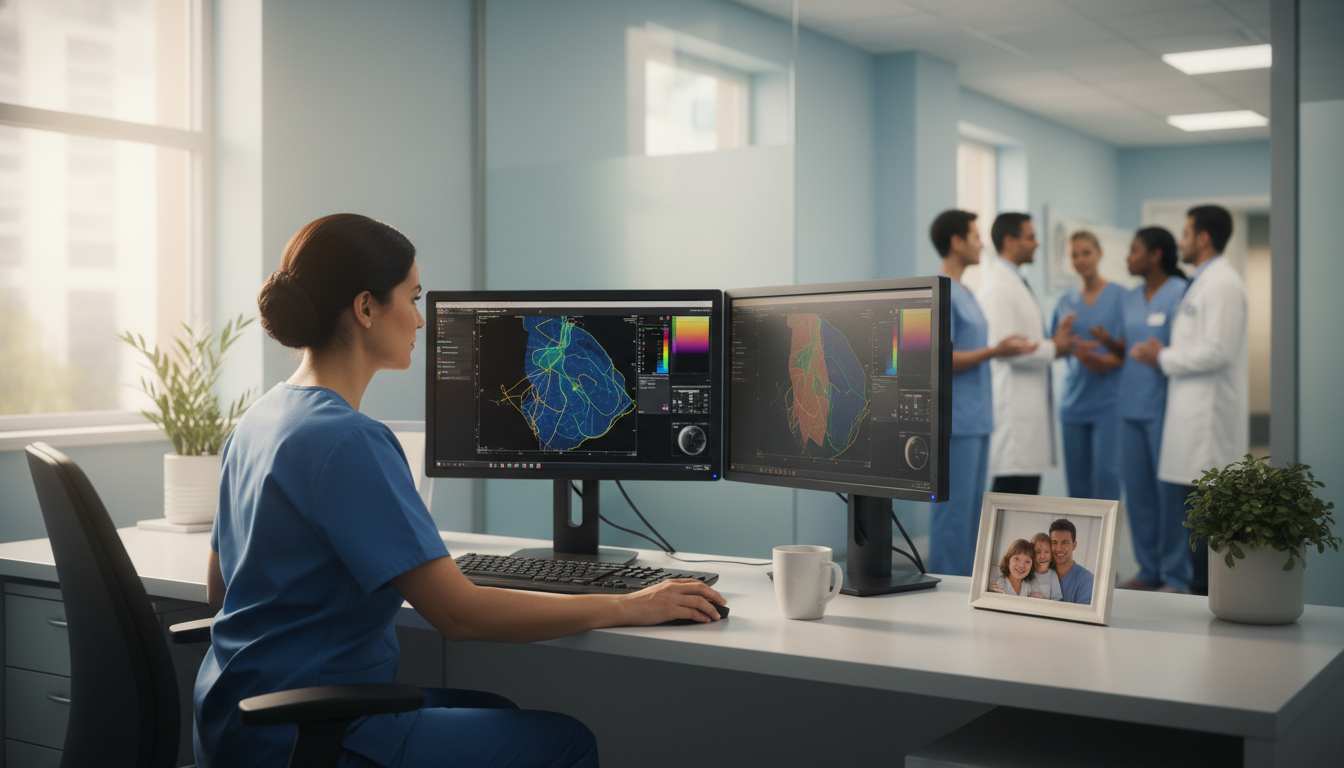
Radiation oncology is often cited as one of the most lifestyle-friendly specialties—but how true is that in practice, especially during residency? For applicants comparing programs and planning their careers, understanding the real work-life balance in a radiation oncology residency is critical.
This guide breaks down what “good lifestyle” actually means in rad onc, how duty hours and workflow shape your day, and what questions to ask to assess work-life balance at specific programs. It’s written for medical students and early residents considering or preparing for a radiation oncology residency.
Understanding Work-Life Balance in Radiation Oncology
Work-life balance in a radiation oncology residency goes beyond “fewer hours.” It reflects how manageable and sustainable those hours feel relative to your personal life, health, and long-term goals.
What “Lifestyle Residency” Actually Means in Rad Onc
Radiation oncology is often described as a lifestyle residency because:
- It is primarily outpatient-based
- It has relatively predictable hours compared to many other specialties
- True emergencies are uncommon
- Nighttime and weekend calls are usually lighter and often taken from home
However, this reputation can be misleading without nuance. A more accurate description is:
Radiation oncology offers favorable work hours and predictable schedules, but comes with intense cognitive workload, emotional demands, and academic expectations that can still strain work-life balance if not managed well.
Dimensions of Work-Life Balance in Radiation Oncology Residency
To assess work-life balance, consider these dimensions:
Time Balance
- Total weekly hours
- Frequency of late evenings, weekends, and call
- Commute time between sites (especially in programs with multiple affiliated hospitals or cancer centers)
Cognitive and Emotional Load
- Complexity of cases
- Responsibility for treatment planning and on-treatment management
- Emotional impact of caring for patients with advanced or terminal malignancies
Schedule Predictability
- How often your day runs late
- Stability of clinic schedules
- How much your schedule changes at the last minute for urgent simulations or add-on patients
Autonomy and Flexibility
- Ability to schedule personal appointments
- Flexibility for major life events, parenting, or caregiving responsibilities
- Culture around swapping days, adjusting research time, or taking vacation
Support and Culture
- Faculty expectations and communication style
- Peer support among residents
- Presence of mentorship and wellness infrastructure
A “good” work-life balance residency is not just one with fewer duty hours; it’s one that scores well across most of these dimensions.
What a Typical Radiation Oncology Resident Schedule Looks Like
Most applicants want to know: What does a normal day and week actually look like?
Typical Daily Schedule
While programs vary, a fairly representative PGY-3 to PGY-5 radiation oncology resident schedule might look like:
- 7:30–8:00 AM – Arrive, review treatment plans, check overnight messages/labs, briefly round on inpatients (if any)
- 8:00–9:00 AM – Simulation sessions, CT/MRI fusion, or contouring time
- 9:00–12:00 PM – New patient consults, follow-ups, and on-treatment visits (OTVs) in clinic
- 12:00–1:00 PM – Lunch + didactics (lectures, contouring rounds, physics review, journal club)
- 1:00–4:30 PM – Continued clinics, treatment planning review with attendings, additional sims
- 4:30–6:30 PM – Contouring, plan review, documentation, follow-up on labs/imaging, finishing notes
Most residents report leaving between 5:30–7:00 PM on typical days, with occasional later evenings during heavy rotations or high-volume services.
Weekly Time Commitment and Duty Hours
Radiation oncology residency is still a full-time training job, not a part-time endeavor. Realistic average duty hours for a radiation oncology resident:
- 40–55 hours per week at many programs
- Up to 60 hours at higher-volume centers, especially during busy disease-site rotations
- Rarely near the 80-hour ACGME cap, except in exceptional circumstances (and if so, that’s a red flag)
Much of the work is mentally intensive but not physically grueling. You may feel more drained from complex decision-making, detailed contouring, and emotional conversations, even if you’re not staying in the hospital overnight.
Call Responsibilities
Call in radiation oncology is generally considered more lifestyle-friendly than many other specialties, but it is not zero.
Typical structures:
- Home call rather than in-house overnight call
- Frequency: often q4–q7 days, depending on resident numbers and call pool design
- Scope:
- Emergent palliative radiation (e.g., spinal cord compression, superior vena cava syndrome, massive hemoptysis)
- Incidental dose questions from inpatient teams or ED
- Machine or treatment interruptions requiring physician input
Most urgent cases are next-day emergencies, not middle-of-the-night procedures. True overnight call-ins (e.g., for cord compression requiring emergent simulation and treatment) are rare but do occur.
Weekend responsibilities often include:
- Short Saturday morning rounding on inpatients
- Limited new emergent consults
- Reviewing and approving urgent plans
Residents often describe call as “intermittently busy but usually manageable,” especially compared to surgical or ICU-based specialties.
Factors That Shape Work-Life Balance in a Radiation Oncology Residency
Not all radiation oncology programs are alike. Your experience of work-life balance will depend heavily on specific program structures and culture.
1. Clinical Volume and Case Mix
Programs differ significantly in patient volume, disease-site distribution, and complexity:
High-volume academic centers:
- Larger numbers of new consults and follow-ups
- More complex cases (e.g., re-irradiation, stereotactic radiosurgery, multi-modality treatment)
- Higher documentation load
- Can push days later, especially for contouring and plan review
Smaller or community-based programs:
- Lower total patient volume
- Often more “bread-and-butter” palliative, breast, and prostate cases
- May allow earlier departures and more consistent hours
Case mix matters, too:
- High CNS, head & neck, or complex re-irradiation volume = more time contouring and planning
- Heavier palliative population = more emotionally intense consultations, but sometimes simpler plans
2. Contouring and Planning Workflow
Contouring and treatment planning are major time sinks for residents.
Key questions to assess workload:
- Is contouring centralized or distributed among attendings and residents?
- Do attendings contour some disease sites themselves (e.g., brain SRS), or are residents expected to contour everything first?
- Are there dedicated “planning blocks” or protected time for contouring and plan review?
- Is contouring performed primarily during the day (balanced with clinics) or mostly after clinic?
Programs with well-structured workflows and adequate dosimetrist support tend to have better work-life balance even with high volume, because residents aren’t constantly staying late to catch up on backlogged contouring.
3. Didactics, Research, and Academic Expectations
Radiation oncology is a research-heavy, subspecialized field. The academic culture of a program has a big impact on your lifestyle:
Didactic burden:
- How many hours per week are dedicated to lectures, physics, and tumor board?
- Are these scheduled consistently and protected, or squeezed between clinical duties?
Research expectations:
- Is each resident expected to produce a certain number of abstracts/papers?
- Are there dedicated research rotations or is research “on your own time”?
- Are residents supported by statisticians, research coordinators, and mentors?
Programs that demand high research productivity without protected research time often shift the load into evenings and weekends, eroding work-life balance.
4. Multisite Coverage and Commuting
Some radiation oncology residencies cover multiple clinics or hospital sites. This can affect balance in subtle ways:
- Added commute time between locations
- Later days if you must return to a main site after an off-site clinic
- Potential disruption in didactics and resident camaraderie
A 30–45 minute commute each way can easily add 5–7 hours per week to your `duty hours + commute” calculation.
5. Program Culture and Expectations
The less tangible—but arguably most important—factor is program culture:
- Are faculty approachable and respectful of resident time?
- Do attendings regularly stay late themselves and expect residents to do the same?
- Is it acceptable to ask for help, communicate overload, or defer non-urgent tasks?
- Do residents actually use their vacation time, or is there unspoken pressure not to?
For a rad onc match applicant, listening closely during interviews and second looks to how residents talk about their experiences (and what they leave unsaid) can tell you more about work-life balance than any schedule handout.
Comparing Radiation Oncology Work-Life Balance to Other Specialties
Many applicants considering radiation oncology also explore other “lifestyle” or cognitive specialties, such as dermatology, pathology, radiology, or PM&R. Understanding these comparisons can help you make a more informed choice.
Compared to Surgical Specialties
Relative to general surgery, orthopedic surgery, neurosurgery, or OB/GYN:
- Duty hours: Substantially lower; generally far from the 80-hour maximum
- Night call: Far fewer in-house nights; more home call, rare overnight activations
- Physical demands: Less OR time, less overnight procedural load
- Predictability: Far more predictable daily schedules, minimal middle-of-the-night emergencies
For applicants burned out from surgery-heavy clerkships, radiation oncology often feels like a breath of fresh air in terms of residency work-life balance.
Compared to Other “Lifestyle Residencies”
Relative to other lifestyle-friendly specialties:
Dermatology:
- Often fewer duty hours and comparable or better schedule predictability
- Less emotional burden from advanced cancer care
- Radiation oncology generally has more acute clinical complexity and more frequent exposure to end-of-life care
Diagnostic Radiology:
- Radiology may have earlier morning starts, more call, and more frequent night float systems
- Radiation oncology tends to have fewer overnight commitments but more direct patient interaction and longitudinal care
Pathology:
- Pathology may have a more contained schedule with less patient-facing emotional load
- Rad onc involves more in-clinic communication demands and cross-team coordination
PM&R:
- PM&R usually has solid work-life balance with more inpatient responsibilities in some programs
- Radiation oncology is more technology-intensive and research-heavy on average
Compared to Internal Medicine or Medical Oncology
Relative to internal medicine or hematology/oncology:
Inpatient vs. outpatient balance:
- Rad onc is predominantly outpatient with limited inpatient rounding
- Medical oncology often includes significant inpatient coverage, particularly in fellowship and early career
Call intensity:
- Fewer acute hemodynamic crises in radiation oncology
- Many urgent issues can be managed during normal working hours or early next day
However, the emotional impact of cancer care and end-of-life decision-making is shared across both fields.

How to Evaluate Work-Life Balance During the Rad Onc Match Process
Work-life balance can be hard to judge from a website. You’ll need to ask targeted questions, read between the lines, and synthesize multiple data points.
Questions to Ask Residents on Interview Day
Focus on open-ended questions that invite honest reflection:
Daily and Weekly Schedule
- “What time do you usually arrive and leave on different rotations?”
- “How many hours per week do you think you actually work on average?”
- “What percentage of days do you leave before 6 PM? After 7 PM?”
Call and Weekends
- “How often are you on call, and what is a typical call like?”
- “How many times per month are you called in physically at night?”
- “What do your weekends look like when you’re on vs. off call?”
Workload and Support
- “When you are swamped with contouring or new consults, how do attendings respond?”
- “How easy is it to ask for help if you are overwhelmed?”
- “Are there specific rotations known to be particularly busy, and how manageable are they?”
Program Culture and Wellness
- “Do you feel the program leadership genuinely cares about resident well-being?”
- “Have any changes been made recently to improve workload or workflow?”
- “Do residents socialize outside of work, or do people generally feel too burned out?”
Research and Academic Expectations
- “Is research time truly protected, or do you still have clinical responsibilities?”
- “Are there informal expectations about number of publications per year?”
Instead of asking “Is work-life balance good here?” ask them to describe their actual days and weeks.
Red Flags to Watch For
Potential warning signs regarding residency work-life balance:
- Residents answering lifestyle questions with hesitation, nervous laughter, or vague generalities
- Frequent comments like:
- “It’s busy, but we manage.”
- “It depends on the attending…” (said repeatedly with eye contact avoidance)
- Residents regularly staying very late (7:00–9:00 PM) on most rotations
- Minimal or no dedicated admin/contouring time
- Heavy research requirements with no protected time
- A program leadership that dismisses the topic of wellness or jokes about “residency being hard for everyone”
Conversely, green flags include:
- Residents giving specific times and consistent descriptions across different PGYs
- A clear, organized schedule with protected didactics and admin time
- Recent concrete changes to improve workflow (e.g., more dosimetry support, added residents, better call distribution)
- Leadership explicitly acknowledging duty hours and supporting genuine time off
Personal Fit: Aligning Program Demands with Your Needs
Your own life circumstances heavily influence what “good work-life balance” means:
Do you have a partner, children, or caregiving responsibilities?
- You may prioritize programs with multicenter coverage minimized, shorter commutes, and more flexible scheduling
Are you academically oriented, aiming for an academic career?
- You might be willing to accept somewhat higher duty hours in a research-intensive program, but should still ensure that research is supported with real time and mentorship
Are you particularly sensitive to emotional strain?
- Ask specifically about supportive resources, debriefing opportunities, and how often residents manage highly complex or end-of-life cases
The key is not to find the absolute lowest-hours program, but the best match between your priorities and the program’s culture and expectations.
Strategies to Maintain Work-Life Balance as a Radiation Oncology Resident
Even in a relatively lifestyle-friendly specialty, sustaining your well-being requires intentional effort.
Time Management and Efficiency
- Batch tasks:
- Group similar tasks (e.g., phone calls, secure messages, note signing) into defined blocks
- Use micro-breaks:
- Short 3–5 minute breaks between consults to reset mentally can prevent end-of-day exhaustion
- Learn high-yield contouring shortcuts:
- Use available auto-contouring tools appropriately
- Develop standardized structures and templates for common sites
Seek out senior residents’ “efficiency hacks”—how they approach consults, documentation, and treatment planning without sacrificing quality.
Boundary Setting and Recovery
- Use your vacation days—don’t let “golden weeks” go unused.
- Set clear off-duty boundaries, especially on home call:
- When you are not on call, avoid routinely checking work email or messages in the evening without necessity
- Create reliable post-call or post-busy-week rituals:
- Exercise, time with friends/family, hobbies that are clearly separate from medicine
Emotional Resilience and Support
Caring for patients with cancer—particularly those with poor prognoses—can be emotionally heavy:
- Use formal resources:
- Counseling services
- Employee assistance programs
- Wellness workshops
- Lean on informal support:
- Trusted co-residents
- Mentors who model healthy coping strategies
- Acknowledge emotional fatigue as a normal and expected part of cancer care, not a personal failing.
Communicating With Leadership
Healthy programs expect and welcome feedback about workload:
- Bring specific examples:
- “On X rotation, we’re consistently staying past 8 PM three nights per week due to contouring backlog.”
- Propose solutions, not just problems:
- “Could we trial dedicated contouring half-days or additional dosimetrist coverage for certain disease sites?”
Programs that respond constructively to such feedback often evolve into more sustainable training environments over time.
FAQs: Work-Life Balance in Radiation Oncology Residency
1. Is radiation oncology really a “lifestyle” specialty?
Radiation oncology is generally considered a lifestyle-friendly specialty relative to many others, especially procedural and surgical residencies. Typical duty hours (often 40–55 per week) and the predominance of outpatient work contribute to this perception.
However, “lifestyle” does not mean effortless. Rad onc residents still face:
- Intense cognitive and planning workload
- Emotional challenges of caring for seriously ill patients
- Research and academic expectations
Think of it as favorable work hours with high cognitive and emotional demands, rather than an easy or low-intensity residency.
2. How often do radiation oncology residents work nights and weekends?
Most programs have home call systems:
- Night call typically involves phone consults and rare in-person emergencies
- Overnight call-ins for emergent radiation (e.g., cord compression) are uncommon but not zero
- Weekend duties usually consist of:
- Short inpatient rounds
- Occasional emergent consultations
- Plan approvals for urgent starts
Residents frequently report that most weekends are at least partially free, especially when not on call.
3. Can I have a family or significant personal responsibilities during a radiation oncology residency?
Yes. Many radiation oncology residents successfully manage parenting, relationships, and other major life commitments. Factors that help:
- Predictable clinic hours
- Limited overnight in-house call
- Supportive program culture for parental leave and schedule flexibility
When ranking programs, ask current residents with families how well the program supports them—their answers often reveal more about true work-life balance than any brochure.
4. How will choosing a research-heavy program affect my work-life balance?
Research-intensive programs can offer excellent academic opportunities but may:
- Increase total weekly time spent on work-related tasks
- Shift more work into evenings or weekends if research is not given protected time
- Raise expectations for conferences, presentations, and publications
For applicants committed to academic careers, these programs can still offer satisfying and sustainable lifestyles, as long as:
- Research time is truly protected
- Adequate mentorship and infrastructure exist
- Program leadership respects duty hours and resident well-being
Radiation oncology offers one of the most balanced combinations of intellectual challenge, patient impact, and sustainable working hours in modern medicine. By understanding the real drivers of residency work-life balance—duty hours, workflow, culture, and personal fit—you can approach the rad onc match with clear priorities and realistic expectations, and set yourself up for a fulfilling residency and career.