
Understanding Work–Life Balance in Anesthesiology as a Caribbean IMG
For a Caribbean IMG planning a career in anesthesiology, work–life balance is not a luxury—it is a strategic consideration that should shape how you choose programs, advocate for yourself, and build long‑term career satisfaction. Anesthesia is often described as a “lifestyle residency,” but this can be misleading if you don’t understand where the balance comes from, where it breaks down, and how your status as an international graduate can influence your experience.
This article analyzes work–life balance in anesthesiology specifically through the lens of a Caribbean IMG, including applicants from schools like SGU, Ross, AUC, and others. We will look at residency duty hours, typical schedules, on‑call demands, program culture, and how to realistically assess whether a particular anesthesiology residency will support your wellbeing and long‑term goals.
Is Anesthesiology Really a “Lifestyle” Specialty?
Anesthesiology often appears on lists of most lifestyle‑friendly specialties. There is truth here, but also nuance, especially for Caribbean IMGs working to secure and succeed in an anesthesia match.
Where Anesthesiology Really Does Offer Better Lifestyle
Compared to fields like general surgery, OB/GYN, or neurosurgery, anesthesiology can offer:
Predictable OR-based days
Cases generally start at predictable times. Many residents know roughly when they will finish each day, except for call or late‑running rooms.Fewer middle-of-the-night emergencies (on average)
You will definitely have nights and emergencies, but anesthesia emergencies are usually linked to surgical emergencies; you are rarely being called for minor issues in the middle of the night the way an inpatient medicine resident might be.Less longitudinal patient management
You typically do not carry long inpatient lists and do not round on large teams daily, which can reduce the after-hours workload.Attending lifestyle prospects
Once board certified, many anesthesiologists enjoy good compensation with options for part‑time work, locums, academic roles, and pain or outpatient-focused practices that can be highly lifestyle-friendly.
Where the “Lifestyle” Label Can Mislead
Residency is still demanding
Anesthesiology may be a “lifestyle specialty” after training, but residency itself is intense. Long OR days, high-stakes environments, and exam preparation all create cumulative stress.Academic centers vs. community programs
Large academic programs with trauma centers can have heavy call and more overnight cases than smaller community hospitals.IMG reality check
Caribbean IMGs sometimes match at programs with heavier clinical loads and fewer “cushioned” rotations, especially early on, which can change your day-to-day balance.
For a Caribbean IMG, the more accurate statement is: anesthesiology offers the potential for excellent work–life balance—if you choose your residency thoughtfully and learn to navigate duty hours and workload early.
Anatomy of an Anesthesiology Residency Schedule
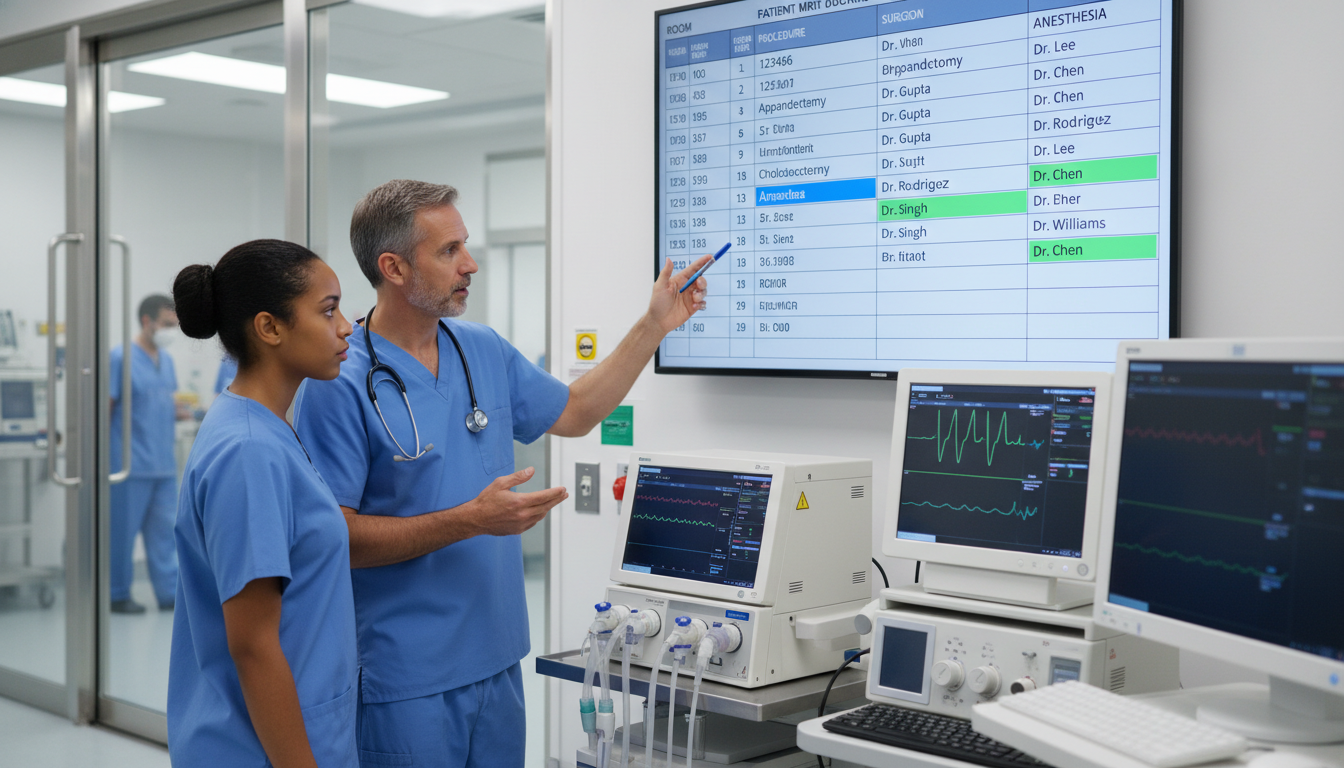
To assess work–life balance, you need to understand what anesthesiology residency actually looks like on the ground. Let’s break it down by core elements: daily schedule, call structures, and rotation types.
Typical Daily Schedule
Most anesthesiology residents start their day early. While variations exist by program:
Morning arrival: 6:15–6:45 AM
- Set up the OR: machine check, airway equipment, drugs, infusions
- Review patient charts, labs, and pre‑op notes
First case start: ~7:00–7:30 AM
- Induction and case management
- Case turnover, pre‑ops for next patient, etc.
Afternoon/Evening:
- Some residents are assigned as “early finishers” and may leave by 3–4 PM
- Others stay until rooms finish: commonly between 5–7 PM
- If on call, the workday extends into overnight coverage
Your average day might be 10–12 hours, with shorter and longer days mixed in depending on the OR schedule and call.
Call Systems: Where Work–Life Balance Is Won or Lost
Anesthesiology residency call structures vary significantly across programs. As a Caribbean IMG, you need to understand and compare:
Traditional In‑House Call
- You work a daytime block, then remain in-house overnight.
- You handle emergent or urgent cases, labor epidurals, traumas, and ICU support depending on the hospital.
- Every 3–4 days is common for some high-volume services, though many programs structure call more humanely.
Night Float
- A block of consecutive nights (e.g., 5–7 nights in a row), then days off.
- Often better for circadian rhythm and predictability, but can be socially isolating.
- Work–life balance depends on what happens during your “off” weeks.
Home Call (More Common Later or Certain Rotations)
- You leave the hospital but must be available to return quickly if called.
- Can feel less oppressive, but frequent pages and interruptions at night can still exhaust you.
Weekend Coverage
- “Late stay” assignments: staying until the last room finishes on a weekend, occasionally until midnight or later.
- Some rotations involve q2 or q3 weekend coverage; others are lighter.
When reviewing programs during the anesthesia match process, ask detailed questions about:
- Call frequency by PGY year
- In‑house vs. home call distribution
- Night float vs. traditional 24‑hour call
- Weekend obligations and post‑call days
Rotations and Their Lifestyle Profiles
Anesthesiology residencies include diverse rotations with very different work–life profiles:
Main OR / General Anesthesia
- Early starts, often predictable end times.
- Moderate to heavy workload but structured.
ICU (Surgical, Medical, Neuro, Cardiac)
- Often the least lifestyle-friendly months.
- Long days, frequent night shifts or 24‑hour calls, high emotional intensity.
Obstetric Anesthesia
- Can be very busy if L&D is high volume.
- Epidural and C‑section coverage might run 24/7.
- Significant night and weekend work, but sometimes with good post‑call rules.
Cardiac / Transplant / Trauma OR
- High acuity, long cases.
- Cases can run late into the evening or even overnight.
Pain Medicine / Pre‑op Clinic / PACU
- Often more lifestyle-friendly rotations.
- Clinic hours, minimal call, more time for studying and personal life.
The overall residency work–life balance depends heavily on how many months you spend on each type of rotation and how they are distributed across years.
Duty Hours, Fatigue, and Wellness: What IMG Anesthesiology Residents Really Experience
You will hear a lot about “duty hours”—the ACGME‑regulated limits on resident working time. Understanding these rules is critical as you assess residency work–life balance and protect your own wellbeing.

Duty Hours 101 in Anesthesiology
Key ACGME duty hour rules include:
- 80‑hour weekly limit, averaged over 4 weeks
- Maximum 24 hours of direct clinical care, plus 4 hours for transition/education
- One day off in 7, averaged over 4 weeks
- Adequate rest between duty periods (usually 8–10 hours)
On paper, these rules apply universally to US residents, including Caribbean IMGs. In practice:
- Some rotations run close to the 80‑hour limit (ICU, trauma).
- Some programs are meticulous about tracking and enforcing duty hours.
- Others place more pressure on residents—especially IMGs—to “be flexible” or under‑report hours.
As a Caribbean IMG, you must know your rights and set a personal policy early: burnout and chronic sleep deprivation will hurt your performance, health, and exam success. Enforcing duty hours is not laziness; it is patient safety.
The Unique Fatigue Profile of Anesthesia
Anesthesia has a specific type of fatigue you should anticipate:
Early morning starts + high vigilance
Long periods of intense focus in dimly lit ORs can be mentally draining even if you are not physically running between floors.Unpredictable bursts of intensity
One minute, you are monitoring a stable case; the next, a major bleed or airway emergency requires maximal focus.Long cases
Eight‑ to twelve‑hour cardiac or spine cases can be exhausting, especially with minimal breaks.Night duty
Covering trauma OR, emergent C‑sections, and ICU support overnight challenges both physical and cognitive stamina.
Burnout Risk and Prevention for Caribbean IMGs
Caribbean IMGs often face additional stressors:
- Visa insecurity
- Financial pressure from loans
- Family living abroad
- Imposter syndrome in high‑acuity US settings
- Extra pressure to “prove yourself” compared to US grads
All of this can interact with heavy duty hours to accelerate burnout. Protect yourself by:
- Normalizing the problem: Burnout in residency is common and not a personal failure.
- Using institutional resources: Wellness programs, confidential counseling, and mental health coverage exist for a reason.
- Building IMG support networks: Connect with other Caribbean graduates in your program or city who uniquely understand your context.
- Planning financial resilience: A structured repayment or budgeting plan reduces stress when residency feels overwhelming.
Comparing Anesthesiology Work–Life Balance to Other Specialties for Caribbean IMGs
If you are early in your decision‑making and considering multiple fields, it helps to place anesthesiology within a broader residency lifestyle context.
Compared to Internal Medicine
Pros for Anesthesia:
- Generally more predictable hours during OR months.
- Fewer pages and “scutwork” after hours.
- Less ongoing patient list management.
Cons for Anesthesia:
- Earlier start times.
- Higher‑stakes acute events that can be more emotionally intense.
- ICU months might be comparable or worse than inpatient medicine months.
Overall, anesthesiology is often perceived as more lifestyle‑friendly than categorical internal medicine residencies, especially at high‑volume teaching hospitals.
Compared to General Surgery and OB/GYN
Anesthesia typically offers:
- Fewer 26–28 hour stretches (many anesthesia programs strictly avoid this).
- Shorter average weekly hours.
- Less longitudinal responsibility for postop floor issues.
However:
- Trauma and cardiac anesthesia at Level I centers can approach surgical workloads.
- OB anesthesia can feel similar to OB/GYN nights in terms of loss of sleep, though with narrower clinical scope.
If you are seeking residency work life balance but still want procedural work and acute care, anesthesiology reliably offers a better compromise than most surgical fields.
Compared to “Lifestyle” Fields (Dermatology, Radiology, Pathology)
- Those specialties generally still have the edge in both residency and attending lifestyle.
- However, they:
- Are often far more competitive for IMGs.
- Offer less immediate hands‑on procedural acute care, which some applicants find less satisfying.
For a Caribbean IMG, anesthesiology often strikes a strong balance between:
- Reasonable lifestyle potential
- Procedural and acute-care exposure
- Realistic match probability (with strong exam scores and solid preparation)
Practical Strategies for Caribbean IMGs to Optimize Work–Life Balance in Anesthesiology
You cannot control everything about your future program, but you can control how strategically you approach the Caribbean medical school residency journey and your first years of training.
1. Selecting Programs with Lifestyle in Mind
When you research anesthesiology programs:
Look at case mix and hospital type
- Level I trauma center with transplant and high‑risk OB? Expect heavier nights and weekends.
- Smaller community‑based program? Possibly more predictable hours but narrower case mix.
Study prior residents’ feedback
- Look at anonymous review sites and alumni you can contact.
- Ask directly: “How strictly does the program protect post‑call days and duty hours?”
Ask IMG-specific questions
- Do Caribbean IMGs in your program feel supported?
- Are IMGs tracked into the same rotations and responsibilities as US grads?
- How many current residents are IMGs, and how are they doing?
2. Leverage Your Caribbean Medical School Training
Graduates from schools like SGU, Ross, and AUC often have:
- Extensive US clinical rotation exposure
- Diverse settings (inner-city hospitals, community sites, VA hospitals)
- Experience adapting to new systems rapidly
Use this background to:
- Quickly learn new workflows and OR cultures.
- Anticipate how different services operate and communicate.
- Demonstrate reliability and efficiency—skills that indirectly improve your schedule because attendings trust you.
SGU residency match data and similar outcomes from other Caribbean schools consistently show that anesthesiology is attainable for well-prepared IMGs. Once you match, that same adaptability becomes a powerful tool for managing workload.
3. Time and Energy Management During Heavy Rotations
Actionable strategies for maintaining balance during high-intensity months:
Structured weekly planning
- Before each week, identify:
- One academic priority (e.g., reading for a specific case or topic)
- One personal priority (e.g., workout, family call, religious service, hobby)
- Protect these non-negotiables as you schedule around call.
- Before each week, identify:
Optimize micro-breaks
- Use 5–10 minutes between cases to:
- Hydrate and eat something small.
- Stretch or walk briefly.
- Review a key anesthetic concept or drug you just used.
- Use 5–10 minutes between cases to:
Batch tasks
- Group similar tasks (chart completion, email replies, studying for in‑training exams) into focused blocks rather than scattering them throughout the day.
Sleep discipline
- Vigilance is non-negotiable in anesthesiology.
- Treat post‑call sleep like a clinical priority; protect it from social or administrative demands whenever possible.
4. Protecting Relationships and Identity Outside Medicine
Residency can easily consume your identity, especially when you’re in a new country and culture as an IMG.
Schedule connection time
Set recurring weekly calls with family back home. Consistency matters more than duration.Build one non-medical routine
Whether it’s a weekly run, a religious gathering, cooking, or music, having a non-medical anchor activity can significantly buffer against burnout.Connect with Caribbean and IMG communities
Look for Caribbean student or alumni networks in your city. Shared culture and food can be deeply restorative amidst the intensity of training.
5. Long-Term Planning: From Residency to Attending Life
Knowing that attending anesthesiologists often enjoy excellent lifestyles can mentally sustain you through tough rotations. But you can also actively plan for a sustainable career.
Consider:
Subspecialty choice and lifestyle
- Pain medicine: often clinic-based with daytime hours.
- Cardiac or transplant anesthesia: more call-heavy and high acuity.
- Outpatient/community anesthesia: high lifestyle potential with relatively predictable hours.
Geographic and practice setting choices
- Rural or smaller cities may offer better hours but fewer amenities.
- Academic centers may retain more nights/weekends but provide academic fulfillment and teaching opportunities.
Remember: your residency work life balance is only the beginning—skillful choices and boundaries will shape your attending lifestyle even more.
FAQs: Work–Life Balance for Caribbean IMGs in Anesthesiology
1. Is anesthesiology a realistic “lifestyle residency” for a Caribbean IMG?
Yes, anesthesiology can be one of the more lifestyle-friendly residencies accessible to Caribbean IMGs, especially compared with surgical specialties and some high-intensity internal medicine programs. However, you should expect:
- Early mornings and moderate-to-long days
- Busy ICU and call rotations that can be grueling
- Periods of exam-related stress (e.g., BASIC, ADVANCED exams)
With good program selection and personal habits, you can achieve a sustainable balance, but it will not be “easy” in an absolute sense.
2. Do Caribbean IMGs in anesthesiology have worse work–life balance than US grads?
Not by rule, but sometimes in practice. IMGs can feel pressure to:
- Take on extra work to “prove” themselves
- Avoid speaking up about duty hours or fatigue
- Accept less desirable rotations or call schedules
This is highly program-specific. Look for programs with multiple happy IMGs, transparent call schedules, and explicit support for wellness. During interviews, pay attention to how attendings and residents talk about fairness and support.
3. How can I assess work–life balance when ranking anesthesiology programs?
Ask residents targeted questions, such as:
- “How many hours do you work on a typical main OR day?”
- “What are your worst months in terms of hours and stress?”
- “How strict is the program about post-call days and 80‑hour limits?”
- “Do you feel comfortable reporting duty hour violations?”
- “As an IMG, do you feel your schedule and expectations are comparable to your colleagues’?”
Compare responses across programs and weigh them alongside training quality, case mix, location, and your support systems.
4. Does choosing anesthesiology improve my lifestyle compared to other Caribbean medical school residency options?
Often, yes—particularly when compared to general surgery, OB/GYN, or some internal medicine tracks. Anesthesiology offers:
- Good long-term lifestyle potential
- Procedural and acute-care focus
- Realistic anesthesia match opportunities for strong Caribbean IMGs
However, you must still approach it with clear eyes: residency will be demanding. The key is to leverage your adaptability as an IMG, choose programs thoughtfully, and develop deliberate habits around sleep, relationships, and self-care. Done well, anesthesiology can provide a fulfilling career with a sustainable balance between your life in and out of the OR.