Understanding Work–Life Balance in a Preliminary Surgery Year
For a DO graduate considering a preliminary surgery year, work–life balance can feel like a contradiction in terms. Surgery is notorious for long hours, high acuity, and constant time pressure. A prelim surgery residency, by definition, adds another layer of uncertainty: it is one year, not a categorical track, and is often used as a bridge to another specialty or a future categorical spot.
That doesn’t mean a prelim year has to be miserable or destructive to your health. It does mean that you must enter with clear eyes, realistic expectations, and a proactive strategy to protect your well‑being. As a DO graduate—often juggling COMLEX/USMLE history, osteopathic identity, and sometimes a less linear path through training—you have specific factors to weigh when assessing residency work–life balance.
This article breaks down how to evaluate and manage lifestyle in a preliminary surgery year, with a particular focus on the priorities and challenges of DO graduates in the osteopathic residency match era.
What Makes a Preliminary Surgery Year Unique?
A preliminary surgery year is typically:
- A 1‑year, non‑categorical position in general surgery
- Intended for:
- Applicants hoping to transition into a categorical general surgery position
- Future surgical subspecialists (e.g., urology, neurosurgery, ENT) whose programs require a surgical intern year
- Applicants who want a strong procedural and acute care foundation before entering another field (e.g., anesthesia, radiology, PM&R, EM)
- Structured similarly to a categorical surgery PGY‑1, but without guaranteed continuation into PGY‑2
Lifestyle implications specific to prelim surgery
Compared to many other lifestyle residency options, a prelim surgery year usually involves:
- Long duty hours close to ACGME limits (80 hours/week averaged over 4 weeks)
- Frequent early mornings and late evenings for rounding, sign‑out, and OR days
- Significant night float or 24‑hour weekend call
- High physical and emotional demands: emergencies, deaths, complex family dynamics, and multidisciplinary coordination
However, there are some features that can be favorable for work–life balance if you’re strategic:
- It’s only one year. Knowing the end date can help you tolerate short‑term intensity.
- It can strengthen your candidacy for fields with better long‑term lifestyle (e.g., radiology, PM&R, anesthesia).
- Once you match into your ultimate specialty, your future lifestyle may significantly improve.
For a DO graduate, the prelim year often functions as a launchpad—a demanding 12 months that can open doors if approached with a deliberate balance strategy.
Realities of Workload, Duty Hours, and Daily Life
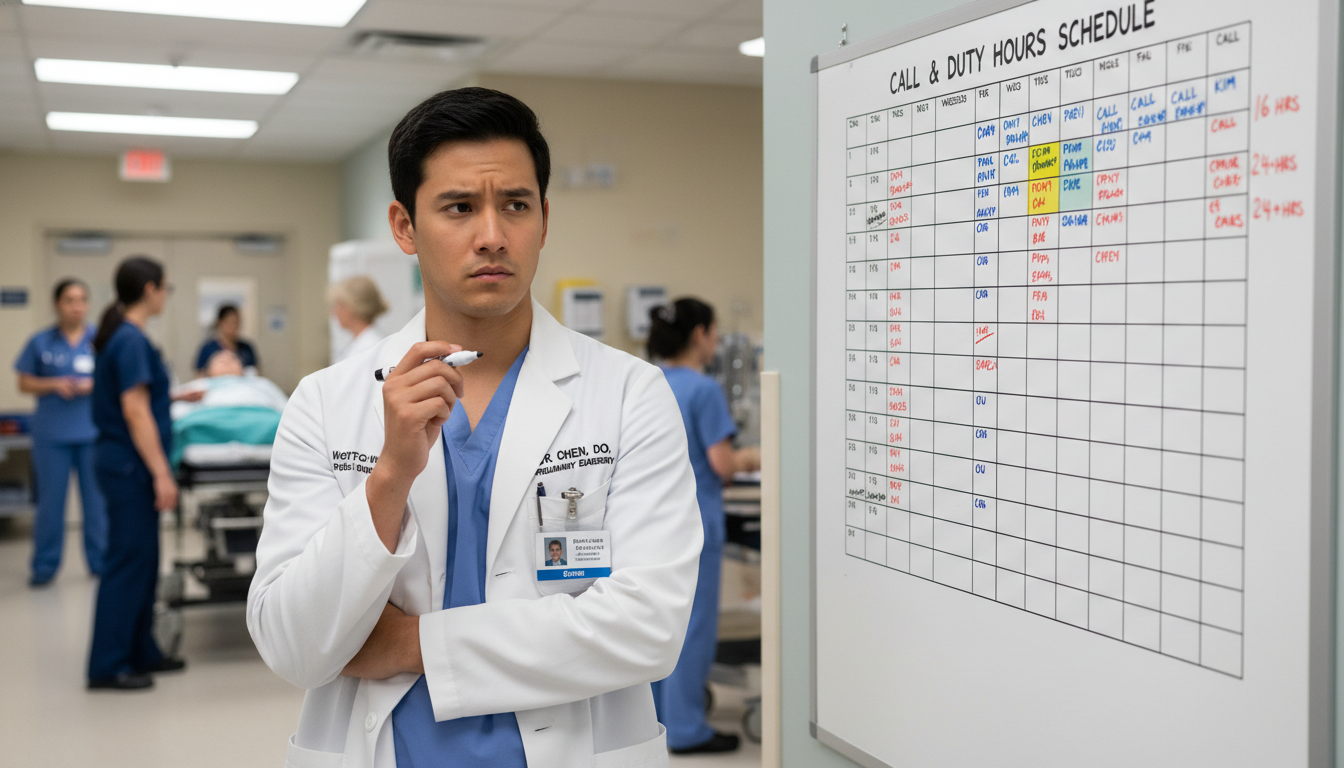
To assess work–life balance, you need a realistic view of what your days and weeks will look like in a prelim surgery residency.
Duty hours: the framework, not the full story
Most prelim programs adhere to ACGME duty hours rules:
- 80 hours/week averaged over 4 weeks
- 1 day off in 7 (averaged over 4 weeks)
- In‑house call no more often than every third night (for programs using traditional call)
- Minimum 10 hours off between duty periods (with some flexibility)
On paper, these rules protect you from the most extreme schedules. In practice:
- Busy services may push right up against the 80‑hour limit
- “Hours” don’t capture intensity (back‑to‑back emergent cases, trauma activations, or floor crises)
- Administrative tasks (charting at home, board prep, research emails) may extend your “work” day mentally even after duty hours end
When interviewing or ranking programs, don’t just ask, “Do you follow duty hours?” Every ACGME‑accredited program will say yes. Instead, ask:
- “How close do your interns usually run to the 80‑hour duty hour limit?”
- “What are typical arrival and departure times on your busiest rotations?”
- “How often are duty hour violations reported, and how does leadership respond?”
Typical weekly rhythm in prelim surgery
While schedules vary, a common pattern might look like:
- Weekdays (M–F)
- 4:30–5:30 am: Arrive, pre‑round, review labs and imaging
- 6:00–7:30 am: Team rounds or sign‑out
- 7:30 am–5:00 pm: OR, clinic, consults, floor work, ED admits
- 5:00–7:00 pm (or later): Evening scut, post‑op checks, sign‑out, notes
- Nights
- Night float blocks (often 5–6 nights/week, 12–14 hour shifts)
- Weekends
- Long call (24‑hour in‑house) or day/night shifts, with an occasional full day off
This leaves limited predictable free time for family, hobbies, and long commuting. Nonetheless, some programs structure rotations to give interns:
- A golden weekend (both Saturday and Sunday off) every few weeks
- Scheduled wellness afternoons or personal appointment time
- Protected didactics that end at a specific time
When evaluating work–life balance, look for patterns rather than promises. One PD comment is less valuable than consistent evidence that the program tries to create sustainable schedules.
Differences between prelim and categorical interns
On the same surgical service, a prelim and categorical PGY‑1 may have:
- Similar daily workload, but different long‑term incentives:
- Categorical interns are know to be part of the “family” for 5+ years
- Prelims may feel more expendable or like “extra hands” if a program culture is unhealthy
- Less access to:
- Mentorship from senior residents
- Longitudinal QI projects or research
- Leadership roles within the program
These differences can amplify stress. When considering a prelim program, ask:
- “How are prelims integrated into the team culture?”
- “Do prelims get assigned to the same educational and OR opportunities as categoricals?”
- “Where have your recent prelims matched or gone after this year?”
Programs that respect prelims as full members of the team tend to have more humane work–life balance—even if the hours are still long.
DO-Specific Considerations: Identity, Match Strategy, and Stressors
As a DO graduate pursuing a preliminary surgery year, your context can directly affect how you experience and manage work–life balance.
The DO graduate perspective
Common DO‑specific realities include:
- Dual board exams: You may have COMLEX only, or COMLEX plus USMLE.
- Perceived bias at certain academic surgical programs, even post single‑accreditation.
- Non‑linear paths: Coming from an osteopathic school without a home surgical program, or switching interest from primary care to surgery later in medical school.
These factors can lead to:
- Increased imposter syndrome: Feeling you must prove yourself constantly
- Greater pressure to over‑work to counteract perceived bias
- Extra mental load related to long‑term career logistics (e.g., “Will this year be enough to land a categorical spot in a surgical subspecialty?”)
All of this heightens the importance of intentional work–life balance planning from day one.
Impact of the osteopathic residency match environment
Since the AOA–ACGME merger, DOs have full access to ACGME programs, but:
- Certain highly competitive surgical fields (e.g., neurosurgery, ENT) still show preference for MD applicants at some institutions.
- DOs often use a strong prelim surgery year to:
- Bolster surgical evaluations and letters
- Build OR skills and comfort
- Gain exposure at academic institutions that didn’t know them as students
This “audition year” dynamic can push you toward:
- Saying yes to every case, extra consult, or research request
- Working beyond your limits to appear tireless and committed
- Neglecting sleep, relationships, and physical health
But overextending is counterproductive. Surgical leadership increasingly values sustainable professionalism—residents who can maintain performance over years, not just months. Striking a realistic balance actually supports your long‑term competitiveness.
Questions DO graduates should ask programs
During interviews, open houses, or resident socials, use targeted questions that address both DO identity and work–life balance:
- “How many DO graduates are currently in your prelim and categorical positions?”
- “Can you share examples of DO prelims who successfully matched into categorical surgery or other specialties?”
- “What support is available if a DO prelim wants to apply into another specialty during the year?”
- “How flexible is the schedule when residents need time for fellowship interviews or specialty change interviews?”
Programs with a track record of supporting DO prelims tend to also be more thoughtful about resident well‑being overall.

Evaluating Work-Life Balance Before You Rank Programs
Because a preliminary year is short and intensive, you want to minimize surprises. Assessing residency work life balance requires going deeper than brochures and websites.
Red flags and green flags in prelim surgery lifestyle
Red flags:
- Residents frequently joke about “surviving” rather than learning
- No clear structure to protect days off; vague responses about time away
- Consistent reports of post‑call residents staying late for non‑urgent tasks
- Leadership dismisses concerns about burnout or well‑being
- Prelims described primarily in terms of “service coverage” rather than education
Green flags:
- Residents across PGY levels speak candidly and coherently about schedule demands
- Clear pattern of on‑time relief after call or night float
- Program monitors and responds to duty hour variances proactively
- Prelims included in:
- Morbidity and mortality conferences
- Simulation training
- Wellness or resilience programming
- Program tracks and proudly shares where prelims go next
Targeted questions to ask residents
During interviews or virtual Q&As, focus on specific, concrete questions like:
- “On your busiest month, what time do interns usually leave the hospital?”
- “How many 24‑hour calls or night shifts did you have over the year?”
- “Are you able to schedule routine medical appointments, therapy sessions, or family events?”
- “On average, how many full weekends off did you have per month?”
- “How does the program respond if a resident feels overwhelmed or burned out?”
Listen not just to what they say, but how they say it. Do residents:
- Sound exhausted or resentful?
- Express pride in hard work but also acknowledge support and boundaries?
- Offer specific examples rather than vague reassurances?
Considering program type and setting
The type of hospital often shapes your lifestyle:
- Large academic centers
- Pros: More residents to share call, robust educator presence, simulation/wellness infrastructure
- Cons: Busy tertiary referrals, complex cases, academic expectations (research, presentations)
- Community programs
- Pros: Smaller teams, potentially more hands‑on operative experience early, sometimes slightly fewer hours
- Cons: Fewer residents may mean more call; less formal wellness programming
- Hybrid/community-based academic
- Often a middle ground, with moderate hours and solid teaching
Also consider geography:
- Urban centers may have shorter commutes but higher cost of living and intensity of clinical volume.
- Suburban/rural centers may provide more space and quiet outside work—but longer commutes can steal hours from your limited personal time.
For work–life balance, think beyond the hospital: how much logistical friction will you face buying groceries, exercising, or seeing friends and family?
Practical Strategies to Protect Your Work–Life Balance as a Prelim DO
Even in a demanding prelim surgery year, there are concrete actions you can take to preserve your wellbeing and plan for your future.
1. Define your primary goal for the year
Your goal shapes how you approach balance:
If you’re aiming for categorical general surgery, you may prioritize:
- Strong clinical evaluations
- Extra time in the OR
- Networking with faculty
If you’re using prelim as a bridge to another field (e.g., anesthesia, radiology, PM&R):
- You need enough surgical exposure to be competent, but you also must:
- Study for specialty‑specific exams/interviews
- Preserve cognitive bandwidth for applications
- You need enough surgical exposure to be competent, but you also must:
Write down your top 2–3 objectives and let them guide what you say yes or no to. This clarity helps prevent over‑commitment out of fear or FOMO.
2. Build micro‑routines that fit long hours
Traditional self‑care advice often fails residents because it ignores time reality. Instead, focus on micro‑routines:
Sleep hygiene micro‑habits
- 10‑minute “wind‑down” with no screens before bed (even if bed is at 10 am post‑call)
- Eye mask and earplugs for day sleep during night float blocks
- Caffeine curfew 6–8 hours before intended sleep whenever possible
Movement micro‑bursts
- 5 minutes of stretching or a hallway walk during sign‑out delays
- Taking stairs instead of elevators when feasible
- A quick body‑weight routine (push‑ups, squats, planks) at home 3–4 times/week for 10 minutes
Nutrition guardrails
- Keep shelf‑stable healthy snacks (nuts, protein bars) in your white coat
- Commit to one vegetable‑containing meal daily, even if it’s hospital salad bar
- Hydration trigger: drink water every time you sit to write notes
These small habits won’t transform your schedule, but they significantly buffer fatigue and burnout.
3. Use osteopathic tools intentionally
As a DO, you have unique training that can directly support your resilience:
- OMT for self‑care: Techniques for neck/back strain, headaches, and stress can be self‑applied in brief sessions.
- Holistic framework: Use your osteopathic lens to check in with the “whole person”—yourself. Ask:
- How are my body, mind, and relationships functioning right now?
- What’s one small adjustment that could improve my overall function this week?
You can also, when appropriate and allowed by your program, use OMT to help patients with pain or respiratory issues, which can increase your sense of meaning and professional identity—critical protective factors against burnout.
4. Protect key relationships deliberately
Residency tends to erode relationships by default. Counteract this with deliberate scheduling:
- Create a standing weekly touchpoint:
- 20‑minute video call with partner/family
- Group text check‑in with close friends
- Share your schedule in advance:
- Let loved ones know which weeks you’ll be unreachable vs more available
- For local partners/friends:
- Short, predictable rituals (Sunday coffee, a 30‑minute walk on post‑call afternoons) matter more than rare elaborate outings.
Clear communication reduces guilt on both sides and allows you to invest fully in your rare time off.
5. Use institutional resources early, not as a last resort
Most programs—not just the historically labeled lifestyle residency fields—now recognize burnout as a serious risk and offer resources:
- Confidential counseling or therapy
- Peer support groups
- Wellness committees or resident advocacy councils
- Protected appointments for mental health
Common barriers include stigma (“I should be able to handle this”) and time constraints. Reframe these resources as performance tools, not rescue tools. Using them early can keep you effective and competitive for your next match.
6. Plan your next steps without letting them consume you
If your prelim year is a stepping stone:
- Set a timeline for planning your next osteopathic residency match or ACGME application:
- Months 1–3: Clarify specialty; gather advice
- Months 4–7: Request letters, start ERAS or other application prep
- Months 8–10: Interview season
- Months 11–12: Rank, prepare transition
- Dedicate a small recurring time block weekly (e.g., 60 minutes on your lighter day) for:
- Application tasks
- Emailing mentors
- Updating CV, writing personal statement
By containing these tasks within a specific time, you avoid constant background anxiety that erodes your off‑hours.
Is a Preliminary Surgery Year Compatible with Work–Life Balance?
The honest answer: a preliminary surgery year is rarely a “lifestyle residency” in the conventional sense. If your primary goal is maximum free time, predictable hours, and low emotional intensity, other specialties will be better aligned.
However, for many DO graduates, a prelim surgery year can be the right short‑term sacrifice:
- It can provide unmatched exposure to critically ill patients, operative technique, and multidisciplinary teams.
- It can demonstrate grit, adaptability, and procedural competence to future programs.
- It can accelerate your path to a more sustainable field once the year is complete.
The key is to approach it as a high‑intensity, time‑limited phase with:
- Clear goals
- Boundaries where possible
- Micro‑habits that support your physical and mental health
- A proactive plan for the next stage of your career
If you deliberately prioritize your well‑being within this demanding context, you can complete your prelim surgery year with your health, your relationships, and your professional motivation intact—and be better positioned for a more balanced residency in the future.
FAQs: Work–Life Balance for DO Graduates in Preliminary Surgery
1. Is a prelim surgery year harder than a categorical PGY‑1 in terms of lifestyle?
Day‑to‑day workload and duty hours for prelim and categorical PGY‑1s in surgery are usually very similar. The main differences are:
- Psychological pressure: Prelims often feel greater uncertainty about their future.
- Integration: In some programs, prelims feel less integrated into long‑term educational planning.
If the program culture is healthy and supportive, the lifestyle gap between prelim and categorical can be minimal. When it’s not, prelims may feel like “extra labor” with less emotional investment from the program—worsening the subjective work–life balance.
2. As a DO graduate, will a prelim surgery year hurt or help my long-term lifestyle?
It depends on your ultimate specialty choice. For many DOs, a prelim surgery year is a bridge to:
- Anesthesiology
- Radiology
- PM&R
- Emergency Medicine
- Certain surgical subspecialties with more controllable lifestyles in practice
In those cases, the prelim year is a high‑intensity, short duration investment that can ultimately lead to a more balanced career. If your goal is categorical general surgery at a busy academic center, your long‑term lifestyle will likely remain demanding but can still be fulfilling if you value operative work and acute care.
3. How can I compare residency work–life balance between prelim programs?
Focus on specifics rather than labels:
- Typical arrival/departure times on high‑acuity rotations
- Number and nature of call shifts (q3 call vs night float, 24‑hour vs 16‑hour)
- Frequency of full weekends off
- Resident reports of how strictly duty hours are honored
- Evidence of prelims being included in wellness initiatives, mentorship, and educational opportunities
Ask residents for concrete examples of “busiest” and “lightest” months and how they used their time off on lighter rotations.
4. What if I realize midway through the year that the lifestyle is unsustainable for me?
First, recognize that almost all interns—in surgery especially—hit a low point during the year. Before making permanent decisions:
- Talk with trusted seniors or faculty you respect.
- Use available mental health resources to assess whether you’re experiencing treatable burnout, depression, or anxiety.
- Revisit your goals: is the current intensity aligned with what you want long‑term?
If, after that, you conclude surgery or this program is not right for you:
- Discuss options with the program director early and honestly.
- Explore transitioning to other fields for the next application cycle.
- Focus on finishing the year safely, maintaining professionalism, and protecting your health as much as possible.
Many physicians ultimately thrive in other specialties after a difficult prelim year; the key is to navigate the transition thoughtfully rather than in crisis.
By entering a preliminary surgery residency as a DO graduate with clear expectations and a deliberate balance strategy, you can transform a demanding year into a powerful, sustainable step toward the career—and lifestyle—you ultimately want.