Understanding Work-Life Balance in General Surgery as a DO Graduate
For a DO graduate considering general surgery, the phrase “residency work life balance” can feel almost contradictory. General surgery carries a reputation for long hours, intense call, and a demanding culture—and there is some truth to that. But the reality is more nuanced, especially in 2025 and beyond, with duty hours regulations, wellness initiatives, and evolving attitudes about lifestyle residency choices.
This article will help you, as a DO graduate, realistically assess work-life balance in general surgery residency and early practice. You’ll learn what to expect during training, how the osteopathic pathway fits into the surgery residency match, and what levers you can pull to protect your life outside the hospital while still thriving in a demanding specialty.
We’ll focus on:
- How work-life balance in general surgery compares with other fields
- What DO applicants specifically should know about culture, expectations, and the osteopathic residency match experience
- Practical strategies to manage your time, energy, and mental health
- How your long-term lifestyle can vary depending on the career path you choose within surgery
1. General Surgery and Lifestyle: Setting Realistic Expectations
General surgery is not typically listed among the “most lifestyle friendly specialties,” especially when compared with dermatology, ophthalmology, radiology, or PM&R. Yet, many surgeons build deeply satisfying lives with families, hobbies, and personal interests. The key is understanding the trade-offs and where general surgery truly sits on the spectrum.
Where General Surgery Fits on the Lifestyle Spectrum
If we roughly rank specialties by typical work-life balance, general surgery tends to fall in the moderate-to-demanding lifestyle category:
- Most lifestyle-friendly: Derm, ophtho, radiology, pathology, PM&R, some outpatient subspecialties
- Moderate: Internal medicine, pediatrics, family medicine with call, anesthesia, psychiatry
- Demanding: General surgery, OB/GYN, neurosurgery, orthopedic surgery, some interventional fields
Within surgery, general surgery residency is on the more intense side due to:
- High acuity and emergent cases (trauma, perforations, bleeding)
- Frequent nights and weekends on call
- Responsibility for complex inpatients and post-op patients
- Operative schedule plus floor/ICU responsibilities
However, the duty hours rules imposed by the ACGME (80-hour weekly average over 4 weeks, with limits on shift length and mandatory time off between shifts) mean that today’s residents generally train under more controlled conditions than prior generations.
What “Work-Life Balance” Actually Looks Like in Residency
For a general surgery resident, work-life balance doesn’t mean a 9–5 job. It typically looks like:
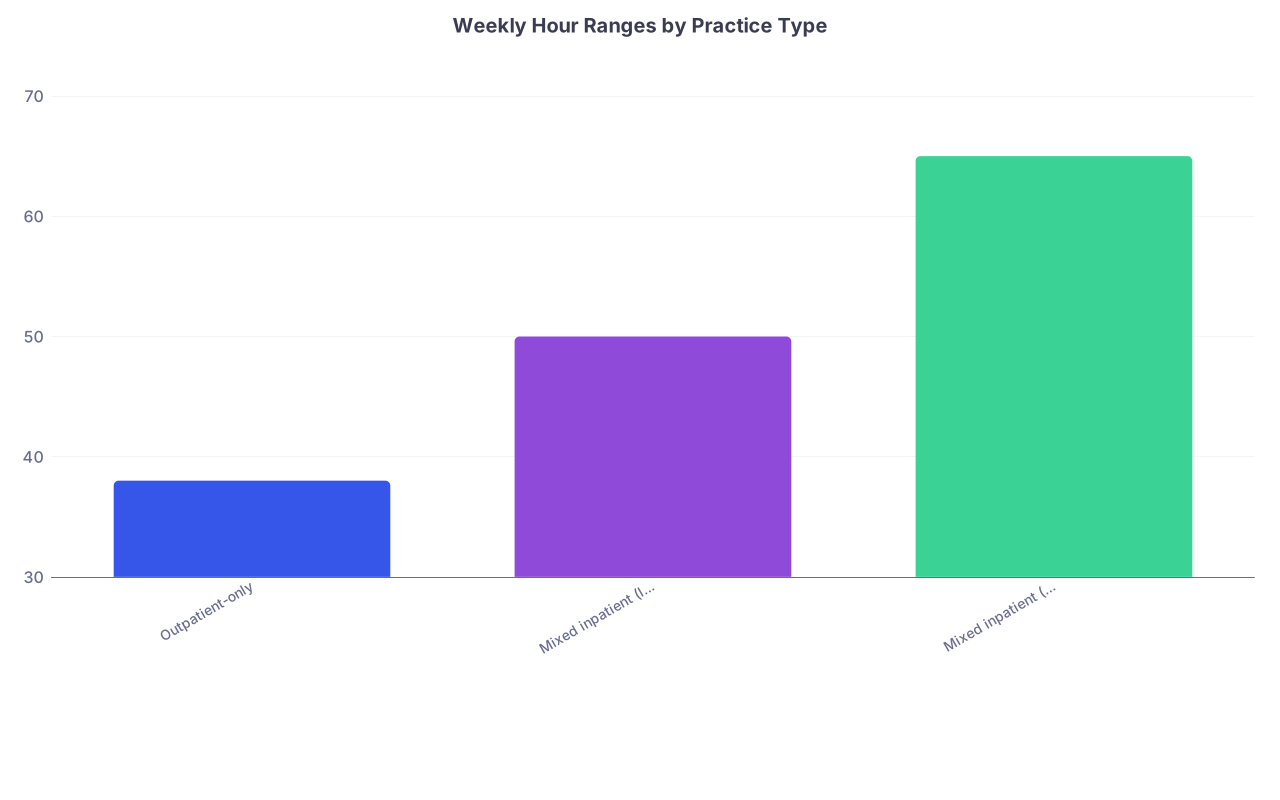
- Average 65–80 hours/week depending on rotation and program
- Early mornings (pre-rounding at 5–6 a.m.) and often late evenings
- Night float or 24-hour call, especially on trauma, ICU, or acute care services
- Weekends in the hospital more often than not, especially early in training
But it also includes:
- Protected didactics and simulation time
- Institutional wellness resources (counseling, resident support groups, mentorship)
- Increasing attention to burnout prevention at the program and national levels
The realistic bar for work-life “balance” in general surgery residency is not equality of time between work and life, but rather sustainable function: you can maintain your personal relationships, basic self-care, and a sense of purpose over five clinical years.

2. DO Graduate Perspective: Culture, Fit, and the Surgery Residency Match
As a DO applying to general surgery, you’re considering not just a specialty with a demanding lifestyle, but also a culture historically perceived as intense, hierarchical, and sometimes less flexible. Fortunately, that culture is evolving—and DO graduates are increasingly integrated into general surgery training.
DO Applicants in General Surgery: Where Things Stand
Since the merger of the AOA and ACGME accreditation systems:
- DO graduates regularly match into ACGME-accredited general surgery residencies
- Many programs explicitly value osteopathic applicants for strong clinical skills, patient-centered focus, and early procedural exposure
- Osteopathic manipulative treatment (OMT) is less central in surgical training, but your DO background can still be a differentiator—especially in trauma, pain, and perioperative care discussions
From a work-life perspective, the key is that DO and MD residents at the same program share the same duty hours, call schedules, and expectations. What differs is often program culture and support, not degree.
The Osteopathic Residency Match Experience in Surgery
You will enter the osteopathic residency match (now the single NRMP Match with DO participation) with some lifestyle-related considerations:
Program selection matters more than your degree
- Programs with strong resident wellness cultures, reasonable operative loads, and clear policies on duty hours provide a better foundation for balance.
- Some community programs may offer slightly more predictable schedules than large trauma-heavy academic centers, though this varies widely.
Signals of resident-friendly culture in program research:
- Residents appear genuinely engaged but not exhausted on interview day
- Transparent conversation about duty hours and enforcement
- Structured mentorship and wellness programming
- Flexible, humane approach to pregnancy, family emergencies, and health issues
Interview questions you can ask that indirectly assess lifestyle:
- “How often are residents close to the 80-hour duty hours limit?”
- “How is backup coverage handled if someone is ill or overwhelmed?”
- “What resources do you have to support resident wellness?”
- “How are night float and weekend responsibilities distributed across PGY years?”
Be diplomatic and professional—programs know that lifestyle residency concerns are real, but they also want residents who are resilient and committed to the workload inherent to general surgery.
3. Day-to-Day Life in General Surgery Residency: Time, Energy, and Call
Understanding the structure of your training years helps you realistically plan for work-life balance. The details vary by program, but there are typical patterns.
PGY-1: The Steepest Learning Curve
- Role: Floor work, basic consults, first assists in the OR, handling post-op orders, cross-cover at night
- Hours: Often among your longest; 70–80 hours/week is common on busy rotations
- Lifestyle impact:
- Less control over schedule
- Fatigue from night float and early mornings
- Challenging to maintain regular exercise or social activities
Key survival strategies:
- Establish non-negotiables (e.g., one weekly call with family, one workout, one protected block to sleep in).
- Learn efficient notes, sign-outs, and OR prep to avoid unnecessary extra hours.
- Use post-call time to truly rest, not catch up on side projects.
PGY-2–3: Expanding Responsibility, Slightly More Control
- Role: More time in the OR, leading parts of cases, more autonomy on consults, sometimes supervising interns
- Hours: Still heavy, but you may feel them as more tolerable as you gain competence
- Lifestyle impact:
- More satisfaction due to operative experience
- Still significant nights/weekends and ICU rotations
- Slightly more ability to plan life events around the schedule
During these years, work-life balance is often about efficiency and boundaries: recognizing what is truly urgent, delegating appropriately, and letting go of perfectionism in non-critical tasks.
PGY-4–5: Senior Resident Years
- Role: Running services, leading rounds, chief in the OR, major decision-making
- Hours: Can still be heavy, but with more scheduling influence and sometimes more daylight in your week
- Lifestyle impact:
- High responsibility, which can be stressful but also rewarding
- More say in vacation timing, elective rotations, and sometimes call patterns
- Preparing for the next phase—fellowship or attending life—becomes crucial
Here, balance depends on leadership skills: how effectively you structure the team’s workflow, advocate for your residents’ well-being, and avoid self-sacrifice that harms your own sustainability.
Duty Hours: Rules vs. Reality
The duty hours rules set guardrails:
- Maximum 80 hours/week averaged over four weeks
- One day in seven free of clinical responsibilities
- Limits on continuous duty and requirements for time off between shifts
In practice:
- Some programs truly honor these limits and proactively monitor them
- Others may subtly pressure residents to “stay until the work is done,” risking overages
- You must learn to document your hours honestly and advocate if systemic issues arise
Work-life balance in general surgery is not just your personal resilience—it’s also about how well your program respects and enforces these regulations.
4. Protecting Your Life Outside the Hospital: Practical Strategies for DO Surgery Residents
Even in a high-intensity specialty, you have real levers to improve your day-to-day experience. As a DO resident, you may already be familiar with holistic approaches to health—use that to your advantage.
4.1 Time and Task Management in a Busy Surgical Day
Streamline your daily workflow:
Standardize pre-rounding:
- Develop a template for your problem list, labs, and overnight events.
- Check critical labs first (H/H, electrolytes, vitals trends) to identify urgent issues before rounds.
Batch tasks:
- Group orders, pages, and calls by patient or location to reduce back-and-forth time.
- Schedule “documentation blocks” instead of writing notes piecemeal all day.
Use checklists for:
- Post-op orders
- Pre-op assessments (consents, labs, imaging, NPO status)
- Consult presentations
Better efficiency doesn’t just help the team—it may be the difference between getting home by 7:30 p.m. vs. 9:00 p.m.
4.2 Sleep and Fatigue Management
Sleep deprivation is inevitable at times in a general surgery residency, but you can lessen its impact:
- Protect anchor sleep: Strive for at least one consistent sleep window (even if short) across your schedule, especially on night float.
- Strategic napping:
- A 20–30 minute nap before night shifts improves cognitive performance.
- Use downtime during long call periods for micro-rest if your service and patient safety permit.
- Caffeine timing:
- Avoid caffeine in the last 6 hours before planned sleep.
- Use smaller, more frequent doses instead of massive doses that lead to crashes.
As a DO, remember the body-as-unit principle; chronic sleep debt undermines your physical, emotional, and cognitive well-being—even if you convince yourself you’re “fine.”
4.3 Protecting Relationships and Identity Outside Medicine
Your identity must extend beyond “surgical resident” to remain emotionally healthy.
Schedule relationships like commitments:
- Reserve a recurring weekly call or video chat with close family or friends.
- Plan short, realistic activities (like a 30-minute walk and coffee) with loved ones instead of elaborate outings that are likely to be canceled.
Micro-hobbies:
- Choose hobbies that can be done in short bursts: reading, journaling, sketching, playing an instrument for 10 minutes, language-learning apps.
- Avoid perfectionism—your hobby is there to recharge you, not become a second job.
Set communication expectations:
- Explain your schedule to family/partners early.
- Share that responsiveness will fluctuate; this reduces misunderstandings and resentment.
4.4 Mental Health, Burnout, and When to Ask for Help
General surgery residents are at meaningful risk of burnout, depression, and anxiety. Protecting work-life balance includes protecting your mental health.
Warning signs to watch for:
- Persistent loss of interest in things you used to enjoy
- Emotional numbness or cynicism about patients or colleagues
- Regular thoughts like “What’s the point?” or fantasies about quitting surgery
- Escalating substance use to cope
Action steps:
- Use institutional resources: Most programs have access to confidential counseling or employee assistance programs.
- Find a mentor who is a good fit: This might be a DO faculty member, an alumnus, or an attending known for being supportive.
- Normalize help-seeking: Many outstanding surgeons have sought therapy or coaching during residency.
Your goal is not to prove invincibility; it’s to reach the end of training healthy enough to enjoy your career.
5. Long-Term Lifestyle: General Surgery Careers After Residency
Work-life balance improves for many surgeons once residency is over, but not automatically. The lifestyle you ultimately have depends heavily on your career choices within surgery.
Academic vs. Community Practice
Academic general surgery:
Pros:
- Structured academic time for research, teaching, or quality improvement
- Collegial environment, often with resident support for call and inpatient management
- Prestige and broader institutional resources
Cons:
- Often more complex cases, more administrative work
- Evening academic commitments (lectures, conferences, meetings)
- Compensation sometimes lower than community roles
Community general surgery:
Pros:
- Potentially more control over schedule and case mix
- Shorter commute, smaller team, more autonomy
- In some settings, more predictable daily workflow
Cons:
- Fewer trainees or advanced practice providers to share off-hours burdens
- You may be the main or only general surgeon covering emergencies
- Business and administrative aspects can be demanding
From a lifestyle standpoint, community practice in a stable hospital with strong support staff can be a reasonable path for a DO graduate prioritizing long-term balance.
Fellowship Choices and Lifestyle
Certain fellowships lead to more demanding paths (e.g., trauma/critical care, surgical oncology), while others may offer more controlled hours (e.g., some minimally invasive, breast, or colorectal practices in certain settings).
Examples:
- Trauma/Acute Care Surgery: High-adrenaline, heavy night coverage, often less predictable lifestyle
- Breast Surgery: More clinic-based, fewer life-or-death emergencies, better schedule predictability in many practices
- Colorectal Surgery: Mix of elective and semi-urgent work, lifestyle varies but can be better controlled than general trauma-heavy practices
When you consider a fellowship, ask mentors:
- “What do your nights and weekends look like?”
- “How often are you called in from home?”
- “How many evenings are you home by 6–7 p.m.?”
Geographic and Practice-Model Variables
Lifestyle in surgery is heavily influenced by:
Urban vs. rural:
- Rural surgeons may have broader scope but more frequent call if few surgeons share the burden.
- Urban areas may have more colleagues and subspecialists to distribute workload.
Group size:
- Larger groups can share call more equitably.
- Solo practice can be lucrative but demanding and isolating.
Employment model:
- Hospital-employed positions may provide more predictable income and standardized benefits.
- Private practice may offer more autonomy but also more administrative stress.
For a DO graduate who values work-life balance, joining a well-structured group practice with shared call is often a better lifestyle choice than solo practice or high-intensity trauma-focused roles.
6. Deciding Whether General Surgery Is the Right Balance for You
Ultimately, whether general surgery is a “lifestyle residency” for you depends on your temperament, values, and goals.
Questions to Ask Yourself
How do I respond to high-acuity, high-responsibility environments?
- Do they energize me, or do they steadily drain me?
Am I willing to trade time for meaning?
- General surgery offers immense meaning—curing disease, stopping bleeding, changing a trajectory in a single operation—but at the cost of long hours.
What does balance mean to me at different life stages?
- Can I accept that residency may be unbalanced, but the long-term career can be shaped into something sustainable?
How important is geographical and practice-model flexibility?
- If work-life balance is paramount, you may prioritize job searches in settings with strong team coverage and moderate acuity over prestige.
A DO Graduate’s Advantage
As a DO, you bring:
- A curriculum steeped in holistic patient care, which often includes self-care principles
- Training in communication and empathy that can support strong team dynamics
- Exposure to wellness and whole-person concepts that can guide how you construct your own career
Leaning into these strengths can help you not only succeed in the surgery residency match but also become the kind of surgeon who thrives—not just survives—over decades of practice.
FAQs: Work-Life Balance for DO Graduates in General Surgery
1. Is general surgery a bad choice if I care about work-life balance as a DO graduate?
Not necessarily. General surgery residency is demanding, and it’s not considered one of the most lifestyle-friendly specialties. But many surgeons build fulfilling, sustainable lives. You need to enter with realistic expectations about duty hours, call, and training length, and be proactive in choosing residency programs and later jobs that support your priorities.
2. Are DO graduates at a disadvantage for general surgery residency work-life balance compared to MDs?
Within the same program, DO and MD residents have the same schedules, duty hours, and call responsibilities. The difference lies more in where you match, program culture, and mentorship. As a DO, you should focus on identifying programs with a strong track record of supporting osteopathic trainees and promoting resident wellness.
3. Can I have a family or meaningful relationships during general surgery residency?
Yes, but it requires intentional planning, clear communication, and flexibility on all sides. Many general surgery residents marry, have children, and maintain close friendships. The key is recognizing that your schedule will be less predictable, especially early in training, and that you’ll need to use your limited free time deliberately to invest in relationships.
4. What practical steps can I take now, as a DO student, to prepare for surgery residency work-life balance?
- Develop strong time-management and study habits while still in medical school.
- Seek mentors in general surgery, including DO surgeons, and ask candid questions about their lifestyle.
- Participate in sub-internships to experience resident life up close.
- Begin building simple wellness routines (sleep hygiene, brief exercise sessions, mindfulness) that you can realistically carry into residency.
These preparatory steps won’t change the inherent demands of general surgery, but they will make you more resilient and better equipped to find a sustainable balance.