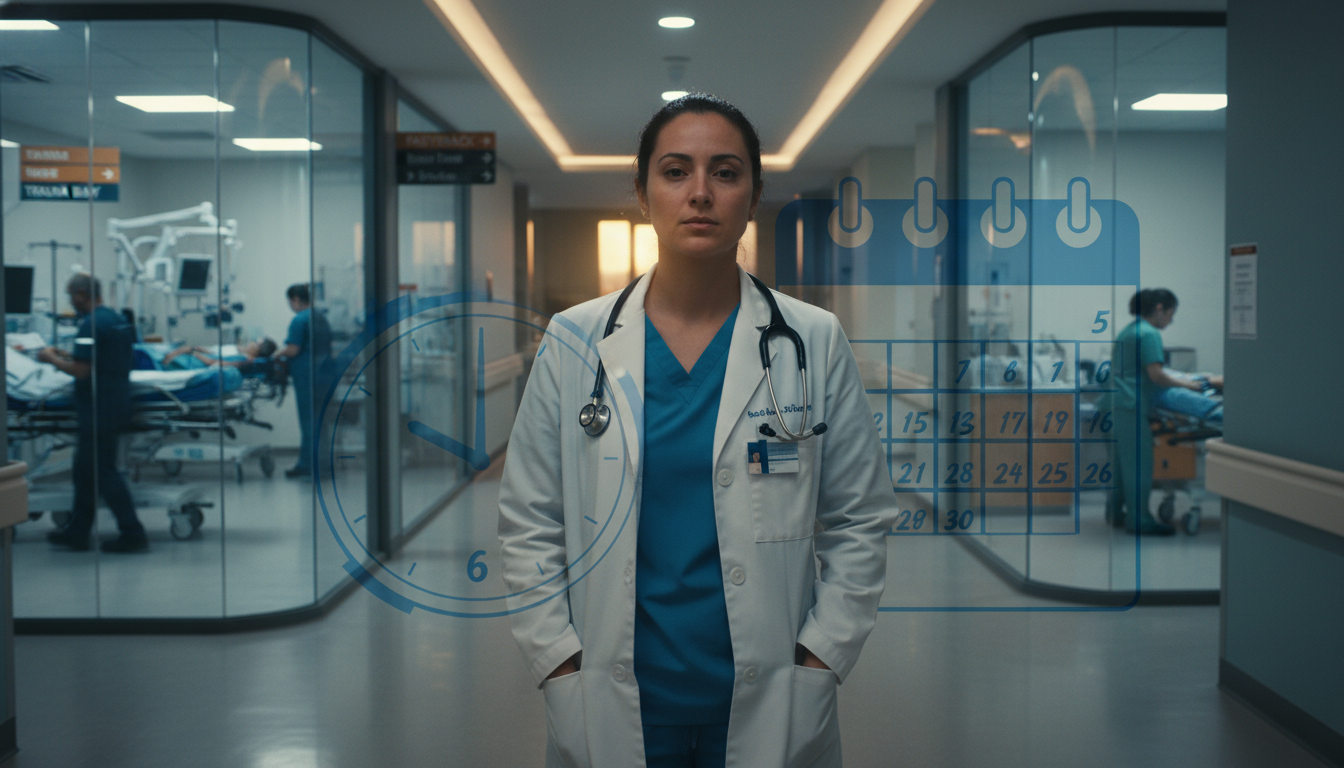
Radiation oncology is frequently ranked among the most lifestyle-friendly specialties—but the reality on the ground can vary enormously by institution, practice setting, and individual priorities. As a DO graduate planning your radiation oncology residency and early career, understanding how and why this field can support a good work-life balance is essential for making smart choices in the match and beyond.
Below is a detailed, practical work-life balance assessment tailored specifically to DO graduates interested in radiation oncology, with a focus on the osteopathic residency match experience, duty hours, and long‑term lifestyle considerations.
Understanding Work-Life Balance in Radiation Oncology
Radiation oncology (rad onc) sits at an interesting intersection: it is a technology-heavy, largely outpatient specialty that cares for seriously ill patients over weeks to months. This combination creates unique lifestyle characteristics.
Core Features That Shape Lifestyle
1. Predominantly Outpatient Schedule
- Most radiation oncology practices are outpatient cancer centers.
- Standard hours often approximate:
- Weekdays, roughly 7:30–8:00 a.m. to 5:00–6:00 p.m.
- Very limited weekend work, primarily for on-call duties or emergencies.
- Compared to inpatient-heavy specialties, this often translates into more predictable daily schedules and fewer overnight disruptions.
2. Procedure and Technology-Driven, but Not “On-Demand” Like Surgery
- Treatments are largely scheduled during block hours; emergent cases (e.g., spinal cord compression, severe bleeding, SVC syndrome) are relatively infrequent.
- This planned nature supports:
- Reliable start and end times most days.
- The ability to schedule personal commitments with less fear of being called back in.
3. Lower Frequency of True Nighttime Emergencies
- Many rad onc residents report:
- Home call where they rarely, if ever, return to the hospital overnight.
- Occasional late stays when complex emergent cases or planning issues arise.
- Contrast with:
- Surgical fields where cases can run late into the night.
- ICU/Hospitalist specialties with frequent overnight admissions and cross-coverage.
4. Emotional Complexity of Oncology
While the physical workload is often reasonable, the emotional intensity is real:
- Frequent exposure to serious illness, end-of-life care, and family distress.
- Longitudinal relationships with patients you see daily for several weeks.
- This can contribute to emotional fatigue even if hours are relatively controlled.
For many physicians, this tradeoff—moderate duty hours but high emotional investment—is an acceptable or even rewarding balance. For others, it demands very intentional self-care and good institutional support.
Duty Hours and Resident Workload: What to Expect
Radiation oncology residency is generally considered moderate in workload compared with many other specialties, but there is significant variability. Understanding duty hours and workflow will shape your expectations of residency work life balance.
Duty Hours in Radiation Oncology Residency
Most programs follow ACGME duty hour rules, even for DO graduates entering formerly osteopathic programs. Common patterns:
- Weekly Hours
- Many residents report working 50–60 hours per week on average.
- Peaks during busy rotations or research deadlines may approach 60–70 hours, but chronic 80+ hour weeks are unusual.
- Call Structure
- Often home call, with infrequent in-person overnight requirements.
- Frequency can range from:
- Q4–Q6 weeks for some small programs.
- Rotating with senior residents or faculty in larger centers.
- Weekends
- Limited routine weekend duties.
- Occasional Saturday QA, emergency simulations, or on-call consults.
This places rad onc toward the more favorable end of lifestyle residency specialties, though not uniformly as “light” as some outpatient non-oncology fields.
Intra-Day Workflow: Why Some Days Still Stretch Long
Even if weekly duty hours are reasonable, daily flow can be intense:
- Morning
- Chart reviews and on-treatment patient checks.
- Tumor boards or multidisciplinary conferences.
- Midday
- Simulation (CT sim) and patient treatment planning.
- New consults and follow-up clinics.
- Afternoon/Evening
- Plan contouring, reviewing dose distributions, and treatment verification with physicists and dosimetrists.
If your attending has high volume or complex cases, you might:
- Stay later to finish contouring or plan checks.
- Review multiple new cases to be ready for the next day.
- Stay for late add-on simulations for inpatients or urgent cases.
This means the shape of your day can sometimes feel demanding, even if total weekly hours remain within typical duty hours limits.
DO Graduate Perspective: Navigating the Osteopathic Residency Match in Rad Onc
As a DO graduate, you face a dual challenge: successfully entering a competitive specialty and optimizing for lifestyle and fit. The osteopathic residency match landscape has evolved post-single accreditation, but some realities remain.
Competitiveness and Its Impact on Lifestyle Choices
Radiation oncology has had fluctuating competitiveness, with some recent years showing fewer applicants relative to positions—but that can change. For DO applicants, barriers can include:
- Fewer DO role models or faculty in academic radiation oncology.
- Program biases (implicit or explicit) favoring MD applicants.
- Limited rad onc exposure at some osteopathic schools.
How this impacts work-life balance:
- You may feel pressure to:
- Take on extra research, away rotations, and test prep to secure a rad onc match.
- Accept any rad onc position you receive, even if lifestyle or culture seems questionable.
- Once you match, your perceived “need to prove yourself” as a DO may lead you to overwork compared to peers.
Recognizing this dynamic is key. It allows you to actively plan boundaries and self-advocacy from the start.
Building a Competitive DO Application Without Burning Out
To enter the osteopathic residency match (NRMP) in radiation oncology and protect your mental health:
Strategic Research, Not Endless Research
- Choose 1–2 impactful projects with clear mentorship (e.g., clinical outcomes, chart reviews, quality-improvement).
- Aim for at least one poster and ideally a manuscript, but set a limit on the number of simultaneous projects.
Thoughtful Away Rotations
- Select 1–2 away rotations at programs known to be DO-friendly or previously matched DOs.
- Use these months to:
- Demonstrate work ethic and teachability—without chronically staying 3–4 hours later than everyone else.
- Ask honest questions about lifestyle, duty hours, and wellness resources.
USMLE and COMLEX Strategy
- If already completed, use good scores strategically to target programs historically open to DOs.
- If still deciding, weigh the stress of another exam versus the potential benefit. Now that Step 1 is pass/fail, Step 2 and COMLEX Level 2 become especially important.
Letters of Recommendation and Fit
- Prioritize letters from radiation oncologists who:
- Know you well and can speak to your clinical judgment, communication skills, and professionalism.
- Have a reputation for supporting learners and practicing with humane work-life balance.
- Prioritize letters from radiation oncologists who:
By approaching the osteopathic residency match process strategically rather than frantically, you’ll start your rad onc journey from a more sustainable place.

Practical Work-Life Balance Assessment During Interviews and Rotations
You can’t rely on a program’s reputation alone; the reality of residency work life balance is highly program-specific. During audition rotations, interviews, and virtual visits, you should intentionally evaluate whether a given radiation oncology residency will support a healthy lifestyle.
Key Questions to Ask Residents (and How to Interpret the Answers)
Use informal conversations to ask current residents:
“What is a typical workday for you, from arrival to leaving?”
- Reasonable answer:
- “Most days I’m here around 7:30–5:30, occasionally 6:30 when we’re really busy.”
- Red flags:
- “We’re scheduled 8–5, but realistically we’re here until 7–8 p.m. a lot.”
- Residents laugh nervously or glance at each other before answering.
- Reasonable answer:
“How often do you work weekends or late nights?”
- Lifestyle-friendly response:
- “Most weekends are free unless I’m on call. Even then, it’s mostly phone calls.”
- Red flags:
- “Call is light” followed by stories of frequent hospital returns or unplanned emergencies.
- Lifestyle-friendly response:
“Do you feel comfortable leaving on time if your work is done?”
- Healthy culture:
- “Yes, attendings are fine with it; they care more about the quality of work than face time.”
- Red flags:
- “Technically yes, but residents usually stay because attendings are always here late.”
- Healthy culture:
“How is vacation time handled? Any issues getting time off?”
- Positive:
- “We get 3–4 weeks per year and we actually use them. Coverage is manageable.”
- Red flags:
- “We get vacation, but I haven’t used all mine in the last two years,” or “There’s a lot of guilt about taking time off.”
- Positive:
“Have any residents left the program or switched specialties?”
- Context matters—one departure is not necessarily concerning, but patterns are.
Signals in the Clinical Environment
During a rotation or interview day, quietly observe:
Resident demeanor
- Do they appear chronically exhausted, or just normally busy?
- Are they joking and interacting pleasantly, or guarded and tense?
Interaction with faculty
- Is feedback delivered respectfully, or are there signs of public shaming?
- Do attendings occasionally mention their own interests outside of medicine, normalizing balance?
Clinic operational flow
- Are patient waits excessively long, suggesting overbooking and chronic time pressure?
- Do residents constantly get interrupted, multitasking beyond reasonable levels?
These subtle clues often speak louder than formal presentations or program brochures.
Evaluating Work-Life Balance for Specific Subdomains in Rad Onc
Within the specialty, some niches can affect lifestyle:
- Academic vs. Community
- Academic:
- More research expectations, teaching, and meetings.
- Potentially more early/late hours tied to academic commitments.
- Often better formal wellness infrastructure.
- Community:
- Higher clinical volume at times, but research pressure may be lower.
- More straightforward 8–5 type schedules in many places.
- Academic:
- Disease Site Focus
- Specialization later in career (e.g., CNS, head and neck, pediatrics) may impact lifestyle.
- Complex sites (e.g., head and neck, pediatrics) can be more time-intensive in planning and follow-up, but also deeply rewarding.
As a resident, you will see a mix of disease sites; how the program supports you through complex rotations is key to assessing overall work-life culture.
Long-Term Lifestyle and Career Planning in Radiation Oncology
For a DO graduate, matching into a rad onc residency is only the first step. Your long-term lifestyle will be shaped by practice setting, geographic choices, and how intentionally you design your career.
Comparing Radiation Oncology Lifestyle with Other Specialties
Within the MOST_LIFESTYLE_FRIENDLY_SPECIALTIES category, radiation oncology often scores well:
- Favorable Aspects
- Mostly outpatient.
- Predictable hours relative to surgery and inpatient specialties.
- Limited overnight in-house call.
- Intellectually rich and team-based environment.
- Challenging Aspects
- Emotional intensity of oncology.
- Documentation demands and complex planning workflows.
- Increasing administrative burden, prior authorizations, and productivity pressures.
Compared to non-oncology outpatient specialties (dermatology, some aspects of PM&R), rad onc may be more emotionally draining but still quite manageable in terms of duty hours and physical demands.
Practice Settings and Lifestyle Tradeoffs
1. Academic Medical Centers
- Pros:
- Teaching and research opportunities.
- Complex cases and cutting-edge technology.
- Potentially more schedule flexibility once established faculty.
- Cons:
- Expectation for scholarly output.
- Additional meetings, committees, and grant responsibilities.
2. Community and Private Practice
- Pros:
- Often clearer clinic hours and simpler structure.
- Productivity often directly linked to compensation, which can be attractive.
- Potentially shorter commute and stable local patient base.
- Cons:
- High volume expectations may push you toward longer days.
- Less formal support for research interests or niche specialization.
3. Hybrid or Multi-Site Practices
- Rotating between satellite centers can mean more commuting time, which indirectly affects lifestyle.
When exploring job offers post-residency, ask very specifically about:
- Expected patient volume per day.
- Time allocated for contouring and plan review.
- Support staff (nurse navigators, APPs, scribes).
- Flexibility for telemedicine follow-up visits.
Protecting Your Well-Being as a DO Radiation Oncologist
Radiation oncology is not immune to burnout, despite being perceived as a lifestyle residency. As a DO physician, your holistic training can be an advantage if you intentionally apply osteopathic principles to your own life.
Concrete strategies:
Boundaries Around Work
- Limit after-hours email and EMR time; set a “shutdown” time on most nights.
- Use your program’s duty hours policies as a floor, not a ceiling—prioritize leaving when work is truly done.
Intentional Emotional Processing
- Regularly debrief challenging cases with colleagues or mentors.
- Use institution-provided counseling or peer-support services when needed.
Preserving Osteopathic Identity
- Integrate OMT where appropriate (e.g., for pain, functional limitations) if your setting allows.
- Maintain the holistic, mind–body approach not only to patients, but to yourself—nutrition, sleep, exercise, and social connection.
Planning for Flexibility
- Consider jobs that allow part-time work, job-sharing, or adjusted FTE later in your career.
- Early in practice, you may choose to work more intensely to establish yourself, but having a long-term plan for balance can prevent slow burnout.

Actionable Steps for DO Graduates Prioritizing Work-Life Balance in Rad Onc
To bring all of this together, here is a stepwise approach you can use from pre-application through early attending life.
Step 1: Self-Assessment Before Applying
Clarify your priorities:
- How important are predictable hours versus academic prestige?
- Are you comfortable with emotionally intense but relatively controlled schedules?
- Do you prefer smaller programs with tight-knit teams or large departments with many co-residents?
Write down your top 3 non-negotiables related to lifestyle residency characteristics (e.g., “Most weekends free,” “Respectful culture,” “Support for family responsibilities”).
Step 2: Target Programs Wisely in the Rad Onc Match
In your osteopathic residency match strategy:
- Use data:
- Look for programs that have matched DOs in recent years.
- Talk to DOs currently in rad onc (through alumni networks, professional societies).
- Apply to a mix of:
- Academic centers with known supportive cultures.
- Community programs with reputation for reasonable duty hours.
Balancing “reach” and “safety” programs without overextending yourself on applications helps maintain sanity during interview season.
Step 3: Use Rotations and Interviews to Evaluate Culture
On audition rotations:
- Volunteer to help and work hard, but resist the temptation to chronically stay 3–4 hours later than everyone as a default.
- Systematically ask the lifestyle-related questions outlined above.
- Keep notes after each day on:
- How residents talk about their lives outside work.
- Whether you can picture yourself thriving there for 4–5 years.
During interviews:
- Don’t be afraid to ask:
- “How does your program support resident well-being?”
- “What recent changes have you made in scheduling or workflow based on resident feedback?”
Programs genuinely focused on work-life balance will answer thoughtfully and specifically.
Step 4: During Residency—Actively Shape Your Experience
Once you match:
- Use your DO communication skills to:
- Collaborate with co-residents to share tips for efficiency.
- Advocate respectfully for reasonable expectations if workloads become unsustainable.
- Keep track of your own time:
- If you consistently exceed duty hours, document and discuss with leadership.
- Build an outside-of-work identity:
- Commit to at least one hobby or activity that is non-negotiable most weeks (gym, running group, book club, religious service, time with family).
Step 5: Transition to Attending Life with Intention
As you finish residency:
- Evaluate job offers not just on salary and location, but on:
- Patient volume.
- Schedule expectations.
- Administrative support.
- Ask to talk to current physicians about:
- How many evenings a week they stay late.
- How often they feel they need to log in from home to finish notes or review plans.
- Remember that initial negotiations can set long-term expectations; advocate for protected time where needed.
FAQs: Work-Life Balance for DO Graduates in Radiation Oncology
1. Is radiation oncology really a “lifestyle residency” compared to other specialties?
Relative to many surgical and inpatient-based specialties, radiation oncology often offers more predictable hours, fewer overnight shifts, and mainly outpatient work. However, it is still a cancer specialty with high emotional demands, documentation, and planning responsibilities. Many residents and attendings experience good residency work life balance, but it is not universally “easy,” and program culture matters greatly.
2. As a DO graduate, will I need to sacrifice lifestyle to be competitive for the rad onc match?
You do not inherently have to sacrifice your well-being, but you will need to be strategic. Quality over quantity in research, targeted away rotations at DO-friendly programs, strong clinical performance, and thoughtful letters can build a competitive osteopathic residency match application without unsustainable overwork. The key is to avoid feeling forced to accept a toxic program solely to match—cast a broad but deliberate net instead.
3. What are typical duty hours for a radiation oncology resident?
Many rad onc residents report working approximately 50–60 hours per week, with some variation by rotation and institution. Call is usually home call with limited overnight returns to the hospital. Weekend work is generally infrequent except when on call or handling true emergencies. This places radiation oncology on the more lifestyle-friendly side among specialties, though the day-to-day intensity can still be significant.
4. How can I evaluate whether a specific rad onc program will support a healthy work-life balance?
Talk to residents informally about their typical day, how often they stay late, weekend expectations, and how easy it is to take vacation. Observe resident–faculty dynamics, clinic flow, and overall morale during your visit or rotation. Ask for concrete examples of wellness initiatives or schedule changes based on resident feedback. Programs that are genuinely committed to lifestyle and wellness will provide detailed, honest answers, not just generic statements.
Radiation oncology can offer a deeply meaningful career with a strong potential for sustainable work-life balance—especially for a DO graduate who values holistic, patient-centered care. By approaching the osteopathic residency match strategically, assessing programs critically, and intentionally designing your training and career, you can build a life in rad onc that supports both professional fulfillment and personal well-being.