Nuclear medicine is increasingly recognized as a lifestyle residency in the United States—particularly attractive for residents seeking predictable hours, less overnight call, and intellectually stimulating, image‑based work. For a non-US citizen IMG (international medical graduate) or foreign national medical graduate, however, the picture is not just about lifestyle; it also involves visas, job stability, and long‑term planning.
This article offers a work‑life balance–centered assessment of nuclear medicine residency in the US, specifically for non-US citizen IMGs. We’ll cover clinical workload, duty hours, training pathways, visa implications, financial realities, and how to navigate the nuclear medicine match strategically as a foreign national.
Understanding Nuclear Medicine as a Lifestyle Specialty
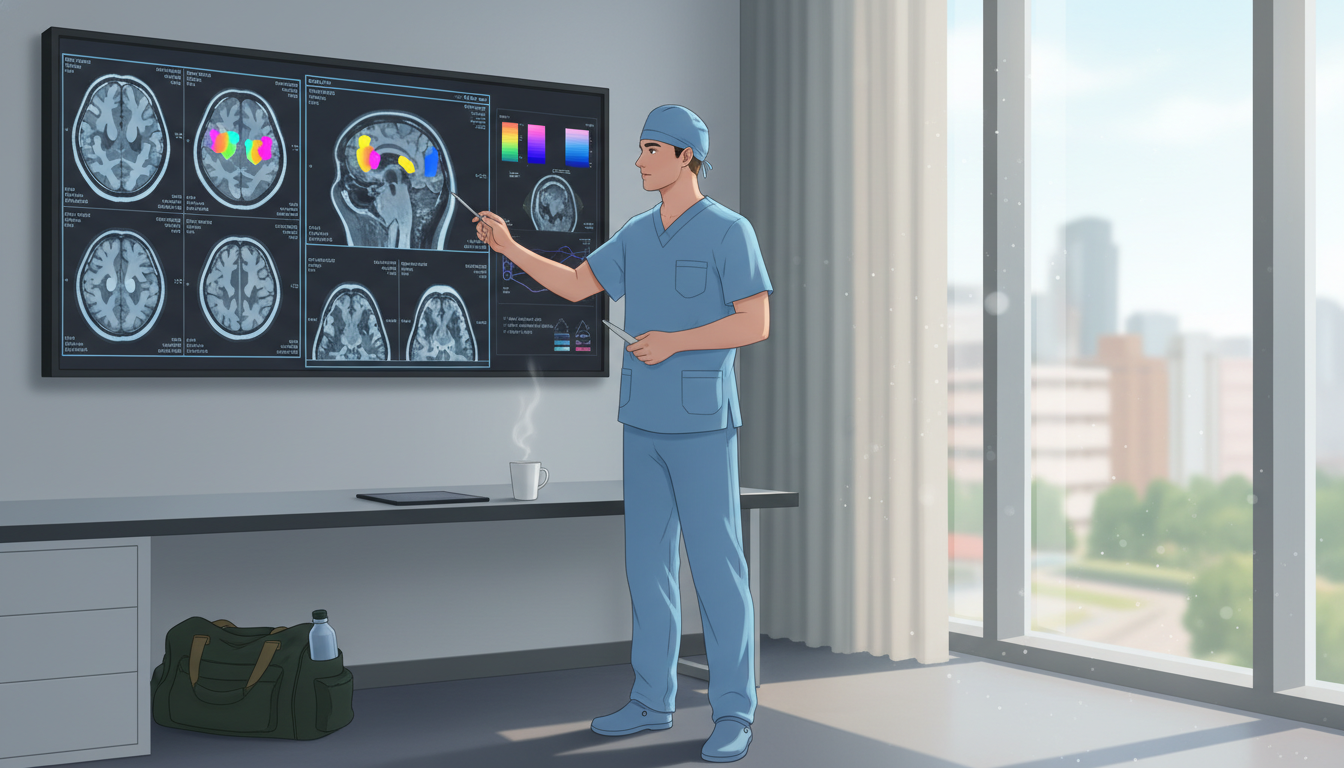
Nuclear medicine sits at the intersection of radiology, oncology, cardiology, and endocrinology. It is image‑centric but also highly clinical and physiologic, relying on radiopharmaceuticals to assess organ function and detect disease.
From a work-life balance standpoint, nuclear medicine is often grouped among the most lifestyle‑friendly specialties, especially compared with acute, procedure-heavy or inpatient disciplines.
Core Features That Support Work-Life Balance
Predictable Daytime Schedule
- Most nuclear medicine departments operate during business hours: roughly 7:30/8:00 am to 4:30/5:30 pm.
- Outpatient imaging (thyroid scans, bone scans, PET/CT, SPECT, cardiac perfusion scans) forms the majority of the workload.
- Many programs have minimal in-house night coverage; urgent after-hours studies are relatively few compared to CT, MRI, or emergency radiology.
Limited Overnight and Weekend Call
- Nuclear medicine call is often:
- Home call rather than in-house.
- Primarily for rare emergency scans (e.g., GI bleed, pulmonary perfusion scans in specific situations, some SPECT).
- Many residents report few true nighttime emergencies, especially at community or smaller academic centers.
- Weekend work mostly involves:
- Reading backlog of PET/CT or scheduled inpatient scans.
- Occasional call for emergent cases.
- Overall, nuclear medicine call intensity tends to be lower than internal medicine, surgery, OB/GYN, or emergency medicine.
- Nuclear medicine call is often:
Procedure Load vs. Cognitive Work
- Compared to interventional radiology or surgical specialties, nuclear medicine has:
- Fewer high‑risk, time‑sensitive procedures.
- More cognitive interpretation of images and correlation with clinical data.
- There are still hands‑on elements (thyroid therapy, some joint injections, radioembolization teamwork, etc.), but the time pressure is generally lower.
- Compared to interventional radiology or surgical specialties, nuclear medicine has:
Lower Direct Patient Care Stress
- Nuclear medicine is less focused on continuous bedside management:
- Fewer direct patient encounters compared to internal medicine, pediatrics, or surgery.
- Many interactions are brief: consent, explanation of procedure, or therapy visits.
- Emotional toll from acute emergencies or end‑of‑life care is less intense than in ICU or ER specialties.
- This reduced acute stress often translates into better mental health and less burnout risk.
- Nuclear medicine is less focused on continuous bedside management:
Caveats for Non-US Citizen IMGs
For a non-US citizen IMG, lifestyle alone cannot be the only deciding factor. You also must factor in:
- Training path length (especially if coming from abroad with prior training).
- Visa feasibility (J‑1 vs H‑1B).
- Job market and employability after training (especially if limited by visa type).
- How nuclear medicine interacts with board certification and whether combined pathways (e.g., DR + NM) are more marketable.
These additional layers may affect whether the objectively good work-life balance translates into a good personal work‑life balance and long‑term security for you.
Training Pathways and Workload: What Daily Life Looks Like
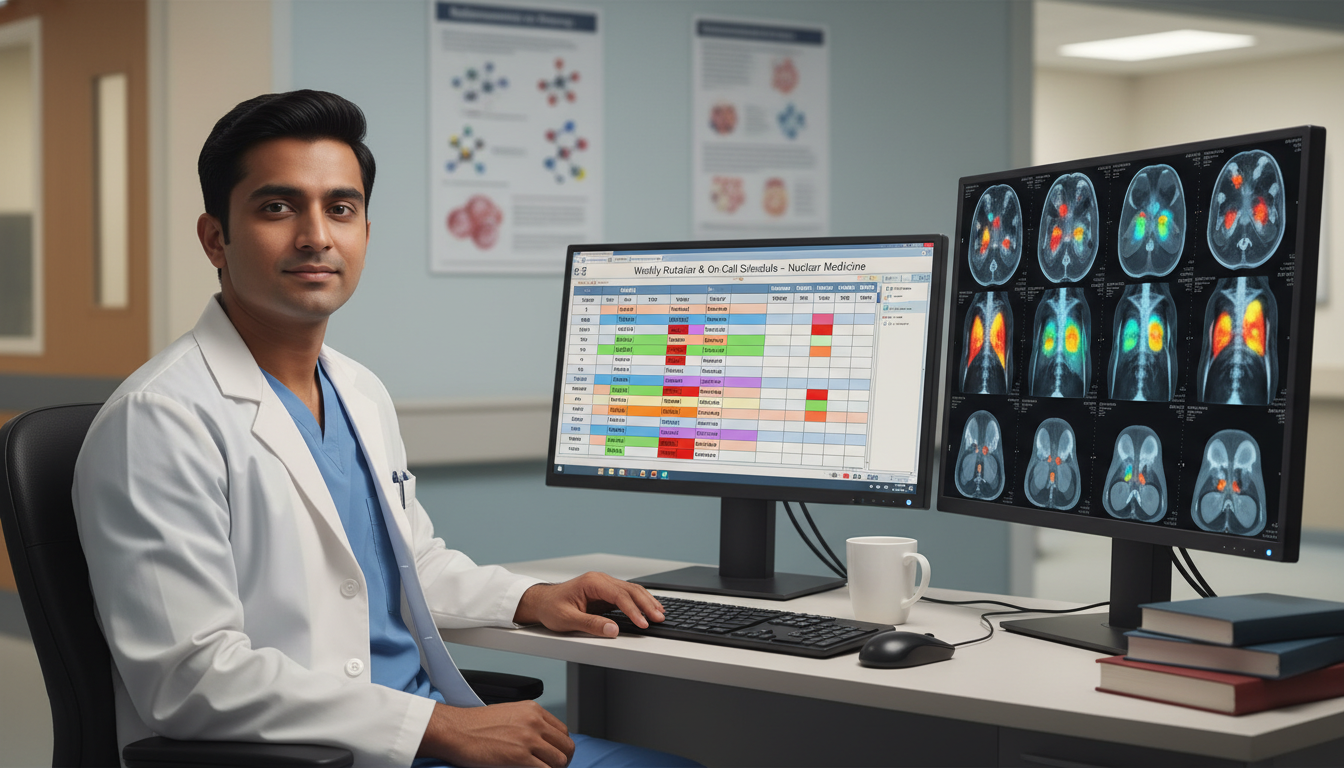
The nuclear medicine residency (or fellowship, depending on the route) you choose will strongly influence your day-to-day residency work life balance. Understanding pathways can help you predict your schedule and stress levels.
Main Pathways into Nuclear Medicine
Direct Nuclear Medicine Residency (ACGME-accredited)
- Historically 3 years after at least 1 post‑graduate clinical year (PGY‑1), but structures can vary.
- Some positions are categorical (PGY‑1 included), others advanced (start at PGY‑2).
- Often less competitive than diagnostic radiology, especially in smaller programs.
- Workload:
- Mostly nuclear medicine rotations.
- Possible rotations in radiology, oncology, endocrinology, or cardiology.
- For a non-US citizen IMG:
- Fewer programs offer H‑1B sponsorship; J‑1 is more common.
- Some institutions may prefer applicants who already have US clinical experience.
Diagnostic Radiology (DR) + Nuclear Medicine
- Pathway: 4-year DR residency plus subspecialty nuclear medicine or nuclear radiology fellowship.
- Some DR residencies have strong integrated nuclear medicine training, enough for ABR + ABNM dual certification in certain structures.
- Work-life balance:
- During DR residency: more intense (night float, ED call, greater imaging volume).
- During a dedicated NM fellowship year: lifestyle generally improves.
- For non-US citizen IMGs:
- DR is more competitive.
- More programs but also more stringent requirements (USMLE scores, research, LORs).
- Stronger job prospects post‑training compared with pure nuclear medicine in many markets.
Other Clinical Background + Nuclear Medicine
- Some physicians come from:
- Internal medicine, cardiology, endocrinology, oncology, etc.
- They may enter nuclear medicine fellowship after primary specialty training.
- This can amplify work-life balance advantages because:
- After a high-intensity primary specialty (e.g., IM residency), switching to NM feels comparatively lighter.
- Visa dynamics depend on your earlier training pathway.
- Some physicians come from:
Typical Daily Schedule in Nuclear Medicine Residency
Example of a typical academic nuclear medicine resident day:
- 07:30–08:00: Arrive, review overnight or early morning studies, check schedule.
- 08:00–09:00: Protocol discussion, teaching conference, or case review with attending.
- 09:00–12:00: Image reading (bone scans, thyroid scans, PET/CT, SPECT), writing preliminary reports, reviewing with faculty.
- 12:00–13:00: Noon conference, tumor board, or lunch.
- 13:00–16:30: Continue reading studies, supervise or observe radiopharmaceutical administration, participate in multidisciplinary meetings.
- 16:30–17:30: Wrap up reports, finalize dictations, call referring physicians when needed.
Differences by training environment:
- Large academic center:
- Higher volume, more complex oncologic PET/CT cases.
- More multidisciplinary meetings (tumor boards).
- More research opportunities but sometimes more non‑clinical time demands.
- Community/university-affiliated hospital:
- Moderate volume, more routine studies.
- Often more predictable day length with fewer late-staying days.
Duty Hours and ACGME Compliance
Nuclear medicine residencies must follow ACGME duty hours rules:
- Max 80 hours per week, averaged over 4 weeks.
- Minimum 1 day off in 7, averaged.
- 10 hours off between shifts recommended.
In practice:
- Most nuclear medicine residents report far fewer than 80 hours/week, commonly:
- 45–55 hours/week in many programs.
- Occasionally 60+ hours during busy PET/CT cycles or while covering multiple sites.
For a non-US citizen IMG, whose stress may also include immigration paperwork, financial pressure, and family separation, the comparatively lighter duty hours can be a major advantage for maintaining personal well‑being.
Call, Weekends, and Realistic Lifestyle Expectations
To judge whether nuclear medicine is truly a lifestyle residency, it’s important to look specifically at call structures and weekend responsibilities.

Call Patterns in Nuclear Medicine
Typical call responsibilities might include:
- Home call:
- Resident carries a pager or phone.
- Rarely called in at night except at major tertiary centers with specialized emergency services.
- Weekend call:
- Coverage for scheduled inpatient scans that must occur on weekends.
- Reading scans remotely (if allowed) or coming in for several hours.
- Some programs use “short call” or “day call” systems on weekends.
Comparisons:
- Compared with internal medicine or surgery:
- Much less frequent 24‑hour in-house calls or night float.
- Fewer consecutive long shifts.
- Compared with diagnostic radiology:
- Often less volume and less intense overnight ED imaging load.
- Some DR programs have dedicated night float blocks; pure NM residencies may not.
Factors That Can Increase Workload
Not every nuclear medicine program offers an equally easy lifestyle. Work‑life balance may be affected by:
- Hybrid responsibilities:
- Some residents rotate on radiology call, not just nuclear medicine.
- If your NM program is closely integrated with DR, you may share ED call or night shifts.
- PET/CT volume:
- High‑volume cancer centers can have heavy reading loads and strict turnaround expectations.
- More PET/CT + more oncology = intellectually demanding but sometimes more mentally draining.
- Staffing shortages:
- Limited faculty or technologists may push more tasks onto residents.
- In smaller programs, you might have broader responsibilities (scheduling, QA checks, radiation safety tasks).
For a non-US citizen IMG, it is especially important to ask targeted questions during interviews:
- “How is call structured for nuclear medicine residents?”
- “Are residents ever pulled to cover general radiology or other services?”
- “On average, how many weekends per month does a resident work?”
- “What is the usual weekly hour range on typical rotations?”
These concrete questions help you evaluate realistic work-life balance instead of relying on generalized reputation.
Visa, Job Market, and Long-Term Lifestyle
Many foreign national medical graduates prioritize lifestyle, but long‑term balance also depends on career stability and immigration strategy.
Visa Considerations (J‑1 vs H‑1B)
For a non-US citizen IMG, the two main visas during residency/fellowship are:
J‑1 Visa (ECFMG-sponsored)
- Most common for residency.
- Requires 2-year home-country return or a J‑1 waiver after training.
- J‑1 waiver jobs are typically:
- In underserved areas.
- More common in primary care, psychiatry, and hospitalist roles than in small subspecialties like nuclear medicine.
- Implication:
- If you train solely in nuclear medicine, you may struggle to find a J‑1 waiver position in NM alone.
- You may need to combine NM with something more employable (e.g., internal medicine + NM, DR + NM) or plan a different immigration path.
H‑1B Visa
- Allows dual intent (immigration intent).
- No 2-year home-country return requirement.
- Less commonly offered for small or less-resourced programs due to cost and complexity.
- Many nuclear medicine-only residencies do not sponsor H‑1B; large academic centers sometimes do.
Lifestyle implications:
- If you complete training but then face limited job options due to visa, you might need to accept:
- Positions with less desirable locations.
- Jobs combining other clinical duties.
- Additional training (e.g., DR residency after NM) to diversify your profile.
- These changes can prolong the period of lower salary and higher duty hours, delaying the “lifestyle dividend” you hoped for.
Job Market for Nuclear Medicine
The job market for pure nuclear medicine physicians in the US is:
- Narrower than for diagnostic radiology or internal medicine.
- Stronger in:
- Large academic centers.
- Cancer centers with high PET/CT volumes.
- Organizations that value subspecialized imaging expertise.
For non-US citizen IMGs:
- Academic centers more commonly sponsor H‑1B or even pathways to green card, but competition is higher.
- Private practice groups may prefer DR‑trained radiologists who can read general imaging plus nuclear studies.
Practical interpretation for work-life balance:
- Pure NM may provide excellent residency work life balance, but if it limits your employability, you might have to:
- Relocate frequently.
- Accept jobs with mixed responsibilities (often increasing workload).
- Pursue additional training, delaying stable lifestyle and financial security.
Many foreign-trained doctors therefore combine nuclear medicine with another specialty:
- Internal medicine + NM: Can work as hospitalist plus nuclear medicine.
- Diagnostic radiology + NM: Most flexible; can work in general radiology and specialize in NM/PET.
This mixed approach:
- Increases job security and bargaining power.
- Allows you to negotiate better call schedules and maintain lifestyle later.
- But adds years of training and potentially heavier duty hours during those extra years.
Financial and Family Considerations
For a non-US citizen IMG, work-life balance includes financial and family realities:
- Longer training = more years with resident salary (modest, especially if supporting family or sending money home).
- If pursuing DR + NM:
- You accept heavier work during DR years in exchange for long‑term stability.
- But your future earnings potential is higher and job market broader.
- Family relocation:
- Visa‑tied employment may restrict choice of location.
- Your partner’s visa and employment options may be limited.
Even if nuclear medicine’s day‑to‑day workload is lighter, visa and market pressures can add significant psychological stress. That makes it crucial to think not just about hours in residency, but the entire 10–15 year career arc.
How to Evaluate Programs for Lifestyle as a Non-US Citizen IMG
When applying to nuclear medicine residency or fellowship positions, your goal is to balance:
- Day-to-day lifestyle (duty hours, call).
- Visa support.
- Long-term career viability.
Here’s how to assess programs systematically.
1. Research Visa Policies Up Front
Before you invest in applications:
- Check program websites and FREIDA for:
- Visa types accepted (J‑1 only, J‑1 + H‑1B, or none).
- Email the program coordinator if unclear:
- “Does your program sponsor H‑1B for residents/fellows?”
- “Have you had non-US citizen IMGs in the last 5 years? On what visa types?”
Programs used to sponsoring foreign national medical graduates:
- Are more likely to handle administrative tasks smoothly.
- May be more understanding of your unique stressors.
2. Ask Lifestyle-Focused Questions at Interviews
During interviews or virtual open houses, ask questions that reveal true residency work life balance:
- “On average, how many hours per week does a nuclear medicine resident work on service?”
- “How is call structured—home vs in-house, weeknights vs weekends?”
- “How many weekends per month are typically worked?”
- “Do residents have any responsibilities on other imaging services or in general radiology call?”
- “What supports are in place for resident wellness and burnout prevention?”
Also ask about flexibility:
- Ability to schedule vacations.
- Accommodation for family emergencies or visa appointments.
- Flexibility for religious observances if relevant.
3. Evaluate Faculty Culture and Resident Morale
Work-life balance is not just about rules; it’s also about culture:
- During interview day, pay attention to:
- How attendings describe residents (respectfully or dismissively).
- Whether residents appear exhausted or reasonably relaxed.
- Whether there is collegial interaction or a tense hierarchy.
- Ask residents privately:
- “Do you feel the attendings respect duty hours?”
- “When the service is busy, do you regularly stay significantly late?”
- “Can you realistically maintain hobbies or family time?”
Programs that attract and retain diverse IMGs often have:
- More inclusive culture.
- Better appreciation of cross-cultural challenges and family separation.
- A track record of supporting residents through visa renewals.
4. Consider the Broader Training System
Finally, think beyond the single nuclear medicine program:
- Are there combined pathways that suit you?
- NM + DR.
- NM fellowship after IM or another specialty.
- Does the institution have:
- Cancer centers, research institutes, or strong radiology departments that could become future employers?
- An institution-level reputation that will help you in the job market later?
The optimal strategy for many non-US citizen IMGs is a balanced approach:
- Choose a pathway that:
- Delivers good day-to-day lifestyle during at least some years (NM-heavy periods).
- Preserves flexibility and employability (e.g., DR + NM or IM + NM).
- Fits within your visa options and long‑term plans (e.g., J‑1 waiver feasibility, H‑1B sponsorship, green card strategy).
Bottom Line: Is Nuclear Medicine a Good Lifestyle Choice for Non-US Citizen IMGs?
For a non-US citizen IMG, nuclear medicine can indeed be one of the most lifestyle-friendly specialties during training:
- Generally moderate duty hours (often 45–55/week).
- Limited overnight call and relatively rare emergencies.
- Cognitive, image-based work with lower acute bedside stress.
- Good environment for academically inclined physicians who enjoy physiology, oncology, and imaging.
However, your final decision should weigh:
- Visa realities:
- J‑1 waiver positions in pure nuclear medicine are limited.
- H‑1B sponsorship is feasible mainly at certain academic centers.
- Job market:
- Narrower for pure NM vs DR or IM.
- Combining NM with DR or another clinical specialty significantly improves employability but adds years and may temporarily reduce lifestyle.
- Personal circumstances:
- Financial obligations.
- Family location and support.
- Long‑term goals (academic vs private practice, US vs returning home).
If your priority is predictable working hours and intellectual, non-procedural work, and you plan your visa and career path carefully, nuclear medicine can offer a very favorable work-life balance, particularly compared with many inpatient or procedural specialties.
FAQs: Work-Life Balance in Nuclear Medicine for Non-US Citizen IMGs
1. Is nuclear medicine residency easier than diagnostic radiology in terms of lifestyle?
Generally yes during the years you are focused on NM alone. Nuclear medicine usually has:
- Less night float.
- Fewer emergency cases.
- Lower imaging volume and pressure than ED radiology. However, if NM training is integrated into a diagnostic radiology residency, your DR years will still involve heavier call and higher duty hours. For long‑term career security, many non-US citizen IMGs accept this tradeoff.
2. Can I get good work-life balance in nuclear medicine on a J‑1 visa?
During residency/fellowship, yes—most nuclear medicine programs provide reasonable hours regardless of visa type. The issue appears after graduation:
- J‑1 waiver nuclear medicine jobs are limited.
- You may need to accept roles in different specialties or underserved regions, which may not have the same lifestyle advantages. Planning early for waiver options, combined training, or alternate immigration routes is crucial.
3. Do non-US citizen IMGs face discrimination or barriers in nuclear medicine programs?
Most reputable programs value IMGs and focus on qualifications. Barriers are more often structural:
- Some programs do not sponsor visas at all or only sponsor J‑1.
- H‑1B sponsorship may be limited.
- Lack of familiarity with your international training may require extra explanation and strong letters of recommendation. Choosing programs with a history of training foreign national medical graduates improves your chances of a supportive environment.
4. What steps can I take now to maximize my future lifestyle if I want nuclear medicine?
- Strengthen your CV to access DR + NM or NM positions at strong centers (USMLE, research, observerships).
- Early in your planning, clarify your visa strategy (J‑1 vs H‑1B potential).
- During interviews, prioritize programs with:
- Reasonable duty hours.
- Transparent call structure.
- Supportive faculty.
- Experience training non-US citizen IMGs.
- Think long-term: if necessary, consider dual training to ensure employability, even if it means temporarily accepting a more intense residency for a better lifestyle later.