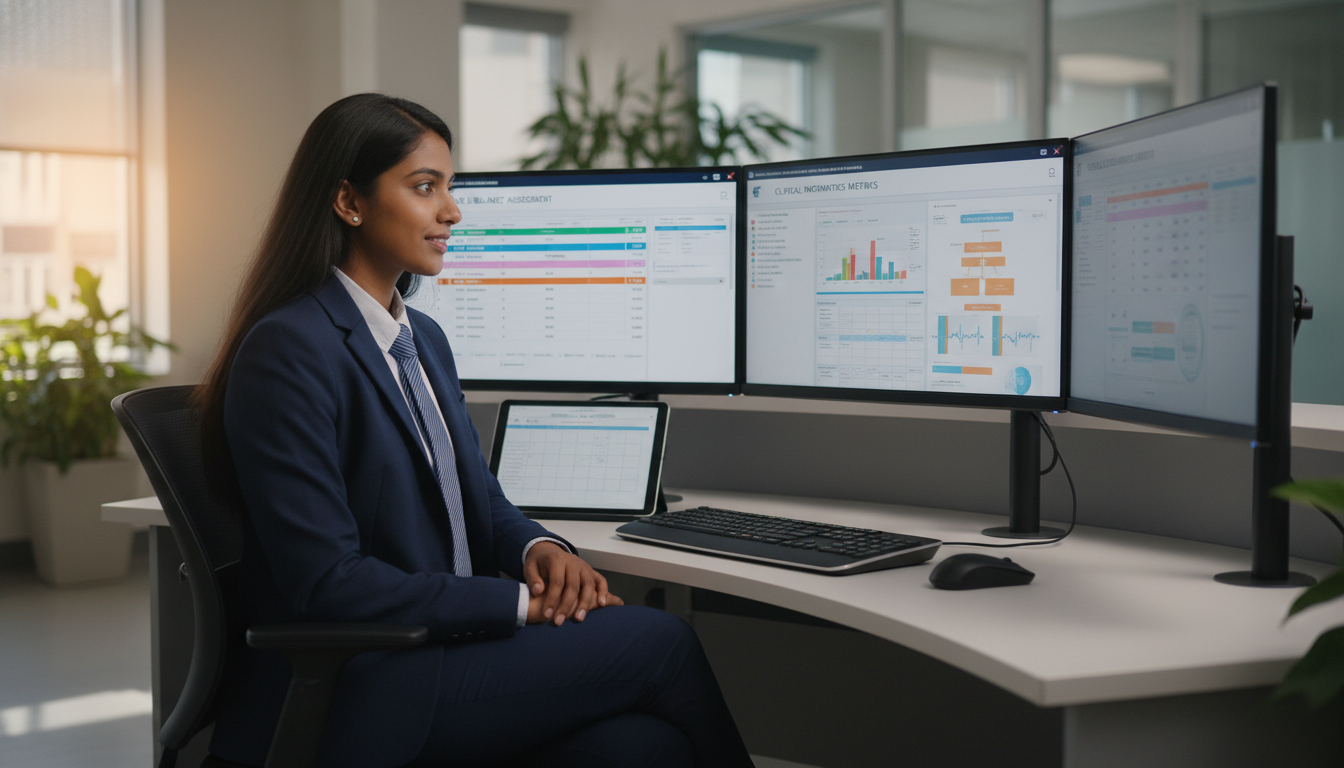
Clinical informatics is often described as a “lifestyle residency” and a “thinking person’s subspecialty,” but what does that really mean for a US citizen IMG looking ahead to fellowship, board certification, and long‑term career? This article breaks down work‑life balance in clinical informatics from the perspective of an American studying abroad who wants a stable, tech‑focused, patient‑impactful career without sacrificing personal life.
Understanding Clinical Informatics as a Career Path
Clinical informatics is not a standalone residency (yet); in the United States it is:
- A board‑certified subspecialty (ABPM and ABPath)
- Pursued after a primary clinical residency (e.g., Internal Medicine, Pediatrics, EM, Pathology, Family Medicine, etc.)
- Typically via a 2‑year ACGME‑accredited clinical informatics fellowship
For a US citizen IMG, this means:
- You still need to match into a primary residency first.
- Your work‑life balance will evolve in three stages:
- Primary residency (where duty hours and lifestyle vary by specialty)
- Clinical informatics fellowship
- Post‑training career in informatics / health IT leadership
Understanding work‑life balance in clinical informatics requires looking at all three phases, not just the fellowship.
Stage 1: Choosing a Base Specialty that Supports Future Lifestyle
Before you reach a clinical informatics fellowship, you must complete an ACGME‑accredited residency. For a US citizen IMG, the base specialty you choose will strongly shape:
- Your day‑to‑day duty hours
- The amount of clinical work you maintain after fellowship
- Your long‑term lifestyle flexibility
Most Lifestyle-Friendly Base Specialties for Future Informaticians
Clinical informatics attracts residents from many fields, but some are more lifestyle‑friendly and IMG‑accessible than others. As a US citizen IMG, your odds are typically stronger in:
Internal Medicine (IM)
- Common home base for informaticians
- Wide range of academic and community jobs with informatics needs
- Work‑life balance: Variable, but hospitalist or outpatient IM can be quite manageable post‑training
Family Medicine (FM)
- Strong focus on outpatient workflows and population health
- Good match with health IT training (panel management, registries, chronic disease tools)
- Often a more predictable schedule (daytime clinics, fewer nights than hospital‑heavy specialties)
Pediatrics
- Emphasis on quality improvement, preventive care, immunization registries
- Many children’s hospitals have advanced EHR and analytics teams
Pathology
- Deeply intertwined with laboratory information systems, digital pathology, and decision support
- Often considered a lifestyle residency with less in‑house overnight call
Other specialties (Emergency Medicine, Anesthesiology, Surgery) also feed into clinical informatics but can be more demanding during residency and sometimes post‑training.
Work-Life Balance Considerations When Picking Your Base Specialty
As a US citizen IMG, you should evaluate each potential residency based on:
Duty hours reality vs. on-paper rules
- ACGME caps at 80 hours/week averaged over 4 weeks, but culture varies.
- Ask current residents:
- “What is your typical weekly schedule on your busiest rotations?”
- “Do people feel the program respects duty hours or pushes the limits?”
Night call and inpatient burden
- More inpatient rotations = more nights, weekends, and stress.
- Outpatient heavy programs often have better residency work life balance.
IMG-friendliness vs. lifestyle
- Some of the most lifestyle-friendly specialties (like Dermatology or Radiology) are highly competitive and less IMG‑friendly.
- IM, FM, and Pathology can offer a solid blend of matchability and lifestyle.
Informatics culture
- Does the program have:
- An EHR optimization committee?
- Residents involved in QI and IT projects?
- Faculty with informatics or data science interest?
- Does the program have:
If your long‑term goal is clinical informatics, you want a base specialty that is:
- Reasonably lifestyle‑friendly, and
- Supports informatics projects during residency (to help you match into a clinical informatics fellowship later).
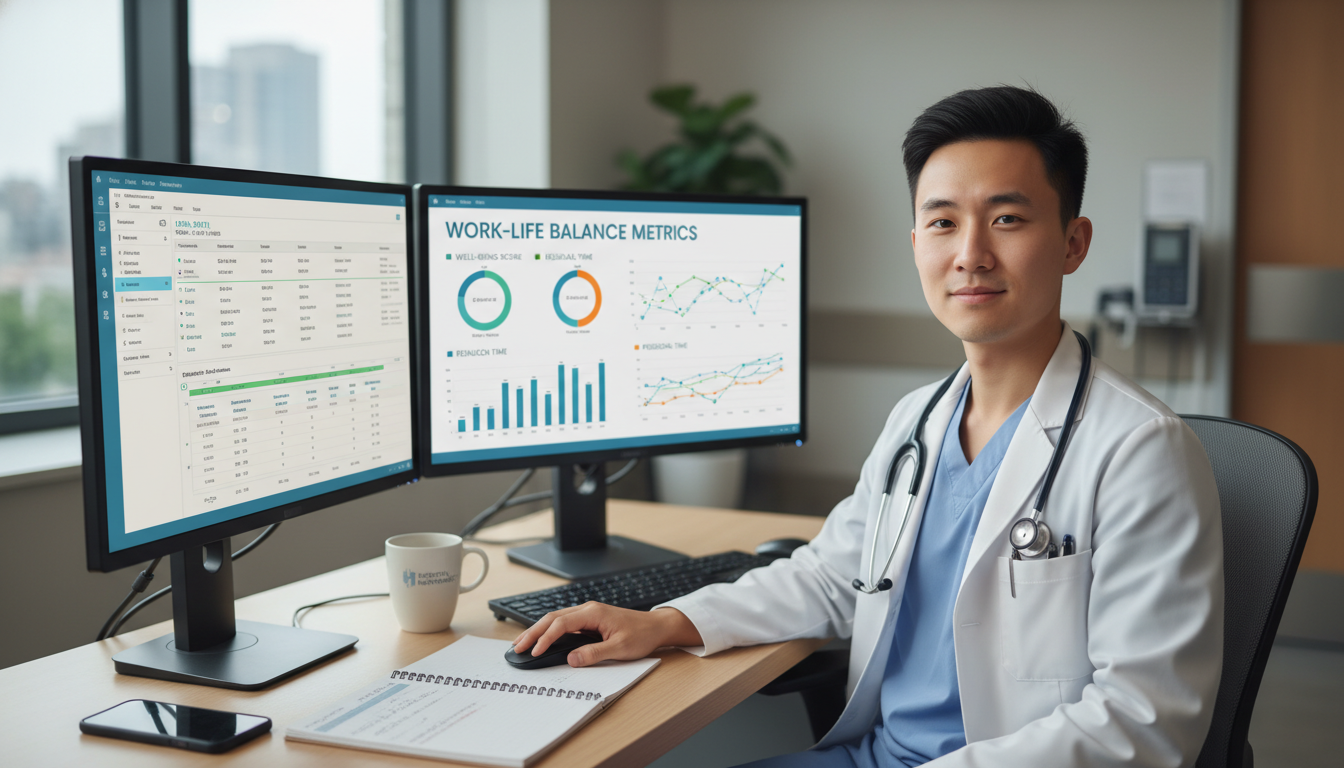
Stage 2: Work-Life Balance During a Clinical Informatics Fellowship
Once you complete residency and match to a clinical informatics fellowship, the day-to-day feel of your work changes dramatically. You transition from mostly direct patient care to a mix of:
- Project work and meetings
- Analytics and EHR configuration
- Limited clinical shifts (to maintain your primary specialty skills and board certification)
Typical Schedule and Duty Hours in a Clinical Informatics Fellowship
Unlike many fellowships heavily dominated by clinical time (e.g., cardiology, GI), clinical informatics fellowships are largely non‑clinical. Approximate structure (varies by program):
60–80% Informatics / IT / academic work
- EHR build and configuration projects
- Clinical decision support design
- Data analytics (quality metrics, dashboards, outcomes research)
- Participation in hospital committees (e.g., EHR governance, clinical pathways)
- Teaching residents and students
20–40% Clinical work
- Continuity clinics or inpatient weeks in your base specialty
- Duty hours for clinical rotations are still governed by ACGME rules, but your informatics time is generally more flexible and office‑like.
In practice, many fellows describe:
- Daily start: 8:00–9:00 AM
- Daily end: 4:30–6:00 PM
- Weekends: Usually off from informatics work; occasional clinical or call shifts depending on your base specialty
- Nights: Rare for informatics activities; any overnight work is linked to your clinical duties
Why Clinical Informatics Is Often Considered a Lifestyle Fellowship
For a US citizen IMG used to long residency hours, a clinical informatics fellowship often feels like a lifestyle upgrade:
Predictable daytime schedule
Most meetings and project work are during business hours.Less physical exhaustion
More laptop and meeting work, less standing at the bedside or in the OR for long stretches.Clear project timelines rather than hour‑by‑hour clinical crises
Workload can still be heavy, but the stress is more cognitive and political (stakeholders, timelines) than life‑or‑death clinical emergencies.Hybrid/remote flexibility (at some institutions)
Many informatics tasks can be done remotely:- Data analysis
- Documentation for regulatory requirements
- Building and testing EHR tools in non‑production environments
Some programs allow partial remote days, which greatly supports residency work life balance in this phase.
Stress Points: Where Work-Life Balance Can Still Be Challenging
Clinical informatics is not a stress‑free zone. Common challenges include:
Go-live periods and major upgrades
- New EHR launches, system upgrades, or module rollouts can mean:
- Early mornings, late evenings, or weekend coverage
- High email volume and urgent troubleshooting
- These are temporary but intense spikes in workload.
- New EHR launches, system upgrades, or module rollouts can mean:
Stakeholder conflict
- Clinicians, administrators, IT, and vendors may have conflicting priorities.
- Navigating politics, expectations, and user frustration can be mentally draining.
Dual identity tension
- As both clinician and “IT person,” you may be pulled in multiple directions.
- You might feel responsible for both keeping patients safe and keeping the EHR usable.
However, compared to most primary residencies and traditional fellowships, overall duty hours are generally lower and more controllable in clinical informatics.
Practical Tips for Protecting Work-Life Balance as a Fellow
Clarify expectations early
- Ask your program director:
- Expected weekly hours, including clinical work
- Weekend and evening coverage during go‑lives
- Flexibility for remote work
- Ask your program director:
Time‑box your day
- Use project management tools (e.g., Outlook calendar blocks, Trello, Asana) to:
- Cap meeting hours
- Reserve “deep work” blocks for focused tasks
- Protect personal time in the evenings
- Use project management tools (e.g., Outlook calendar blocks, Trello, Asana) to:
Establish boundaries with email and messaging
- Disable push notifications after a certain hour unless you are on-call for a go-live or urgent issue.
- Clarify with your team when “ASAP” truly means tonight vs. tomorrow morning.
Leverage your dual role for efficiency
- You understand both clinical workflows and IT constraints; use that insight to propose realistic solutions and timelines, reducing last‑minute crises.
For a US citizen IMG who worked incredibly hard to secure a residency spot, the relatively structured and human‑scale duty hours of a clinical informatics fellowship can feel like a welcome recalibration.
Stage 3: Long-Term Lifestyle in Clinical Informatics Careers
After fellowship, you will likely shape a hybrid career with varying degrees of:
- Direct patient care
- Informatics leadership and implementation
- Data analytics, research, and quality improvement
- Health IT training and education
Your long‑term residency work life balance (now truly “attending life balance”) depends on how you structure this mix.
Common Career Models and Lifestyle Impact
Clinician + Informatics Leader (Most Common)
- Example:
- 0.5 FTE clinical (hospitalist, outpatient IM, FM clinic, etc.)
- 0.5 FTE informatics (associate CMIO, site lead, EHR champion)
- Lifestyle:
- Clinical weeks can still be busy, but your overall schedule tends to be more controllable than 1.0 FTE purely clinical.
- Informatics days are mainly office hours with occasional early/late meetings.
- Example:
Full-Time Informatics / Health IT Role
- Titles: Clinical Informaticist, CMIO, Associate CMIO, Director of Clinical Informatics
- Little or no regular clinical practice
- Lifestyle:
- Hours closer to corporate jobs: 40–50 hrs/week on average.
- On‑call for major system issues or go-lives.
- Travel to conferences and vendor meetings (often a plus for those who enjoy it).
Academic Clinical Informatics
- Mix of:
- Teaching med students/residents about EHR and data literacy
- Research on clinical decision support, AI in medicine, workflow optimization
- Limited clinical practice
- Lifestyle:
- Flexibility in research time and writing schedule
- Periodic grant deadlines or paper submissions may temporarily intensify workload
- Many academic informaticians enjoy higher autonomy over their daily schedule.
- Mix of:
Industry / Vendor / Health Tech Roles
- Working for an EHR company, digital health startup, or consulting firm
- Lifestyle:
- Often fully remote or hybrid
- Hours can be typical corporate (40–50 hrs/week), but some startups may push longer
- Less traditional “call,” but deadlines and product launches can be intense
For a US citizen IMG, these paths often provide much more predictable and family‑compatible schedules than front-line clinical work alone, especially in hospital‑based specialties.
Pay vs. Lifestyle Trade-offs
- Many informatics roles, especially where you are part‑time clinical, can provide competitive or higher total compensation than purely clinical roles, especially as you advance to leadership.
- Some full‑time academic or research-heavy roles may pay less than high‑volume clinical positions but offer more flexibility and satisfaction.
- Industry and consulting roles can be highly lucrative, but your schedule and travel expectations may vary.
The key is that you usually have more knobs to turn:
- Increase clinical FTE for more income but less lifestyle.
- Increase informatics/academic FTE for more schedule control and intellectual variety.

Unique Considerations for US Citizen IMG in Clinical Informatics
Being a US citizen IMG or American studying abroad adds a few extra layers when thinking about long‑term residency work life balance and career strategy.
1. Match Strategy: Balancing IMG‑Friendliness and Informatics Potential
Choose a base specialty where:
- US citizen IMG applicants have a realistic chance (IM, FM, Pathology, Peds are common)
- You can access informatics experiences (EHR committees, QI projects, data analysis)
Prioritize programs that:
- Use a modern EHR (Epic, Cerner, Meditech, etc.)
- Have faculty involved in:
- Clinical informatics
- Quality improvement
- Population health analytics
- Offer scholarly project time
This balance increases your odds of:
- Matching into residency as a US citizen IMG, and
- Building a strong application for a clinical informatics fellowship.
2. Early Exposure to Health IT Training
Even before fellowship, you can build your portfolio:
Learn basic data and IT skills:
- SQL or basic database querying
- Introductory statistics and R or Python
- Excel for basic analytics and dashboards
Get involved in:
- EHR optimization and user feedback projects
- Quality improvement committees
- Development or refinement of clinical order sets, pathways, or documentation templates
This will:
- Make your day‑to‑day clinical work more interesting and impactful
- Signal to program directors and fellowship directors that you’re serious about informatics
3. Visa Is Less of a Barrier, but You Still Compete
As a US citizen IMG, you avoid major visa hurdles, which is a huge advantage. However:
- Clinical informatics fellowship spots are still limited and competitive.
- Many programs prefer candidates from their own or closely affiliated residencies.
Your strategy:
- Stand out with concrete informatics projects:
- “I helped redesign the admission order set for heart failure, reducing clicks by 20% and improving documentation compliance.”
- Show that you understand and care about:
- Physician burnout due to poor EHR usability
- Safe, effective clinical decision support
- Data‑driven quality improvement and population health
This combination of clinical credibility plus technical/quality interest is exactly what programs seek.
4. Long-Term Stability and Flexibility
Compared to purely clinical roles, clinical informatics offers several advantages for a US citizen IMG concerned about lifestyle and job security:
Multiple employment sectors:
- Academic medical centers
- Community hospitals and health systems
- EHR vendors and health tech startups
- Public health agencies and payers
Geographic flexibility:
- Many informatics roles, especially industry, can be remote or hybrid, broadening your options worldwide.
Resilience to automation:
- You are part of the team deciding how AI and automation are implemented, not simply being replaced by them.
This diversification can protect your lifestyle and career stability over decades.
Actionable Steps to Optimize Work-Life Balance on the Clinical Informatics Path
For a US citizen IMG planning this path, here’s how to align lifestyle and career at each stage.
During Medical School (Especially If You’re an American Studying Abroad)
Seek US clinical experience (USCE) in:
- Internal Medicine, FM, Pediatrics, or Pathology
- Institutions with strong EHR infrastructures
Ask attendings about:
- Their experiences with the EHR (pain points and success stories)
- Opportunities students can join (QI, EMR configuration pilots)
Take or audit courses in:
- Basic statistics, data science, or health informatics (if available)
- Health systems, quality improvement, or public health
During Residency
Identify and join:
- The EHR optimization committee or a specialty‑specific IT group
- Quality improvement projects that use data dashboards or reports
Track and document:
- Concrete outcomes: decreased clicks, reduced errors, better turnaround time
- Your role: idea generation, testing, feedback gathering, analysis
Protect your work‑life balance by:
- Maintaining good sleep and exercise routines despite duty hours
- Saying “yes” to high-yield informatics projects, but “no” to unrelated commitments that overload your schedule
During Clinical Informatics Fellowship
Clarify expectations on:
- Duty hours, remote work, evening/weekend expectations
- Availability during go‑lives
Build sustainable habits:
- Block personal time on your calendar
- Set reasonable boundaries for after‑hours communication
Develop parallel skills:
- Project management
- Stakeholder communication and negotiation
- Basic programming or advanced analytics (if desired)
These will help you secure higher-autonomy roles later, which further enhances lifestyle flexibility.
After Training
Design your job description intentionally:
- Decide the clinical vs. informatics ratio you want.
- Negotiate for:
- Protected informatics time
- Clear expectations on after-hours support for the EHR
Periodically reassess:
- Burnout levels (from both clinical and informatics sides)
- Career satisfaction, financial goals, and family priorities
Be open to gradual shifts:
- Increase or decrease clinical time
- Move towards more education, research, or industry work as your life evolves
FAQs: Work-Life Balance & Clinical Informatics for US Citizen IMG
1. Is clinical informatics considered a “lifestyle” specialty?
Clinical informatics is a subspecialty rather than a standalone residency, but yes, it is widely viewed as lifestyle‑friendly compared with many other paths. During fellowship and in long‑term roles, your work is largely daytime, office‑based, and project‑oriented, with predictable schedules and fewer overnight emergencies. Intensity spikes can occur around go‑lives and major upgrades, but day‑to‑day duty hours are generally more reasonable than most primary residencies.
2. As a US citizen IMG, will choosing clinical informatics limit my job options?
Generally, no. If anything, clinical informatics can broaden your opportunities beyond pure clinical work by opening doors in:
- Hospital and health system leadership
- Academic centers and research groups
- EHR vendors, health tech, and consulting
- Public health and payer organizations
Your US citizenship removes visa hurdles, and your informatics expertise adds value that many employers seek, especially as health systems invest more in data and digital transformation.
3. Do I still need to work nights and weekends after becoming an informatics specialist?
It depends on your base specialty and job design:
- If you maintain inpatient clinical duties (e.g., hospitalist), you will still have nights and weekends for that side of your work.
- Informatics responsibilities are mostly weekday, daytime, but you may be involved in:
- Occasional weekend go-lives or cutovers
- On‑call rotations for major EHR issues (more common in leadership roles)
However, compared to a full‑time inpatient clinical schedule, many informaticians experience a substantial lifestyle improvement.
4. How can I demonstrate interest in clinical informatics as a student or resident without overloading myself?
Focus on one or two well‑defined projects rather than scattering your efforts:
- Join or start a QI initiative that uses:
- EHR tools (order sets, templates, dashboards)
- Data reports to measure outcomes (admissions, readmissions, documentation compliance)
- Aim for a tangible result:
- Fewer unnecessary alerts
- Improved workflow efficiency
- Reduced documentation time
Document it with:
- A poster, presentation, or brief manuscript
- A concise description for your CV and personal statement
This targeted strategy lets you build a strong clinical informatics story without sacrificing your overall residency work life balance.
By understanding each stage—from base specialty choice through fellowship to long‑term career—you can intentionally build a path in clinical informatics that aligns with both your professional ambitions and your desired lifestyle as a US citizen IMG.