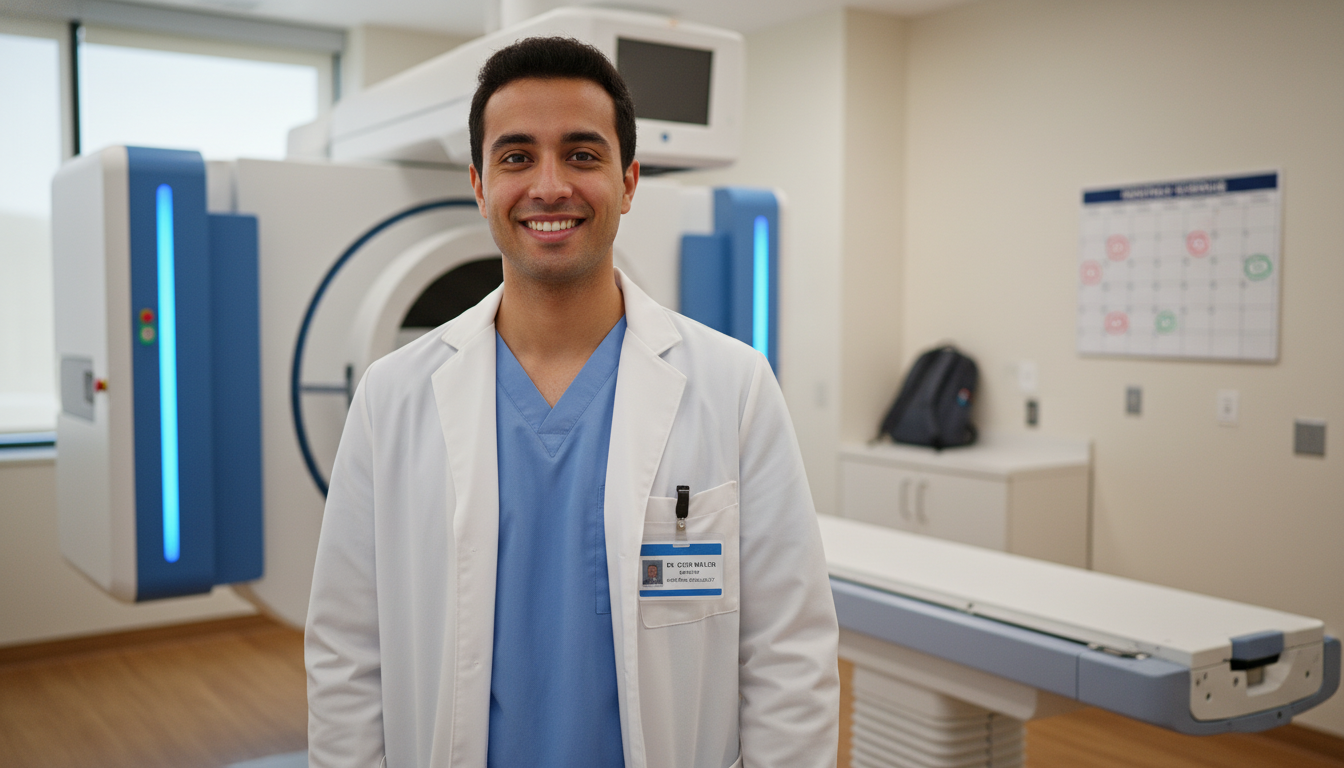
Radiation oncology has a strong reputation as a “lifestyle residency,” but the reality is more nuanced—especially if you are a US citizen IMG or an American studying abroad. Understanding what the work actually looks like, how it varies by program, and where the pressure points are will help you decide if the specialty’s work-life balance truly matches your priorities.
This article provides a detailed work-life balance assessment of radiation oncology residency from the perspective of a US citizen IMG, with a focus on practical, day-to-day realities and strategic planning for the rad onc match.
1. Big-Picture Lifestyle: Is Radiation Oncology Really a “Lifestyle Residency”?
Radiation oncology is often grouped with so‑called “lifestyle residencies.” Compared with many procedural and acute-care specialties, it generally offers:
- More predictable hours
- Less overnight and weekend work
- Fewer medical emergencies
- A patient population managed largely in the outpatient setting
However, “good lifestyle” does not mean easy or low-pressure:
- The cognitive load is high: complex treatment planning, physics concepts, and detailed imaging interpretation.
- Cases can be emotionally heavy: end‑of‑life discussions, palliation, and long-term relationships with cancer patients.
- The job market has been variable, which can add career stress during and after training.
For a US citizen IMG, the lifestyle question intersects with another: Is this specialty worth the risk and effort of matching? Work-life balance is only one dimension; you also need to consider competitiveness, geographic flexibility, and long-term career stability. But in terms of day-to-day life—especially duty hours and schedule control—radiation oncology compares favorably to many other fields.
Typical big-picture advantages:
- Clinic-based workflow: Most care occurs during daytime clinic hours.
- Limited overnight duties: Many programs have no traditional in-house overnight call.
- Predictable patient volume: Scheduled treatments and follow-ups reduce surprise surges.
- Opportunity for structured routines: Easier to maintain exercise, hobbies, and family obligations than in many acute-care specialties.
Common lifestyle challenges:
- Intensity of learning curve: Physics, radiobiology, treatment planning software.
- Documentation and planning demands: Complex contours, plan reviews, and peer-review conferences.
- Emotional fatigue: Long-term relationships with cancer patients, recurrence discussions, terminal illness.
2. Typical Radiation Oncology Resident Schedule & Duty Hours
Understanding the real day-to-day schedule is critical if you’re evaluating lifestyle and residency work life balance. While schedules differ by program, some patterns are common across US training sites.
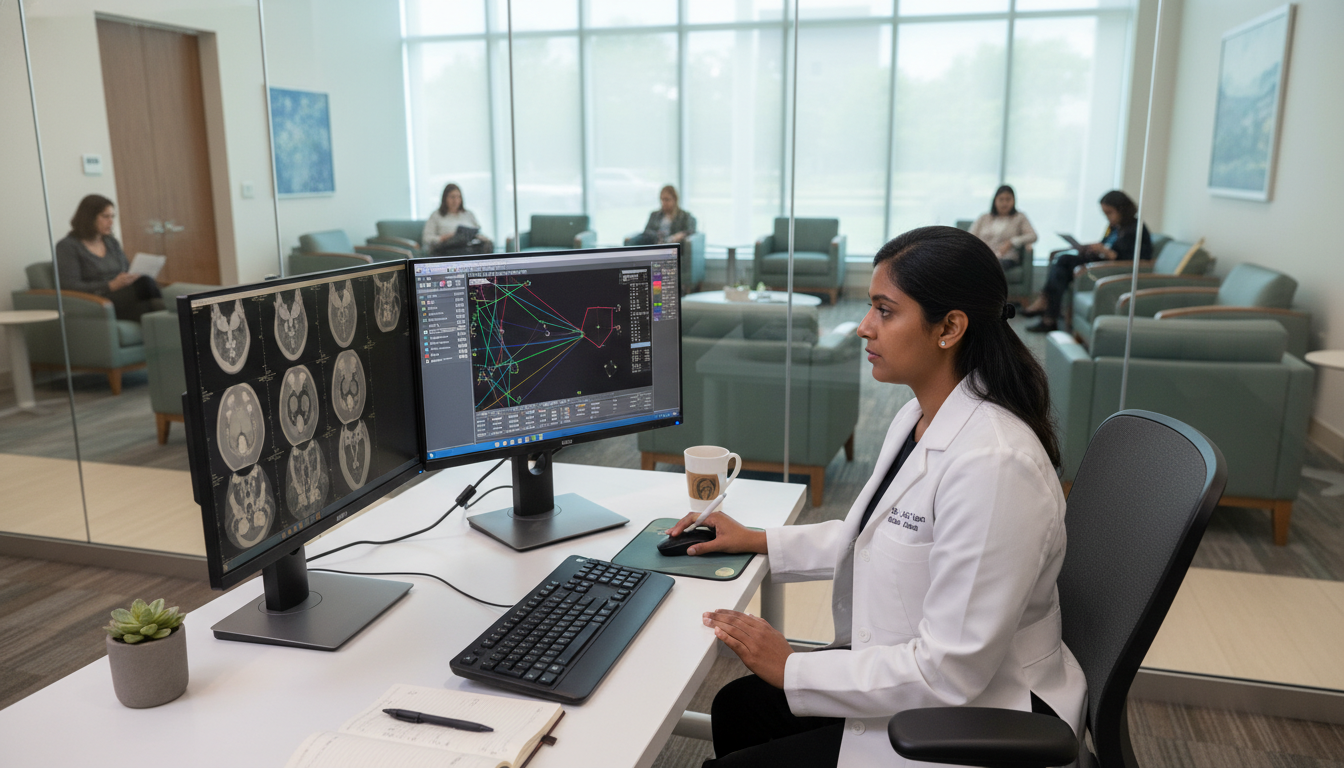
2.1 Core Clinic Day
Most radiation oncology residency days resemble a “clinic job” more than a hospitalist or surgical schedule.
Typical weekday (PGY-3+ rad onc years):
7:30–8:00 am:
- Arrive, review the day’s schedule.
- Check messages from therapists, nurses, or dosimetrists.
- Brief chart pre-review of new patients or on-treatment visits.
8:00–12:00 pm:
- New patient consults and follow-up visits.
- On-treatment visits (OTVs) with patients currently receiving radiation.
- Quick contour edits or plan checks if time permits.
12:00–1:00 pm:
- Lunch + educational conference (didactics, tumor board, physics lecture, or journal club).
- Residents often eat during the session but this is usually predictable and protected.
1:00–4:30/5:30 pm:
- More clinic: additional consults, follow-ups, OTVs.
- Between patients, catch up on notes, order sets, and imaging reviews.
4:30–6:30 pm (variable):
- Treatment planning tasks:
- Contouring target volumes and organs at risk.
- Reviewing and approving plans with attendings.
- Responding to staff questions about patient setups.
- Finish notes and wrap up communication with therapists and nurses.
- Treatment planning tasks:
Most residents leave between 5:00 and 7:00 pm on typical days. Busy services (e.g., high-volume academic centers or large regional cancer centers) may run later, especially when you’re earlier in training and still learning efficiency.
2.2 Duty Hours and ACGME Limits
Radiation oncology programs must follow standard ACGME duty hour policies:
- 80-hour work week, averaged over four weeks
- 1 day off in 7, free of all patient care and educational obligations
- No more than 24 contiguous hours of in-hospital clinical work (though most rad onc programs rarely approach this)
In practice, many rad onc residents work 50–60 hours per week, sometimes less during lighter rotations or research blocks. Heavy rotations or systems issues can push weeks closer to 70 hours, but regularly hitting the full 80 hours is less common than in many surgical or acute-care programs.
2.3 Call and Weekends
One of the main reasons radiation oncology is considered a lifestyle residency is the relative paucity of call.
Common call structures:
- Home call rather than in-house call
- Phone consults from the ED or inpatient teams about palliative radiation, spinal cord compression, brain metastases, or oncologic emergencies
- Occasional weekend rounding on inpatients receiving inpatient radiation or with radiation-related complications
- Some programs may have evening or weekend simulation coverage, but this is often rare and reserved for true emergencies
For many programs:
- Home call is 1 week in 4–6, or a similar rotation.
- Overnight calls may be limited to phone advice and triage, with in-person simulation rarely required.
- Weekend in-person duties (if they exist) are often half-days for rounding or urgent cases.
When comparing the rad onc match to other specialty matches, this lighter call structure is a major lifestyle advantage.
2.4 Research Blocks and Electives
Radiation oncology is highly academic. Many programs offer:
- Dedicated research blocks (3–12 months across residency)
- Elective time for brachytherapy, proton therapy, global health, palliative care, or advanced imaging
These blocks may bring:
- More flexible hours
- Less patient-facing time but more reading, data analysis, and writing
- More control over your schedule, which can improve work-life balance if you’re disciplined
For a US citizen IMG, research productivity can also be strategically valuable for the rad onc match and for future job prospects, but research time can blur boundaries: it’s easy to work nights and weekends from home if you’re not careful.
3. Workload, Stressors, and Emotional Demands
Lifestyle is not just about duty hours; it’s also about mental and emotional load. Radiation oncology has specific stressors that can impact your overall well-being.

3.1 Cognitive Complexity
Radiation oncology demands mastery of:
- Cross-sectional imaging (CT, MRI, PET)
- Radiation physics and radiobiology fundamentals
- Treatment planning systems and contouring workflows
- Multidisciplinary cancer management principles
During your early years, especially as a US citizen IMG adjusting to a new system, this complexity can make your days feel mentally full even if your duty hours are relatively low. You may be:
- Staying late to finish contours while you’re still learning anatomy
- Re-reading physics concepts at night
- Preparing for tumor boards and oral case discussions
To maintain residency work life balance, you’ll need to build efficient study habits and accept that the first 1–2 years will be more cognitively taxing.
3.2 Emotional Burden of Oncology
Cancer care involves:
- Conversations about prognosis and mortality
- Managing recurrence or treatment failure
- Supporting families through grief and uncertainty
- Longitudinal relationships—watching patients decline can be painful
Unlike high-intensity specialties with short, crisis-focused interactions, radiation oncology often yields deeper relationships over weeks of daily treatments. This can be incredibly meaningful, but:
- Emotional boundaries are important
- You may find yourself thinking about patients when you go home
- Burnout can arise from compassion fatigue, not just from long duty hours
Programs that support resident well-being—through mentoring, debriefing sessions, and wellness resources—can make a major difference in your lifestyle experience.
3.3 Administrative and Documentation Load
Radiation oncology has extensive documentation needs:
- Detailed consult notes and treatment plans
- Pre-authorizations and insurance appeals for advanced techniques
- Quality assurance checklists and peer-review documentation
These tasks:
- Are often squeezed between patient visits and planning sessions
- May extend your workday even if the patient schedule ends early
- Can be more or less efficient depending on your program’s infrastructure and EHR
For an American studying abroad returning to the US system, learning US documentation standards and billing requirements may take extra time initially. Building templates and smart phrases early can help limit after-hours work.
4. Work-Life Balance Through Training Stages (US Citizen IMG Perspective)
Your experience of lifestyle in radiation oncology will change across training years, and your unique path as a US citizen IMG influences each stage.
4.1 The Internship Year (Pre-Rad Onc)
Radiation oncology is typically a 4-year advanced program (PGY-2–PGY-5) after an intern year in:
- Internal medicine (categorical or preliminary)
- Transitional year
- Occasionally surgery or other prelims
From a pure lifestyle perspective:
- Transitional year programs often offer the best work-life balance (more electives, fewer ICU months).
- Preliminary medicine or surgery years can be more intense, with heavier call, more nights, and more weekends.
For a US citizen IMG:
- Matching a solid but not necessarily prestigious intern year can be strategic:
- Look for programs with a good reputation for teaching and a reasonable lifestyle.
- Avoid extremely malignant or overburdened internships, which can make you start residency already burned out.
Your perception of “radiation oncology lifestyle” will be skewed if you base it on your intern year, which may be heavier than your rad onc years.
4.2 Early Rad Onc Years (PGY-2 and PGY-3)
This is the steep learning phase:
- You’re learning contouring, treatment planning, and clinic workflows.
- You may be slower, which means staying later to finish tasks.
- Self-directed learning (reading, board prep) typically occurs at night or on weekends.
Work-life balance tips at this stage:
- Establish structured study blocks (e.g., 1–2 hours after dinner, 3–4 evenings per week) rather than continuous low-level anxiety about “needing to study.”
- Use senior residents and physics/dosimetry staff as efficiency mentors—how to structure your day, batch tasks, and avoid duplicated work.
- Communicate early with attendings if your workload is consistently exceeding reasonable duty hours.
4.3 Senior Years (PGY-4 and PGY-5)
By your senior years:
- You are more efficient at contouring and planning.
- You may have more autonomy but also more responsibility (complex cases, teaching juniors).
- You often have dedicated research or elective time, which offers more schedule flexibility.
Lifestyle can actually improve compared with earlier years if:
- You have developed strong time management skills.
- You protect research time from endless “just one more” project creep.
- Your program fosters appropriate graduated responsibility rather than overloading seniors.
For US citizen IMGs, these years are also crucial for career planning: job applications, fellowship interviews, and potential geographic moves. These additional tasks can compress your free time, but they’re also key to ensuring a satisfying post-residency lifestyle.
5. Key Program-to-Program Differences That Impact Lifestyle
Lifestyle in radiation oncology is not uniform. When targeting the rad onc match as a US citizen IMG, you should evaluate programs explicitly on work-life factors.
5.1 Volume and Case Mix
Questions to ask or infer:
- What is the annual patient volume per attending and per resident?
- Are there high-acuity inpatient services with frequent emergent cases?
- Is the case mix heavily weighted toward:
- Palliative radiation
- Complex head and neck or GI cases
- Pediatrics or re-irradiation cases
Higher complexity and volume can mean:
- More late days finalizing plans
- More after-hours phone calls
- Greater cognitive and emotional load
However, extremely low-volume departments may provide too little exposure, which can compromise training or require extra work to find outside rotations.
5.2 Faculty Culture and Expectations
The culture of a department often predicts day-to-day lifestyle more than formal duty hours:
- Do attendings stay until 7–8 pm every night?
- Do they expect residents to mirror their hours, even when tasks are complete?
- Are they supportive of residents leaving once their work and learning goals are met?
During interviews and away rotations, observe:
- How residents talk about their attendings when attendings are not present
- Whether there is visible respect for work-life boundaries (e.g., discouraging non-urgent texts late at night)
- Whether faculty emphasize sustainable careers or “always be available” attitudes
5.3 Support Staff and Infrastructure
Good infrastructure significantly enhances lifestyle:
- Experienced dosimetrists and physicists who help optimize plans efficiently
- Strong nursing support to triage symptoms and manage routine calls
- Adequate therapist staffing so schedule changes and add-ons don’t routinely extend treatments late into the evening
- Efficient EHR and templates, reducing documentation time
Ask residents:
- How often do technical or staffing issues cause major schedule disruptions?
- Are they often staying late due to non-clinical system failures?
5.4 Research Expectations
In research-heavy academic programs:
- There may be an implicit expectation of significant research productivity (abstracts, manuscripts, presentations).
- While research is valuable for career advancement, it often encroaches on evenings and weekends.
Clarify:
- Are research goals realistic given the clinic load?
- Are there protected research blocks, or is research done “on the side”?
- How supportive are mentors in understanding your need for balance?
For US citizen IMGs, research can make you more competitive in both residency and future faculty positions, but be realistic about your capacity and need for downtime.
6. Practical Strategies to Protect Work-Life Balance as a US Citizen IMG in Rad Onc
A “good lifestyle residency” still requires active management. Here are concrete strategies tailored for US citizen IMGs and Americans studying abroad entering radiation oncology.
6.1 Before the Match: Choosing Programs Wisely
When researching programs:
- Look for descriptions and resident comments that mention:
- “Predictable hours,” “supportive culture,” “strong ancillary staff”
- Reasonable case volume and variety
- Use interview days to ask resident-focused questions:
- “What does a typical day look like for you?”
- “How often do you stay past 6 pm, and why?”
- “What does a typical call week involve in terms of actual work?”
- Ask about moonlighting policies if you anticipate financial pressure; moonlighting income may help quality of life but can also cut into rest.
Balance your desire for a lifestyle residency with your need for a training environment that values and supports US citizen IMGs. A program that understands your unique background may provide better mentoring and psychological safety, which strongly influences how sustainable the workload feels.
6.2 Early in Training: Build Systems and Boundaries
Time-blocking:
- Reserve specific hours for reading (e.g., 7–8 am or early evenings).
- Reserve at least one evening per week completely off for social life or hobbies.
Efficiency tools:
- Develop note templates early.
- Learn EHR shortcuts and smart phrases.
- Keep personal contouring “cheat sheets” for common sites.
Boundary-setting communication:
- Discuss expectations clearly with attendings: when they want notes done, how they prefer to communicate after hours.
- Be transparent if duty hours are consistently exceeded—programs are required to address this.
6.3 Maintaining Health and Relationships
Physical health:
- Choose 2–3 “non-negotiable” health habits (e.g., 30 minutes of exercise 3 times/week, standing desk at work, pre-packed healthy snacks).
Mental health:
- Use institutional counseling or wellness services, especially after difficult patient deaths or burnout signs.
- Seek peer support—other residents (especially fellow IMGs) may share similar adjustment challenges.
Family and social life:
- Communicate your typical schedule and call duties to family/friends.
- Use your relatively predictable schedule to plan regular recurring events (weekly dinner, date night, or group activity).
6.4 Career Planning: Long-Term Lifestyle Considerations
Lifestyle in practice can differ from residency. As you approach graduation:
- Explore how academic vs. community jobs differ in:
- Clinic workload
- Research expectations
- Call and coverage patterns
- Consider geography: some markets have higher patient volumes and more competition, potentially affecting work-life balance.
- Ask potential employers:
- How many patients do attendings typically see per day?
- What are expectations for staying late or taking work home?
- How is PTO handled, and how often is true coverage provided (vs. working remotely while “on vacation”)?
For US citizen IMGs, certain regions may be more welcoming or offer better mentoring networks, leading indirectly to a more sustainable career.
FAQ: Work-Life Balance for US Citizen IMG in Radiation Oncology
1. As a US citizen IMG, is radiation oncology a realistic choice if I value lifestyle?
Yes, radiation oncology can offer excellent work-life balance compared to many specialties. However, the rad onc match has become more competitive as positions have tightened, and job market dynamics evolve. If you have strong academic metrics, research, and genuine interest in oncology, it can be a realistic and lifestyle-friendly path. You should also be open to a range of geographic locations and practice settings after training.
2. How many hours per week do rad onc residents usually work?
Most radiation oncology residents report working 50–60 hours per week on average, sometimes less on lighter rotations or research blocks, sometimes more on busy services. This is generally below the 80-hour ACGME duty hours limit and often more predictable than in many surgical or acute-care specialties.
3. Are there overnight shifts and heavy weekend duties in radiation oncology?
Most programs do not have regular in-house overnight shifts. Call is typically home call, focusing on phone consults and rare emergent simulations. Weekend duties, if present, often involve brief inpatient rounds or urgent palliative cases. Compared with many residencies, night and weekend disruption is minimal, which strongly supports a favorable residency work life balance.
4. Does the emotional burden of oncology offset the lifestyle benefits?
It depends on your personality and coping strategies. Radiation oncology involves long-term relationships with patients facing serious illness, which can be emotionally intense. However, many residents find this work deeply meaningful and rewarding. Access to good mentorship, wellness resources, and peer support can help you manage emotional fatigue while still enjoying the structural lifestyle advantages—predictable hours, limited nights, and a primarily outpatient practice.
If you are a US citizen IMG or an American studying abroad weighing radiation oncology against other fields, it can indeed offer one of the most lifestyle-friendly combinations of intellectual challenge, predictable duty hours, and meaningful patient relationships. Your task is to choose programs and shape habits that preserve this advantage throughout residency and into your career.