Physical Medicine & Rehabilitation (PM&R) is often mentioned in the same breath as “lifestyle residency,” but the reality is more nuanced—especially if you are a US citizen IMG or American studying abroad. This article takes a deep, practical look at work-life balance in PM&R and what it means specifically for you as you navigate the physiatry match and plan your career.
Understanding PM&R as a “Lifestyle Specialty” for US Citizen IMGs
PM&R is widely considered one of the most lifestyle-friendly specialties. Compared to many procedural or acute-care fields, physiatry often offers:
- Predictable schedules
- Fewer overnight in-house calls
- More outpatient and daytime work
- Less culture of “heroic” hours and constant emergencies
However, “lifestyle” does not mean “easy,” and it certainly does not mean low stress or low stakes. PM&R physicians manage complex patients with spinal cord injuries, strokes, traumatic brain injuries, chronic pain, amputations, and neuromuscular disorders. The cognitive load and emotional weight can be significant, even if the duty hours are relatively reasonable.
For a US citizen IMG, PM&R can be especially attractive because:
- The field tends to be more open to non-traditional applicants and US citizen IMGs than some hyper-competitive specialties.
- There are growing numbers of programs and positions.
- Work-life balance is a legitimate strength once you’re in.
However, IMGs may sometimes feel pressure to “overprove” themselves, taking extra call, research, or leadership roles to stand out. Balancing that ambition with your own well-being is crucial.
Key takeaway: PM&R can offer excellent work-life balance, but you must make conscious choices—during training and in your job search—to protect that balance.
Residency Work-Life Balance in PM&R: What to Actually Expect
Work-life balance in PM&R residency is shaped by three main factors:
- Program type and culture
- Rotation mix (inpatient vs outpatient vs consults)
- Your own boundaries and habits
Let’s break down each area.
1. Duty Hours: How Intense Is PM&R Training?
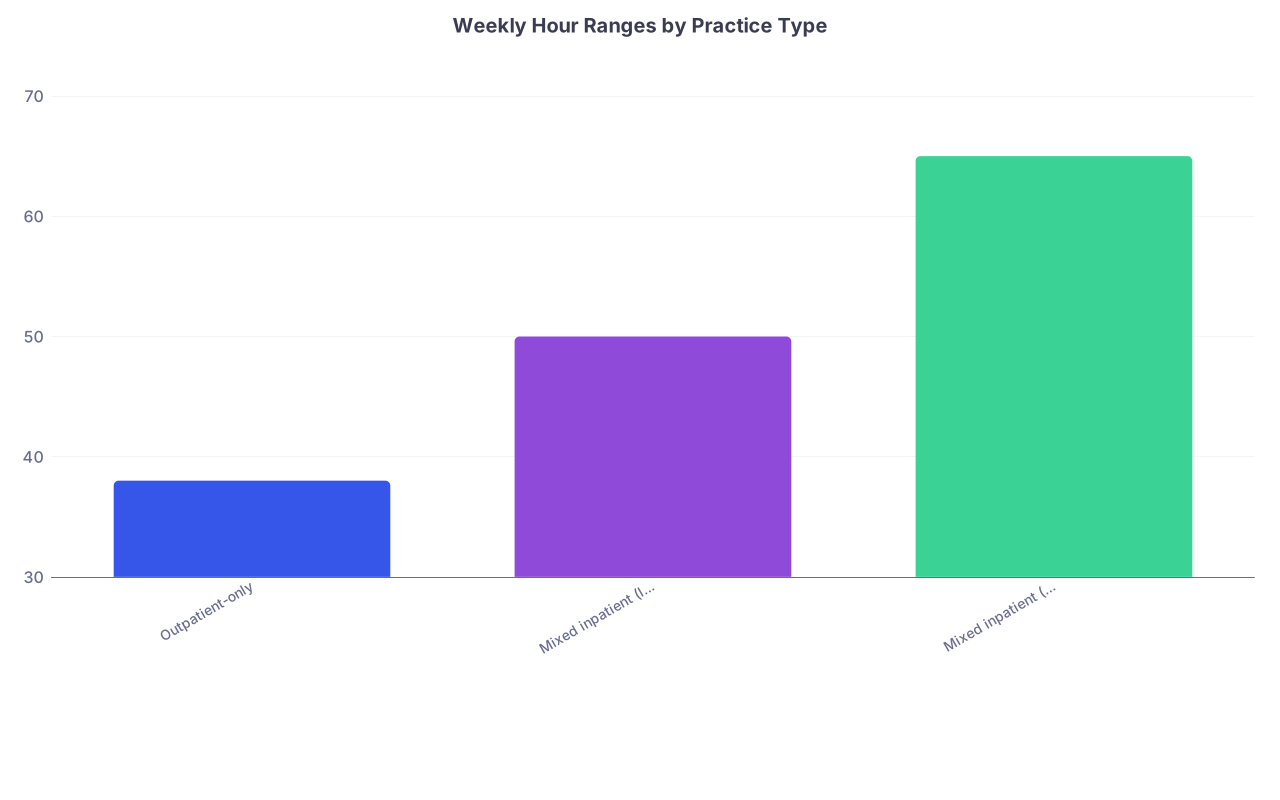
PM&R programs are accredited under the same duty hours rules as other specialties, usually capped around the standard 80-hour workweek averaged over four weeks. In reality, most PM&R residents report significantly fewer hours than that—commonly in the range of 50–65 hours per week overall, with some lighter outpatient blocks.
Common patterns you’ll see:
- Inpatient rehab months:
- Typically 6–6:30 am to 5–6 pm on weekdays
- Rotating weekend coverage (e.g., 1 in 3 or 1 in 4 weekends)
- Home call or in-house call depending on the program and service
- Outpatient clinics (MSK, EMG, sports, pain, general rehab):
- Usually closer to 8 am to 5 pm
- Rarely require post-clinic notes late into the night if documentation habits are efficient
- Consult services (stroke units, trauma, ICU rehab consults):
- Can be more variable depending on hospital census
- Often similar hours to inpatient rehab but occasionally busier days
Compared to many surgical and acute care specialties, PM&R duty hours are generally more predictable and shorter, even during the busiest months. Still, the workload can be heavy in terms of patient volume, documentation, family meetings, and coordination with therapy services.
2. Call Structure: Nights, Weekends, and Holidays
Call is a key driver of residency work-life balance.
Typical PM&R call models:
- Inpatient rehab unit call
- May be home call, especially at smaller centers
- On larger academic services, in-house call may be required, but usually less intense than internal medicine or surgery night shifts
- Cross-coverage for multiple rehab units or consult services
- One resident may cover several floors or facilities by phone, occasionally coming in for urgent issues
- ICU or acute hospital rotations (as part of prelim/transitional year or shared rotations)
- Hours and intensity here may resemble internal medicine patterns more than PM&R
As a US citizen IMG, you may wonder if you’ll get “less favorable” call schedules. Most well-run programs allocate call equitably. If you hear reports of IMGs being assigned disproportionately heavier call, that is a red flag about program culture more than the specialty itself.
Questions to ask on interview day about call:
- “How often are residents on in-house call vs home call, and on which rotations?”
- “On a typical call night, how many pages/consults do you get, and what time do you usually get to sleep?”
- “How are call schedules created and how flexible can they be for personal needs (religious holidays, childcare, etc.)?”
3. Culture, Autonomy, and Emotional Load
Even if the duty hours are reasonable, the subjective experience of work-life balance is shaped by:
- Team support (attendings, co-residents, therapists, nursing)
- Administrative burden (notes, billing, EMR demands)
- Complexity of patient behavior and social issues (substance use, chronic pain, family conflict)
- Your own coping strategies and support network
In PM&R, you work closely with interdisciplinary teams, often with:
- Physical therapists
- Occupational therapists
- Speech-language pathologists
- Psychologists
- Social workers
- Case managers
This team-based care can be emotionally sustaining—you are not the only one carrying the weight of complex cases. That said, rehab often involves long, emotionally charged discussions about prognosis, disability, and quality of life. The emotional energy required can be substantial.
For US citizen IMGs, an added layer is navigating:
- Cultural adaptation if you studied abroad
- Visa or licensing logistics if you did med school in a different system
- Possible implicit biases about IMGs in some institutions
These factors can impact your sense of belonging and stress levels, which influence overall work-life balance.
Factors That Shape Lifestyle in PM&R: From Residency to Attending
PM&R is not one monolithic lifestyle. Your balance will vary widely based on subspecialty, practice setting, and career choices.
1. Inpatient vs Outpatient Focus
Inpatient-focused careers:
- Typical settings:
- Acute inpatient rehab units
- Long-term acute care hospitals (LTACHs)
- VA inpatient rehabilitation
- Pros for work-life balance:
- Often salaried with clear shifts
- Limited need to “build a practice”
- Predictable daily schedule centered on rounds, team meetings, and family conferences
- Cons:
- Earlier start times
- More weekend and holiday coverage rotations
- Emotional intensity from severe disability, complex discharges, and family dynamics
Outpatient-focused careers:
- Typical settings:
- MSK and sports clinics
- Pain clinics
- EMG/neuromuscular clinics
- Spasticity and neurorehab clinics
- Pros:
- Generally more regular daytime hours
- Minimal hospital call
- Opportunity for part-time or flexible schedules, especially in private practice or group practices
- Cons:
- Productivity pressures (RVUs, patient volumes) can create time stress
- Documentation can bleed into evenings if not carefully managed
Lifestyle-friendly combinations often integrate:
- A primarily outpatient practice with 1–2 half-days of EMG or procedure clinic per week
- Limited hospital rounding responsibilities (e.g., 1 week every few months or consult-only coverage)
2. Academic vs Community Practice
Academic PM&R:
- Pros:
- Protected time (in well-structured departments) for teaching, research, and admin
- Collegial environment with other physiatrists and interdisciplinary colleagues
- Access to subspecialized clinics and niche interests (SCI, TBI, pedi rehab, etc.)
- Cons:
- Often lower base salary than private practice
- Additional expectations: lectures, conferences, committees, resident supervision
- Research and academic demands can spill into evenings and weekends
Community or Private Practice PM&R:
- Pros:
- Potentially higher earnings (especially in pain, EMG, or busy MSK practices)
- Autonomy to shape your schedule, patient mix, and days off
- Ability to negotiate part-time or 4-day work weeks in some settings
- Cons:
- Greater emphasis on productivity and efficiency
- Call or weekend coverage often shared among fewer physicians
- Less built-in teaching/academic structure (if that motivates you)
As a US citizen IMG, your path to academic roles is absolutely possible; many academic physiatrists trained as IMGs. However, you may initially find more open doors in community or non-university-affiliated practices, especially if you trained in a smaller or community PM&R residency.
3. Subspecialty Choice and Lifestyle
Subspecialties within PM&R vary in workload and lifestyle:
- Sports and MSK medicine:
- Often outpatient-heavy, daytime hours
- Event coverage (evenings/weekends) depending on team commitments
- Pain medicine:
- Procedure-heavy, often profitable
- Some practices have high volume and can be intense, but scheduling can be controlled in many settings
- Spinal cord injury (SCI), brain injury (TBI), stroke rehab:
- Commonly inpatient or mixed inpatient/outpatient
- Emotional rewards are high, but complexity can be draining
- Pediatric rehab:
- Mix of clinic, procedures (e.g., botulinum toxin, intrathecal baclofen), and multidisciplinary care
- Emotional demands are unique but schedule can be stable
For a lifestyle-first approach, many physiatrists tailor a practice that is:
- Majority outpatient, with:
- Limited or no night call
- Predictable clinic sessions
- Scope of practice chosen to avoid the most time-pressured or emergent settings
Strategic Planning: How a US Citizen IMG Can Protect Work-Life Balance
Work-life balance does not “just happen.” You can actively shape it during the path from med school to physiatry match to attending life.
1. During Medical School (Especially if You’re an American Studying Abroad)
If you’re an American studying abroad (Caribbean, Europe, Asia, etc.), you already know that as a US citizen IMG, you’ll work hard to stand out. The key is to be strategic, not self-sacrificial.
Actionable steps:
- US clinical experience (USCE) in PM&R or related fields
- Aim for at least one PM&R elective in the US.
- Supplement with related specialties (neurology, orthopedics, rheumatology, pain, geriatrics).
- Letters of recommendation
- Secure strong letters from US-based physiatrists or related specialists familiar with PM&R.
- Step scores and exams
- Solid scores help open doors to more lifestyle-friendly programs and locations.
- Early exposure to PM&R
- Attend virtual PM&R interest groups, AAP/AAPM&R events, IMG-focused webinars.
- Mindset
- Avoid the trap of thinking, “As an IMG, I must say yes to everything.”
- Instead think, “As an IMG, I must say yes to the right things and protect my long-term sustainability.”
2. Choosing a PM&R Residency with Lifestyle in Mind
Not all programs offer the same residency work-life balance. As a US citizen IMG, prioritize programs that:
- Have a history of matching and graduating IMGs
- Demonstrate equitable treatment and strong mentorship
- Show genuine respect for duty hours and time off
Red flags during interviews/virtual open houses:
- Residents look exhausted, disengaged, or uniformly negative
- Vague answers when you ask about call load, weekend coverage, or duty hours
- Reports of frequent duty hour violations or pressure to under-report hours
- Little support for parental leave, mental health, or flexible scheduling
Green flags:
- Residents openly discuss hobbies, families, or community involvement
- Program leadership acknowledges wellness, burnout, and support resources
- Clear systems: night float vs 24-hour call, coverage policies, backup for illness
- Transparent schedule examples given to interviewees
3. During Residency: Practical Habits to Maintain Balance
Once you start PM&R residency, you’ll quickly realize that even in a lifestyle-friendly specialty, your calendar can fill with:
- Clinics
- Consults
- Academic half-days
- Research projects
- QI initiatives
- Conferences
- Program or hospital committees
Concrete strategies to protect your time:
Master efficient documentation early.
- Learn and optimize EMR templates.
- Dictate or use voice recognition tools when allowed.
- Finish notes during the day; avoid “note bloat” after hours when possible.
Be intentional with extra projects.
- Choose 1–2 meaningful projects (research, QI, education) rather than saying yes to everything.
- Clarify timelines and expectations up front.
Schedule your personal life like it matters (because it does).
- Block regular exercise, time with family/friends, or spirituality into your calendar.
- Treat these appointments with the same respect as academic obligations.
Use time off fully.
- Take vacations; don’t “bank” all your days and then lose them.
- When off, actually disconnect as much as circumstances allow.
Leverage your support network.
- Connect with co-residents, especially other IMGs or US citizens who studied abroad.
- Seek mentorship from physiatrists who model the balance you want.
4. Early Attending Life: Negotiating for Lifestyle
Your first job has a massive impact on your long-term work-life balance. As an early-career physiatrist, especially coming from a US citizen IMG background, you might feel pressure to accept the first offer you receive. Whenever possible, resist that reflex and ask:
Schedule and hours:
- What are typical clinic hours?
- How early/late do attendings usually arrive and leave?
- Is there protected admin time?
Call and weekend expectations:
- How frequently will I take call? Is it home or in-house?
- Are there holiday call rotations, and how are they divided?
Productivity expectations:
- Is compensation salary-based, RVU-based, or mixed?
- What are realistic patient volumes and RVU targets for new hires?
Lifestyle options:
- Are part-time or 0.8 FTE options available after a certain period?
- Can clinic days be compressed (e.g., four 10-hour days)?
Understanding these factors helps you choose a position that aligns with your definition of lifestyle and work-life balance.
Realistic Pros and Cons: Is PM&R the Right Lifestyle Fit for You?
Major Lifestyle Strengths of PM&R
- Reasonable and predictable duty hours for most residents and attendings
- Less overnight in-house call than many other specialties
- Flexibility in career design (inpatient vs outpatient, academic vs private, variety of subspecialties)
- Team-based environment that can distribute emotional and cognitive workload
- Opportunity to find niche roles (e.g., only outpatient spine, or only inpatient SCI, etc.) that match your tolerance for intensity and schedule demands
Real Lifestyle Challenges in PM&R
- Documentation-heavy work
- Rehab notes can be detailed and lengthy, especially for inpatient or consult services
- Complex patient and family interactions
- Goals-of-care discussions, disability benefits, pain management, conflict about functional expectations
- Academic and career pressures
- IMGs may feel obligated to “overachieve” to counter bias or open doors
- Varied job market by region and subspecialty
- Some geographic markets are saturated in generic outpatient MSK, requiring flexibility or fellowship training
If you value:
- Deep longitudinal relationships with patients
- Interdisciplinary teamwork
- A meaningful role in restoring function and quality of life
- And a schedule that is generally compatible with family, hobbies, and outside interests
then PM&R can be a very appropriate choice, even as a US citizen IMG navigating additional challenges.
FAQs: Work-Life Balance in PM&R for US Citizen IMGs
1. Is PM&R really a “lifestyle residency” compared with IM or surgery?
For most residents, yes—PM&R offers better residency work-life balance than many inpatient-heavy, procedural, or surgical specialties. Hours are typically lower than surgery and often more stable than internal medicine, especially after your intern year. However, during busy inpatient months or on call rotations, you will still work long days and some weekends. It’s better to think of PM&R as a “more balanced specialty” rather than “easy” or “low work.”
2. As a US citizen IMG, will I have to work harder or take worse schedules than others?
In well-run programs and practices, call and duty hours are assigned equitably among residents and attendings, regardless of IMG status. You may feel personal pressure to say yes to everything (extra shifts, research, committees) to stand out, but that is often self-imposed and not required. Choose environments where:
- IMGs are well-represented and supported
- Leadership clearly values fairness and wellness
If you hear consistent stories that IMGs are given worse schedules or fewer opportunities, consider that a serious warning sign about the program’s culture.
3. Can I have a good work-life balance in PM&R if I pursue a competitive fellowship like sports or pain?
Yes, but it depends heavily on your practice setting:
Sports & MSK medicine:
- Baseline hours are often clinic-based and predictable. Team coverage and events can add evenings/weekends, but you can typically negotiate how much of this you want.
Pain medicine:
- Many pain practices are procedure-focused with high productivity, but you can still set boundaries around clinic days and vacation time. The variability in lifestyle here is large, so evaluate each practice individually.
In both cases, PM&R gives you a strong platform to design a career that balances interesting subspecialty work with sustainable hours.
4. What concrete steps should I take now as an American studying abroad to optimize future lifestyle in PM&R?
- Prioritize US clinical electives in PM&R and related fields.
- Develop connections with US-based physiatrists who can mentor you and write letters.
- Choose PM&R programs that explicitly value wellness, have positive resident reviews, and a track record of supporting IMGs.
- During residency, invest in efficiency skills (documentation, time management) so you don’t bring work home unnecessarily.
- As you approach graduation, be intentional about job selection—focus on positions that offer clear boundaries around duty hours, call, and productivity expectations.
A career in Physical Medicine & Rehabilitation offers genuine potential for a fulfilling mix of professional meaning and personal time. As a US citizen IMG, your path may be less linear and require careful strategy, but you are not locked out of balanced, satisfying work. By understanding how PM&R residency and attending schedules operate, asking the right questions, and protecting your own boundaries, you can build a sustainable, rewarding life in physiatry.