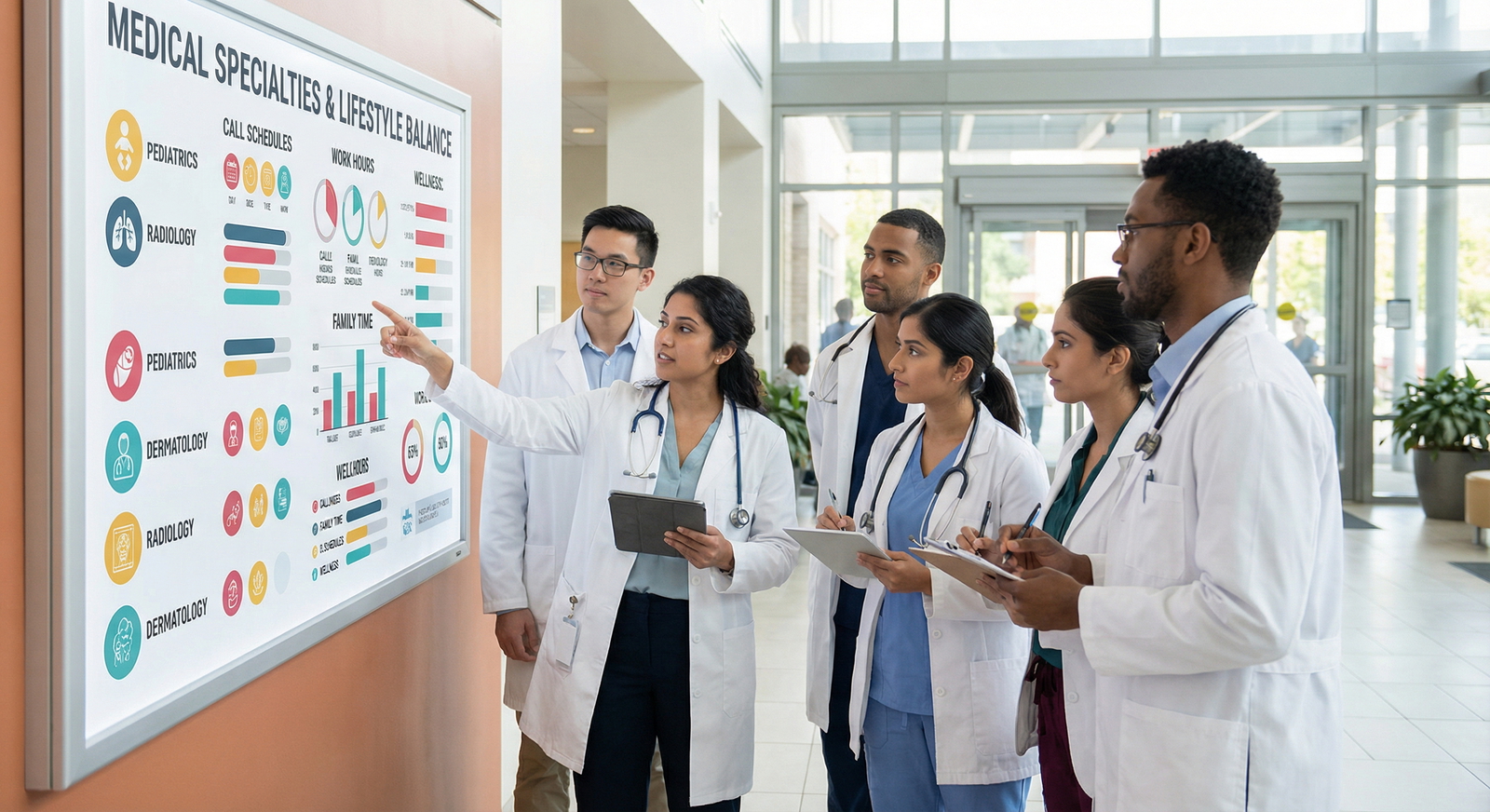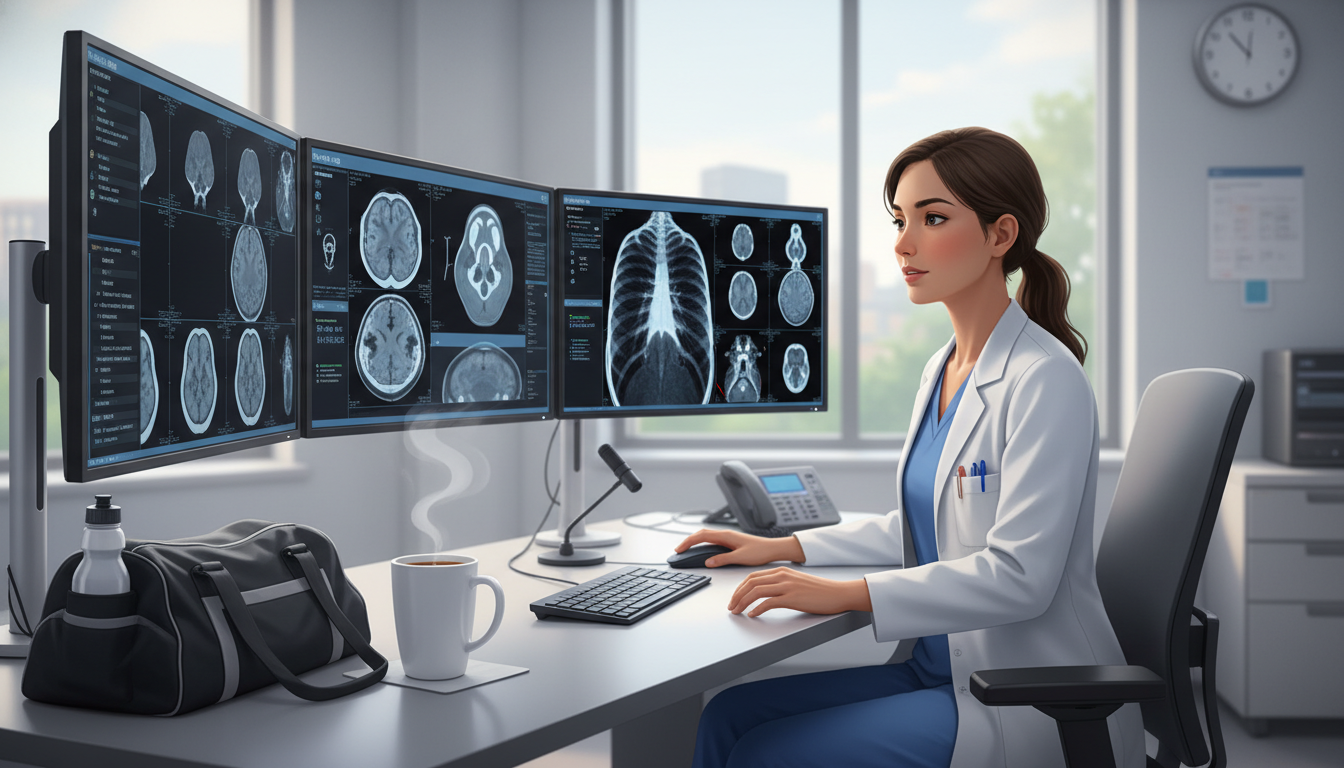
Diagnostic radiology has a strong reputation as a “lifestyle residency” compared with many other core specialties. For a US citizen IMG (American studying abroad), this reputation can be both a major attraction and a source of questions: Is the work-life balance really as good as people say? Does it stay that way after training? How does being a US citizen IMG affect that experience?
This article breaks down the reality of residency work life balance in diagnostic radiology from multiple angles—duty hours, call schedules, case intensity, fellowship impact, and career pathways—with specific, practical advice for US citizen IMGs navigating the diagnostic radiology match.
Understanding Work-Life Balance in Diagnostic Radiology
Work-life balance in any specialty is shaped by three main factors:
- Workload: hours worked, duty hours rules, call frequency
- Work intensity: mental load, case complexity, pace, interruptions
- Control: ability to influence your schedule, site type, and career track
Diagnostic radiology generally performs well in all three domains compared to surgical fields, emergency medicine, and many inpatient-heavy specialties. However, this does not mean that it is “easy” or “chill.” Radiology requires:
- Sustained concentration over long stretches
- Dealing with high volumes of imaging
- Time pressure in emergency and overnight settings
- Constant studying during residency and for boards
For a US citizen IMG, the key questions are:
- Will my residency training environment be more or less lifestyle-friendly than for AMGs?
- Will I have to sacrifice work-life balance to improve my competitiveness or match chances?
- What concrete choices can I make (program type, geography, academic vs community) to protect my quality of life?
Typical Duty Hours and Schedule Structure in Diagnostic Radiology Residency
Diagnostic radiology residency is governed by the same ACGME duty hours standards as other specialties:
- 80-hour weekly limit, averaged over 4 weeks
- One day off in seven, averaged over 4 weeks
- In-house call generally limited to 24+4 hours (24 hours of continuous duty plus up to 4 hours for handoff/transition), though many radiology programs have shorter overnight shifts
- Adequate rest between shifts, usually 8–10 hours
In practice, radiology residents typically work far fewer than 80 hours per week. Common patterns:
PGY-2 to PGY-5 (Diagnostic Radiology Years)
Routine daytime rotations:
- Start: 7:30–8:00 a.m.
- End: 5:00–6:00 p.m.
- Average: 45–55 hours/week on many rotations
Evening/overnight shifts (varies by program):
- Night float blocks (e.g., 1–2 weeks at a time, 6–7 p.m. to 7 a.m.)
- Some institutions use a mix of short calls and night float
Weekend coverage:
- Typically q4–q6 weekends (every 4th–6th weekend), depending on program size and call structure
- Some programs use “short call” Saturdays with Sundays off; others alternate full weekends and off weekends
Despite duty hours compliance, radiology residency can feel intense because most of your time is productive cognitive work—reading cases, dictating reports, consulting with clinicians, and studying.
For a US citizen IMG, the actual duty hours are usually the same as for any resident in that program. Where you may notice a difference is in:
- Pressure to perform (to prove yourself as an IMG)
- Less margin for error if you feel you need strong evaluations to match into competitive fellowships (like IR, MSK, or neuroradiology)
Still, compared with many inpatient specialties where 65–80 hours per week is typical, diagnostic radiology generally offers:
- More predictable start and end times
- Fewer middle-of-the-night page interruptions outside of call
- More ability to protect study and personal time during certain rotations
Call, Nights, and Weekends: How Heavy Is It Really?
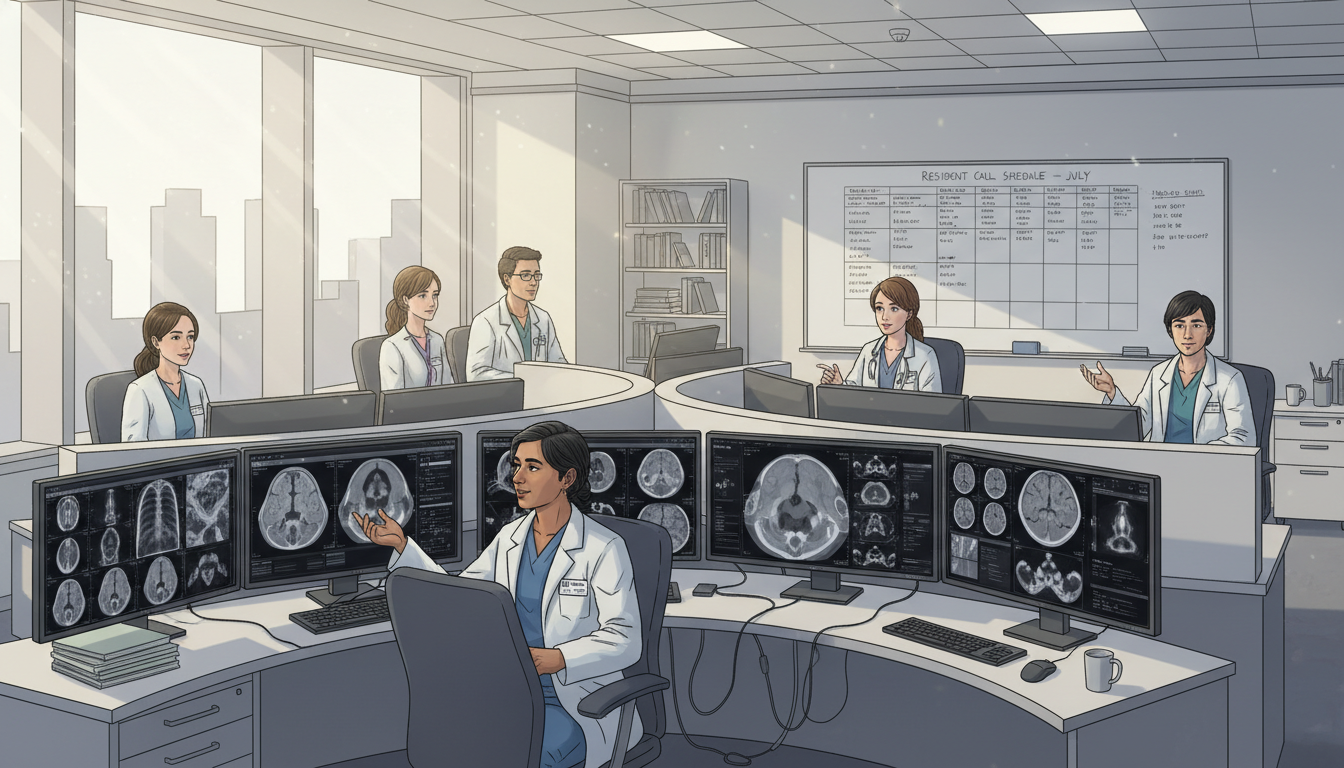
The biggest concern for lifestyle in any residency is the call structure and night coverage. For diagnostic radiology, the burden is moderate and usually front-loaded in the mid-residency years.
Common Call Models in Radiology
Night Float Model
- Residents cover several consecutive nights (often 1–2 weeks)
- Shifts might be 6 p.m.–7 a.m. or 8 p.m.–8 a.m.
- During these blocks, days are free to sleep; no daytime responsibilities
- Frequency: a few blocks per year per resident
Short Call / Late Shift
- Afternoon to late evening (e.g., noon–10 p.m.)
- You cover emergent imaging and help with overflow cases
- The following morning is often lighter or off, depending on program policy
Traditional Home Call (Less Common Now in Large Centers)
- You are at home, but responsible for teleradiology coverage or being reachable
- More common in smaller or community-affiliated settings
What to Expect by Training Year
PGY-2 (first radiology year)
- Focus on fundamentals: plain films, basic cross-sectional imaging, on-call safety
- Many programs limit overnight call early to reduce stress and allow onboarding
- Call often supervised closely by senior residents and attendings
PGY-3 to PGY-4
- Typically the heaviest call years
- Greater autonomy on preliminary reads, especially in ER and overnight
- More night float blocks and weekend call
- These years can feel intense, but still usually more contained than heavy inpatient specialties
PGY-5 (senior year)
- Usually more elective and subspecialty rotations
- Some programs reduce call load; others keep it relatively steady but with more responsibility
- More focus on boards prep and fellowship/job planning
Lifestyle Implications
Compared with internal medicine, general surgery, or OB/GYN:
- Radiology call is more shift-based and predictable
- You are typically stationed in the reading room, not racing around the hospital
- Physical fatigue is usually less; mental fatigue can be high
- Post-call protections are generally robust
For a US citizen IMG, the intensity of nights and weekends is usually identical to that of any other resident. What may differ is:
- Baseline stress (visa issues are less of an issue for US citizen IMGs, but match security and perceived scrutiny can increase stress)
- Pressure to be prepared early on, to combat stereotypes about IMGs
A pragmatic strategy is to approach night float as:
- A structured learning opportunity for acute imaging and rapid decision-making
- A time-limited sacrifice during training, rather than a permanent lifestyle pattern
Training Content, Studying, and Board Pressure: The “Hidden” Time Commitment
Even if duty hours are reasonable, radiology demands substantial independent study time to master:
- Anatomy and pathophysiology
- Imaging physics, radiation safety
- Pattern recognition across modalities (CT, MRI, US, nuclear medicine, etc.)
- Communication, reporting, and appropriateness criteria
Daily Cognitive Workload
On a typical rotation, you might:
- Read 30–100+ cases per day, depending on modality and institution
- Dictate detailed reports for each case
- Discuss selected cases with clinicians (e.g., ER, surgery, oncology)
- Attend noon conferences or morning lectures daily
This can leave you mentally drained by the end of the day, even if the clock time is manageable.
Independent Study Time
Most radiology residents—particularly in the mid-years—add 5–10 hours/week of focused study outside of clinical hours:
- Reading core textbooks or online resources
- Reviewing teaching files or Radiopaedia cases
- Completing question banks for the ABR Core Exam
- Attending multidisciplinary conferences or tumor boards
For a US citizen IMG, there can be extra academic pressure if you:
- Graduated from a lesser-known or lower-ranked international school
- Have a non-traditional background or a previous USMLE attempt
- Feel you must “prove” that your training is equivalent to that of US-based grads
However, this pressure can be channeled productively without destroying your quality of life by:
- Building a weekly study schedule that is realistic (e.g., 1–1.5 hours on weeknights, 2–3 hours total on weekends)
- Using high-yield, structured resources rather than passively browsing cases
- Forming a small study group with co-residents to divide topics and keep motivated
Diagnostic radiology has one of the most organized exam pathways (ABR Core Exam typically in PGY-4), allowing residents to plan months in advance. Many programs build in dedicated study time before boards: lighter rotations, decreased call, or mini-bootcamps.
Comparing Radiology Lifestyle: Residency vs Attending Life
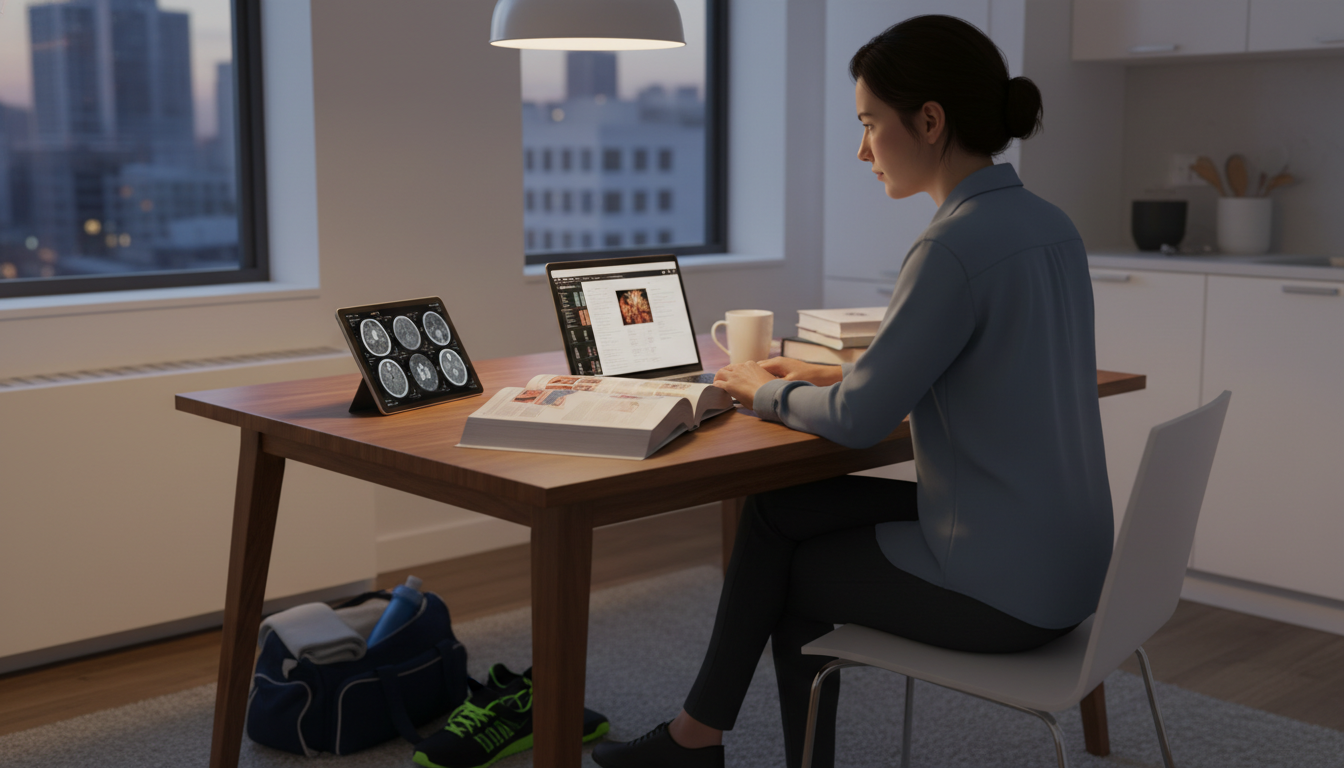
Many applicants focus only on residency work life balance—but long-term lifestyle matters at least as much. Diagnostic radiology is often considered one of the most favorable specialties in this regard.
Attending Radiology Work Patterns
Your attending lifestyle depends heavily on:
- Practice setting: academic, community, hybrid, teleradiology
- Subspecialty: neuroradiology, MSK, body, breast, IR vs purely diagnostic
- Region and market conditions: coastal academic centers vs midwestern community groups
Typical features that support good lifestyle:
- Daytime-focused schedules: Many jobs are primarily 8 a.m.–5 p.m.
- Shift-based work: Clear start/end, limited after-hours responsibilities
- Teleradiology options: Ability to work from home partially or fully
- Part-time or flexible schedules: Available in many markets once you’re established
Contrast this with:
- Hospitalist medicine: nights and 7-on/7-off models
- Surgical subspecialties: frequent late cases, OR delays, weekend rounds
- OB/GYN, EM: circadian disruption, high overnight demand
Diagnostic radiology is widely viewed as a lifestyle residency and lifestyle specialty, provided you choose your post-residency job thoughtfully.
The US Citizen IMG Perspective in the Job Market
As a US citizen IMG, your long-term lifestyle is shaped by:
- Fellowship choice
- Geographic flexibility
- Networking and reputation from residency
The IMG label tends to fade over time as your fellowship training, board certification, and references speak louder. If you:
- Train at a solid program
- Build strong relationships with faculty
- Develop a subspecialty niche or added value (e.g., informatics, QI, AI tools, procedures)
You can access the same range of lifestyle-friendly jobs as any AMG, especially in community and hybrid practices.
Practical Strategies for US Citizen IMGs to Maximize Work-Life Balance in Radiology
1. Protect Your Match Prospects Without Burning Out
To reach a diagnostic radiology residency with good work life balance, you do need to be competitive—but you can do this strategically:
Choose your clinical rotations wisely
- Seek US clinical experience that is relevant but not exploitative in hours
- Electives in radiology or closely allied fields (ER, oncology, surgery)
Optimize—not maximize—your application profile
- Strong USMLE scores (if still relevant for your application cycle), but avoid obsessing to the point of health sacrifice
- One or two well-executed research projects are better than 6 rushed or low-quality ones
- Target programs historically friendly to IMGs and to US citizen IMG applicants in particular
Use your unique story as an advantage
- As an American studying abroad, you have cross-cultural training and flexibility
- Frame this as resilience and adaptability rather than a “second-tier” path
2. During Residency: Set Boundaries and Routines Early
Even in a relatively lifestyle-friendly field, boundaries matter:
Represent your needs clearly
- Give early, honest feedback to your program about schedule conflicts, fatigue, or mental health concerns
- Use institutional resources (wellness programs, counseling, resident mentors)
Create a sustainable weekly routine
- Fixed sleep schedule during daytime rotations
- Pre-defined times for exercise and social activities
- Dedicated, realistic study blocks (not cramming every night)
Practice efficient reading and dictation
- Efficiency means shorter days on some rotations and less need to stay late for unfinished cases
- Ask senior residents for templates, phrase libraries, and time-saving workflow tips
3. Choose Subspecialty and Job Settings Carefully
Lifestyle variations within radiology can be substantial:
Generally more lifestyle-friendly subspecialties
- Body imaging
- MSK
- Neuroradiology (depending on practice)
- Breast imaging (often daytime, outpatient-based)
Potentially more intense (but can still be manageable)
- Interventional radiology (IR): Procedures, call, emergencies
- Neurointerventional
- Heavy trauma centers
If work-life balance is a top priority:
- Consider diagnostic-only or primarily diagnostic jobs
- Carefully evaluate call structures in job offers (frequency, nights, weekend coverage, backup coverage)
- Ask direct questions about average RVUs, case volumes, and expectations
4. Use Your IMG Background as a Lifestyle Asset
As a US citizen IMG, you often bring:
- Adaptability from switching systems and countries
- Language or cultural skills that can make you valuable in certain communities
- Perspective on burnout and work styles from multiple healthcare environments
These can help you:
- Be flexible geographically (increasing your choice of lifestyle-friendly jobs)
- Serve diverse patient populations and build a loyal referral network
- Negotiate from a position of genuine value, not desperation, when selecting jobs
If willing to work in underserved or non-coastal markets, you often find:
- Higher compensation
- More reasonable workloads
- Better control over vacation and schedule
This can significantly enhance your overall residency work life balance and long-term career satisfaction.
Red Flags and Green Flags: Evaluating Radiology Programs for Lifestyle
When researching diagnostic radiology residency programs as a US citizen IMG, pay attention to more than just name recognition.
Lifestyle Green Flags
- Transparent duty hour reporting and genuine resident input
- Structured wellness initiatives: protected half-days, mental health resources
- Reasonable call structure with well-defined night float and post-call protections
- Positive, approachable leadership (PD, APDs, chief residents)
- Healthy culture where residents are not afraid to speak up about workload or learning needs
Lifestyle Red Flags
- Residents appear chronically exhausted or discouraged on interview day
- Vague or evasive answers about night coverage and duty hours
- Heavy emphasis on RVUs and “productivity” even at the residency level
- Poor board pass rates without clear remediation support
- Programs with minimal IMG presence and limited track record of success for IMGs
As an American studying abroad, you should specifically ask:
- “How many US citizen IMG residents have you had in the last 5–10 years?”
- “What fellowships and jobs have your IMG graduates obtained?”
- “How does your program support residents who might feel extra pressure to prove themselves?”
Their answers will tell you a lot about both lifestyle and long-term support.
FAQs: Work-Life Balance for US Citizen IMGs in Diagnostic Radiology
1. Is diagnostic radiology really a “lifestyle residency” for US citizen IMGs?
Yes, relative to many other core specialties, diagnostic radiology offers:
- More predictable hours
- Typically 45–60 hours/week on most rotations
- Structured call with protected off time
Being a US citizen IMG does not inherently worsen your duty hours; the residency environment and institutional culture matter more. Your IMG status may increase internal pressure, but good programs will support you in managing expectations and workload.
2. How do radiology duty hours compare with internal medicine or surgery?
Internal medicine and general surgery often approach the upper limit of 70–80 hours/week in busy programs, with frequent overnight calls and early-morning prerounds. Diagnostic radiology residents generally work fewer hours, experience less physical fatigue, and have more control over personal time outside of call blocks, though the mental workload is intense.
3. Will I need to sacrifice work-life balance to become competitive as an IMG applicant?
You do need a solid application—good test scores, strong letters, some radiology exposure—but you do not need to annihilate your personal life to get there. Thoughtful planning, strategic US rotations, focused research, and effective studying are more valuable than constantly being “on.” Overworking to the point of burnout can actually harm your performance and application.
4. Does diagnostic radiology still offer good lifestyle as an attending, or is that just during residency?
If anything, lifestyle often improves after residency for diagnostic radiology attendings—especially in well-chosen community or hybrid positions. Many radiologists work more standard daytime hours, have shift-based schedules, and may incorporate partial remote work. Long-term, diagnostic radiology remains one of the most lifestyle-friendly specialties when you carefully select your practice environment and subspecialty.
For US citizen IMGs, diagnostic radiology offers a compelling blend of intellectual challenge, controlled duty hours, and long-term lifestyle flexibility. With careful program selection, realistic expectations, and deliberate career planning, it can provide not only a successful diagnostic radiology match, but also a sustainable and satisfying life inside and outside of medicine.