Understanding Work-Life Balance in Pediatrics-Psychiatry as an IMG
Pediatrics-Psychiatry (often pursued through combined pediatrics-psychiatry-child and adolescent psychiatry tracks, or “triple board” programs) can offer a surprisingly favorable residency work life balance compared to many other training paths—especially for those who are deliberate about program choice and boundaries.
For an international medical graduate (IMG), the equation is more complex. Beyond clinical work, you are adapting to a new healthcare system, immigration rules, and sometimes a new language and culture. This article is designed as a practical IMG residency guide specifically for those considering or entering Pediatrics-Psychiatry (Peds Psych) or triple board training, with a focus on work-life balance.
We’ll cover:
- What “work-life balance” realistically means in this specialty
- Typical schedules, duty hours, call, and weekend expectations
- Unique pressures and advantages for IMGs
- How to choose more “lifestyle residency”–friendly programs
- Concrete strategies to protect your well-being during training
1. What Work-Life Balance Really Looks Like in Peds-Psych & Triple Board
1.1 The Nature of the Specialty
Peds-Psych (often through triple board: Pediatrics + General Psychiatry + Child & Adolescent Psychiatry in 5 years) blends:
- Pediatrics: Inpatient wards, NICU/PICU exposure, clinic, emergencies
- Psychiatry: Inpatient units, consult-liaison, outpatient, emergency psychiatry
- Child & Adolescent Psychiatry: Largely outpatient, family-focused, school and community interfaces
From a lifestyle lens, this fusion has trade-offs:
More demanding periods (less balanced):
- Pediatric inpatient and ICU months: early mornings, sicker patients, more admissions
- Psychiatry emergency services and consult months: overnight calls, unpredictable intensity
- First 1–2 years of residency: steeper learning curve, more nights and weekends
More balanced periods:
- Many outpatient psychiatry and child psychiatry rotations
- Pediatric continuity clinics once workflows are established
- Senior years, when you have more autonomy and usually fewer nights
Compared to pure surgery or OB/GYN, triple board is typically more “lifestyle-friendly” in the mid-to-late years. Compared to pure outpatient psychiatry, it is more demanding—especially early on, due to pediatric inpatient and ICU duties.
1.2 Defining Work-Life Balance for You as an IMG
“Good balance” is highly personal. Clarify your own priorities before applying:
- How important is predictable time for:
- Calling family in your home country (time zone differences)
- Visa/immigration tasks and bureaucratic appointments
- Religious observances, community involvement, or language classes
- How much do you need protected time for:
- USMLE/STEP 3 or board exam preparation
- Research or academic activities for future fellowship
- Part-time caregiving (children, spouse, parents abroad needing coordination)
Work-life balance is not “minimal work.” It means:
Your schedule and energy allow you to sustain performance, physical health, and meaningful personal life over several years.
For IMGs, this also includes having bandwidth for cultural adaptation and support network building, which many U.S. graduates already have locally.
2. Schedules, Duty Hours, and Call: What to Expect
2.1 Duty Hours and Regulatory Framework
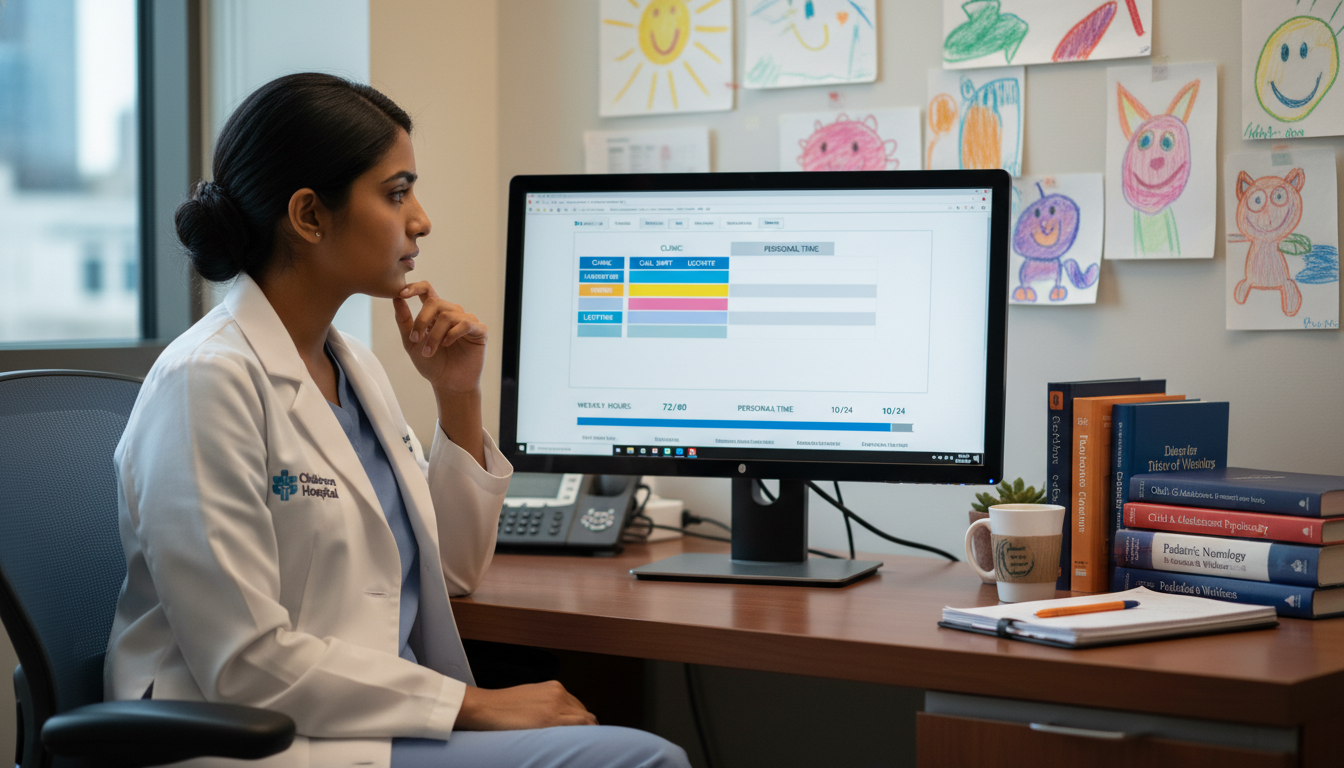
Most U.S. residency programs, including Peds-Psych and triple board, comply with ACGME duty hour rules. You should expect:
- 80 hours per week cap, averaged over 4 weeks
- Maximum 24 hours continuous in-house duty, plus up to 4 hours for transitions
- One day in 7 off, free of patient care and clinical responsibilities
- Certain limits on night float, in-house call frequency, and time off between shifts
In practice, hours vary significantly by rotation:
Pediatric Inpatient/Wards
- Average: 55–75 hours per week depending on census and hospital
- Early morning rounds; notes, family meetings, follow-up
- Weekend coverage often every 3rd–4th weekend at busy programs
NICU/PICU (if part of your curriculum)
- High intensity, sometimes close to 80 hours during busy blocks
- Nights and extended shifts more common
- Very emotionally and cognitively demanding
Psychiatry Inpatient/Consult
- Typically 50–65 hours per week
- Some night and weekend coverage, but fewer “emergent procedures”
- Emotional load high, especially with acutely suicidal or psychotic patients
Outpatient Psychiatry & Child Psychiatry
- Often 40–55 hours per week
- Mostly daytime schedule, fewer nights/weekends
- Offers some of the best residency work life balance within the combined pathway
2.2 Triple Board vs. Other Tracks: Lifestyle Perspective
Triple Board (5 years)
- Pros:
- Longer training, but with built-in variety; burnout may be mitigated by changing contexts
- Outpatient-heavy later years can be very lifestyle-friendly
- Highly unique skill set; post-residency you can design very flexible careers (e.g., mostly outpatient psych with some pediatrics, or integrated clinics)
- Cons:
- Early years can feel intense because you must meet both pediatrics and psychiatry requirements
- More frequent transitions; each switch (e.g., from NICU to child psych clinic) disrupts routines and coping strategies
- You might feel you “live in two worlds,” with meetings and expectations from both departments
Categorical Pediatrics → Child Psychiatry Fellowship route
- More concentrated pediatric inpatient in the first 3 years, then mostly psych (which tends to be more lifestyle-friendly)
- Overall similar or slightly heavier total clinical load early on compared to triple board
Lifestyle takeaway:
Triple board and combined peds-psych call themselves “lifestyle residency” paths relative to some high-intensity surgical fields, but not relative to dermatology or pure outpatient psychiatry. They sit in the “moderate” zone: you will work hard, but you should still be able to maintain relationships, hobbies, and health—if you plan proactively.
2.3 Night Float and Weekend Patterns
Many programs have adopted night float systems to reduce 24+ hour calls. You might see:
- 1–2 weeks of night float blocks on pediatric wards or nursery
- Occasional psychiatry night float or evening crisis coverage
- Around 4–6 nights per month during certain rotations
Weekend patterns:
- Pediatrics: often 2–3 weekends per month as junior resident; 1–2 as senior
- Psychiatry/Child Psych: usually fewer full weekend obligations, but call can be home call or backup
As an IMG, expect that early on you may feel more mentally exhausted after nights/weekends due to:
- Using a second language
- Navigating new electronic medical records and healthcare systems
- Cultural differences in family expectations and patient communication
Plan extra recovery strategies (we’ll discuss specific tactics later).
3. Unique Work-Life Challenges for IMGs in Peds-Psych
3.1 Extra Non-Clinical Work You Must Manage
Beyond the standard resident workload, IMGs often carry extra “invisible” tasks that affect balance:
- Immigration and Visa Management
- Tracking deadlines for J-1 waivers, H-1B processes, or permanent residence steps
- Time-consuming document collection, emails, and legal consultations
- Financial and Administrative Setup
- Credit history building, banking, taxes, possible financial support for family abroad
- Understanding U.S. insurance, retirement accounts, and loan systems
- Cultural and Communication Learning Curve
- Subtle differences in how U.S. patients, families, nurses, and consultants interact
- Adjusting to documentation standards, defensive medicine, and legal concerns
Each of these uses energy that U.S. graduates may devote to rest or hobbies. Recognize and plan for this overhead when you evaluate workloads.
3.2 Emotional Load: Pediatrics Plus Psychiatry
The emotional aspects of peds psych residency are heavy:
- Pediatrics:
- Sick infants, complex congenital disorders, sometimes child deaths
- Intense distressed parents: fear, grief, anger that can be projected onto staff
- Psychiatry/Child Psychiatry:
- Suicidal adolescents, abuse/neglect cases, trauma histories
- Vicarious trauma and the weight of safety planning, risk assessment
For IMGs, this can be compounded by:
- Different cultural attitudes toward mental illness, parenting, and medical authority
- Personal experiences with instability, war, or migration that might be triggered by patient stories
- Distance from your own support network when you process difficult cases
This means burnout and compassion fatigue are real risks. On the other hand, many IMGs bring strong resilience, family-centered values, and perspective that help them thrive in this field—once they find their support systems.
4. Choosing a Program with Strong Work-Life Balance

Your IMG residency guide should emphasize that program choice is your single highest-impact decision for lifestyle. The same specialty can feel completely different at two programs.
4.1 Signals of a Lifestyle-Friendly Peds-Psych or Triple Board Program
When researching websites, talking to residents, or interviewing, look for:
Transparency About Duty Hours and Workload
- Do they discuss average hours on wards vs. outpatient?
- Are call schedules clearly described?
- Do residents honestly confirm they are within duty hour limits?
Structure of Rotations
- Reasonable balance between ICU-heavy and outpatient months
- Presence of night float vs. traditional 24+ hour calls
- Prescheduled elective or research time that is truly protected
Orientation and Support for IMGs
- Dedicated faculty or staff who help with visa and onboarding issues
- History of successfully training multiple IMGs
- Formal mentorship for underrepresented trainees, including IMGs
Wellness and Culture
- Regular wellness activities that are not just “checkbox” items
- Easy access to mental health services for residents
- A culture where residents feel safe asking for help or coverage when overwhelmed
Child Psychiatry and Outpatient Emphasis
- Robust outpatient child psych rotations, with clear clinic structure
- Reasonable patient volumes per half-day clinic
- Interdisciplinary teams (psychologists, social workers, therapists) to share the care load
Outcomes and Satisfaction
- What do graduates say about their experience? (Ask during interviews.)
- Do graduates tend to pursue fellowships or jobs that suggest they were not completely burned out (e.g., academic roles, leadership positions)?
4.2 Questions to Ask on Interview Day
When you speak with current residents—especially other IMGs—consider asking:
- “On your busiest inpatient pediatrics months, how many hours per week do you usually work?”
- “How often do your duty hours get close to or exceed 80 hours, and how does the program respond?”
- “When you are on call, what is the typical workload overnight? Admissions, cross-cover, psychiatric emergencies?”
- “How respected is time off? Do attendings or co-residents contact you frequently on your days off?”
- “How many IMGs are in the program now? What challenges did you face as an IMG, and how did the program help?”
- “How flexible is the schedule if you need time off for visa interviews or unexpected immigration appointments?”
Programs that encourage honest, nuanced answers and have current IMGs who sound supported are more likely to foster sustainable balance.
5. Practical Strategies to Protect Balance During Training
Even in a strong program, you will need personal strategies to maintain a healthy lifestyle residency experience.
5.1 Build a Structured Weekly Routine
On any given rotation, create a weekly template that includes:
- Fixed work hours and commute time
- At least 3–4 non-negotiable slots per week for exercise, hobbies, or spiritual practice
- 1–2 scheduled video or phone calls with family/friends back home (respecting time zones)
- A specific “admin hour” once a week for:
- Immigration emails
- Paying bills
- Scheduling medical/dental appointments
- Organizing study materials
Treat these personal blocks like mandatory conferences. If you don’t protect time by default, residency will fill every gap.
5.2 Create Boundaries Around Work
- When off-duty, log out of the electronic medical record unless there is a clear expectation for remote work.
- Avoid routinely staying late “just to be thorough” when it’s not clinically necessary; ask seniors what is good enough documentation on busy days.
- For patient emotional boundaries, particularly in psychiatry and child abuse cases:
- Use debrief sessions with your team
- Set internal rules (e.g., no case notes review after 9 p.m. at home)
- Limit “doom-scrolling” about similar cases in the news
5.3 Optimize Study and Documentation Efficiency
A common reason residents feel imbalanced is time lost to inefficient tasks.
- Develop note templates early for pediatric H&Ps, psychiatry admission notes, suicide risk assessments, safety plans, and discharge summaries.
- Use micro-learning: 15–20 minutes of board review every day, rather than long, infrequent sessions.
- Use commute audio time for guideline updates or psychiatry podcasts (without sacrificing relaxation if you need mental rest).
For IMGs, language nuances may slow you down initially. Keep a digital “phrase bank” of:
- Common U.S. idioms and how to interpret them
- Standard ways to ask sensitive questions (e.g., suicide, abuse, substance use) kindly and clearly
- Phrases for setting boundaries with families (e.g., “I want to make sure I provide the best care; let’s plan a follow-up visit to address these remaining questions”)
5.4 Build an Intentional Support Network
Being far from home increases the risk of isolation. Proactively:
- Identify at least 2–3 “go-to” colleagues in your program for venting and debriefing.
- Seek out other IMGs, even in different specialties; they often understand your unique stressors.
- Join local or virtual communities:
- Cultural associations or places of worship
- Professional IMG groups
- Parenting or hobby groups if you have children or specific interests
If your schedule makes regular in-person groups difficult, consider online communities with asynchronous communication that respect your erratic hours.
5.5 Use Professional Mental Health Resources
Peds-Psych exposes you to trauma, suffering, and moral distress. It is not a sign of weakness to seek help; it is part of your professional skill set.
- Most programs offer confidential counseling services for residents, often free.
- If you are uncomfortable seeing someone affiliated with your hospital, ask about external options covered by your insurance.
- Consider therapy not only when in crisis, but also as preventative maintenance, especially if you have a history of anxiety, depression, or trauma.
For IMGs, finding a therapist who understands cross-cultural issues can be especially helpful. Ask if there are providers experienced with international trainees or using interpreters.
6. Long-Term Outlook: Post-Residency Lifestyle in Peds-Psych
One of the strongest reasons to accept the intensity of combined training is the flexibility and lifestyle you can enjoy later.
6.1 Career Configurations with Excellent Work-Life Balance
After completing triple board or peds-psych pathways, you can design careers such as:
Mostly Outpatient Child and Adolescent Psychiatry:
- 8 a.m.–5 p.m. clinic, minimal or no call depending on practice arrangement
- Options for part-time work, telepsychiatry, or hybrid schedules
- High control over patient volume and type
Integrated Pediatric-Behavioral Clinics:
- Joint practice with pediatricians and therapists
- Emphasis on developmental disorders, ADHD, anxiety, school problems
- Often daytime hours with manageable call
Academic Roles with Protected Time:
- Mix of clinical care, teaching, and research
- Built-in non-clinical days for scholarship or curriculum work
- Greater schedule control after early promotions
6.2 Financial and Immigration Stability: Impact on Work-Life Balance
For IMGs, long-term balance also depends on:
- Visa stability:
- Securing a J-1 waiver or H-1B/permanent residency can reduce anxiety and allow you to choose less intense jobs instead of any job that sponsors you
- Debt and Financial Planning:
- Early attention to budgeting, student loans (if applicable), and retirement savings can prevent the need for extra moonlighting or overwork later
- Negotiating First Jobs:
- Use your triple board or combined expertise as leverage: ask for protected time, reasonable panel sizes, and limits on call responsibilities
A well-planned early career can transform the demanding years of residency into a foundation for a sustainable, fulfilling, and flexible professional life.
FAQs: Work-Life Balance for IMGs in Pediatrics-Psychiatry
1. Is Pediatrics-Psychiatry or Triple Board a Good Choice for IMGs Seeking Work-Life Balance?
Yes, with caveats. Compared to surgery, OB/GYN, or some high-intensity internal medicine subspecialties, peds-psych and triple board are relatively moderate in workload, especially in later years and on outpatient rotations. However, they are not as light as dermatology or pure outpatient psychiatry. IMGs who are deliberate about program selection and boundaries often find this to be a sustainable and rewarding path.
2. How Can I Evaluate Residency Work-Life Balance Before Matching?
Use a combination of strategies:
- Review program websites for honest descriptions of duty hours, night float systems, and call.
- During interviews, ask residents specific questions about average weekly hours on different rotations and how often duty hour violations occur.
- Pay attention to how many current IMGs the program has and whether they appear supported and engaged.
- Seek feedback from alumni through professional networks or social media when possible.
3. Will Being an IMG Make My Work-Life Balance Worse?
Not necessarily, but you will face additional pressures: immigration tasks, cultural adaptation, and often a smaller local support network. These can make the same workload feel heavier. On the positive side, many IMGs bring strong coping skills, resilience, and family values that support good balance. Choosing an IMG-friendly program and building intentional support systems are key.
4. Can I Maintain a Family Life or Have Children During Peds-Psych Residency?
Yes, many residents—including IMGs—successfully raise families during training. Outpatient-heavy psychiatry and child psychiatry rotations can be especially family-friendly. However:
- You must plan carefully for childcare, parental leave, and backup coverage.
- Discuss parental leave policies, schedule flexibility, and remote work options with programs during or after the match.
- Expect some periods (e.g., NICU, inpatient wards) to be more challenging for family time; balance them with more forgiving rotations when possible.
By understanding the real demands of peds psych residency and triple board, and by planning around your unique needs as an international medical graduate, you can build a realistic, sustainable work-life balance—both in training and in the long career that follows.