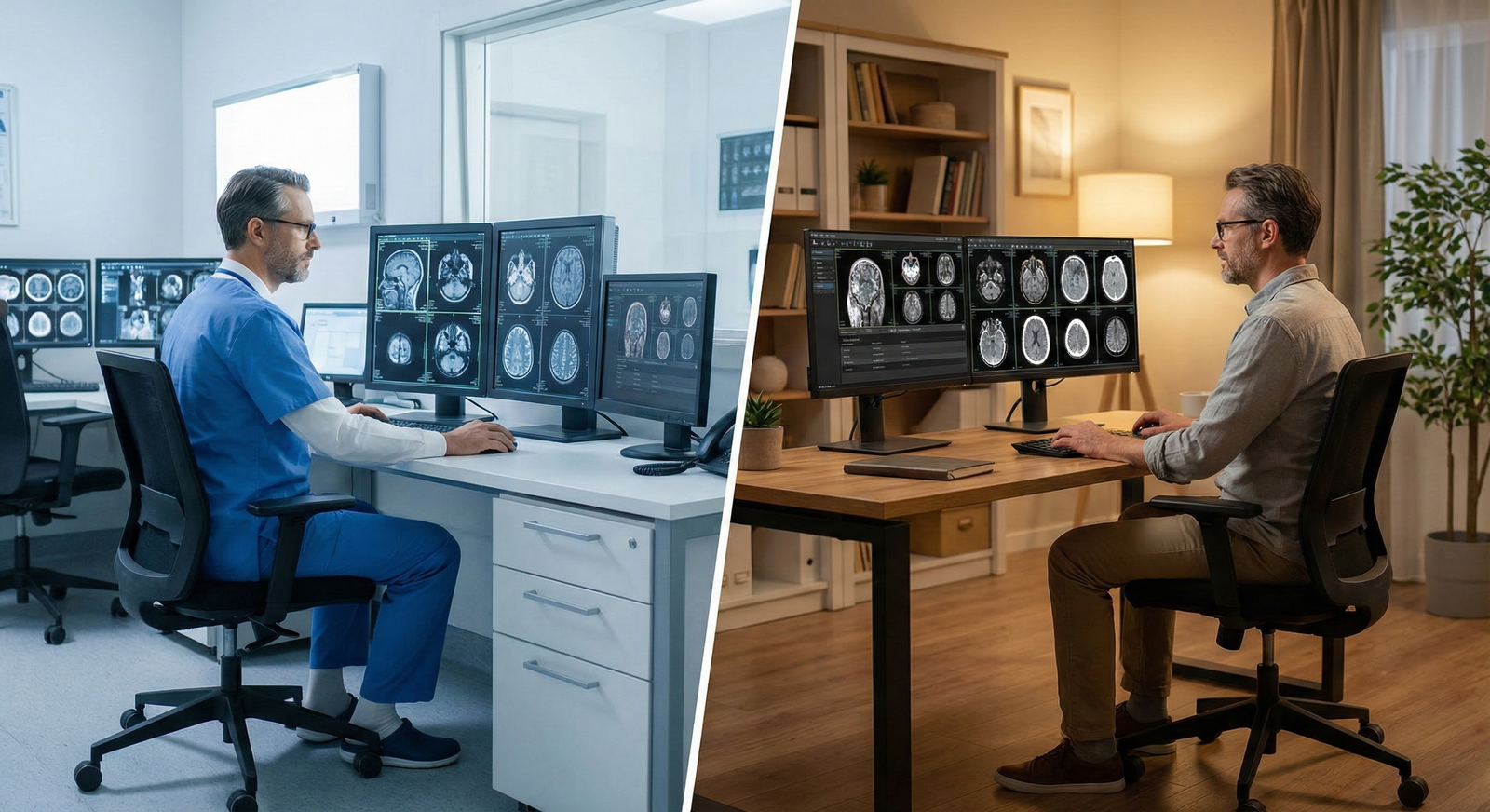
Understanding Work-Life Balance in Interventional Radiology
Interventional radiology (IR) has rapidly evolved from a niche procedural field into a core clinical specialty. Alongside its growth, applicants are asking a different type of question: not only “Can I match into interventional radiology residency?” but “What will my life actually look like if I do?”
Compared with many other procedural specialties, IR sits in a gray zone. It is not a stereotypical “lifestyle residency” like dermatology or pathology, but it is also no longer the behind-the-scenes call-heavy service it once was in many hospitals. Work-life balance in IR is highly program- and practice-dependent, and understanding the nuances is key for residency applicants.
This guide breaks down the realities of duty hours, call, schedule predictability, and long-term lifestyle in interventional radiology. It is written for:
- Medical students considering the IR match
- Diagnostic radiology residents exploring ESIR or independent IR paths
- Early residents comparing IR to other specialties for lifestyle and fit
The goal is not to oversell IR as “easy” or to discourage you with worst-case scenarios, but to offer a realistic, structured framework to assess work-life balance in this specialty.
1. The Structure of Interventional Radiology Training and Its Lifestyle Implications
Interventional radiology is unique because of its multiple training pathways and its hybrid nature: part procedural, part imaging, part clinical. Understanding the structure of training helps you anticipate what different phases of your career will feel like from a work-life perspective.
1.1 Training Pathways and Time Commitment
There are three main routes into IR in the U.S.:
Integrated Interventional Radiology Residency (5–6 years total)
- 1 preliminary/transition year (often medicine or surgery)
- 3 years of predominantly diagnostic radiology (DR)
- 2 years with IR focus (IR-heavy rotations + IR clinic, consults, wards)
Independent IR Residency (2 years after DR)
- 4-year DR residency
- 1 year of ESIR (Enhanced Skills in Interventional Radiology), then 1 independent year
- Or full 2-year independent IR if no ESIR
Traditional Pathway (Less Common Now)
- DR residency
- IR fellowship (slowly being phased out or restructured depending on region)
Lifestyle implication:
- You will spend a substantial portion of your training on diagnostic radiology rotations, which are generally more predictable and lifestyle-friendly relative to many procedural surgical specialties.
- As you progress into the IR-heavy years, you trade some of that predictability and sedentary reading room time for higher-intensity procedural days, more direct patient care, and more call.
1.2 How Your Training Year Affects Work-Life Balance
Work-life balance in an interventional radiology residency shifts notably across years:
PGY-1 (Prelim/Transitional):
- Often the hardest year from a lifestyle standpoint.
- Medicine or surgery prelim years may feature long floor hours, early starts, and frequent call.
- IR-specific content is usually limited, but this year sets a realistic baseline for clinical workload.
DR Years (PGY-2–PGY-4/5 in an integrated program):
- Much more regular hours compared with surgical prelims and ICU-heavy specialties.
- Evening/weekend call is usually from home for many rotations (though this varies by program).
- You may experience excellent residency work life balance during stretches—especially on certain imaging rotations.
IR Years (Final 2 years of integrated or independent residency):
- Days tend to start early (set-up, list review, pre-procedure patient evaluations).
- Procedures may run long or spill past scheduled end times.
- Call intensity increases, often with in-house or home call for emergent procedures (e.g., bleeds, strokes, trauma embolizations, septic patients needing drains).
Net result: Your lifestyle will often improve after PGY-1, peak in predictability during core DR years, and become more demanding but clinically rewarding in IR years.
2. Duty Hours, Call, and Day-to-Day Workflow in IR Training
2.1 Duty Hours: What’s Typical in IR Residency?
IR residencies are still bound by ACGME duty hours:
- 80 hours/week maximum, averaged over 4 weeks
- At least 1 day off in 7, averaged over 4 weeks
- Adequate rest between shifts
In practice:
DR-heavy rotations: Often 40–60 hours/week
- Typically 8 a.m.–5 p.m. with occasional later stays
- Call shifts or night float may temporarily push you toward the upper limits
IR-heavy rotations: Commonly 50–70+ hours/week, depending on:
- Case volume
- Level I trauma center status
- Presence of residents, fellows, NPs/PAs
- How much IR manages its own inpatient service vs consult-only
IR is not specifically designed as a “lifestyle residency,” but it is rarely as consistently brutal as some surgical subspecialties or neurosurgery. Instead, you might think of it as moderate-to-high intensity with significant variability.
2.2 Call: Types, Frequency, and Lifestyle Impact
Call is one of the biggest determinants of work-life balance in interventional radiology. During residency, you may experience:
IR-Specific Call
- Emergent procedures: trauma embolizations, GI bleeds, stroke thrombectomies (depending on your center), septic patients needing lines or drains, complications requiring immediate intervention.
- May be home call with return to hospital as needed, or in-house at busier centers.
Diagnostic Radiology Call
- Overnight reading of CTs, MRIs, and emergency films.
- Often organized as night float blocks (e.g., 1–2 weeks at a time).
Hybrid or Shared Call Models
- Some smaller centers combine IR and DR call responsibilities.
Lifestyle considerations:
- Home call can feel more sustainable if overnight volume is low to moderate, but frequent callbacks can be exhausting.
- In-house call guarantees you’ll be tired post-call but can ensure clear turnaround time and more structure.
- Trauma centers, stroke centers, and transplant programs usually generate more night-time emergencies.
When assessing programs, ask specifically:
- How often do IR residents take call? (e.g., 1:4, 1:6, etc.)
- Is it in-house or from home?
- What is a “typical” call night versus a worst-case scenario?
- How frequently are residents or attendings called in after midnight?

2.3 A Day in the Life: Sample IR Resident Schedules
Example: IR Rotation at a High-Volume Academic Center
- 6:30–7:00 a.m. – Arrive, review list, pre-round on IR inpatients, check overnight consults
- 7:00–7:30 a.m. – Brief team huddle or multidisciplinary conference (e.g., tumor board twice weekly)
- 7:30 a.m.–4:30 p.m. – Procedures (biopsies, drains, ports, angiograms, embolizations, TIPS, etc.)
- Short breaks between cases to review imaging, consent patients, and discuss plans
- 4:30–6:00 p.m. – Wrap-up cases, follow-ups, documentation
- After 5–6 p.m. – New emergent case? You may stay late or return from home if on call
Example: DR Rotation (Body CT) for an IR Resident
- 8:00 a.m.–5:00 p.m. – Read cross-sectional imaging studies, attend teaching conferences, sign out with attendings
- Call:
- Maybe 1 week of night float every 1–2 months
- Weekends every ~4–6 weeks, depending on program
Comparatively, during core DR years, even with night float blocks, many residents describe their routine as having more predictability than most non-radiology specialties, allowing time for studying, exercise, hobbies, and family.
3. Is Interventional Radiology a “Lifestyle Residency”?
The short answer: It depends on what you compare it to and where you practice.
3.1 How IR Compares to Other Specialties
On the spectrum of lifestyle and work intensity:
More lifestyle-friendly than:
- Trauma surgery, neurosurgery, many surgical subspecialties, OB/GYN, many ICU-focused paths
- Often more predictable overall than emergency medicine in terms of shift structure (though EM has generally protected hours)
Less lifestyle-friendly than:
- Classic “lifestyle residencies” like dermatology, pathology, PM&R at many sites, certain outpatient-heavy fields
- Some DR-only practices (outpatient or teleradiology) where hours and call are minimal
Similar to (but varies widely):
- Cardiology with interventional focus (though IR may have fewer weekends depending on practice)
- Gastroenterology with heavy ERCP/advanced endoscopy practice
- Some procedural-heavy anesthesiology practices
IR draws many applicants who enjoy procedural work but would like more control over hours than a typical surgical career offers. However, high-acuity IR practices—especially those covering 24/7 neurointerventions, trauma, and complex oncologic procedures—can be intense and may resemble surgical lifestyles during busy stretches.
3.2 Academic vs Private Practice: Long-Term Lifestyle
Long-term work-life balance in IR after residency depends heavily on practice environment:
Academic IR Practice:
Pros:
- Typically more defined structure, protected time for teaching, research, and multidisciplinary conferences.
- Often more residents/fellows to share call and workload.
- Some institutions have robust APP support to help with clinic and inpatient management.
Cons:
- Higher complexity cases; may attract more emergent work.
- Expectations for research, publishing, and institutional service on top of clinical duties.
Private Practice IR or IR/DR Hybrid:
Pros:
- Potential for more control over schedule, especially in mature groups.
- Some practices have dedicated outpatient IR centers with more predictable hours and minimal overnight emergencies.
- Strong financial compensation can enable personal flexibility outside of work.
Cons:
- In smaller groups, IR physicians may be “on” more often due to limited coverage.
- Administrative/business responsibilities (contract negotiations, marketing, network building) may add non-clinical work.
- In hybrid DR/IR models, you may do fewer high-end IR cases but spread yourself across more services.
When thinking about residency work life balance as a predictor for long-term lifestyle, recognize that:
- Residency tends to overrepresent high-acuity, academic experiences.
- Outpatient-heavy IR or mixed DR/IR jobs in community settings may offer significantly more lifestyle flexibility.
4. Key Factors That Influence Work-Life Balance in IR
Not all IR programs—or IR careers—are equal in terms of lifestyle. Specific structural and cultural features can make a huge difference.
4.1 Clinical Service Structure
Important questions to ask during interviews and away rotations:
Does IR run its own inpatient service with primary responsibility for certain patients, or is it purely consultative?
- A full IR service with admitted patients increases clinical workload but deepens clinical ownership and relationships.
- Pure consult services may reduce daily rounding but still require significant follow-up coordination.
Are there outpatient IR clinics? How frequent?
- Clinic increases longitudinal care (and work hours) but can improve patient relationships and job satisfaction.
4.2 Team Composition and Support Staff
Number of IR attendings and trainees:
- Large teams can share call and distribute workload.
- Small teams may be tight-knit but more burdened by coverage needs.
Advanced practice providers (NPs/PAs):
- Can drastically reduce resident and attending burden for routine follow-ups, clinic tasks, and discharge planning.
Nursing and technologist support:
- Well-trained IR nurses and techs make days smoother, more efficient, and less stressful.
Bottom line: A well-staffed, well-organized IR department is one of the biggest determinants of whether IR feels sustainable and balanced versus chaotic and draining.

4.3 Case Mix and Institutional Profile
Your lifestyle will often mirror your case mix:
High-acuity centers:
- Trauma, stroke, transplant, vascular emergencies
- High percentage of middle-of-the-night cases
- Great for training; more intense for work-life balance
Oncology-focused or outpatient-heavy centers:
- Tumor ablations, Y-90, chemoembolizations, venous access, uterine fibroid embolization, pain interventions
- More scheduled, daytime procedures with relatively fewer emergencies
Understanding your own priorities is crucial:
- If you value complex, adrenaline-filled cases and want to practice at a tertiary academic center, you’ll likely accept more intense call and frequent late nights.
- If you prioritize predictable hours and fewer emergencies, you might aim for outpatient IR centers, hybrid DR/IR roles, or practices with limited ER responsibility.
5. Strategies for Maintaining Work-Life Balance as an IR Resident
While structural factors matter, individual strategies can significantly influence how sustainable IR training feels.
5.1 Protecting Your Time and Energy
Deliberate scheduling of rest:
- On lighter rotations, actively plan recovery: sleep, exercise, family time, non-medical hobbies.
- Anticipate heavy IR blocks and try not to overload them with nonessential commitments.
Boundaries outside of duty hours:
- Learn when and how to say “no” to unreasonable extra projects, especially if they are not aligned with your goals.
- Consider focusing on one or two meaningful scholarly activities instead of multiple low-yield obligations.
Efficiency with documentation and workflow:
- Use templates and macros in your reporting system.
- Learn from senior residents and attendings how to streamline pre- and post-procedure work.
5.2 Building a Sustainable Support System
Co-residents and fellows:
- Develop a culture of mutual help—covering a colleague for an appointment or checking in when someone is post-call.
- Informal peer debriefing after tough cases or complications can be psychologically protective.
Mentorship:
- Seek mentors who are not only clinically outstanding but also model a lifestyle you respect—how they handle call, family obligations, and wellness.
- Ask pointed questions: “What does your average week look like?” “What was hardest about your lifestyle at my stage?”
Non-medical support:
- Friends, partners, or family who understand your schedule variability are vital.
- Consider logistics such as child care, commuting time, and gym access near the hospital to make your life easier.
5.3 Mental Health and Burnout Prevention
IR residents can be at risk for burnout due to:
- Overnight emergencies and high-stakes procedures
- Complications and poor outcomes in critically ill patients
- Balancing clinical demands with studying, research, and exams
Practical steps:
- Normalize seeking help: Many institutions offer free confidential counseling; utilize it early rather than waiting for crisis points.
- Debrief after difficult cases or deaths: Use morbidity & mortality conferences constructively, not punitively.
- Create small daily anchors: 10 minutes of stretching, a short walk outside, or a defined evening shutdown routine can provide psychological stability.
6. How to Evaluate Work-Life Balance When Ranking IR Programs
When preparing your IR match list, explicitly assess lifestyle factors rather than relying on vague impressions.
6.1 Questions to Ask on Interview Day
- “What does a typical week look like on IR and DR rotations for residents in each year?”
- “How is IR call structured? In-house vs home? How often are residents and attendings called in overnight?”
- “What is the average weekly duty hours range on IR rotations?”
- “Is there an IR inpatient service, and how much time do residents spend on it?”
- “What percentage of cases are emergent versus scheduled?”
- “How is wellness supported? Are there protected days or resources?”
Listen for specific, concrete answers rather than generic reassurance.
6.2 Red Flags and Green Flags
Red Flags:
- Residents dodge lifestyle questions or give inconsistent answers.
- High number of faculty departures or frequent turnover.
- Regularly exceeding duty hours without a clear system response.
- Culture that glorifies exhaustion or dismisses concerns about workload.
Green Flags:
- Residents are candid about busy times but also describe protective mechanisms (e.g., cross-coverage, backup attendings).
- Clear scheduling structure, predictable call rotations, and adherence to duty hours.
- Visible institutional support for wellness, including mental health resources and formal debriefings.
6.3 Balancing Training Quality and Lifestyle
Programs with intense workloads often provide superb procedural exposure and case diversity. Programs with more moderate workloads may have:
- Slightly fewer high-complexity cases
- More teaching time, more manageable hours, and better capacity to study and grow intentionally
You are not just choosing where you can survive; you’re choosing where you can grow into the physician you want to become while maintaining your health and relationships. Be honest with yourself about your bandwidth and priorities.
FAQs: Work-Life Balance in Interventional Radiology
1. Is interventional radiology considered a lifestyle residency?
No. Interventional radiology is not typically classified in the same group as classic “lifestyle residencies” like dermatology or pathology. However, compared with many surgical subspecialties, IR often offers relatively more predictable schedules and fewer marathon OR days, especially in outpatient-focused or hybrid IR/DR practices. Within radiology, pure diagnostic radiology generally has more lifestyle flexibility than IR.
2. How intense are duty hours in an interventional radiology residency?
Duty hours vary by rotation and program. On diagnostic radiology rotations, many IR residents report 40–60 hours per week with night float blocks. On IR-intensive rotations, 50–70 hours per week is common, especially at high-acuity academic centers with heavy call. All programs must remain within the ACGME 80-hour weekly limit, averaged over four weeks.
3. What does call look like for an IR resident and attending?
Call can be home or in-house. Residents typically share IR call for emergent procedures (e.g., trauma embolizations, active bleeds, urgent drains), often in combination with DR call during earlier years. As an attending, call frequency and intensity depend heavily on group size, hospital profile (trauma center vs community hospital), and whether the practice performs neurointerventions or primarily elective work. In many mature private or outpatient-oriented practices, call can be relatively light.
4. Can I have a good work-life balance as an interventional radiologist in the long term?
Yes, but it requires deliberate choices. Many IR physicians craft balanced careers by choosing:
- Outpatient IR centers or community practices with limited overnight emergencies
- Group sizes and call structures that distribute workload realistically
- Practices with strong team support (APPs, nurses, techs) and good leadership
Others intentionally choose high-acuity academic IR roles for the challenge and mission, accepting a more demanding lifestyle. Understanding your personal priorities and carefully evaluating job opportunities will be essential to shaping the kind of life and career you want in interventional radiology.