Understanding Work-Life Balance in Medical Genetics
Medical genetics is frequently cited as a “lifestyle residency” with predictable duty hours, intellectually rich work, and relatively low overnight call. For an MD graduate evaluating residency options, it can be one of the most lifestyle‑friendly specialties within academic medicine—especially when compared to acute care fields.
But “good lifestyle” can mean different things depending on your priorities: predictable hours, low stress, minimal nights/weekends, flexibility for research or family, or remote work opportunities. This article breaks down what work-life balance actually looks like in a medical genetics residency and career, specifically for an allopathic MD graduate interested in the medical genetics residency pathway.
We’ll cover:
- Typical schedules and duty hours
- Call structure and overnight demands
- Emotional and cognitive workload
- Flexibility in practice models after training
- How to decide if the lifestyle of medical genetics matches your personal and professional goals
Throughout, the focus is on the MD graduate residency experience and the allopathic medical school match landscape for the genetics match.
Training Pathways and What They Mean for Lifestyle
Medical genetics isn’t a single monolithic pathway. Your day‑to‑day work-life balance as a resident depends heavily on which route you take.
Common Training Pathways
For an MD graduate, the most common pathways in the United States are:
Combined programs
- Pediatrics–Medical Genetics (Peds/Genetics): 4–5 years
- Internal Medicine–Medical Genetics (IM/Genetics): 4–5 years
- Maternal-Fetal Medicine or OB-Gyn–Genetics (less common; highly specialized)
Sequential training
- Complete a full residency (e.g., Pediatrics, Internal Medicine)
- Then complete a 2-year Medical Genetics and Genomics residency
Medical Biochemical Genetics or other post‑residency fellowships
- Additional 1-year subspecialty training after core genetics
Lifestyle Implications by Pathway
Combined Peds/Genetics or IM/Genetics (4–5 years)
- The first 2–3 years often resemble a standard primary specialty residency, with heavier inpatient time and less control over duty hours.
- The genetics years, however, are dramatically different—more outpatient, more predictable daytime work, and significantly fewer nights.
Sequential training (e.g., Pediatrics → Genetics)
- Your initial residency (pediatrics, internal medicine, etc.) may have a more demanding schedule.
- Once you begin the medical genetics residency, you transition from a high-intensity inpatient environment to a slower-paced, highly analytical outpatient-focused world.
For an MD graduate evaluating work-life balance in the context of the allopathic medical school match, it’s critical to distinguish between:
- The lifestyle of your base specialty years (e.g., peds or IM), and
- The lifestyle of the medical genetics residency years themselves.
Many residents describe their genetics years as when they finally found a sustainable balance: time for family, hobbies, research, and even fairly regular evenings.

Daily Schedule, Duty Hours, and Call in Medical Genetics
Typical Resident Workweek in Medical Genetics
Once you are in the medical genetics portion of your training (either in a combined program or a standalone genetics residency), the average duty hours and structure tend to be:
- Clinical days:
- Start: ~8:00 AM
- End: ~5:00 PM
- Most programs run standard weekday clinics and multidisciplinary conferences.
- Average weekly hours:
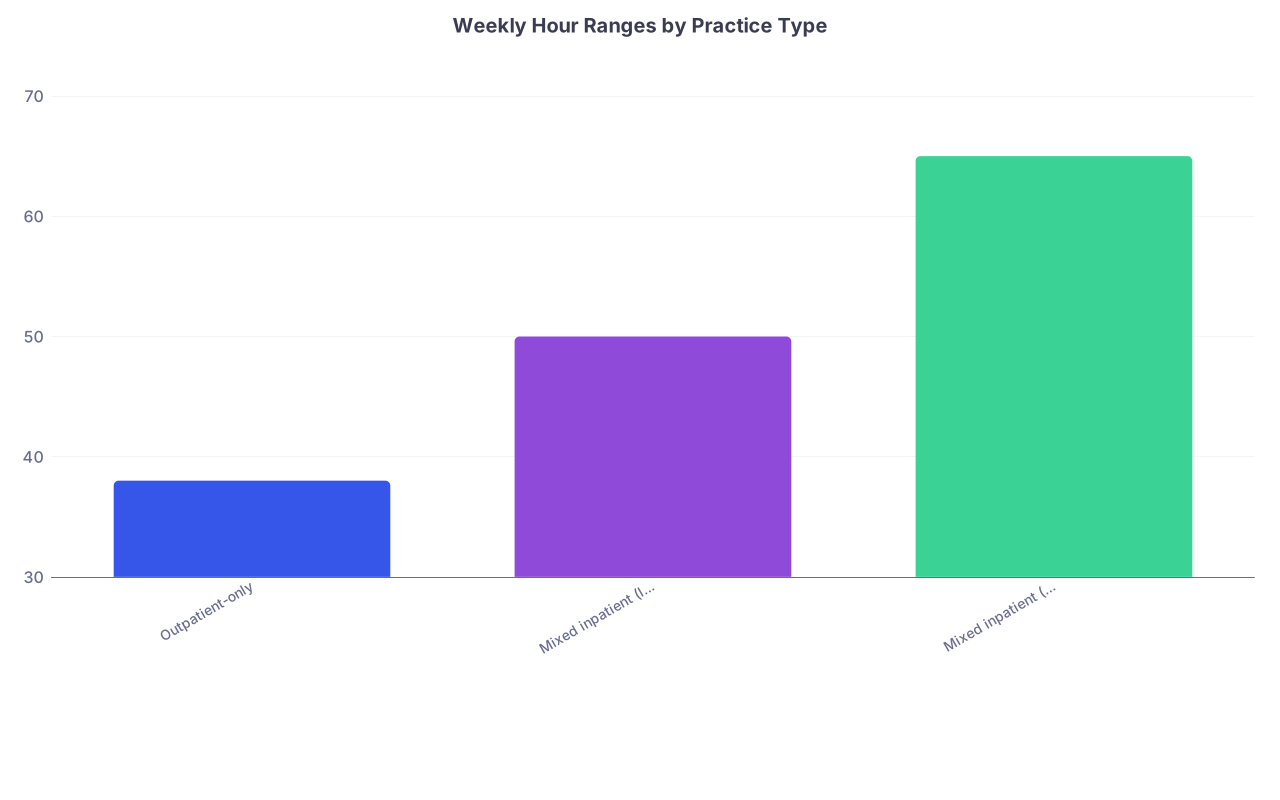
- Commonly in the range of 40–55 hours/week, substantially below many high-acuity specialties.
- Weekends:
- Often free or light; inpatient consults may require rare weekend coverage, depending on the institution.
While programs must still adhere to ACGME duty hour rules (80 hours/week averaged over 4 weeks, etc.), most genetics residents report working far below the cap. Medical genetics is one of the clearest examples of a lifestyle residency in terms of duty hours.
Nature of Clinical Work
Medical genetics clinics are generally subspecialty consultation clinics, not high-volume walk-in or acute-care clinics. A typical clinic day might include:
- 3–6 new patient consults
- 3–8 follow-up visits
- Multidisciplinary case conferences or tumor boards
- Time allocated for documentation, ordering and interpreting testing, and coordination with labs and other services
These visits tend to be longer in duration than general internal medicine or pediatrics visits (45–90 minutes for new patients is common), with more emphasis on:
- Detailed history-taking and phenotype description
- Constructing and analyzing pedigrees
- Selecting and interpreting genetic tests
- Counseling patients and families about risk, prognosis, and testing options
This deliberate pace means:
- Less of the “clinic churn” or high-velocity throughput stress
- More cognitive and emotional demands, but less physical exhaustion and time pressure
Call Responsibilities
Call can vary by institution, but typical features include:
Frequency:
- Some programs have home call every 4–7 days or share call among multiple attendings and fellows.
- Others may have genetics fellows or attendings as primary call, with residents backing up.
Overnight Calls:
- Many programs have home call only, without in-house requirements.
- Urgent calls often involve:
- Newborn screening follow-ups
- Inpatient consults for suspected metabolic or genetic conditions
- Questions from other services about testing or management
Weekends:
- Rare in-person responsibilities; more often just answering urgent pages/calls.
- Inpatient rounding, if required, is typically limited and not daily.
Compared to fields like surgery, OB-Gyn, or emergency medicine, the genetics match offers relatively favorable call structures. For an MD graduate prioritizing predictable evenings and limited overnight disruptions, medical genetics is often attractive.
Emotional and Cognitive Workload: Stress Without Chaos
Even in a lifestyle residency, the content of your work matters. Medical genetics is not emotionally light, even if the hours are manageable.
Emotional Intensity
You will often work with:
- Children and adults with rare, sometimes life-limiting genetic conditions
- Families dealing with diagnostic odysseys, uncertainty, or guilt
- Prenatal cases with abnormal testing that may influence pregnancy decisions
- Oncologic patients learning about hereditary cancer syndromes
Typical emotionally challenging scenarios include:
- Explaining a new, serious genetic diagnosis that has significant implications for prognosis and quality of life
- Counseling a couple about a high risk of recurrence in future pregnancies
- Discussing incidental or secondary findings that affect multiple family members
- Communicating uncertain or variant of unknown significance (VUS) results and what they mean for surveillance or treatment
This is intense, but the pace and environment soften the load:
- You have scheduled, extended visits for counseling.
- You are not dealing with rapid-fire emergencies.
- You often work alongside genetic counselors, social workers, and multidisciplinary teams, sharing the emotional burden.
Many physicians find this a sustainable form of stress—profound but not chaotic. The work encourages developing strong communication skills and emotional resilience, essential for long-term work-life balance.
Cognitive Demands
From an intellectual standpoint, medical genetics is:
- Deeply analytical and evolving, given constant advances in genomic testing and variant interpretation.
- Heavily based in pattern recognition, molecular biology, and increasingly, genomics informatics.
You’ll need to stay current with:
- Updates in gene panels, exome and genome sequencing methodologies
- Interpretation guidelines (e.g., ACMG variant classification)
- Targeted therapies and precision medicine (especially in oncology and metabolic genetics)
For many MD graduates, this cognitive engagement is a major benefit: the work remains interesting without the physical exhaustion of high-intensity procedural specialties. But it does require:
- Ongoing, self-directed learning
- Comfort with uncertainty and incomplete data
- Willingness to adapt to rapidly changing technologies

Long-Term Career Lifestyle: Beyond Residency
When assessing work-life balance, it’s not enough to look at residency alone. You’re also making a long-term decision about your future as an attending. Medical genetics offers several practice models that can meaningfully shape your lifestyle.
Typical Attending Schedules
Many medical genetics attendings in academic centers work:
- 4–5 days per week, roughly 8:00 AM–5:00 PM
- Primarily outpatient with occasional inpatient consults
- Protected time for:
- Teaching residents and fellows
- Research or quality improvement
- Administrative work or multidisciplinary conferences
Compared to more acute specialties, there is often:
- Lower frequency of nights and weekends
- Limited or no in-house overnight call
- Fewer interruptions during personal time, especially for outpatient-focused geneticists
This structure can be ideal for physicians seeking a sustainable, family-friendly schedule.
Practice Settings and Their Lifestyle Impact
Academic Medical Centers
- Most common environment for medical genetics residency graduates.
- Lifestyle benefits:
- Team-based care with genetic counselors and trainees
- Predictable clinics and conferences
- Opportunities for part-time work or reduced clinical FTE in some institutions
- Potential trade-offs:
- Academic expectations (research, publications, teaching) can encroach on personal time.
Children’s Hospitals and Specialty Clinics
- Focus on pediatric genetic conditions, metabolic disorders, neurogenetics, etc.
- Often very well-structured clinics.
- On-call duty hours usually less demanding than pediatric intensive care or neonatology.
Diagnostic Laboratories / Industry Roles
- Variant interpretation, test development, or medical director roles.
- Often highly predictable daytime work; many positions are fully or partially remote.
- Minimal patient-facing emotional labor; trade-off is more screen-based analytic work.
Telehealth and Remote Genetics
- Increasingly common, particularly for underserved regions.
- Can offer flexible scheduling, work-from-home options, and efficient use of time.
- Great potential for excellent residency work life balance once in attending practice.
Income vs Lifestyle
Medical genetics is not among the highest-paying specialties, especially compared to procedural fields. However:
- Compensation is generally comfortable and competitive within nonprocedural, cognitive subspecialties.
- The trade-off is substantial in terms of lifestyle: fewer hours, more predictability, less burnout risk relative to many high-intensity specialties.
For an MD graduate, the calculus often becomes:
Slightly lower earnings but significantly higher control over time and stress.
Fit Assessment: Is Medical Genetics a Good Work-Life Match for You?
When thinking about the allopathic medical school match and choosing a residency, you should align your personal values with the realities of a medical genetics residency.
Indicators Medical Genetics May Be a Great Lifestyle Fit
You might thrive in medical genetics if you:
- Value predictable duty hours and limited nights/weekends.
- Prefer deep thinking and analysis over rapid, high-volume clinical throughput.
- Enjoy counseling and complex conversations more than acute procedural interventions.
- Are comfortable with uncertainty and being honest when answers are incomplete.
- Seek a lifestyle residency that still offers rich intellectual and academic stimulation.
- Are open to long-term roles in academia, specialized clinics, or industry with flexible structures.
Red Flags: When Genetics Might Not Match Your Needs
Medical genetics might not be the right fit if:
- You crave procedures and hands-on interventions.
- You enjoy high-adrenaline, fast-paced acute medicine (e.g., trauma surgery, EM).
- You prefer seeing immediate, concrete outcomes from your interventions.
- The idea of long, detailed counseling sessions feels draining rather than rewarding.
- You would feel unsatisfied with a highly specialized, niche focus.
Balancing Genetics with Other Lifestyle-Friendly Specialties
Some MD graduates consider medical genetics alongside other specialties known for residency work life balance, such as:
- Dermatology
- Pathology
- Radiation oncology
- Physical medicine and rehabilitation
- Certain outpatient-focused internal medicine subspecialties
Compared to these, medical genetics stands out because:
- It combines direct patient interaction with strong academic and molecular medicine components.
- It is central to the growth of precision medicine, creating diverse career options.
- It tends to avoid the intense competition of some ultra-lifestyle specialties (e.g., dermatology), making the genetics match more accessible for many applicants.
Practical Advice for MD Graduates Entering the Genetics Match
1. Understand Program Structure in Detail
When evaluating programs for the allopathic medical school match:
Ask explicitly about:
- Typical weekly duty hours during genetics years
- Call structure: frequency, home vs. in-house, weekend expectations
- The balance of inpatient vs outpatient work
- Access to genetic counselors, social workers, and other support staff
Clarify the breakdown if it’s a combined program (e.g., years spent in pediatrics vs genetics and when the schedule becomes more predictable).
2. Shadow and Elect in Medical Genetics
Before committing to a medical genetics residency:
- Arrange a clinical elective in adult or pediatric genetics, cancer genetics, or metabolic clinics.
- Observe:
- How physicians structure their day
- The emotional tone of patient visits
- How much time they spend on documentation and test interpretation
- Talk to current residents and fellows candidly about real-world lifestyle, not just what’s shown on recruitment materials.
3. Clarify Your Long-Term Lifestyle Goals
Reflect honestly:
Are your top priorities:
- Time with family?
- Research and academic work?
- Geographic flexibility or remote/telehealth options?
- Avoiding overnight and weekend duty hours?
Map these to genetics-specific opportunities:
- Lab or industry roles for remote and flexible schedules
- Outpatient-only clinical practices for predictable days
- Combined academic roles for those who enjoy teaching and research
4. Consider the “Two-Phase” Lifestyle of Combined Programs
If you pursue Peds/Genetics or IM/Genetics:
- Recognize that early residency years may feel similar to standard pediatrics or internal medicine:
- More nights and weekends
- Heavier inpatient workload
- But understand that your work-life balance dramatically improves as you progress into the dedicated genetics years.
Keeping this long view can help you stay grounded through initial intensive rotations.
FAQs: Work-Life Balance in Medical Genetics for MD Graduates
1. How many hours per week do medical genetics residents typically work?
In the dedicated genetics years, most residents report working around 40–55 hours per week, often at the lower end in outpatient-heavy programs. This is well within ACGME duty hours and notably lighter than many core residencies. In combined programs, the early years (e.g., pediatrics or internal medicine) may be closer to traditional residency hours, but the later genetics years are markedly more balanced and predictable.
2. How demanding is call in a medical genetics residency?
Call is usually home call, not in-house, and is often shared among multiple physicians. Urgent calls tend to be consultative (e.g., advising on metabolic emergencies, newborn screening follow-up, inpatient genetics consults) rather than hands-on acute care. Overnight pages may occur but are generally less frequent and less disruptive than in high-intensity specialties. Some attending roles later in your career may have minimal or no call.
3. Is the emotional burden high in medical genetics despite the good hours?
The emotional burden can be significant because you often deliver serious or life-changing information to patients and families. However, the environment is usually calm, with scheduled, longer visits that allow thoughtful counseling. Team-based care with genetic counselors and other professionals also distributes the emotional load. Most physicians find this emotionally meaningful and sustainable, especially compared to the chaotic stress of acute care environments.
4. What kind of work-life balance can I expect as an attending medical geneticist?
Most attending medical geneticists, particularly in academic or large health-system settings, enjoy:
- Regular weekday hours (about 8:00 AM–5:00 PM)
- Primarily outpatient work
- Limited nights/weekends and mostly home call if any
- Opportunities for part-time, telehealth, or laboratory/industry roles with even more lifestyle flexibility
While compensation is moderate compared to procedural fields, the combination of predictable duty hours, lower burnout risk, and evolving career options makes medical genetics one of the most lifestyle-friendly specialties available for MD graduates.
By carefully considering your values—predictable hours, emotional resilience, intellectual curiosity, and long-term career flexibility—you can decide whether a medical genetics residency and the genetics match align with your ideal work-life balance as an MD graduate.