
Understanding Work–Life Balance in Urology for the Non‑US Citizen IMG
For a non-US citizen IMG considering urology, “work–life balance” is not a simple yes or no question. Urology is a surgically oriented specialty with demanding training, call responsibilities, and long duty hours—yet it also has a strong reputation as a relatively “lifestyle residency” compared with many other surgical fields. The reality sits somewhere in between and varies significantly by program, visa status, and practice setting.
This article unpacks what work–life balance actually looks like for a foreign national medical graduate in urology: during residency, fellowship, and early attending practice. You’ll find concrete examples, realistic timelines, and targeted advice for choosing programs and planning a sustainable career while navigating the complexities of the urology match as a non-US citizen IMG.
1. Is Urology Truly a “Lifestyle” Surgical Specialty?
The phrase “lifestyle residency” gets mentioned frequently with urology, especially in comparison to general surgery, neurosurgery, or orthopedics. It’s important to understand precisely what that means—and what it doesn’t.
1.1 How Urology Compares to Other Specialties
On a spectrum of work intensity in residency, urology typically falls here:
- Most intense surgical residencies: General surgery, neurosurgery, vascular surgery, cardiothoracic surgery, orthopedic surgery
- Moderately intense but relatively more lifestyle-friendly surgeries: Urology, otolaryngology (ENT), ophthalmology (still surgical, but very different scope)
- Medical specialties with better average balance: Family medicine, psychiatry, dermatology, pathology, radiology (in most settings)
Key comparative points:
- Duty hours: Urology residents are still bound by ACGME 80-hour duty hour limits, just like any surgical specialty. In practice, 60–80 hours per week is common, with peak periods hitting the upper range.
- Call intensity: Urology call is often less punishing than trauma-heavy general surgery. Many emergency urologic issues (renal colic, urinary retention) are urgent but not always life-threatening; however, they still require night and weekend work.
- Elective vs emergent work: A significant portion of urology practice becomes elective as an attending (oncology operations, BPH surgery, reconstructive work, infertility), which tends to allow for somewhat better control over schedule.
1.2 What “Lifestyle-Friendly” Means in Urology
For urology, “lifestyle-friendly” usually means:
- Fewer 100+ hour weeks compared with some other surgical fields
- Less chronic sleep deprivation than trauma-focused general surgery
- Better long-term control over your practice (more outpatient clinic, elective cases, subspecialty focus)
- Sustainable earning potential that may allow you to outsource some life tasks (childcare support, help with elderly parents, etc.)
What it does not mean:
- A 9–5 residency schedule
- Free evenings and weekends every week
- No night calls or holidays in the hospital
For a non-US citizen IMG, there are added layers: learning a new healthcare system, practicing in a second (or third) language, and managing visa-related restrictions—all of which can increase stress and time pressure in the early years.
2. The Urology Residency Workload: What Your Weeks Really Look Like
To assess residency work life balance realistically, you need a concrete sense of weekly life in a urology residency: clinical expectations, typical schedules, and how these evolve over training.
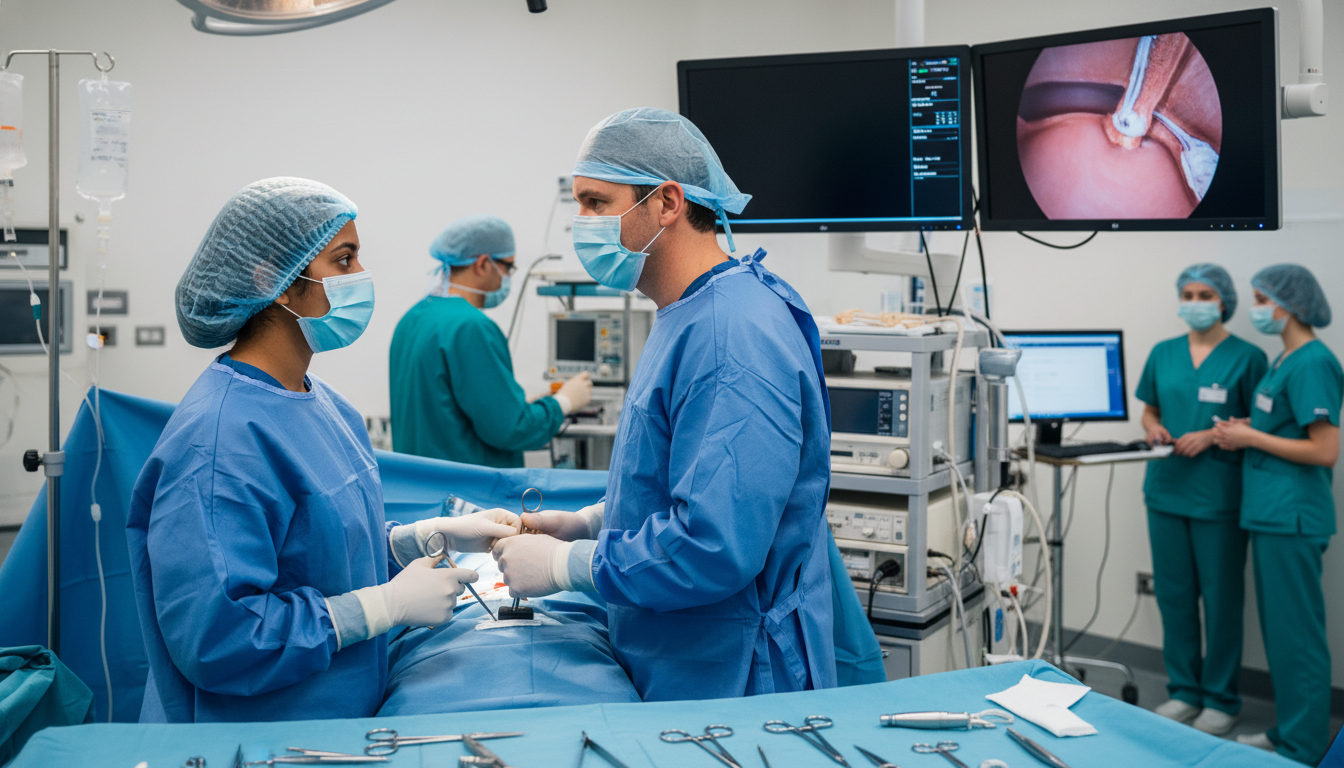
2.1 Typical Duty Hours and Daily Schedule
Although there is variability between programs, a common pattern in urology residency includes:
Weekdays (PGY-2 to PGY-5):
- 06:00–06:30 – Pre-rounding on inpatients
- 06:30–07:30 – Team rounds, sign-out, or teaching conference
- 07:30–16:00/17:00+ – OR cases, outpatient clinics, procedures (cystoscopy, vasectomy, biopsies), consults
- 17:00–19:00 – Wrap up notes, late cases, floor issues, consults, sign-out to night team
Many residents report 60–75 hours/week as common, with some rotations approaching the 80-hour limit.
Weekends:
- Typically 1–2 weekends per month with:
- Rounds in the morning
- Day call responsibilities for floor issues and consults
- Night call (in-house or home call, depending on program and rotation)
2.2 Call Structure: Nights, Weekends, and Emergencies
Urology call is a key factor in work life balance:
In-house vs home call:
- Larger academic centers may have in-house urology residents overnight.
- Some rotations or affiliated hospitals use home call, which can range from quiet to extremely busy, depending on ED volume and referral patterns.
Common urologic emergencies:
- Obstructing stones with sepsis
- Urinary retention
- Testicular torsion
- Foley catheter issues, hematuria, trauma consultations
These cases can disrupt sleep, but compared to trauma or acute general surgery, the number of true life-or-death operations at 3 AM is somewhat lower.
2.3 Progression Over the Years: Does It Get Better?
Workload and perceived work–life balance often follow this pattern:
PGY-1 (prelim/intern year, often shared with general surgery):
- Heavy floor work, ICU rotations, emergency surgery exposure
- Possibly less direct urology initially, more general surgery service
- Many non-US citizen IMGs struggle most in this year due to system adaptation
PGY-2–3 (junior urology resident):
- High call burden, front-line for consults, basic procedures
- Long hours in the OR and on the wards
- Work–life balance often feels the most strained here
PGY-4–5 (senior and chief resident):
- More autonomy and decision-making
- Slightly more control of OR days and clinic schedule
- Leadership responsibilities but often a better sense of efficiency
- Many residents report this as the most professionally rewarding, with modest improvement in balance
Overall, residency is not a “balanced” time in a conventional sense. The real goal is sustainability and preventing burnout rather than expecting a perfect personal–professional equilibrium.
3. Unique Work–Life Challenges for the Non‑US Citizen IMG
For a foreign national medical graduate, urology residency training in the US adds extra complexity beyond clinical workload. These factors matter significantly when evaluating overall quality of life.
3.1 Visa Status and Its Impact
Most non-US citizen IMGs match on:
- J-1 visa (via ECFMG)
- H-1B visa (less common in urology, but some programs sponsor)
Implications for work–life balance:
Limited flexibility to moonlight:
- Moonlighting (extra shifts for pay) may be restricted or prohibited depending on your visa type and program policy.
- Less flexibility to increase income to outsource personal burdens (e.g., childcare, family support) or to pay off debt more aggressively.
Geographic limitations after residency:
- J-1 waiver jobs (e.g., HPSA or underserved areas) might be in more rural or less-resourced settings.
- Call burden and support can be higher in small community hospitals where you may be the only urologist on call.
Administrative burden:
- Time and mental bandwidth for visa renewals, legal consultations, and immigration paperwork—often occurring during your busiest years.
3.2 Cultural and System Adaptation
Non-US citizen IMGs in urology face:
Different documentation norms:
- US-style electronic medical records (Epic, Cerner)
- Coding, billing, and documentation for procedures that may not exist or be different in your home system
Hierarchy and communication style:
- Direct communication with nursing, anesthesia, and surgical teams
- Need to quickly adapt to US expectations for disclosure, autonomy, and patient communication
Language and fatigue:
- Explaining complex procedures (e.g., radical prostatectomy, percutaneous nephrolithotomy) in a non-native language takes more cognitive effort.
- This can exacerbate fatigue and burn out faster after long duty hours.
3.3 Distance From Family and Support Systems
Being far from home introduces additional stressors:
- Time zone differences make regular family contact harder.
- Emergencies at home (ill parent, political instability, financial crises) can deeply affect your mental state with limited ability to travel.
- Major life events (weddings, funerals) are easily missed due to residency duty hours and visa travel constraints.
Practical example:
A PGY-2 urology resident on J-1 visa wants to attend a sibling’s wedding abroad. They must coordinate:
- Program director approval
- Vacation block alignment
- Visa re-entry risks and consular appointments
The administrative friction can turn what should be a restorative trip into another source of stress.
4. Strategies to Protect Your Work–Life Balance in Urology
While you cannot change the nature of residency, you can shape how you experience it. This includes informed program selection during the urology match and deliberate personal strategies once you start training.

4.1 Choosing Programs with Realistic Work–Life Balance
When researching and ranking urology residency programs as a non-US citizen IMG, ask:
1. How does the program manage duty hours?
- Do residents frequently hit or exceed the 80-hour/week limit?
- Is duty hour reporting anonymous and taken seriously?
- Are there dedicated night float systems to prevent chronic sleep deprivation?
2. What is the call schedule like?
- In-house vs home call, and how often?
- How many weekends per month are on call?
- Are PGY-2 residents heavily loaded with call compared to seniors?
3. How international-IMG friendly is the program?
- Does the program have current or past non-US citizen IMGs in urology?
- Are there clear policies on J-1 or H-1B sponsorship?
- Any institutional resources for foreign national medical graduates (immigration office, IMG support group)?
4. Does the program support wellness and time off?
- Protected vacation time and how easy it is to actually use
- Access to mental health resources, counseling, or wellness programs
- Culture around asking for help when overwhelmed
During interviews, ask seniors and juniors separately. Seniors may have more loyalty to the program, while juniors can give “fresh” perspectives on call, service load, and support.
4.2 Building Personal Efficiency and Boundaries
Your habits matter as much as the program structure.
Time management tips:
- Batch tasks: Dictate notes between cases when possible; batch inbox work rather than checking constantly.
- Standardize templates: Develop EMR templates for common notes (cystoscopy, stone follow-up, BPH consults) early in training.
- Prioritize learning over perfection: Aim for safe, accurate documentation, but avoid over-polishing notes when sleep is more valuable.
Boundary-setting examples:
- If you are post-call and the system allows, politely—but firmly—go home once officially signed out, even if others are staying “just to help.”
- Practice saying: “I’ve reached my duty hour limit for this week; is there a way to redistribute cases or consults?” when appropriate.
4.3 Mental Health and Burnout Prevention
Burnout is higher among surgical residents, and IMGs may be at elevated risk due to isolation and cultural pressures.
Helpful approaches:
Find at least one mentor who understands both urology training and the additional pressures on IMGs (senior resident, faculty member, or another foreign national medical graduate).
Schedule non-negotiable recovery:
- One evening each week where you plan not to study or do extra work, barring true emergencies.
- A consistent micro-routine, such as a 10–15 minute walk after leaving the hospital to mentally transition.
Use institutional resources:
- Resident assistance programs
- Confidential counseling
- Pastoral care or spiritual support if relevant to your background
4.4 Micro-Habits That Support Balance
Small, consistent habits matter more than rare big breaks:
- Carry healthy portable snacks to avoid going an entire shift without eating.
- Keep a short “gratitude or wins” list on your phone—briefly noting 1–2 positive things per day can protect against cynicism.
- Use language-learning or accent-reduction resources if communication feels like a chronic stressor; even 10 minutes a day over months can help you feel more confident with patients and colleagues.
5. Long-Term Outlook: Work–Life Balance After Urology Residency
Many non-US citizen IMGs are willing to endure difficult residency years if attending life offers a sustainable, fulfilling future. Urology generally delivers reasonably well on this, but there are important choices to make.
5.1 Academic vs Community vs Private Practice
Each practice type affects lifestyle differently:
Academic urology:
Pros:
- Subspecialization (oncology, female pelvic medicine, pediatrics, endourology)
- Collegial environment, residents to share call
- Protected research/teaching time in some roles
Cons:
- Lower average income compared to private practice
- Expectation of publications, meetings, committees (expands “work” beyond the clinic and OR)
Community hospital employed practice:
Pros:
- More predictable clinic and OR blocks
- Often a good balance of elective and urgent cases
- Hospital may handle business aspects (billing, staffing)
Cons:
- You may be one of few urologists, leading to heavy call
- Limited subspecialization; broad general urology practice
Private practice (solo or group):
Pros:
- Highest potential income
- More control over your schedule long term
- Ability to shape your patient population and services
Cons:
- Business risks and administrative load
- Early years can be very demanding, especially if building a practice
- Visa-related restrictions may limit initial access to private practice jobs
5.2 Typical Call and Hours as an Attending
A “typical” urology attending schedule (hospital-employed or group):
- Clinic: 2–3 days/week, 8–10 hours/day
- OR: 1–2 full days/week of elective cases
- Admin/telehealth/research: partial days for charting, meetings, etc.
- Call: 1:3 to 1:5 in many group settings, but 1:1 or 1:2 in smaller communities
For many attendings, this translates to 50–60 hours/week, which is still heavy but more stable and predictable than residency. You may be able to structure certain days for earlier finishes or no late add-on cases.
5.3 Special Considerations for Non-US Citizen IMGs Post-Training
After residency (and possibly fellowship), non-US citizen IMGs must factor:
- J-1 waiver jobs: Often in underserved areas, which may have:
- Higher on-call burden but less academic pressure
- Good opportunities for broad surgical experience
- Path to permanent residency (green card):
- Affects job mobility and the ability to shape your lifestyle long-term
- Early career may prioritize immigration-stable positions over ideal lifestyle
Still, many urologists—IMGs included—achieve a good balance within 5–10 years of completing training: stable income, planned vacations, and the ability to support family both in the US and abroad.
6. Action Plan for Non‑US Citizen IMG Applicants Seeking Balance
To integrate all of this into a concrete approach for your urology match and beyond, consider the following stepwise strategy.
6.1 Before Applying
Clarify your non-negotiables:
- Are you willing to relocate anywhere in the US for a urology residency?
- How much call or duty hours intensity are you prepared to tolerate for 5–6 years?
- Do you have specific family obligations (children, spouse, parents) that require geographic proximity or flexibility?
Research:
- Program websites and resident rosters—look for other non-US citizen IMGs.
- Case logs and resident schedules, if shared publicly.
- Location cost of living; financial stress can profoundly affect perceived work–life balance.
6.2 During Interviews and Rotations
Ask specific, non-confrontational questions:
- “On a typical week for a PGY-2 on call, what are their approximate hours and number of overnight calls?”
- “How often do residents feel they are reaching the 80-hour duty-hours limit?”
- “Are there formal wellness or mental health resources that residents actually use?”
Observe:
- Do residents look chronically exhausted, or appropriately busy but functional?
- Do they speak openly about challenges, or is there a sense of fear in criticizing workload?
- Is there diversity among the residents and faculty (including international backgrounds)?
6.3 During Residency
Revisit and adjust your expectations:
- The first years will be hard; that is true for all urology residents, US or IMG.
- Aim for relative balance—enough recovery, social life, and time for essential personal tasks—not perfection.
Protect your non-work identity:
- Maintain at least one part of your pre-residency life: a hobby, a language, a faith community, or regular calls with family.
- Avoid letting urology become 100% of your self-worth; this reduces vulnerability to burnout after adverse outcomes or conflicts.
6.4 Thinking Long-Term: Your Ideal Practice
Start asking early:
- Do you prefer complex oncologic cases in an academic center or a broad general urology practice with more predictable hours?
- Are you willing to work in a rural area (often better pay, broader scope, but heavier call) for J-1 waiver obligations?
- What level of income do you realistically need to support family obligations in two countries?
Use elective time, mentors, and fellowship opportunities to shape a career that aligns with both your professional passion and your life outside the hospital.
FAQs: Work–Life Balance in Urology for Non‑US Citizen IMGs
1. Is urology a good choice for a non-US citizen IMG who wants a lifestyle residency?
Urology is on the more lifestyle-friendly end among surgical specialties, but it is still a demanding field with long duty hours during residency. If your primary priority is minimal nights and weekends or a very low-intensity schedule, non-procedural specialties (like psychiatry or pathology) may offer better baseline balance. However, if you enjoy the OR and procedures, urology often provides a more sustainable long-term lifestyle than many other surgical options.
2. How does being a foreign national medical graduate affect my work–life balance in urology?
You will face additional stressors: visa limitations, cultural and language adjustment, distance from family, and sometimes implicit bias. These do not change the core duty hours, but they add cognitive and emotional load. Choosing IMG-friendly programs, finding mentors, and planning for immigration stability early can help offset some of this pressure.
3. Can I have a family during urology residency as a non-US citizen IMG?
Yes, many residents successfully marry and have children during training. The main considerations are call schedules, parental leave policies, childcare logistics, and visa/travel constraints for extended family support. When ranking programs, ask directly about parental leave experiences and schedule flexibility for residents with young children.
4. Does the work–life balance improve significantly after finishing urology residency?
For most urologists, yes. As an attending, you typically have more predictable schedules, fewer total hours than during residency, and greater control over your clinical focus. Call remains part of life, but its burden depends heavily on practice setting and group size. Many urologists feel that the sacrifices of residency are compensated by a stable, rewarding career with decent work–life balance within a few years of completing training.
In summary, for a non-US citizen IMG, urology offers a challenging but potentially very rewarding path. It is not a low-intensity lifestyle specialty, but compared with other surgical fields, it often allows a more sustainable balance—particularly after training—provided you choose your program and practice setting thoughtfully, and protect your own well-being along the way.