Overview: Why Nuclear Medicine Can Be a Lifestyle-Friendly Choice for Caribbean IMGs
Nuclear medicine is often described as a “thinking specialty”—highly diagnostic, technology-driven, and generally more predictable than many hospital-based fields. For a Caribbean IMG evaluating residency work life balance and long-term lifestyle, nuclear medicine can be an attractive option, especially if you enjoy imaging, physiology, and multidisciplinary collaboration more than overnight emergencies and procedures.
As a Caribbean medical school graduate, you may have additional concerns beyond the usual specialty choice questions:
- Will a nuclear medicine residency in the U.S. allow a reasonable balance between study, work, and immigration/visa tasks?
- How compatible is nuclear medicine with family life, financial obligations, or living far from your support network in the Caribbean?
- Is the specialty realistically attainable for a Caribbean IMG, especially those from schools like SGU (St. George’s University), AUC, or Ross?
- What are the long-term lifestyle and duty hours like after training?
This article focuses specifically on work-life balance in nuclear medicine for Caribbean IMGs—what to expect in residency, how to optimize your experience, and how to position yourself competitively for the nuclear medicine match coming from a Caribbean medical school background.
Understanding Nuclear Medicine: Workflow and Lifestyle Basics
Nuclear medicine centers on the use of radiopharmaceuticals to diagnose (and sometimes treat) disease. Day-to-day work revolves around:
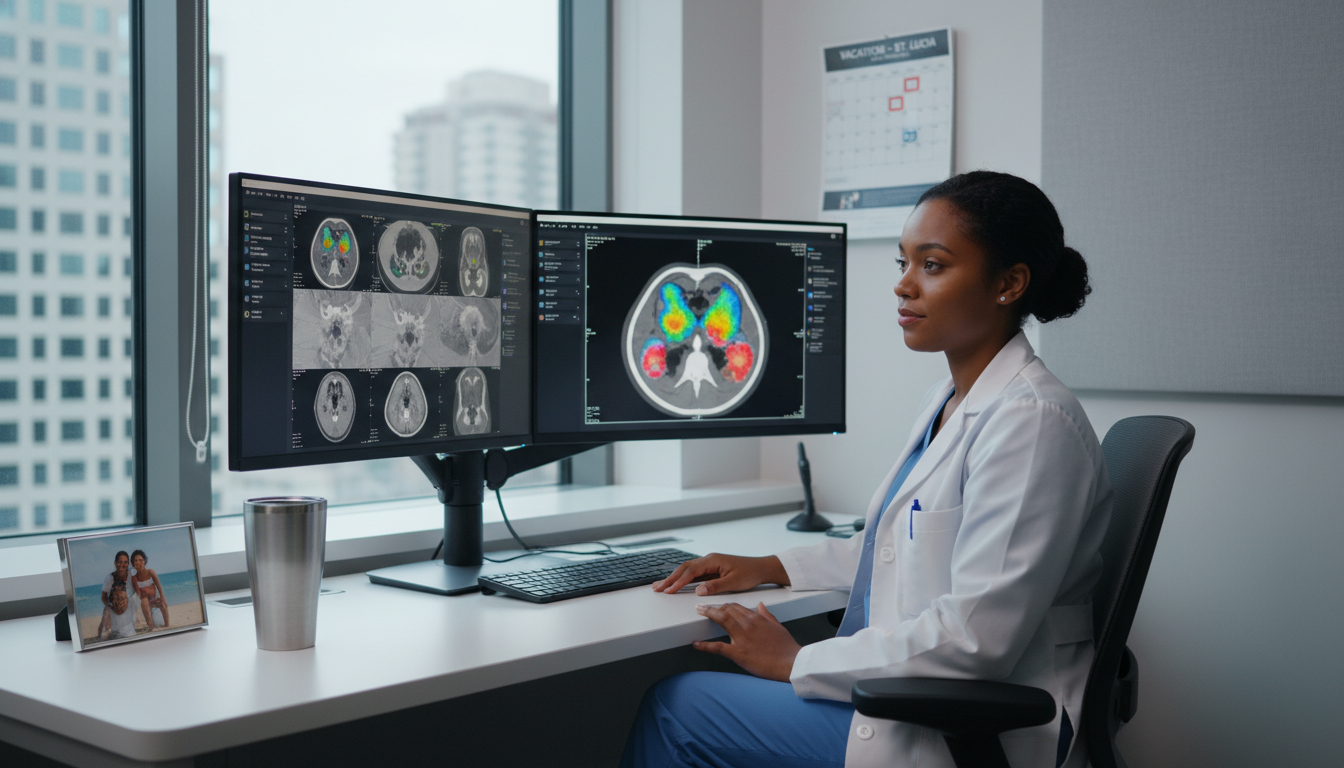
- Interpreting SPECT, PET, and hybrid PET/CT or SPECT/CT studies
- Overseeing radiotracer administration and quality/safety protocols
- Participating in tumor boards, cardiology/imaging conferences, and multidisciplinary rounds
- Increasingly, involvement in theranostics (e.g., I-131 therapies, Lu-177 DOTATATE, Lu-177 PSMA)
Typical Clinical Workflow
A standard day in nuclear medicine is more structured than in many acute specialties:
- Daytime-focused: Most studies are scheduled during daytime hours
- Limited emergencies: Urgent nuclear medicine scans (e.g., V/Q for suspected PE, GI bleed studies) exist but are far less frequent than CT, MRI, or emergent surgery
- Predictable lists: You often know your daily case volume from the start of the day
- Team-based: Close work with technologists, physicists, radiologists, cardiologists, oncologists, and endocrinologists
As a result, nuclear medicine is considered a lifestyle residency by many physicians, particularly when compared to surgery, emergency medicine, or critical care.
How This Translates to Work-Life Balance
Key lifestyle advantages:
- More regular hours: Many programs approximate a “business hours” schedule, e.g., ~7:30–5:30
- Less overnight call: Some programs have home call for emergencies (e.g., after-hours PET/CT or bleeding scans), but the frequency is usually lower than procedural specialties
- Lower acute stress: Few real-time life-or-death decisions, more measured diagnostic reasoning
- Stable clinic volume: Less susceptible to sudden surges seen in ED-driven services
For a Caribbean IMG, this often means:
- More consistent time to study for boards, manage visa/immigration paperwork, and handle life logistics
- A more predictable environment if you’re supporting family back home or raising children in a new country
- A career that pairs well with academic goals, research, or leadership interests

Residency Structure, Duty Hours, and Daily Life in Nuclear Medicine
To judge whether a specialty is truly lifestyle-friendly, you need to understand the structure of its training. Nuclear medicine training pathways can vary (separate nuclear medicine residency vs. radiology + subspecialty), but the core workflow has similar themes.
Training Pathways and Their Lifestyle Implications
Common U.S. training routes include:
Independent Nuclear Medicine Residency (1–3 years)
- Often taken after at least one year of clinical training (e.g., prelim medicine, surgery, or transitional year)
- Some programs are two or three years total depending on prior imaging experience
- Can be relatively small departments with intimate mentorship
Diagnostic Radiology Residency + Nuclear Medicine/Nuclear Radiology Fellowship
- 4 years of diagnostic radiology + 1-year fellowship
- Radiology residency years can have more intensive call than pure nuclear medicine
- Still, compared with surgical or interventional fields, radiology is often viewed as more lifestyle-compatible
For Caribbean IMGs, both routes exist, but the independent nuclear medicine residency track may sometimes be more approachable if you face stiffer competition for categorical radiology positions.
Duty Hours in Nuclear Medicine Residency
All ACGME-accredited residencies, including nuclear medicine, follow duty hours regulations:
- Max 80 hours per week, averaged over 4 weeks
- One day off in seven, averaged over 4 weeks
- In-house call limited with specific rest periods
In practice, most nuclear medicine residents fall well below the upper duty hour limit:
- Typical weeks: 40–60 hours, depending on rotation and institution
- Occasional busier weeks if paired with cross-coverage or rotating with other imaging services
- Some home call or backup call, but usually not equivalent to high-intensity in-house overnight call
Compared with many fields, nuclear medicine is rarely a 70–80 hour/week residency.
A Sample Week-in-the-Life of a Nuclear Medicine Resident
To illustrate, here is a representative schedule (actual hours vary by program):
Monday–Friday
7:30 AM – 5:30 PM
- 7:30–8:00: Attend sign-out or morning case conference
- 8:00–12:00: Read SPECT/CT and PET/CT studies; directly supervise selected exams
- 12:00–1:00: Noon conference or didactics (physics, radiobiology, board review)
- 1:00–4:30: Additional study interpretation; therapy planning (e.g., I-131, Lu-177), consult calls with referring teams
- 4:30–5:30: Finish dictations, QA with attending, follow-up on complex cases
Call Structure (Example)
- Home call 1–4 nights per month and occasional weekend days, depending on program
- Rare in-house overnight shifts—if they exist, they’re usually tied to broader radiology coverage
This regular structure is highly conducive to:
- Setting a study routine for well-timed nuclear medicine and radiology board exams
- Maintaining sleep hygiene and mental health
- Developing a solid research or QI project without chronic time pressure
Academic vs Community Programs: Lifestyle Nuances
- Academic centers
- May have higher case volumes and more complex oncology cases
- More multidisciplinary conferences, but often better educational structure
- Often better for research-minded Caribbean IMGs and those aiming for academic careers
- Community programs
- May have lighter call and fewer conferences
- Potentially more predictable day-to-day flow
- Sometimes fewer research expectations but also fewer research opportunities
Both settings can still be lifestyle-friendly, but you should ask targeted questions during interviews (see advice later) to gauge real-world duty hours and expectations.
Caribbean IMG-Specific Factors: Balancing Training, Immigration, and Life
Caribbean IMGs navigate unique pressures: visa requirements, financial obligations, stigma about certain Caribbean schools, and cultural adjustment. Nuclear medicine’s structure can mitigate some of this stress—but only if you plan intentionally.
The Caribbean Medical School Residency and Nuclear Medicine
Graduates from Caribbean schools (including SGU, AUC, Ross, etc.) do match into imaging and nuclear specialties, though competition is real. In this context:
- Some Caribbean schools, especially SGU, maintain data on SGU residency match successes in radiology/nuclear medicine and related fields.
- Reviewing these statistics can help you:
- Identify programs more IMG-friendly
- Understand realistic match expectations
- Strategically plan your USMLE and clinical rotation performance
Your Caribbean medical school residency strategy should:
- Diversify: Apply to both nuclear medicine residencies and compatible backup specialties (e.g., internal medicine with possibility of imaging fellowship).
- Leverage rotations: Aim for U.S.-based rotations in radiology or nuclear medicine early enough to earn strong letters.
- Highlight strengths: Emphasize your adaptability, cross-cultural communication, and prior imaging exposure.
Visa and Immigration Considerations
Work-life balance is affected not just by clinical hours, but by administrative load:
- Visa holders (J-1, H-1B) must manage:
- DS-2019/H-1B paperwork
- Travel planning for visits home
- Long-term strategy (e.g., waiver jobs, green card pathways)
The lower-intensity schedule in nuclear medicine can give you:
- More bandwidth to navigate immigration logistics
- Flexibility to attend visa appointments, meet with attorneys, and manage documentation
When interviewing, Caribbean IMGs should explicitly ask:
- “How many current residents are IMGs and on visas?”
- “Does your program sponsor J-1 and/or H-1B?”
- “Has any resident had visa-related issues or delays, and how did the program support them?”
Transparent answers will tell you whether the work environment and administrative culture support a sustainable life as an IMG.
Financial and Family Responsibilities
Caribbean education is often expensive; many graduates enter residency with significant loan burdens and family expectations. Nuclear medicine’s lifestyle can help in ways such as:
- Reduced burnout risk, allowing you to maintain side projects (within policy limits), research stipends, or moonlighting (later in training, where allowed)
- More stable schedule to:
- Call family in the Caribbean regularly
- Manage finances, budgeting, and loan repayment planning
- Participate in community or faith activities that keep you grounded
However, be realistic: nuclear medicine is not the highest-paying imaging specialty compared to, say, interventional radiology. Work-life balance is favorable, but you should also study:
- Long-term job market
- Academic vs private practice roles
- Reimbursement trends for PET/CT and theranostics

Advanced Work-Life Balance: Optimizing Your Nuclear Medicine Residency
Even within a lifestyle-friendly field, your choices can dramatically shape your experience. As a Caribbean IMG in nuclear medicine, be proactive in managing your time, expectations, and career development.
Strategy 1: Choose Programs with Clear Structure and Transparent Expectations
On interviews and virtual info sessions, ask pointed questions:
- “What is the average weekly duty hours for residents in your program?”
- “How often do residents take night or weekend call, and is it in-house or home call?”
- “Do residents routinely stay late to finish cases, or is there a cut-off/rollover system?”
- “What proportion of time is spent on didactics, conferences, and self-study vs pure service work?”
Look for programs where:
- Attendings actively protect resident education time
- Case volume is adequate for learning but not overwhelming
- Residents and fellows appear calm, supported, and collegial rather than exhausted or demoralized
Strategy 2: Establish Boundaries and Professional Habits Early
To sustain balance:
- Protect sleep: Even with relatively lighter hours, late-night reading or screen time can erode rest.
- Set a study schedule: For example, 60–90 minutes of focused board prep 4–5 days a week, instead of cramming before exams.
- Communicate proactively:
- Let faculty know your goals (e.g., board scores, research) so they can mentor efficiently.
- If you feel overburdened, speak early rather than letting burnout accumulate.
Healthy boundaries are not unprofessional; they’re essential for safe, high-quality patient care.
Strategy 3: Integrate Wellness into Your Routine
Work-life balance doesn’t automatically happen just because the specialty is structured:
- Exercise: Find a gym near the hospital or your apartment; short, regular sessions work better than ambitious but infrequent workouts.
- Nutrition: Pack snacks, hydrate, and avoid relying solely on cafeteria or vending-machine food.
- Mental health:
- Identify local therapists, support groups, or counseling services.
- Many hospitals have employee wellness programs; don’t hesitate to use them.
As a Caribbean IMG, consider also:
- Local Caribbean diaspora communities for social and cultural support
- Video calls with family at consistent times, anchored around your relatively predictable schedule
Strategy 4: Plan for Long-Term Career Fit
Work-life balance in residency is only half the story; look ahead to attending life:
- Academic nuclear medicine:
- Often has structured hours, protected research time, and predictable call
- Good fit if you like teaching and conferences
- Private practice / hybrid imaging groups:
- May offer higher compensation but variable schedules, depending on group size and coverage models
- Theranostics-focused practices:
- Growing field with both outpatient and inpatient components
- Can be rewarding but may involve more coordination and on-site time
During residency, shadow attendings in multiple settings if possible. Ask them directly:
- “What does your typical week look like?”
- “How many hours a week do you realistically work, including home reading and administrative tasks?”
- “How does your practice support physician wellness and time off?”
This helps you match your future job to your personal definition of lifestyle—not just what others say is “easy” or “hard.”
Matching into Nuclear Medicine as a Caribbean IMG While Prioritizing Lifestyle
Finally, how do you position yourself for the nuclear medicine match without sacrificing your well-being?
Academic and Application Priorities
To maximize your match chances:
- USMLE Scores: Solid Step 2 CK performance is particularly important as many programs look closely at it for IMG candidates.
- Clinical Rotations:
- Aim for U.S.-based rotations in radiology, nuclear medicine, or internal medicine at institutions that host nuclear medicine programs.
- Seek strong, detailed letters of recommendation that speak to your analytical skills, reliability, and communication.
- Research and QI:
- Even small imaging or oncology projects can be valuable; nuclear medicine leadership appreciates candidates who show genuine interest in the field.
- Case reports on PET/CT findings, retrospective oncology imaging analyses, or radiation safety projects all demonstrate commitment.
Balancing Application Effort with Personal Well-Being
Application season can be all-consuming—especially for Caribbean IMGs who may feel pressure to “overdo” everything. Protect your lifestyle by:
- Planning a realistic ERAS strategy:
- Targeted list of nuclear medicine programs that are IMG-friendly
- Parallel backup specialty (e.g., internal medicine) to reduce anxiety
- Batching tasks:
- Assign specific weekly blocks for personal statement editing, email outreach, and application review rather than reacting continuously.
- Limiting comparison:
- Resist constant comparison to peers’ social media posts or forum gossip; focus on objective tasks (scores, research, letters).
Interview Season: Assessing Lifestyle Fit
During interviews and virtual tours, observe:
- Resident demeanor: Do they look rested and engaged, or burned out and rushed?
- Facilities: Is there a comfortable reading room, adequate workstations, and space for residents to eat/rest?
- Scheduling culture:
- Do attendings talk about cutting residents loose once work is done?
- Are weekends routinely encroached upon, or clearly protected?
Make notes immediately after each interaction. When ranking programs, weigh supportive culture and realistic duty hours as heavily as prestige or case volume—especially if sustainable lifestyle is a core priority for you.
FAQs: Work-Life Balance and Nuclear Medicine for Caribbean IMGs
1. Is nuclear medicine really a “lifestyle residency,” or is that reputation exaggerated?
Nuclear medicine is genuinely more lifestyle-friendly than many acute-care specialties. Most residents report 40–60 hours per week, with limited nighttime emergencies and more predictable days. That said, intensity varies by program and rotation, and you still must handle exams, research, and conferences. It is not “easy,” but it is usually more controllable and structured than surgical fields or ED-based disciplines.
2. As a Caribbean IMG, is nuclear medicine too competitive to be practical?
Nuclear medicine is a smaller field, and Caribbean medical school residency applicants absolutely do match into it, particularly from schools like SGU that have established U.S. clinical sites. It’s not as cutthroat as some other specialties, but you still need strong USMLE scores, U.S. clinical experience, and ideally some imaging- or oncology-related research. A thoughtful strategy—including backup specialties—keeps your options open.
3. How do duty hours in nuclear medicine residency compare with diagnostic radiology?
Diagnostic radiology residencies typically have more intensive call responsibilities, especially on night float or ED rotations. Nuclear medicine residency often has fewer and lighter call duties, with more home call than in-house overnight shifts. Both are more lifestyle-friendly than many procedural specialties, but pure nuclear medicine generally has less overnight disruption and more consistent daytime workflow.
4. What can I do during medical school to prepare for a balanced life in nuclear medicine?
During your Caribbean medical school years, focus on:
- Building a solid foundation in physiology, anatomy, and imaging basics
- Achieving strong USMLE Step 2 CK performance
- Completing U.S. rotations in radiology/nuclear medicine when possible
- Participating in simple imaging-related research or case reports
- Practicing good habits: time management, regular exercise, and proactive communication
These same habits will serve you in residency, allowing you to fully benefit from nuclear medicine’s lifestyle advantages while managing the unique pressures of being a Caribbean IMG.
By understanding the realities of nuclear medicine training, the nuances of the nuclear medicine match, and the specific challenges Caribbean IMGs face, you can make an informed, strategic choice. For many Caribbean graduates, nuclear medicine offers a rare combination of intellectual challenge, stable duty hours, and long-term work-life balance—a combination well worth serious consideration.