
Overcompensating for Low Scores: Extracurriculars That Look Desperate
What do program directors really think when they see you suddenly went from zero volunteering to “200 hours in 3 months” right after a low Step score?
They do not think, “Wow, so dedicated.”
They think, “This applicant is scrambling.”
If you have a low Step score, you’re vulnerable. And that’s exactly when people make their worst application decisions—rushed, performative, and transparently desperate. I’ve watched otherwise strong candidates torpedo their chances not because of the score itself, but because of how they reacted to it.
Let’s walk through the extracurricular moves that scream “panic” instead of “potential”—and what to do instead.
The Core Problem: Trying to Outrun Your Score With Noise
A low Step score is like a loud alarm in your file. You won’t mute it by throwing glitter on the rest of the application.
Programs don’t reject you because you’re not “busy enough.” They reject you because:
- Your clinical performance looks average or inconsistent
- Your letters are vague or lukewarm
- Your Step scores raise concern about board passing
- Your application doesn’t show any coherent narrative
When you respond to a low score by frantically stacking “stuff” on your CV, you usually make all of that worse. Why?
Because desperation has a pattern. It shows up as:
- Sudden, uncharacteristic activity spikes right after score release
- Superficial, low-impact roles with inflated descriptions
- “Any opportunity I can get” rather than “This fits who I am and where I’m headed”
Program directors are not dumb. They see hundreds of applications a year. They can tell who’s been actually building something over time—and who panicked in June.
Desperate Move #1: Last-Minute, High-Hour Volunteering Sprints
You know the story. Score comes back lower than you wanted. Someone says, “You need more service.” Suddenly you’re doing 10–15 hours a week at three different places.
Soup kitchen. Free clinic. Health fair. Maybe tutoring. All started in the same month.
If it looks like you’re trying to buy character in bulk, it backfires.
The Red Flags PDs Notice
- Start dates all cluster right after Step 1 or Step 2 CK scores post
- Short duration with oddly high hours (“70 hours in 6 weeks”)
- No clear connection to your specialty interest
- No progression in responsibility—just “volunteer,” “volunteer,” “volunteer”
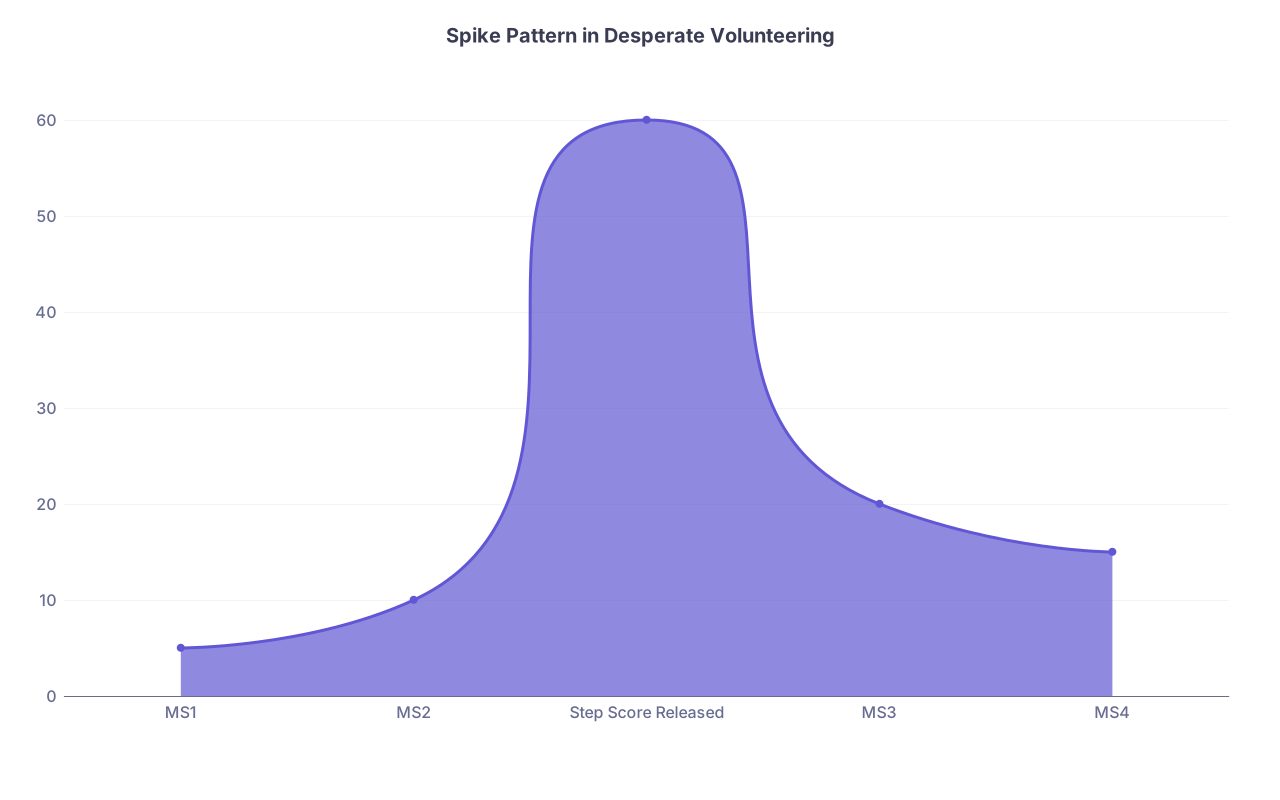
| Category | Value |
|---|---|
| MS1 | 5 |
| MS2 | 10 |
| Step Score Released | 60 |
| MS3 | 20 |
| MS4 | 15 |
Program directors have literally said in meetings:
“This guy suddenly found religion in community service…right after his 214 came back.”
Not flattering.
What You Should Do Instead
If you already have some service:
- Deepen one existing commitment. Take on a small leadership or continuity role.
- Focus on quality, consistency, and reflection—something letters can talk about.
If you have almost nothing:
- Start one activity that actually aligns with your interests or specialty.
- Accept that it will not “fix” this cycle. But it can help if you need a future application, and it makes you a better clinician regardless.
Do not sign up for three new things at once just to pad a spreadsheet. That looks like performance, not purpose.
Desperate Move #2: Inflated, Vague “Research Experience”
Weak score. Wants competitive specialty. Result? Suddenly everyone thinks “more research” is the magic fix.
Research can help. Fake or shallow research hurts.
I’ve seen applicants write “Clinical research fellow” for what was basically unpaid data entry twice a month for 4 weeks. Or list “manuscript in preparation” for every half-baked idea they ever discussed in a hallway.
Program directors read those lines and roll their eyes.
Clear Signs Your Research Looks Desperate
- All research experiences start within the same 1–2 month window
- Projects have no output: no abstracts, no posters, no meaningful progress
- You’re listed on 5–6 “manuscripts in preparation” with no specifics
- Your role description is buzzword soup: “involved in data collection, analysis, manuscript drafting” (translation: probably none of these in depth)
- The research topic has zero connection to your stated specialty interest

Here’s how PDs think:
- If research matters in their field, they want to see commitment over time and at least one completed product.
- If research is less central, they don’t care that much—but they still hate fluff.
The worst combination? Low score + obviously padded research.
Smarter Approach to Research with a Low Score
If you already have some experience, focus on:
- Finishing one thing. One poster. One abstract. One small retrospective study.
- Getting your mentor to write about your reliability and improvement over time.
If you’re starting late:
- Join an ongoing project where you can contribute something concrete before application season: data abstraction, chart review, literature review that leads to an actual submission.
- Be honest in your role descriptions. Understated > exaggerated.
Do not list every brainstorm as a “project.” Half-finished, shallow research makes you look undisciplined and image-focused.
Desperate Move #3: Generic “Leadership” Titles With No Substance
Another classic: “If I have more leadership, my score will matter less.”
So you become:
- Co-chair of a brand new student interest group
- Treasurer of some club that never meets
- “Founder” of a project that never actually launched
Then you write “Led multiple initiatives to improve patient care and student engagement.” With no specifics. No impact.
Program directors have been burned by this for years. The title inflation is obvious.
How Fake Leadership Exposes You
They see:
- “President, XYZ Interest Group” for 3 months with no tangible activities listed
- “Founder, health equity initiative” that has no outcomes, no events, no continuity
- 4+ leadership roles all starting in MS4, right before ERAS
They think:
- “This person loves titles, not work.”
- “If they do this on a CV, how will they document in the chart?”
| Feature | Real Leadership | Desperate Leadership |
|---|---|---|
| Duration | 1+ year | 2–4 months |
| Output | Events, projects, measurable | None or vaguely described |
| Timing | Across MS2–MS4 | Clustered just before ERAS |
| Role Description | Concrete, specific | Buzzwords, no numbers |
| Alignment | Fits specialty story | Random, scattered |
What Actually Helps
Real leadership doesn’t have to be flashy. A strong line on your CV might look like:
“Organized and ran 8 weekend hypertension screening events at local churches; trained 12 volunteers; screened ~250 participants; identified 40 with abnormal readings for follow-up.”
That beats “President, Community Health Committee” with no details every time.
If you’re late:
- Take on one contained project with clear deliverables over a short period.
- Document it clearly: scope, your role, and outcome.
- Resist adding three new “titles” just to feel busier.
Desperate Move #4: Random, Unrelated “Passion Projects”
Another panic pattern: the “side project” spree.
Low Step score. Anxiety. Suddenly you:
- Start a YouTube channel “educating patients about health”
- Launch a half-baked tutoring company
- Build an Instagram “wellness” page
- Create a podcast with two episodes and call yourself a “host”
On their own, these things can be interesting. But thrown together right after a bad score? They read as noise. More performance than purpose.
Why Random Projects Backfire
Program directors ask one basic question:
“Does this help me predict how this person will function as my resident?”
If your passion projects are:
- Unfinished
- Lightly touched, then abandoned
- Completely disconnected from your stated goals and specialty
- Obviously timed as reaction to your score
They suggest poor follow-through and shaky priorities.
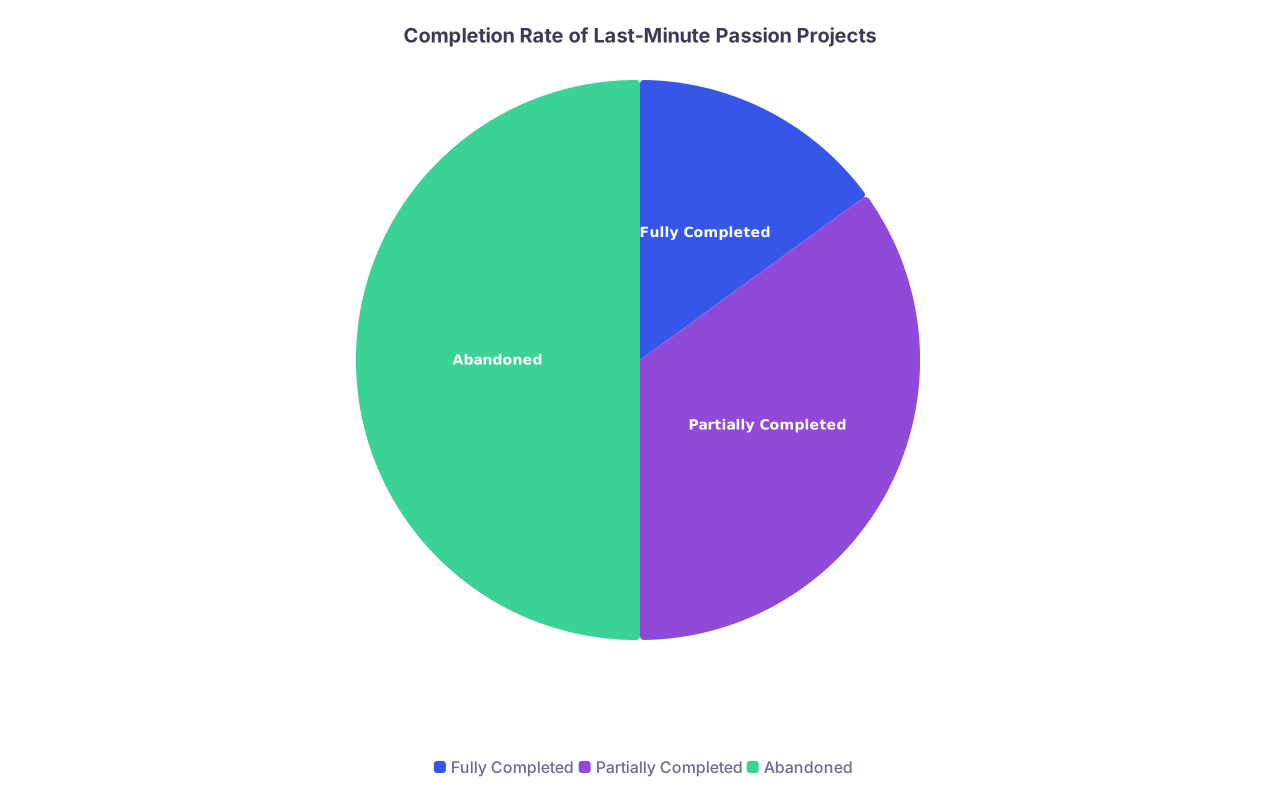
| Category | Value |
|---|---|
| Fully Completed | 15 |
| Partially Completed | 35 |
| Abandoned | 50 |
Half-done projects can be worse than none. They create a pattern: “starts things under stress, doesn’t finish.”
Better Use of Your Time
Use the “passion project” test:
- Will someone credible (attending, faculty, mentor) actually be able to write about this in a letter?
- Will there be something clearly completed by the time ERAS locks?
- Does this connect to who you say you are and what you want to do?
If the answer is no to at least 2 of these, it’s probably ego or anxiety talking. Not strategy.
Desperate Move #5: Sudden, Overly Convenient Specialty “Interest”
Here’s another trap: trying to “prove” you’re committed to a specialty with last-minute, superficial involvement.
Example I’ve actually seen:
- MS3: No earlier specialty involvement, no interest mentioned
- Step 2 score comes back weaker than desired for something competitive
- Suddenly: shadowing, 3 “substantial” projects, 2 leadership roles in that specialty’s interest group—all starting May–July of MS4
You cannot fake a long-term narrative in a few months. And when you try, it looks exactly like what it is: calculated.
How Programs Spot It
They compare:
- Your early clinical choices (electives, away rotations)
- Your preclinical involvement
- Your personal statement story
- Your letters and who wrote them
If everything before Step scores was generic, and everything after is hyper-focused on one specialty, it’s obvious you’re trying to “signal” commitment at the last second.

What they think is not “Wow, late bloomer.” It’s more like, “This person crafted a persona for ERAS.”
When Pivoting Late Is Legitimate
Sometimes people truly discover a specialty late. That’s fine. But then you have to be honest:
- Own the late interest in your personal statement.
- Show how earlier experiences connect indirectly (skills, values, patient types).
- Have at least one strong letter from that field, not six minor fluff experiences.
Don’t grab every tangentially related opportunity just to bulk up a single-column specialty section on your CV.
The Underestimated Fix: Depth, Not Volume
Here’s the part almost nobody wants to hear: with a low Step score, throwing more activities at your application is usually the wrong move.
The better questions are:
- Which existing experiences can I deepen?
- Where can I show reliability, growth, and maturity?
- Who can genuinely vouch for me with a strong, specific letter?
Program directors care far more about:
- Consistent clinical performance
- Strong, concrete letters of recommendation
- Evidence you’ll pass your boards and function safely
- A story that makes sense
They don’t care if you hit some magic “hours” number.

| Step | Description |
|---|---|
| Step 1 | Receive Low Step Score |
| Step 2 | Looks Desperate |
| Step 3 | Lower Chances |
| Step 4 | Assess Application Honestly |
| Step 5 | Strengthen Clinical Work |
| Step 6 | Deepen Existing Activities |
| Step 7 | Targeted Programs and Mentors |
| Step 8 | Stronger Letters |
| Step 9 | More Realistic Interview List |
| Step 10 | Better Overall Application |
| Step 11 | Panic and Add Random ECs? |
Notice something? “Add new random extracurriculars” doesn’t show up in the good branch.
Smarter Moves That Actually Help Compensate
Let’s be blunt. A low score is not reversed by extracurricular heroics. But you can make yourself a safer and more attractive candidate by focusing on things that actually move the needle.
1. Documented Clinical Excellence
- Crush your core rotations, especially in your target specialty and related fields.
- Ask for feedback early, improve visibly, and then ask for letters from attendings who have seen that arc.
- On sub-Is, be the resident’s shadow in the good way: reliable, prepared, no drama.
2. Targeted, Honest Program List
Stop pretending you’re score-blind. You’re not. They’re not.
Be realistic about:
- Which specialties are still viable with your score
- Which program tiers actually interview applicants like you
- Where your school’s grads with similar scores have successfully matched
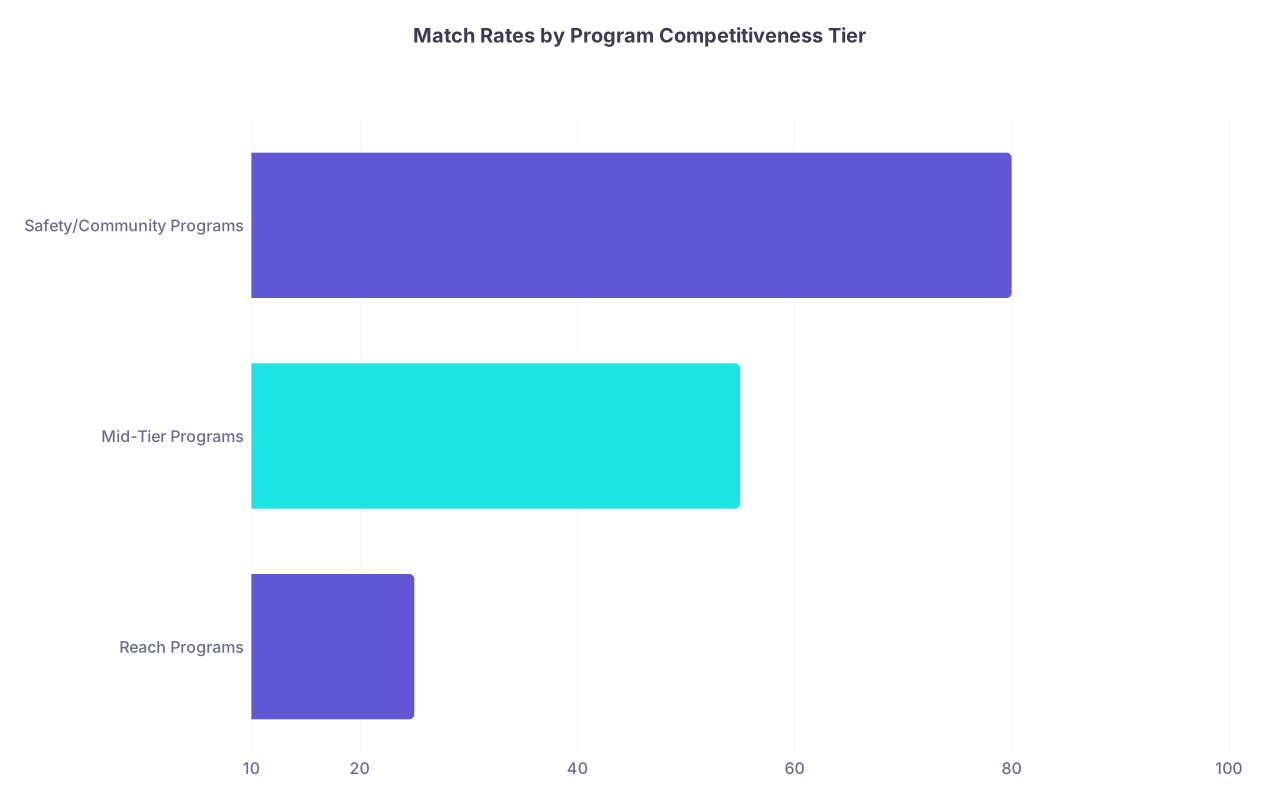
| Category | Value |
|---|---|
| Reach Programs | 25 |
| Mid-Tier Programs | 55 |
| Safety/Community Programs | 80 |
More “stuff” on your CV won’t fix an unhinged application list.
3. Board Risk Mitigation
If your Step 1 or Step 2 is low:
- Take Step 2 (if not yet) when you’re actually ready—not just “before ERAS.”
- Use a structured study plan and external accountability.
- If possible, show upward trajectory (Step 2 > Step 1), then let your mentors frame that in letters and in their advocacy.
4. Honest Mentorship and Advocacy
The best thing you can do is get a few attendings who know you well to believe in you enough to:
- Write detailed, behavior-based letters
- Email or call programs on your behalf (for realistic targets)
- Help shape your personal statement around growth, not excuses
Weak score plus strong real-world endorsements beats weak score plus frantic extracurricular fluff every single time.
How to Audit Your Current Extracurriculars for Desperation
Open your CV right now and look at the last 12–18 months. Ask yourself, bluntly:
- Did I add this because I care about it or because I panicked about my score?
- Can I name one specific, concrete thing I actually accomplished in this role?
- Could a reasonable person see a logical story connecting these activities over time?
- If a PD grills me on this in an interview, will I sound genuine or rehearsed?
Anything that fails those questions is a candidate for:
- Removal, or
- Reframing with less exaggeration, or
- Quietly letting it go and not expanding it in the future
Extracurriculars are not a costume. You can’t dress up your low score with a borrowed identity and expect nobody to notice the seams.
Your Next Step (Do This Today)
Open your residency CV or ERAS activities section right now.
Pick three entries that started after your Step score came back.
For each of the three, write in one sentence:
- The real reason you started it.
- The most concrete thing you accomplished.
- Whether it actually fits the story you want programs to see.
If you struggle to answer those cleanly for any of them, that’s a red flag. Fix those first—by deepening, reframing, or cutting—before you sign up for one more “opportunity” that only makes you look more desperate.