
The fastest way to kill a marginal residency application is not your score. It’s your online footprint.
If you have low Step scores, you simply cannot afford social media and professionalism mistakes. High scorers sometimes survive this garbage. You will not.
Why Low Scores Change the Rules
Let me be blunt: programs already have an easy excuse to screen you out—your score. If you then hand them a professionalism concern on a silver platter via Instagram, X, TikTok, or your ERAS photo? They’re done with you.
Here’s what changes when your score is weak:
- You’re no longer “benefit of the doubt” material.
- Every red flag counts more.
- Professionalism isn’t just “important”; it’s the only thing keeping some programs from auto-rejecting you.
Program directors have options. Tons of applicants with 230–250+ (or strong pass with high shelf scores if you’re post-Step 1 P/F). When they’re on the fence, they look for reasons to say no:
- Any whiff of drama
- Any sign you’ll be a headache for HR
- Anything that screams “immature,” “careless,” or “boundary problem”
You cannot give them that.
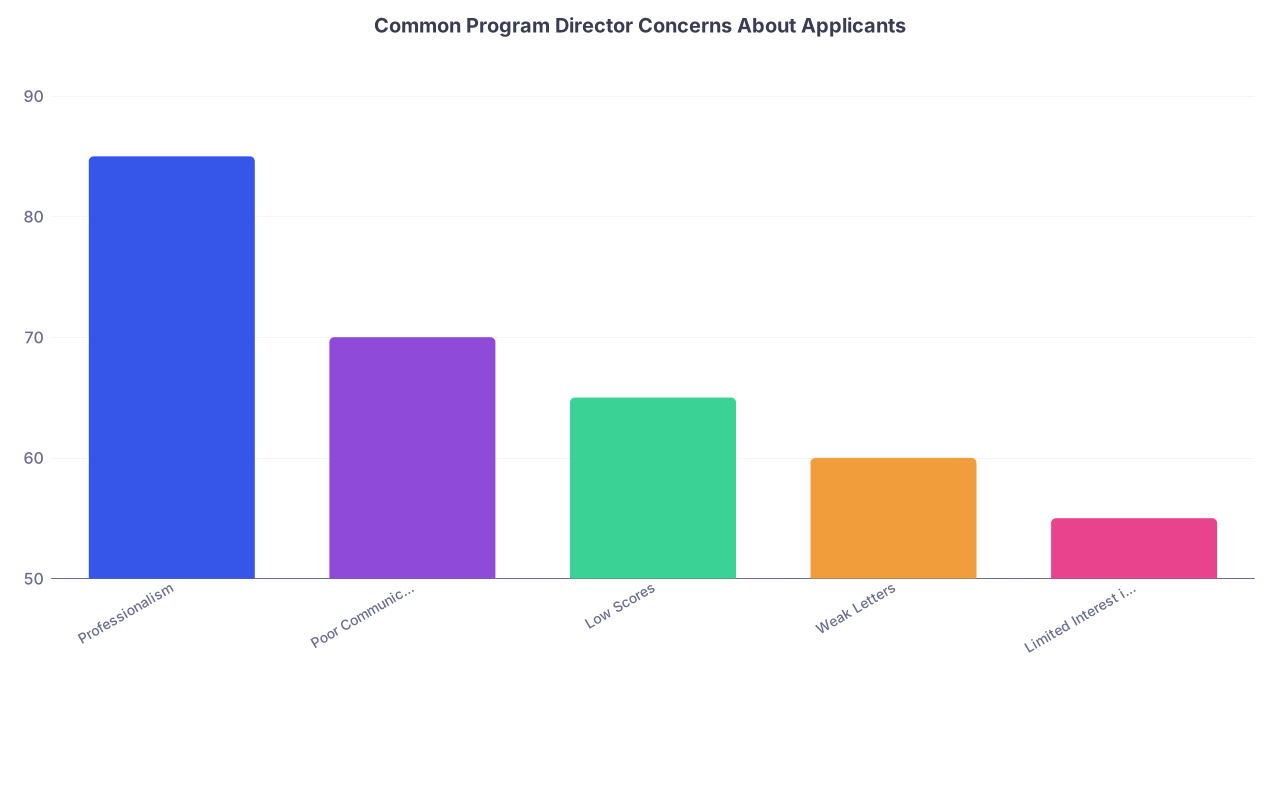
| Category | Value |
|---|---|
| Professionalism | 85 |
| Poor Communication | 70 |
| Low Scores | 65 |
| Weak Letters | 60 |
| Limited Interest in Program | 55 |
That 85% “professionalism” concern? That’s where social media lives.
Mistake #1: Leaving a Messy Digital Footprint
The worst mistake isn’t what you post during application season. It’s what you never cleaned up from before.
I’ve watched this exact story:
Applicant with a 214 on Step 1, solid clinical comments, applies broadly in IM. PD looks up their name. First hit: public Facebook with:
- Beer funnel photo as profile cover
- Caption: “Pre-call be like…”
- Comments full of classmates tagging them with “future Dr. Shots”
That applicant didn’t just look like a low scorer. They looked like a liability.
Do not assume:
- “Nobody will search me.” Wrong. Coordinators, chiefs, faculty, residents do this.
- “My name is common, they won’t know it’s me.” If your school, city, or photo connects the dots, it’s you.
- “They know it’s just a joke.” They don’t care. They have safer options.
Clean-Up Checklist You’re Probably Avoiding
You need one ruthless evening doing this:
-
- Your full name + “MD,” “medical student,” your school, your city
- Images tab too
- Any account that is clearly you but unprofessional? Fix or nuke it.
Lock down old platforms
- Facebook: set everything to “Friends,” hide old albums, scrub tags
- Twitter/X: delete old edgy threads, lock account or make it boring and professional
- TikTok/IG: if there’s partying, complaints about work, or crude humor, either:
- Make it private and change username to something non-identifiable, or
- Remove content and rebuild as clean
Check LinkedIn and professional profiles
- Outdated jobs or “aspiring neurosurgeon” when you’re applying FM with a 205? Looks unserious
- Fix grammar, add a normal headshot, delete cringey motivational quotes
Do not leave dead, half-professional accounts floating around. A dead LinkedIn with no real content is fine. A dead Twitter full of med-school rants is not.
Mistake #2: Treating “Private” Accounts Like They’re Actually Private
The second delusion: “My account is private, I’m safe.” No. You are not.
Someone in your class, on your rotation, or on your team can screenshot anything you post and send it to:
- Your dean’s office
- A chief resident
- A program coordinator
- A PD they know from away rotations
And yes, that happens. I’ve seen it.
High-Risk Content That Gets Shared Around
You cannot safely post—even “privately”—any of this while applying, especially with low scores:
- Venting about rotations, attendings, nurses, programs
- “Can’t wait to be out of this toxic hellhole of a hospital”
- “My attending is incompetent”
- Patient-related content, even “de-identified”
- “Just saw the wildest GI bleed in a 22-year-old”
- “My 28-week preemie is crashing, I’m dying inside”
- Anything that suggests burnout + poor judgment
- “Wish I could call in sick tomorrow, I’m so done with these patients”
- “Three White Claws and emails to attendings… let’s go”
Those screenshots travel. Fast.
If your Step scores are already a worry, programs start thinking:
“Poor exam performance + questionable judgment + emotional volatility online? Pass.”
Mistake #3: Confusing “Relatable” with “Professional”
There’s a whole genre of med Twitter / med TikTok / meme IG that lives off the “relatable resident/med student” vibe.
Funny? Often. Safe for you with low scores? Not even a little.
Common traps:
- Posting memes about:
- Hating your specialty but “doing it for the money”
- Cutting corners at work
- Ignoring pages or calls
- Pretending to care about patients
- Jokes about illegal or unethical behavior:
- “Trying not to write for more opioids but also trying to get good reviews”
- “Charting that I did a full neuro exam when I definitely did not”
- Mocking patient types:
- “Every fibromyalgia patient ever…”
- “Another 25-year-old with chest pain who ‘swears’ it’s not anxiety”
Here’s the problem: PDs are not consuming this as “relatable content.” They’re thinking:
- “Is this how they talk about patients behind closed doors?”
- “Will this person embarrass my program on social media in two years?”
- “If this is their judgment when they know they’re online, what’s it like in the hospital?”
If your Step score is strong, some programs might roll their eyes and still rank you.
If it’s low? This becomes a tie-breaker against you.
Mistake #4: Posting Residency Drama During Interview Season
Never underestimate how small the residency world is. Attendings know other attendings. Residents have group chats across programs. That sarcastic “anonymous” post about a program? Not anonymous.
Typical self-sabotage during application season:
- Sharing screenshots of:
- A weirdly worded rejection email
- An awkward interviewer question
- An “unfair” cancellation policy
- Posting snarky comments:
- “Just interviewed at [obviously recognizable program]… massive red flags”
- “If one more community program pretends they’re Harvard…”
- “Why are some PDs so socially awkward?”
You might think it’s just catharsis. It’s not. It’s evidence. Evidence that:
- You gossip
- You publicly drag institutions
- You don’t understand discretion
If your Step score already made you a borderline interview, this behavior can absolutely drop you off a rank list.

Mistake #5: Misusing “Professional” Accounts
Some of you think the solution is to become “Med Twitter official” or start an “educational TikTok.” That can help if done well. It can destroy you if done sloppily.
Big mistakes I’ve seen:
- Overstating your role or expertise
- “As a future cardiologist, I recommend…” (you’re an M4 with a 214)
- Giving medical advice outside your scope
- Posting educational content from real patients
- Recordings in patient areas
- Photos of hospital dashboards, rooms, or even just “vibes” that are clearly from your hospital
- Mixing personal and professional badly
- One post: thoughtful thread on diabetic ketoacidosis
- Next post: drunk party video with your white coat hanging off a barstool
If you have low scores, your professional account should do one thing: contradict the “low-score slacker” stereotype. That’s it.
Safe content:
- Short, respectful reflections on learning experiences (no patient identifiers)
- Sharing high-quality articles with brief, humble comments
- Basic study tips, not “expert opinions on management”
If there’s even a 1% chance a post could be interpreted as arrogant, reckless, or insensitive, don’t post it. With your score, you’re not playing on easy mode.
Mistake #6: Letting Others Tag You Into Trouble
You might be squeaky clean online. Your friends? Not so much.
Huge blind spot: what shows up when people tag you.
- Group photos at parties:
- You don’t need to be doing anything wild. Just being in a clearly intoxicated, half-dressed group where everyone knows you’re in med school can look bad.
- Comments under your name:
- “This guy was the drunkest one there”
- “Future Dr. Shots in the house”
- Old college friends tagging you:
- In memes about drugs, sex, cheating, etc.
You can’t control everything, but you must control more than you think:
- Review tag settings on every platform
- Un-tag yourself from anything you wouldn’t show a PD on your phone
- Ask close friends to:
- Stop tagging you in questionable content
- Not use “Dr. [Your Name]” jokingly in wild posts
Again, high scorers sometimes get away with this. You’re not in that category. You must look like a safe, boring, reliable hire.
Mistake #7: Underestimating How ERAS + Social Media Fit Together
Programs don’t just see your scores and CV. They see a story.
If your ERAS suggests “hardworking, humble, team player” but your social media says “cynical, burned-out, clout-chaser,” they will believe the latter.
Common mismatches that hurt low scorers:
- Personal statement: “I found my calling in caring for vulnerable patients.”
Social media: mocking “frequent flyers,” psych patients, or “non-compliant” diabetics. - LORs: “Easy to work with, calm under pressure.”
Social media: ranting about every slight, over-sharing emotional meltdowns. - ERAS experiences: leadership, community service, tutoring.
Social media: not a single sign of that side of you—just partying, complaining, and memes.
Programs suspect you:
- Performed for attendings/rotations
- Live a completely different personality online
- May be manipulative or immature
With low scores, your whole application needs to feel consistent. Professional. Boring in the best way.
| Applicant Type | Same Social Media Mistake | Likely Impact |
|---|---|---|
| 250+ / stellar record | Mild professionalism issue | Eye roll, maybe forgiven |
| 240s / solid file | Same issue | Could drop a few spots on rank list |
| Borderline scores | Same issue | May be removed from rank list entirely |
| Step failures / low | Same issue | Often auto-screened out or never ranked |
Mistake #8: Not Having a Clear Social Media Strategy for Application Year
If you’re still posting randomly during application season, you’re already behind.
You need an explicit plan, especially with low scores. Something like:
Option A: Go Dark (Safest for Many of You)
- Set everything to private
- No new posts until after Match
- No commenting on public threads about:
- Programs
- Match process
- Exam scores
- Politics of medicine
- Only exception: LinkedIn, kept bland, updated, and professional
This is absolutely fine strategically. Nobody gives bonus points for being Very Online.
Option B: Deliberately Professional
If you insist on staying active:
- One platform only (e.g., LinkedIn or a professional Twitter)
- No hot takes. None.
- Strict rules you actually write down for yourself, like:
- Never post past 10 p.m. local time
- Never post when emotional or tired
- Never post from work or while on service
- No patient-related anything
- No jokes that punch down (patients, nurses, other trainees)
And if you’re not sure whether something is “too much”? It is.
Mistake #9: Thinking “Everyone Else Is Doing It and They Matched”
You’ll hear this defense:
“But that famous med TikToker complains all the time and still matched derm.”
Yes. Outliers exist. You are not them.
Here’s what those people usually have that you do not:
- Top-tier Step scores
- A powerhouse home institution
- Built-in connections + mentors protecting them
- Massive followings that programs view as “branding assets”
You have:
- A low score that already makes programs nervous
- No leverage to make people overlook bad judgment
So you can’t copy the behavior of high-score, high-power people and expect the same outcome. That’s how applicants with 205–220s and one fail end up scrambling or going unmatched.
Fast Reality Check: What To Do This Week
If you’re serious about not letting social media destroy your chances:
Audit everything
- Google yourself
- Click through every platform you’ve touched since high school
Delete aggressively
- If you hesitate about a post or photo for more than two seconds, it goes
Lock down or go dark
- Private settings everywhere
- Turn off tagging or manually approve tags
Align your online presence with your application
- No contradictions between your “professional story” and the person they can find online
Treat this like part of your application
- Because that’s exactly what it is now
FAQ: Social Media and Professionalism with Low Scores
1. Do programs really look at my social media, or is that overblown?
They don’t all systematically search, but enough people do that you cannot gamble. It’s often informal: a resident recognizes you from TikTok, a coordinator Googles your name, or someone flags a concerning post to leadership. You only need one person to see one bad thing at one program to lose that opportunity. With low scores, every opportunity matters.
2. Is it safer to delete all my accounts completely?
Safer than leaving problematic content up, yes. But you don’t have to delete everything. Set accounts to private, scrub old posts, and keep a clean LinkedIn or low-key professional profile. Total disappearance can look a little odd in 2026, but it’s far less dangerous than visible unprofessional content.
3. Can I post about failing Step or struggling academically?
Careful. Vulnerability isn’t the problem; tone is. “I failed, learned, worked hard, and passed” in a measured, professional way is fine on something like LinkedIn. Public ranting, blaming, or sounding unstable is not. Anything that suggests you’re still spiraling, resentful, or reckless about your situation will hurt you more than help.
4. What about political or social opinions—do I need to hide those too?
Extreme, aggressive, or hostile posts are risky, especially when tied to your real name and MD identity. Thoughtful, respectful advocacy tied to medicine is usually fine. But heated arguments, insults, or posts that could make patients or colleagues feel unsafe? Those are landmines. With low scores, you can’t afford people quietly deciding you’d be “a problem” in their workplace.
5. If I clean everything up now, is old stuff still a threat?
If it’s gone from your accounts, most programs will never see it. But screenshots are forever. If you know something particularly bad has been shared around, talk to a trusted dean or advisor before it becomes a crisis. For most people, though, a decisive clean-up now dramatically lowers risk. The real mistake is pretending the past is invisible and doing nothing.
Key points to walk away with:
- With low Step scores, social media mistakes aren’t just embarrassing—they’re match-killers.
- You must control your digital footprint as aggressively as you’re managing your ERAS application.
- When in doubt, be boring, be professional, and go quieter than you think you need to. Your future self will thank you.