Your Situation, Your Dilemma: Why a 3.9 GPA Can't Fix a 502 MCAT
You busted your ass for four years. Organic chemistry at 8 AM. Biochem with the professor everyone warned you about. A 3.9 GPA that proves you can grind through academia like a machine. Then the MCAT happened. A 502. Maybe a 504. Suddenly the whole narrative flips, and you're sitting in your apartment at 2 AM staring at the AAMC percentile chart wondering if your GPA is worthless.
It's not worthless. But it's not enough.
Here's the gap nobody in your premed advisory office will say out loud: a high GPA signals you can handle coursework, structured, syllabus-driven, deadline-bounded coursework. The MCAT signals something different. It tests whether you can integrate knowledge across disciplines, reason under time pressure, and perform on a single high-stakes day. Admissions committees see a 3.9 GPA paired with a 502 MCAT and think one of three things: this student can't take tests, this student's school has grade inflation, or this student crammed rather than learned. None of those are the narrative you want.
Let's be specific about the scenario we're addressing here: GPA above 3.7, MCAT below 505. That's the danger zone. High enough GPA that you feel like you should be competitive. Low enough MCAT that the data says otherwise.
Look at that chart. A 3.8 GPA with a 520 MCAT gives you an 85% acceptance rate at MD programs. Same GPA with a 500 MCAT? Fifteen percent. You're not in the same conversation. The MCAT is doing heavy lifting in admissions decisions whether you like it or not.
This is a fork in the road. You can retake and try to fix the number, apply as-is and hope the rest of your app carries you, or delay and strengthen everything. Which path depends on your specific situation. Let's break them down.
Scenario 1: You Bombed MCAT but Your GPA Is a Rockstar, Retake
This is the most common scenario I see. One MCAT attempt. Score came back 10+ points below your practice test averages. Or maybe you took it after barely prepping because you wanted to "get it over with." Bad decision, but recoverable.
If your GPA is above 3.7 and you have a single low MCAT attempt, retaking is almost always the right call. Here's why: you've already proven the academic capacity. The MCAT is a learnable, coachable test. A 502 doesn't mean you're not smart enough for medicine. It means you didn't prepare correctly, or you had a bad day, or you walked in without enough full-length practice under your belt.
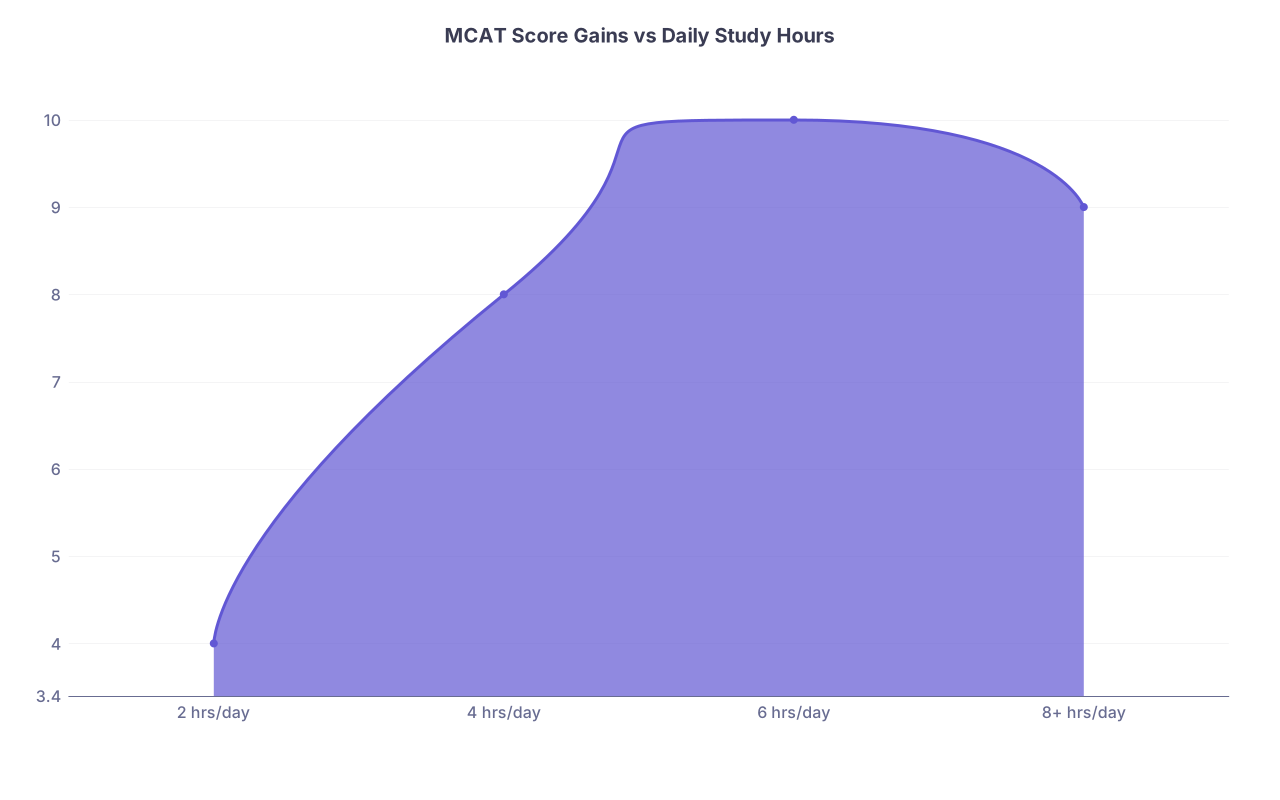
The retake path works if you have 3-4 months of focused bandwidth. That means no 18-credit semester, no research thesis defense, no family crisis competing for your mental energy. If you're trying to retake while taking a full course load, you're setting yourself up for another mediocre score.
The 12-week study plan that actually moves the score:
- Weeks 1-4: Content review only. Use UWorld or Kaplan books. Don't touch full-lengths yet. Focus on your weakest sections first.
- Weeks 5-8: Mixed content + section bank practice. Start doing timed section practice. Identify patterns in what you miss.
- Weeks 9-12: Full-length exams every 3-4 days. At least 6-8 full-lengths. Review each one for 6-8 hours. The review matters more than the test.
- Week 12: Test day. Take it when your practice scores are consistently 3-5 points above your target.
When to retake, specific criteria:
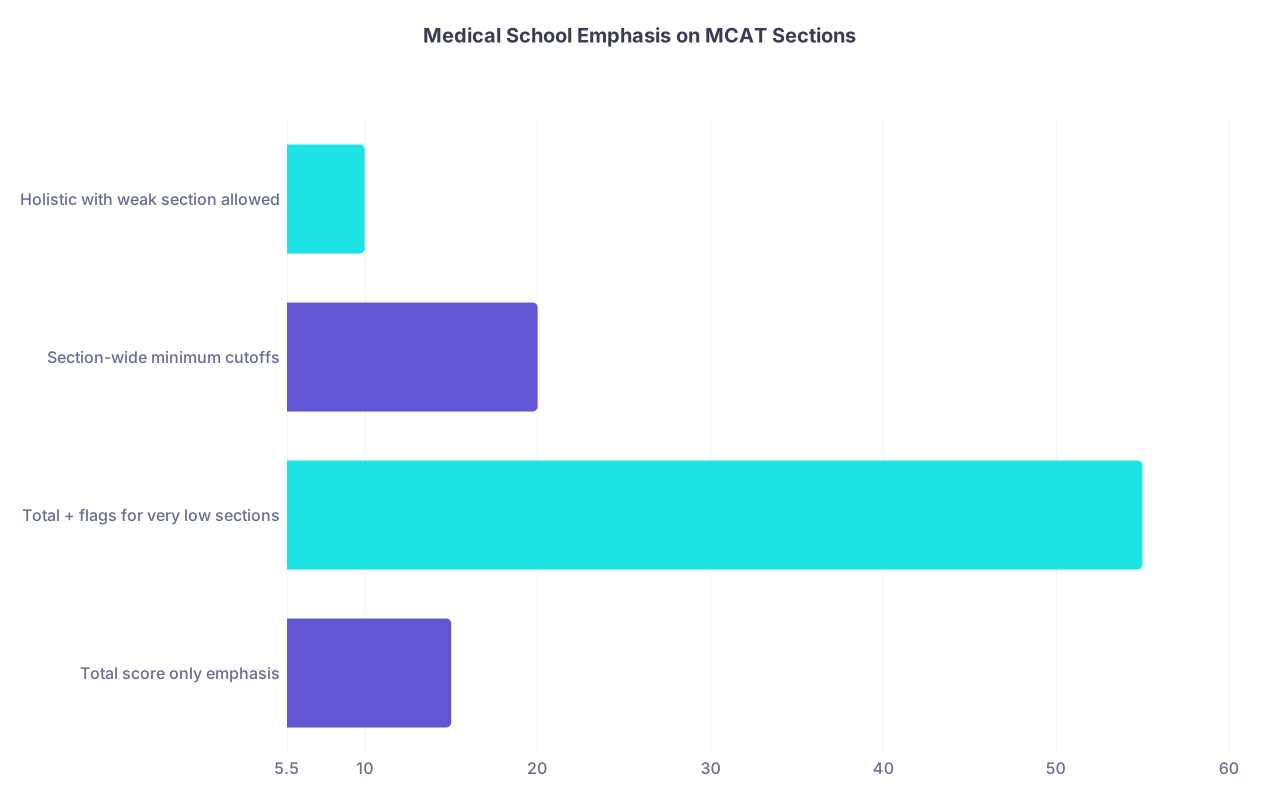
- You scored below the 10th percentile in any single section. A 122 in CARS will tank you regardless of the total.
- You had a medical event, family emergency, or trauma on test day. Void the score if you can. If you didn't void, retake.
- You never completed at least 3 full-length practice exams before test day. You went in blind. That's fixable.
- Your practice averages were 510+ and you scored 500. Something went wrong logistically, panic, sleep deprivation, test center issues. Retake.
The fear that paralyzes everyone: "What if I score lower the second time?" This is real. I've seen it happen. A student scores 503, retakes, gets 500. Now they've got two low scores and feel worse than before. Here's how to prevent that: if you're not consistently scoring 5+ points higher on your practice full-lengths than your first real MCAT, don't retake yet. Keep prepping. The retake only happens when your practice data supports it.
You also have the score cancellation option. If you walk out of a retake and know you bombed it, void the score. It won't show up on your record. Use this judiciously, some schools see voids as a yellow flag, but one void is better than one more sub-500 score.
Scenario 2: Low MCAT + High GPA, but You've Taken It Twice Already, Apply Cautiously
Now we're in different territory. You've taken the MCAT twice. Maybe three times. Scores: 498, then 502, then 504. You've plateaued. Another retake isn't going to magically produce a 515.
Here's the hard truth: diminishing returns kick in hard after two attempts. A third MCAT attempt with minimal improvement actually looks worse to admissions committees than two attempts. It signals you can't identify what's wrong and fix it. After three attempts, you're in the zone where some schools screen you out automatically regardless of total score.
If you're in this scenario, the move is to apply as-is, but apply smart. This means:
Target DO schools aggressively. DO programs have lower median MCAT scores, typically 500-508 at most schools. A 504 with a 3.8 GPA and solid ECs is genuinely competitive at many DO programs. Stop fixating on MD. A doctor is a doctor.
Apply to MD programs strategically. Look at the MSAR (Medical School Admission Requirements) database. Find MD programs where the 10th percentile MCAT is at or near your score. These schools exist, Wayne State, Quinnipiac, some state schools with regional preferences. If you have state residency ties, lean into them hard. In-state applicants get a significant boost at public MD programs.
Make the rest of your application elite. Your GPA can't carry the MCAT weakness, but a loaded application can soften it. You need:
- 300+ clinical hours, ideally with patient contact (scribing, EMT, medical assistant)
- 100+ shadowing hours across multiple specialties
- 200+ research hours with output (poster, publication, thesis)
- Strong personal statement that doesn't mention your MCAT score. Ever. Don't explain it away. Let the rest of your app do the talking.
- Letters of recommendation from faculty and clinicians who can speak to your intellectual capacity. One strong science professor letter can offset a low MCAT more than you'd think.

Your school list should be bottom-heavy. Out of 20-25 schools, maybe 3-5 should be "reach" programs. The rest should be schools where your MCAT falls within the 25th-75th percentile range. Don't waste money applying to 20 reach schools hoping for a miracle. That's not a strategy; that's a lottery ticket.
One more thing: if you've taken the MCAT three times and you're stuck at 504, consider whether an MCAT retake with a completely different prep approach, tutor, bootcamp, different resources, could break the plateau. Sometimes a third retake does work if you change your method. But if you've already tried different approaches and nothing moved, stop. Apply.
Scenario 3: Low MCAT, High GPA, But Clinical Experience Is Weak, Hold Off
Here's the scenario that ends in rejection letters every cycle: GPA 3.85, MCAT 503, 60 clinical hours, 20 shadowing hours, no research, generic personal statement. You apply in June. By October, you're getting silence or mass rejections.
This is a double liability. A low MCAT and weak ECs means your application has nothing to fall back on. The GPA is impressive, but GPA alone doesn't get you into medical school. It gets you screened in. Then the rest of your app has to carry you across the finish line.
If you're in this situation, do not apply this cycle. I know the urge to "just go for it" is overwhelming. Your friends are applying. Your parents are asking. You've been premed for four years. But applying with a weak app doesn't save you time, it costs you a year of rejections and puts you in a worse position next cycle because now you're a reapplicant.
The gap year fix: Take 6-9 months and fix both problems simultaneously. Here's the timeline:
Months 1-3: MCAT prep. Treat it like a full-time job. 40 hours a week. Content review, then full-lengths. Take the MCAT at the end of Month 3.
Months 4-6: Clinical immersion. Get a paid position, scribe, EMT, medical assistant, ER tech. Work 30-40 hours a week. You'll rack up 400-500 clinical hours in this window. That transforms your application.
Months 7-8: Application prep. Write your personal statement. Get your letters lined up. Finalize your school list. Submit day one of the cycle.
By the time you submit, you've got a higher MCAT, 400+ new clinical hours, and a gap year narrative that shows maturity and commitment. That's a different applicant. A competitive one.
The alternative, applying now with 60 clinical hours and a 503, gets you rejected. Not maybe. Not probably. The data is clear on this. Save your money and your reapplicant status. Take the gap year.
Final Decision: Use This Simple Math to Decide Today
Stop spinning. Here's a framework to decide right now.
Score your application. Give yourself:
- GPA: 40% weight. A 3.8+ = full marks. 3.5-3.7 = 80%. Below 3.5 = 50% or less.
- MCAT: 40% weight. 510+ = full marks. 505-509 = 75%. 500-504 = 40%. Below 500 = 20%.
- ECs: 20% weight. 500+ clinical hours + research + strong letters = full marks. Moderate ECs = 60%. Weak ECs = 30%.
If your weighted score is above 80% for your target schools, apply. Below 70%, fix something first. Between 70-80%, it's borderline, lean on your specific scenario.
The quick summary:
Retake if: Single MCAT attempt, score below 505, GPA above 3.7, and you have 3+ months of dedicated study time. This is the clearest scenario. Don't waste your GPA by pairing it with a score that gets you auto-screened.
Apply as-is if: You've taken the MCAT 2-3 times with no improvement, your GPA is above 3.8, your ECs are strong, and you're targeting DO programs and lower-tier MD schools. Your app has enough ammunition to compete where the MCAT ranges are lower.
Hold off entirely if: Your MCAT is low, your ECs are weak, and you're applying because you feel rushed. Take a gap year. Fix both. Come back stronger.
Your GPA is an asset. Your MCAT is a problem. The question is whether that problem is fixable in a few months or whether you've hit a ceiling. Be honest with yourself about which one it is. Then act.
If you're still uncertain which scenario fits you, book a 1-on-1 strategy session or grab a free MCAT study plan download. Stop agonizing and start executing. The clock is already ticking on this cycle, your decision needs to happen this week, not next month. Every day you delay is a day of lost prep time or lost application advantage.
Key Takeaways
- One low MCAT attempt with a high GPA is almost always best addressed by a retake. Don't let a single bad test day undermine four years of academic work.
- Two or three stagnant MCAT attempts signal a plateau. Apply smartly to DO and lower-tier MD programs rather than burning another cycle on retakes.
- If your clinical experience is weak, delay. Use a gap year to fix both MCAT and ECs simultaneously. A rejection costs more time than a gap year.