
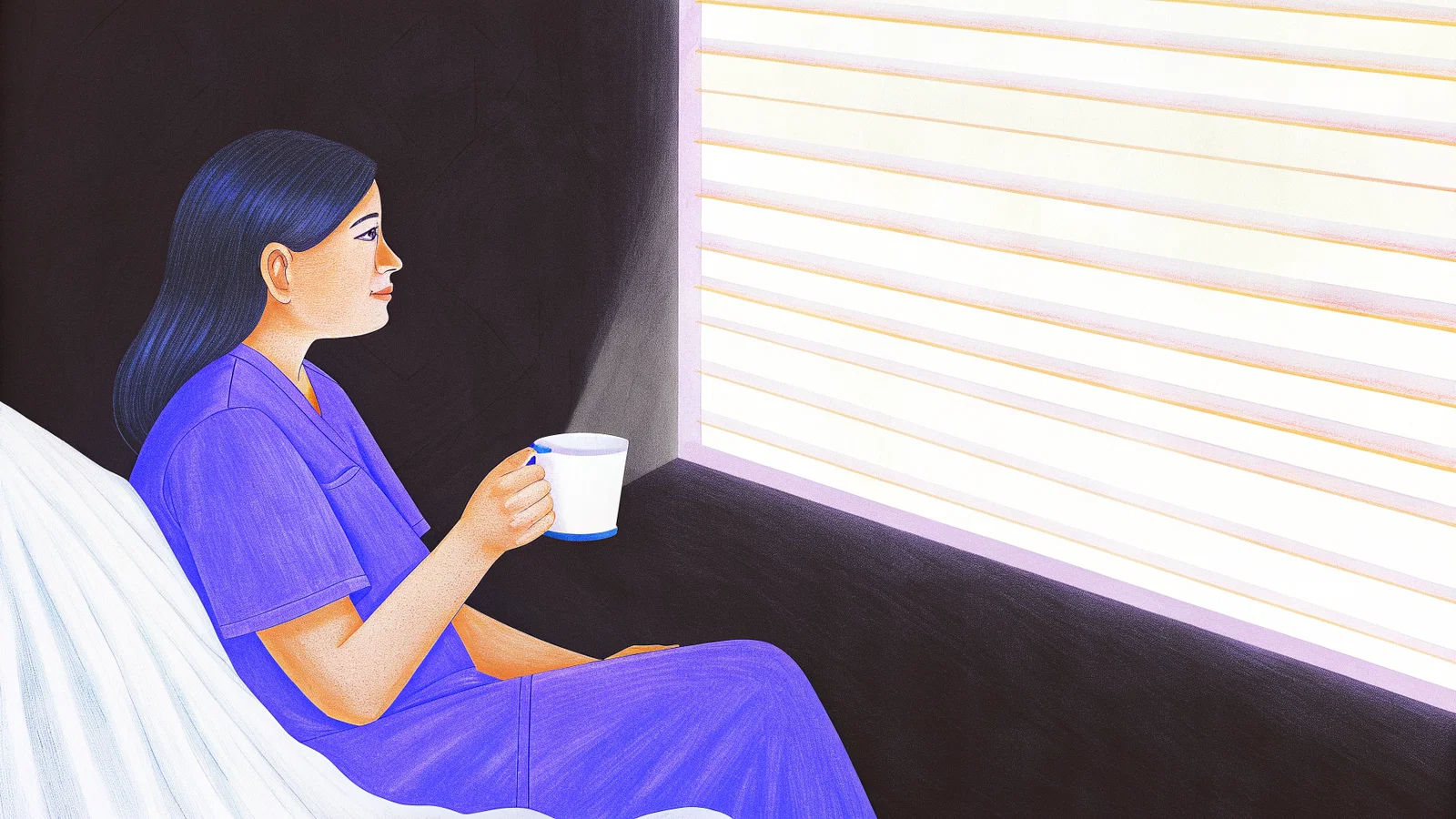
Night float isn't just being tired. It's your brain trying to work at 3 AM while your body is screaming for sleep, then trying to sleep at 10 AM when your body thinks you should be awake.
That's shift-work sleep disorder. And if you're on night float, you're in the highest-risk setup in residency for it.
This article is for educational purposes only. It is not financial advice, not legal advice, and not tax advice. Figures vary by individual circumstances, so consult a qualified professional before acting.
What Shift-Work Sleep Disorder on Night Float Actually Is
Shift-work sleep disorder is a circadian misalignment problem. Plain and simple: you're forcing yourself to be awake when your internal clock expects sleep, and forcing yourself to sleep when it expects you to be awake.
Your circadian rhythm is set by light, melatonin, and core body temperature. It wants you asleep at night. Night float asks you to do the exact opposite.
Why night float makes it worse than regular nights:
- It's prolonged inversion, not one bad call. You're not doing a 28-hour call then recovering. You're flipping your entire sleep-wake cycle for 2-4 weeks straight.
- Your sleep is fragmented and short. You get home at 7:30 AM, the world is loud, your phone buzzes, you have clinic emails, and the sun is up. Most residents get 5-6 hours during the day, not 7-8.
- Light exposure is backwards. Bright hospital lights all night suppress melatonin when you need to be alert, then morning sunlight hits you on the drive home when you desperately need melatonin to rise.
What it actually feels like:
- Insomnia during the day - lying awake even though you're exhausted
- Intense sleepiness on shift, especially 2-5 AM
- Brain fog, slower reaction time, forgetting orders or details you normally wouldn't
- Irritability, low mood, anxiety that feels out of proportion
- Stomach issues - nausea, heartburn, weird appetite, constipation
Every resident on night float gets some sleep loss. That's normal. It becomes a disorder when this pattern lasts for weeks, it happens consistently with night work, and it starts impacting your function. If you can't sleep when you have the opportunity, you're fighting to stay awake on shift despite trying, and you feel dramatically better on days off or when you rotate off nights - that's clinically significant. That's not just being weak or inefficient.
Why Night Float Triggers It: The Sleep Biology Behind the Problem
Your sleep-wake timing isn't about willpower. It's biology. Two systems run the show.
First, your circadian rhythm. Light hits your retina, signals your suprachiasmatic nucleus, and controls when melatonin is released. Darkness = melatonin rises = sleepy. Bright light = melatonin suppressed = alert. Your rhythm naturally dips around 2-4 PM and 2-5 AM. That 3 AM wall you hit on night float? That's not lack of coffee. That's your core clock at its lowest alertness point.
Second, sleep pressure. The longer you're awake, the more adenosine builds up and the sleepier you get. On night float, both systems are working against you at once.
Here's how it snowballs:
You work all night under bright lights. Melatonin stays suppressed. You drive home into bright morning sun - more suppression right when you need melatonin to help you fall asleep. You get into a not-quite-dark-enough room, sleep 4 hours, get woken up by construction, then try to squeeze in another broken 90 minutes. Total sleep time drops to 5 hours.
Sleep debt builds. And sleep debt is brutal on performance.
With even one night of 5-hour sleep:
- Reaction time slows as much as if you were legally drunk
- Sustained attention tanks - you miss subtle changes, you have to re-read notes three times
- Working memory shrinks - you forget that lab you were just about to order
- Emotional regulation drops - everything feels more personal, more frustrating
I've seen residents swear they're fine after three nights of short sleep, then nearly dose off at a red light on the drive home. That's not anecdotal. That's predictable physiology.
Risk amplifiers that make night float unbearable:
- The commute. A 30-minute drive home after a 12-hour night shift is dangerous. You're at peak sleep pressure plus morning light plus circadian low.
- Unpredictable flipping. Programs that do 2 nights on, 1 off, 3 on make it impossible to anchor any rhythm.
- Caffeine overuse. Chugging coffee at 5 AM to survive sign-out means you get home wired and can't sleep at 8 AM.
- Daytime obligations. Trying to go to grand rounds, pay bills, or see friends at noon when you should be sleeping cuts your already short sleep window.
How to Recognize Shift-Work Sleep Disorder on Night Float
The hallmark pattern is insanely consistent. Learn it.
You have insomnia when you try to sleep during the day, and excessive sleepiness when you're supposed to be working at night, and it's lasted at least several weeks of night work. It's tied to your schedule. It improves when you go back to days.
Ask yourself three honest questions:
- Can I actually sleep when I get home? Not "do I fall asleep for 20 minutes then stare at the ceiling." Can you get a solid 6-7 hour block if left alone?
- Am I fighting sleep on duty? Not yawning. Fighting. Head bobbing, microsleeps, needing to stand up to stay awake at 4 AM.
- Do I recover on days off? If two days off days and you're still exhausted, irritable, and can't get your sleep back to normal, your debt is deeper than you think.
Red flags you cannot ignore:
- Near-miss or actual drowsy driving episodes. If you've drifted lanes or hit a rumble strip after a night shift, that's a safety emergency.
- Repeated charting errors, dosing errors, or sign-out mistakes that are not like you.
- Microsleeps - that jerk-awake moment at the workstation.
- Mood changes that feel new. New anxiety at 2 AM, crying after shifts, feeling detached or unusually cynical, and it's tightly linked to your night block.
This is also when you need to think about other things that masquerade as shift-work sleep disorder. If you snore loudly, gasp at night, wake with headaches, and still feel exhausted even after you rotate off nights - think obstructive sleep apnea. If low mood, anhedonia, and hopelessness persist even when you're sleeping well on vacation, that's more than circadian disruption. Anxiety, depression, restless legs, thyroid issues, certain meds (hello, prednisone, SSRIs that disrupt sleep, stimulants) can all mimic it. Don't just label everything as "night float."

What Actually Helps: A Practical Night Float Sleep Plan
Generic sleep hygiene is useless on night float. "Avoid screens before bed" - you're looking at a computer all night. You need a plan that actually fits the inversion.
I break it into three phases. Pre-shift, on-shift, post-shift.
Pre-Shift: Anchor and Protect
- Get your main sleep block. Don't cut it short to run errands. 7 hours minimum if you can protect it. Split sleep (4 hours + 2 hour nap before shift) is worse than one continuous block, but it's better than nothing if your schedule forces it.
- When you wake up, get bright light immediately. Light box, walk outside if it's before sunset. This tells your clock to stay shifted.
- Caffeine is allowed here, but time it. Coffee in the first 30 minutes after waking is fine. After that, save it.
- Light movement, real food, hydration. Don't start the shift already dehydrated.
On-Shift: Stay Alert Without Wrecking Tomorrow's Sleep
- Light management is your biggest lever. Use bright light early in your shift - first 6-8 hours. That keeps you alert. Then dim things down for the last 2 hours if you can. Lower computer brightness, turn off overheads in call rooms.
- Caffeine strategically. Small, frequent doses beat one giant coffee. Think 100-150 mg around 9 PM, maybe another 50-100 mg at 1-2 AM if needed. No caffeine after 3-4 AM. Seriously. That 5 AM coffee to survive sign-out is why you can't sleep at 8 AM.
- Strategic naps. If your program and coverage allow, a 20-minute nap between 2-4 AM is magic. Set an alarm. 20 minutes, not 90. A short nap reduces errors without leaving you in sleep inertia hell. Even 10 minutes of eyes-closed in a call room helps.
- Eat light. Heavy, greasy meals at 3 AM will make you sleepy and nauseous. Protein + complex carbs, small portions. And water. You get sluggish when dehydrated.
Post-Shift: Win the Light Battle and Protect Sleep
- Light is the enemy on the way home. Wear sunglasses on the drive - dark, wraparound if you have them. Don't run errands in bright sun.
- Go straight to bed. Don't "just check one email." Eat a light snack, not a feast. Alcohol to "help you sleep" is a lie - it fragments sleep.
- Protect your sleep block like it's sacred. Blackout curtains - actually blackout, not cheap ones that leak light. Eye mask if needed. Earplugs plus white noise machine. Cool room, 65-68F if you can. Phone on Do Not Disturb, tell your co-residents you're off and unreachable unless emergency.
- Melatonin. Timing matters more than dose. For most residents, a low dose (0.5-1.5 mg) taken 30 minutes before you want to sleep in the morning can help you fall asleep faster. It's not a sedative - it's a clock shifter. Higher doses don't work better, they just give you weird dreams and a hangover. If you have mood disorders, are pregnant, or take interacting meds, talk to your own clinician first. Don't just buy 10 mg gummies because your co-resident does.
When to Get Help and How to Make Night Float Safer
There is a line where optimization stops and you need evaluation. Here's my threshold.
Get evaluated promptly if: symptoms have persisted through your entire night block and aren't improving, you've had unsafe driving or a near-miss while working, you're making clinical errors you wouldn't normally make, or your mood is tanking - new panic, crying spells, hopelessness that lifts when you're back on days.
What treatment actually looks like:
- Schedule adjustment first. Can you cluster nights with consistent start/end times? Can you avoid rapid flips between days and nights? Some programs can give you 5 nights in a row instead of 2 on/2 off. That consistency helps.
- Behavioral sleep strategies. CBT-i adapted for shift work is way more effective than most people think. It teaches you to consolidate sleep and manage circadian expectations.
- Rule out other disorders. Sleep apnea screening, depression screening, medication review. Don't let a label of shift-work sleep disorder stop a real workup.
- Medication only under supervision. Wake-promoting agents and sleep aids exist, but they have risks, side effects, and regulatory considerations. This is not a DIY project with your co-resident's modafinil. If you're considering anything beyond melatonin and caffeine timing, see a sleep medicine clinician.
And workplace safety. This part I feel strongly about.
If you are dangerously sleepy, do not drive. Full stop. Use ride-share, call a friend, nap in the call room for 90 minutes and then reassess. One crash will cost more than any Uber. I've seen programs normalize post-night driving while microsleeping. It's dumb. It's unsafe. Don't do it.
Talk to your chiefs early. Not after an error, before. "I'm having persistent insomnia on days and I'm falling asleep on drive home, I need to discuss coverage for safe commuting and consistent scheduling" is a professional safety statement, not complaining.
Decision framework you can actually use:
- Mild: Occasional daytime sleep trouble, sleepy but safe on shift, recovers quickly on days off. Action: optimize your environment. Light management, blackout curtains, protected 7-hour block, smarter caffeine and naps.
- Moderate: Regular insomnia after shifts, frequent sleepiness on duty that you have to fight, mood or performance is slipping but no safety events. Action: add behavioral support. Consistent schedule requests, CBT-i tools, sleep diary for 2 weeks, consider clinician discussion about melatonin timing.
- Severe or unsafe: Can't sleep, can't stay awake, driving near-misses, clinical errors, persistent mood symptoms. Action: seek clinical evaluation now. Document symptoms, stop unsafe driving, escalate to program leadership and your primary care or sleep clinic.
Night float will always be hard. But hard and unsafe are different. You can protect your brain if you stop pretending you can override circadian biology with grit.


