
You are wasting half of your post–night float week stumbling around like a jet-lagged zombie. That is unnecessary. You can reset your schedule in 48–72 hours if you stop winging it and follow a protocol.
This is that protocol.
You already know the problem: night float destroys your circadian rhythm, your appetite is upside down, and you walk into the next rotation already behind. The fix is not “sleep when you can” and “drink less coffee.” The fix is a structured, hour-by-hour plan that you run every single time you come off nights.
I am going to give you exactly that.
Core Principles: Why Your Current “Strategy” Fails
Let us set the rules before the playbook.
Most residents do one of three things after their last night:
- Sleep a full day right after the final shift, stay up late, and hope it works out.
- Stay awake after the last shift, crash early that night, and feel like death all day.
- Flip back and forth randomly for 3–4 days.
All three waste time and prolong jet lag.
Here is what actually works, physiologically and practically:
- You must pick a direction and commit. You are flipping from being fully nocturnal to fully diurnal. Half-measures create a “neither here nor there” state that feels awful.
- You cannot pay back all your sleep debt in one day. Expect 2–3 days of structured reset. Not 12 hours of coma sleep followed by chaos.
- Light is the primary lever. Not melatonin, not coffee. Light. Strategic exposure and avoidance makes or breaks your reset.
- Movement and food timing matter more than you think. When you move and when you eat tells your internal clock what “time” it is.
- You need a repeatable protocol, not vibes. Same pattern every time you finish nights, with minor tweaks based on your schedule.
So the question is not “How do I feel after my last night?” The question is “Which protocol am I running?”
Step 1: Choose Your Reset Strategy Based on Your Call Schedule
Before we jump into the hour-by-hour plan, you have to identify which scenario you are in. They are not the same.
| Scenario | Last Shift | Next Rotation Starts | Best Reset Type |
|---|---|---|---|
| A | Thu night | Mon AM | Standard 72h reset |
| B | Sun night | Tue AM | Compressed 48h reset |
| C | Fri night | Mon PM clinic | Gentle reset |
| D | Random | Next day off | Emergency fast flip |
| E | Random | On-service days | Partial reset |
For this article, I will walk you through three main protocols you will actually use:
- Standard 72-Hour Reset – at least 3 days between last night and new rotation.
- Compressed 48-Hour Reset – 2 days or less.
- Emergency Same-Day Flip – last night float directly into day work (yes, it happens, usually in dysfunctional programs; you still need a plan).
Pick one now and run it in your head as you read.
Step 2: The Standard 72-Hour Reset (Best-Case Scenario)
Let us say your last night float shift ends Friday at 8:00 AM. Your next day rotation starts Monday 7:00 AM. This is the ideal window. Here is exactly what to do.
Day 0: Last Night Shift → Controlled Crash
Goal: Prevent a 10-hour coma that destroys the rest of the weekend.
Timeline (Assume off work at 8:00 AM Friday)
08:00–09:00 – Controlled exposure and wind-down
- Go home in dark sunglasses.
- Limit phone use. No bright screens, no “I deserve to scroll for 45 minutes.”
- Light, simple snack if you are hungry; avoid heavy carb bombs.
09:00–13:00 – Strategic nap (3–4 hours, max)
- Blackout room. Eye mask if needed.
- White noise on. Phone in another room.
- Set two alarms: 12:30 PM and 1:00 PM. You do not “sleep until you wake up.” That is how you ruin your reset.
13:00–15:00 – Get vertical and get light
- Get outside for at least 20–30 minutes. Sun on your face. No sunglasses if you can stand it.
- Hydrate. Real water, not just coffee.
- First real meal of the “day” here. Think high-protein, moderate carb.
15:00–20:00 – Stay awake, keep it boring
- Gentle physical activity: walk, light gym, yoga. No hero workouts.
- Keep caffeine low and stop it entirely after 15:00.
- Low-stimulation tasks. Do not start a new Netflix season you will binge.
20:00–22:00 – Early wind-down
- Aim for bed between 21:00–22:00.
- Light dinner 3–4 hours before bed if needed.
- Consider melatonin 0.5–1 mg 2 hours before bed if you are wide awake. If you take it, keep it low dose and short term.
22:00–07:00 – Anchor sleep
- This is the first “normal” nighttime sleep. If you wake up at 03:00–04:00, stay in bed in the dark. Do not get on your phone. Let your brain start linking bed with night sleep again.
Day 1: Saturday – Stabilize the Day Schedule
Goal: Lock in a regular wake time and daytime behavior.
07:00–08:00 – Wake up
- Get out of bed when your alarm goes off. No snoozing for an hour.
- Open blinds immediately. Light in your face.
08:00–12:00 – Act like a daytime person
- Breakfast within an hour of waking.
- Get outside again. Walk, errands, farmer’s market, whatever. Just light + movement.
- Moderate caffeine allowed before 11:00.
12:00–18:00 – Normal day
- Normal lunch around 12:00–13:00.
- Light exercise if you feel up to it.
- Avoid long naps. If you crash, set a timer: 20–30 minutes max, before 15:00.
18:00–22:00 – Evening routine
- Dinner around 18:00–19:00.
- Screen brightness down after 20:00.
- Go to bed between 21:30–22:30 again. No melatonin unless you are really struggling.
Day 2: Sunday – Solidify Your Workday Pattern
Goal: Match the schedule you will need Monday.
- Wake near your intended weekday wake time. If you need to be up 05:30 Monday, set Sunday alarm 06:00–06:30.
- Same: light, breakfast, movement.
- Treat Sunday like a real workday rehearsal:
- Clothing prepped for Monday.
- Commute time estimated.
- Bedtime Sunday no later than 22:00.
By Monday morning, you will feel a little tired but functional. Not euphoric. Functional. That is success.
Step 3: Compressed 48-Hour Reset (The Real-World Default)
Now the more common scenario: your last night float ends Sunday morning, and you start a busy daytime rotation Tuesday morning.
That gives you one full day (Monday) plus the partial Sunday. You do not have time for mistakes.
Day 0: Last Night (Sunday AM off)
Almost identical to the 72-hour version, but you must be a bit stricter.
- 08:00–12:00 – Nap window
- Same deal: 3–4 hour max. Absolutely no stretching this to 5–6 hours.
- 12:00–21:00 – Forced wakefulness
- You will feel wrecked. That is expected.
- No caffeine after 14:00.
- Keep yourself upright and around people if possible. Errands, laundry, brunch with co-residents, anything that prevents couch coma.
- 21:00–06:00 – First anchored night
- Bed early. If you are used to being awake all night, you may not feel sleepy. Do not stay on screens. Do not get up and start doing tasks. Just lie there and let your body catch up.
Day 1: Monday – Hard Lock to Day Shift
You only have one real adjustment day.
- 06:00 – Wake
- Get up. No negotiation.
- 06:00–09:00 – Strong light, strong anchors
- Light exposure within 15 minutes.
- Decent breakfast. Real protein.
- One cup of coffee is fine, maybe two, both before 10:00.
- 09:00–17:00 – Simulate a workday
- Do not drift or nap. Act like you are on days already.
- Knock out life admin: pharmacy, dry cleaning, meal prep. Use the day productively but not frantically.
- 17:00–21:30 – Wind down, not crash
- Light dinner 18:00–19:00.
- Off screens and bright lights by 20:30–21:00.
- Bed by 21:30–22:00.
Tuesday morning, you will be a bit hazy. But alert enough to work safely and not feel illegal behind the wheel.
Step 4: Emergency Same-Day Flip (Last Night → Immediate Days)
I have seen programs do this: last night float shift Thursday, post-call Friday, and then you are expected to show up for “orientation stuff” or even clinical work mid-morning.
Is it ideal? No. But you can still run damage control.
Scenario: Off at 08:00, expected back on campus 12:00–13:00 for a light day (meetings, orientation, admin).
Triage Plan
08:00–08:30 – Fast transition
- Hydrate before leaving work.
- Minimal phone time. Go straight home.
09:00–10:30 – Controlled nap
- 60–90 minutes. That is it.
- Dark room, white noise, tight alarms.
10:30–11:30 – Wake and re-activate
- Bright light exposure.
- Caffeine here is acceptable; this might be your one real caffeine of the day.
- Small, balanced meal.
12:00–17:00 – Survive the “day”
- Keep moving. Stand when you can. Sunlight breaks if possible.
- Avoid excess sugar. It will spike and crash you.
17:00–21:00 – Wind-down
- Light dinner earlier rather than later.
- No naps. Power through.
- Bed as early as possible once you are home and clean: 20:30–21:00 if you can manage it.
Next 2 days – Conservative behavior
- No evening plans.
- Rigid wake and sleep times.
- Minimal caffeine after noon.
You will not feel good. That is the honest truth. But you will be better off than the residents who “just collapse” for 4–5 hours and then wonder why they are wide awake at 02:00.
Step 5: The Four Levers You Control (Use Them Intentionally)
Forget “listen to your body.” During a flip, your body is lying to you. You listen to the protocol and use these four tools.
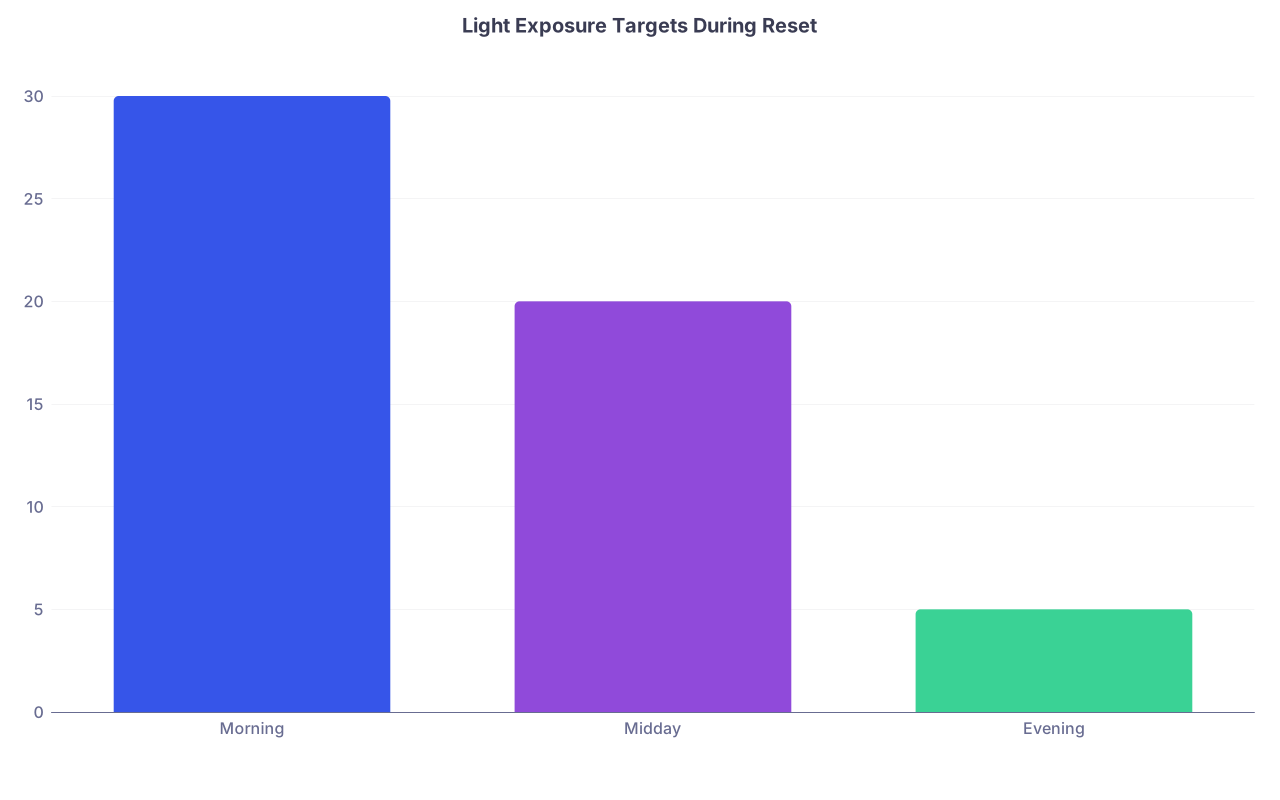
1. Light: Your Main Circadian Weapon
- Morning: heavy exposure as soon as you wake (day after last night onward).
- Midday: get outside at least once. Even 10–15 minutes.
- Evening (after 20:00): aggressively dim all screens, or use night mode + blue light filters.
- Post-shift ride home: on the last night, wear dark glasses to avoid confusing your brain about “daytime.”
| Category | Value |
|---|---|
| Morning | 30 |
| Midday | 20 |
| Evening | 5 |
(Values in minutes per day you should aim for.)
2. Sleep: Timing Matters More Than Total
You will not get perfect 8-hour stretches immediately. Focus on:
- Anchoring sleep to 21:00–23:00 bedtime and 05:30–07:30 wake, not on hitting exact totals.
- Capping naps:
- Post-last-night: 3–4 hours max.
- Other days: 20–30 minutes, before 15:00, only if truly needed.
- Consistency over heroics: three nights of 6–7 hours at the right time beats one 11-hour crash at noon.
3. Caffeine: Use It, Do Not Let It Use You
Basic rules:
- No caffeine within 8 hours of planned bedtime.
- Do not “treat” exhaustion on flip day with a 3 PM cold brew. That is how you blow up your 22:00 bedtime.
- Use caffeine in the work-simulated morning, not overnight once you are done with nights.
4. Movement and Food Timing
You do not need a perfect diet. You need predictable signals.
Food:
- First real meal within 1–2 hours of waking.
- Last substantial meal at least 3 hours before bedtime.
- Avoid huge carb-heavy feasts late at night during the flip.
Movement:
- Light to moderate exercise during the day (walks, easy run, light strength).
- Avoid intense late-night workouts during the reset; they keep your sympathetic system activated.
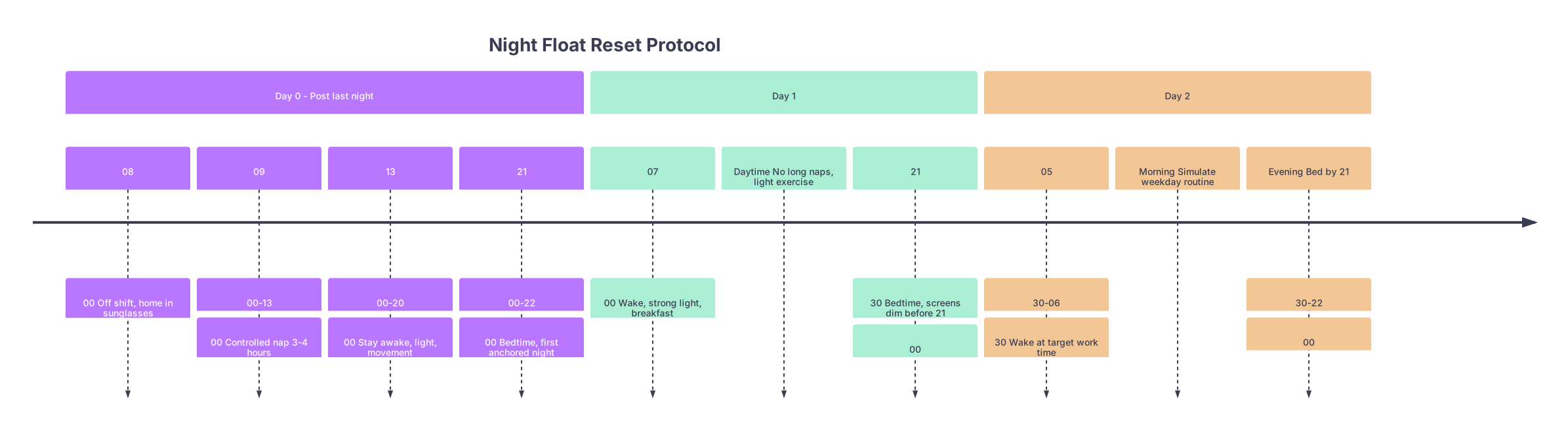
Step 6: A Visual Reset Timeline You Can Copy-Paste
Here is a generic 3-day flip schedule from nights to days you can adapt. Assume last night ends Day 0 at 8:00 AM.
| Period | Event |
|---|---|
| Day 0 - Post last night - 08 | 00 Off shift, home in sunglasses |
| Day 0 - Post last night - 09 | 00-13 |
| Day 0 - Post last night - 13 | 00-20 |
| Day 0 - Post last night - 21 | 00-22 |
| Day 1 - 07 | 00 Wake, strong light, breakfast |
| Day 1 - 21 | 30 Bedtime, screens dim before 21 |
| Day 2 - 05 | 30-06 |
| Day 2 - Evening Bed by 21 | 30-22 |
Print this out. Tape it in your call room. Stop improvising every month.
Step 7: Common Mistakes That Ruin Your Reset
I have watched residents sabotage themselves with the same errors over and over. Learn from them.
“I’ll just sleep until I wake up after my last night.”
- Translation: “I will sleep 7–8 hours, wake up at 16:00–17:00, and then feel wide awake all night.” Set an alarm. Or three.
Binging Netflix “because I earned it.”
- You did earn rest. But not a 6-hour blue-light blast at midnight when you are supposedly flipping back to days.
Random, long naps on reset days.
- You feel sleepy at 16:00, lie down “for a minute,” wake up at 19:30, and your circadian clock is now in the trash.
Hammering caffeine late in the day.
- Post-call exhaustion is real. But solving it with a 17:00 energy drink pushes your sleep onset by several hours.
Going out drinking on your first free night.
- Bad combination: alcohol, circadian misalignment, and dehydration. You will feel impressive for 3 hours and miserable for 48.
Step 8: Night Float → Nights Again (Between Night Rotations)
Sometimes you have a week or a few days off between two separate night float blocks. Different game.
Here, your goal is recovery, not full circadian flip. You do not want to fully revert to days if you are going right back to nights soon after.
When You Have ≤ 5 Days Off Before Nights Again
- Do a partial reset, not a full one:
- Shift your sleep to something like 02:00–10:00 rather than full 22:00–06:00.
- This keeps you closer to night schedule but lets you see some daylight and people.
- Light:
- Get afternoon sun, not early morning sun as much.
- Social:
- Get non-hospital human contact, but avoid extreme early mornings or red-eyes that confuse your clock further.
You are not “fixing” your schedule here. You are just refilling the tank without whiplash.
Step 9: Protecting Your Next Rotation From Night Float Hangover
Reset is not only about you feeling decent. It is about not sabotaging your incoming rotation before it starts.
The Week Before Your Night Float Ends
Prepare your future daytime self:
- Refill meds.
- Stock simple, decent food at home (frozen veggies, eggs, rotisserie chicken, microwave rice).
- Lay out a minimum plan for the first 2–3 days of your next rotation: commute, parking, start time, first-day tasks.
First 2 Days of New Rotation
Treat them as high risk for errors and low patience.
- Double-check orders, dosages, and communication.
- Warn your senior: “I just flipped off nights; I am safe but slower than usual.” That is professional, not weak.
- Protect sleep fiercely. This is not the time to volunteer for every extra teaching session at 18:00.
Step 10: Plug-and-Play Protocols You Can Actually Use
To make this stupidly simple, I will spell out the most common patterns as short, direct sequences.
If Last Night Ends Thursday, Start Days Monday
- Thu 08:00–12:00 – 3–4 hour nap.
- Thu 12:00–21:00 – Awake, no naps, no caffeine after 14:00.
- Thu 21:00 – Bed.
- Fri, Sat, Sun – Wake 06:00–07:00, no naps >30 minutes, bed 21:30–22:30.
If Last Night Ends Sunday, Start Days Tuesday
- Sun 08:00–12:00 – 3–4 hour nap.
- Sun 12:00–21:00 – Awake, keep moving.
- Sun 21:00 – Bed.
- Mon – Full simulated workday 06:00–22:00.
- Tue – Start rotation.
If Forced Into Same-Day Orientation After Last Night
- Post-shift 60–90 minute nap only.
- Light, caffeine, food. Go to orientation.
- No nap after.
- Bed as early as humanly possible once home.
A Quick Visual for What Not to Do

If your reset days look like this, you are dragging the night float hangover into your new rotation on purpose.
A Realistic Example: PGY-2 on ICU Nights → Wards
You just finished 2 weeks of brutal ICU nights. Last shift ends Friday 08:00. Wards start Monday 06:30 sign-out.
Here is how you run it:
Friday
- 09:00–12:30: Nap (dark room, alarms set).
- 13:00: Brunch with co-resident, sunlight.
- 14:00–18:00: Light errands, no screens in bed.
- 19:00: Dinner.
- 21:30: Bed. No alcohol. You are not “celebrating;” you are resetting.
Saturday
- 07:00: Wake, light, coffee.
- Late morning: Workout, groceries.
- Afternoon: Meal prep for wards (even 2–3 simple meals).
- 21:30–22:00: Bed.
Sunday
- 06:00–06:30: Wake (match Monday).
- 08:00–12:00: Review wards basics, check emails, review sign-out expectations.
- 15:00: Stop caffeine.
- 21:00: Bed.
Monday morning you will be a bit tired but clearheaded. That is the target.
Quick Tools That Actually Help
Use them intentionally, not as magic cures.
- Eye mask + white noise app: Use during the post-night controlled nap.
- Sunrise alarm clock: If your room is a cave, this helps anchor wake times.
- 0.5–1 mg melatonin: Short-term crutch the first 1–2 nights only, 1–2 hours before target bedtime.
- Blue light filters / glasses: After 20:00 during reset days.
| Category | Value |
|---|---|
| Light exposure | 10 |
| Sleep timing | 9 |
| Caffeine control | 7 |
| Melatonin | 4 |
| Exercise | 6 |
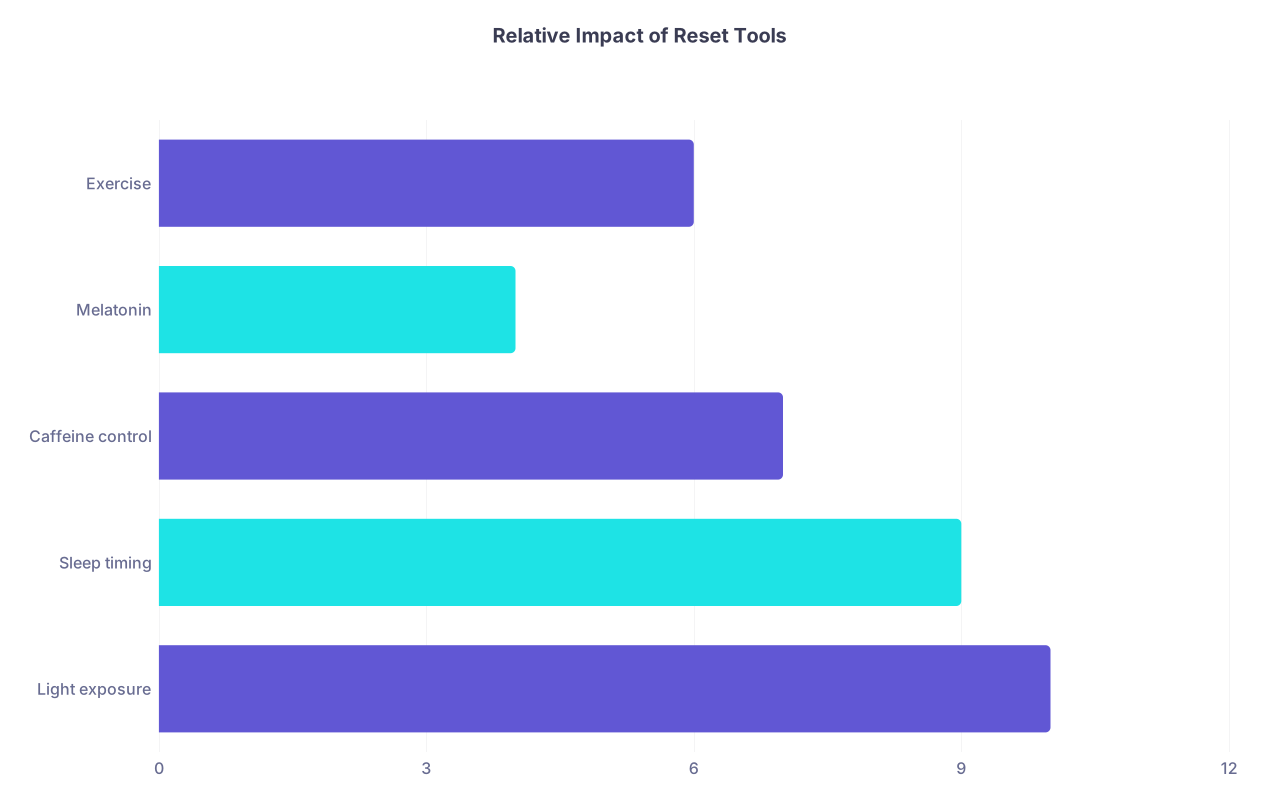
(10 = highest impact, 1 = lowest; approximate relative importance.)

How to Make This Automatic
You are too tired post-nights to think clearly. Set this up ahead of time.
Create a “Night Float Reset” note on your phone.
- Put your chosen protocol and times in there.
- Read it at 04:00 on your last night when your brain is mush.
Tell a friend / partner your plan.
- Ask them to wake you from your post-night nap if your alarms fail.
- Ask them not to invite you out late your first night off.
Standardize your wake time for day rotations.
- If you always aim for 05:30–06:30, every flip gets easier. Your body learns the pattern.

The Bottom Line
You will not “feel great” flipping off night float. That is fantasy. Your goal is functional, safe, and not wrecked for a week.
Remember these three points:
- Cap the post-last-night nap and force yourself onto an early night sleep the same day. The nap is controlled. The bedtime is sacred.
- Use light, timing, and caffeine deliberately instead of reacting to how tired you feel in the moment. Your feelings lag behind your physiology.
- Run the same protocol every time you come off nights, with minor tweaks for timing. Consistency is how you stop repeating the same miserable reset every month.
You cannot control your schedule. You can absolutely control your reset.