
Your transition off nights is where most people wreck themselves. Not the nights themselves. The flip back to days is what quietly destroys your sleep, your mood, and your performance.
I have watched excellent residents stumble through three days of “post-nights jet lag” like zombies because they had no actual plan. Just vibes. “I’ll crash when I get home and see what happens.” That is how you end up awake at 2 a.m. before your first day shift, staring at the ceiling and hating everything.
You need a protocol. Not hope. Not “I’ll just nap when I am tired.” A clear, stepwise plan for the 72 hours from your last night to being functional on days again.
Here is that plan.
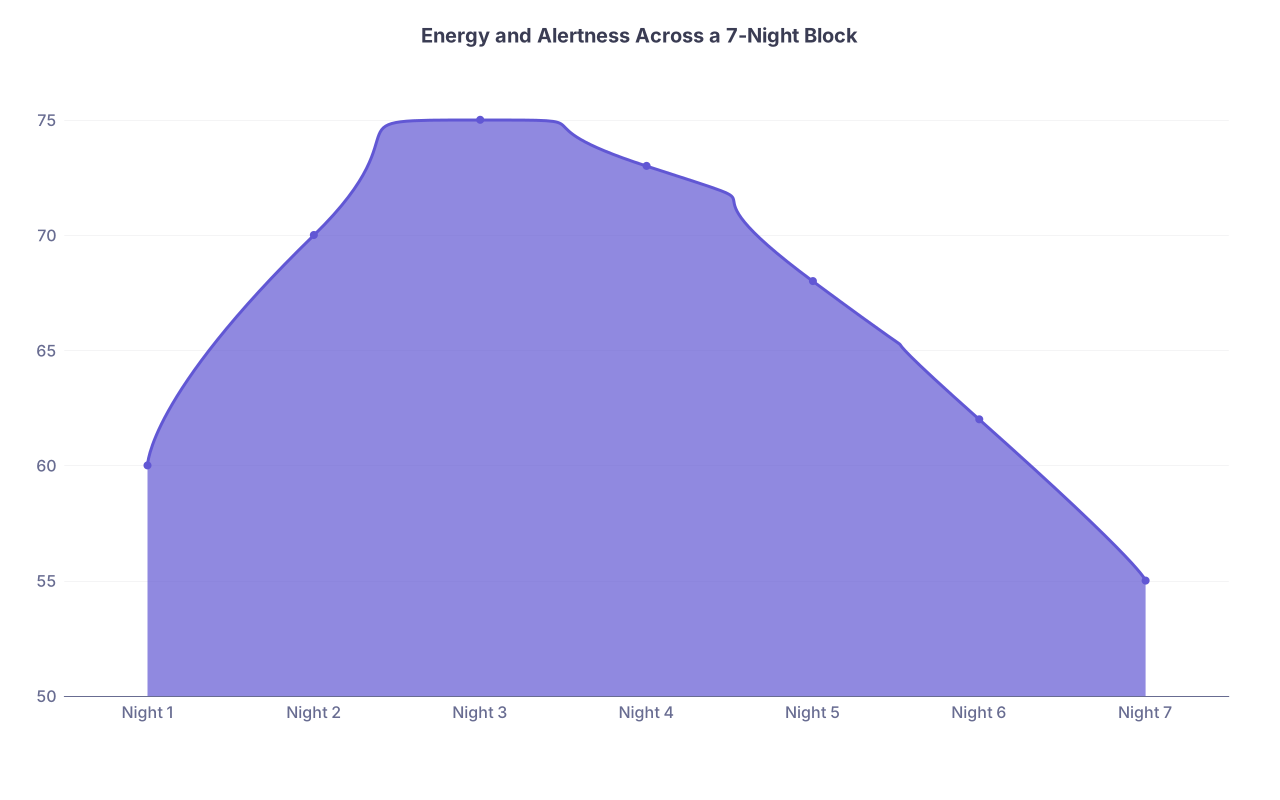
| Category | Value |
|---|---|
| Night 1 | 60 |
| Night 2 | 70 |
| Night 3 | 75 |
| Night 4 | 73 |
| Night 5 | 68 |
| Night 6 | 62 |
| Night 7 | 55 |
Core Principles Before We Get Tactical
If you understand these four rules, the rest of the protocol makes sense. If you ignore them, all the hacks in the world will not help.
You are not “catching up” on sleep in one day.
Sleep debt from a week of nights does not disappear with a 12‑hour crash. You reduce it gradually over several days.The goal after your last night is controlled sleep, not maximum sleep.
Most residents blow the transition by sleeping too long that first post‑call day. They feel great at 6 p.m., then cannot sleep at 11 p.m., then they are wrecked the next morning.Light is your main lever.
Light exposure is stronger than caffeine and will either save or ruin you. Used properly, it forces your circadian rhythm to move.Consistency for 3 days beats perfection for 1 day.
You will not feel amazing right away. Fine. The goal is “safe and functional” quickly and “actually normal” by day 3–4.
Keep those in mind. Now let’s build the protocol.
Step 1: Know Your Schedule and Choose a Strategy
Do not wait until your last night to decide what you are doing. The right plan depends on when your last night ends and when your first day shift starts.
| Last Night Ends | Next Day Shift | Best Strategy |
|---|---|---|
| Fri morning | Mon morning | Full reset weekend |
| Fri morning | Sun morning | Gradual reset |
| Thu morning | Fri morning | Aggressive same-day |
| Single night | Next morning | Mini-reset |
Basic rule
The shorter the gap between last night and first day, the stricter you must be with wake time, light, and caffeine.
- Gap ≥ 2 days: You can transition more gently.
- Gap 1 day: You must run an aggressive, almost military-style protocol.
We will start with the most common: finishing a run of nights, off service the next day, then back on days shortly after.
Step 2: The Last Night Shift – Do Not Sabotage Yourself
The transition actually starts during your last night.
During the last 4–6 hours of that shift
Cut caffeine completely 6 hours before sign‑out.
If you sign out at 8 a.m., last caffeine at 2 a.m. No “just one cup at 5 a.m.” That one cup is why you lie in bed at 10 a.m. wired and miserable.Start dimming your environment if possible.
- Turn down computer brightness.
- Avoid sitting directly under the brightest lights.
- If your ED or unit is bright and chaotic, you at least avoid staring into massive overhead light banks when not required.
Eat something light, not a heavy meal, in the last 2 hours.
Heavy carb‑fat bombs at 6–7 a.m. make you groggy and nauseated, not “sleepy in a good way.”
You are trying to make sleep after shift possible, not perfect.
Step 3: Post-Call Day 0 – The Critical 24 Hours
This is where most people either set up a clean transition or guarantee insomnia.
We will assume a typical schedule:
- You sign out around 7–8 a.m.
- You are off that calendar day and do not have to return until at least the next morning.
07:00–08:00 – Leaving the hospital
The walk out of the hospital matters more than you think.
Block the morning light.
- Use dark sunglasses the second you step outside.
- Avoid looking directly at the bright sky.
Your brain reads that morning light as “time to wake up,” which fights your attempt to sleep.
Avoid long commutes that tempt you to fall asleep at the wheel.
If you are struggling to keep your eyes open:- 10–15 minute nap in your car before driving.
- Cold air, upright seat, mild audio stimulation (not relaxing podcasts).
Do not have a big social conversation with a co‑resident in the parking lot.
You are burning your last bit of fatigue while your circadian clock is swinging toward “daytime.”
08:30–09:00 – At home: rapid downshift
You want to be in bed as soon as reasonably possible.
Do this, in order:
Minimal routine only.
- Quick shower or wash face.
- Light snack if starving (yogurt, toast, not a giant meal).
- Use the bathroom.
Transform your room into a cave.
- Blackout curtains or rig up extra darkness with a blanket if needed.
- Eye mask if light leaks are unavoidable.
- White noise (fan, app, whatever actually drowns hallway noise).
Phone out of reach.
Airplane mode or Do Not Disturb. You scroll for 15 minutes, you just burned the window where you were actually sleepy.
09:00–13:00 (approx.) – The controlled “anchor sleep”
This is the most important rule:
Set an alarm. 4–5 hours max.
- If you sleep 7–8 hours here (09:00–17:00), you will be WIDE awake at midnight.
- 4–5 hours gets you out of the danger zone of extreme fatigue but still leaves you sleepy enough to fall asleep again at a more “normal” night time.
So:
- In bed by 09:00.
- Alarm between 13:00–14:00.
- Expect to wake feeling groggy. That is fine.
13:00–14:00 – Waking up (do not crawl back under the covers)
When the alarm goes off:
Get out of bed within 5 minutes.
Lying there half-awake turns into a 2‑hour fragmented “nap” that wrecks your night.Light exposure – aggressively.
- Open curtains fully if the room has daylight.
- Or go outside for 15–30 minutes of direct daylight.
This pushes your clock toward days.
Caffeine is now allowed, but set a curfew.
- One moderate dose early afternoon is fine.
- Zero caffeine after 16:00–17:00.
I have seen people slam an energy drink at 18:00 and then complain they “just can’t fall asleep before 2 a.m.”
Small, balanced meal.
You probably have not eaten since ~02:00–04:00. Eat real food, not pure sugar.
14:00–21:00 – Stay awake, move, but do not overdo it
This is the long, annoying stretch. You will be tempted to “just lie down for a second.” Dangerous.
Target activities:
- Light physical movement: walk, light workout, stretching.
- Low‑stakes tasks: laundry, grocery run, meal prep.
- Short social time: coffee with a friend, call family.
Avoid:
- Long drives.
- Lying in bed with your laptop.
- Napping on the couch with “background TV.”
If you absolutely cannot stay awake:
- One emergency nap: 20–30 minutes before 17:00.
Not 2 hours. Not at 19:00.
21:00–22:30 – Wind down and sleep like it is a normal night
Your target for Post-Call Night 0: asleep 21:00–23:00, not 01:00–03:00.
Do a truncated wind down:
- Lights dim 60–90 minutes before target bedtime.
- No heavy meals late.
- No stimulants, no intense workouts.
- Brief hot shower can help.
If your brain will not shut up, I have seen this help:
- 5–10 minutes of journaling: write down all “to-do” thoughts.
- Neutral, boring audio (low drama podcast, audiobook).
If you are not asleep after 30–40 minutes:
- Get out of bed. Sit in a chair, low light, read something boring or do a calm activity.
- Return to bed when sleepy. Do not sit in bed stewing.
Step 4: Days 1–3 – Lock In the Day Schedule
Assume the following:
- Day 1: First full day after that controlled post‑call reset.
- Day 2–3: Back to clinic or day wards.
Your goals:
- Bedtime window: 21:00–23:00.
- Wake time: 06:00–07:00.
- Solid morning light exposure.
- Zero naps after 15:00.
Morning: Force the anchor
When your alarm goes off (even if you slept poorly):
Get vertical immediately.
Do not bargain with yourself about “just 15 more minutes.”20–30 minutes of bright light ASAP.
- Ideal: outdoors.
- Acceptable: very bright indoor light facing windows.
First caffeine in the morning, not afternoon-heavy.
You want your wakefulness skewed toward earlier hours to push your clock.
Midday: Move, eat, stabilize
- Physical activity: even 20–30 minutes helps your brain accept the new schedule.
- Regular meals: breakfast, lunch, dinner at “normal” times. Night-shift grazing pattern must stop here.
- Hydration: you are usually volume‑depleted after a run of nights.
Afternoons: The danger window
Flush pattern I have seen dozens of times:
- Resident gets sleepy at 16:00.
- Collapses into a 2‑hour nap.
- Now cannot sleep until 01:00.
- Next morning’s 06:00 alarm feels like torture.
You have two options:
Ideal – push through without napping:
- Small walk.
- Cold water splash on the face.
- Light snack with some protein.
If absolutely needed – controlled nap:
- 20–30 minutes, before 15:00–16:00.
- Set an alarm and sit up immediately when it rings.
Evenings: Guard your bedtime like an ICU patient
Your circadian rhythm will try to drift later again, especially if you were on nights for > 5–7 shifts.
Protect:
- Lights dim 1–2 hours before target sleep time.
- No screens in bed. If you must use your phone, use night mode, lowest brightness, and set a hard stop time.
- Avoid “second wind” triggers: intense workouts, big arguments, heavy studying at 21:00–22:00.
If on Day 1 you sleep from 22:30–06:30, that is a huge win. You are essentially back to a functional day pattern.
Step 5: Special Cases and Adjustments
Scenario A: Last night ends Friday, first day shift Monday
You have luxury time. Do not waste it by staying fully nocturnal all weekend.
Plan:
- Friday after shift
- Same controlled sleep 4–5 hours (09:00–13:00).
- Stay awake until 22:00–23:00.
- Saturday
- Wake 07:00–08:00, outdoor light, moderate caffeine.
- Optional 20–30 min nap before 15:00 if ruined.
- Normal bedtime 22:00–23:00.
- Sunday
- Same as Saturday, but even stricter on naps and caffeine.
- By Sunday night you should feel reasonably synced.
Scenario B: Last night ends Thursday, you are on days Friday
You do not have the luxury of a gradual reset.
Aggressive version:
- Sleep 3–4 hours max after shift (09:00–12:30).
- Wake, bright light immediately.
- Zero naps all afternoon if you can possibly avoid them.
- Bedtime 21:00–22:00.
- The first day on service will not feel great, but you will be safer and usually sharper than if you had slept 8 hours and then been awake all night.
Scenario C: Single random night shift, then back to days
This is more common in smaller programs or consult services.
Treat it as “jet lag from one red‑eye flight”:
- Short sleep block (3–4 hours) immediately post-shift.
- Forced wake with sunlight.
- Optional short early afternoon nap.
- Sleep again that night at normal time.
The same rules, just compressed.

Step 6: What To Do When You Already Screwed It Up
You will ignore this plan at some point. Sleep 7 hours post-call, wake at 17:00, feel fantastic, then be wide awake at 03:00.
Fine. Here is the damage control protocol.
If you overslept post-call and wake up late afternoon
Example: you crash at 09:00, accidentally wake up at 17:30.
Still get out of bed.
Staying down until 20:00 just adds insult.Immediate bright light.
You need to send the strongest possible cue that this is still “daytime.”You are not sleeping at 22:00 now. Adjust expectations.
Aim for a compromise bedtime: midnight–01:00.Zero caffeine after you wake.
You already slept 8 hours. You do not need stimulants.Wake up next morning at a fixed time (07:00–08:00), even if you only got 5–6 hours.
You will be tired that day but your rhythm corrects faster.
If you cannot fall asleep the first “normal” night
Lying awake at 23:30, annoyed.
- Give it 20–30 minutes.
- If awake, get out of bed. Go to a chair, dim light, boring reading.
- Try again when sleepy.
- Do not stay awake in bed for hours watching the clock. That trains your brain that “bed = being awake and frustrated.”
Next morning:
- Get up at your planned wake time anyway.
- Morning light, caffeine, and movement.
- Short early afternoon nap only if necessary.
Step 7: Caffeine, Melatonin, and Sleep Meds – Use Like a Professional, Not a Desperate Intern
People either underuse or abuse these. Here is what actually works.
Caffeine
Treat it like a drug. It is.
During nights:
- Small, regular doses early in the shift.
- Hard cut‑off 6 hours before the end of shift.
Post-nights transition:
- First day: one moderate dose after waking from anchor sleep, not late evening.
- On subsequent days: normal morning use, limit after 14:00–15:00.
If you are pounding energy drinks at 18:00, nothing else I wrote will save your sleep.
Melatonin
Melatonin is a timing signal, not a knockout pill.
Used correctly:
- Small dose: 0.5–3 mg, not 10 mg horse tablets.
- Time: 1–3 hours before desired sleep time during the first 1–3 transition nights.
For example:
- you want to sleep 22:00;
- take 0.5–1 mg around 20:30–21:00.
Stop once your schedule stabilizes. It is a temporary nudge, not a lifelong crutch.
Prescription sleep meds
I will be blunt: I see residents reach for these far too casually.
If you:
- have a history of insomnia,
- or are already on a prescribed agent,
then coordinate with your own physician for a short-term targeted use during heavy night blocks. Do not freelance with leftover tablets from med school.
Complicated mix of:
- sleep meds,
- extreme fatigue,
- and back‑to‑back clinical responsibilities
is how people make serious cognitive errors.
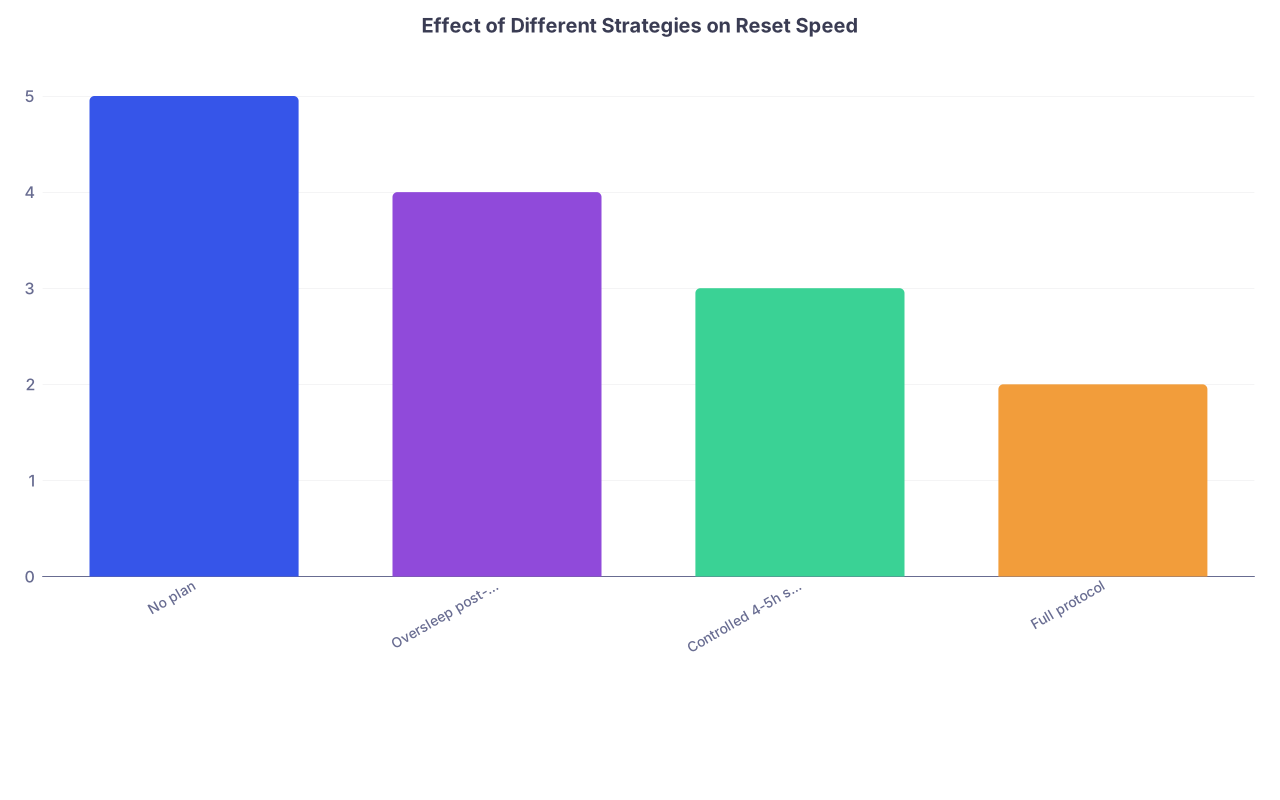
| Category | Value |
|---|---|
| No plan | 5 |
| Oversleep post-call | 4 |
| Controlled 4-5h sleep | 3 |
| Full protocol | 2 |
(Values represent approximate days to feel “back to normal”)
Step 8: Reduce Damage During the Night Block So Transition Is Easier
You can make the flip back to days much smoother by not destroying your body during the nights themselves.
Basic rules:
Keep a consistent “daytime” during nights.
Same sleep period after each night (e.g., 09:30–15:30) instead of randomly sleeping 4 hours one day and 9 the next.Light discipline:
- Dark on the drive home (sunglasses).
- Bright on the way into work at dusk.
Eat something approximating “meals” rather than constant snacking.
Your GI tract does not love being hammered with sugar and grease at 03:00.Do not completely detach from day-world on your days off.
If you have a random off‑night during a run of nights, partially shift toward a more normal bedtime so your body is not whiplashed as hard at the end.
Step 9: When You Still Feel Like Garbage – Red Flags and Reality
Even with a perfect protocol, you might feel:
- Foggy,
- Low mood,
- Irritable,
- Slower on recall and decision-making
for 2–4 days after a long block of nights. That is expected. You are not broken, you are recovering.
What is not normal:
- You cannot fall asleep or stay asleep for more than 3–4 nights in a row.
- You are so sleepy driving home that you genuinely fear you will crash.
- Your mood tanks to the point of hopelessness or severe anxiety.
- You are making repeated dangerous clinical mistakes because you cannot think clearly.
That is when you escalate:
- Talk to your chief, program leadership, or wellness officer.
- See your own physician or a sleep specialist if this is a pattern, not just a rough week.
Chronic circadian disruption during residency is real. So is burnout. Playing “hero” while your brain is disintegrating helps no one.
The Short Version You Can Screenshot
If all of this felt long, here is the cliff‑notes protocol you can actually use:
After your last night:
- No caffeine 6 hours before sign‑out.
- Sunglasses on when leaving.
- Home, in bed by ~09:00.
- Set alarm for 4–5 hours later (13:00–14:00). Do not skip the alarm.
Post‑nap:
- Get up within 5 minutes.
- 20–30 minutes bright light.
- One caffeine dose early afternoon. None after 16:00–17:00.
- Stay awake. Only emergency nap: 20–30 minutes, before 15:00–16:00.
Bed that night:
- Aim to sleep 21:00–23:00.
- Dark, cool room. No screens in bed.
Next 2–3 days:
- Wake 06:00–07:00, bright light immediately.
- Normal meals, some physical activity.
- No naps after 15:00.
- Protect bedtime, no late caffeine.
Do this consistently and you will stop “crashing” every time you flip from nights to days. You will still be tired. You will not be destroyed.
Key takeaways:
- The transition back to days starts during your last night: cut caffeine, guard light, and pre‑plan your post‑call sleep window.
- The single most powerful move is controlled 4–5 hour sleep after your last shift, then forcing a normal bedtime that same calendar day.
- Light, timing, and consistency over 2–3 days beat any single “hack” or medication. Use them like tools, not afterthoughts.