Direct Reality Check: Why Night Float Leaves You Feeling Jet-Lagged
Night float wrecks you for a reason. Not because you are weak. Not because you “just need to sleep more.” It hits several systems at once: your circadian clock gets dragged off schedule, sleep pressure builds in the wrong places, meal timing gets weird, and your alertness becomes unreliable. It is jet lag without the airport.
I have seen residents finish a brutal run of nights, sleep ten hours, then wonder why they still feel foggy, hungry at odd times, and wide awake at midnight. That is the trap. Total sleep matters, but timing matters more than most people realize. If you sleep at the wrong biological time, get blasted with bright dawn light on the drive home, then scroll your phone under ceiling LEDs at 10 p.m., you are feeding the problem from both ends.
The biggest myth is simple: “I will just catch up later.” No. Recovery after nights is not just a quantity problem. It is a clock problem. Your brain needs clear signals about when sleep happens and when wakefulness starts. Light is the strongest of those signals. Used well, it shortens the misery. Used badly, it keeps you half-switched for days.
This article is the fix. Not biohacking nonsense. Not a 14-step perfection routine no resident will follow. Just practical light-exposure tactics that help you reset faster after nights, reduce the post-call crash, and make the handoff back to normal life less ugly.
Myth vs Reality: What Light Actually Does to Your Body Clock
Light is not just “wake-up energy.” It is instructions. It tells your brain what time it is supposed to be.
That is where people get sloppy.
Myth: Any bright light at any time is helpful.
Reality: timing changes everything.
- Morning light tends to advance your clock. It pulls you earlier.
- Evening and late-night light tend to delay your clock. It pushes you later.
- Bright light at the wrong time can make your reset worse, not better.
That means the cheerful sunrise on your commute home after night float is not always your friend. If your goal is to get home and sleep, direct morning light can tell your brain, “Great, day has started.” Then you crawl into bed and wonder why you are tired but not sleepy. I have watched that movie too many times.
Myth: Blackout curtains alone solve night float.
Reality: blackout is defense, not offense.
Yes, you need darkness during daytime sleep. Full stop. A bright room ruins sleep depth and continuity. But darkness only protects the sleep period. It does not actively re-anchor your clock. To do that, you need intentional bright light after waking. That is the missing piece for many residents. They focus on blocking light, then forget to use it strategically later.
Myth: Caffeine and willpower can replace light management.
Reality: caffeine is a tool, not a circadian reset button.
Coffee can prop open your eyelids. It cannot reliably shift your body clock. Light can. That is why a disciplined light routine often works better than another espresso and a pep talk. Pair that light routine with reasonably consistent sleep and wake times, and your odds improve fast.
Bottom line:
- Darkness protects sleep
- Bright light anchors wake time
- Late bright light delays bedtime
- Random light exposure is a mess
That is the whole game.
The Reset Protocol: Exactly How to Use Light After a Night Shift
Here is the practical protocol. Use it as written before you start improvising.
Step 1: Decide your goal before you leave the hospital
This is where most people fail. They do not choose a strategy.
You usually have two real options:
Rapid return to days
Use this if you have several days off or need to function on a normal daytime schedule.Temporary night-mode recovery
Use this if you are working another night shift soon and flipping fully back to days would be dumb and inefficient.
Pick one. Do not mix them hour to hour based on vibes.
Step 2: Control light on the commute home if sleep is coming soon
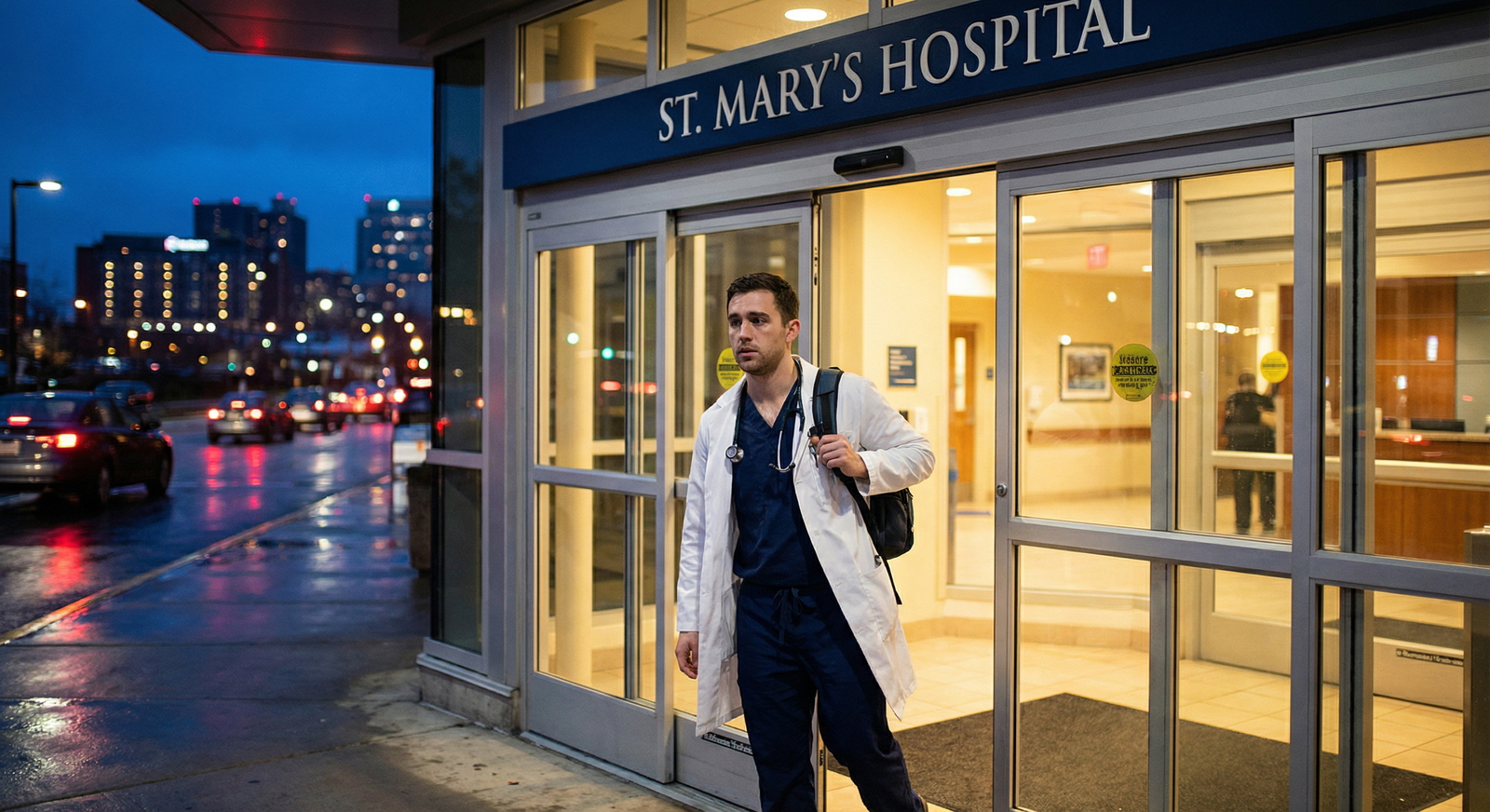
If your plan is to sleep after shift, do not marinate in bright morning sun on the way home.
Use:
- Dark sunglasses
- Car visor
- Avoid extra outdoor errands
- No “I will just walk the dog first” if you are trying to preserve daytime sleep
This is not dramatic. It is practical. Morning light is a powerful wake signal. Blocking some of it buys you a smoother landing into sleep.
If you commute by train or walk home in daylight, be even more deliberate. Hat, sunglasses, minimal direct sky exposure if possible. You do not need cave-level darkness, but you should avoid unnecessary bright light.
Step 3: Build a dark sleep setup immediately
Once you are home, move straight into sleep mode. Do not wander around the kitchen under overhead LEDs answering messages and reorganizing your bag. That is how a 20-minute delay becomes 90 minutes.
Your daytime sleep setup should include:
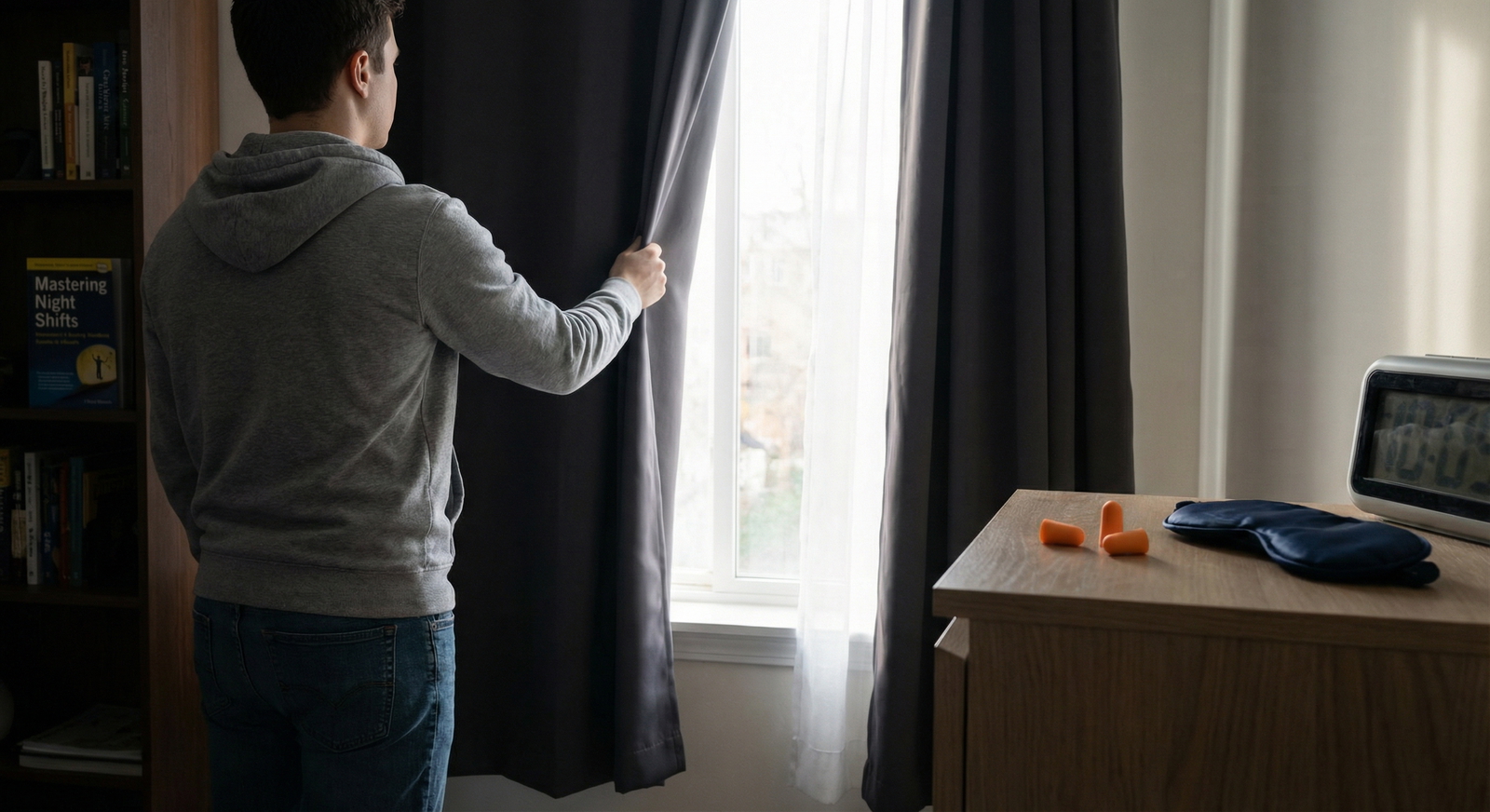
- Blackout curtains or temporary blackout shades
- Eye mask
- Cool room
- Phone on do-not-disturb
- White noise or earplugs if needed
- A fixed sleep block, not random fragmented napping
My preference: commit to one solid post-shift sleep block rather than a messy series of naps. Fragmented sleep feels fake-restful. You wake up more often, drift in and out, and never quite reset.
If you are trying to flip back to days after your final night, a common practical approach is:
- Sleep a shorter recovery block in the morning to early afternoon
- Wake intentionally
- Get bright light
- Stay awake until a normal evening bedtime
That is uncomfortable for one day, but it often resets faster than sleeping all day and then lying awake half the night.
Step 4: After waking, use bright light on purpose
This is the part people skip. Bad idea.
Once you wake for your intended wake period, get strong light exposure quickly.
Best option:
- Outdoor daylight for 20 to 30 minutes
Backup option:
- Bright light box used at a consistent time after waking
Why outdoor light? Because natural daylight is extremely potent, even on cloudy days. A short walk, coffee on the balcony, sitting outside near the hospital courtyard, whatever is realistic. Just do it early in your wake window.
If you are using a light box:
- Place it at the recommended angle and distance
- Use it while reading, eating, or charting from home
- Keep timing consistent day to day
- Do not use it late in the evening unless your goal is to stay on nights
This step is your re-anchor. Your brain needs a clear “day starts now” signal. Without it, you stay in circadian limbo.
Step 5: Protect the evening from accidental delay
If your goal is a normal bedtime, do not sabotage it with late bright light.
Two to three hours before your intended bedtime:
- Dim the room lights
- Switch off bright overhead lighting
- Reduce screen brightness
- Turn on night-mode or blue-light reduction settings
- Keep TV, laptop, and phone use lower and shorter if possible
The problem is not just the phone. It is the whole house glowing like an operating room at 9:30 p.m.
A practical rule: if the room feels bright and stimulating, it probably is.
Two simple protocols to copy
Protocol A: Rapid return to days after final night shift
- Finish shift.
- Wear sunglasses and limit bright light on commute.
- Sleep a planned recovery block, often shorter than a full day.
- Wake at a deliberate time.
- Get 20 to 30 minutes of outdoor light right away.
- Stay active, hydrate, eat normal-timed meals.
- Dim lights aggressively in the evening.
- Go to bed at your target nighttime hour.
Protocol B: Stay in partial night mode for another upcoming shift
- Finish shift.
- Limit morning light on commute home.
- Sleep in a dark room at roughly the same time each day.
- Delay strong daylight exposure if you are trying to preserve a later schedule.
- Use brighter light during your planned wake period later in the day or evening.
- Keep meal and caffeine timing consistent with your night schedule.
That is it. Not glamorous. Effective.
Common Mistakes That Undermine the Reset
Residents usually do not fail because they lack motivation. They fail because they accidentally do the exact opposite of what their body clock needs.
Mistake 1: Bright light right after shift when you need sleep soon
This is the classic error. You leave the hospital, walk into broad sunrise, stop for coffee outside, maybe run an errand, and then wonder why sleep feels impossible.
Fix: Block morning light until after your planned sleep block. Sunglasses. Minimal detours. Straight home.
Mistake 2: Sleeping in a bright room and pretending it counts
A thin curtain is not a blackout curtain. A glowing bedroom is not “good enough.” Daytime light fragments sleep, shortens it, and makes recovery worse.
Fix: Upgrade the room before your next night block starts.
- Blackout curtains
- Eye mask
- Cool temperature
- Noise control
Do this once. Then stop suffering needlessly.
Mistake 3: Using bright light too late after waking
If you wake late afternoon and flood yourself with bright light at the wrong time while trying to sleep normally that night, you can push bedtime later.
Fix: Concentrate your bright light exposure early in your intended wake period, then dim aggressively later.
Mistake 4: Changing strategy every day
This is the silent killer. One day you try to flip to days. The next day you half-stay on nights. Then you nap randomly and drink caffeine at midnight on your day off. Chaos.
Fix: Choose one of two plans:
- Temporary night-mode recovery
- Rapid return to days
Stick to it for several days. Consistency beats creativity here.
Practical Gear and Scheduling: Make the Fix Easy to Follow
Make this easy or you will not do it after a 13-hour night.
The basic reset kit
Keep these on hand:
- Dark sunglasses for the commute home
- Eye mask
- Blackout curtains or temporary blackout film/shades
- Bright light box if outdoor light is not reliable
- Blue-light reduction settings on phone, tablet, and laptop
- Water bottle at bedside so you do not wake up dehydrated and miserable
The timing rules that actually matter
Use these three rules:
- Dark when you need sleep
- Bright light soon after wake
- Avoid bright light close to bedtime
Everything else is secondary.
Pair light with food, hydration, and caffeine
This matters in residency because life is not a laboratory.
- Hydrate after shift and after waking
- Eat on a schedule that matches your target wake period
- Use caffeine early, not late
- Avoid caffeine in the several hours before your planned sleep
I like a simple approach: caffeine near the start of the wake period, not as a desperate rescue near the end. Late caffeine plus bad light timing is how you end up exhausted and unable to sleep. A ridiculous combination. Yet common.
Quick decision rules for messy real-life situations
Long commute home:
Use sunglasses and keep the car environment dimmer. If you commute by public transit, hat plus sunglasses still helps.
Rotating shifts:
Do not expect perfect adaptation. Focus on minimizing damage: protect sleep with darkness and make wake-up light consistent.
Post-call obligations:
If you must attend a meeting, appointment, or childcare handoff after shift, reduce light exposure as much as possible, then sleep as soon as you can. Once you shorten the sleep window, be even more disciplined about the post-wake light anchor.
When Light Tricks Are Not Enough: Know When to Escalate
Sometimes the problem is not just poor timing. Sometimes there is a real sleep disorder, burnout spiral, or safety issue underneath it.
Red flags:
- Persistent insomnia even when you follow a good routine
- Severe mood symptoms, irritability, or depression
- Loud snoring, witnessed apneas, or suspected sleep apnea
- Drowsy driving or near-miss crashes after shift
- Inability to function despite proper sleep and light timing
If that is you, stop improvising. Get evaluated. A primary care clinician or sleep specialist can help sort out insomnia, circadian rhythm disorders, sleep apnea, medication effects, or mood symptoms that make shift work much harder.
Here is the clean action plan:
- Choose your goal: return to days or stay on nights briefly.
- Protect sleep with darkness after shift.
- Get bright light immediately after waking for your intended wake period.
- Dim evenings aggressively if you want a normal bedtime.
- Repeat the same routine for several days.
That is the reset. Not perfect. But very effective when you actually do it.
FAQ
1. Should I wear sunglasses after night float on the drive home?
Yes, if you are trying to sleep soon after getting home. That morning light is a strong signal to your brain that the day has started. If sleep is the next task, block the signal and make the landing easier.
2. How much morning light do I actually need after I wake up?
Aim for 20 to 30 minutes of outdoor daylight soon after waking. That is the simplest and strongest option. If natural light is not practical, use a bright light box consistently at the same time after wake. Consistency beats heroics.
3. Is blackout sleep enough by itself to recover from night float?
No. Blackout sleep is necessary, but it is only half the job. Darkness protects the sleep block. Deliberate bright light after waking is what helps reset your clock. Skip that part and you stay half-shifted.
4. What if I have to work another night shift the next day?
Then do not fully flip back to days. That is inefficient and usually miserable. Stay in a partial night-mode plan: limit morning light after shift, sleep at roughly the same time, and use bright light strategically during your planned wake period later in the day or evening.