

The biggest mistake residents make after nights is thinking they can “wing” the flip back to days. You can’t. If you do, your first week back will feel like jet lag, food poisoning, and intern year all over again.
Here’s how to time your reset so you hit your first “normal” day actually functional—not staring at the rounding list like it’s hieroglyphics.
Big Picture: What You’re Up Against
You’re not just “tired.” You’re shifting a full circadian phase by 6–12 hours in a few days. That’s like flying from New York to Europe and back… without leaving the hospital.
At this point, you need to understand the moving pieces:
- How many nights in a row you’re coming off
- When your last night ends (07:00 vs 08:00 vs 09:00 matters)
- When your next day schedule actually starts (clinic at 08:00 vs wards pre-rounding at 05:30)
- Your personal baseline (early bird vs night owl)
Let me give you a basic comparison framework.
| Scenario | Main Goal | Reset Time Needed |
|---|---|---|
| 3–4 nights, then 2 days off | Mild reset | 24–48 hours |
| 5–7 nights, straight to days | Full flip under pressure | 48–72 hours |
| Split nights (3 on, 1 off, 3 on) | Damage control | Focus on stability, not full reset |
| ICU/ED nights to clinic days | Max contrast | Plan 72 hours if possible |
If your program does not give you at least 24 hours off between nights and days, you’re not “tired.” You’re being set up to fail. So you have to control the small levers you still own: timing, light, caffeine, and sleep windows.
Timeline Overview: From Last Night Shift to First Normal Day
Before we go granular, here’s the rough arc you’re aiming for after a typical 5–7 night block:
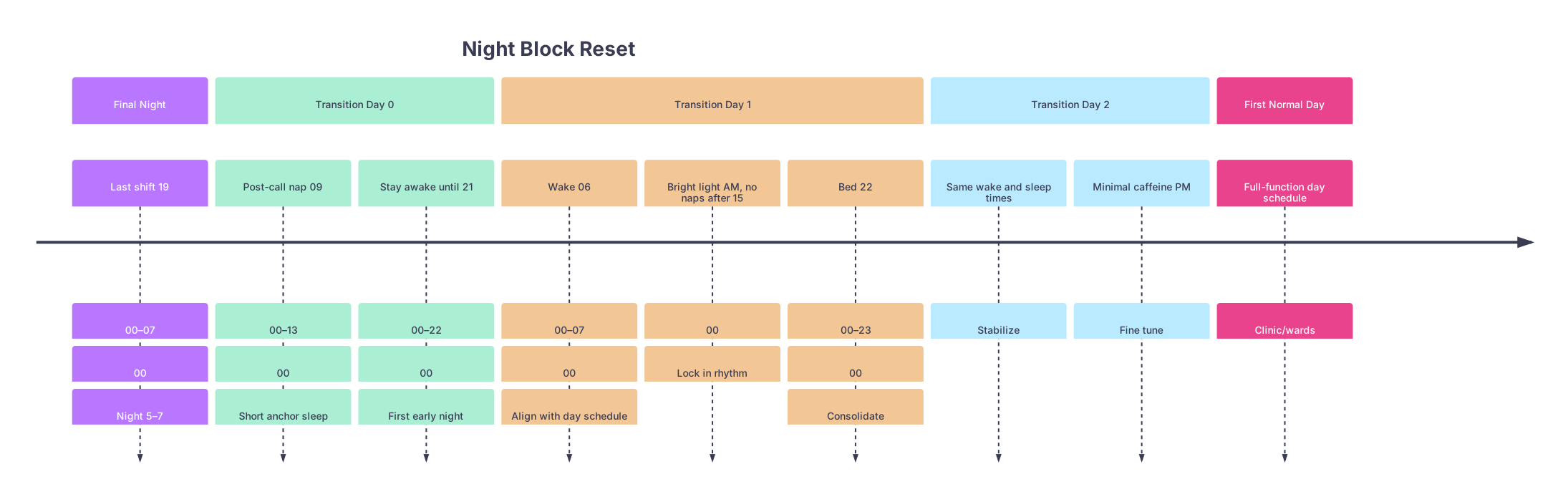
| Period | Event |
|---|---|
| Final Night - Last shift 19 | 00–07 |
| Transition Day 0 - Post-call nap 09 | 00–13 |
| Transition Day 0 - Stay awake until 21 | 00–22 |
| Transition Day 1 - Wake 06 | 00–07 |
| Transition Day 1 - Bright light AM, no naps after 15 | 00 |
| Transition Day 1 - Bed 22 | 00–23 |
| Transition Day 2 - Same wake and sleep times | Stabilize |
| Transition Day 2 - Minimal caffeine PM | Fine tune |
| First Normal Day - Full-function day schedule | Clinic/wards |
Now let’s walk it step by step.
Phase 1: The Last 2–3 Nights of the Block
This is where people start sabotage by accident. At this point you should be setting up the flip, not just surviving.
72–48 Hours Before the Last Night
On your last 2–3 nights:
Hold your night schedule
- Sleep as much as you can during the day (consistent window, e.g., 09:00–15:00).
- Avoid creeping earlier “because I’m tired.” That just leaves you wrecked at 03:00.
Start controlling light
- Coming off your night shifts in the morning:
- Dark sunglasses on the way home
- No “quick grocery trip” in bright light
- Treat sunlight like a drug. Right now, it’s the wrong drug.
- Coming off your night shifts in the morning:
Cap late-shift caffeine
- Last caffeine no later than ~03:00.
- If you’re pounding coffee at 05:30, you’re buying yourself garbage sleep at 09:00.
24 Hours Before the Last Night
This is your pre-flip mindset. At this point, your goal isn’t “feel good now.” It’s “set up the exit.”
- Do not experiment with weird split sleeps or surprise all-nighters.
- Keep your usual pre-night nap timing. If you normally nap 16:00–18:00, stick to it.
- Plan your reset day intentionally:
- When do you want to go to bed after your last night?
- What commitments are non-negotiable (school pickup, conference, clinic)?
If you don’t plan this now, you will make bad decisions post-call with a brain that thinks peanut butter is a food group and charting is optional.
Phase 2: The Final Night – Hour by Hour
This is the pivot point. At this point, every choice should be about the next 48 hours, not just surviving until sign-out.
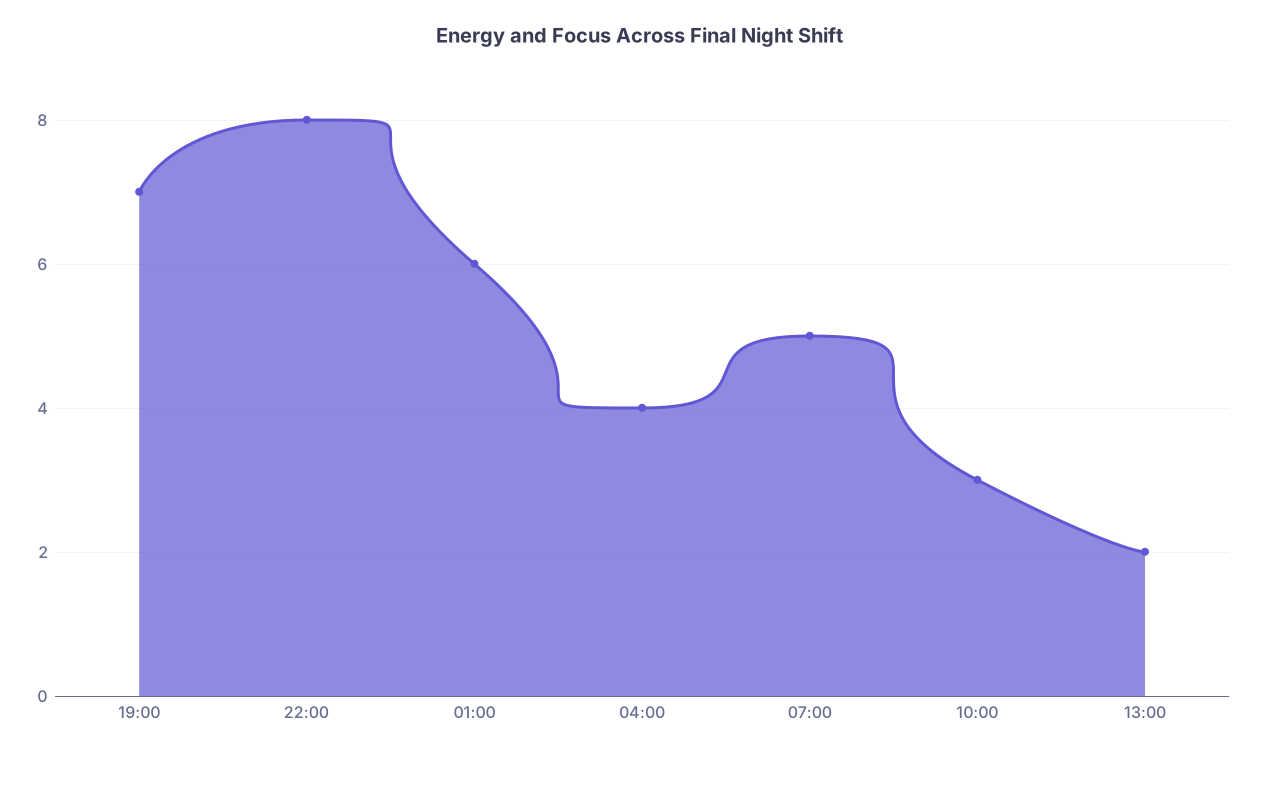
| Category | Value |
|---|---|
| 19:00 | 7 |
| 22:00 | 8 |
| 01:00 | 6 |
| 04:00 | 4 |
| 07:00 | 5 |
| 10:00 | 3 |
| 13:00 | 2 |
During the Final Shift
19:00–23:00 (Start of shift)
- Normal caffeine early in shift is fine.
- Eat a real meal by ~22:00. Not just graham crackers and peanut butter from the call room.
23:00–03:00 (Peak work / admissions)
- This is your last true “night mode” window.
- If you’re dragging, small caffeine dose before 02:00 is okay. Avoid a giant coffee or energy drink.
03:00–06:00 (The dead zone)
- You will feel awful. Do not fix this with a double espresso at 05:00.
- Move around: walk halls, stretch, do quick chart tasks upright, not slumped in a chair.
- Hydrate, light snack if needed.
06:00–08:00 (Sign-out and commute)
At this point, your priority is fast, safe exit and controlled light.
- Finish notes. No “I’ll just stay an extra two hours and clean up.”
- Sunglasses on for the commute home, even if cloudy.
- Do not schedule anything after shift “just quickly” (Costco, DMV, oil change). That’s how you end up awake at noon and wide-eyed at midnight.
Phase 3: Transition Day 0 (Post-Call Reset Day)
This is the day that makes or breaks your flip. Most people either sleep too long or too little. You’re aiming for a controlled partial sleep, then an early night.
At this point you should treat your post-call day as a flight recovery day, not a “day off.”
08:00–09:00: Get Home, Wind Down Fast
Simple routine:
- Shower
- Light snack if hungry
- Blackout curtains, room cold, phone far away
No:
- Scrolling your phone
- “Just one episode”
- Text debates about schedule or gossip
You’re racing the clock before your cortisol and sunlight fully wake you up.
09:00–13:00: Anchor Nap (Not a Full Sleep)
Goal: 3–4 hours. Not 6–8. Not “sleep until I wake up.”
- Set an alarm for 13:00. Yes, you’ll hate it. Yes, you need it.
- Phone across the room.
- Earplugs/white noise if you live in a loud building.
If you sleep until 16:00 or 17:00, you’ve basically chosen to stay on nights another day. You’ll be wide awake at 02:00.
13:00–18:00: Controlled Wakefulness
You will feel like trash. That’s expected. At this point:
Get bright light exposure
- Open shades, go outside if you can.
- Walk 15–30 minutes. No sunglasses if safe for your eyes.
Eat actual meals on a day schedule
- Lunch around 13:00–14:00
- Light snack mid-afternoon
- Early dinner 17:00–18:00
Tiny nap window (optional)
- If you’re falling over, you can do a micro-nap:
- 20–30 minutes max
- Before 15:00
- Set an alarm and sit partially upright so it doesn’t turn into a second full sleep.
- If you’re falling over, you can do a micro-nap:
Caffeine strategy
- Small dose early afternoon is okay (e.g., coffee at 13:00).
- Nothing after 15:00.
18:00–22:00: First Night Back Toward Normal
Now the temptation: “I feel wired, may as well stay up until midnight or 01:00.” No.
At this point your job is to force an early bedtime:
Wind down intentionally
- No major screens last hour before bed
- Warm shower, dim lights
- Keep it boring (this is not the time to start a new show)
Target sleep time: 21:00–22:00
- You may not fall asleep right away. That’s fine.
- Stay in low-light, no-screen mode even if awake.
You’re front-loading the circadian shift tonight so tomorrow doesn’t suck as much.
Phase 4: Transition Day 1 – Locking in the Day Schedule
This is the first day that should look like a normal human day. It won’t feel like it, but the skeleton should be there.
At this point you should mirror your upcoming real schedule as closely as possible.
06:00–07:00: Wake Time
Set your alarm when you go to bed on Day 0. Do not “catch up” by sleeping until 10:00.
- Aim wake time within 30–60 minutes of your future normal wake time (e.g., if you pre-round at 05:30, target 06:00–06:30 on this transition day).
- Get out of bed, into bright light immediately.
07:00–12:00: Morning Structure
- Bright light: open curtains, step outside within 30 minutes of waking.
- Normal breakfast: protein + complex carbs. Your body needs something more than coffee and saltines.
- Light physical activity: walk, short workout, or even a 10-minute stretch routine.
If you have mandatory didactics or a random “wellness” session this day, fine. But do not book extra social stuff or errands yet. You’re still fragile.
12:00–17:00: Carefully Timed Slump
You’ll hit a wall somewhere in here. Usually early afternoon.
At this point you should:
Allow a short nap if absolutely needed:
- 20–30 minutes max
- Before 15:00
- Dark room, alarm set
Caffeine
- Last dose by ~14:00.
- Use small, steady amounts, not a large 20 oz coffee at 16:00.
Keep moving
- Walk breaks, light chores, nothing that lets you melt into the couch for three hours.
20:00–23:00: Second Night of Normal Sleep
Repeat the structure:
- Low light after 20:00
- No big meals late
- Screens off or dimmed last hour
- Bedtime 22:00–23:00
You might wake up a few times. Do not reach for your phone. Just stay in the dark and let your brain drift.
Phase 5: Transition Day 2 – Stabilize and Fine Tune
For a heavy night block flip, you usually need 48–72 hours to feel like a person again. Day 2 is where you decide if you’re going to feel semi-functional or completely wrecked on your first real day back.
At this point you should be:
- Waking within 30 minutes of your target “workday” wake time
- Sleeping within 30–60 minutes of your target “workday” bedtime
- Avoiding naps entirely if you can
Morning
- Same wake time as Day 1 (do not drift later).
- Immediately hit bright light. If the weather’s awful, a light box can help if you’re using one consistently.
Day
No naps unless you’re absolutely useless, and even then:
- Keep it early (before 14:00)
- Keep it very short (15–20 minutes)
Stay hydrated, eat regular meals, and keep caffeine in the first half of the day.
Evening
- Keep the same bedtime.
- You’re basically rehearsing for go-live. If your first day back in the hospital is tomorrow, this is your dress rehearsal night.
Special Situations and How to Adjust
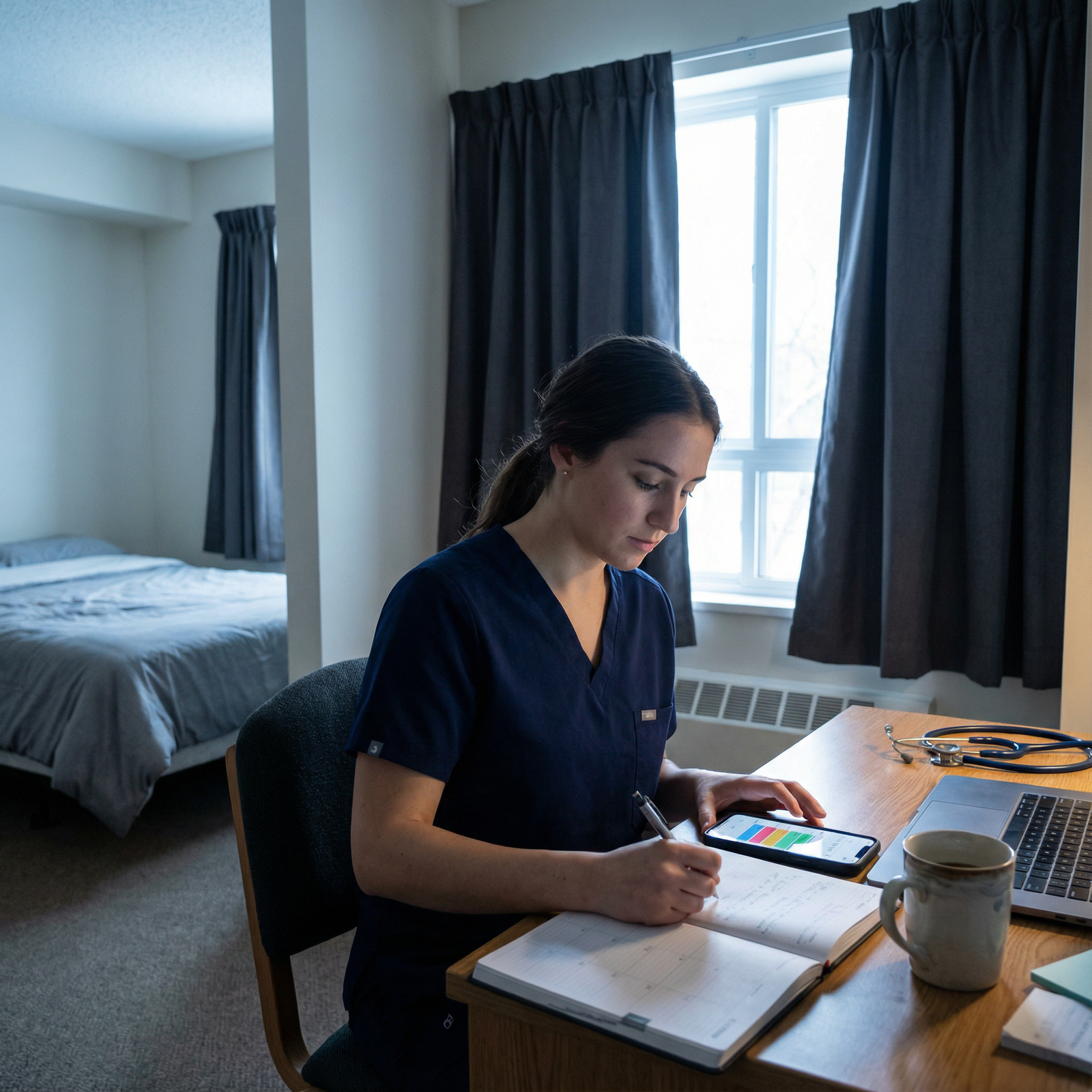
Real life isn’t clean. You’ll get curveballs.
Scenario 1: Straight from Nights to Clinic (No Full Day Off)
Brutal but common.
Post-call Day 0:
- Short nap 09:00–12:00
- Stay awake rest of the day
- Early bed 20:00–21:00
Post-call Day 1 (clinic):
- Set alarm for your true clinic wake time
- No naps after clinic, even if destroyed
- Bed again 21:00–22:00
You won’t feel great, but you’ll at least be aligned.
Scenario 2: You Overslept Post-Call (Woke Up at 16:00)
It happens. At this point:
- Accept that tonight’s bedtime will be later (maybe midnight).
- Still get up at 07:00–08:00 the next morning.
- You’ll be more tired, but you’ll recover by forcing the wake time, not by chasing extra sleep.
Scenario 3: You’re a Natural Night Owl
You still have to see pre-round labs.
- Aim for a slightly later “normal” bedtime (23:00 instead of 21:30) if your schedule allows.
- Keep wake time non-negotiable. Shift bedtime, not wake time.
- Use morning bright light aggressively to anchor your clock.
Tools That Actually Help (and Some That Don’t)
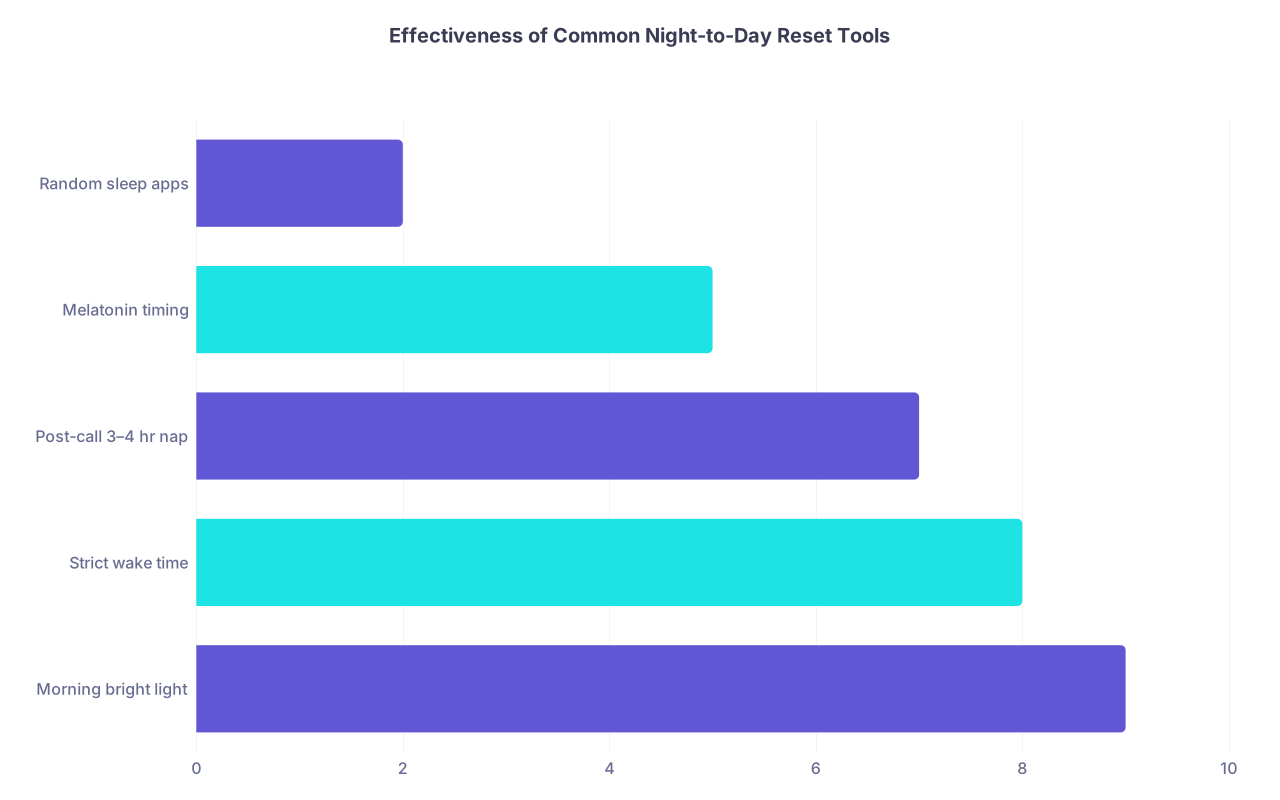
| Category | Value |
|---|---|
| Morning bright light | 9 |
| Strict wake time | 8 |
| Post-call 3–4 hr nap | 7 |
| Melatonin timing | 5 |
| Random sleep apps | 2 |
High-yield:
- Strict wake time on Transition Days 1–2
- Short, controlled post-call nap (3–4 hours)
- Morning bright light exposure on reset days
- Caffeine timing (early day only)
Medium yield:
Melatonin:
- Low dose (0.5–1 mg) 4–5 hours before your target sleep time can help shift phase a bit.
- Do not randomly take huge doses right at bedtime and expect magic.
Exercise:
- Light to moderate in the morning or early afternoon is helpful.
- Heavy workouts late at night can keep you wired.
Low-yield or overrated during flip:
- Fancy sleep tracking apps (you don’t need more data; you need discipline)
- Random supplements you found in a TikTok comment
- “I’ll just sleep when I’m tired and let my body decide” (this is how you stay nocturnal for a week)
Minimal Checklists by Time Point

Night of Final Shift
- Last caffeine by 02:00–03:00
- Eat a real meal by ~22:00
- Decline extra “just a quick favor” tasks after 07:00
- Sunglasses on for commute home
Transition Day 0 (Post-Call)
- Home by 08:30–09:00
- Sleep 09:00–13:00 (alarm set)
- Bright light + real lunch after waking
- Optional 20–30 min nap before 15:00 if desperate
- No caffeine after 15:00
- Dinner 17:00–18:00
- Bed 21:00–22:00, minimal screens
Transition Day 1
- Wake 06:00–07:00, no snooze games
- Bright light within 30 minutes of waking
- Small, early caffeine; none after 14:00
- Optional short nap before 15:00 only
- Bed 22:00–23:00, wind-down routine
Transition Day 2
- Same wake time as Day 1
- No naps if you can avoid them
- Keep meals, light, and caffeine aligned with your future workday
- Same bedtime window as Day 1


