
Myth vs Reality: Do Programs Blacklist Applicants Who Don’t Visit?
What actually happens to your application if you never set foot in a program’s hospital before rank lists are due? Are you silently blacklisted… or does nobody care as much as your classmates say they do?
Let me be blunt: the “if you don’t visit, you’re dead” myth is wildly overstated. But—as usual—there’s a sliver of truth buried inside the panic.
Let’s separate campfire horror stories from what programs actually do, using what data we have and what PDs say when they’re not on stage giving polished answers.
Where This Blacklist Myth Comes From
The idea goes like this:
If you don’t do a second look, or don’t come to some optional “pre-interview dinner,” or don’t rotate there, your file gets quietly flagged and dropped down (or off) the rank list.
You hear things like:
- “My chief said their PD won’t rank anyone who doesn’t show up in person.”
- “At [Big-Name Program], if you skip the second look, that’s it. You’re done.”
- “They need to know you’re ‘serious about us’ or they won’t waste a rank on you.”
I have seen the other side of this.
Programs absolutely complain about “tourists” and “coasters” who interview and obviously don’t care. They hate wasted interview slots. They do sometimes try to gauge interest.
But the leap from “they care about interest” to “they maintain a secret blacklist and auto-dump every non-visitor” is where the story detaches from reality.
There are three separate things people mix up:
- Pre-interview visiting / informal visits
- Audition/Sub-I rotations
- Second looks / post-interview visits
Each one carries different weight. Lumping them together is how bad rumors start.
What The Data and PDs Actually Say
Let’s start with hard numbers instead of hallway gossip.
The NRMP’s Program Director Survey is about as close as you’ll get to peeking under the hood. Programs report what factors they actually use to decide who to interview and how to rank them.
The survey breaks down “visits to program”–type things, but with nuance:
- “Away rotation at your institution”
- “Demonstrated interest in program”
- “Clerkship or clinical experience with your faculty”
- “Personal knowledge of the applicant”
Notice what’s missing:
“Second look attendance” or “showed up for informal visit” as a standalone variable.
In competitive fields (ortho, ENT, derm, neurosurg), away rotations are huge. That’s not a myth. But that’s not the same as just dropping by or going to second look.
For most core specialties (IM, peds, FM, psych, neurology, OB, anesthesia), programs consistently rank these higher than any “visit” variable:
- Board scores (or pass/fail now with more weight on Step 2)
- MSPE and transcript
- Letters of recommendation (especially from their own faculty)
- Interview performance
- Perceived fit / professionalism
“Demonstrated interest” matters for some programs—but it’s one factor in a pile, not a switch that flips you to “blacklisted”.
Here’s the key:
Programs have to fill their spots. They are not in the business of torching solid applicants just because you didn’t buy a plane ticket.
Away Rotations vs “Just Visiting”: Completely Different Animals
People love to conflate these.
Away / Sub-I Rotations
These do matter a lot in some specialties. But they work more like a high-yield audition, not a blacklist barrier.
If you do well on an away:
- You get strong, specific letters.
- Faculty can advocate for you in rank meetings with statements like “We’ve seen this person on nights; they’re legit.”
- You might get bumped up the list because you’re a known quantity.
If you do terribly on an away, can that hurt you? Yes. I’ve watched PDs say, “We will not rank this person” based on an awful rotation. That’s not blacklisting for not visiting; that’s consequences for being bad when you visited.
Now, what if you do no away rotation at that program?
In many specialties, that’s normal; the majority of residents didn’t rotate there. In the hyper-competitive ones, it might make it harder to stand out, but not rotating ≠ automatic rejection.
Programs don’t assume “no away here = no interest.” They know away slot availability is limited, students have geography constraints, and some schools strongly discourage multiple away rotations.
Casual Program Visits / Tours
Those “come visit if you’re in town” or pre-interview “feel free to stop by” emails?
They’re fluff. They exist to be nice, not as a scoring tool.
Nobody is meticulously cross-referencing a spreadsheet of who came for a random Tuesday tour in October.
Second Looks
Here’s where the myth concentrates.
The Second Look Obsession: More About You Than Them
Let me be direct: second looks mostly help the applicant, not the program.
Programs already have:
- Your application
- Your interview performance
- Committee impressions and notes
What does your second look add for them? Very little. At best, it confirms you’re not a weirdo and you still seem interested. At worst, you annoy overworked residents and faculty who feel obligated to entertain you while your rank is already basically set.
Most programs fall into one of three buckets on second looks:
| Program Type | Typical View of Second Looks |
|---|---|
| Highly structured, transparent | “Second looks don’t change rank lists; come only if it helps you decide.” |
| Quiet but honest internally | “Might slightly adjust borderline candidates; otherwise meaningless.” |
| Old-school / opaque | “We’ll take it as a plus for perceived interest, but not coming is not an automatic no.” |
Notice what’s missing:
“We blacklist you if you do not attend.”
I’ve heard PDs say explicitly on Zoom town halls: “Second look is for you, not us. We rarely, if ever, change ranks because of it.” They say this because it’s true and they’re tired of people flying cross-country for no reason.
Will some programs nudge up someone who made an especially positive impression during a second look? Sure. Especially in smaller programs where one extra data point matters. But that’s not the same as torpedoing you for not coming.
Why Programs Can’t Practically Blacklist Non‑Visitors
Set aside ethics for a second. Just look at logistics and math.
Imagine a mid-sized IM program with 14 spots.
- They interview 120–180 applicants.
- They need a long rank list because people match elsewhere.
- If they only ranked people who did second looks or visits, they’d be insane.
If 20% of interviewees do a second look and they “blacklist” the rest, they’ve just limited themselves to 20% of the pool. Then the match comes back with… 6 positions unfilled. Now they’re in SOAP hell trying to scrape together warm bodies who might not even want to be there.
Programs know this. They build realistically long rank lists and avoid dumb policies that leave spots open.
The one exception:
Extremely competitive, small programs in hyper-competitive specialties, where almost everyone does aways and visits, and they’re flooded with more qualified applicants than spots. There, “didn’t rotate here / never visited” might be code for “we have plenty of people who showed higher interest and we prefer them.”
Even then, it’s preference and tie-breaking, not an official blacklist for non-visiters.
Where Interest Does Matter (But Not Like You Think)
There’s a distinction programs actually use that students often miss:
- Demonstrated, specific interest
- Desperation and noise
Useful, legitimate signs of interest:
- A targeted, specific email to the PD or PC referencing their curriculum, patient population, or research and why it matches your background.
- A strong letter from someone they trust saying, “This applicant is very interested in your program and would be an excellent fit.”
- Thoughtful interview answers that clearly show you did your homework about that program, not “I just want great teaching, variety of pathology, and a collegial environment…” (the universal word salad).
What’s not particularly useful:
- Showing up physically without adding any new substantive data.
- Attending every optional social and then broadcasting, “Look how interested I am!” without actually understanding the program.
The reality: if you’re a strong applicant who interviewed well and shows alignment with the program’s strengths, they are not going to tank you because you didn’t attend a second look brunch.
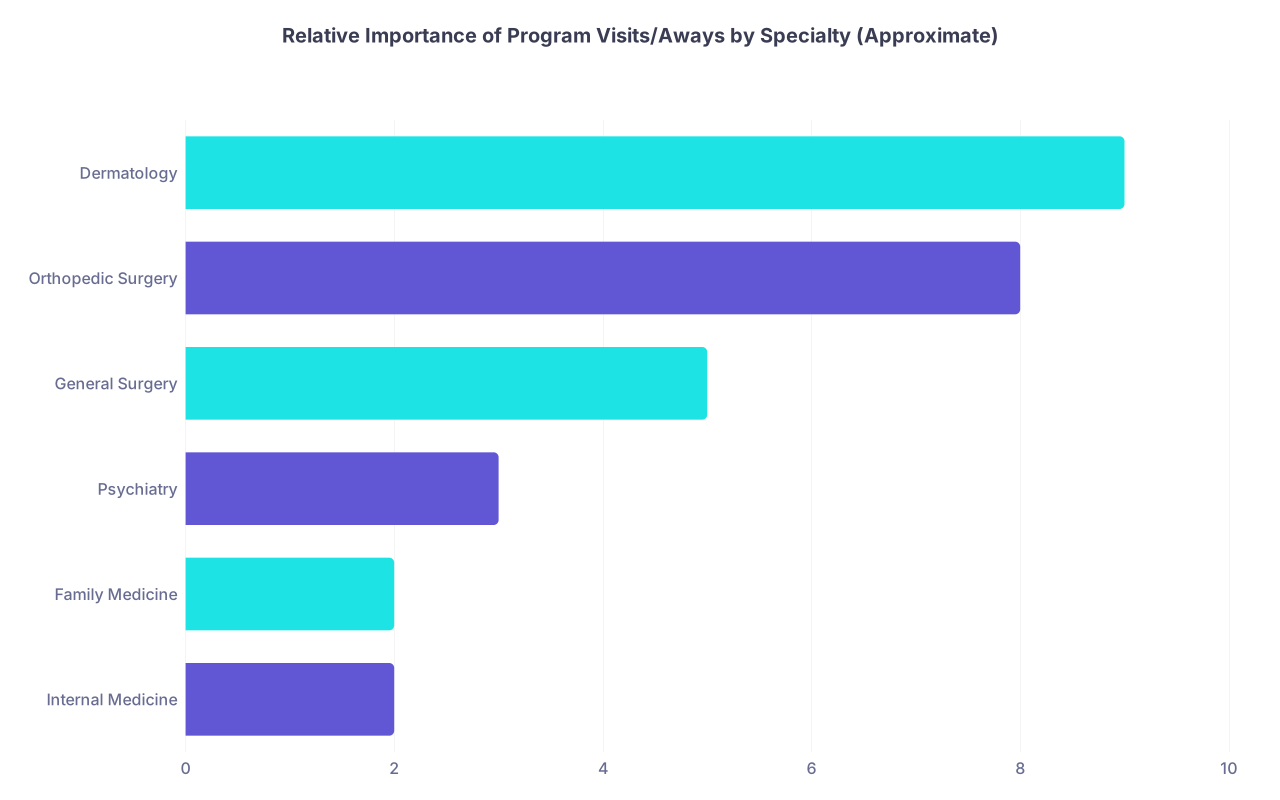
Specialty Differences: Where Visits Actually Move the Needle
Some nuance, because not every field behaves the same way.
| Category | Value |
|---|---|
| Internal Medicine | 2 |
| Family Medicine | 2 |
| Psychiatry | 3 |
| General Surgery | 5 |
| Orthopedic Surgery | 8 |
| Dermatology | 9 |
Scale: 1 = almost irrelevant, 10 = critical
Here’s the pattern:
Primary care fields (FM, IM, peds)
Programs tend to be broad, with many spots. Away rotations and second looks can help, especially at highly sought academic centers, but they’re rarely make-or-break. Not visiting is extremely common.Psych, neurology, anesthesia
Similar story. Fit and interview performance dominate. Visiting helps you more than them.General surgery
Aways are more important, especially at academic and competitive programs. But second looks still usually sit in the “nice but not essential” category.Hyper-competitive surgical / niche specialties (ortho, ENT, neurosurg, urology, derm, plastics)
Aways can be crucial. Many residents at a given program did at least one away there. This is a different conversation from “do they blacklist non-visitors?” It’s more: “are you disadvantaged compared to people who gave them months of direct data?”
Notice: that’s about rotating, not about quick “visits” or second looks.
The Real Risks of Chasing Every Visit
There’s an opportunity cost nobody talks about when they guilt you into endless travel.
Money. Time. Fatigue.
Those matter more than one extra handshake with a PD who won’t remember you in three weeks.
Over-visiting leads to:
- Worse performance on rotations at your home or away institutions because you’re constantly traveling.
- Fuzzy interviewing because you’re exhausted and burned out.
- Poor financial decisions—throwing thousands at plane tickets to “signal interest” when an honest, targeted email would have done the job 10x better.
I’ve seen applicants drag themselves into crucial interviews half-dead after scheduling a second look across the country the weekend before. You know what actually dropped their rank? That. Not missing the second look.
How to Show Interest Without Worshipping Visits
If you’re worried about “looking interested” but don’t want to play the second look circus, do this instead:
- During the interview, ask program-specific questions that show you’ve actually read their website and understand their structure.
- After the interview, send a concise, genuine thank you to the PD or PC referencing one or two specific aspects that clicked with you.
- If the program is truly top choice (and your specialty and program culture tolerate them), send a clear, honest communication near rank time to state strong interest or #1 ranking—without spamming or wordiness.
None of that requires booking flights or hotel rooms.
If you want to do a second look to clarify fit for yourself—fine. Go. But go knowing it’s mostly for you. Not because someone in your class swore you’ll be blacklisted otherwise.
Quick Reality Check Scenarios
Let’s run a few:
Scenario 1:
You’re a solid IM applicant. Mid 230s Step 2, good letters, no red flags. You interviewed at a university program that said on their website: “Second looks are optional and will not affect rank order.”
You don’t go to a second look.
Do you drop from possible mid-list to unranked? No. That would be self-sabotage for them.
Scenario 2:
You’re applying ortho. Their current residents all did away rotations there. You didn’t rotate, didn’t reach out, and your interview felt lukewarm.
Does “no visit” hurt? Yes, because in that world not rotating is a missed opportunity for months of direct evaluation and relationship building.
But again, that’s away rotation culture, not second look obsession.
Scenario 3:
You’re psych, ranking a mix of community and university programs. You skip every second look, but your interviews went well, and your letters are strong.
You will absolutely still match if your list is long and realistic. Programs are not collectively boycotting you for staying home.

| Step | Description |
|---|---|
| Step 1 | Applicant |
| Step 2 | Application Strength |
| Step 3 | Interview Performance |
| Step 4 | Documented Interest |
| Step 5 | Perceived Interest |
| Step 6 | Final Rank Position |
| Step 7 | Second Look Visit |
Notice where second look sits: dotted line, small influence. Not a gate, not a blacklist trigger.

When You Might Consider Visiting Anyway
So when is a visit worth it?
- You have two or three programs clustered at the top of your list, and on paper they all look great. You’re torn. A second look could help you sort out culture and day-to-day reality.
- The program explicitly says something like, “We encourage second looks as they may help us and you assess fit.” (Rare but not nonexistent.)
- You want to see the city/housing/neighborhoods because moving blindly would stress you out.
Do that once or twice if you can afford it and if it genuinely helps your decision. Don’t build your entire season around them.
| Category | Value |
|---|---|
| Applicant Belief | 9 |
| Program Reality | 3 |
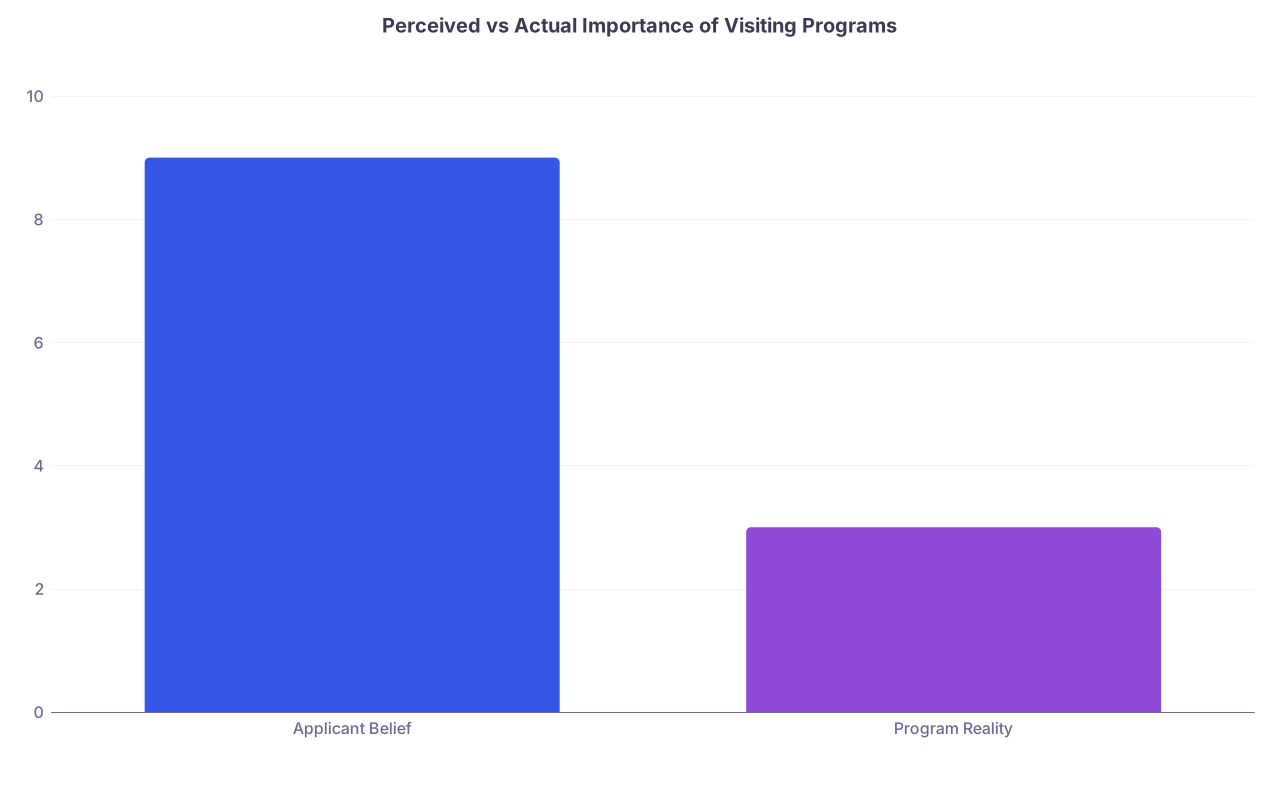
That’s the core mismatch. Applicants think visiting is a 9/10 variable. For most programs, it’s a 2–4 at best.