The 3 AM Page Everyone Dreads: Why 'Patient Found on Floor' Is the Most Common On-Call Page
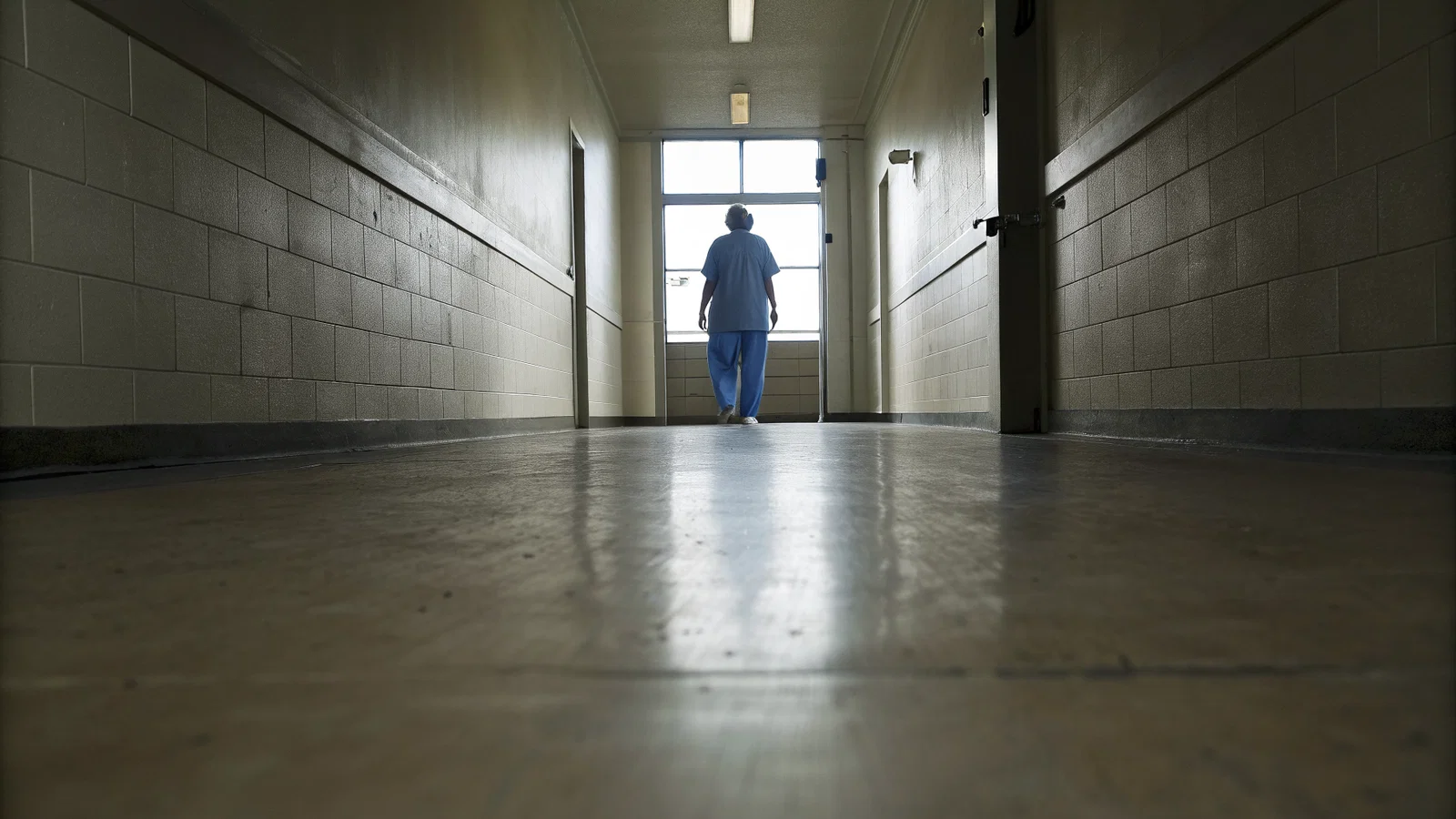
You're cross-covering 40 patients. You finally lay down. Then the pager shrieks: "Patient in 304 found on floor. Please call." Your stomach drops. You're suddenly very awake, running through worst-case scenarios in your head, subdural hematoma, hip fracture, a family meeting you're not prepared to lead.
Here's the truth: this is the most common overnight page you'll receive during residency. Not because you're unlucky, but because hospitals are perfectly designed to make confused, sedated, elderly patients fall. Unfamiliar beds, IV poles acting like tripwires, medications that tank blood pressure, and 3 AM bathroom urgency, it's a setup. And when the nurse doesn't witness it, you're walking into a complete unknown. Was it a syncopal episode? A mechanical trip? Did they seize? You don't know. That uncertainty is what makes this page so psychologically heavy.
But here's what I want you to understand: by the end of this article, you'll have a reproducible framework for handling this page. You won't freeze. You won't over-escalate out of fear. You'll walk into that room, assess systematically, document cleanly, and maybe, just maybe, prevent the next one.
Why Patients Fall (So You Can Understand What You're Walking Into)
Before we talk about what to do, you need to understand why these pages keep happening. Because if you're just reacting to falls without understanding the mechanism, you're missing the point entirely.
The predisposing factors are predictable. Anticoagulation tops my list because it transforms a minor bump into a neurosurgical emergency. Orthostatic hypotension, especially in the elderly patient who just got their morning antihypertensives held but their evening dose doubled, is rampant. Delirium is the great multiplier: the patient who was oriented yesterday is now trying to climb over bedrails at 2 AM because they think they're late for work. And dementia creates a baseline where fall risk is constant.
Then there's the environment. Hospital beds are higher than home beds. The lighting is terrible at night. IV poles have wheels and a mind of their own. Non-slip socks? Patients take them off. Bed alarms? Nurses silence them while toileting patients and forget to reactivate. I've seen a patient fall simply reaching for a water cup on a bedside table that was moved six inches during shift change. Six inches.
Medications deserve special blame. Benzodiazepines for sleep. Opioids for pain. Zolpidem because someone ordered it at admission and nobody discontinued it. Antihypertensives given at bedtime when the patient's circadian blood pressure dip makes them hypotensive. I'll say this plainly: if you're prescribing sleep aids to hospitalized elderly patients, you're contributing to the fall rate. Harsh? Maybe. True? Absolutely.
And here's the distinction that matters clinically: "found on floor" versus "witnessed fall." A witnessed fall tells you mechanism, head strike (or lack thereof), and whether there was loss of consciousness. An unwitnessed fall tells you none of that. You have to assume head strike and syncope until proven otherwise. That's not defensive medicine, that's just good medicine.
Step 1: The First 90 Seconds (Your Initial Response)
You pick up the phone. The nurse says, "Patient found on floor, awake and talking." Don't sprint. Walk briskly, but don't run. Running communicates panic, and you need to be the calmest person in the room.
Here's what you ask the nurse before you even stand up: "Is the patient responsive? Any obvious bleeding? Are they on anticoagulation?" That takes 15 seconds. If the patient is unresponsive or there's significant bleeding, that's your cue to run, but that's rare. Most "found on floor" patients are sitting up, confused, and complaining that someone pushed them.
When you arrive, your first 60 seconds at the bedside are about three questions. I call this the "Where-What-Move" triad: "Where does it hurt?" "What happened?" (even if they don't know, their answer quality tells you about their mental status). "Can you move your arms and legs for me?" If they answer all three coherently and move all extremities, you've already ruled out about 90% of badness. If they don't, or if they're on anticoagulation, you move to the full assessment with more urgency.
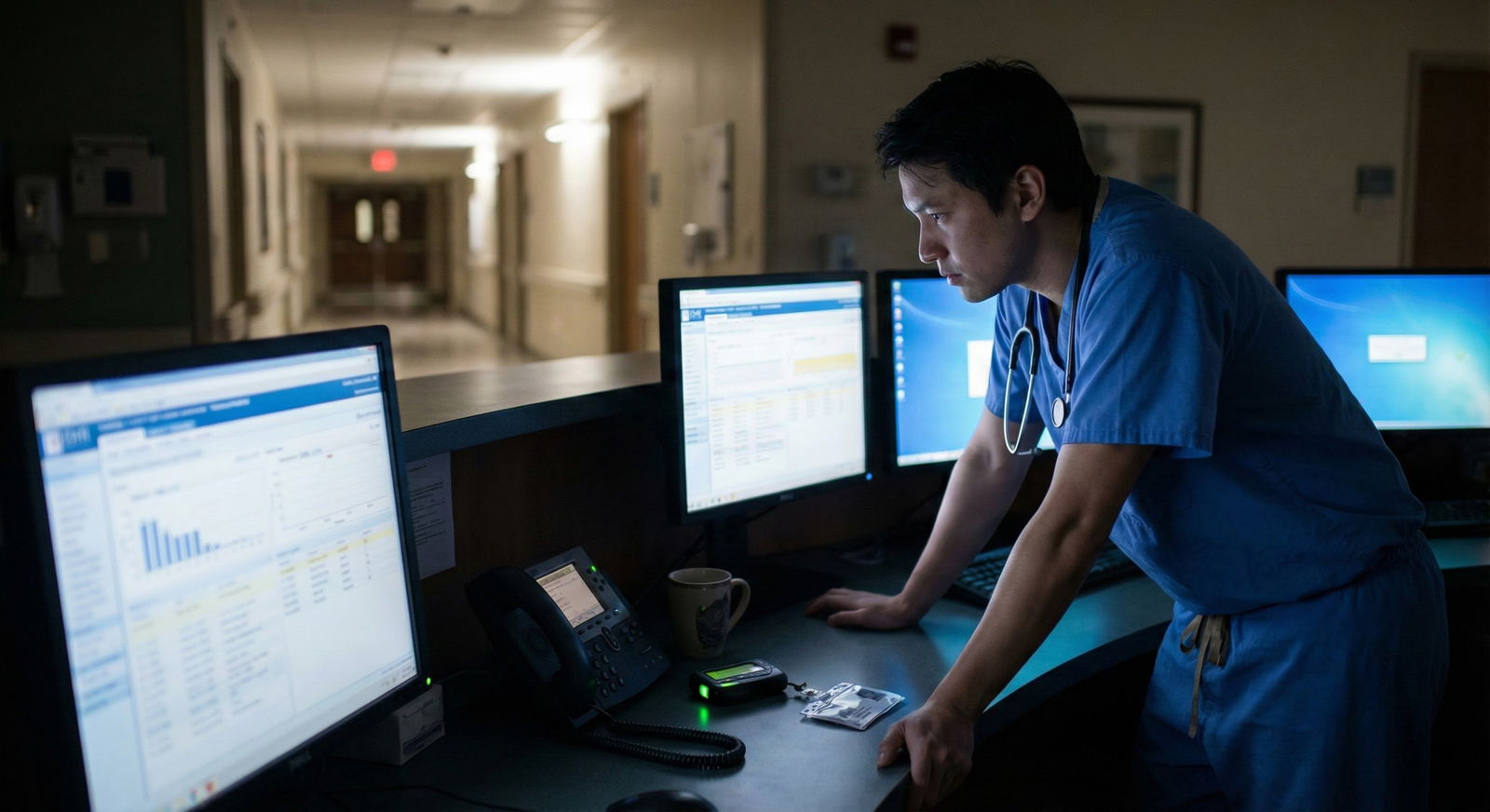
Don't call your senior yet. Don't order the CT yet. Just assess. Once you've laid hands on the patient and run through those three questions, you'll know whether this is a routine fall or something that needs escalation. Most of the time, it's routine. But you verify before you relax.
Step 2: The Full Assessment Framework
Now you do the real exam. I use an ABCDE structure modified for falls, because it forces you to think systematically when your brain wants to skip around.
Airway: Did they hit their head? If yes, your assessment shifts toward intracranial injury. Any vomiting, severe headache, or amnesia elevates your concern. Breathing: Chest pain or shortness of breath? Rib fractures from falls are common and painful. Hypoxia might suggest pulmonary contusion in high-impact falls. Circulation: Check orthostatic vitals if possible. A patient who fell getting up to urinate might be profoundly hypotensive from over-diuresis or GI bleed. Disability: This is your neurological exam. GCS, pupils, cranial nerves, strength in all four extremities, sensation, coordination. Document baselines versus new deficits obsessively. "Moving all extremities spontaneously" is not the same as "5/5 strength throughout." Be specific. Exposure: Look at their entire body. Hips, spine, scalp. You can't assess what you don't expose.
Head injury red flags drive the rest of your decision-making. Anticoagulation plus any possibility of head strike equals head CT. Full stop. I don't care if the patient says they didn't hit their head, if it was unwitnessed and they're on warfarin, apixaban, rivaroxaban, or any antiplatelet, you're getting the scan. The subdural hematoma you catch on CT at 3 AM is the one you don't explain to a family at 3 PM.
Spinal precautions: if they have midline cervical or thoracic tenderness, or any new neurological deficit in extremities, immobilize until cleared. Don't be the resident who missed a C-spine fracture because you didn't check for tenderness. Ask them to move their neck. Press on each spinous process. It takes 20 seconds.
If the exam is completely normal, they're not anticoagulated, and you can rule out syncope, you can likely observe with serial neuro checks. But you must document why you made that decision.
Step 3: When to Escalate and Who to Call
Here's where residents often mess up. They either call their attending for every minor fall, which erodes trust and makes you look panicked, or they handle something alone that should have been escalated hours ago. There's a middle path.
Call your senior immediately (yes, at 3 AM) if: any neurological deficit is present, the patient is anticoagulated and struck their head, there's visible trauma requiring intervention (laceration, deformity, possible fracture), or you genuinely cannot assess the patient due to agitation or refusal. That last one is underappreciated. If a delirious patient is swinging at you and you can't do a neuro exam, you need backup. Your senior needs to know.
Call your attending if: imaging shows an acute finding, the patient needs a procedure, you're uncertain about disposition (can they go back to bed safely?), or the family needs to be notified about a serious change. Don't call your attending at 3 AM for a minor fall with normal neuro exam. They will not thank you. They will, however, thank you for calling at 7 AM with a concise update.
If you're ever in doubt, escalate. The worst outcome from over-escalation is a grumpy senior. The worst outcome from under-escalation is patient harm. The math is easy.
Step 4: Documentation and Orders
Your documentation for a fall is your medicolegal shield. Be obsessive. I document: exact time found, exact location (including whether they were in bed, on the floor beside the bed, in bathroom, in hallway), witnessed versus unwitnessed, initial complaint(s), full neurological exam with specific motor strength grades, all visible injuries (including size and location of ecchymosis or abrasions), my assessment, my plan, who I notified and when, and the patient's current disposition.
If you write "patient fell, neuro exam normal, will monitor," you have not documented enough. That note will not protect you if this patient has a delayed subdural hemorrhage. Write like someone will be reading your note in a deposition two years from now, because they might be.
Orders depend on severity. For any significant fall, I order: CBC (check for anemia from occult bleeding or injury), BMP (electrolyte abnormalities can cause arrhythmias or weakness). Head CT non-contrast if red flags present. If they're on anticoagulation, check your hospital's protocol, many have standardized "fall on anticoagulation" order sets with serial neuro checks and hold parameters. Don't forget PRN orders: acetaminophen for pain, ice packs, antiemetics if they're nauseated.
Disposition decisions: can this patient safely return to bed? If delirium contributed, do they need a sitter? Should the bed alarm be reactivated? Should bedrails be raised? These are nursing concerns, but you should be asking the questions and documenting the plan.
After the Fall: Prevention and Systemic Thinking
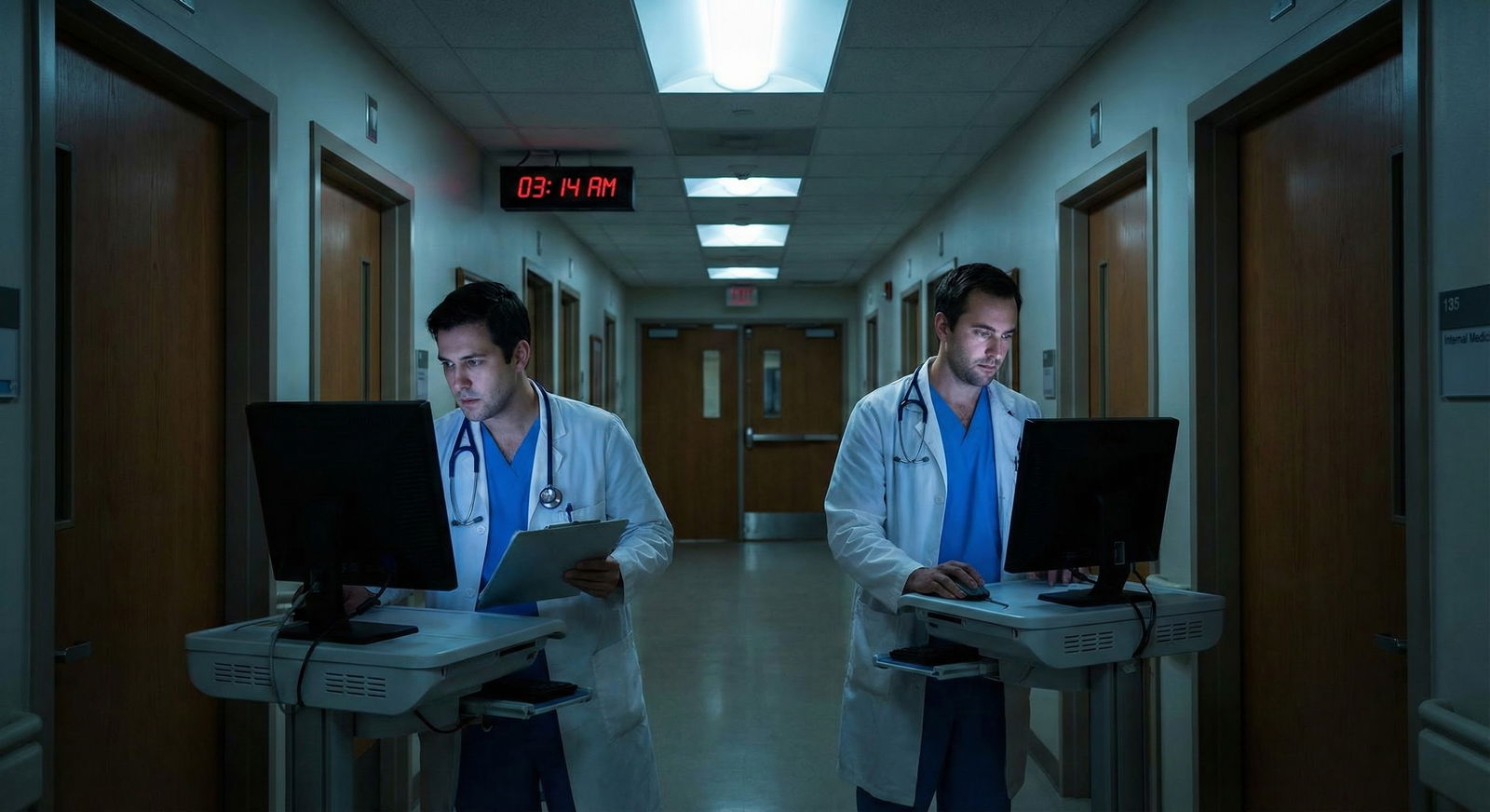
Here's what separates good residents from great ones: after the fall is managed, they ask why. Why did this specific patient fall at 3 AM? And more importantly, what's going to prevent the next one?
Root cause analysis doesn't require a committee, just five minutes of thinking. Were they delirious? Treat the underlying cause, UTI, pain, medication side effect. Did they get up to urinate? Maybe they need a urinal at bedside or scheduled toileting. Were they on benzodiazepines or zolpidem? Discontinue them. Were orthostatics positive? Hold the offending antihypertensives and discuss with the primary team in the morning.
Fall prevention bundles are evidence-based and simple: bed alarm on (and actually audited), non-slip socks, frequent rounding, optimized lighting, personal items within reach, and medication review. This is a team sport, your nurses do the frontline work, but you set the tone. If you blow off a fall as "just one of those things," the floor culture reflects that. If you take it seriously, so will everyone else.
Hospitals track fall rates obsessively because they're a quality metric and tied to reimbursement. But the real reason you should care isn't administrative, it's that the second fall is often the one that causes the hip fracture, the head bleed, the ICU transfer. Your job after the first fall is to make the second one impossible.
Summary: Your Framework for the 'Patient Found on Floor' Page
Let me make this as simple as possible. When that pager goes off at 3 AM, you don't need to remember 20 things. You need four:
Don't panic. Most falls are minor. Walk, don't run, unless the patient is unresponsive or bleeding heavily.
Run through your mental checklist: responsiveness, anticoagulation status, neurological exam, head CT if indicated. That sequence has never failed me.
Escalate appropriately. Senior for concerning findings or anticoagulated head strikes. Attending for serious injuries or diagnostic uncertainty. Over-escalation is a learning opportunity. Under-escalation is a mistake.
Document thoroughly and think preventively. Your note protects you. Your root-cause thinking protects the patient.

You'll handle dozens of these pages during residency. The first few will feel terrifying. By your tenth, you'll barely break a sweat. By your twentieth, you'll be the one teaching interns how to do it right. The framework works, just use it.
Key Takeaways
- Most "patient found on floor" pages at 3 AM are not emergencies, but you must assess systematically using ABCDE and neurological exam.
- Key decision point: anticoagulated + any head strike = get head CT; any new neurological deficit = escalate immediately.
- Document the mechanism, exam, and disposition precisely, this is a high-risk medicolegal scenario.
- The real goal isn't just handling this fall, it's preventing the next one by addressing root causes like delirium, medications, or bed alarms.