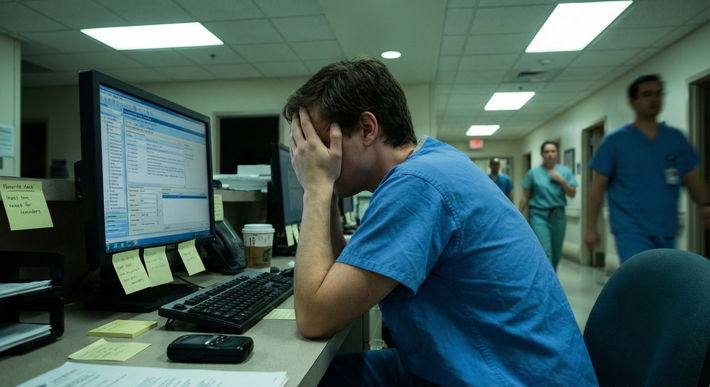
I still wake up at 3 a.m. sometimes replaying that one presentation. You know the one. The attending's eyes locked on you like a sniper scope while your mouth opened and... nothing. Absolute blank. Mr. Henderson's creatinine? The one you checked twice last night? Gone. Vanished into the fluorescent void of the workroom. Everyone staring. The intern behind you shifting uncomfortably. Your own heartbeat loud enough to chart.
That frozen moment doesn't just suck. It rewires your brain into permanent worst-case mode. What if they think I'm stupid? What if this is the day they realize I don't belong here? Imposter syndrome loves this exact scenario, it throws a party and invites actual memory failure as the guest of honor. One blank stare and suddenly you're convinced the entire team is drafting your termination letter in their heads.
Here's the brutal truth nobody says out loud during orientation: relying solely on your brain is how patients get hurt. I've seen it. The resident who "knew" the potassium was normal and ordered the wrong fluids. The one who winged the antibiotic history and nearly caused anaphylaxis. Your memory is not a secure vault. It's a leaky colander under sleep deprivation, cortisol, and the constant low-grade terror of looking dumb. Pretending otherwise is ego, not excellence. And ego kills.
But, and this is the part that kept me up more nights than the blanks themselves, there's this razor-thin line. Pull out a crumpled scrap of paper at the wrong second and you look like the kid who never studied. Check your phone too obviously and you're "distracted." So how do you protect the patient without branding yourself incompetent forever?
If you are concerned that your reliance on these aids will be perceived negatively by your superiors, check out our guide on Myth vs Reality: Do Attendings Think You're Incompetent If You Write Things Down Mid-Round?.
The Hierarchy of Memory Aids: What to Carry and What to Hide
I used to stuff everything into my white coat like a frantic squirrel. Index cards, printed labs, half-written SOAP notes that looked like ransom demands. Then I watched a senior resident, someone I actually respected, casually flip a single laminated card during rounds and look like a complete pro. That was the day I stopped winging it and started engineering the appearance of competence.
The Index Card vs. Tablet debate is real and it matters more than anyone admits. A phone or tablet screams "I'm Googling this in real time" even when you're not. An index card or tiny notebook says "I prepared." One looks reactive. The other looks deliberate. I went full palm-card. Three-by-five, written the night before in my own handwriting, organized by system. No one ever questioned it. They assumed I was thorough.
For those who struggle with high-volume or chaotic workloads, implementing these organization strategies for struggling interns can help keep you afloat.
Pocket notebook etiquette is its own quiet battlefield. You can't be flipping pages like you're lost in a novel while the attending is waiting. I number my patients 1 through whatever on the left margin the night before. One page per patient max. Sticky tabs if you're desperate. The second you lose your place, the whole illusion cracks. I've watched interns scramble and it is painful. Don't be that person.
Strategic placement is half the game. Inside the left breast pocket, card facing out so you can tilt it with one finger without fully extracting it. Never the side pocket, too much digging. Never the back of your badge reel where it swings around like a neon "I NEED HELP" sign. And for the love of God, don't leave printed sheets folded on the computer-on-wheels where everyone can see the frantic highlighter marks.
Digital tools are trickier. EMR SmartPhrases are lifesavers if you build them right, but hammering keys mid-presentation looks terrible. I draft the full note before rounds, then use the pause (more on that later) to confirm one number. Never open a new window while someone is talking. That little click-clack of the keyboard under an attending's monologue is the sound of your reputation dying.
Here's the decision tree I finally settled on after too many near-misses:
High-stakes numbers that will be asked right now? Palm card. Background trends or discharge criteria you might need later? SmartPhrase waiting quietly in the chart. Anything else lives in your head or gets left behind. Simplicity is the only thing that survives real rounds.
Executing the 'Seamless Glance': How to Peek Without Being Spotted
This is the part that actually separates the residents who look calm from the ones who look like they're cheating on a test. The seamless glance is a skill. You practice it the same way you practice procedures, badly at first, then better, then invisible.
Peripheral vision is your best friend and your most underused tool. You don't need to look down fully. Angle the card just below the attending's sightline while you keep your chin up and maintain eye contact with the team. I've done full electrolyte recitations this way. It feels shady the first ten times. Then it feels like breathing.
The Pause is even more powerful. Before you ever reach for the card, you say something that buys you three clean seconds: "So for the overnight events..." or "Looking at the big picture here..." That tiny verbal buffer lets you drop your eyes, confirm the number, and come back up without anyone clocking the movement. Silence is deadly. Controlled speech is camouflage.
I eventually built a Patient Summary Template that looks nothing like a cheat sheet and everything like a high-level briefing document. One column for overnight events. One for the three numbers I know they'll ask. One for the plan I already decided. It sits flat on my clipboard or folded once in my pocket. When I glance at it, I look like I'm reviewing strategy, not desperately hunting for a potassium value. Presentation matters. A messy scrap looks desperate. A clean template looks prepared.
And language. God, language saves you. Never say "I forgot" or "hang on." Say "Let me double-check that lab to be 100% accurate." Or "I want to confirm the exact timing on that culture." You just reframed memory failure as meticulousness. Attendings eat that up. I've watched people recover from total blanks with one well-timed phrase and walk away looking more competent than the resident who guessed wrong with confidence.
From Panic to Proficiency: Building Your External Brain
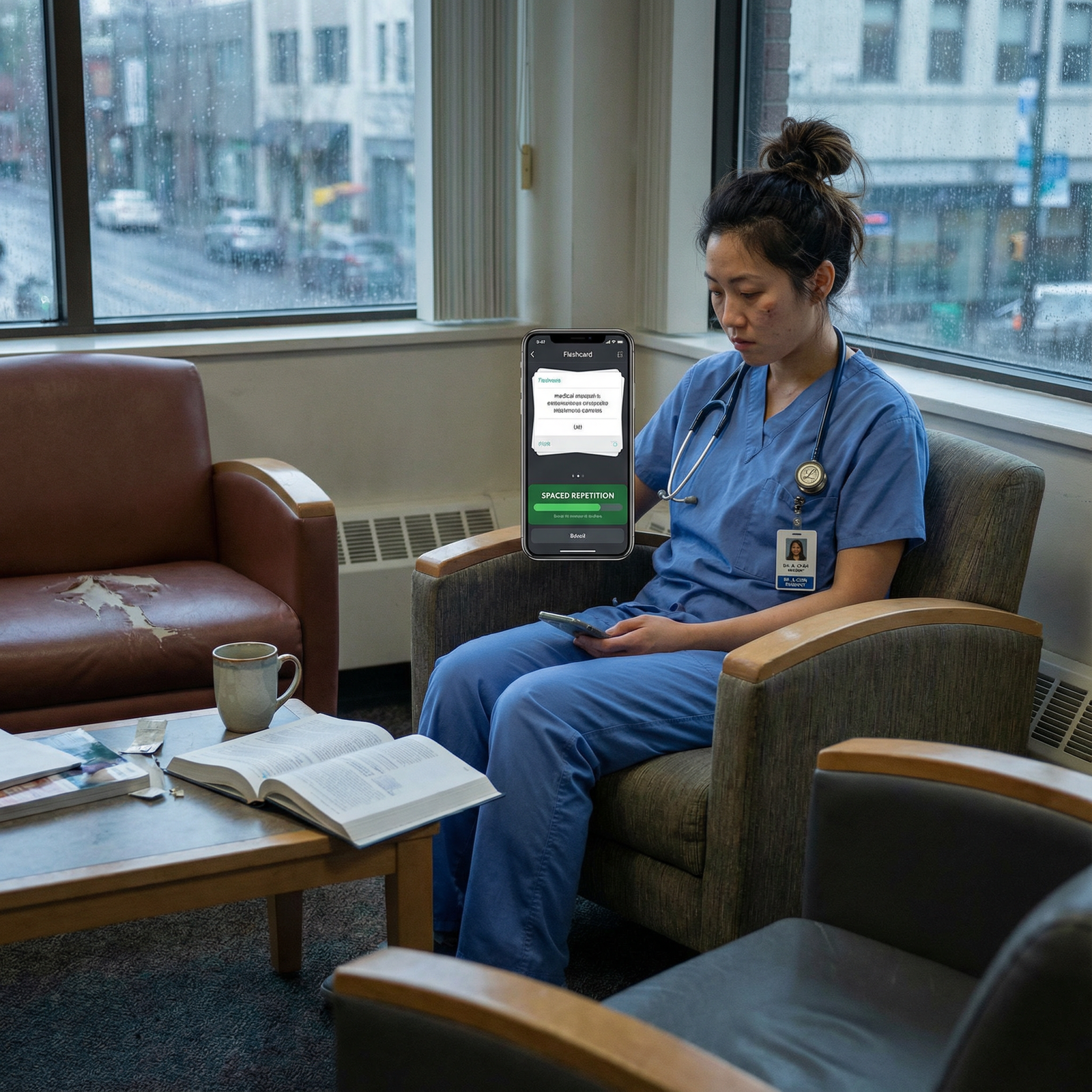
Eventually the anxiety has to become a system or it will eat you. I designed my own rounds sheet after one particularly humiliating morning where I blanked on three patients in a row. One page. Pre-filled with the skeleton: overnight, vitals trajectory, key labs, pending, plan. I fill it at 5 a.m. while the coffee is still hot and my brain still works. That sheet is my cognitive safety net. It doesn't make me look weak. It makes me look like someone who refuses to wing patient care.
There is a moment when admitting you don't know is actually the power move. The "what-if" protection strategy goes like this: if the information is truly not in front of you and guessing would be dangerous, you say "I don't have that number memorized, let me pull it up right now so we get it exact." Then you do it cleanly. The alternative, bluffing, is how you get the reputation you actually fear. I've never seen an attending punish honest precision. I've watched them destroy confident wrongness.
Every Sunday night I used to spiral. What if tomorrow is the day everything falls apart? The fix was iteration. After each set of rounds I spent ten minutes asking: which card failed me? Which glance looked awkward? Which phrase worked? I refined the template. I cut the clutter. The night-before anxiety didn't disappear, but it got quieter because I had evidence that the system worked yesterday and the day before.
Look around the team. Really look. That chief who never seems to forget a single detail? Pocket card. That fellow who always has the exact antibiotic start date? SmartPhrase. That attending who pauses mid-sentence and glances at their own list? They're doing it too. The ones who pretend they aren't are either lying or dangerous. Your patient's safety is more important than your ego. Checking your notes is better than guessing and harming them. Professionalism is defined by how you handle information gaps, not by the absence of them. A clean, well-organized pocket card shows preparation, not incompetence.
The chart doesn't lie. The residents who build the external brain sleep. The ones who keep trying to be walking encyclopedias stay terrified.
You've already survived worse than a blank moment. You got into this program. You can build a system that keeps patients safe and keeps your dignity intact. Start tonight. One clean card. One template. One better phrase. Then go to rounds tomorrow and use the tools without apology.
Do it for the patient who needs the right creatinine. Do it so the 3 a.m. replays finally stop. You've got this, even when your brain insists you don't. Now go make the card.