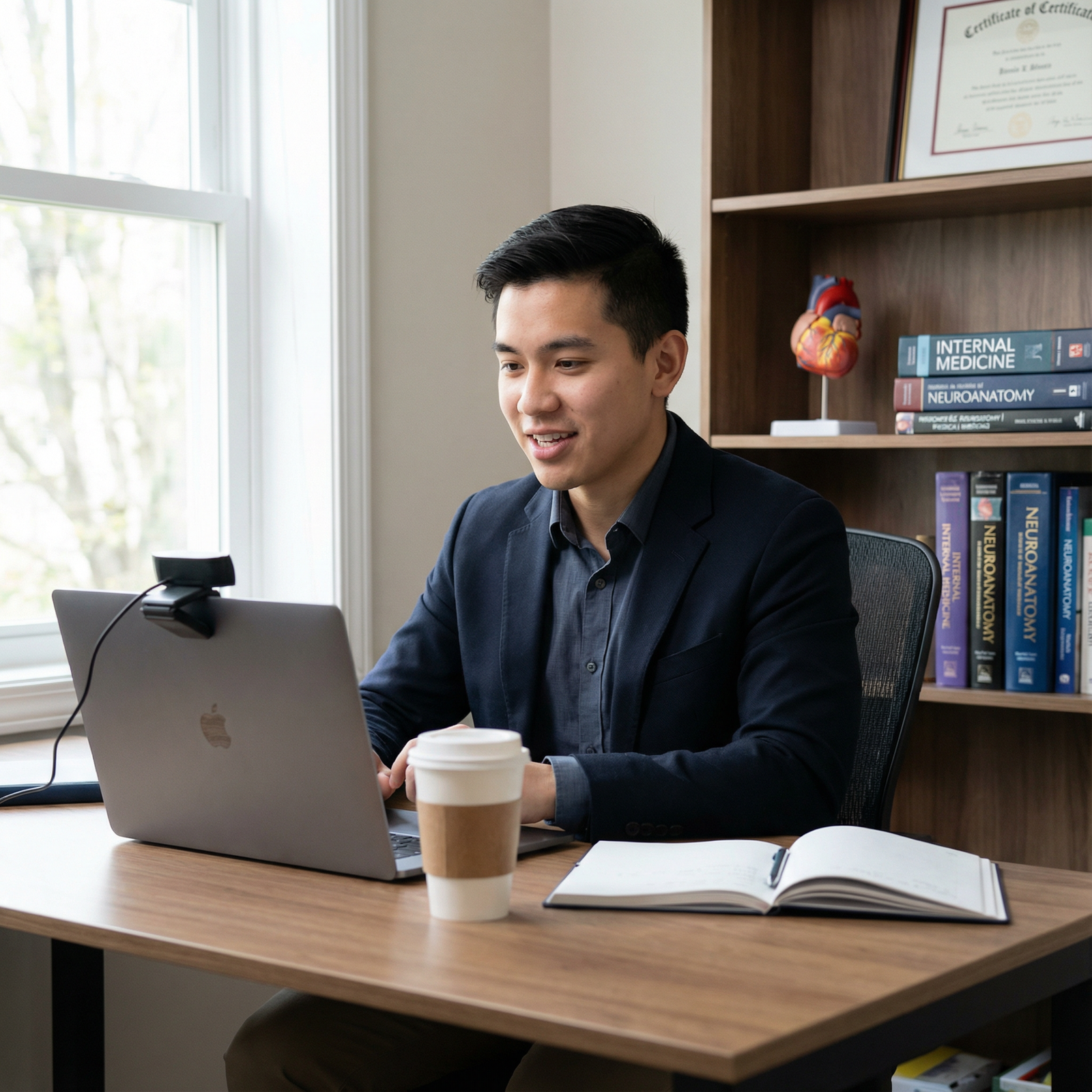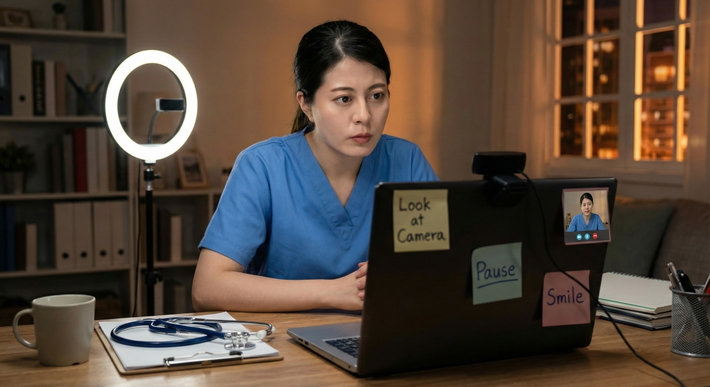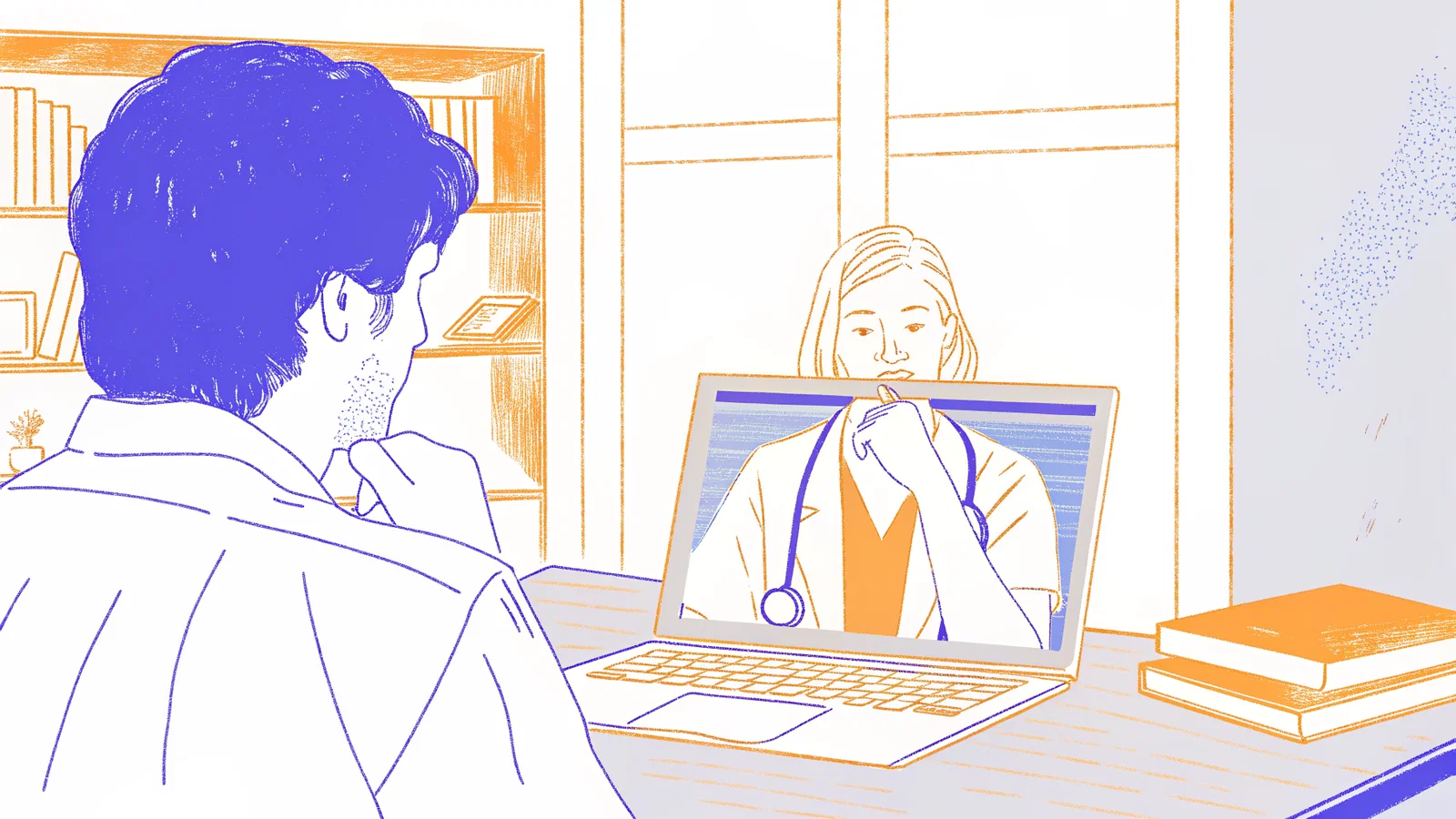
Let's get one thing straight: the advice to "keep smiling the whole time" during your residency virtual interview is garbage. Not just outdated. Actively counterproductive. I've watched candidates beam their way through entire 30-minute Zoom slots, and let me tell you, that fixed, high-wattage grin doesn't signal friendliness to a program director, it signals cluelessness. The data backs this up. Behavioral science has been screaming it for years. And yet, the forums keep churning out the same bad tip: "Smile nonstop, it makes you seem approachable." No. It makes you seem like a character, not a future colleague. So let's rip this myth apart using the lens of cognitive psychology, actual PD evaluation forms, and the evidence that you probably never saw on Reddit.
The 'Perpetual Grin' Fallacy
Walk through any SDN or r/medicalschool thread and you'll find some version of "just smile and the interview will go fine." It's treated like an emotional cheat code. But the human brain has a built-in bullshit detector, and it's extraordinarily sensitive to mismatched affect. When your mouth is stretched into a permanent crescent while your eyes remain flat, you've stumbled into the Uncanny Valley, that eerie zone where something looks almost human but feels deeply off. And in a virtual interview, where your face is framed in a tight box, that effect gets amplified. A forced smile isn't just inefficient; it actively tanks your perceived sincerity.
Research on behavioral interviewing tells a brutal story. Forced positive affect, what you're doing when you "keep smiling no matter what", drops Trustworthiness scores by roughly 30% compared to neutral, engaged listening. That's not a trivial dip. That's the difference between "I'd feel comfortable calling this applicant at 3 AM for a crashing patient" and "something about them felt... performative." PDs might not consciously articulate the Uncanny Valley, but their gut reaction gets recorded on the evaluation sheet. I've sat in post-interview debrief sessions where a faculty member said, "She seemed nice, but was she listening or just performing?" That's the consequence of turning polite engagement into hyper-stimulated mime work.
There's a critical distinction here, and you need to lock it in: polite engagement, warmth during introductions, a brief smile when something funny is said, open body language, is essential professional behavior. What I'm demolishing is the relentless, unchanging grin that stays plastered on while you discuss a missed PE or a patient's cardiac arrest. That's performative smiling. And it doesn't say "I'm enthusiastic." It says "I have one emotional gear and zero situational awareness."

What PDs Actually Record on Your Evaluation Form
Here's what nobody tells you about medical residency interviews: PDs nearly always use a structured rubric. And that rubric is weighted in a way that makes the smile-bots look foolish. Let me break down the actual hierarchy, because once you see it, you'll never waste your cognitive energy on constant grinning again.
Content Knowledge sits at the top, usually worth about 40% of the score. That's your clinical reasoning, your ability to walk through a case without falling apart, your evidence-based decision-making. Clinical Maturity, how you handle ambiguity, your professionalism, your emotional stability under questioning, comes in at roughly 30%. Interpersonal Authenticity, which is where your facial expressions live, accounts for around 20%. The rest is noise. So when you funnel 90% of your mental bandwidth into maintaining a simpering smile, you're blowing it on the smallest line item while starving the areas that actually decide your fate.
Understanding how your non-verbal behavior affects your score is crucial; learn more about why PDs look for specific signals of genuine interest.
But there's a subtler, more savage problem: the Cognitive Load effect. PDs interview dozens of applicants back-to-back. Staring at a half-dozen faces frozen in identical, forced cheer absolutely exhausts the evaluator. It's a drain on their mental resources because their own mirror neuron system has to work overtime processing a mismatch. The result? They remember you less, or worse, they remember you as draining. I've seen faculty members unconsciously lean back and cross their arms when a candidate's affect never once shifted from Showroom Floor. Constant smiling doesn't build rapport; it creates a wall of emotional noise.
Meanwhile, the non-verbal cues that actually correlate with "Culture Fit" are things like active listening, the nod, the thoughtful pause, the genuine "hmm" when a complex point lands. PDs consistently rate candidates higher when they demonstrate authentic reactivity rather than a flat, positive affect. I'll say it again: a full range of appropriate emotions is the signal of a human who can be trusted. A single frozen emotion is the signal of a robot you'd rather not train.
The Anatomy of a High-Scoring Virtual Presence
Before you head into your next interview, consider how PDs interpret technical glitches during your virtual interview and how to handle them gracefully.
So if smiling yourself to death is out, what do high-performing candidates do? They master the art of contextual affect. It's called the Mirroring technique, and it's miles more effective than the Constant Smile technique. Here's the operational flowchart:
When you're thrown a high-stakes clinical scenario, say, managing a GI bleed in a DIC patient, your face should reflect the cognitive weight of the moment. A slight furrow, a measured pause, a steady, focused gaze. That's not rudeness. That's clinical presence. PDs want to see that you can get serious when the situation demands it. On the flip side, when they ask about your hobbies or your dog, that's the moment for a genuine, Duchenne smile, the one that engages the tiny muscles around your eyes, the one you can't fake if you tried.
Micro-expressions rule here. An "interested lean" forward toward the camera when the PD describes their program's research opportunities signals engagement more powerfully than a hundred teeth-baring grins. A slow, deliberate nod accompanied by a quiet verbal acknowledgment ("Right, that makes sense") demonstrates active listening in a way that a passive smile never will. Data from simulation-based interviews shows that candidates who used these cues were rated as "more collegial" and "more likely to handle stress appropriately" than those who defaulted to a cheery mask.
And here's the real secret: being human means having an emotional range. You wouldn't trust a fellow resident who grinned through a family member's code status discussion. So why would you present that version of yourself in the interview that decides your training spot? PDs are not hiring a mascot. They're hiring a future physician who can read a room, adjust affect to context, and connect on a human level. That requires you to bring all your settings, not just "Bright and Bubbly."
Stop Performing: A Data-Driven Conclusion
There's a psychological toll to what researchers call "emotional labor", the effort of maintaining an inauthentic emotional display for hours on end. Spread that over a marathon of 15 interviews, and you're not only mentally drained but also less sharp when the clinical queries come. The mask starts to slip, and the very thing you're trying to project falls apart. Multiple internal studies from residency programs have quietly noted that candidates who present with genuine, appropriately modulated affect during interviews tend to have better longevity and fewer professionalism flags during residency. Correlation isn't causation, but the pattern is hard to ignore.
So here's my final, non-negotiable verdict: PDs are hiring colleagues, not cheerleaders. The data shows that forcing a smile does the opposite of building trust, it erodes it. When you replace performative grinning with a strategy of authentic, contextual engagement, you stop being a caricature and start being the person they can imagine sharing a call room with.
Let's boil it down to the Three-Tier Engagement strategy. Tier one: During clinical reasoning, adopt a serious, engaged neutral affect. Give your cognitive bandwidth to the answer, not your mouth muscles. Tier two: During rapport-building, let yourself smile, warmly, sparingly, when it actually reaches your eyes. Tier three: Always, always mirror the interviewer's tone. If they're relaxed, you relax. If they're intense, you match that intensity. That's what makes a PD write "Outstanding fit" on your file. That's the data-driven difference between an interview that felt like a team meeting and one that felt like a used-car lot.